

 English
 русский
 Español
 Français
 Português
 عربى





+86-13588556918
Content
- 1 1. What Is a Side-Turn Truck Dumper?
- 2 2. Main Product Features
- 3 3. Main Technical Parameters
- 4 4. Advantages Over Traditional Rear Dumpers
- 5 5. Handling Difficult Bulk Materials
- 6 6. Advanced Manufacturing and Engineering Strengths
- 7 7. Safety and Operational Management
- 8 8. Installation and Project Planning
- 9 9. Application Industries
- 10 10. Why Choose a Customized Side-Turn Solution?
- 11 11. Frequently Asked Questions
- 11.1 Q1. What materials can a side-turn truck dumper unload?
- 11.2 Q2. What is the difference between the 45-degree and 55-degree modes?
- 11.3 Q3. Can the equipment handle different truck sizes?
- 11.4 Q4. Is a vibration device always necessary?
- 11.5 Q5. Does a side-turn dumper require more width than a rear dumper?
- 11.6 Q6. Can the dumper be installed outdoors?
- 11.7 Q7. How does the side-turn arrangement reduce truck maneuvering?
- 11.8 Q8. What maintenance is required?
- 11.9 Q9. Can the equipment be connected to a plant automation system?
- 11.10 Q10. How should a customer select the correct model?
- 12 12. Conclusion
- 13 References
- 14 Product: Side-Turn Truck Dumpers
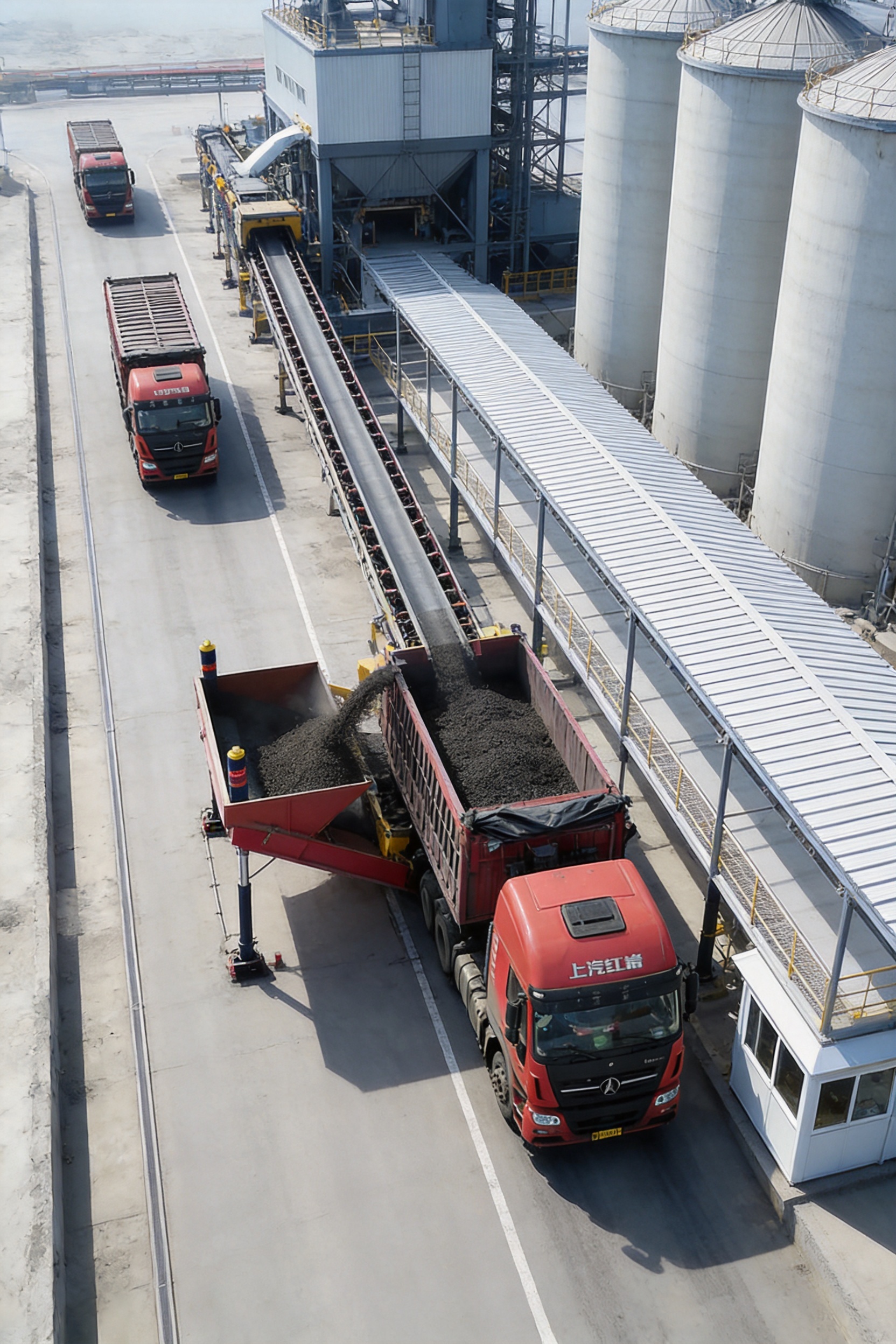
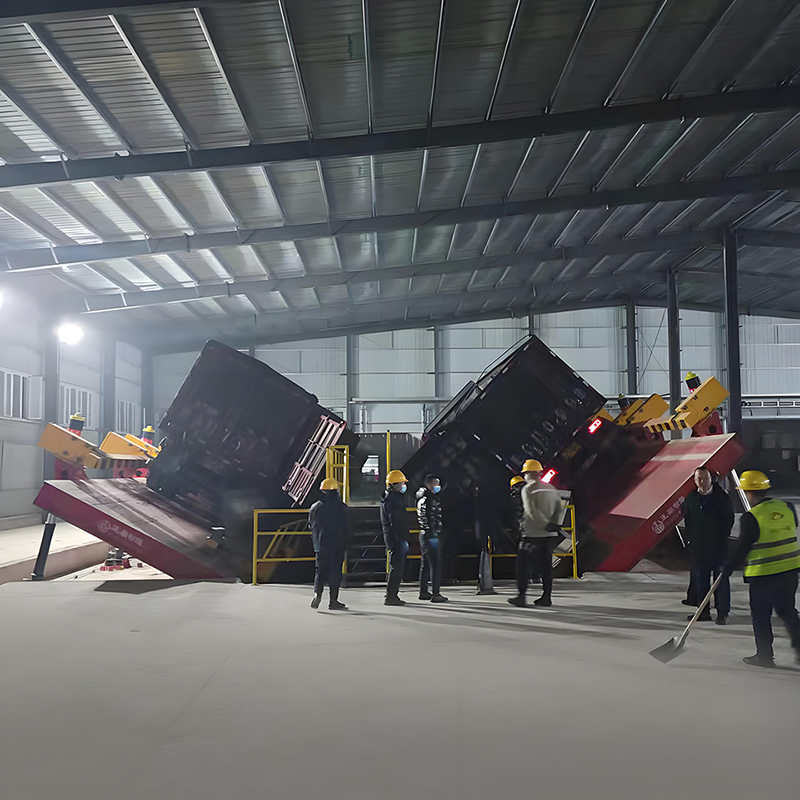
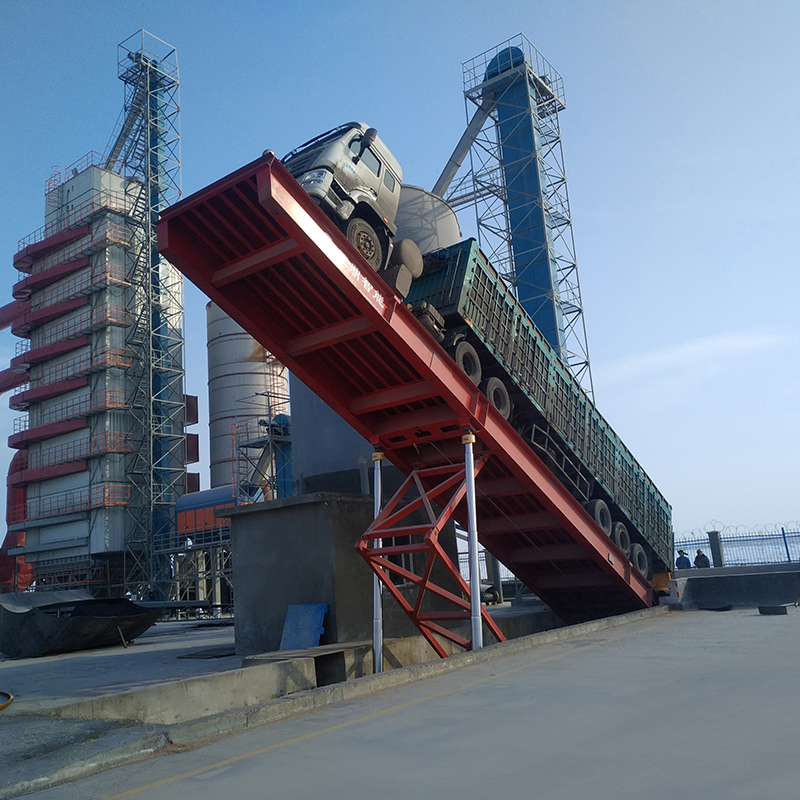
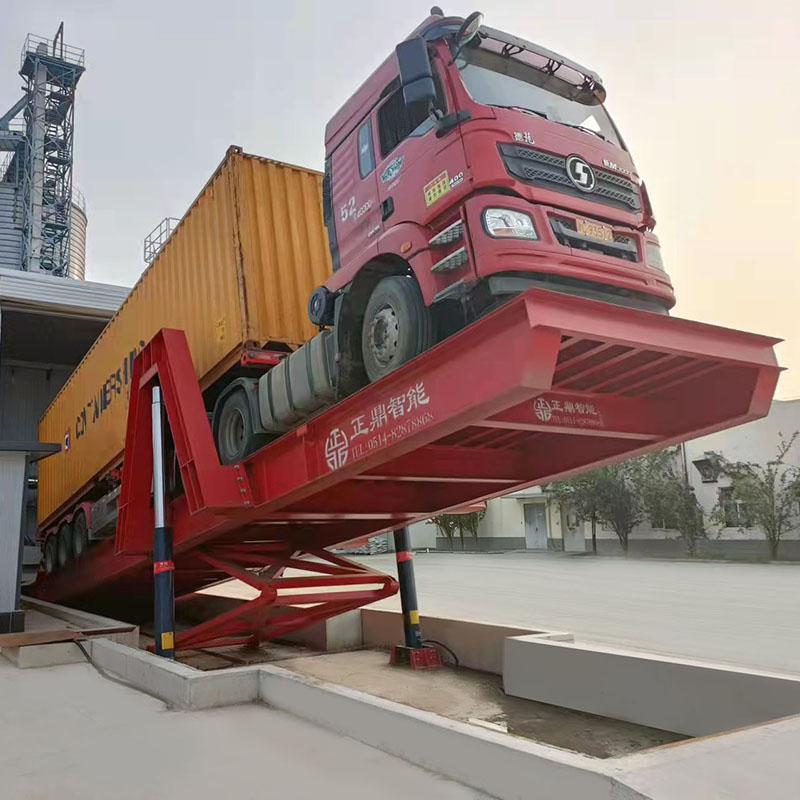
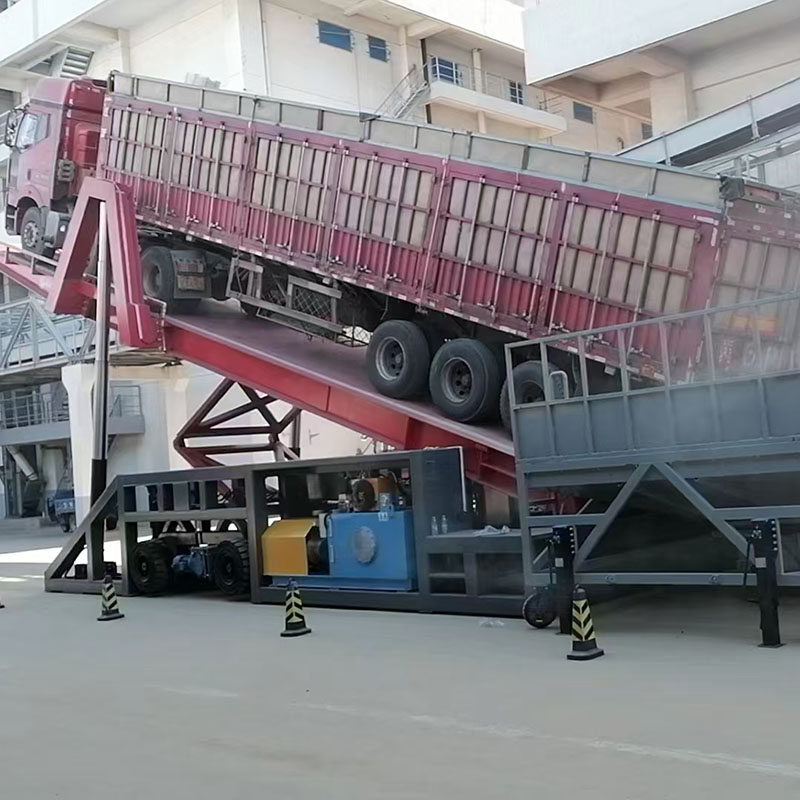
Side-turn truck dumpers are engineered systems for unloading bulk materials from heavy-duty trucks by rotating or tilting the loaded vehicle laterally. Unlike conventional rear dumpers, which raise the truck bed toward the rear, a side-turn dumper discharges material toward the side of the platform. This operating principle provides a practical solution for facilities that need high unloading capacity but have limited longitudinal space, multiple discharge points, or difficult-to-handle materials.
Modern industrial facilities increasingly require unloading equipment that combines high lifting capacity, safe operation, reliable material flow, and efficient use of available land. Coal terminals, cement plants, ports, grain storage bases, steel mills, thermal power plants, and mineral processing facilities may receive hundreds of truckloads every day. If the unloading process is slow, difficult to control, or dependent on extensive truck maneuvering, the entire material-handling system can become a bottleneck.
A side-turn truck dumper addresses these challenges by providing lateral unloading at a controlled angle. The equipment can be configured with standard and large-angle tilting modes, optional vibration equipment, personnel access passages, and material-guiding devices. These options allow the dumper to be adapted to different vehicle dimensions, material characteristics, site layouts, and downstream conveying systems.
Jiangsu Zhengding Intelligent Equipment Co., Ltd. develops and manufactures automated loading and unloading equipment for vehicles, containers, ships, and industrial logistics applications. Its side-turn truck dumpers are designed for demanding environments in which stable operation, customized engineering, and efficient unloading are essential. The company’s product portfolio also includes rear dumpers, car loading equipment, container flippers, and other specialized material-handling systems.
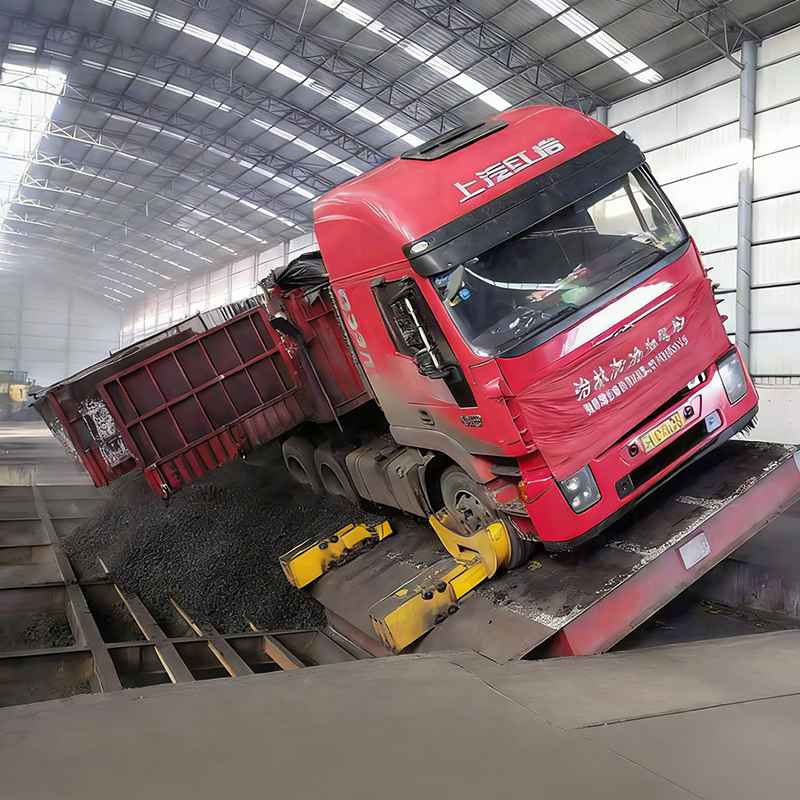
Side-Turn Truck Dumpers
1. What Is a Side-Turn Truck Dumper?
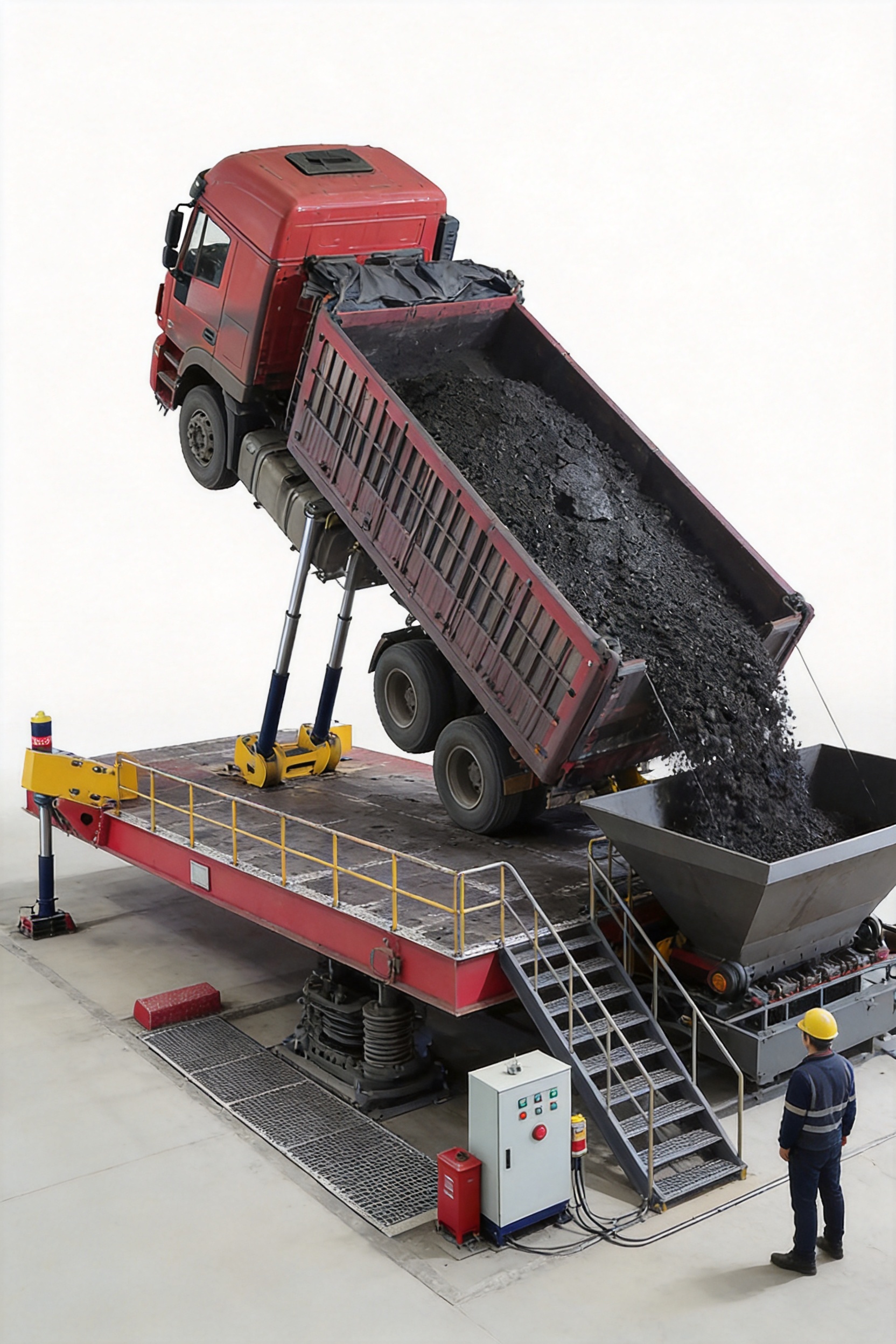
A side-turn truck dumper is a heavy-duty unloading machine that lifts and tilts a truck or truck-mounted container sideways. The truck is positioned on a reinforced platform, secured using appropriate safety devices, and then raised by a hydraulic lifting system. As the platform reaches the specified angle, the bulk material flows from the vehicle body into an adjacent receiving hopper, conveyor, pit, or transfer system.
The equipment is designed for standard heavy-duty trucks carrying materials such as coal, iron ore, mineral fines, grain, cement, feed, and other bulk products. Its lateral discharge arrangement is particularly useful where a rear discharge system would require excessive installation length or create difficulties with truck circulation.
Side-turn dumpers are also suitable for materials that do not flow easily under ordinary tipping conditions. Wet sticky coal, iron ore fines, damp minerals, and materials that have compacted during transportation may remain attached to the truck bed after a normal partial tilt. For these applications, the dumper can be equipped with a larger lifting angle and, where required, a vibration device to help release material from the vehicle floor and sidewalls.
The basic operating sequence generally includes truck positioning, safety-device engagement, platform lifting, lateral discharge, platform return, safety-device release, and truck departure. The system can be operated semi-automatically, while additional automation, control, weighing, interlocking, and conveyor integration can be considered as part of a complete project solution.
Core operating principle
The central design feature is the side rotation of the loading platform. Instead of requiring the truck body to rise directly behind the vehicle, the platform moves the truck toward a side discharge position. This makes it possible to place the receiving hopper or conveyor alongside the truck path and to organize the installation around a compact material-transfer point.
Hydraulic cylinders, structural frames, pivot assemblies, locking devices, control systems, and safety interlocks work together to support the loaded vehicle during the lifting cycle. Because the platform must handle substantial dynamic loads, the structural and hydraulic design must be matched to the maximum lifting weight, truck dimensions, center of gravity, and required discharge angle.
Semi-automatic operation
The standard side-turn dumper described for this application uses a semi-automatic operating concept. The operator controls the unloading cycle, while safety devices require manual suspension or engagement according to the operating procedure. This arrangement balances operational control with mechanical assistance and is suitable for facilities where trained personnel supervise each vehicle unloading cycle.
For large industrial installations, the control system may be integrated with vehicle detection, traffic signals, conveyor operation, weighing systems, emergency-stop circuits, and plant management procedures. The degree of automation can therefore be selected according to the customer’s production requirements and site conditions.
2. Main Product Features
Dual tilting modes for different materials
The equipment provides two principal maximum lifting-angle options: 45 degrees as the standard mode and 55 degrees as the large-angle mode. The 45-degree position is suitable for materials that flow relatively easily and for routine unloading applications. The 55-degree position provides additional assistance when the material has poor fluidity or tends to remain in the truck body.
The large-angle configuration is especially valuable for wet sticky coal, iron ore fines, damp mineral products, and other materials that may bridge, cake, or adhere to the vehicle floor. By increasing the gravitational component acting along the vehicle body, the larger tilt angle helps improve discharge completeness and reduce the need for manual cleaning.
Optional vibration device
A vibration device can be added when the material frequently cakes at the bottom of the truck or remains trapped in corners. Controlled vibration helps loosen material deposits and improves the removal of products with poor flow characteristics. This option is not intended to replace correct material preparation or safe operating procedures, but it can significantly improve unloading performance for difficult bulk products.
The vibration system should be selected according to the truck structure, material density, platform design, and plant noise requirements. Proper engineering is important because uncontrolled vibration may create unnecessary mechanical stress. When correctly specified, the device provides a practical method for improving discharge consistency and reducing residual material.
Operation passage for inspection and maintenance
An optional operation passage can be installed to provide personnel access around the equipment. This passage supports safety inspections, lubrication activities, visual checks, cleaning, and routine maintenance. Access provisions are particularly important in large installations where the dumper is integrated with hoppers, conveyors, dust-control systems, and guarding structures.
A properly designed passage should include suitable walking surfaces, guardrails, access points, lighting provisions, and separation from moving components. By making inspection areas easier to reach, the passage can help maintenance teams identify wear, leakage, loose fasteners, or abnormal conditions before they develop into more serious failures.
Material-guiding device
A material-guiding device can be configured to direct the discharged product toward the receiving area. Without adequate guidance, some material may fall onto the platform or surrounding floor, increasing cleanup work and creating a potential slip, dust, or housekeeping hazard.
The guiding arrangement can be adapted to the hopper opening, conveyor location, product characteristics, and required discharge trajectory. It is especially helpful when handling fine powders, granular products, or materials that spread laterally as the vehicle is raised.
Low-profile and modular design approach
Side-turn truck dumpers are commonly designed with low-profile platforms and modular structural arrangements. A low-profile configuration can simplify truck access and help reduce the depth or height requirements of the surrounding civil works. The modular approach allows key components to be adjusted for different truck sizes, discharge heights, platform dimensions, and site layouts.
Modularity also supports project planning and future expansion. A plant may initially install a standard unloading arrangement and later add vibration, access, material-guiding, dust-control, metering, or conveyor integration features as operating requirements develop.
3. Main Technical Parameters
The following models represent the principal product configurations provided for side-turn truck unloading applications. Final selection should be confirmed through engineering review of the truck type, total vehicle weight, center of gravity, body dimensions, material characteristics, discharge height, and civil foundation conditions.
| Model | Applicable Platform Size L × W | Maximum Lifting Weight | Maximum Lifting Angle |
|---|---|---|---|
| TQXCB 80 | 16 × 3 m or 18 × 3 m | 80 t | 45° / 55° |
| TQXCB 100 | 18 × 3 m or 20 × 3 m | 100 t | 45° / 55° |
| TQXCB 150 | 18 × 3 m, 20 × 3 m, or 22 × 3 m | 150 t | 45° / 55° |
The maximum lifting weight is a key selection parameter, but it should not be considered in isolation. The design must account for the combined weight of the truck, body, payload, and any special equipment mounted on the vehicle. Truck wheelbase, axle distribution, body sideboard height, tire position, and center of gravity may also influence the required platform configuration.
The available platform lengths allow the equipment to serve a range of vehicle sizes. A shorter platform may be suitable for specific rigid trucks, while longer configurations may be needed for larger bodies or special trailers. The three-meter platform width shown in the technical range provides a foundation for standard applications, with final dimensions confirmed through project-specific design.
4. Advantages Over Traditional Rear Dumpers
Traditional rear dumpers remain useful in many facilities, but they require a different site arrangement. The truck is raised toward the rear, and the receiving hopper or pit is positioned behind the platform. This configuration often requires a long approach and exit area, additional truck maneuvering, and adequate clearance behind the dumper.
A side-turn dumper discharges laterally. The receiving hopper can be positioned beside the truck path, while the vehicle may enter and leave in a relatively straight line. This difference can create major advantages in facilities with limited length, existing buildings, multiple discharge points, or difficult traffic flows.
Reduced longitudinal footprint
A typical rear-dumper installation may require approximately 25 to 35 meters for the platform, approach, and exit arrangement, depending on the truck type and site design. A side-turn installation may require approximately 12 to 18 meters in the longitudinal direction, although it needs additional width on the discharge side. The precise dimensions depend on the truck, platform, safety clearances, hopper, conveyor, and access requirements.
In practical planning, side-turn systems are often considered where the facility has adequate width but insufficient length. Existing loading bays, narrow industrial plots, port transfer zones, and retrofitted plants may benefit from this layout. The equipment can sometimes be installed inside an existing building without extending the structure length, provided that the building height, floor strength, side clearance, and discharge arrangement are suitable.
Simplified truck maneuvering
Rear dumpers may require a vehicle to back into position, align carefully with the platform, wait for clearance, and then exit forward. In busy facilities, reversing movements can increase cycle time and require additional traffic control. The risk of contact with structures, equipment, or other vehicles may also increase if the site is congested.
Side-turn dumpers can often support a drive-through arrangement. The truck approaches the platform, stops in the unloading position, completes the tipping cycle, returns to the normal position, and leaves forward. This operating pattern can reduce repositioning requirements and make vehicle circulation easier to understand for drivers and operators.
Flexible discharge positioning
Because the receiving system is located beside the platform, the discharge point can be arranged along the side of the truck path. This provides flexibility when a facility needs to feed more than one hopper, conveyor, storage line, or processing unit. The lateral discharge direction can also simplify the connection between the dumper and an existing material-handling route.
By contrast, rear dumpers typically discharge toward a fixed area behind the platform. Changing that arrangement may involve substantial civil modifications, extended conveyors, or additional transfer equipment. Side-turn technology can therefore be advantageous during plant upgrades and brownfield projects.
Improved containment potential
Material spillage depends on many factors, including truck condition, body design, material moisture, loading accuracy, platform alignment, hopper dimensions, and operator practice. Nevertheless, a properly designed side discharge arrangement can help improve containment by directing the material toward a nearby receiving device and reducing the distance between the vehicle body and hopper opening.
The optional material-guiding device further supports controlled discharge. Reduced spillage can lower cleanup labor, improve housekeeping, decrease product loss, and reduce the possibility of material accumulating around moving equipment.
Comparison table
| Attribute | Traditional Rear Dumper | Side-Turn Truck Dumper | Typical Practical Benefit |
|---|---|---|---|
| Discharge direction | Rearward | Lateral | Allows a side-positioned receiving system |
| Longitudinal site length | Often about 40–50 m for the complete arrangement | Often about 18–25 m for the complete arrangement | Better suitability for length-constrained sites |
| Truck movement | May require backing and repositioning | Often supports straight drive-through movement | Simpler traffic flow |
| Hopper location | Behind the platform | Alongside the platform | More flexible integration with side conveyors |
| Large-angle unloading | Depends on equipment configuration | 45° and 55° options | Improved handling of poor-flow materials |
| Optional material assistance | Project-dependent | Vibration and guiding devices available | Better adaptation to sticky or caked products |
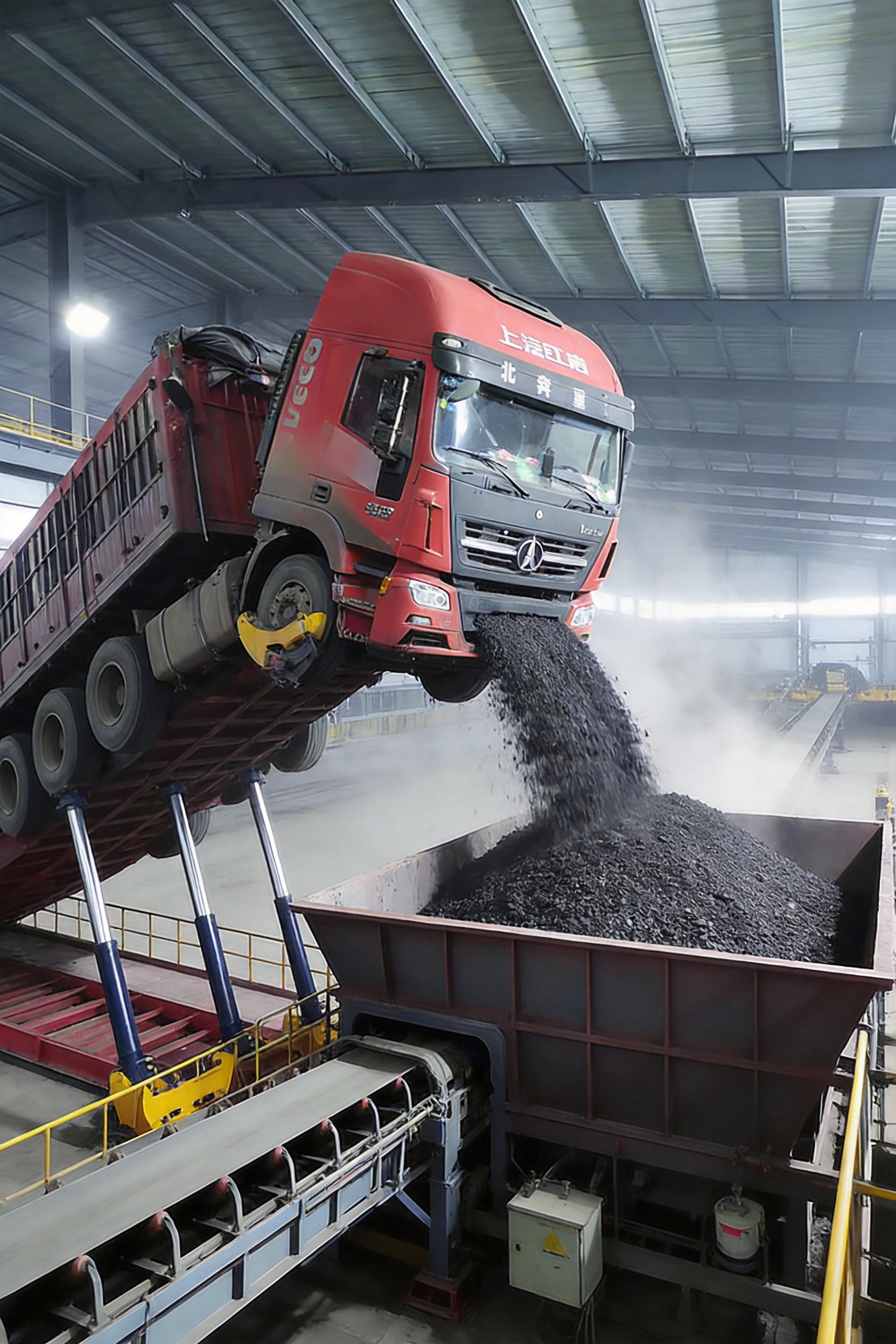
5. Handling Difficult Bulk Materials
Bulk material behavior is one of the most important factors in selecting an unloading system. Dry, free-flowing grain may discharge quickly, while damp coal or fine iron ore can adhere to the truck floor and form compacted layers. Cementitious or powdery products may bridge at the outlet, and wet materials may move unevenly as the platform rises.
Wet sticky coal
Wet coal often presents a combination of high moisture, adhesion, and irregular flow. A conventional tipping cycle may leave a layer of coal on the truck bed, particularly when the vehicle body has rough surfaces or when the material has compacted during transport. The 55-degree tilting mode can improve the discharge angle, while a vibration device may help release material from the bottom of the body.
Coal handling also requires attention to dust, ignition prevention, housekeeping, and downstream conveyor design. The dumper should be integrated with suitable dust-control and fire-prevention procedures where required by the material and local plant standards.
Iron ore fines
Iron ore fines can exhibit poor flow behavior when moisture levels are high or when the material has been compressed by vibration during transport. The large-angle mode is useful in these conditions because it increases the tendency of the product to move toward the discharge side. Guiding equipment can help transfer the fines into the receiving hopper and reduce accumulation around the platform.
Grain and agricultural products
Grain, feed, and similar products generally flow more easily than wet mineral materials, but careful containment remains important. Spillage may attract pests, create slip hazards, and increase product loss. A side-turn dumper can be integrated with storage pits, receiving conveyors, weighing systems, and dust-control equipment used in grain processing and storage bases.
Cement and powdery products
Cement and other fine materials require attention to dust containment and hopper geometry. The receiving system should be designed to prevent excessive air displacement and uncontrolled dust release. A material-guiding device may help ensure that product enters the intended hopper rather than falling onto the platform or surrounding floor.
6. Advanced Manufacturing and Engineering Strengths
The performance of a heavy-duty dumper depends not only on its operating concept but also on the quality of its engineering, manufacturing, assembly, commissioning, and service processes. Jiangsu Zhengding Intelligent Equipment Co., Ltd. positions its side-turn truck dumpers within a broader intelligent logistics equipment portfolio and provides systematic loading and unloading solutions for different industries.
Application-led engineering
A reliable dumper begins with a detailed understanding of the customer’s operating conditions. Important design inputs include the truck fleet, payload range, material density, moisture, flow characteristics, daily truck volume, required cycle time, discharge destination, available footprint, foundation conditions, weather exposure, and safety procedures.
By assessing these factors before final equipment selection, the engineering team can determine the appropriate lifting capacity, platform length, tilting mode, optional vibration arrangement, guiding system, access passage, and control concept. This application-led process is more effective than selecting a standard machine based only on nominal payload.
Heavy-duty structural design
The platform and supporting frame must withstand repeated loading cycles and uneven material movement. Structural design therefore considers static payload, dynamic forces, asymmetric loading, lifting torque, impact during truck positioning, and fatigue caused by continuous operation.
Material thickness, reinforcement layout, pivot support, hydraulic-cylinder mounting, weld design, and foundation connections all influence service life. A well-engineered structure distributes load efficiently and reduces local stress concentrations. The use of modular structural components also supports maintenance and future adaptation.
Hydraulic system optimization
The hydraulic system is responsible for controlled platform movement and must provide sufficient force throughout the lifting cycle. Hydraulic-cylinder sizing, pump capacity, valve response, oil filtration, pressure protection, hose routing, and cooling provisions are important considerations.
An optimized hydraulic system should lift smoothly, maintain stability during discharge, return the platform in a controlled manner, and protect the equipment against abnormal pressure or overload conditions. The system should also provide practical access for inspection and replacement of wear components such as seals, hoses, filters, and valves.
Modular configuration
Different industries require different unloading arrangements. A coal-fired power plant may prioritize high throughput and dust control. A grain facility may require weighing and contamination control. A cement plant may need integration with enclosed conveyors and a compact building layout. A port may require corrosion protection and outdoor weather resistance.
The modular configuration of the equipment allows the basic dumper to be combined with appropriate options rather than forcing every customer to use an identical arrangement. Vibration devices, operation passages, guiding equipment, control functions, and discharge interfaces can be incorporated according to the application.
Integration with intelligent logistics systems
Jiangsu Zhengding Intelligent Equipment Co., Ltd. focuses on intelligent automated loading and unloading equipment for automobiles, containers, ships, and related logistics applications. This broader product experience supports the integration of side-turn dumpers with plant logistics systems.
Possible integration points include vehicle identification, weighing, traffic lights, gate control, conveyor permissives, loading-position confirmation, emergency stops, safety interlocks, operation records, and maintenance notifications. The final control architecture depends on the customer’s automation platform and project requirements.
Manufacturing consistency and quality control
Large unloading equipment requires consistency from component fabrication through final assembly. Manufacturing quality involves accurate cutting, forming, machining, welding, surface preparation, hydraulic assembly, electrical installation, dimensional inspection, and functional testing.
Welded structures should be inspected according to the project’s quality requirements. Pivot and cylinder mounting points must maintain correct alignment. Hydraulic lines should be routed to reduce abrasion and protect them from unnecessary mechanical damage. Control panels and electrical components should be selected for the installation environment, particularly when the equipment operates outdoors or in dusty industrial areas.
Final inspection should include platform movement, limit positions, emergency-stop functions, safety interlocks, hydraulic pressure, abnormal noise, leakage checks, and compatibility with the intended truck dimensions. Factory testing and site commissioning together help confirm that the equipment performs correctly under actual operating conditions.
Experience across multiple industries
The company’s equipment is used in steel, chemical, cement, coal, grain, oil, food, feed, port, papermaking, and new energy applications. This cross-industry experience is valuable because it exposes the engineering team to different material behaviors, environmental conditions, vehicle types, and plant layouts.
Its products are also supplied to markets including Japan, Brazil, Egypt, Pakistan, India, the Middle East, and Southeast Asia. International applications require attention to different climates, operating practices, electrical requirements, safety expectations, transportation conditions, and installation arrangements.
7. Safety and Operational Management
Safety is fundamental to the operation of any truck dumper because the equipment handles high loads and creates moving zones around the vehicle. The operating area should be clearly marked, and only authorized personnel should control the unloading cycle.
Truck positioning
The truck must be positioned within the specified area before the lifting sequence begins. Wheel stops, guide structures, positioning indicators, cameras, sensors, or operator confirmation may be used according to the system design. The vehicle should be stable, properly aligned, and free from conditions that could interfere with platform movement.
Safety devices and interlocks
Safety devices are used to prevent unintended vehicle movement and to confirm that the lifting cycle can begin. The semi-automatic design requires manual suspension or engagement of safety devices as part of the operating procedure. Operators must follow the approved sequence and verify that personnel are clear of the danger zone.
Interlocks may be provided to prevent lifting when the truck is incorrectly positioned, the receiving conveyor is unavailable, a gate is open, or an emergency stop has been activated. The exact system depends on the project’s control design.
Exclusion zones
The lifting and discharge area should be treated as a restricted zone during operation. Personnel should not stand beside the truck, underneath the raised platform, or near the discharge path. Guardrails, barriers, warning lights, audible alarms, and clear operating signs can help control access.
Weather and outdoor operation
Side-turn dumpers can be installed outdoors when the hydraulic power unit, control panel, electrical components, and exposed steelwork are properly protected. Corrosion-resistant coatings, weatherproof enclosures, drainage, lighting, and suitable maintenance procedures should be incorporated into the installation.
Outdoor projects may also require consideration of wind, rain, snow, temperature, lightning, and visibility. In areas with severe weather, the control system can be configured with monitoring and automatic shutdown procedures. The operating manual should define the conditions under which lifting is restricted or suspended.
Routine inspection
Operators should inspect the platform, safety devices, hydraulic hoses, cylinder mounts, pins, guards, warning systems, and surrounding area before operation. Maintenance personnel should conduct periodic checks of oil levels, filters, seals, fasteners, welds, pivot components, electrical connections, and control-system functions.
The optional operation passage makes these checks easier and can improve the regularity of inspection. Planned maintenance is generally more effective than waiting for abnormal vibration, leakage, slow movement, or incomplete discharge to appear.
8. Installation and Project Planning
Successful installation requires coordination between the dumper manufacturer, civil contractor, plant owner, conveyor supplier, electrical contractor, and end users. The project should begin with a site survey and a review of all interface conditions.
Site assessment
The site assessment should record available length and width, building height, access routes, foundation conditions, groundwater, drainage, vehicle approach direction, discharge-side clearance, existing conveyors, power supply, control-room location, and maintenance access.
Truck drawings or accurate dimensional data are required to confirm wheelbase, overall length, width, body height, axle loads, payload, and the position of sideboards. If several truck models will use the dumper, the design should be checked against the complete fleet rather than only the largest or smallest vehicle.
Civil foundation requirements
The foundation must support the equipment loads and transfer forces safely into the ground. Foundation design depends on the dumper model, maximum lifting weight, platform arrangement, local soil conditions, seismic requirements, drainage, and the selected installation method.
Embedded plates, anchor bolts, pits, access openings, cable routes, drainage channels, and hopper interfaces should be coordinated before concrete work begins. Accurate foundation construction reduces installation delays and helps maintain correct platform alignment.
Receiving hopper and conveyor interface
The receiving hopper must be sized and positioned to capture the material discharged from the largest expected load. Its inlet geometry should consider the discharge angle, material trajectory, moisture, particle size, dust behavior, and downstream flow rate.
Conveyors, feeders, screens, magnets, weighing systems, and dust collectors may be connected after the hopper. The dumper control system should communicate with these devices so that unloading cannot begin if the receiving route is unavailable or blocked.
Commissioning
Commissioning usually includes mechanical inspection, hydraulic testing, electrical testing, no-load movement, controlled load testing, safety-function verification, truck positioning trials, material-flow testing, and operator training. The customer should receive operating instructions, maintenance recommendations, safety procedures, and spare-parts information.
9. Application Industries
Thermal power plants
Thermal power plants receive large quantities of coal and may need to unload trucks continuously during fuel supply operations. A side-turn dumper can be installed beside a receiving hopper or conveyor while preserving a relatively direct truck route. The large-angle option and vibration device are useful when coal arrives wet or compacted.
Ports and terminals
Ports and terminals often operate under strict space and scheduling constraints. Trucks may need to enter, unload, and leave quickly to avoid congestion. Side-turn equipment can support a compact traffic arrangement and can be connected to conveyors, transfer stations, storage yards, or ship-loading systems.
Iron and steel plants
Steel plants handle ore, fines, coal, slag-related materials, additives, and other bulk products. The equipment must withstand demanding operating cycles and industrial environmental conditions. A side-turn dumper equipped with a large tilting angle can help unload iron ore fines and other materials with poor flow characteristics.
Cement plants
Cement plants may receive coal, limestone, gypsum, clinker-related products, additives, and packaged or bulk raw materials. Limited building length can make a side discharge arrangement attractive. Guiding devices and enclosed receiving systems can help control spillage and dust near the unloading point.
Grain processing and storage bases
Grain facilities depend on efficient truck receiving, accurate weighing, product containment, and reliable transfer to storage or processing lines. Side-turn dumpers can be integrated with receiving pits and conveyors while minimizing truck reversing movements. Appropriate cleaning and food-handling procedures should be incorporated into the site design.
Chemical, feed, oil, and food industries
These industries may require customized surfaces, containment arrangements, dust control, explosion-risk assessment, or special cleaning procedures. The dumper configuration should be selected according to the product’s physical properties and the applicable plant safety standards.
10. Why Choose a Customized Side-Turn Solution?
A standard dumper model provides a starting point, but the best performance is achieved when the machine is matched to the complete unloading process. Customized engineering can improve throughput, reduce residual material, simplify maintenance, and make better use of the available site.
Customization may involve platform length, platform width, lifting capacity, maximum angle, hydraulic configuration, vibration intensity, truck restraints, hopper interface, material-guiding equipment, access passages, weather protection, control logic, weighing, dust suppression, and conveyor communication.
Jiangsu Zhengding Intelligent Equipment Co., Ltd. provides systematic solutions rather than limiting its work to the supply of an isolated machine. Its broader range of automatic loading and unloading equipment allows the company to consider vehicle handling, container handling, material transfer, and plant logistics as connected engineering tasks.
The company serves domestic and international users and has supplied equipment for demanding industrial groups and material-handling applications. Its experience with rear dumpers, side dumpers, car loading systems, container flippers, and related equipment supports a wide understanding of loading and unloading processes.
11. Frequently Asked Questions
Q1. What materials can a side-turn truck dumper unload?
A side-turn dumper can handle many bulk materials, including coal, iron ore, mineral fines, grain, cement, feed, and similar products. The final configuration depends on bulk density, moisture, particle size, adhesion, flowability, and the required unloading rate. Difficult materials such as wet sticky coal and iron ore fines may benefit from the 55-degree mode and an optional vibration device.
Q2. What is the difference between the 45-degree and 55-degree modes?
The 45-degree mode is suitable for standard unloading conditions and materials that flow relatively easily. The 55-degree mode provides a larger discharge angle for materials with poor fluidity, high moisture, or a tendency to cake inside the vehicle body. The appropriate mode should be selected according to material tests and actual operating conditions.
Q3. Can the equipment handle different truck sizes?
Yes. The platform can be configured for different truck dimensions and load capacities. The TQXCB series includes models with maximum lifting capacities of 80, 100, and 150 metric tons. Engineering confirmation is required for each truck type, including vehicle weight, body size, axle arrangement, wheelbase, and center of gravity.
Q4. Is a vibration device always necessary?
No. A vibration device is an optional feature intended for materials that cake at the bottom of the vehicle or fail to discharge completely under normal tilting. Free-flowing materials may not require it. Selection should consider the material properties, expected residual quantity, truck body construction, and plant operating objectives.
Q5. Does a side-turn dumper require more width than a rear dumper?
It may require additional width on the discharge side because the receiving hopper or conveyor is positioned beside the truck path. However, it generally requires considerably less longitudinal length than a rear-dumper arrangement. This makes it particularly suitable for sites with available width but limited length.
Q6. Can the dumper be installed outdoors?
Yes. Outdoor installation is possible when the hydraulic power unit, control panel, electrical components, and exposed structural surfaces are suitably protected. Weather protection, corrosion-resistant coatings, drainage, lighting, wind considerations, and maintenance access should be included in the project design.
Q7. How does the side-turn arrangement reduce truck maneuvering?
The truck can often approach, position, unload, return to its normal level, and exit forward without backing into a rear unloading pit. This drive-through pattern can simplify traffic management and reduce repositioning time. The exact cycle improvement depends on site layout, driver practice, vehicle type, and unloading material.
Q8. What maintenance is required?
Maintenance typically includes inspection of hydraulic cylinders, hoses, valves, filters, pivot points, pins, structural welds, fasteners, safety devices, electrical connections, and control functions. Operators should also check for material accumulation, leakage, abnormal vibration, and incomplete platform return. An operation passage can make inspection and routine service more convenient.
Q9. Can the equipment be connected to a plant automation system?
Yes. Depending on the project, the dumper may be connected with weighing systems, vehicle identification, conveyor controls, traffic signals, safety interlocks, emergency stops, and plant supervisory systems. The final automation scope should be defined during engineering and control-system design.
Q10. How should a customer select the correct model?
The selection should consider the combined truck and payload weight, truck dimensions, required platform length, material behavior, unloading rate, maximum angle, site footprint, discharge height, foundation conditions, environmental exposure, and downstream equipment. A site survey and truck-data review are recommended before final model confirmation.
12. Conclusion
Side-turn truck dumpers provide a practical alternative to traditional rear dumpers for facilities that require efficient bulk unloading in a compact layout. Their lateral discharge direction can reduce longitudinal space requirements, simplify truck movement, support flexible hopper positioning, and improve integration with existing conveyors and receiving systems.
The 45-degree and 55-degree tilting modes allow the equipment to serve both ordinary and difficult-flow materials. Optional vibration devices assist with caked products, operation passages improve inspection access, and material-guiding devices help control the discharge path. Together, these features make the dumper adaptable to coal, ore, grain, cement, feed, and other bulk-handling applications.
Jiangsu Zhengding Intelligent Equipment Co., Ltd. combines side-turn dumper technology with wider experience in automated vehicle, container, and logistics equipment. Its engineering approach emphasizes application assessment, modular configuration, hydraulic optimization, structural reliability, safety integration, and customized project support. For industrial users seeking to increase unloading efficiency while making better use of limited space, a properly engineered side-turn truck dumper can become an important part of the complete material-handling system.
References
1. Product technical information for TQXCB series side-turn truck dumpers, including model capacity, platform dimensions, and lifting-angle options.
2. Jiangsu Zhengding Intelligent Equipment Co., Ltd. company information and product portfolio documentation for automated vehicle, container, and industrial loading and unloading equipment.
3. Industrial bulk-material handling principles covering truck receiving, hopper design, conveyor integration, dust control, and material-flow management.
4. General engineering practices for hydraulic lifting equipment, structural platforms, safety interlocks, maintenance access, and industrial equipment commissioning.
5. Comparative site-planning considerations for side-discharge and rear-discharge truck unloading systems.


