
 English
 русский
 Español
 Français
 Português
 عربى





+86-13588556918
Content
- 1 1. The Role of Dehulling in Modern Oat Processing
- 2 2. Working Principle of the Centrifugal Oat Dehuller
- 3 3. Main Advantages of the Oat Dehuller
- 4 4. Technical Parameters and Capacity Selection
- 5 5. Oat Quality Factors That Affect Dehulling
- 6 6. Advantages Compared with Alternative Dehulling Methods
- 7 7. Manufacturing Strengths and Engineering Capability
- 8 8. Installation and Process-Line Integration
- 9 9. Operation, Adjustment, and Maintenance
- 10 10. Product Quality and Economic Benefits
- 11 11. Selecting the Right Supplier and Equipment Partner
- 12 12. Practical Selection Checklist
- 13 13. Frequently Asked Questions
- 13.1 Q1: What is the main purpose of an oat dehuller?
- 13.2 Q2: How does the centrifugal Oat Dehuller remove the hull?
- 13.3 Q3: What is the one-time dehulling rate?
- 13.4 Q4: Can the machine process different oat varieties?
- 13.5 Q5: Can it process grains other than oats?
- 13.6 Q6: How can operators reduce groat breakage?
- 13.7 Q7: What are the main wear parts?
- 13.8 Q8: How often should the dehuller be inspected?
- 13.9 Q9: Does the dehuller need an aspiration system?
- 13.10 Q10: How should a buyer select between the TTK56 and TTK60?
- 13.11 Q11: Can the machine be integrated into an automated processing plant?
- 13.12 Q12: What support can an experienced industrial equipment manufacturer provide?
- 14 14. Conclusion
- 15 References
- 16 Product: Oat Dehuller
Oat dehulling is one of the most important operations in the production of food-grade oat groats, rolled oats, oat flour, animal feed, and other oat-based products. Oats are protected by a firm outer hull that must be removed efficiently before further processing. However, the hull is closely associated with the kernel, and careless mechanical treatment can crack or crush the groat. An effective dehulling system must therefore achieve a careful balance between strong hull separation, high throughput, low energy consumption, and protection of the valuable inner kernel.
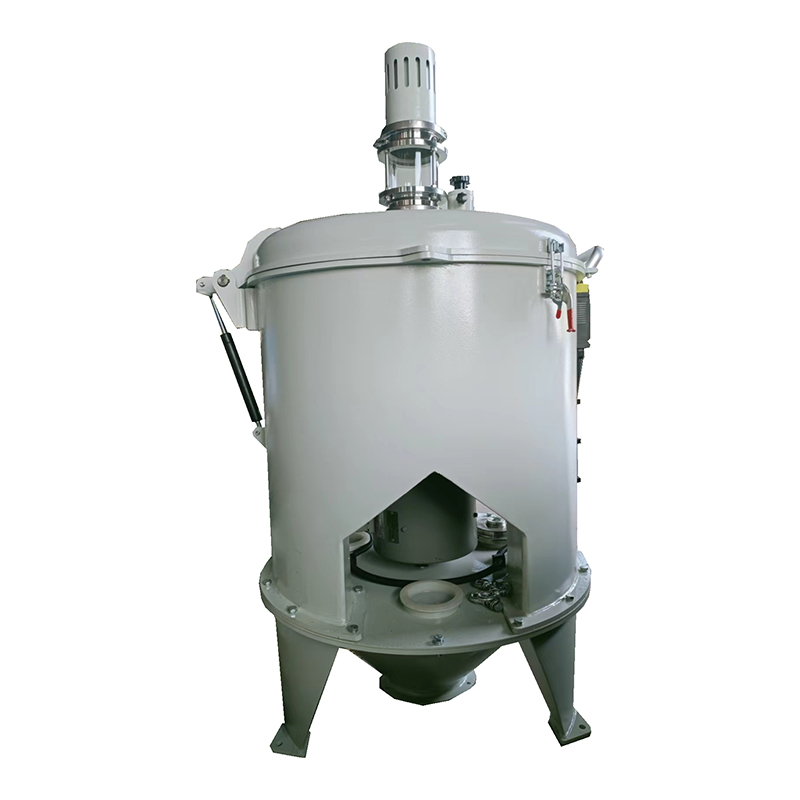
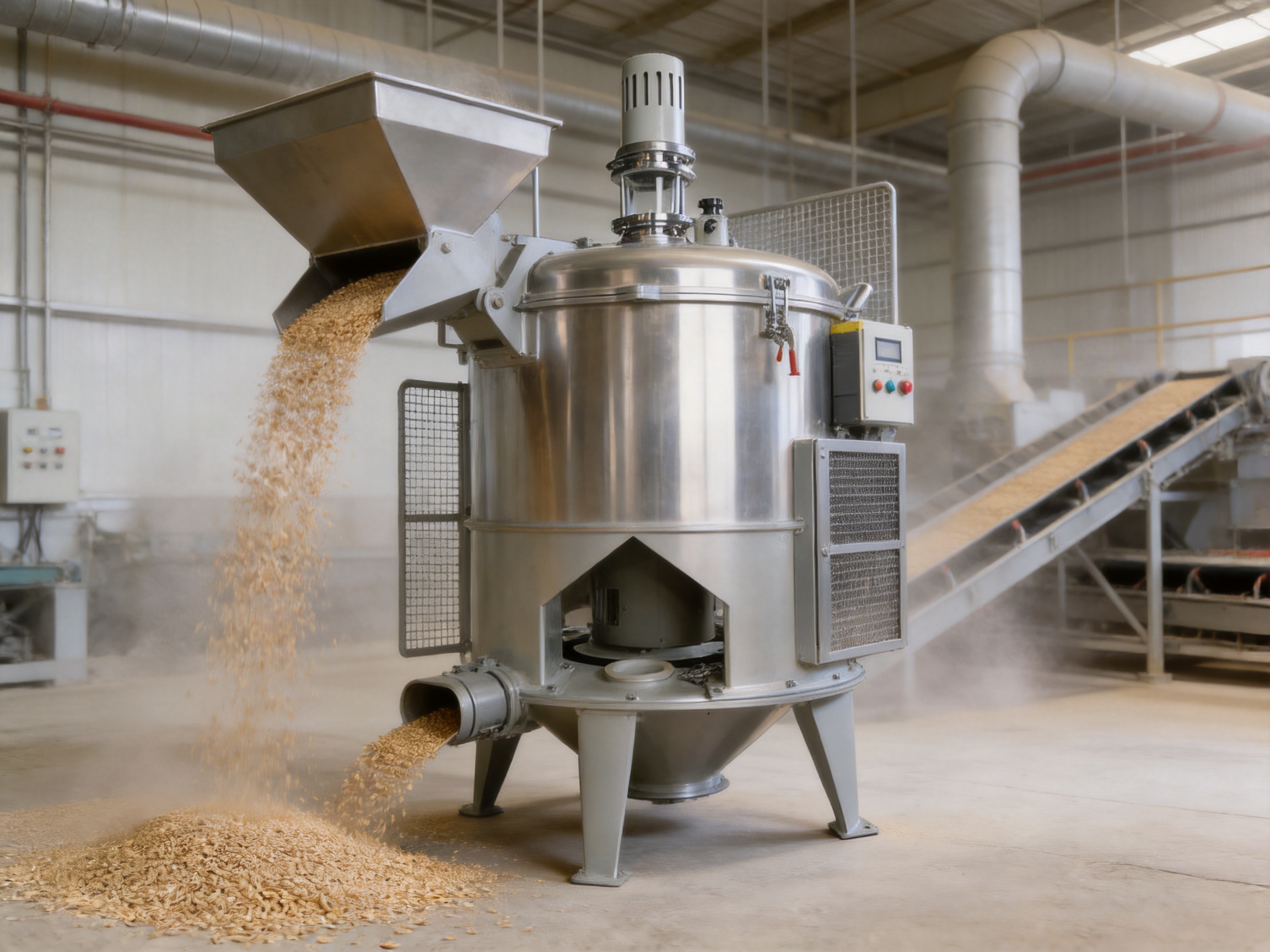
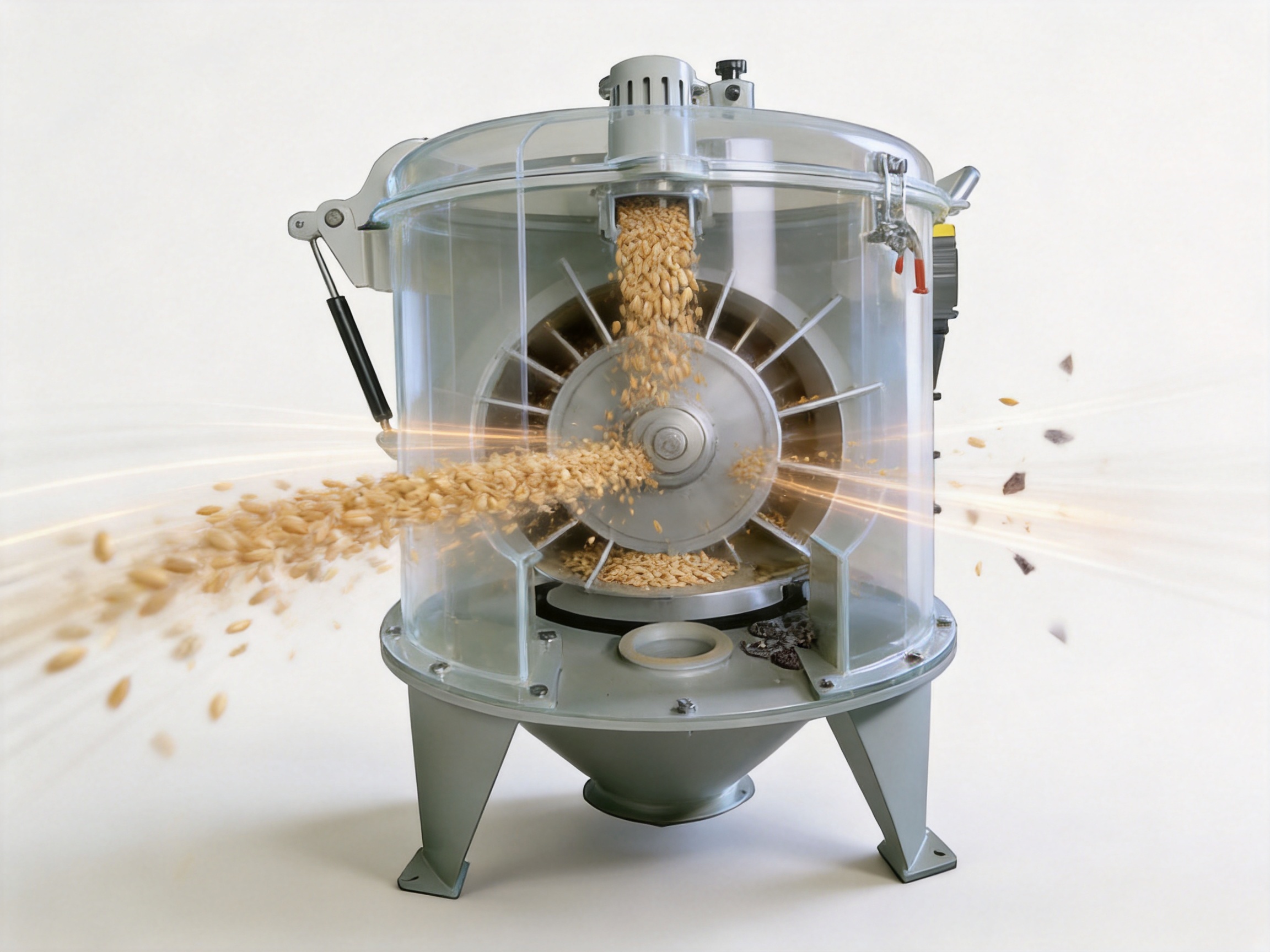
The Oat Dehuller is a centrifugal oat dehulling machine developed for this purpose. It uses a high-speed rotating centrifugal disk to accelerate oat kernels toward an impact ring. Guide slots inside the disk control the direction of movement, helping the kernels strike the impact surface in a consistent manner. The impact causes the oat hulls to crack and separate from the groats, while the machine design helps limit unnecessary kernel breakage. The resulting mixture can then be routed to aspiration, screening, or other downstream separation equipment.
Although designed primarily for oats, the centrifugal dehuller can also be used for selected coarse grains that are difficult to dehull, including barley, rye, and broomcorn millet. Its adjustable operating speed allows processors to respond to differences in grain variety, kernel size, moisture content, and hull attachment strength.
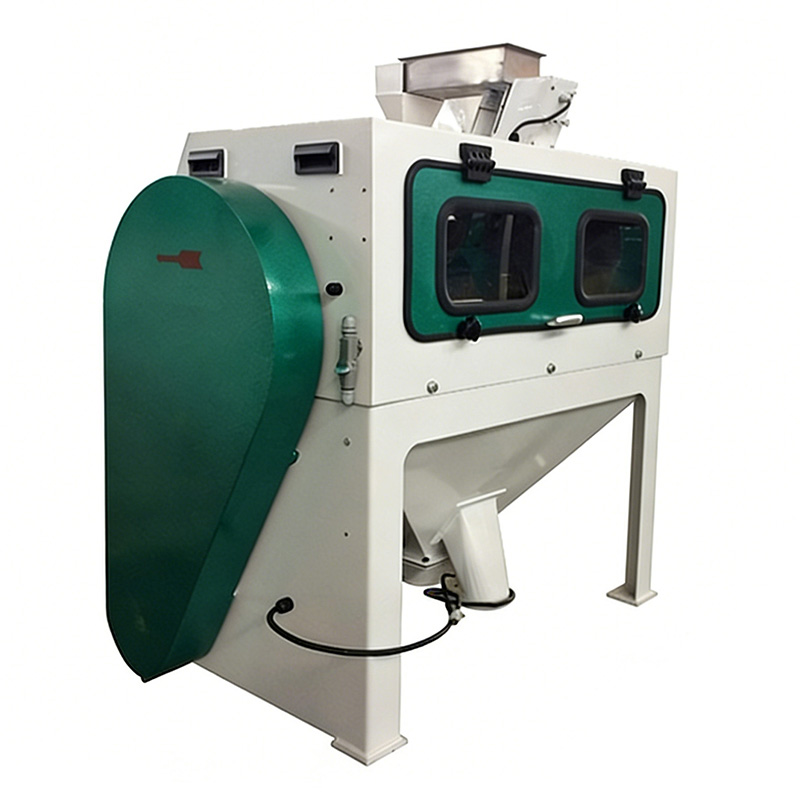
Oat Dehuller
1. The Role of Dehulling in Modern Oat Processing
Oat kernels arrive at a processing facility enclosed in a fibrous outer hull. This hull protects the grain during cultivation, harvesting, transportation, and storage, but it is not suitable for most human-food applications. It contains a high proportion of fiber and may carry dust, field material, and other impurities. Before oats can be stabilized, steamed, rolled, cut, milled, or packaged, the hull must be separated from the groat.
The groat is the edible portion of the oat kernel. It contains the nutritional components that make oats valuable, including carbohydrates, proteins, lipids, dietary fiber, vitamins, and minerals. Maintaining the physical integrity of the groat is essential because whole groats generally have greater commercial value than excessive quantities of broken material. Groat quality also affects the appearance, storage performance, cooking characteristics, and suitability of products such as rolled oats and steel-cut oats.
Traditional dehulling methods may rely on abrasive surfaces, impact mechanisms, or repeated mechanical passes. These systems can remove the hull, but their performance may vary considerably with grain condition. Excessive impact can increase breakage, while insufficient impact can leave hulls attached to the groat. A modern centrifugal design addresses this challenge by controlling the path and velocity of the kernel before impact.
The Oat Dehuller is designed around a controlled centrifugal process. Rather than allowing kernels to move randomly through the working chamber, the internal guide slots direct them toward the impact ring. This controlled movement improves the consistency of contact between the grain and the impact surface. The objective is to fracture the hull while reducing direct, destructive force on the groat.
Why consistent dehulling matters
Inconsistent dehulling creates several problems. Undehulled oats may reduce the quality of the finished product and require recirculation. Excessively broken groats can lower yield and increase the quantity of fines. A large amount of hull dust can place additional demands on aspiration and filtration equipment. Inconsistent treatment can also make downstream thermal stabilization and rolling operations more difficult to control.
A well-adjusted dehuller helps create a more uniform feed for the remainder of the processing line. This supports stable operation of conveying, aspiration, grading, steaming, flaking, milling, and packaging systems. For this reason, dehulling is not simply an isolated machine operation; it is a key performance point within the entire oat processing plant.
2. Working Principle of the Centrifugal Oat Dehuller
The Oat Dehuller uses centrifugal force as the primary means of accelerating the grain. Prepared oats enter the machine and are distributed onto a rotating centrifugal disk. As the disk rotates at high speed, the kernels move outward under centrifugal force. The guide slots in the disk maintain a more consistent direction and help position the kernels for impact.
When the kernels reach the outer portion of the disk, they strike the impact ring. The sudden change in velocity produces a mechanical impact that cracks and breaks the oat hull. Because the hull is more brittle and less resilient than the groat, a properly selected operating speed can separate the outer covering without causing excessive damage to the edible kernel.
After impact, the dehulled groats, loosened hulls, and any residual materials leave the working area for separation. In a complete processing line, pneumatic aspiration can remove the lighter hulls, while screens or grading equipment can separate groats according to size. If a small percentage of kernels remains incompletely dehulled, those kernels may be returned for an additional pass depending on the required product specification.
Controlled acceleration instead of uncontrolled impact
A major difference between a controlled centrifugal dehuller and a basic impact machine is the way energy is transferred to the grain. A fixed-impact system may expose kernels to similar mechanical conditions regardless of variety or moisture. A centrifugal system with adjustable speed gives operators more control over the energy applied to the material.
For relatively dry oats with easily detachable hulls, a lower or moderate speed may be sufficient. For varieties with stronger hull attachment, a higher speed may be selected. If the grain is more fragile or contains a higher proportion of small kernels, operators can reduce the speed to help protect groat integrity. This adjustability is especially valuable for facilities that process different varieties or purchase oats from multiple growing regions.
The importance of guide slots
The guide slots are central to the machine’s operating principle. They help maintain the direction of kernel movement as the grain travels across the centrifugal disk. A consistent travel path means that the impact ring receives kernels under more predictable conditions. This supports stable dehulling performance and helps reduce random collisions inside the machine.
Since the guide slots are exposed to repeated contact with fast-moving grain, they must resist abrasion and deformation. The Oat Dehuller uses wear-resistant materials for the guide slots and other high-contact components. This design increases service life, reduces the frequency of replacement, and helps preserve the intended operating geometry over an extended maintenance cycle.
3. Main Advantages of the Oat Dehuller
High dehulling rate
The Oat Dehuller can achieve a one-time dehulling rate of up to 80 percent under suitable operating and material conditions. The actual result depends on oat variety, moisture content, kernel size distribution, feed preparation, machine adjustment, and separation settings. Even when a final production line requires recirculation, a strong first-pass result can reduce the quantity of material needing additional treatment.
High first-pass dehulling performance offers several practical benefits. It reduces the load on return conveyors and recirculation equipment, decreases the amount of material repeatedly exposed to impact, and supports a more stable production rate. It can also reduce the quantity of unprocessed material entering downstream equipment, improving the consistency of the final groat stream.
Low groat breakage
Removing the hull is only valuable if the groat remains commercially useful. Excessive breakage reduces whole-groat yield and can affect the appearance of finished oat products. The centrifugal disk and impact ring are designed to provide effective hull cracking while limiting unnecessary crushing and abrasion.
Low breakage is especially important for producers of rolled oats, whole oat groats, and premium cereal products. Whole or large groat pieces usually command better value than small fragments. They also provide more predictable behavior during steaming, flaking, cooking, and packaging. By maintaining a better balance between dehulling force and kernel protection, the machine can contribute to improved product quality.
Adjustable rotational speed
One of the machine’s most important advantages over less adaptable dehulling equipment is its adjustable rotational speed. Operators can change the speed of the centrifugal disk according to the material being processed. Relevant factors include moisture content, oat variety, kernel size, hull strength, and the desired balance between dehulling efficiency and breakage.
Speed adjustment makes the machine suitable for more than one raw material condition. It also allows operators to respond to seasonal variations. Oats harvested during different periods may have different moisture levels and physical characteristics. A fixed-speed machine may require compromises, whereas an adjustable centrifugal design provides a wider operating range.
Low energy consumption
Energy efficiency is increasingly important for grain processors because electrical consumption directly affects operating cost. The Oat Dehuller is designed to deliver effective mechanical separation without relying on unnecessary processing passes. Its centrifugal working principle concentrates energy in the dehulling zone, while the controlled material path helps avoid inefficient movement inside the machine.
Low energy consumption can reduce the cost per ton of processed oats. It may also help lower the total electrical demand of a processing line, especially when the dehuller is integrated with appropriately sized conveyors, aspiration equipment, elevators, and grading systems. Actual energy performance depends on throughput, speed, raw material condition, and the complete plant configuration.
Wear-resistant working components
The guide slots and impact ring are subject to high-speed frictional contact with the grain. If these parts wear rapidly, the machine may experience more frequent shutdowns, rising maintenance costs, and changes in dehulling performance. To address this issue, the Oat Dehuller uses special wear-resistant materials in key contact components.
Wear-resistant components provide more than a longer service interval. They help preserve the shape and position of the working surfaces. Stable working geometry supports more consistent impact conditions and can help maintain dehulling performance between inspections. Fewer component replacements also reduce labor requirements and spare-part consumption.
Suitability for multiple coarse grains
Although oats are the primary application, the machine can also be used for other difficult-to-dehull coarse grains, such as barley, rye, and broomcorn millet. Each grain requires appropriate testing and adjustment. The operating speed, feed rate, and downstream separation settings may need to be changed for different materials.
Multi-grain capability can be valuable for agricultural cooperatives, feed mills, small grain processors, and diversified food-processing facilities. Instead of purchasing a separate machine for every grain type, a facility may use one adaptable centrifugal platform for several compatible applications. Product trials should be conducted before commercial production to verify dehulling rate, breakage, capacity, and separation quality.
4. Technical Parameters and Capacity Selection
The available Oat Dehuller models are designed for different production requirements. The following table presents the principal technical parameters supplied for oat processing. Output is based on oats and may vary according to material characteristics, feeding conditions, and operating adjustments.
| Product Model | Motor Power | Rated Output Based on Oats | Reported Dehulling Performance |
|---|---|---|---|
| TTK56 | 3 kW | 0.8–1.5 t/h | ≥75% |
| TTK60 | 5.5 kW | 2.5–3.2 t/h | ≥75% |
The rated values provide a starting point for equipment selection. A processor should not choose a machine solely by comparing the nominal output with annual raw material volume. Operating hours, seasonal production patterns, storage capacity, labor availability, planned expansion, and desired product quality should also be considered.
Small farm and cooperative applications
A small farm or cooperative may process several hundred tons of oats annually, often during a concentrated harvest season. For such operations, a compact dehuller with a capacity near the lower end of the available range may be appropriate. The main priorities may include manageable investment, simple operation, flexible scheduling, low maintenance requirements, and the ability to process different batches without complex changeovers.
When production is seasonal, operators should estimate realistic annual running hours rather than assuming continuous operation. A machine that appears large enough based on average annual volume may still be undersized if the entire crop must be processed within a short period. Conversely, excessive oversizing can increase capital costs and make stable feeding more difficult.
Commercial and factory-scale applications
Commercial processors generally require higher throughput, stable long-duration operation, and integration with automated conveying and separation equipment. For these facilities, the dehuller should be evaluated as part of the entire production line. The capacity of upstream cleaning equipment, storage bins, elevators, aspiration systems, screens, and downstream stabilization equipment must be coordinated with the dehuller’s actual operating rate.
A factory may also require a bypass line, parallel units, or a recirculation arrangement. These choices depend on the required annual production, production schedule, product specifications, and the level of redundancy required. A properly engineered line can maintain production during inspection or servicing of one machine, which is particularly important for high-volume operations.
Using a safety margin
A practical capacity calculation divides the expected annual volume by the number of planned operating hours and then adds a reasonable safety margin. The margin allows for variations in raw material supply, cleaning downtime, maintenance, operator breaks, and future production growth. Selecting a machine with no capacity reserve may create a bottleneck when actual production conditions differ from the original plan.
Capacity should also be considered alongside dehulling quality. A machine running beyond its stable operating range may produce more material per hour but increase incomplete dehulling, breakage, or uneven feeding. The best selection is not necessarily the machine with the largest nominal output; it is the machine that delivers the required quality at a sustainable operating rate.
5. Oat Quality Factors That Affect Dehulling
Moisture content
Moisture has a direct influence on hull flexibility, kernel resilience, and the energy required to separate the hull. Oats that are too dry may be more susceptible to groat breakage, while oats with excessive moisture may resist clean hull fracture or create feeding and separation difficulties. Operators should maintain suitable and consistent raw material conditions before dehulling.
Moisture variation within a batch can also lead to uneven results. Some kernels may be properly dehulled while others remain partially covered or become damaged. Good storage management, representative sampling, and suitable preconditioning help the centrifugal dehuller operate more consistently.
Kernel size distribution
Oat lots often contain a mixture of large, medium, and small kernels. Different kernel sizes may respond differently to centrifugal acceleration and impact. Small kernels can be more vulnerable to excessive force, while large kernels may require sufficient energy to release the hull. Screening or grading before dehulling may improve uniformity when the raw material contains a particularly wide size distribution.
Oat variety and hull attachment
Oat varieties differ in hull structure, kernel shape, and hull attachment strength. These differences influence the speed and impact conditions needed for effective dehulling. A setting that works well for one variety may not be ideal for another. Adjustable speed allows the operator to compensate for some of these differences, but sample testing remains the best method for determining the correct operating range.
Cleaning before dehulling
Foreign materials such as stones, metal, soil, straw, and oversized particles should be removed before oats enter the dehuller. Pre-cleaning protects the centrifugal disk and impact ring, reduces unnecessary wear, and improves product hygiene. It also helps prevent blockages and protects downstream separation equipment.
Magnetic separators, scalpers, aspirators, destoners, and vibrating screens may be included in a complete preparation line. The precise equipment combination depends on the source of the oats and the quality standards of the finished product. Proper cleaning is an important part of protecting both the machine and the final groat stream.
6. Advantages Compared with Alternative Dehulling Methods
Compared with traditional stone-based systems
Stone-based or abrasive dehulling systems can be simple in concept, but the frictional contact may be less adaptable to differences in grain condition. Abrasive action can also increase the production of fines or cause unnecessary surface damage when the machine is not correctly adjusted. The centrifugal Oat Dehuller uses a targeted impact principle and provides rotational speed adjustment, giving operators more control over the dehulling force.
Traditional systems may also require more frequent adjustment of abrasive surfaces as they wear. By using wear-resistant guide slots and an impact ring, the centrifugal machine is designed to provide a more stable working condition over the maintenance cycle.
Compared with fixed-speed impact equipment
Fixed-speed impact machines may offer straightforward operation, but their limited adjustment range can be a disadvantage when processing different oat varieties or moisture levels. A fixed operating condition that is strong enough for hard-to-dehull material may be too aggressive for fragile kernels. Conversely, a setting that protects delicate material may leave more hulls attached to stronger varieties.
The adjustable centrifugal disk provides greater flexibility. Operators can change the speed to match the raw material and desired result. This feature can be especially useful for processors who handle oats from multiple suppliers or who also process compatible coarse grains.
Compared with repeated manual or low-capacity processing
Small-scale manual or semi-mechanical dehulling may be acceptable for testing or very limited production, but it becomes inefficient as volume increases. Manual systems require more labor, make consistent quality difficult to achieve, and may expose the product to unnecessary handling. The Oat Dehuller provides a continuous mechanical process that can be integrated into an automated line.
Continuous operation helps reduce labor per ton and allows material flow to be synchronized with cleaning, separation, and packaging equipment. It also makes production data easier to monitor and provides a more repeatable process for commercial customers.
7. Manufacturing Strengths and Engineering Capability
The performance of a dehuller depends not only on its operating principle but also on manufacturing quality. The centrifugal disk must maintain correct balance at high speed. The guide slots must be accurately formed and securely installed. The impact ring must tolerate repeated contact with fast-moving grain. The housing, drive assembly, bearings, and adjustment components must all work together under continuous operating conditions.
Jiangsu Zhengding Intelligent Equipment Co., Ltd. is a national high-tech enterprise engaged in the research, development, manufacturing, and sales of intelligent equipment. Its broader product portfolio includes automated loading and unloading equipment for automobiles, containers, ships, and industrial logistics applications. This background provides experience in mechanical engineering, equipment integration, structural design, automation, safety, and customized industrial solutions.
Research and development focus
A modern equipment manufacturer must develop machines based on actual operating requirements rather than relying only on standard mechanical configurations. For an oat dehuller, research and development includes the study of grain movement, impact behavior, wear patterns, motor loading, speed control, feeding stability, and compatibility with downstream separation systems.
The use of adjustable operating parameters reflects an engineering approach based on process flexibility. Instead of treating all oats as identical, the equipment allows operators to adapt the mechanical conditions to the material. This can help processors achieve a better balance between hull removal and groat protection.
Manufacturing of high-wear components
High-wear components are among the most important parts of a centrifugal dehuller. The guide slots and impact ring are continuously exposed to abrasive grain contact. If their surfaces wear unevenly, the direction and energy of impact can change, reducing performance and potentially increasing breakage.
Using special wear-resistant materials helps extend component life and preserve the designed working profile. Manufacturing control is important because the parts must not only be hard and durable; they must also be correctly dimensioned, balanced, aligned, and replaceable during routine maintenance.
Mechanical balance and operating stability
High-speed rotating equipment requires careful attention to balance and alignment. An unbalanced disk can create vibration, increase bearing loads, accelerate wear, and reduce operator confidence. Stable assembly and inspection procedures are therefore essential to reliable machine operation.
The complete drive system must be matched to the intended speed range and output. Bearings, shafts, couplings, guards, fasteners, and housing structures must work together to withstand continuous operation. Proper guarding is also necessary to protect personnel from rotating components and moving grain.
Integration with complete logistics and processing systems
Jiangsu Zhengding’s experience extends beyond individual machines. The company provides systematic solutions for automated loading and unloading and has supplied equipment for industries including steel, chemical products, cement, coal, grain, oil, food, feed, ports, papermaking, and new energy.
For oat-processing facilities, this broader engineering capability can support the integration of hopper loaders, belt conveyors, feeding systems, container packing equipment, and other material-handling components around the dehuller. A complete solution reduces the risk that individual machines will be selected without considering the total process flow.
8. Installation and Process-Line Integration
The Oat Dehuller should be installed on a stable foundation with adequate clearance for inspection, cleaning, and replacement of wear parts. The installation area must provide sufficient height for feeding and discharge arrangements. Access should be planned around the centrifugal disk, impact ring, motor, bearings, guards, and inspection openings.
Material flow should be designed to prevent surging. An irregular feed can cause unstable machine loading and inconsistent dehulling. A suitable hopper, metering feeder, or controlled conveyor may be used to maintain a steady supply. The upstream cleaning section should remove foreign materials before the oats reach the dehuller.
Typical process arrangement
A typical oat processing line may include raw grain receiving, preliminary cleaning, magnetic separation, destoning, grading, moisture conditioning, dehulling, aspiration, screening, groat separation, thermal stabilization, and final product preparation. Not every facility requires every stage, but the process should be designed around the intended final product.
After the centrifugal dehuller, the product stream normally contains groats, hulls, partially dehulled kernels, and fine particles. Air separation removes the lighter hull fraction. Screens or plansifters separate the remaining material by size and density. The unhulled fraction may be returned to the dehuller if the production specification requires a higher final dehulling rate.
Electrical and control requirements
Before installation, the processor should verify the available electrical supply, motor rating, control panel requirements, grounding, overload protection, and emergency-stop arrangements. The machine must be operated within the manufacturer’s approved speed and power range. If a variable-speed drive is used, it should be correctly selected and configured for the motor and application.
Control integration can include start and stop interlocks with upstream and downstream equipment. For example, the dehuller should not receive material if the discharge conveyor or aspiration system is stopped. Such interlocks help prevent blockages and reduce the risk of abnormal loading.
Dust and hygiene management
Oat dehulling produces hull fragments and light dust. Proper aspiration and dust collection are important for product cleanliness, worker comfort, equipment protection, and overall plant safety. The collection system should be sized according to the complete material flow and connected to suitable filters or separators.
Food-processing facilities should also establish cleaning procedures to prevent product accumulation. The machine’s accessible surfaces should be inspected regularly, particularly when switching between different materials or product grades. Good hygiene practices help protect product quality and minimize cross-contamination.
9. Operation, Adjustment, and Maintenance
Starting the machine
Before starting, operators should confirm that guards are securely fitted, the discharge route is open, and no tools or foreign materials remain inside the working chamber. The aspiration system and downstream conveyors should be started according to the plant sequence. The centrifugal disk should reach the intended operating condition before material is introduced.
Initial operation should be monitored carefully. Operators should check vibration, unusual noise, motor load, feed stability, and the quality of the discharged material. A small sample can be collected and examined for hull removal, groat breakage, fines, and the presence of foreign material.
Adjusting speed and feed rate
Speed should be adjusted gradually rather than changed abruptly. If too many hulls remain attached, the operator may increase the speed within the permitted range or review feed preparation and moisture condition. If groat breakage rises, the speed may be reduced, the feed rate reviewed, or the raw material conditioned more appropriately.
Feed rate and rotational speed must be considered together. Increasing feed beyond the stable capacity of the machine may reduce contact consistency and cause incomplete dehulling. Operating at a lower throughput with a properly selected speed can sometimes produce better overall yield than forcing the machine to operate at an excessive rate.
Inspecting wear parts
Wear parts should be inspected at scheduled intervals. The guide slots and impact ring should be checked for grooves, thinning, cracks, deformation, uneven wear, and material buildup. Bearings and drive components should be monitored for heat, noise, vibration, and lubrication condition.
Regular inspection helps identify gradual performance changes before they become serious problems. A machine may continue running while producing a lower dehulling rate or higher breakage because of worn components. Replacing a worn part at the appropriate time is generally less costly than operating with unstable quality or suffering an unexpected shutdown.
Maintenance planning
Maintenance intervals depend on throughput, operating hours, raw material cleanliness, grain abrasiveness, and speed. The supplied operating guidance recommends regular inspection and recognizes that wear-part life varies by application. Facilities should maintain records of running hours, processed tonnage, component replacement, speed settings, and product quality.
These records help establish a site-specific maintenance schedule. A farm processing clean oats for a short seasonal period may have different replacement requirements from a factory operating continuously with large volumes of grain. Maintenance plans should be based on actual wear observations rather than a single universal interval.
10. Product Quality and Economic Benefits
The economic value of a dehuller is determined by more than its purchase price. Important factors include whole-groat yield, power consumption, labor requirements, maintenance cost, spare-part life, production stability, and the ability to meet customer specifications.
Low breakage can improve the percentage of saleable whole or large groats. This is important for rolled-oat manufacturers and premium food brands, where visual appearance and texture influence market value. More consistent dehulling can also reduce the amount of reprocessing required, saving both time and energy.
High first-pass performance may lower the load on recirculation equipment and reduce repeated exposure of the product to mechanical stress. Wear-resistant components can extend maintenance cycles and reduce the frequency of production interruptions. Adjustable speed can help the operator use only the mechanical energy required for the specific material.
Balancing efficiency and product integrity
Maximum hull removal is not always the only objective. A processor may prefer a slightly lower first-pass rate if the result is a substantial reduction in groat breakage. The ideal operating point depends on the final product, the cost of recirculation, and the value difference between whole groats and broken material.
For whole-groat products, kernel integrity may receive the highest priority. For oat flour, some breakage may be acceptable because the material will be milled later. For animal feed, the economic balance may be different again. The centrifugal design provides the adjustment flexibility needed to support these different processing objectives.
11. Selecting the Right Supplier and Equipment Partner
Choosing an oat dehuller supplier should involve more than comparing motor power and stated output. Buyers should evaluate the manufacturer’s engineering capability, production quality, experience with industrial equipment, spare-part support, technical documentation, installation assistance, and ability to provide customized solutions.
A supplier with experience in complete material-handling systems can often identify integration issues that may be overlooked when purchasing a stand-alone machine. These issues include hopper geometry, conveyor capacity, discharge height, aspiration requirements, electrical controls, dust collection, maintenance access, and coordination with packaging or container-loading systems.
Jiangsu Zhengding Intelligent Equipment Co., Ltd. has developed a broad range of automated loading and unloading equipment, including rear dumpers, side-turn truck dumpers, vehicle loading systems, and container flippers. Its equipment is used in multiple industrial sectors and exported to international markets such as Japan, Brazil, Egypt, Pakistan, India, the Middle East, and Southeast Asia.
The company’s experience serving grain, food, feed, oil, and other bulk-material industries supports its ability to understand demanding industrial environments. Its product philosophy emphasizes safety, automation, efficiency, customized design, and integrated metering and unloading systems.
Customized solutions
Every oat plant has different requirements. A small farm may need a compact machine with simple controls, while an international factory may require automated sequencing, multiple storage bins, dust collection, remote monitoring, and coordinated packaging. The equipment supplier should be able to review the process flow and recommend a suitable configuration.
Customization may involve the inlet and outlet arrangement, support structure, control system, material-contact surfaces, conveyor connections, aspiration interface, or layout of the complete line. The goal is not to add unnecessary complexity, but to ensure that the machine fits the customer’s actual operating conditions.
12. Practical Selection Checklist
Before purchasing an Oat Dehuller, processors should prepare accurate information about their raw material and production goals. The following checklist can help organize the evaluation process.
- Determine annual oat volume and peak-season processing requirements.
- Calculate the required hourly throughput and include a reasonable operating margin.
- Identify the oat varieties, average kernel size, and expected moisture range.
- Define the desired hull removal rate and acceptable groat breakage level.
- Confirm available electrical supply and motor-control requirements.
- Measure the available floor area, ceiling height, and maintenance access.
- Review upstream cleaning and feeding equipment for compatibility.
- Confirm the capacity of aspiration, screening, and downstream conveying systems.
- Request sample testing with representative oat material where possible.
- Verify the availability of wear parts, technical assistance, and operating documentation.
- Establish a preventive maintenance and inspection schedule.
- Consider future expansion and the possibility of processing compatible grains.
| Evaluation Item | Small Farm or Cooperative | Commercial Factory |
|---|---|---|
| Typical annual volume | Below approximately 1,000 tons | Above approximately 1,000 tons |
| Priority | Flexibility, simple operation, maintenance access | Stable throughput, high efficiency, product integrity |
| Capacity planning | Approximately 0.3–1.5 t/h, depending on schedule | Approximately 2.0–10.0 t/h, depending on production targets |
| Efficiency objective | Suitable first-pass dehulling with practical recirculation | High total-line dehulling efficiency and reduced recirculation |
| Breakage objective | Acceptable breakage based on product type | Low breakage for high-value groat products |
| System integration | Basic hopper, conveyor, aspiration, and screening | Automated feeding, separation, controls, storage, and packing |
13. Frequently Asked Questions
Q1: What is the main purpose of an oat dehuller?
The main purpose is to remove the tough outer hull from oat kernels while preserving the edible groat. The dehulled groat can then be stabilized, rolled, cut, milled, or used in other food and feed applications.
Q2: How does the centrifugal Oat Dehuller remove the hull?
Oats are accelerated by a high-speed rotating centrifugal disk. Guide slots direct the kernels toward an impact ring, where the impact cracks and breaks the hull. The groats and hull fragments are then discharged for separation by aspiration, screening, or related equipment.
Q3: What is the one-time dehulling rate?
The supplied product information states that the one-time dehulling rate can reach 80 percent under suitable conditions. The technical parameter table lists a reported dehulling performance of at least 75 percent for the TTK56 and TTK60 models. Actual performance depends on oat variety, moisture, kernel size, feed rate, speed, and upstream preparation.
Q4: Can the machine process different oat varieties?
Yes. The adjustable rotational speed allows operators to adapt the machine to differences in oat variety, moisture content, and particle size. Trial operation is recommended when introducing a new variety so that the best balance between hull removal and groat integrity can be established.
Q5: Can it process grains other than oats?
The machine can also be used for selected difficult-to-dehull coarse grains, including barley, rye, and broomcorn millet. Because each grain behaves differently, operating parameters and downstream separation settings should be verified through sample testing before regular production.
Q6: How can operators reduce groat breakage?
Operators should use clean and properly conditioned grain, select a suitable feed rate, and adjust the centrifugal disk speed gradually. Excessive speed, unstable feeding, unsuitable moisture, worn impact surfaces, and foreign materials can all increase breakage. Regular inspection of the guide slots and impact ring is also important.
Q7: What are the main wear parts?
The guide slots and impact ring experience the greatest direct contact with the grain and are therefore important wear parts. Bearings, shafts, couplings, and drive components should also be inspected as part of routine maintenance. Wear-resistant materials are used in key contact areas to extend service life.
Q8: How often should the dehuller be inspected?
Inspection frequency depends on throughput, operating hours, grain cleanliness, and material abrasiveness. A regular inspection program should include the working surfaces, bearings, fasteners, guards, motor, vibration, and discharge condition. The supplied guidance recommends periodic inspection to identify wear before it affects product quality or causes downtime.
Q9: Does the dehuller need an aspiration system?
In most complete oat-processing lines, aspiration is used after dehulling to remove the lighter hulls from the heavier groats. The dehuller itself performs the mechanical hull-breaking operation, while air separation and screening complete the separation process.
Q10: How should a buyer select between the TTK56 and TTK60?
The TTK56 has a listed motor power of 3 kW and an oat-based output of 0.8–1.5 tons per hour. The TTK60 has a listed motor power of 5.5 kW and an oat-based output of 2.5–3.2 tons per hour. The selection should be based on required throughput, operating schedule, raw material characteristics, available electrical service, and the complete line capacity.
Q11: Can the machine be integrated into an automated processing plant?
Yes. It can be connected with feeding hoppers, conveyors, elevators, aspiration equipment, screens, storage systems, and packing equipment. Control interlocks can help coordinate material flow and prevent the machine from operating without a clear discharge route.
Q12: What support can an experienced industrial equipment manufacturer provide?
An experienced supplier can assist with model selection, process planning, equipment layout, material-flow integration, electrical requirements, installation guidance, spare parts, and maintenance recommendations. Jiangsu Zhengding Intelligent Equipment Co., Ltd. also manufactures broader automated loading and unloading systems, allowing it to support customers with related bulk-material and logistics applications.
14. Conclusion
The Oat Dehuller provides a practical centrifugal solution for separating oat hulls from valuable groats. Its high-speed rotating disk, directional guide slots, and impact ring work together to create a controlled dehulling process. The machine is designed to achieve a high dehulling rate while limiting groat breakage, reducing energy consumption, and supporting continuous industrial operation.
Adjustable rotational speed is a major advantage because it allows operators to respond to changes in moisture, variety, kernel size, and hull strength. Wear-resistant guide slots and impact components help extend service intervals and preserve stable performance. The ability to process selected coarse grains beyond oats adds further flexibility for diversified facilities.
Correct selection remains essential. Buyers should evaluate throughput, annual production, operating hours, raw material characteristics, desired product quality, available power, installation space, maintenance access, and the capacity of connected equipment. Sample testing and complete-line planning can help ensure that the selected dehuller performs effectively under actual conditions.
Backed by Jiangsu Zhengding Intelligent Equipment Co., Ltd.’s experience in intelligent industrial machinery, grain handling, automated loading and unloading, and customized system integration, the Oat Dehuller can serve as an important component in modern oat-processing operations. Its combination of controlled centrifugal technology, adaptable operation, durable components, and integration potential makes it suitable for farms, cooperatives, commercial processors, and larger food-processing plants.
References
1. General principles of cereal grain cleaning, conditioning, dehulling, grading, and separation.
2. Industrial guidelines for oat groat production and whole-groat quality control.
3. Equipment selection practices for centrifugal grain dehullers and impact-based processing machinery.
4. Preventive maintenance principles for high-speed rotating food-processing equipment.
5. Grain-processing engineering practices for dust control, aspiration, conveying, and product hygiene.
6. Product technical information for the TTK56 and TTK60 Oat Dehuller models.
7. Jiangsu Zhengding Intelligent Equipment Co., Ltd. company and equipment information.