

 English
 русский
 Español
 Français
 Português
 عربى





+86-13588556918
Content
- 1 1. The Role of Shallow Foundation Truck Dumpers in Modern Logistics
- 2 2. Main Advantages Compared with Conventional Dumpers
- 3 3. Product Structure and Operating Principle
- 4 4. Material Compatibility and Handling Performance
- 5 5. Advanced Manufacturing and Engineering Strengths
- 6 6. Model Selection and Technical Parameters
- 7 7. Safety, Reliability, and Maintenance
- 8 8. Project Planning and Installation Considerations
- 9 9. Total Cost of Ownership and Competitive Value
- 10 10. Applications Across Different Industries
- 11 11. Frequently Asked Questions
- 11.1 Q1: What is a shallow foundation truck dumper?
- 11.2 Q2: How much can civil construction cost be reduced?
- 11.3 Q3: What materials can the equipment handle?
- 11.4 Q4: Can the dumper handle wet or sticky materials?
- 11.5 Q5: What is the maximum lifting capacity?
- 11.6 Q6: What platform dimensions are available?
- 11.7 Q7: Can the system operate automatically?
- 11.8 Q8: Is automatic operation safe in a dusty environment?
- 11.9 Q9: What maintenance is required?
- 11.10 Q10: Can stainless steel be used for food-grade applications?
- 11.11 Q11: Does the shallow design reduce unloading efficiency?
- 11.12 Q12: What information is needed for a quotation?
- 12 12. Conclusion
- 13 References
- 14 Product: Shallow Foundation Truck Dumpers
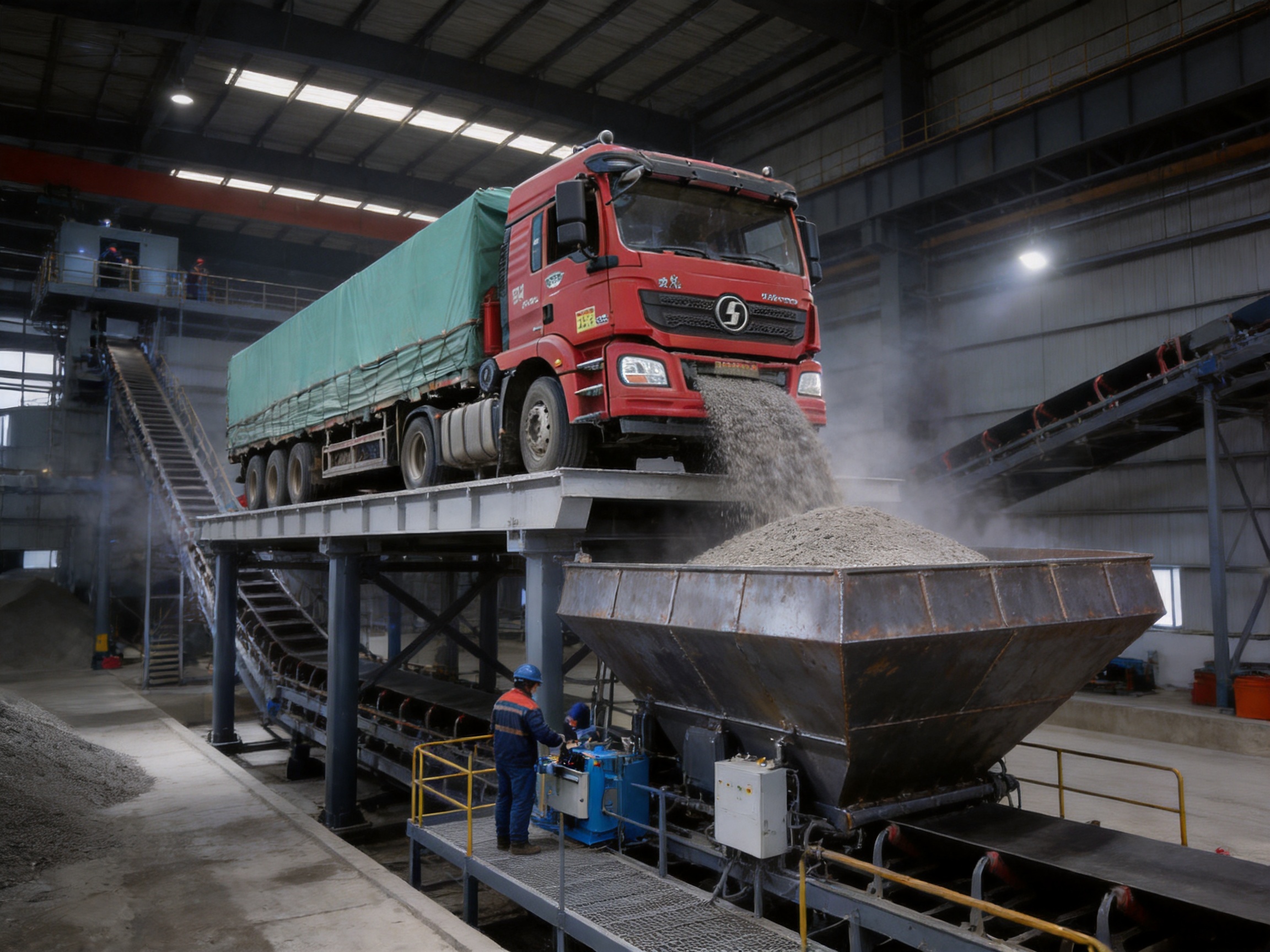
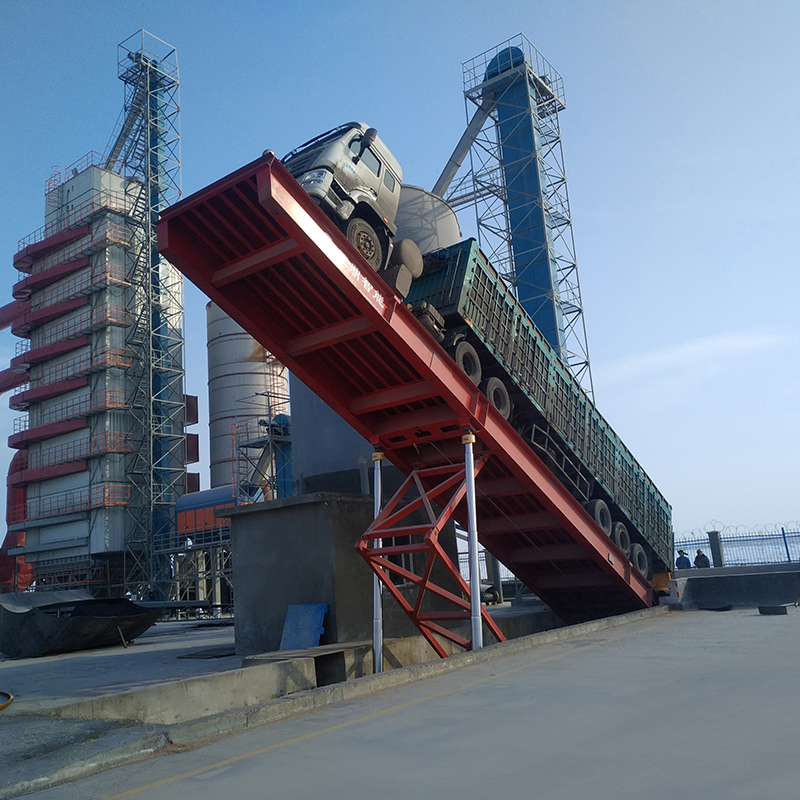
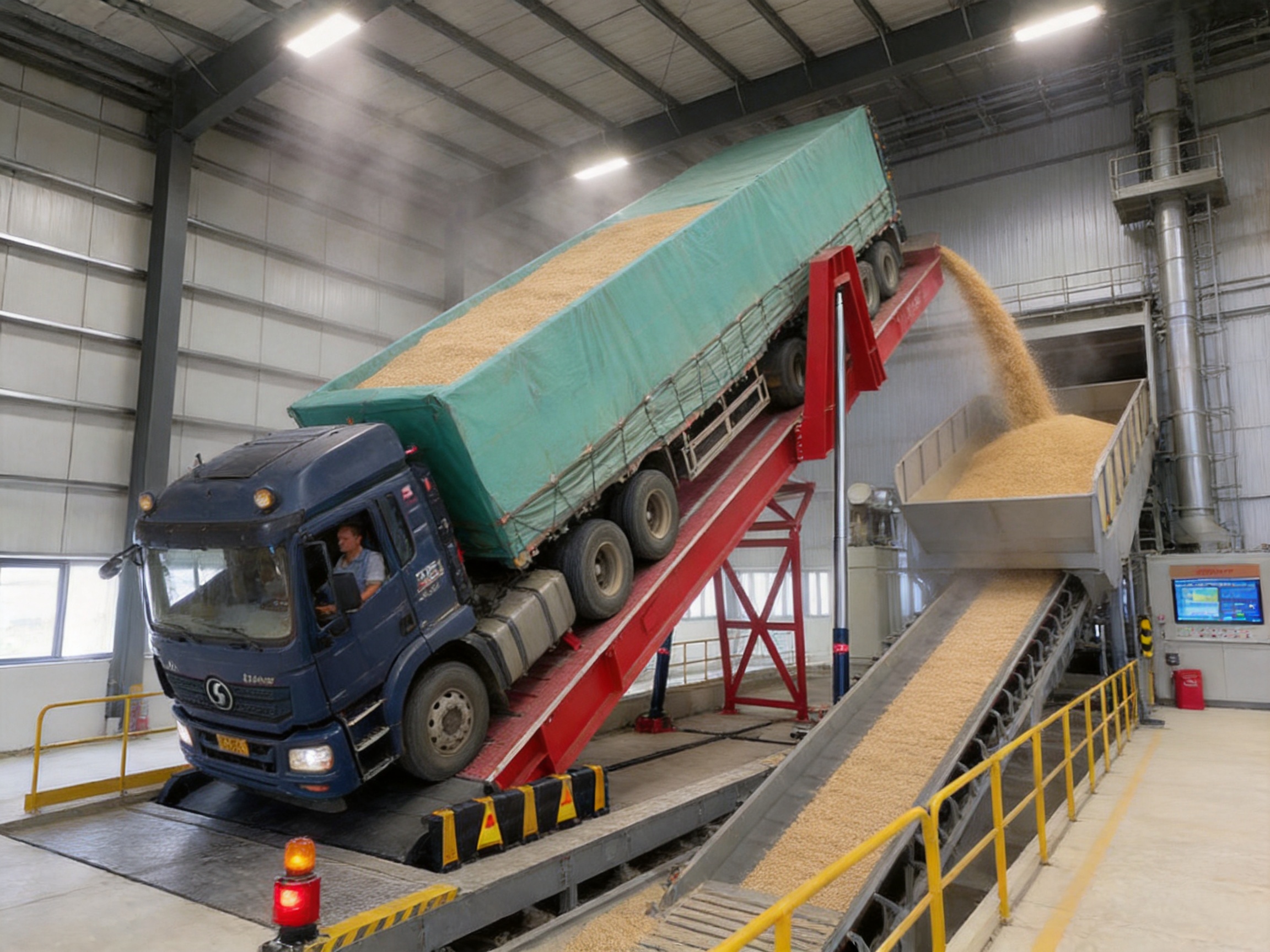
Shallow foundation truck dumpers are designed for industrial sites that require dependable truck unloading without the deep excavation, extensive civil works, and high installation cost associated with conventional dumping systems. By combining a low-profile pit structure, synchronized hydraulic lifting, automatic wheel retention, and intelligent operating controls, this type of dumper provides a practical solution for grain terminals, feed mills, cement plants, chemical facilities, coal yards, mineral processing sites, ports, and other bulk-material handling operations.
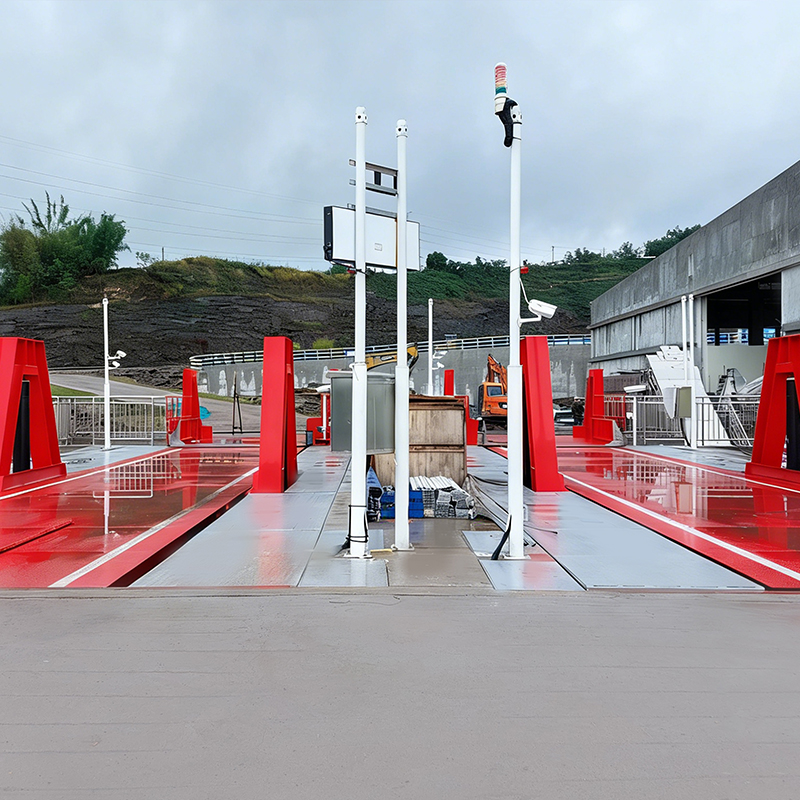
The shallow foundation configuration is particularly valuable when a site has difficult geological conditions, a high groundwater table, limited construction space, existing buildings, underground utilities, or strict project deadlines. Instead of constructing a deep receiving pit, the platform is installed with a foundation depth generally close to the thickness of the lifting platform. Depending on the project, the typical pit depth is approximately 0.5 to 1.2 meters. This arrangement can reduce civil construction costs by approximately 60% to 70% compared with conventional deep-pit truck dumpers, while also simplifying inspection, maintenance, and future modification.
Jiangsu Zhengding Intelligent Equipment Co., Ltd. develops and manufactures automated loading and unloading equipment for trucks, containers, ships, and industrial logistics systems. Its shallow foundation truck dumpers are engineered as complete unloading solutions rather than as isolated lifting platforms. The company can support project planning, foundation assessment, equipment selection, hydraulic configuration, material-flow analysis, safety design, installation, and after-sales service. This integrated approach allows the equipment to be adapted to different vehicle dimensions, material characteristics, operating environments, and production capacities.
1. The Role of Shallow Foundation Truck Dumpers in Modern Logistics
Truck unloading is one of the most important links in a bulk-material supply chain. Delays at the unloading station can affect storage capacity, production continuity, vehicle turnover, labor costs, and the utilization of downstream conveyors or processing equipment. A truck dumper must therefore do more than lift a loaded vehicle. It must position the vehicle securely, discharge the material efficiently, return to its original position smoothly, and remain reliable under repetitive operation.
Conventional truck dumpers commonly require a deep pit below the platform. The pit provides space for the lifting mechanism and allows the truck body to rotate or incline sufficiently for gravity discharge. However, deep excavation can create significant construction requirements. Reinforced concrete walls, drainage systems, waterproofing, soil reinforcement, retaining structures, and long access ramps may all be necessary. These requirements increase the project budget and may extend the construction schedule.
A shallow foundation truck dumper addresses these limitations by using a low-profile installation concept. The lifting structure, hydraulic cylinders, and supporting components are designed to achieve the necessary lifting angle within a shallower foundation. The result is a system that can often be installed where a deep foundation is impractical or uneconomical.
The shallow arrangement is suitable for both new projects and modernization work. In a new plant, it can reduce the amount of excavation and concrete required. In an existing plant, it may allow the owner to install a truck unloading station without relocating major buildings, pipelines, cables, roads, or drainage infrastructure. This flexibility is one of the most important advantages over traditional deep-pit systems.
Although the foundation is shallow, the equipment is still intended for heavy-duty operation. The available models include configurations with maximum lifting capacities of approximately 80 to 150 tons, depending on the selected design. The platform length and width can be customized to suit semi-trailers, rigid trucks, bulk tankers, and other commercial vehicles. Typical platform lengths range from approximately 14 to 20 meters, while the lifting angle can be configured at approximately 45 or 55 degrees.
2. Main Advantages Compared with Conventional Dumpers
2.1 Lower Civil Engineering Investment
The most visible advantage of a shallow foundation truck dumper is its reduced civil construction requirement. A conventional deep-pit installation may require a large excavation, extensive concrete work, deeper retaining walls, and additional waterproofing. By reducing the foundation depth, the shallow system can significantly lower the quantity of earthwork and structural materials.
For suitable sites, civil engineering costs may be reduced by more than 60%, with some project configurations achieving reductions of approximately 70%. The actual saving depends on soil conditions, local construction prices, drainage requirements, truck dimensions, and the selected lifting capacity. Even when the equipment cost is similar to that of a conventional dumper, a lower foundation cost can substantially reduce total project expenditure.
Lower civil construction costs also improve project predictability. Deep excavations can reveal unexpected groundwater, unstable soil, buried structures, or utility lines. A shallower structure generally creates fewer excavation risks and may require fewer changes during construction. This is especially beneficial for brownfield projects and factories that must continue operating while the new unloading station is installed.
2.2 Faster Installation and Easier Site Adaptation
A shallow foundation design normally requires less excavation and less structural preparation. This can shorten the installation period and reduce the number of construction activities that must be coordinated. The site may need less heavy excavation equipment, and the surrounding traffic lanes may be affected for a shorter period.
The system can also be adapted to different site layouts. Depending on the process design, the dumper can feed a receiving hopper, belt conveyor, chain conveyor, screw conveyor, bucket elevator, screening system, or other downstream equipment. The platform length, approach arrangement, control cabinet location, wheel-stopping device, and discharge opening can be configured according to the customer’s vehicle fleet and material-handling route.
2.3 Improved Maintenance Access
Maintenance work is easier when key hydraulic and mechanical components are accessible without requiring personnel to enter a deep underground chamber. A shallow pit reduces the distance between the equipment and the working surface, making routine inspection more convenient. It can also simplify cleaning, component replacement, drainage management, and emergency response.
Maintenance access is particularly important in dusty industries such as grain, coal, cement, and mineral processing. Dust can accumulate around hydraulic components, sensors, safety switches, and structural joints. Easy access allows operators and maintenance teams to inspect these areas more frequently, helping to identify leakage, wear, loose fasteners, or abnormal vibration before a major failure occurs.
The lower foundation depth can also reduce the consequences of water ingress. While proper drainage and waterproofing remain essential, a shallow structure generally presents fewer challenges than a deep underground pit. Site-specific drainage provisions should still be designed according to rainfall, groundwater, soil permeability, and local building regulations.
2.4 Stable and Controlled Lifting
The dumper uses a high-precision hydraulic cylinder synchronous stability system developed for controlled platform movement. Synchronized cylinder action helps the platform rise evenly and reduces torsion, lateral movement, and uneven loading on the lifting structure. Stable movement is important not only for equipment life but also for vehicle safety and material discharge consistency.
Small vibration during operation reduces impact on hydraulic cylinders, pins, bearings, and supporting structures. Lower mechanical shock can extend component service life and improve the working environment around the unloading station. Smooth movement is especially valuable when the truck carries a high-density material or when the load is unevenly distributed.
The hydraulic system can be configured with imported-brand cylinders and pumps selected for reliability and long service life. Hydraulic components must be properly matched to the lifting capacity, platform weight, operating frequency, oil temperature, and environmental conditions. Appropriate filtration, oil cleanliness, pressure protection, and scheduled inspection remain necessary regardless of component brand.
2.5 Safer Vehicle Retention
A full automatic retaining wheel fixing device is used to secure the truck during the lifting cycle. The purpose of the device is to prevent unwanted vehicle movement as the platform inclines. Automatic wheel retention also reduces dependence on manual positioning and helps standardize the unloading procedure.
In dusty operating environments, manually holding a remote control near the vehicle may be inconvenient and potentially unsafe. An automatic wheel-retaining sequence allows the operator to complete the procedure with fewer manual interventions. The system can be integrated with vehicle detection, platform-position confirmation, hydraulic interlocks, and emergency-stop circuits.
Safety design should include clear operating signals, access control, audible or visual warnings, emergency-stop buttons, overload protection, platform limit switches, hydraulic pressure protection, and procedures for abnormal conditions. The final safety arrangement should be determined through a site-specific risk assessment and should comply with applicable national and local regulations.
2.6 Unmanned or Reduced-Labor Operation
The dumper can support unmanned control or reduced-labor operation. In a properly integrated system, the driver can complete the unloading cycle without requiring a dedicated professional operator at the platform. This can reduce labor requirements and improve consistency between shifts.
Automation can include vehicle entry confirmation, automatic wheel positioning, platform lifting, timed discharge, return-to-level operation, and status communication with the receiving system. The level of automation can be selected according to the customer’s production requirements. Some facilities may prefer a local operator station, while others may integrate the dumper with a central control room, weighbridge system, access-control system, or plant-wide supervisory control system.
Reduced labor does not eliminate the need for supervision. Operators must still receive training in vehicle positioning, emergency procedures, equipment inspection, material-specific precautions, and safe access control. Automation should be used to reduce unnecessary exposure to hazards, not to replace responsible safety management.
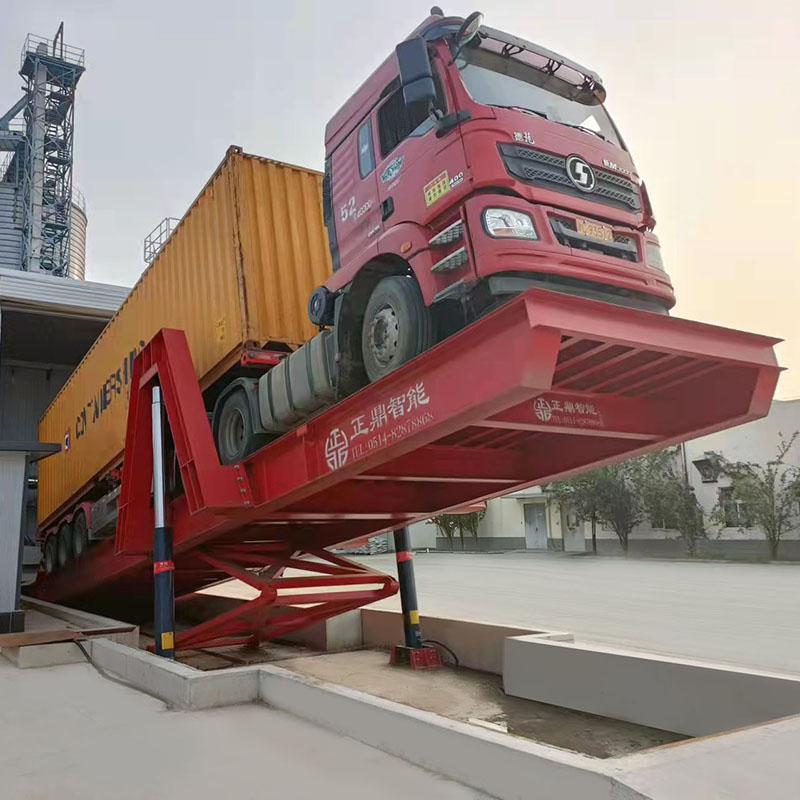
Shallow Foundation Truck Dumpers
3. Product Structure and Operating Principle
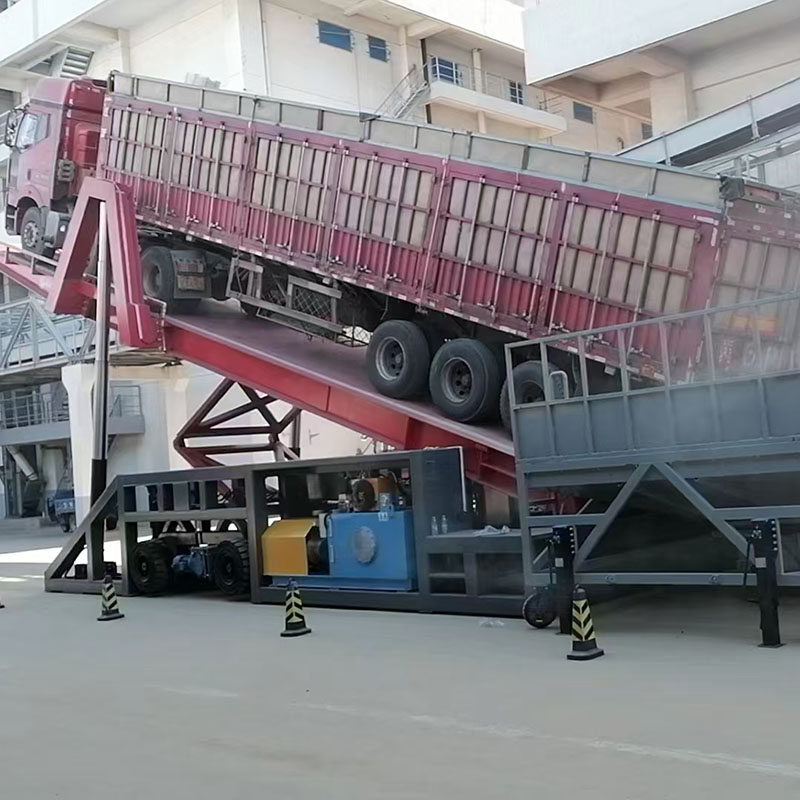
A shallow foundation truck dumper generally consists of a lifting platform, hydraulic cylinders, hydraulic power unit, supporting frame, wheel-retaining device, safety interlocks, control system, and discharge interface. Depending on the project, additional equipment may include a receiving hopper, dust-control system, vibration system, liner package, weighing system, truck-position sensors, and communication modules.
3.1 Lifting Platform
The platform supports the truck and transfers the vehicle load to the structural frame and foundation. It is designed according to the truck’s wheelbase, axle configuration, overall length, tire position, maximum gross weight, and expected load distribution. The deck surface may be fitted with anti-slip features and wear-resistant materials according to the application.
For aggregate, coal, petroleum coke, slag, and other abrasive products, reinforced steel plates or replaceable wear liners can be applied to areas exposed to repeated material impact. For food-grade applications, stainless steel surfaces and hygienic design features can be selected. For sticky products, low-friction liners can help reduce material adhesion and improve discharge.
3.2 Hydraulic Cylinders and Power Unit
Hydraulic cylinders provide the lifting force required to raise the platform. The cylinder arrangement is selected to achieve the required angle while maintaining stability throughout the motion. The power unit includes hydraulic pumps, valves, an oil reservoir, filters, pressure-control devices, and associated piping.
The synchronous stability system is intended to maintain coordinated cylinder movement. This is important because unequal cylinder extension can cause platform twisting, uneven stress, or instability. High-precision synchronization improves movement accuracy and reduces mechanical impact during starting, lifting, stopping, and lowering.
Hydraulic design should consider the expected duty cycle. A truck dumper operating ten times per day has different requirements from a grain terminal processing hundreds of vehicles per day. Oil cooling, filtration, pump capacity, valve response, and component redundancy should be evaluated based on actual operating frequency and environmental temperature.
3.3 Automatic Wheel-Fixing Device
The retaining device positions the truck and prevents movement during lifting. It may include mechanical stops, hydraulic barriers, sensors, or a combination of these elements. The system should confirm that the truck is correctly positioned before the lifting command is accepted.
Wheel retention is especially important when handling heavy loads, high-density materials, or vehicles with uneven weight distribution. It also creates a repeatable operating sequence, helping reduce errors caused by inconsistent driver positioning. The design should leave sufficient clearance for the vehicle tires and should account for different truck models used at the site.
3.4 Control and Interlocking System
The control system coordinates the lifting sequence and monitors critical operating conditions. Typical signals include platform position, cylinder status, hydraulic pressure, wheel-stop position, emergency-stop status, access-gate status, and receiving-hopper readiness.
Interlocks can prevent lifting when the truck is incorrectly positioned, when a safety barrier is open, when downstream equipment is unavailable, or when the platform has not returned to the required position. These features help prevent unsafe operation and reduce the risk of material spillage or equipment damage.
3.5 Foundation and Discharge Interface
The shallow foundation must be designed to carry the combined effects of vehicle weight, material weight, dynamic loading, hydraulic reaction forces, vibration, braking, and environmental conditions. A foundation assessment should consider soil bearing capacity, settlement, drainage, groundwater, frost conditions where applicable, and the expected traffic pattern.
The lower end of the platform connects to a receiving hopper or conveyor interface. The geometry of this area influences discharge efficiency. The opening should be sized for the material, vehicle body shape, expected flow rate, and downstream equipment capacity. Dust control may include enclosed hoppers, extraction points, flexible skirts, filters, or suppression systems.
4. Material Compatibility and Handling Performance
Shallow foundation truck dumpers can handle a wide range of bulk solids, granular products, and free-flowing powders. Typical materials include grains, oilseeds, coal, sand, gravel, crushed stone, cement, fly ash, lime, fertilizers, plastic pellets, petroleum coke, construction aggregates, and selected industrial powders.
The suitability of a material depends on more than bulk density. Moisture content, particle size, cohesiveness, abrasiveness, temperature, corrosiveness, flowability, and product hygiene requirements all influence the final equipment configuration. Material testing and process analysis are recommended when the product is sticky, highly cohesive, unusually hot, corrosive, or difficult to discharge.
| Material Category | Typical Bulk Density | Recommended Tilt Angle | Indicative Discharge Efficiency | Recommended Design Considerations |
|---|---|---|---|---|
| Corn, soybeans, and wheat | 0.72–0.78 t/m³ | 40°–45° | Approximately 99.5% | Food-grade surfaces, dust control, gentle transfer |
| Sand, gravel, and crushed stone | 1.4–1.8 t/m³ | 50°–55° | Approximately 98.2% | Wear-resistant liners and reinforced impact areas |
| Cement, fly ash, and lime | 0.9–1.2 t/m³ | 45°–50° | Approximately 97.8% | Sealed transfer points and abrasion-resistant components |
| Granular fertilizers | 0.85–1.1 t/m³ | 42°–48° | Approximately 99.1% | Corrosion protection and contamination control |
| Plastic pellets | 0.55–0.65 t/m³ | 38°–42° | Approximately 99.7% | Low-friction surfaces and pellet-loss prevention |
| Coal and petroleum coke | 0.75–0.95 t/m³ | 48°–53° | Approximately 98.5% | Wear protection, dust control, and fire-risk management |
The performance values in the table are indicative engineering data rather than universal guarantees. Actual efficiency depends on truck body geometry, material moisture, loading pattern, discharge opening, platform angle, downstream receiving equipment, and cleaning requirements.
4.1 Grain and Oilseed Applications
Grains and oilseeds are among the most common materials handled by truck dumpers. Corn, wheat, soybeans, rice, barley, and similar products normally have good flowability and can be discharged rapidly when the platform angle and hopper geometry are correctly selected.
Food and feed facilities require additional attention to hygiene, cross-contamination, dust emissions, pest control, and product damage. Stainless steel contact surfaces, cleanable structures, sealed bearings, suitable coatings, and accessible inspection points may be specified. The equipment can be integrated with truck weighing, sampling, intake cleaning, magnetic separation, screening, and storage systems.
For grain terminals operating at high throughput, the most important design factors include truck turnaround time, receiving-hopper capacity, conveyor speed, dust collection, traffic organization, and automatic control. A shallow dumper can support these requirements while reducing the foundation work needed for a deep receiving pit.
4.2 Aggregates, Minerals, and Coal
Aggregates and minerals are typically heavier and more abrasive than agricultural products. Sand, gravel, crushed stone, limestone, slag, petroleum coke, and coal can create significant impact and wear at the point where material leaves the truck body and enters the receiving hopper.
For these applications, AR400 or similar wear-resistant steel liners can be installed in high-impact areas. The hardness and thickness should be selected according to the material’s abrasiveness, particle size, drop height, operating hours, and maintenance strategy. Replaceable liners can reduce repair time and protect the main structural steel.
Coal and petroleum coke may also require dust-control systems and special attention to fire prevention. The unloading area should be designed to limit dust escape, avoid ignition sources, and provide suitable inspection and emergency-response arrangements. Where combustible dust is present, electrical and control components should be evaluated according to the applicable hazardous-area requirements.
4.3 Cement, Fly Ash, and Powders
Powdered materials such as cement, fly ash, and lime can be handled when the truck body, discharge hopper, and extraction system are properly matched. Dust containment is often the main design priority. Enclosed receiving points, negative-pressure extraction, cartridge filters, flexible seals, and minimized transfer distances can help control emissions.
Powders may bridge or compact if they contain moisture or are stored under unsuitable conditions. The system can be supplemented with vibration, air assistance, or other flow-promotion features when necessary. The appropriate solution should be selected after evaluating the powder’s angle of repose, moisture level, particle size distribution, and tendency to aerate.
4.4 Fertilizers and Chemicals
Fertilizers can be free-flowing but may absorb moisture, cake, or corrode carbon steel surfaces depending on composition and storage conditions. Corrosion-resistant finishes, stainless steel components, sealed hydraulic areas, and careful cleaning procedures may be necessary.
For chemical products, compatibility with platform materials, coatings, seals, and hydraulic-fluid protection must be considered. Stainless steel platforms are available for suitable food-grade and corrosive applications. The final material selection should be based on chemical composition, concentration, temperature, pH, exposure time, and cleaning agents.
4.5 Plastic Pellets and Specialty Products
Plastic pellets such as PVC and polyethylene generally flow well and can achieve high discharge efficiency. However, pellets can escape through gaps, accumulate in corners, or create housekeeping problems if the platform and receiving hopper are not properly sealed.
Low-friction surfaces, smooth transitions, tight joints, and suitable containment skirts can reduce product loss. Where color or resin changes occur frequently, cleanability and inspection access are important. A well-designed shallow dumper can support reliable unloading while minimizing residual material between truckloads.
4.6 Wet or Sticky Materials
Wet clay, concentrates, moist biomass, and other cohesive materials present a greater challenge than free-flowing grains or pellets. These materials may adhere to the truck body or platform and may not discharge completely at a standard tilt angle.
Possible improvements include UHMW-PE liners, reduced lifting speed, vibration systems, increased tilt angles where structurally appropriate, specialized truck-body surfaces, and heated platforms. For materials with approximately 12% to 18% moisture, suitable liners or vibration can improve discharge performance. Extremely sticky materials may benefit from thermostatically controlled heating systems operating within an application-specific temperature range.
Material testing is strongly recommended before final design approval. A small difference in moisture content can significantly change flow behavior. Testing can also determine whether the receiving hopper requires agitation, lining, heating, or special cleaning provisions.
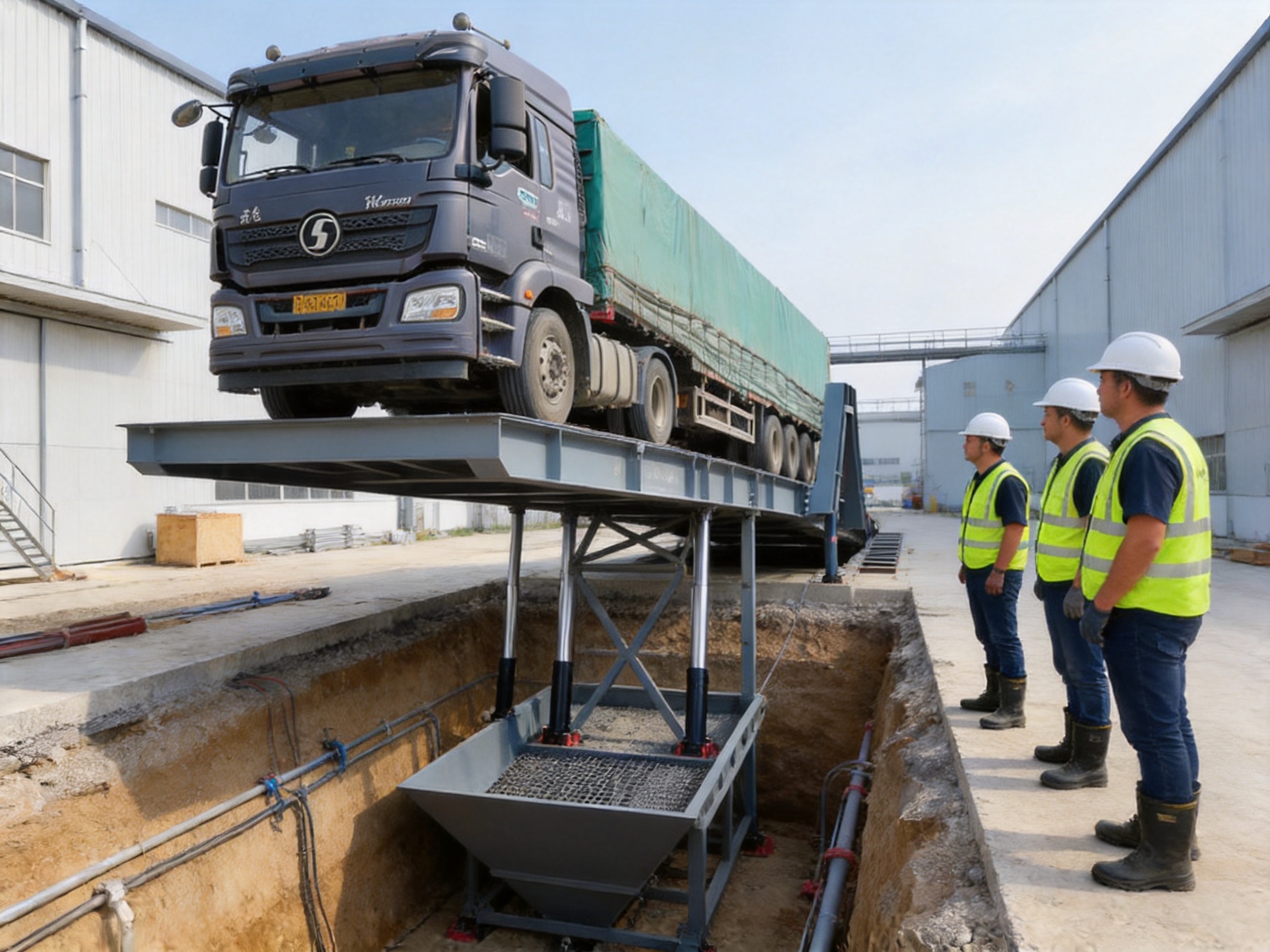
5. Advanced Manufacturing and Engineering Strengths
The performance of a truck dumper depends on the quality of its engineering, fabrication, hydraulic assembly, control integration, inspection, and commissioning. Jiangsu Zhengding Intelligent Equipment Co., Ltd. positions itself as a national high-tech enterprise focused on research, development, manufacturing, and sales of intelligent logistics equipment.
5.1 Application-Based Engineering
Rather than applying one standard configuration to every site, the company can develop solutions around the customer’s actual unloading process. Engineering begins with information such as truck dimensions, gross vehicle weight, axle layout, material density, moisture, particle size, required throughput, operating hours, installation conditions, and downstream equipment.
This application-based method helps determine the platform size, lifting capacity, tilt angle, hydraulic configuration, wheel-retaining arrangement, liner selection, hopper geometry, control philosophy, and safety devices. It also reduces the risk of selecting equipment that is technically adequate in one area but unsuitable for the complete process.
5.2 Structural Fabrication
The platform and support structure must tolerate repeated loading, lifting, vibration, impact, and environmental exposure. Fabrication quality influences service life, alignment, fatigue resistance, and maintenance requirements. Important manufacturing controls include material traceability, plate preparation, dimensional inspection, welding procedure control, weld quality inspection, surface preparation, and protective coating.
For abrasive service, the placement of liners and reinforcement plates must be carefully coordinated with the structural design. A liner that is too thin may wear quickly, while an unnecessarily heavy liner can increase dead weight and hydraulic demand. Engineering should focus on the areas that receive the greatest impact rather than adding weight indiscriminately.
5.3 Hydraulic System Assembly
Hydraulic system quality depends on correct component selection, clean assembly, properly routed piping, accurate valve adjustment, and protection against contamination. The company’s equipment uses a high-precision hydraulic cylinder synchronization concept to support stable lifting.
During assembly, hydraulic lines should be protected from abrasion, sharp bends, excessive vibration, and heat. Filters and reservoirs should be selected according to the pump flow and operating environment. Pressure testing and movement testing should be completed before shipment or site commissioning.
The hydraulic system should also include practical service features such as accessible inspection points, clearly identified valves, pressure gauges or diagnostic ports, suitable drain arrangements, and replacement procedures for seals and filters. These details can significantly reduce downtime during the equipment’s operating life.
5.4 Intelligent Control Integration
Modern truck dumpers increasingly operate as part of an automated logistics system. The dumper may exchange signals with weighbridges, access gates, traffic lights, conveyors, silos, dust collectors, sampling systems, and plant control rooms.
Jiangsu Zhengding’s broader product range includes automatic loading and unloading equipment for vehicles and containers. This experience supports the integration of truck dumpers into larger logistics systems. The control architecture can be adapted to local operating requirements, including automatic cycles, manual maintenance mode, emergency stop, fault display, remote diagnosis, and production data communication.
5.5 Quality and Commissioning
Before delivery, equipment should undergo dimensional checks, hydraulic testing, control-circuit verification, safety-function testing, and trial operation. Where possible, simulated loads or controlled test loads can be used to check lifting stability, platform alignment, wheel-stop operation, limit switches, and emergency functions.
Site commissioning should verify the complete process rather than the dumper alone. The receiving hopper must accept the material at the required rate, the conveyor must handle the incoming flow, dust-control equipment must operate correctly, and the vehicle traffic arrangement must permit safe and efficient turnaround.
5.6 International Project Experience
The company’s equipment is used in industries including steel, chemicals, cement, coal, grain, oil, food, feed, ports, papermaking, and new energy. Its products have been exported to Japan, Brazil, Egypt, Pakistan, India, the Middle East, and Southeast Asia.
International projects require attention to different vehicle standards, electrical systems, documentation requirements, climate conditions, language needs, safety regulations, and installation practices. Experience across multiple markets can help an equipment supplier prepare more practical technical documents and coordinate project communication with overseas customers, contractors, and local service teams.
6. Model Selection and Technical Parameters
The following models represent common capacity options for the shallow foundation truck dumper range. The final model should be selected according to the vehicle’s maximum gross weight, material density, unloading frequency, platform size, foundation conditions, and required safety margin.
| Model | Available Platform Size, L × W | Maximum Lifting Weight | Maximum Lifting Angle | Typical Application Direction |
|---|---|---|---|---|
| TQXHC 50 | 14 × 3 m, 16 × 3 m, or 17 × 3 m | 80 tons | 45° or 55° | Medium and heavy bulk unloading |
| TQXHC 80 | 16 × 3 m, 17 × 3 m, or 18 × 3 m | 80 tons | 45° or 55° | Standard semi-trailer and rigid-truck applications |
| TQXHC 100 | 17 × 3 m, 18 × 3 m, or 20 × 3 m | 100 tons | 45° or 55° | High-capacity industrial unloading |
| TQXHC 150 | 17 × 3 m, 18 × 3 m, or 20 × 3 m | 150 tons | 45° or 55° | Very heavy vehicle and high-load applications |
The listed dimensions indicate available configuration choices rather than a universal platform size for every installation. Vehicle drawings should be reviewed before production. The wheelbase, front and rear overhangs, tire position, exhaust components, tank shape, tipping body design, and turning radius can all affect platform layout.
Maximum lifting weight should not be confused with the quantity of material alone. The equipment must carry the combined weight of the truck and its load, together with dynamic effects and an appropriate design margin. The maximum vehicle dimensions and allowable axle loads must be confirmed during project engineering.
7. Safety, Reliability, and Maintenance
7.1 Safety During Truck Positioning
The truck must be aligned correctly before the lifting cycle begins. Traffic lights, guide markings, cameras, sensors, wheel stops, and operator instructions can be used to improve positioning accuracy. The driver should remain in the designated safe location during lifting unless the approved operating procedure states otherwise.
Vehicles should not be lifted if the load is severely shifted, the truck is outside the permitted size range, the wheel-retaining system is not engaged, or the platform and receiving system are not ready. Loads that may shift suddenly should be assessed before unloading.
7.2 Hydraulic Safety
Hydraulic systems operate under high pressure and must be inspected for leakage, hose damage, abnormal noise, pressure fluctuations, and uncontrolled movement. Personnel must never place themselves beneath a raised platform unless it has been mechanically secured according to the approved maintenance procedure.
Hydraulic oil should be selected for the operating temperature and environmental conditions. Filters must be replaced at the recommended intervals, and contamination should be prevented during filling or component replacement. Any recurring leakage should be investigated rather than solved only by repeated tightening.
7.3 Structural and Mechanical Inspection
Routine inspection should cover welds, hinges, pins, bushings, bolts, wheel stops, platform surfaces, liners, guardrails, access areas, and foundation interfaces. Particular attention should be given to high-stress locations and regions exposed to impact from falling material.
Wear liners should be measured periodically. Abrasive materials can reduce liner thickness faster than expected if particle size, moisture, or drop height changes. Replacing a liner at a planned maintenance interval is generally less disruptive than repairing the main platform after wear has progressed too far.
7.4 Material-Specific Maintenance
| Material Type | Primary Risk | Recommended Maintenance Focus |
|---|---|---|
| Grain and oilseeds | Dust accumulation, contamination, pest attraction | Frequent cleaning, sanitation, seal inspection, and dust-collector maintenance |
| Sand, gravel, and stone | Abrasion and impact | Wear-liner inspection, weld inspection, and replacement of damaged plates |
| Cement and fly ash | Dust penetration and powder buildup | Seal inspection, filter maintenance, enclosed-transfer inspection |
| Fertilizers and chemicals | Corrosion and chemical exposure | Surface inspection, washdown control, seal checks, and corrosion monitoring |
| Coal and petroleum coke | Dust, abrasion, and fire risk | Dust control, housekeeping, temperature monitoring, and wear inspection |
| Wet clay and sticky products | Adhesion and incomplete discharge | Liner condition, vibration equipment, heating system, and platform cleaning |
For abrasive service, liner inspections may be scheduled at approximately every 1,000 operating hours, although actual intervals should be based on the material and duty cycle. Corrosive chemical applications may require seal checks every three months or more frequently. Food and feed installations should follow a documented sanitation schedule appropriate to the product and regulatory requirements.
8. Project Planning and Installation Considerations
A successful dumper installation begins with accurate site information. The customer should provide a layout showing truck routes, existing structures, utilities, drainage, conveyors, storage bins, control rooms, and available maintenance space. Soil investigation is recommended where foundation conditions are uncertain.
Vehicle information should include the largest and smallest trucks expected to use the dumper. Important data includes overall length, width, height, wheelbase, axle spacing, gross vehicle weight, body shape, tire dimensions, and unloading-door arrangement. If multiple truck types are used, the platform should be designed around the complete fleet rather than only the most common vehicle.
Material information should include bulk density, moisture range, temperature, particle-size distribution, angle of repose, abrasiveness, corrosiveness, flowability, and product hygiene requirements. Seasonal changes should be considered. A grain may flow well in a dry season but become more difficult to handle during humid conditions. Coal may vary in moisture and particle size depending on its source and storage conditions.
The downstream process must also be evaluated. A dumper capable of unloading a truck quickly can overload a conveyor or receiving hopper if the downstream capacity is insufficient. The equipment should be coordinated with the entire material-flow system, including surge capacity, dust extraction, weighing, screening, storage, and process feeding.
Installation planning should include lifting access, delivery routes, temporary traffic control, electrical supply, hydraulic-oil filling, testing space, and operator training. A shallow foundation may reduce construction work, but it still requires an accurately prepared base and correctly installed drainage and anchoring systems.
9. Total Cost of Ownership and Competitive Value
The purchase price is only one part of a truck dumper investment. Total cost of ownership includes civil construction, installation, electricity, labor, maintenance, wear parts, downtime, cleaning, and future expansion. A shallow foundation design can provide competitive value by reducing several of these cost categories at the same time.
The first saving usually comes from civil engineering. Less excavation can mean lower costs for earth removal, concrete, retaining structures, waterproofing, and groundwater management. The second saving can come from installation time. When the unloading station becomes operational sooner, the customer may reduce temporary handling arrangements and begin production earlier.
Maintenance access can also affect operating cost. Components that can be inspected and replaced from an accessible level generally require less labor than components located in a deep, confined pit. Shorter maintenance activities can improve vehicle availability and reduce interruption to the material-handling process.
Automatic operation reduces repetitive manual tasks and can improve truck turnaround. If the vehicle driver can complete the standard cycle without a separate operator, the facility may achieve lower labor demand and more consistent unloading procedures. The exact labor saving depends on the site’s traffic volume, work rules, and automation level.
Wear-resistant options can further improve lifecycle value. AR400 steel liners, replaceable impact plates, UHMW-PE surfaces, and stainless steel components should be selected according to the material rather than applied uniformly. The right combination can extend service life, reduce product residue, and minimize unplanned repairs.
Compared with competitors offering only standard deep-pit dumpers, a shallow foundation system provides a stronger value proposition where civil construction is expensive or site restrictions are severe. Compared with low-cost equipment that lacks integrated safety and control functions, a professionally engineered system can offer better operating consistency, easier expansion, and lower long-term risk.
10. Applications Across Different Industries
10.1 Grain Terminals and Feed Mills
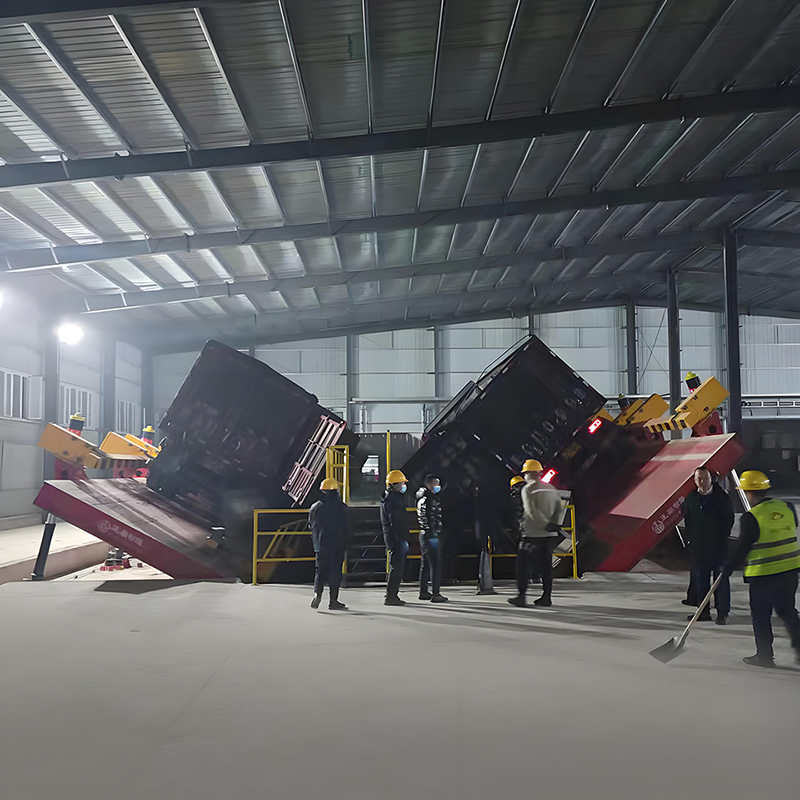
Grain terminals use truck dumpers to receive agricultural products from farms, collection points, and transport fleets. The dumper can be connected to sampling, weighing, cleaning, drying, conveying, and storage systems. Automatic operation helps manage high vehicle volumes during harvest seasons.
Feed mills can use the same basic concept for corn, wheat, soybean meal, rice bran, and other feed ingredients. Hygienic construction and controlled cleaning are important when several ingredients pass through the same unloading station.
10.2 Cement and Building Materials
Cement plants, concrete facilities, and building-material producers may receive limestone, sand, gravel, fly ash, cement additives, and other powders. Abrasion resistance and dust management are central design considerations. The shallow foundation can be useful where the plant is located on constrained industrial land or where a deep pit would interfere with existing structures.
10.3 Coal, Minerals, and Steel
Steel mills, mineral terminals, power-related facilities, and coal yards often handle heavy or abrasive materials. High-capacity models, wear-resistant liners, dust extraction, and robust vehicle retention are important. The system can feed crushers, screens, stockpiles, hoppers, or belt conveyors.
10.4 Chemical and Fertilizer Facilities
Chemical and fertilizer plants may require corrosion-resistant construction, sealed components, special coatings, and carefully controlled discharge. A shallow dumper can be designed for granular products, bagged-product transfer support, or bulk powders, depending on the vehicle and receiving process.
10.5 Ports and Logistics Terminals
Ports and logistics terminals require fast truck turnaround and reliable integration with storage or ship-loading systems. The company’s broader range of container and vehicle loading and unloading equipment allows project planners to consider the truck dumper as part of a larger logistics solution.
10.6 Food, Oil, and New Energy Industries
Food and oilseed facilities may require stainless steel contact surfaces, cleanable structures, and contamination control. New energy plants may handle mineral powders, cathode or anode-related raw materials, aggregates, or other bulk products that require controlled dust management and traceability.
11. Frequently Asked Questions
Q1: What is a shallow foundation truck dumper?
A shallow foundation truck dumper is a hydraulic unloading platform designed to lift and incline a loaded truck while requiring a relatively shallow pit. The typical foundation depth may be approximately 0.5 to 1.2 meters, depending on the selected model and site design. It is intended to reduce excavation and civil construction compared with a conventional deep-pit dumper.
Q2: How much can civil construction cost be reduced?
For suitable projects, the shallow foundation design may reduce civil construction costs by approximately 60% to 70%. The actual result depends on local construction prices, soil conditions, groundwater, drainage, retaining-wall requirements, platform size, and the amount of existing infrastructure that can be preserved.
Q3: What materials can the equipment handle?
The equipment can handle grains, oilseeds, coal, sand, gravel, crushed stone, cement, fly ash, lime, fertilizers, plastic pellets, petroleum coke, construction aggregates, and selected chemical powders. Wet, sticky, highly abrasive, or corrosive materials may require special liners, vibration, heating, stainless steel, coatings, or other modifications.
Q4: Can the dumper handle wet or sticky materials?
Yes, but the equipment should be configured for the material. UHMW-PE liners, vibration systems, reduced lifting speed, specialized wear surfaces, increased tilt angles, or heated platforms may improve discharge. Material testing is recommended for products with high moisture or strong adhesion.
Q5: What is the maximum lifting capacity?
The listed product range includes configurations with maximum lifting capacities of approximately 80, 100, and 150 tons. The correct capacity must include the truck’s own weight, the material load, dynamic effects, and the required design margin. Vehicle drawings and load data should be confirmed before final selection.
Q6: What platform dimensions are available?
Typical platform lengths range from approximately 14 to 20 meters, with a common width of approximately 3 meters. Available model configurations include several length options. Final dimensions should be selected according to the largest vehicle, wheelbase, axle arrangement, body shape, and site layout.
Q7: Can the system operate automatically?
Yes. The dumper can support automatic wheel fixing, hydraulic lifting and lowering, safety interlocking, status monitoring, and communication with other equipment. In suitable installations, the driver can complete the standard unloading operation without a dedicated professional operator at the platform.
Q8: Is automatic operation safe in a dusty environment?
Automatic wheel retention and remote or local control can reduce the need for personnel to stand near the vehicle during dusty operation. However, the control system must be supported by appropriate sensors, emergency stops, warning devices, access control, maintenance procedures, and site-specific risk assessment.
Q9: What maintenance is required?
Maintenance includes hydraulic oil and filter management, cylinder and hose inspection, structural inspection, lubrication, wheel-stop testing, sensor checks, liner inspection, cleaning, and control-system testing. Abrasive materials generally require more frequent liner checks, while food applications require stricter sanitation and contamination-control procedures.
Q10: Can stainless steel be used for food-grade applications?
Yes. Stainless steel platforms and suitable food-grade components can be specified for grain, feed, food, and selected corrosive applications. The design may also include cleanable surfaces, FDA-compliant seals where required, controlled drainage, and access for sanitation.
Q11: Does the shallow design reduce unloading efficiency?
A properly engineered shallow dumper can provide discharge efficiency comparable to a conventional system. The final result depends on the lifting angle, material flowability, hopper geometry, truck body, moisture, and downstream equipment. Free-flowing products such as grains and plastic pellets can achieve very high discharge efficiency, while sticky materials may require additional systems.
Q12: What information is needed for a quotation?
Important information includes the truck models, maximum gross weight, dimensions, wheelbase, material type, bulk density, moisture, particle size, required capacity, daily truck volume, preferred lifting angle, site layout, soil conditions, receiving equipment, electrical standard, automation requirements, and local safety regulations.
12. Conclusion
Shallow foundation truck dumpers provide a practical alternative to conventional deep-pit unloading systems. Their principal advantage is the combination of reduced civil construction, easier installation, improved maintenance access, automatic vehicle retention, stable hydraulic lifting, and flexible integration with material-handling systems.
The equipment is suitable for a wide range of industries and materials, including grain, feed, coal, minerals, aggregates, cement, fertilizers, chemicals, plastic pellets, food products, and selected specialty powders. Performance can be enhanced through application-specific options such as AR400 wear liners, UHMW-PE coatings, stainless steel platforms, vibration systems, heating, dust extraction, and intelligent control.
Jiangsu Zhengding Intelligent Equipment Co., Ltd. strengthens this product offering through application engineering, hydraulic synchronization technology, automated control integration, customized structural design, and experience in truck and container loading and unloading equipment. Its international project experience and industry coverage support the development of complete unloading solutions rather than isolated equipment deliveries.
For customers comparing suppliers, the most important evaluation criteria should include total installation cost, foundation requirements, vehicle compatibility, hydraulic stability, safety functions, material suitability, automation capability, maintenance access, manufacturing quality, spare-parts support, and the supplier’s ability to integrate the dumper into the complete production process. When these factors are considered together, a shallow foundation truck dumper can deliver strong technical and economic value for modern bulk-material logistics.
References
1. Product technical information for shallow foundation truck dumpers, including model capacities, platform dimensions, lifting angles, hydraulic functions, and automatic retaining-wheel systems.
2. Industrial bulk-material handling principles covering truck unloading, receiving hoppers, conveyor integration, dust control, material flow, and equipment maintenance.
3. Engineering guidance for the handling of grains, aggregates, cement, fertilizers, coal, petroleum coke, plastic pellets, and cohesive bulk solids.
4. General hydraulic equipment design practices for cylinder synchronization, pressure protection, filtration, inspection, and safe maintenance.
5. General industrial safety practices for vehicle positioning, lifting platforms, emergency stops, access control, mechanical guarding, and automated material-handling equipment.
6. General materials-engineering references concerning abrasion-resistant steel, UHMW-PE liners, stainless steel equipment, corrosion control, and wear-life evaluation.


