

 English
 русский
 Español
 Français
 Português
 عربى
عربى




+86-13588556918
Content
- 1 1. The Role of Hydrothermal Treatment in Oat Processing
- 2 2. What Is a Kiln Granotherm?
- 3 3. Main Advantages Over Conventional Treatment Equipment
- 3.1 3.1 Accurate retention-time control
- 3.2 3.2 Controlled addition of moisture and heat
- 3.3 3.3 Stainless-steel product-contact construction
- 3.4 3.4 No drive components inside the material flow
- 3.5 3.5 Separate hot and cold exhaust air
- 3.6 3.6 Reduced product accumulation
- 3.7 3.7 Accessible cleaning and maintenance
- 3.8 3.8 Pull-out stainless-steel radiators
- 3.9 3.9 Thermal insulation and energy efficiency
- 4 4. Hygienic Design for Oat and Legume Processing
- 5 5. Integration With a Conditioner and Complete Processing Line
- 6 6. Technical Parameters and Capacity Selection
- 7 7. Process Quality and Product Stability
- 8 8. Manufacturing Strengths and Engineering Capabilities
- 9 9. Automated Material Handling and Plant Efficiency
- 10 10. Installation and Commissioning Considerations
- 11 11. Operation and Maintenance Recommendations
- 12 12. Comparison With Alternative Thermal Treatment Systems
- 13 13. Applications Beyond Dehulled Oats
- 14 14. Why Manufacturer Experience Matters
- 15 15. Frequently Asked Questions
- 15.1 Q1. What is the primary purpose of the Kiln Granotherm?
- 15.2 Q2. Is the equipment suitable for use with a conditioner?
- 15.3 Q3. Why is enzyme inactivation important in oat processing?
- 15.4 Q4. What are the available equipment models?
- 15.5 Q5. What is the listed steam consumption?
- 15.6 Q6. Are the product-contact parts made from stainless steel?
- 15.7 Q7. Does the machine contain moving drive parts inside the product stream?
- 15.8 Q8. How does the system reduce condensation?
- 15.9 Q9. How is cleaning carried out?
- 15.10 Q10. Can the equipment process legumes?
- 15.11 Q11. What should be considered when selecting a model?
- 15.12 Q12. Can the equipment be integrated into an automated plant?
- 15.13 Q13. What maintenance is generally recommended?
- 15.14 Q14. Does the system improve product flavor?
- 15.15 Q15. What company supplies this equipment?
- 16 16. Conclusion
- 17 References
- 18 Product: Kiln Granotherm
Oats and legumes are valuable agricultural materials, but they require careful processing before they can be used in food, feed, ingredient, and industrial applications. Dehulled oats contain naturally occurring enzymes that can promote rancidity, shorten shelf life, and affect the taste and aroma of finished products. Legumes may also require controlled thermal treatment to improve stability, reduce microbial contamination, and develop desirable flavor characteristics. A reliable hydrothermal treatment system must therefore deliver accurate moisture addition, controlled heating, consistent residence time, hygienic operation, and efficient cooling.
The Kiln Granotherm is an oat processing equipment solution developed for the hydrothermal treatment of dehulled oats and legumes. Used frequently together with a conditioner, it provides a controlled environment in which steam, moisture, and heat can be introduced with precision. The equipment is designed to inactivate enzymes, stabilize the processed material, reduce microbial contamination, and improve the sensory properties of the finished product.
Unlike basic heating chambers or uncontrolled steam-treatment systems, this equipment integrates thermal conditioning, retention-time management, hygienic airflow control, and cooling into a coordinated process. Its construction is focused on product safety, ease of cleaning, reduced material accumulation, convenient maintenance, thermal insulation, and low energy consumption.
For processors seeking dependable oat stabilization equipment, the system offers an effective balance between process control and practical plant operation. Its stainless-steel product-contact surfaces, separated exhaust-air circuits, removable pipelines, pull-out radiators, and absence of internal drive components in the product stream help create a cleaner and more maintainable processing environment.
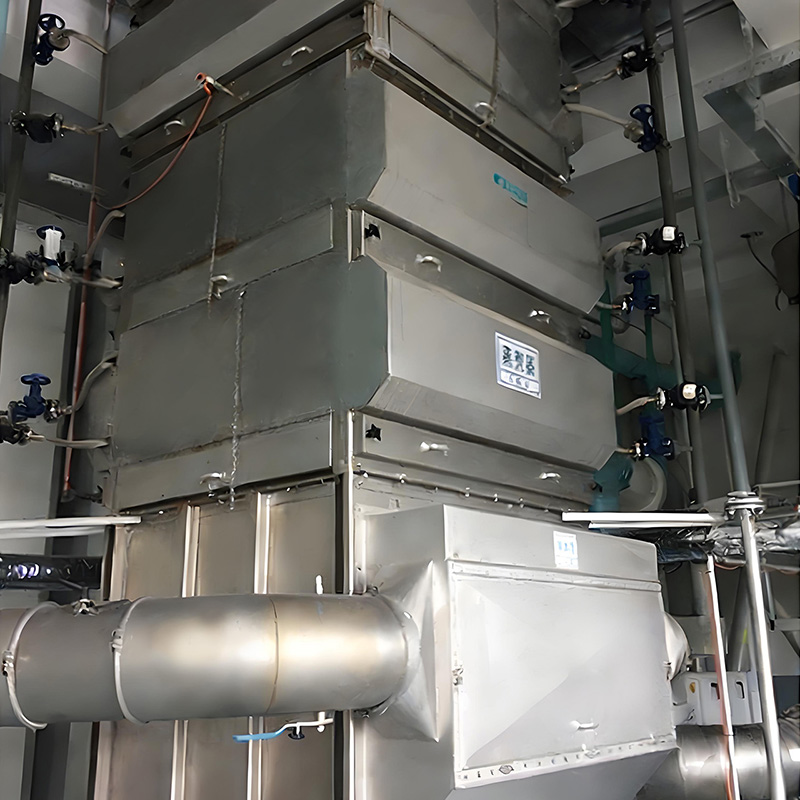
Kiln Granotherm
1. The Role of Hydrothermal Treatment in Oat Processing
Oats are nutritionally valuable grains containing carbohydrates, proteins, lipids, dietary fiber, vitamins, minerals, and bioactive compounds. However, their relatively high lipid content makes them more sensitive to enzymatic activity than many other cereal grains. After dehulling, the internal material is exposed to air and processing conditions, and naturally occurring lipase enzymes may begin breaking down fats into free fatty acids and other compounds associated with rancid flavors.
Hydrothermal treatment is used to control this problem. By combining moisture and heat for a defined period, the process can inactivate enzymes before they cause significant deterioration. The treatment must be carefully controlled because insufficient heating may leave enzyme activity too high, while excessive heating may damage nutritional quality, alter color, create undesirable flavors, or increase energy consumption.
A modern oat stabilization process therefore requires more than simply adding steam. The processor must control several variables simultaneously:
- Material feed rate and uniformity.
- Moisture addition and distribution.
- Heating temperature and steam quality.
- Material residence time.
- Airflow and exhaust conditions.
- Cooling speed and final product temperature.
- Equipment cleanliness and contamination prevention.
The Kiln Granotherm addresses these requirements through a dedicated hydrothermal treatment chamber designed for accurate retention-time settings and controlled addition of moisture and heat. It may be installed as part of a broader oat processing line, usually after dehulling and before subsequent drying, flaking, milling, storage, or packaging operations.
In legume processing, controlled hydrothermal treatment can also contribute to improved product stability and flavor. Depending on the material and process configuration, thermal conditioning may help reduce microbial load and modify raw-material characteristics before further processing. The actual operating profile should be selected according to the material, moisture content, throughput, and required end-product properties.
2. What Is a Kiln Granotherm?
The Kiln Granotherm is a specialized thermal processing machine for granular agricultural materials, particularly dehulled oats and legumes. In this application, the equipment is not simply a conventional drying machine. It is a controlled hydrothermal treatment system that combines heat transfer, moisture management, residence-time control, and cooling in a hygienically designed structure.
The term “kiln” refers to the controlled thermal environment, while the Granotherm concept emphasizes uniform treatment of granular material. The equipment is designed to expose the product to consistent heat and moisture conditions while preventing excessive accumulation, contamination, or uncontrolled condensation.
A conditioner is often used upstream of the system. The conditioner can prepare the material by mixing it with moisture and steam, helping the product reach a more uniform initial condition. The Kiln Granotherm then provides the required retention period and thermal environment. This combination allows the processor to separate moisture preparation from controlled treatment, improving process adjustment and repeatability.
The equipment is particularly suitable where the processor needs to achieve the following objectives:
- Inactivation of enzymes in dehulled oats.
- Improved storage stability of treated material.
- Reduction of microbial contamination.
- Improvement of oat and legume flavor.
- Accurate and repeatable residence time.
- Controlled heating without unnecessary product damage.
- Hygienic operation in food and feed production environments.
Its design is also intended to support continuous industrial production. Instead of relying on batch treatment with irregular heating patterns, the system can be incorporated into a continuous line. Continuous processing reduces manual handling, supports stable throughput, and makes it easier to connect the treatment stage with upstream and downstream conveying equipment.
2.1 Process principle
During operation, prepared oats or legumes enter the treatment section at a controlled rate. Steam, heat, and moisture are introduced according to the required process profile. The material remains in the equipment for a selected period, allowing the thermal treatment to reach the desired enzyme-inactivation and stabilization effect. After treatment, the product is cooled under controlled airflow before discharge.
Retention time is a particularly important factor. If the product moves too quickly, the material may not receive sufficient heat treatment. If it remains too long, energy use may increase and the product may experience unnecessary thermal exposure. The equipment is therefore designed to provide accurate retention-time settings, helping operators match process intensity with material requirements.
The treatment profile can be adjusted according to oat variety, particle size, initial moisture, production capacity, steam conditions, and final application. A food-grade oat ingredient may require a different profile from a feed ingredient or a legume product. For this reason, commissioning and process validation should be completed using representative raw materials and the target operating conditions.
3. Main Advantages Over Conventional Treatment Equipment
Processors comparing oat stabilization systems usually consider more than nominal capacity. They also evaluate hygiene, maintenance, steam efficiency, process stability, cleaning time, product quality, and integration with other machinery. The Kiln Granotherm has several design characteristics that distinguish it from simpler heating chambers and less specialized thermal treatment equipment.
3.1 Accurate retention-time control
Consistent residence time is essential for reliable enzyme inactivation. Variations in material flow can cause some product to be under-treated while other product receives excessive heat. The equipment is designed to provide controlled retention-time settings, enabling the operator to establish a repeatable relationship between feed rate, internal conditions, and product treatment.
This is an important advantage over systems in which product movement is strongly affected by uncontrolled buildup, irregular discharge, or internal obstructions. A stable material path improves batch-to-batch and shift-to-shift consistency.
3.2 Controlled addition of moisture and heat
Hydrothermal treatment depends on the interaction between heat and moisture. Steam can transfer thermal energy rapidly, but the quantity and distribution must be controlled. Too little moisture may lead to uneven treatment, while excessive moisture may increase the load on downstream drying equipment.
The Kiln Granotherm is designed to work with controlled steam and moisture addition. When combined with a conditioner, the system can support a more uniform material profile before the main retention stage. This helps the thermal energy reach the product more consistently and reduces the risk of localized wet spots or dry areas.
3.3 Stainless-steel product-contact construction
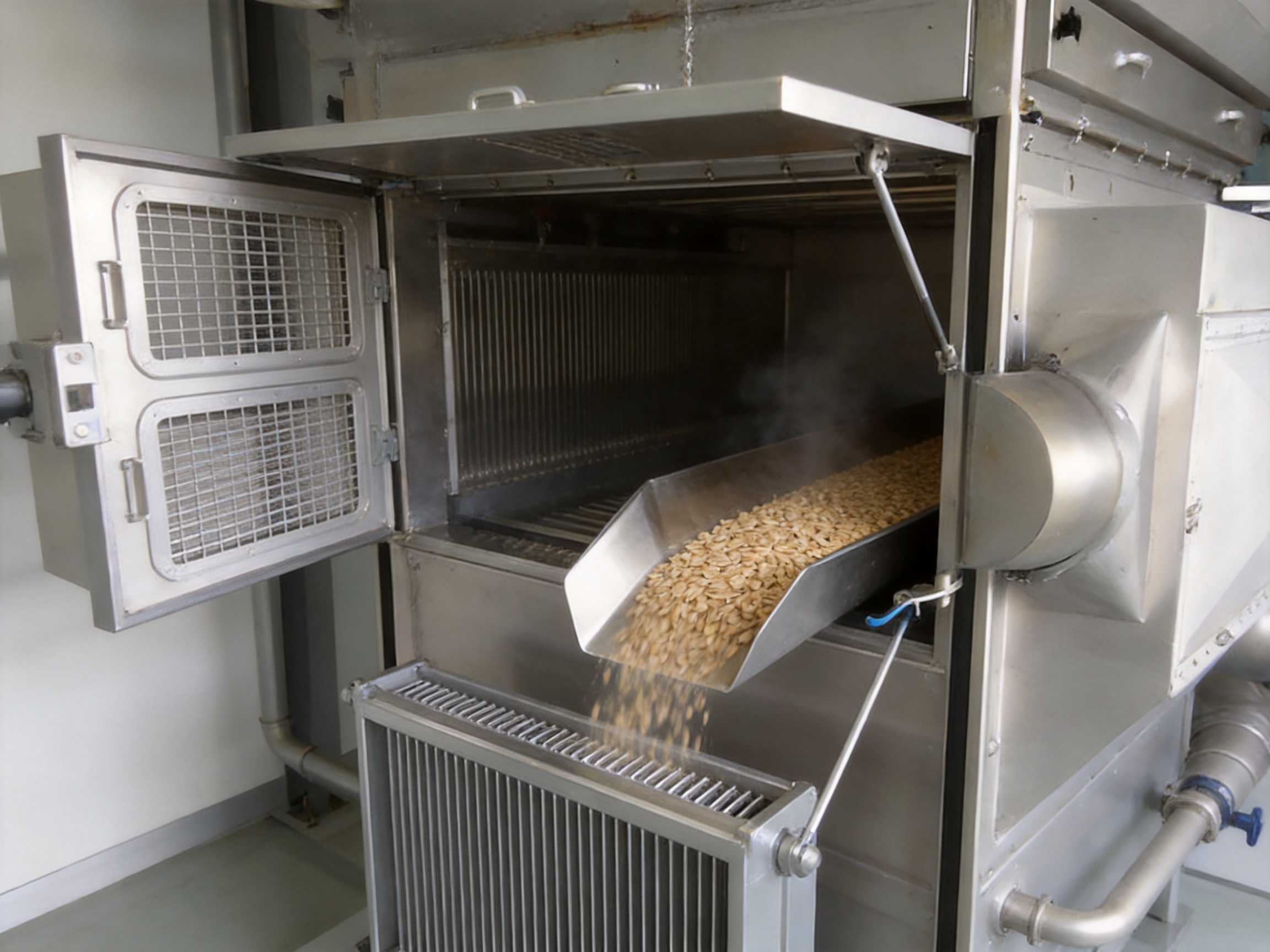
All parts that come into contact with the material are made of stainless steel. This construction helps prevent corrosion and reduces the risk of contamination caused by unsuitable materials. Stainless steel is widely used in food, feed, grain, and agricultural processing because it offers good resistance to moisture, steam, cleaning chemicals, and normal operating conditions.
Product-contact surfaces are especially important in hydrothermal equipment because the process includes elevated moisture and temperature. Carbon-steel surfaces may require additional protection and can become vulnerable if coatings are damaged. Stainless-steel construction provides a more suitable foundation for hygienic processing and long-term service.
3.4 No drive components inside the material flow
The design contains no drive components or moving parts within the material flow. This feature offers several practical benefits. It reduces the possibility of mechanical contamination, minimizes locations where oats can become trapped, and simplifies cleaning. It also helps protect internal drive parts from exposure to steam, moisture, product dust, and abrasion.
In equipment with internal moving components, bearings, paddles, chains, or drive shafts may become additional maintenance points. They can also create dead zones where product accumulates. Removing these components from the product stream supports cleaner operation and reduces the chance of unexpected mechanical contact with the processed material.
3.5 Separate hot and cold exhaust air
One of the important hygienic design features is the separation of hot and cold exhaust air. When air streams with different temperatures mix in an uncontrolled manner, condensation can occur. Moisture condensation inside processing equipment creates conditions that may support microbial growth, product caking, corrosion, and difficult cleaning.
By separating hot and cold exhaust air, the equipment helps prevent condensation in critical areas. This contributes to a more stable internal environment and supports better hygienic conditions. For oat processors, this is particularly valuable because product residue combined with moisture can become difficult to remove and may affect subsequent production cycles.
3.6 Reduced product accumulation
The equipment has a design intended to prevent material accumulation. Product buildup can cause several problems, including inconsistent residence time, reduced capacity, contamination between production runs, difficult inspection, and increased cleaning labor. The unique internal arrangement helps keep the material moving through the treatment area instead of allowing it to settle in corners or dead zones.
Reduced accumulation also supports more accurate process control. When old material remains inside a system, it may mix with newly fed product and make the effective residence time difficult to determine. A cleaner material path improves product traceability and process repeatability.
3.7 Accessible cleaning and maintenance
The cooling chamber is fitted with hinged cleaning flaps, and the air outlet guards use quick-release closures. These features allow operators to access areas that may require routine inspection or cleaning without lengthy disassembly.
All air, steam, and condensate pipelines are designed to be easily removable. Removable piping simplifies cleaning, inspection, and replacement. It also enables maintenance personnel to verify that condensate pathways are clear and that no residue has accumulated in low points or connections.
3.8 Pull-out stainless-steel radiators
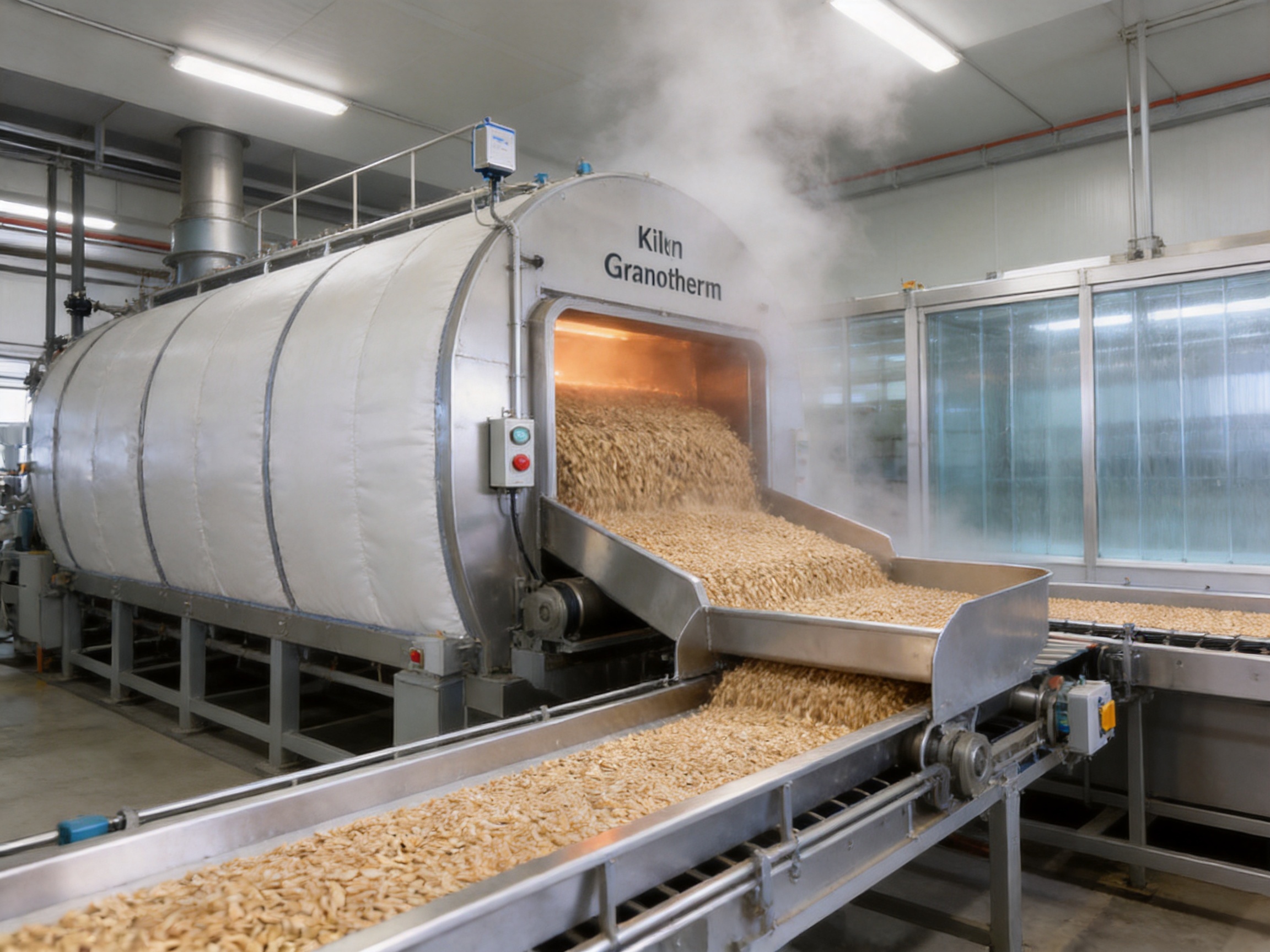
The stainless-steel radiators are of a pull-out type. This arrangement makes maintenance more convenient because technicians can access the radiators without dismantling a large portion of the equipment. Pull-out components reduce service time and make it easier to inspect heat-transfer surfaces, remove deposits, and replace worn parts.
Efficient maintenance is important in continuous grain and ingredient production. Shorter service procedures can reduce downtime and make preventive maintenance easier to schedule. In a food or feed plant, the ability to access heat-transfer components quickly also supports more regular hygiene inspections.
3.9 Thermal insulation and energy efficiency
The equipment is designed with effective thermal insulation and low energy consumption in mind. Good insulation reduces heat loss from the treatment chamber and helps maintain a more stable process temperature. It also improves workplace conditions by limiting the release of excess heat into the surrounding production area.
Energy efficiency depends on the complete installation, including steam quality, insulation condition, airflow balance, condensate recovery, feed rate, and operating temperature. Nevertheless, a well-insulated treatment chamber provides an important foundation for reducing avoidable energy losses.
4. Hygienic Design for Oat and Legume Processing
Hygiene is a central consideration in the design of equipment used for oats, legumes, feed ingredients, and food materials. The process may involve steam and elevated temperature, but thermal treatment alone does not eliminate the need for careful equipment construction and cleaning. Residues can remain in cold zones, air outlets, condensate lines, seals, and inaccessible corners if the machine is not designed for inspection and maintenance.
The Kiln Granotherm addresses hygiene through several coordinated features rather than a single component. Stainless-steel contact surfaces reduce corrosion risk. The absence of moving parts in the material flow reduces contamination points. Separate hot and cold exhaust air prevents condensation. Hinged access panels and removable pipelines make cleaning more practical.
A hygienic processing strategy should include the following operating practices:
- Inspecting product-contact surfaces at regular intervals.
- Removing accumulated dust and material residue.
- Checking condensate lines for blockage or standing water.
- Cleaning steam and air pipelines according to the plant sanitation schedule.
- Inspecting seals, closures, and access flaps for proper condition.
- Verifying that cooling air is clean and properly controlled.
- Recording cleaning, inspection, and maintenance activities.
Hygienic design also supports changeover between materials. If the same line processes different oat products or legumes, the ease of cleaning becomes an important factor in preventing cross-contamination. Removable components and accessible internal areas can help reduce changeover time and improve confidence in the sanitation process.
5. Integration With a Conditioner and Complete Processing Line
The Kiln Granotherm is often used together with a conditioner. The conditioner prepares the dehulled oats or legumes by applying moisture and heat, mixing the material, and helping establish a uniform starting condition. The treated material then enters the kiln system for controlled hydrothermal retention.
This combination creates a clear process sequence:
- Dehulled oats or prepared legumes are delivered to the treatment line.
- The material is metered at a controlled rate.
- A conditioner adds and distributes moisture and heat.
- The Kiln Granotherm provides the selected retention period.
- Enzyme activity is reduced through controlled hydrothermal treatment.
- The product passes through the cooling section.
- Cooled material is conveyed to drying, flaking, milling, storage, or packaging.
Integration with upstream and downstream equipment is important because stabilization quality depends on the whole line. A poorly controlled feeder can create fluctuations that cannot be corrected inside the treatment chamber. Similarly, inadequate cooling or conveying after treatment can affect storage stability and product quality.
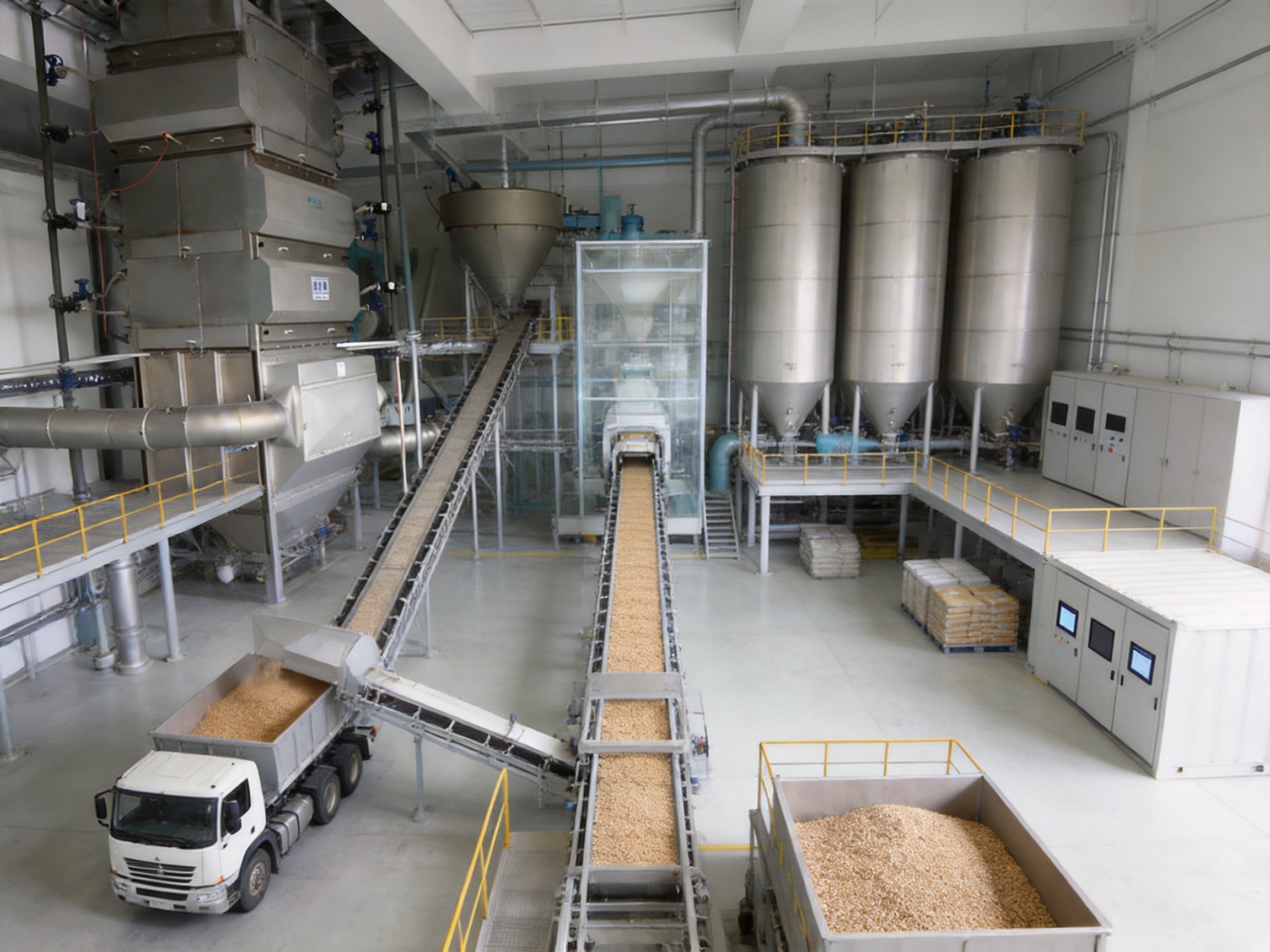
Jiangsu Zhengding Intelligent Equipment Co., Ltd. also provides automated loading and unloading equipment, including rear dumpers, side-turn truck dumpers, container flippers, and car loading systems. These solutions can support the movement of bulk raw materials and finished products around a processing facility. By combining material-handling equipment with process equipment, an industrial plant can reduce manual intervention and create a more continuous logistics flow.
Bulk handling integration can provide several benefits:
- More consistent material supply to the processing line.
- Reduced manual loading and unloading work.
- Lower risk of material segregation during transfer.
- Improved dust containment around receiving and dispatch areas.
- Better coordination between storage, treatment, and shipping operations.
- More efficient use of labor and plant space.
For large grain, food, feed, and agricultural facilities, the relationship between processing equipment and logistics equipment is increasingly important. A high-performance thermal treatment machine cannot deliver its full value if raw materials are supplied irregularly or if treated products are exposed to contamination during discharge and transfer.
6. Technical Parameters and Capacity Selection
The available Kiln Granotherm models include YZZ90 and YZZ140. The main published parameters are shown below. Output values are based on oats and should be confirmed during technical selection because actual capacity may vary with material properties and operating conditions.
| Product Model | Steam Consumption | Output Based on Oats |
|---|---|---|
| YZZ90 | 200 kg per metric ton | 1.0 to 2.0 metric tons per hour |
| YZZ140 | 200 kg per metric ton | 2.0 to 4.0 metric tons per hour |
The YZZ90 model is suitable for smaller production lines, pilot-scale expansion, or facilities whose required output is between approximately 1.0 and 2.0 metric tons per hour based on oats. The YZZ140 model provides a higher output range and is intended for operations requiring approximately 2.0 to 4.0 metric tons per hour.
Steam consumption is listed at 200 kilograms per metric ton. Actual consumption may depend on incoming material moisture, required treatment intensity, steam pressure, heat loss, ambient conditions, and the operating condition of the complete system. Processors should evaluate steam supply capacity and condensate management during project planning.
Capacity selection should consider more than the average daily production target. The following factors should also be reviewed:
- Peak hourly demand.
- Expected future production growth.
- Raw-material moisture range.
- Oat variety and particle size.
- Legume type and physical characteristics.
- Required treatment temperature and retention time.
- Available steam pressure and boiler capacity.
- Space available for installation and maintenance access.
- Downstream drying and cooling capacity.
Oversizing a machine may reduce operating efficiency if the system is consistently run below its intended load. Undersizing may create bottlenecks and force the rest of the production line to operate below capacity. A balanced selection should match the treatment system with the conditioner, conveyors, cooling equipment, storage bins, and packaging or dispatch equipment.
7. Process Quality and Product Stability
The purpose of oat hydrothermal treatment is to create a more stable and consistent ingredient. Enzyme inactivation is a major objective because uncontrolled lipase activity can contribute to rancidity and shorten the usable storage period. Proper treatment can help preserve a fresher taste and reduce the risk of product deterioration during subsequent storage.
Thermal treatment may also influence the flavor of oats and legumes. Controlled heating can develop a more pleasant roasted or cooked note, depending on the process profile. Flavor improvement must be balanced against the need to protect color, nutrition, texture, and functional properties. Precise control of moisture and residence time is therefore essential.
Cooling is another important quality stage. After the material has received the required heat treatment, it should be cooled in a controlled manner before storage or further processing. If hot material is transferred directly into a storage bin, internal condensation may occur as the product cools unevenly. This can create localized moisture accumulation and affect shelf life.
The cooling section of the Kiln Granotherm is designed to work with controlled airflow. The separate hot and cold exhaust arrangement helps reduce condensation risk and supports more hygienic operation. The cooling chamber also includes accessible cleaning features, allowing operators to inspect and maintain the air-handling area.
Quality monitoring may include:
- Incoming and outgoing moisture.
- Product temperature before and after treatment.
- Residence-time verification.
- Enzyme activity testing.
- Microbiological testing where required.
- Color and flavor evaluation.
- Bulk density and particle condition.
- Storage stability testing.
Testing should be established according to the processor’s product specifications and applicable food or feed regulations. The equipment provides process control, but final product performance also depends on raw-material quality, sanitation, storage conditions, and downstream handling.
8. Manufacturing Strengths and Engineering Capabilities
Jiangsu Zhengding Intelligent Equipment Co., Ltd. is a national high-tech enterprise engaged in the research and development, manufacturing, and sales of intelligent equipment for logistics and automated loading and unloading. The company’s product range includes rear dumpers, side-turn truck dumpers, automobile loading equipment, container flippers, and related systems for bulk-material handling.
This engineering background is relevant to the supply of oat processing equipment because modern grain and food plants often require more than an individual machine. They need coordinated systems for receiving raw materials, feeding process equipment, transferring finished product, loading vehicles, and handling containers. Experience in automated logistics allows the company to consider the complete material flow rather than treating each machine as an isolated unit.
The company serves a wide range of industries, including steel, chemical, cement, coal, grain, oil, food, feed, ports, papermaking, and new energy. Its products have been exported to Japan, Brazil, Egypt, Pakistan, India, the Middle East, and Southeast Asia. This international experience exposes the engineering team to different plant conditions, operating standards, climate environments, material characteristics, and customer requirements.
Reported international users and business groups associated with the company’s equipment experience include Budweiser, Heineken, Buhler Group, Wilmar International, Cargill, DuPont, Louis Dreyfus, Charoen Pokphand Group, and Saint-Gobain Group. Such industrial applications demonstrate the company’s focus on large-scale material handling and customized equipment solutions.
8.1 Research and development orientation
Research and development is important when equipment must handle variable agricultural materials. Oats and legumes can differ in moisture, density, particle size, flowability, and thermal response. A fixed machine configuration may require adjustments to suit a particular production line. Engineering development allows the manufacturer to adapt feed arrangements, control systems, piping, access points, and supporting equipment to the customer’s process.
A development-oriented manufacturer can also improve the equipment over time through feedback from operating plants. Maintenance experience may lead to better access panels, stronger seals, improved insulation, revised condensate lines, or more practical cleaning arrangements. These details have a direct impact on total ownership cost.
8.2 Manufacturing process
Manufacturing quality begins with design verification and material selection. Product-contact components for the Kiln Granotherm are made from stainless steel to support corrosion resistance and hygienic operation. Fabrication must maintain suitable surface quality, accurate dimensions, reliable welding, and proper alignment of removable and fixed parts.
The main manufacturing stages may include:
- Reviewing process requirements, capacity, and material characteristics.
- Preparing equipment drawings and confirming the process layout.
- Selecting stainless steel and other materials according to service conditions.
- Cutting, forming, and machining structural and product-contact parts.
- Welding and fabricating the treatment chamber and cooling sections.
- Installing radiators, air passages, steam connections, and condensate lines.
- Fitting access flaps, quick-release guards, insulation, and inspection points.
- Checking dimensions, weld quality, and component fit.
- Testing mechanical operation, airflow pathways, and steam connections.
- Completing factory inspection before shipment and installation.
Particular attention should be given to the interface between hot components and stainless-steel product-contact surfaces. Thermal expansion, sealing, insulation, and access for maintenance must all be considered. A well-designed machine should not only perform correctly when new; it should remain serviceable after repeated heating and cooling cycles.
8.3 Customized project support
Industrial processing lines differ in building height, raw-material route, electrical standards, steam availability, dust-control requirements, and downstream equipment. The manufacturer’s ability to provide systematic solutions helps customers adapt the equipment to their existing plant arrangement.
Project support may involve equipment selection, process-flow planning, feeding and discharge design, layout coordination, automated controls, loading and unloading integration, commissioning assistance, and operator training. The precise scope depends on the project and should be confirmed during technical discussions.
9. Automated Material Handling and Plant Efficiency
Oat processing plants often receive raw material in bulk vehicles or containers and ship finished ingredients in bags, bulk trucks, or other transport units. Manual handling between these stages can create delays, dust emissions, safety risks, and inconsistent feeding. Automated loading and unloading equipment can improve the connection between transportation and processing.
Jiangsu Zhengding provides equipment for automatic loading and unloading of automobiles and containers. Rear dumpers and side-turn truck dumpers can assist with bulk-material discharge, while container flippers and car loading equipment support loading and unloading operations. These systems are applicable to grain, feed, food, chemical, cement, coal, and other bulk products.
When combined with hydrothermal oat treatment, automated material handling can help establish a continuous workflow:
- Bulk vehicles discharge raw oats into the receiving system.
- Screening, cleaning, dehulling, and conveying prepare the material.
- A controlled feeder supplies the conditioner and Kiln Granotherm.
- Cooled stabilized product is transferred to storage or further processing.
- Finished product is loaded into vehicles or containers using automated equipment.
Efficient transfer reduces unnecessary handling and can help minimize segregation. This is important for granular materials because differences in particle size or density may cause separation during uncontrolled conveying or loading. A well-designed handling system maintains a more uniform product stream and supports accurate inventory management.
Automation can also improve workplace safety. Heavy vehicle unloading and loading operations involve risks associated with tipping, elevated platforms, moving equipment, and dust. Properly engineered automatic systems can reduce the need for personnel to work directly in hazardous areas. Safety interlocks, access controls, emergency stops, and operating procedures remain essential components of the complete installation.
10. Installation and Commissioning Considerations
Successful installation begins with a clear understanding of the site. Before delivery, the processor should confirm foundation requirements, equipment dimensions, lifting access, electrical supply, steam connections, condensate drainage, exhaust routing, cooling-air intake, and maintenance clearance.
The treatment machine should be positioned so that operators can open cleaning flaps, remove pipelines, withdraw radiators, inspect seals, and access controls without obstruction. Adequate service space is not an optional feature. It directly influences how consistently preventive maintenance and sanitation tasks are performed.
Commissioning should be completed in stages. The first stage is usually a mechanical inspection to verify that all components are installed correctly and that transport supports have been removed. The second stage checks electrical controls, sensors, alarms, interlocks, drives, valves, and instrumentation. The third stage confirms steam, air, and condensate performance without product. The final stage uses representative oats or legumes to establish operating parameters.
During product trials, the following items should be recorded:
- Feed rate.
- Initial moisture.
- Steam pressure and consumption.
- Conditioner settings.
- Material temperature.
- Residence time.
- Cooling-air conditions.
- Final moisture and temperature.
- Enzyme activity or other quality indicators.
- Energy use and product yield.
Trial results should be compared with the customer’s product requirements. Adjustments may be required to the conditioner, steam supply, retention time, airflow, or cooling stage. Process optimization should be performed gradually so that the effect of each adjustment can be evaluated.
11. Operation and Maintenance Recommendations
Reliable performance depends on correct operation and regular maintenance. Operators should receive training in startup, normal operation, shutdown, cleaning, emergency procedures, and basic fault identification. They should understand the relationship between feed rate, steam input, retention time, and final product quality.
Before startup, operators should confirm that the treatment chamber is clean, access doors and closures are secure, pipelines are connected, condensate routes are open, and downstream equipment is ready to receive product. Steam should be introduced according to the approved startup sequence to avoid sudden thermal stress or uncontrolled condensation.
During operation, operators should monitor material flow and look for signs of accumulation, unstable discharge, unusual vibration, abnormal temperature, or changes in steam consumption. Any irregularity should be investigated before it causes product-quality problems or mechanical damage.
After production, the equipment should be shut down according to the recommended sequence. Product should be cleared from the material path, and the cooling system should operate long enough to reduce residual heat where required. Cleaning should follow the plant’s sanitation program and the material being processed.
11.1 Preventive maintenance schedule
Recommended maintenance may include quarterly inspection of lifting or internal material-guidance components and thermal surfaces, semiannual inspection of the drive system and bearings, and annual inspection or replacement of thermocouples and seal elements depending on their condition. Heating elements may have an operational life of approximately 8,000 to 12,000 hours, depending on operating temperature and cycling frequency.
These intervals are general guidelines rather than substitutes for condition-based maintenance. Actual service frequency should be adjusted according to operating hours, dust levels, steam quality, cleaning chemicals, temperature, material abrasiveness, and the manufacturer’s maintenance instructions.
Important inspection points include:
- Stainless-steel surfaces and weld areas.
- Access flaps and quick-release closures.
- Radiator surfaces and connections.
- Steam valves and flexible connections.
- Condensate pipelines and traps.
- Exhaust-air passages and guards.
- Insulation and external covers.
- Temperature sensors and control instruments.
- Bearings, external drive components, and seals.
A documented maintenance program helps identify recurring issues and supports better spare-parts planning. It also provides useful information when optimizing energy consumption or investigating changes in product quality.
12. Comparison With Alternative Thermal Treatment Systems
Conventional thermal treatment systems may use direct hot air, batch steam chambers, indirect heating surfaces, or basic rotary arrangements. Each method may be suitable for certain materials, but the selection must consider the specific requirements of dehulled oats and legumes.
A basic hot-air system may provide drying but may not deliver the controlled moisture addition needed for hydrothermal enzyme inactivation. A batch steam chamber can provide intense treatment but may require more manual handling and may produce greater variation between batches. Equipment with internal moving parts in the material stream can create additional contamination and maintenance points.
The Kiln Granotherm is differentiated by the combination of several features:
| Consideration | Basic Heating Chamber | Conventional Batch System | Kiln Granotherm |
|---|---|---|---|
| Continuous processing | May be available | Usually limited | Designed for continuous integration |
| Controlled moisture and heat addition | Variable | Possible but batch dependent | Designed for accurate adjustment |
| Retention-time control | May be inconsistent | Batch timing | Controlled retention setting |
| Product-contact material | Depends on design | Depends on design | Stainless steel |
| Internal moving parts in material flow | May be present | May be present | No drive components or moving parts in the material flow |
| Condensation control | Depends on airflow design | Depends on chamber design | Hot and cold exhaust air separated |
| Cleaning access | Varies | Often requires opening the chamber | Hinged flaps, quick-release guards, and removable pipelines |
| Heat retention | Varies | Varies | Thermal insulation designed for low energy consumption |
The most suitable solution depends on the desired capacity, raw material, product specification, available utilities, and overall process layout. The comparison demonstrates why a purpose-designed hydrothermal treatment system can provide advantages beyond simple heating capacity.
13. Applications Beyond Dehulled Oats
Although the Kiln Granotherm is primarily intended for dehulled oats and legumes, the general operating concept may be applied to other granular agricultural materials when their physical and thermal characteristics are compatible with the equipment.
Potential applications may include selected cereal ingredients, specialty feed materials, oilseed-related products, and other particulate products that benefit from controlled heat and moisture treatment. Each application should be evaluated separately because material behavior can vary significantly.
Important application questions include:
- Does the material remain free-flowing during treatment?
- Can it tolerate the required temperature and residence time?
- Will steam cause excessive agglomeration?
- Does the product require enzyme inactivation, microbial reduction, or flavor development?
- What final moisture is acceptable?
- Is cooling required before storage?
- Are there special allergen or cross-contamination controls?
Testing with actual material is recommended before finalizing a commercial process. Laboratory analysis and pilot trials can help establish the required steam input, treatment duration, cooling conditions, and downstream drying requirements.
14. Why Manufacturer Experience Matters
Choosing processing equipment is also a choice of engineering partner. Thermal treatment machines are connected to feeders, steam systems, air systems, condensate drains, controls, conveyors, storage equipment, and loading systems. Problems at the interfaces between these components can reduce the effectiveness of an otherwise well-designed machine.
A manufacturer with experience in intelligent logistics equipment understands the importance of complete material flow. Jiangsu Zhengding’s broader product portfolio includes automated loading and unloading solutions for vehicles and containers, giving the company experience with bulk-material movement, industrial structures, control systems, and customer-specific layouts.
The company’s focus on automation, safety, customized solutions, integrated metering, and unloading systems supports the requirements of modern processing facilities. Its equipment is used in industries with demanding production environments, including grain, food, feed, chemicals, cement, steel, and port logistics.
For customers purchasing oat stabilization equipment, manufacturer strengths may include:
- Process-oriented equipment design.
- Stainless-steel fabrication for product-contact components.
- Experience with automated material handling.
- Ability to coordinate equipment with existing lines.
- Support for customized capacity and layout requirements.
- International project experience.
- Focus on maintenance access and hygienic operation.
- Development of integrated loading, unloading, and conveying solutions.
These capabilities can reduce project complexity for customers who prefer to source several related systems from one engineering supplier. They also make it easier to coordinate mechanical, electrical, process, and logistics requirements during installation.
15. Frequently Asked Questions
Q1. What is the primary purpose of the Kiln Granotherm?
The primary purpose is the hydrothermal treatment of dehulled oats and legumes. The system adds controlled moisture and heat for a defined retention time to support enzyme inactivation, product stabilization, microbial contamination reduction, and improved flavor.
Q2. Is the equipment suitable for use with a conditioner?
Yes. The equipment is often used together with a conditioner. The conditioner helps prepare the material by distributing moisture and heat, while the Kiln Granotherm provides the controlled treatment and retention stage.
Q3. Why is enzyme inactivation important in oat processing?
Dehulled oats contain enzymes that can break down lipids and contribute to rancid flavors and reduced storage stability. Controlled hydrothermal treatment reduces this activity and helps produce a more stable oat ingredient.
Q4. What are the available equipment models?
The listed models are YZZ90 and YZZ140. The YZZ90 has an oat-based output range of approximately 1.0 to 2.0 metric tons per hour, while the YZZ140 has an oat-based output range of approximately 2.0 to 4.0 metric tons per hour.
Q5. What is the listed steam consumption?
The listed steam consumption is 200 kilograms per metric ton. Actual consumption may change depending on incoming moisture, process temperature, steam conditions, heat losses, and the operating settings selected for the product.
Q6. Are the product-contact parts made from stainless steel?
Yes. All parts in contact with the material are made of stainless steel. This helps prevent corrosion and contamination and provides a suitable surface for food, feed, grain, and agricultural processing applications.
Q7. Does the machine contain moving drive parts inside the product stream?
No. The design does not place drive components or moving parts within the material flow. This helps reduce contamination risks, product trapping, and maintenance requirements inside the treatment path.
Q8. How does the system reduce condensation?
Hot and cold exhaust air are separated. This prevents the mixing of air streams with significantly different temperatures and reduces the risk of condensation, which can contribute to microbial growth and product accumulation.
Q9. How is cleaning carried out?
The equipment includes hinged cleaning flaps, quick-release closures on cooling-chamber air outlet guards, pull-out stainless-steel radiators, and removable air, steam, and condensate pipelines. These features provide better access for cleaning and inspection.
Q10. Can the equipment process legumes?
Yes. The equipment is primarily used for dehulled oats and legumes. The specific process conditions should be confirmed according to the legume type, moisture, particle size, required treatment effect, and final product specification.
Q11. What should be considered when selecting a model?
Capacity, raw-material characteristics, steam availability, required residence time, initial and final moisture, downstream drying capacity, future production plans, installation space, and maintenance access should all be considered. Technical confirmation with the manufacturer is recommended before ordering.
Q12. Can the equipment be integrated into an automated plant?
Yes. The Kiln Granotherm can be connected with conditioners, feeders, conveyors, cooling systems, storage equipment, and automated material-handling systems. The manufacturer also supplies automated loading and unloading equipment for vehicles and containers.
Q13. What maintenance is generally recommended?
General recommendations include quarterly inspection of internal treatment components and thermal surfaces, semiannual inspection of external drives and bearings, and annual inspection or replacement of sensors and seals as required. Actual intervals should be based on operating conditions and equipment inspection results.
Q14. Does the system improve product flavor?
Hydrothermal treatment can improve the flavor of finished oat and legume products by producing a more desirable cooked or treated profile. Flavor results depend on the raw material and the selected thermal and moisture conditions.
Q15. What company supplies this equipment?
The equipment is supplied by Jiangsu Zhengding Intelligent Equipment Co., Ltd., a Chinese manufacturer of intelligent loading and unloading equipment, logistics machinery, and related industrial systems. The company also provides customized solutions for grain, food, feed, chemical, cement, steel, port, and other industries.
16. Conclusion
The Kiln Granotherm is a specialized hydrothermal treatment solution for processors that need stable, hygienic, and repeatable treatment of dehulled oats and legumes. Its core function is to apply controlled moisture and heat for an accurate retention period, supporting enzyme inactivation, microbial contamination reduction, product stabilization, and flavor improvement.
The machine’s principal advantages include stainless-steel product-contact construction, no internal drive components in the material flow, separated hot and cold exhaust air, accessible cleaning flaps, quick-release cooling-air guards, pull-out radiators, removable pipelines, reduced material accumulation, strong thermal insulation, and low energy consumption.
Its available YZZ90 and YZZ140 models provide oat-based output ranges of approximately 1.0 to 2.0 metric tons per hour and 2.0 to 4.0 metric tons per hour respectively. Used with a conditioner and integrated with suitable feeding, cooling, conveying, storage, and loading systems, the equipment can form an effective part of a continuous oat processing line.
Jiangsu Zhengding Intelligent Equipment Co., Ltd. strengthens this offering through experience in intelligent logistics, automated vehicle and container loading and unloading, customized industrial equipment, and international applications. For processors looking to improve oat stability while maintaining hygienic operation and practical maintenance, the Kiln Granotherm provides a well-structured solution for modern grain and ingredient production.
References
1. Product technical information for Kiln Granotherm, including product features, model data, steam consumption, and oat-based output specifications.
2. General principles of hydrothermal stabilization in cereal and legume processing, including enzyme control, moisture management, thermal treatment, and cooling.
3. Hygienic design practices for food, feed, grain, and agricultural processing equipment.
4. Preventive maintenance principles for steam-treatment equipment, heat-transfer systems, airflow systems, and industrial conveying machinery.
5. Technical information on Jiangsu Zhengding Intelligent Equipment Co., Ltd., including intelligent logistics equipment, automated loading and unloading systems, and industrial applications.


