

 English
 русский
 Español
 Français
 Português
 عربى
عربى




+86-13588556918
Content
- 1 1. What Is a Drum Groats Cutter?
- 2 2. Primary Uses in Oat and Grain Processing
- 3 3. Why Uniform Kernel Cutting Matters
- 4 4. Main Design and Structural Features
- 5 5. Operating Principle
- 6 6. Product Advantages Compared with Conventional Equipment
- 7 7. Technical Parameters
- 8 8. Recommended Process Flow for Oat Cutting
- 9 9. Manufacturing Strengths and Engineering Capabilities
- 10 10. Manufacturing Process for a Reliable Drum Groats Cutter
- 11 11. Installation and Commissioning
- 12 12. Maintenance and Service Recommendations
- 13 13. Product Quality Control
- 14 14. Comparison with Hammer Mills and Other Size-Reduction Equipment
- 15 15. Energy Efficiency and Operating Economics
- 16 16. Automation and Intelligent Processing Lines
- 17 17. Safety Considerations
- 18 18. Environmental and Hygienic Benefits
- 19 19. Customer-Specific Engineering and Export Experience
- 20 20. Selection Guide for Buyers
- 21 21. Frequently Asked Questions
- 21.1 Q1: What does the Drum Groats Cutter produce?
- 21.2 Q2: What materials can be processed?
- 21.3 Q3: What is the output of the YQL50 model?
- 21.4 Q4: How much cutting waste should be expected?
- 21.5 Q5: Can the cutting speed be adjusted?
- 21.6 Q6: Why is stainless steel used for the cutting drum?
- 21.7 Q7: Does the machine require a screening system?
- 21.8 Q8: What moisture range is suitable?
- 21.9 Q9: How often should the equipment be maintained?
- 21.10 Q10: Can the machine be integrated into an automated line?
- 21.11 Q11: Is the machine suitable for small and medium-sized plants?
- 21.12 Q12: What should be tested before commercial production?
- 22 22. Conclusion
- 23 References
- 24 Product: Drum Groats Cutter
Modern grain processors require more than simple size reduction. They need equipment that can cut kernels accurately, maintain stable output, minimize waste, consume limited energy, and operate reliably for long production cycles. The Drum Groats Cutter is designed to meet these requirements by converting dehulled oat kernels into uniformly sized groats through controlled drum cutting.
Unlike impact-based milling equipment that fractures kernels randomly, the Drum Groats Cutter applies a controlled cutting action. This approach helps produce steel-cut oats with a consistent appearance and more predictable particle-size distribution. It is particularly suitable for oat processors producing fine, medium, or coarse groats, while also offering flexibility for barley, rye, wheat, and rice processing.
The equipment combines a stainless-steel cutting drum, adjustable rotational speed, carefully arranged working holes, and a compact drive system. These features support stable production while helping keep cutting waste below 1 percent under suitable operating conditions. The result is a practical solution for cereal processors that need dependable performance without excessive energy consumption or complicated operation.
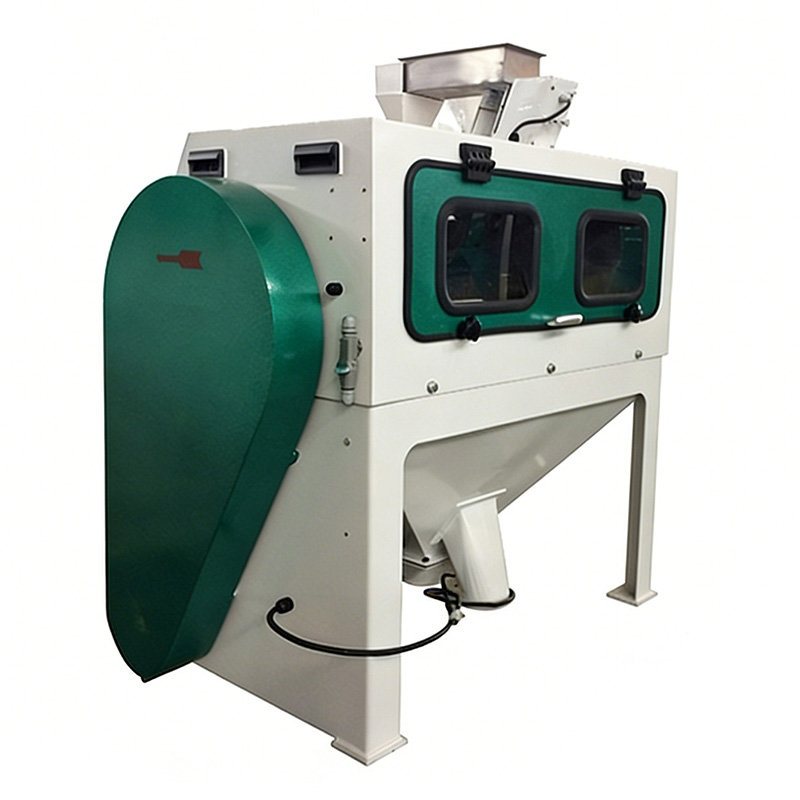
Drum Groats Cutter
1. What Is a Drum Groats Cutter?
A Drum Groats Cutter is a specialized grain-processing machine used to divide dehulled kernels into smaller, relatively uniform pieces. In oat processing, the machine receives cleaned and dehulled oat kernels and cuts them into approximately three to four segments. These segments are commonly known as steel-cut oats or oat groats, depending on the stage of processing and the desired market specification.
The cutting process is performed inside or around a rotating drum fitted with working holes and cutting surfaces. As kernels enter the cutting zone, the rotating drum guides them toward the cutting elements. The kernel is divided rather than pulverized, allowing the processor to obtain a more regular groat size and reduce the amount of powder and irregular fragments.
The equipment is different from a conventional hammer mill, which relies primarily on repeated impact. It is also different from a roller mill that generally flattens or cracks material between two rolls. The Drum Groats Cutter is designed specifically for controlled kernel segmentation. This makes it well suited to products where visual uniformity, cooking performance, and particle-size consistency are important.
For oat processors, uniform cutting is important because groat size affects cooking time, water absorption, texture, packaging appearance, and consumer perception. If the cut pieces vary widely, smaller fragments may become overcooked while larger pieces remain firm. A consistent cutting process allows manufacturers to produce a more predictable final product.
2. Primary Uses in Oat and Grain Processing
The principal application of the Drum Groats Cutter is the production of steel-cut oats from dehulled oat kernels. Depending on the required product specification, the machine can produce fine, medium, or coarse cuts. The selected cut grade may be influenced by market demand, cooking instructions, packaging format, and downstream processing requirements.
Fine groats are often used in products requiring shorter cooking times or a smoother texture. Medium groats provide a balance between cooking speed and visible grain structure. Coarse groats are suitable for products where a more substantial texture and longer cooking time are preferred. Adjustable drum rotation enables processors to adapt the cutting action to different kernel lengths and product grades.
Although developed for oat processing, the machine can also be used for other cereal materials. Barley, rye, wheat, and rice may be processed when their physical characteristics and moisture levels are suitable for the equipment. Before commercial production, each material should be tested to confirm the correct feed preparation, drum configuration, speed, and capacity.
In addition to retail breakfast cereals, cut grain products may be used in ingredient production, bakery formulations, cereal blends, nutrition products, instant-food preparations, and food-service applications. The machine can therefore form part of a larger cereal-processing line that includes cleaning, grading, dehulling, aspiration, cutting, screening, weighing, and packaging.
3. Why Uniform Kernel Cutting Matters
Kernel uniformity is one of the most important quality factors in steel-cut oat production. A uniform cut creates a more consistent cooking response and improves the appearance of the finished product. It also makes the product easier to grade, pack, transport, and market.
When a cutting machine produces excessive fines, the product may contain too much powder or small broken material. Fines can reduce the visual quality of packaged oats and may create dust during conveying and filling. They can also change the cooking behavior of the product by absorbing water more rapidly than larger groats.
Excessively large or irregular pieces create a different problem. They may require additional screening or reprocessing, increasing labor and energy consumption. A well-designed cutting system should therefore balance high throughput with accurate segmentation and limited recirculation.
The Drum Groats Cutter is designed to support this balance. Its cutting drum provides a controlled working surface, while the adjustable rotation speed gives operators a way to adapt the process to different materials and desired cut lengths. Under suitable operating conditions, the stated cutting waste is less than 1 percent, helping processors retain more saleable material.
4. Main Design and Structural Features
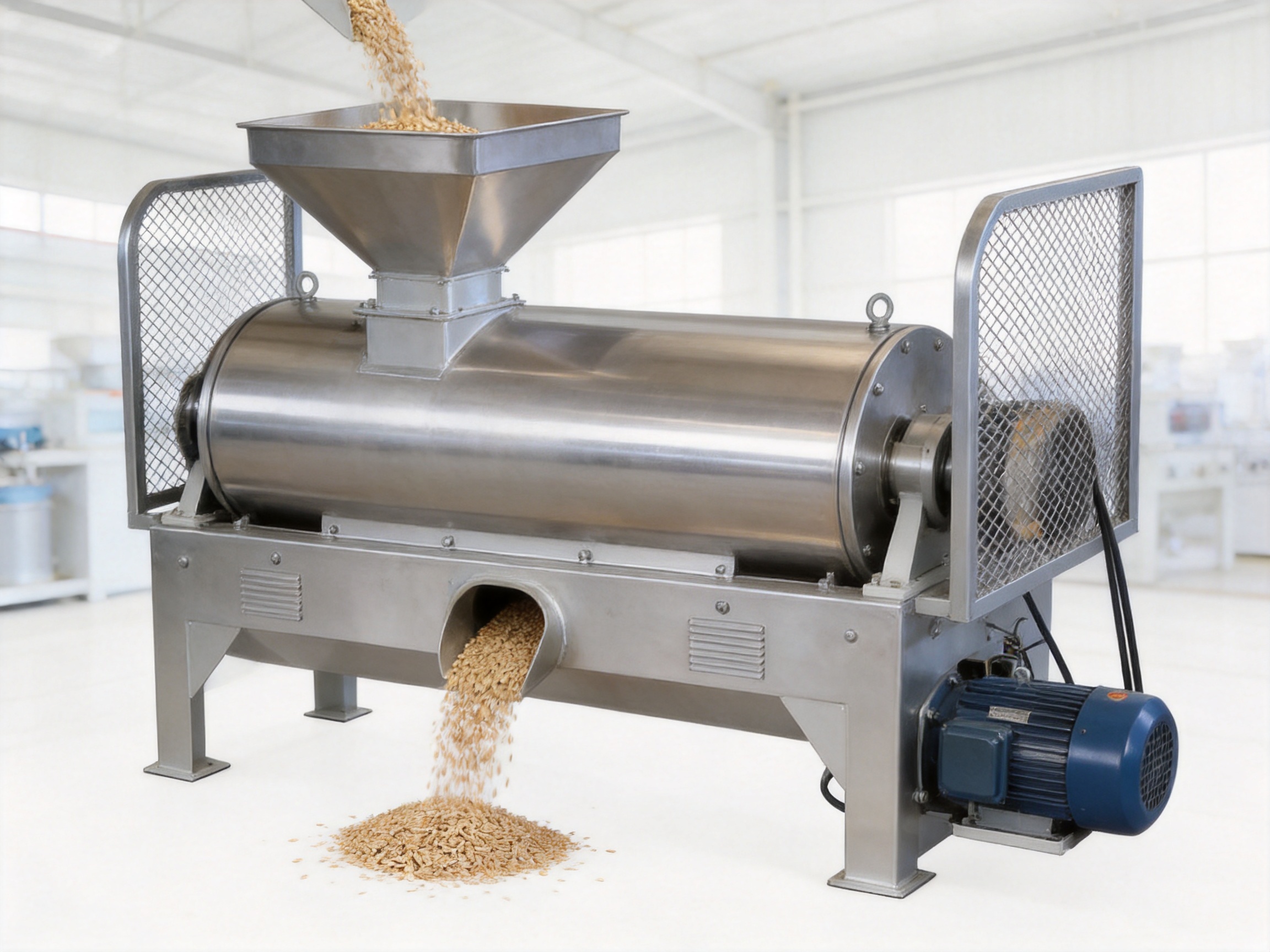
4.1 Stainless-Steel Cutting Drum
The cutting drum is manufactured with stainless steel. This material provides several advantages in cereal processing. It offers good resistance to corrosion, supports hygienic operation, and is suitable for environments where the machine may be exposed to grain dust, cleaning procedures, and changing humidity.
Stainless steel also contributes to a long service life when the drum is correctly operated and maintained. The material must still be inspected for wear, deformation, or surface damage, but its durability makes it a practical choice for food and grain applications. Smooth and cleanable surfaces also help reduce the accumulation of residues in areas that are accessible during maintenance.
4.2 Increased Number of Working Holes
The equipment design increases the number of working holes on the cutting drum. This change improves the effective working area and allows more kernels to enter the cutting zone during each rotation. As a result, the machine can achieve improved production capacity without requiring a proportionate increase in machine size.
The arrangement of working holes must be balanced carefully. If the openings are too large, cut precision may decrease. If they are too small, throughput may be restricted and blockages may become more likely. The drum configuration is therefore an important part of the machine’s ability to combine capacity and product uniformity.
4.3 Adjustable Rotation Speed
Kernel length, moisture content, hardness, and desired cut size vary between raw materials. A single fixed rotational speed would not be ideal for every application. The Drum Groats Cutter uses adjustable rotation speed so operators can adapt the cutting action to the material being processed.
Speed adjustment can help manufacturers produce different grades of groats and process kernels of various lengths. It also provides a useful operating tool when the raw material changes between harvests or suppliers. Operators should make speed changes gradually and verify product size through regular sampling.
4.4 Compact Drive System
The listed YQL50 model uses a 1.5 kW motor and provides an output of approximately 0.8 to 1.0 tons per hour based on oats. This gives smaller and medium-sized processors access to a dedicated cutting solution without requiring a large power installation.
A compact drive system can simplify plant layout, reduce installation requirements, and make the equipment easier to integrate with conveyors, elevators, aspiration systems, and screening units. The final electrical configuration should be confirmed according to local power standards, plant conditions, and customer requirements.
5. Operating Principle
The operating process begins when prepared kernels enter the feed inlet. The raw material should normally be cleaned and dehulled before cutting. Foreign objects, stones, metal, excessive husk, and other contaminants should be removed upstream to protect the cutting drum and maintain food-product quality.
After entering the machine, kernels are distributed into the working area of the rotating drum. The drum’s holes and cutting surfaces control the movement of the kernels. As the drum rotates, the kernels encounter a cutting force that divides them into smaller segments.
The cutting action is more controlled than the random impact generated by a hammer mill. Instead of repeatedly striking kernels until they become small particles, the Drum Groats Cutter is intended to create deliberate cuts. This is particularly valuable when the target product is a recognizable groat rather than flour or fine meal.
After cutting, the product can be discharged to a grading or screening system. Screening may separate fine particles, acceptable groats, and oversized pieces. Oversized material may be returned for another pass if the production process requires a narrow size range. The best arrangement depends on the product specification and the desired balance between capacity and final uniformity.
Operators should monitor feed rate, drum speed, motor load, product temperature, dust levels, and cut-size distribution. Stable feeding is especially important. Sudden surges can overload the cutting area, while an insufficient feed rate can reduce productivity and make the cutting action less consistent.
6. Product Advantages Compared with Conventional Equipment
6.1 Better Cut Uniformity
The most important advantage of a Drum Groats Cutter is its focus on segmentation rather than general-purpose crushing. The machine is designed to create pieces with a more consistent size and shape. This supports predictable cooking performance and improves the presentation of packaged steel-cut oats.
Traditional impact equipment can produce a mixture of powder, small fragments, and larger broken pieces. Such a mixture may require intensive screening and recirculation. A purpose-built cutting machine can reduce this variation at the source, improving the efficiency of later grading operations.
6.2 Lower Cutting Waste
The stated cutting waste of the equipment is no more than 1 percent. Lower waste improves material utilization and can have a meaningful effect on the economics of cereal processing. Even a small reduction in waste becomes important when a plant operates continuously or handles high-value grain.
Reduced waste also supports better product yield. More of the dehulled oat kernel is converted into saleable groats, while less material is lost as dust or unsuitable fragments. Actual results depend on kernel condition, feed preparation, operating speed, and the design of the complete processing line.
6.3 Low Energy Consumption
The machine uses a relatively low-power motor for its stated capacity. Its cutting action is designed to reduce unnecessary impact and repeated grinding. This can help limit energy consumption compared with equipment that must break material down through multiple high-speed impacts.
Lower energy demand can reduce operating costs and support a more efficient plant design. It may also reduce heat generation in the processing zone, which is useful when protecting the quality of cereal products. Energy performance should be evaluated together with actual throughput, because energy per ton is more meaningful than motor power alone.
6.4 Flexible Product Grades
The adjustable rotation speed allows the same machine platform to support fine, medium, and coarse kernel products. This flexibility is useful for manufacturers that serve several markets or change product specifications during the year.
Instead of purchasing separate machines for every cut grade, a processor may adjust operating conditions and combine the cutter with different screening arrangements. Product trials are recommended to determine the appropriate speed and screening configuration for each grade.
6.5 Suitability for Multiple Cereals
The Drum Groats Cutter can be applied to oats, barley, rye, wheat, and rice when the material is properly prepared. This broadens the machine’s usefulness and enables a processing facility to handle more than one cereal product.
Multi-material capability is especially valuable for contract processors and food manufacturers with seasonal production schedules. However, changeover procedures should be planned carefully. The cutting chamber, feed system, and discharge areas should be cleaned thoroughly between materials to avoid cross-contamination and preserve product identity.
7. Technical Parameters
| Product Model | Motor Power | Output Based on Oats | Cutting Waste |
|---|---|---|---|
| YQL50 | 1.5 kW | 0.8–1.0 t/h | ≤1% |
The YQL50 is a compact model intended for oat cutting applications. Its rated output is based on oats and should not automatically be applied to barley, rye, wheat, rice, or other materials. Differences in kernel size, moisture, hardness, bulk density, and cleanliness may affect capacity.
Before installation, the processor should confirm the required capacity, raw-material specifications, power supply, feeding method, discharge height, and available floor space. The machine may be installed as an independent unit or integrated into a complete oat-processing line.
Capacity testing should be performed using representative production material. Laboratory grain or a small sample may not accurately reflect commercial performance because industrial raw material can contain variation in moisture and kernel size. A practical test should examine both throughput and final product quality.
8. Recommended Process Flow for Oat Cutting
A complete oat-processing line normally begins with receiving and preliminary cleaning. Raw oats may contain dust, stones, metal particles, plant residue, and other foreign materials. Cleaning equipment removes these contaminants before the grain reaches sensitive processing machinery.
After cleaning, the oats may be graded according to size. Grading helps separate kernels with different physical dimensions and can improve the consistency of subsequent dehulling and cutting. The precise configuration depends on the raw material and the target product.
Dehulling is the next important stage. The Drum Groats Cutter is designed for dehulled kernels rather than whole oats with intact husks. Removing the hull before cutting helps expose the edible kernel and reduces unwanted fibrous material in the final product.
Following dehulling, aspiration or separation equipment may remove loose hulls and light impurities. The cleaned groats are then conveyed to the cutter. Stable feeding is recommended so that the cutting drum receives a regular supply of material.
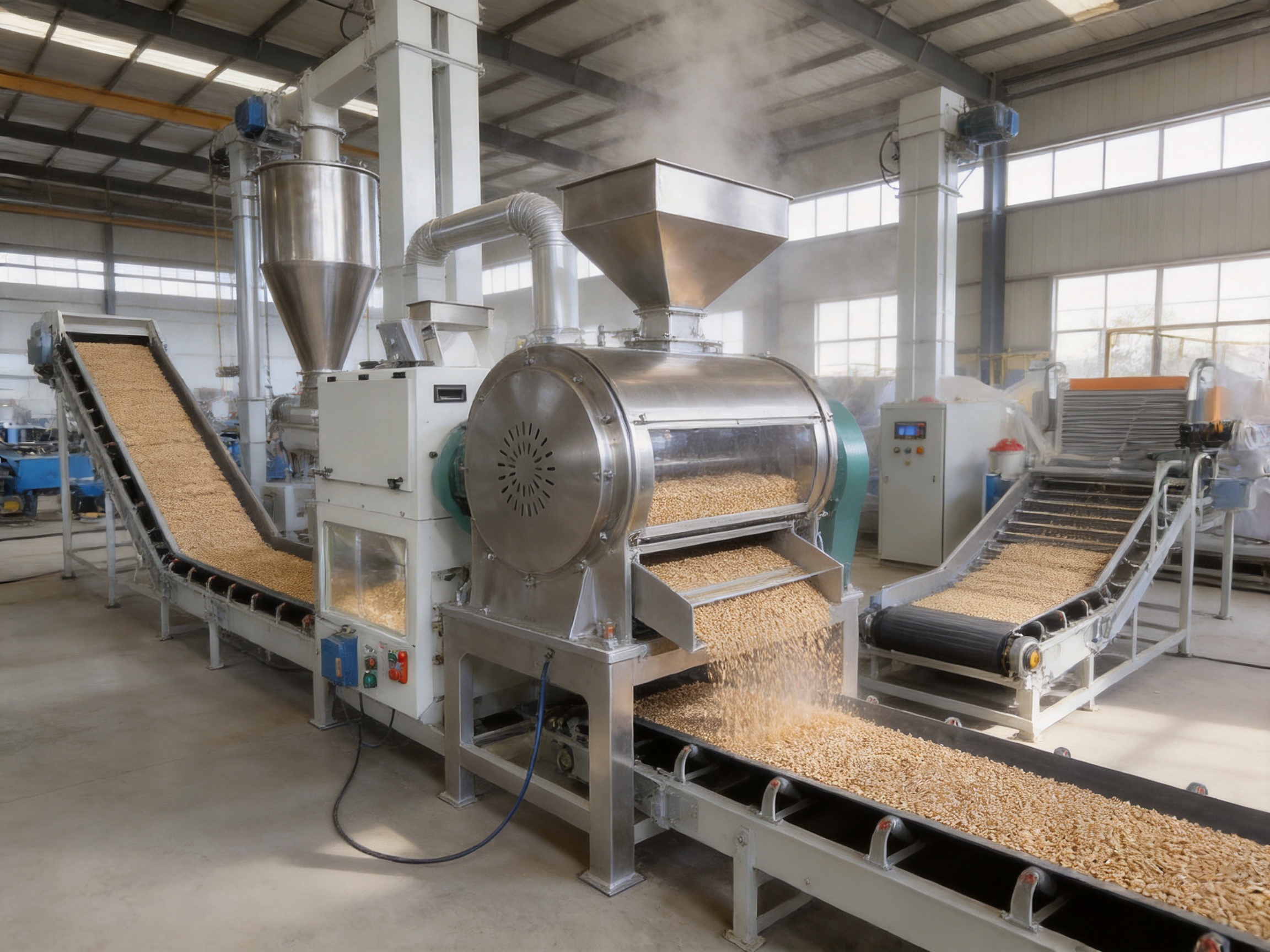
After cutting, the groats may pass through a plansifter, rotary screen, or other grading device. The screen separates fine material and oversized pieces from the desired product fraction. Depending on the product strategy, fines may be used in another formulation, while oversized pieces may be returned to the cutter.
The final product can then be weighed, packed, or transferred to additional processing equipment. For ready-to-cook or breakfast-cereal products, further steaming, stabilization, drying, flavoring, blending, or packaging operations may follow.
9. Manufacturing Strengths and Engineering Capabilities
The manufacturer behind the equipment is Jiangsu Zhengding Intelligent Equipment Co., Ltd., a national high-tech enterprise engaged in research and development, manufacturing, and sales of intelligent equipment. Its primary expertise is in automated loading and unloading systems for trucks, containers, ships, and related logistics applications.
This industrial background is relevant to the Drum Groats Cutter because reliable processing equipment depends not only on the cutting mechanism but also on material handling, feeding, discharge, automation, safety, and integration. A manufacturer experienced in complete mechanical systems can approach the cutter as part of a production line rather than as an isolated machine.
The company develops equipment for industries including steel, chemical, cement, coal, grain, oil, food, feed, ports, papermaking, and new energy. Working across these sectors requires experience with different bulk materials, dust conditions, loading patterns, operating environments, and safety requirements.
Its product range includes rear dumpers, side-turn truck dumpers, car loading equipment, container flippers, and other automatic loading and unloading systems. These products demonstrate capabilities in heavy mechanical construction, hydraulic or electric actuation, structural design, control systems, and customized industrial integration.
For a grain processor, these capabilities can support the design of a connected system in which raw materials are received, conveyed, processed, measured, stored, and packaged with less manual handling. Integrated material movement helps reduce transfer losses and can improve workplace safety.
9.1 Research and Development
Research and development is important in adapting a cutting machine to different grains and production requirements. Product development may involve drum geometry, hole arrangement, cutting clearances, rotational speed, material selection, wear resistance, feeding stability, and discharge performance.
Testing different kernel types helps engineers understand how moisture and hardness influence cutting quality. Oats, barley, rye, wheat, and rice each have different physical characteristics. A design that performs well with one cereal may require adjustments for another.
Engineering work also includes the development of practical maintenance procedures. Components that wear during production should be accessible for inspection, cleaning, adjustment, and replacement. A machine that is difficult to maintain can create unnecessary downtime even if its cutting performance is good.
9.2 Material and Fabrication Quality
The stainless-steel cutting drum is a central example of material selection based on application requirements. The drum must withstand repeated mechanical contact while remaining suitable for grain processing. Manufacturing accuracy is also important because uneven surfaces or poorly aligned components can affect product consistency.
Fabrication quality includes cutting, forming, welding, machining, balancing, assembly, and inspection. The drum should rotate smoothly, and the working holes should be manufactured according to the intended design. Proper alignment reduces vibration and helps protect bearings, seals, and drive components.
For equipment used in dusty environments, enclosure design and sealing are also significant. Dust control protects the machine and supports a cleaner working environment. The final installation should include suitable aspiration and ventilation where required by the plant’s safety plan.
9.3 System Integration
Many cereal processors do not purchase a cutter as a stand-alone device. They require a complete solution that includes conveyors, elevators, bins, magnets, cleaning machines, dehullers, screens, weighing systems, and packaging equipment. Integration allows the individual machines to operate at compatible rates.
The manufacturer’s experience in automated loading and unloading can support this type of system planning. Equipment layout, material flow, control logic, access platforms, safety guarding, and emergency-stop arrangements should be considered during the design stage.
A well-integrated line can reduce manual intervention, shorten transfer distances, and improve traceability. It can also make it easier to monitor production data and identify operating problems. The best solution depends on the customer’s factory building, raw-material supply, product portfolio, and expected expansion plans.
10. Manufacturing Process for a Reliable Drum Groats Cutter
10.1 Design Confirmation
Manufacturing begins with a clear understanding of the customer’s application. Engineers should review the material type, moisture range, kernel dimensions, desired cut size, capacity, operating hours, cleaning requirements, and available utilities.
Design confirmation may include process diagrams, equipment drawings, foundation requirements, electrical specifications, and connection points. Confirming these details early reduces the risk of installation changes later.
10.2 Component Production
Key components are produced using appropriate cutting, forming, machining, welding, and finishing processes. Dimensional accuracy is important for the drum, shafts, bearing seats, mounting points, guards, and feed and discharge sections.
The working holes of the cutting drum should be arranged consistently. Their size and position influence how kernels enter the cutting zone and how material exits the machine. Any deviation may affect capacity or product distribution.
10.3 Assembly and Alignment
During assembly, the drum, shaft, bearings, motor, transmission components, housing, covers, and safety guards are installed in sequence. Correct alignment is necessary to limit vibration and avoid excessive stress on rotating parts.
The drive system should be checked for smooth operation and suitable tension or coupling conditions. Protective guards must be fitted around moving components. Access panels should allow maintenance while preventing accidental contact during operation.
10.4 Factory Testing
Before shipment, the machine should undergo no-load and, where practical, loaded testing. No-load testing checks rotation direction, vibration, noise, bearing temperature, electrical controls, and emergency-stop functions.
Loaded testing allows engineers to examine actual feed behavior, throughput, discharge performance, and cut quality. A representative material sample can help verify whether the selected drum configuration and speed are suitable for the intended application.
Inspection records, operating instructions, spare-parts recommendations, and maintenance guidelines should accompany the equipment. These documents support correct installation and help operators establish a reliable production routine.
11. Installation and Commissioning
The installation area should have a stable foundation, adequate headroom, sufficient working space, and safe access for inspection. The equipment must be leveled and anchored according to the installation drawings. Incorrect leveling can increase vibration and affect the life of rotating components.
The inlet and outlet connections should be aligned with the upstream and downstream conveyors. Abrupt transitions, material buildup, or excessive drop heights may cause blockages or unnecessary damage to the kernels.
Electrical installation should be completed by qualified personnel. The motor, control cabinet, grounding system, overload protection, and emergency-stop circuit must be checked before production begins. Local regulations and site-specific safety requirements should always be followed.
Commissioning should begin at a low feed rate. Operators can gradually increase the feed while observing motor load, vibration, sound, product flow, and cut distribution. Speed adjustments should be recorded together with the resulting product quality so that the optimum settings can be repeated.
Samples should be collected from the discharge after the machine reaches stable operation. The samples can be screened and weighed to determine the proportion of acceptable groats, fines, oversized pieces, and waste. These measurements provide a more useful assessment than visual observation alone.
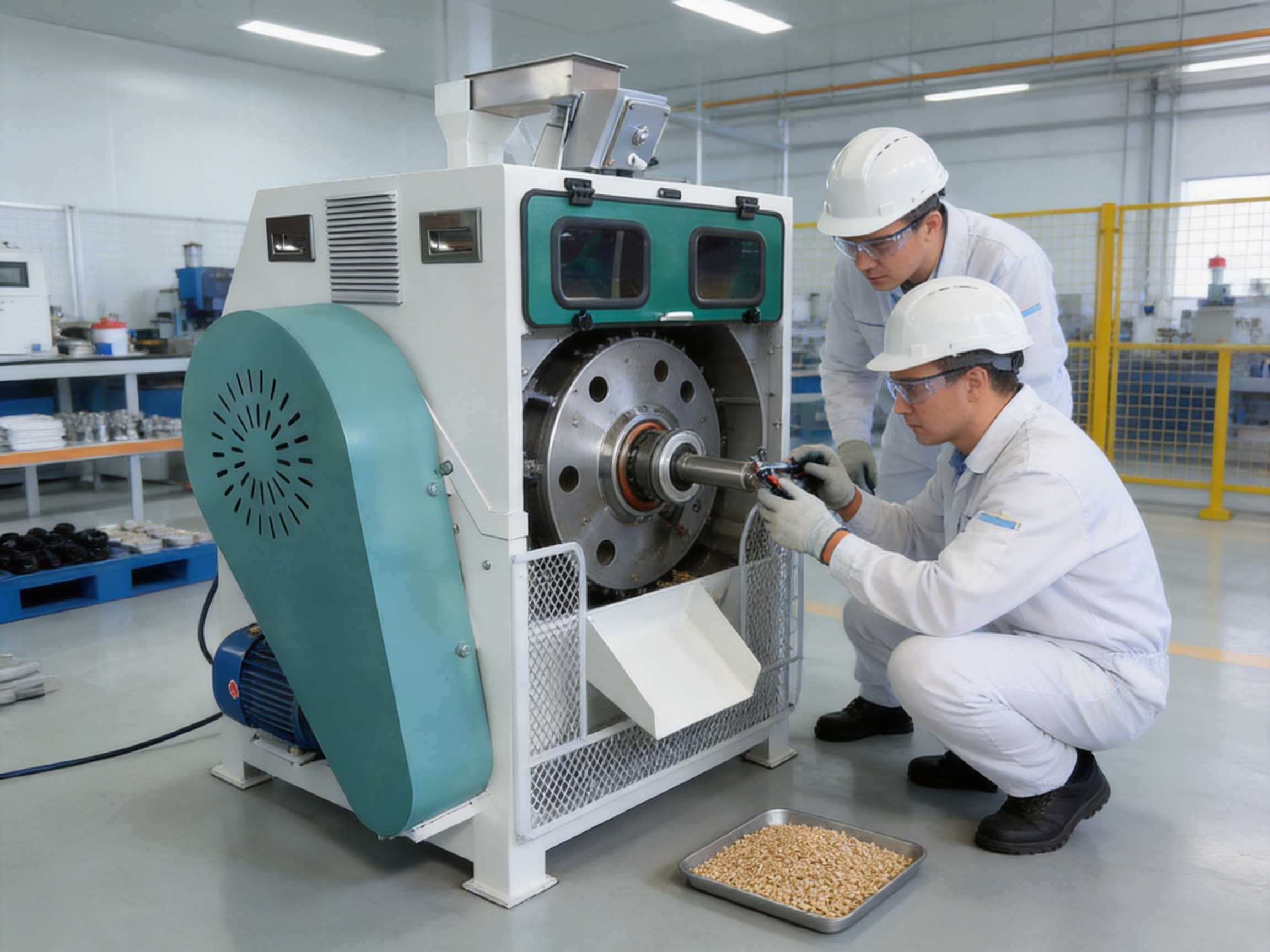
12. Maintenance and Service Recommendations
12.1 Daily Inspection
Operators should inspect the machine before each shift. The inspection should include the feed inlet, discharge outlet, guards, visible fasteners, electrical indicators, and external surfaces. Any unusual noise, vibration, overheating, or material leakage should be investigated promptly.
The machine should be cleaned according to the plant’s hygiene procedures. Grain residue and dust should not be allowed to accumulate around bearings, drive components, or electrical enclosures. Cleaning methods must be compatible with the machine’s materials and protection rating.
12.2 Routine Lubrication
Bearings and other lubricated components should be serviced according to the manufacturer’s maintenance schedule and the conditions of use. Lubrication intervals may need adjustment in dusty, hot, humid, or heavily loaded environments.
Over-lubrication should be avoided because it can cause heat buildup, seal damage, and contamination. The maintenance team should use the correct lubricant and keep records of service activities.
12.3 Drum and Cutting-Surface Inspection
The cutting drum should be inspected for wear, deformation, cracks, blocked holes, and residue buildup. Worn or damaged working surfaces can reduce product uniformity and increase waste. Cleaning should be performed with tools that will not damage the stainless-steel surface.
If the drum becomes unbalanced or develops excessive wear, it should be removed from service until it has been repaired or replaced. Continuing to operate with a damaged rotating component may create a safety hazard and cause secondary damage to the drive system.
12.4 Preventive Maintenance
Preventive maintenance is more economical than waiting for a failure. A planned maintenance program should include fastener checks, bearing inspections, motor tests, belt or coupling checks, guard inspections, electrical testing, and verification of emergency-stop functions.
Maintenance personnel should also examine the feed system. Uneven feeding, foreign material, or excessive moisture can create problems that appear to originate in the cutter. Keeping the entire upstream process stable is therefore part of maintaining cutting performance.
Recommended inspection intervals depend on production hours and material abrasiveness. A practical schedule may include operator checks each shift, detailed inspections every few hundred operating hours, and comprehensive servicing during planned shutdowns. Exact intervals should be established from operating experience and the supplier’s technical instructions.
13. Product Quality Control
Quality control should be based on measurable characteristics. Important indicators include average groat size, size distribution, proportion of fines, proportion of oversized pieces, moisture content, color, odor, and the presence of foreign material.
Sieve analysis is a practical method for evaluating cut distribution. A representative sample is passed through a series of screens, and each fraction is weighed. The results show whether the machine is producing the intended fine, medium, or coarse grade.
Operators should compare test results with established product specifications. If the amount of fines increases, possible causes include excessive drum speed, unsuitable feed moisture, worn cutting surfaces, uneven feeding, or material contamination.
If oversized pieces increase, the machine may require a speed adjustment, a different drum configuration, improved feeding, or a second-pass arrangement. Product quality should be corrected systematically rather than by changing several variables at once.
Moisture control is also important. The stated suitable moisture range for many grain applications is generally around 8 to 15 percent, although the ideal value depends on the material and product specification. Material above approximately 16 percent moisture may cut less consistently and may reduce capacity. Pre-drying or other conditioning methods may be required for wetter grain.
14. Comparison with Hammer Mills and Other Size-Reduction Equipment
Hammer mills are versatile machines used for producing meal, flour, and fine particles. Their high-speed impact action is effective for many applications, but it may not be the best choice when the objective is to create recognizable, uniform groats.
A hammer mill can generate more fines because kernels are repeatedly struck by hammers until they pass through a screen. This process is useful when a fine product is needed but less suitable when controlled kernel segmentation is the priority.
The Drum Groats Cutter is designed around a different production objective. Its cutting action aims to preserve larger product pieces and create a more predictable size distribution. It may therefore reduce the need for intensive screening and reprocessing in steel-cut cereal production.
Roller mills can provide controlled cracking or flattening, but their product shape and operating principle differ from a drum cutter. A roller mill may be preferred for flaking or crushing, while a Drum Groats Cutter is more directly suited to segmenting dehulled kernels.
Compared with manual or semi-manual cutting methods, the machine provides higher consistency, better hygiene control, and improved labor efficiency. It also allows production records and operating parameters to be standardized.
| Evaluation Area | Drum Groats Cutter | Hammer Mill | Typical Benefit for Oat Processing |
|---|---|---|---|
| Primary action | Controlled cutting and segmentation | High-speed impact and grinding | More recognizable groat pieces |
| Product objective | Fine, medium, or coarse groats | Meal, flour, or fine particles | Better alignment with steel-cut oat production |
| Fines control | Designed to limit unnecessary fines | Can create a larger fine fraction | Improved appearance and reduced dust |
| Speed adjustment | Adjustable for different kernel lengths | Usually controlled through rotor speed and screen selection | Flexible product grading |
| Material suitability | Oats and selected cereals | Broad range of feed and grain materials | Purpose-built performance for groat production |
Performance comparisons should be made using the same raw material, moisture, feed rate, and target size. No machine is universally superior for every type of size reduction. The Drum Groats Cutter offers its strongest advantage when consistent cut groats, low waste, and controlled product texture are more important than producing flour or meal.
15. Energy Efficiency and Operating Economics
Energy efficiency depends on motor power, throughput, operating time, feed stability, and the condition of the machine. The YQL50 model uses 1.5 kW of installed motor power and produces approximately 0.8 to 1.0 tons per hour based on oats. This represents a practical power-to-capacity relationship for a compact cutter.
Low energy consumption can reduce the direct cost of processing. It may also lower the required capacity of electrical infrastructure, especially in smaller plants. When combined with limited cutting waste, the machine can improve the total cost per ton of saleable groats.
Economic evaluation should include more than electricity. Important factors include yield, labor, maintenance, spare parts, downtime, cleaning time, product reprocessing, and integration with existing equipment. A machine that produces a more uniform product may create additional value by reducing rejects and improving downstream efficiency.
Stable operation is also economically important. Unplanned stoppages can interrupt conveyors, storage systems, packaging lines, and delivery schedules. A durable stainless-steel drum, accessible maintenance points, and preventive servicing help reduce this risk.
16. Automation and Intelligent Processing Lines
Automation can improve the consistency and traceability of grain processing. Sensors and control systems may be used to monitor motor current, rotation speed, feed rate, temperature, vibration, and alarm status. These functions help operators identify abnormal conditions before they develop into major failures.
The Drum Groats Cutter can be integrated with upstream and downstream equipment through electrical controls and material-handling systems. For example, a level sensor in a feed bin can regulate the supply of kernels, while a downstream screen can signal when product flow is restricted.
Automatic control does not eliminate the need for skilled operators. Instead, it gives operators better information and allows them to focus on process supervision, quality verification, and maintenance decisions. Manual adjustments remain useful during product changeovers and raw-material variations.
Data collection can also support continuous improvement. By recording speed, feed rate, motor load, moisture, product size, and waste percentage, a processor can identify the most efficient settings for each material. Over time, these records can become a standard operating database for the plant.
17. Safety Considerations
Rotating drums, drive components, and material-feed openings create mechanical hazards. All moving parts should be enclosed or guarded. Operators must not open inspection covers or reach into the machine while it is energized or rotating.
Lockout and tagout procedures should be followed during cleaning, blockage removal, inspection, and maintenance. The machine should be isolated from electrical power before personnel enter any area where moving components could cause injury.
Grain dust can create respiratory and explosion risks under certain conditions. The processing area should use appropriate dust-control, aspiration, housekeeping, and ventilation procedures. Electrical equipment should be selected and installed according to the hazard classification and local requirements of the facility.
Noise and vibration should be monitored. Excessive vibration may indicate imbalance, bearing damage, loose fasteners, or an unsuitable installation. Early detection improves safety and reduces repair costs.
18. Environmental and Hygienic Benefits
Efficient cutting can help reduce the amount of wasted grain and dust released during processing. Lower waste improves raw-material utilization, while controlled product flow can make housekeeping easier.
The stainless-steel drum supports hygienic operation and simplifies cleaning. Food processors should still establish documented sanitation procedures, including product changeover cleaning, inspection of inaccessible areas, and verification that no residues remain in the cutting chamber.
Where the machine is used for different cereals, allergen-control procedures may be required. Cleaning validation should be based on the plant’s food-safety plan and the products being manufactured. The machine’s suitability for food production must be assessed together with the entire line, not only the cutter.
19. Customer-Specific Engineering and Export Experience
Jiangsu Zhengding Intelligent Equipment Co., Ltd. serves domestic and international industrial customers and exports equipment to markets including Japan, Brazil, Egypt, Pakistan, India, the Middle East, and Southeast Asia. Experience across different regions requires attention to transportation, electrical standards, site conditions, documentation, installation, and after-sales support.
International equipment projects often require customized dimensions, control interfaces, safety features, materials, and production capacities. A manufacturer with experience in heavy industrial automation can adapt the equipment to local operating conditions and connect it with the customer’s existing system.
The company’s broader customer base includes users in brewing, grain, food, agricultural processing, chemicals, and construction-material industries. Such applications require reliable material handling and stable equipment performance. Although the Drum Groats Cutter is a grain-processing machine, the same engineering disciplines apply: robust construction, controlled movement, safe operation, and serviceability.
Customers evaluating a supplier should review the complete project capability. Important questions include whether the supplier can provide layout assistance, process testing, commissioning support, spare parts, technical training, and long-term service. These factors often have as much influence on the total project result as the initial machine price.
20. Selection Guide for Buyers
Before purchasing a Drum Groats Cutter, the buyer should define the required product grade. Fine, medium, and coarse groats may require different operating speeds, screening arrangements, and process settings. A clear product specification helps the supplier recommend the correct configuration.
The buyer should also provide information about the raw material. This includes cereal type, average kernel length, moisture content, bulk density, degree of dehulling, foreign-material level, and seasonal variation. Representative samples can be useful for performance testing.
Capacity should be stated as both hourly output and annual production. A plant operating only one shift may need a different machine arrangement from a plant operating continuously. Future expansion should also be considered so that conveyors, bins, and electrical systems are not undersized.
Installation conditions are equally important. The supplier should know the available floor area, ceiling height, material-flow direction, discharge elevation, foundation condition, power supply, dust-control arrangement, and cleaning requirements.
Finally, the buyer should evaluate service and spare-parts support. The cutting drum, bearings, seals, drive components, electrical parts, and fasteners should be available within a practical time frame. A planned spare-parts package can reduce downtime during the first years of operation.
21. Frequently Asked Questions
Q1: What does the Drum Groats Cutter produce?
The machine cuts dehulled oat kernels into approximately three to four segments to produce steel-cut oats or oat groats. By adjusting operating conditions, it can produce fine, medium, or coarse kernel cuts.
Q2: What materials can be processed?
The primary material is dehulled oats. The machine may also be used for barley, rye, wheat, and rice when the material is appropriately cleaned, prepared, and tested. The actual capacity and cut quality may vary between materials.
Q3: What is the output of the YQL50 model?
The YQL50 model has a 1.5 kW motor and an approximate output of 0.8 to 1.0 tons per hour based on oats. Final performance depends on kernel condition, feed stability, moisture, speed, and the selected product grade.
Q4: How much cutting waste should be expected?
The stated cutting waste is no more than 1 percent under suitable operating conditions. Actual waste should be verified through production sampling because raw-material quality and operating settings influence the result.
Q5: Can the cutting speed be adjusted?
Yes. The rotation speed is adjustable. This allows operators to adapt the cutting action to kernels of different lengths and to produce different groat grades. Adjustments should be made gradually and checked through sieve analysis.
Q6: Why is stainless steel used for the cutting drum?
Stainless steel offers good corrosion resistance, durability, and suitability for grain-processing environments. It also supports cleaning and hygienic operation when the machine is maintained according to the plant’s sanitation procedures.
Q7: Does the machine require a screening system?
A screening system is recommended when the processor requires a narrow final particle-size distribution. Screening can separate fines and oversized pieces after cutting and may allow oversized material to be returned for reprocessing.
Q8: What moisture range is suitable?
Many grain applications perform best when material moisture is approximately 8 to 15 percent. Materials above approximately 16 percent moisture may cut less consistently and reduce capacity. The correct range should be confirmed through testing for each cereal.
Q9: How often should the equipment be maintained?
Operators should inspect the machine before each shift and perform routine cleaning and checks during operation. More detailed inspections should be scheduled according to operating hours, material abrasiveness, and the manufacturer’s instructions. Bearings, fasteners, guards, the drum, and the drive system require regular attention.
Q10: Can the machine be integrated into an automated line?
Yes. The cutter can be connected with cleaning, dehulling, conveying, screening, weighing, storage, and packaging equipment. Automated controls can help manage feed flow, monitor motor load, identify alarms, and improve production traceability.
Q11: Is the machine suitable for small and medium-sized plants?
The compact YQL50 model, with its 1.5 kW motor and 0.8 to 1.0 tons-per-hour oat capacity, can be suitable for smaller or medium-sized operations. The correct selection depends on the customer’s required output, working schedule, and future expansion plans.
Q12: What should be tested before commercial production?
Processors should test throughput, cut-size distribution, fines percentage, waste percentage, motor load, temperature, vibration, and product appearance. Testing should use representative raw material and the intended operating settings.
22. Conclusion
The Drum Groats Cutter is a purpose-built solution for processors that need to convert dehulled oat kernels into uniform steel-cut groats. Its stainless-steel cutting drum, increased number of working holes, adjustable rotation speed, low power requirement, and stated cutting waste of no more than 1 percent provide a strong combination of productivity and product control.
Compared with general-purpose impact equipment, the machine is better aligned with applications where the final product must retain recognizable grain pieces and a consistent size. It can support fine, medium, and coarse groat production and may also process barley, rye, wheat, and rice after suitable preparation and testing.
The value of the equipment extends beyond the cutting drum itself. Jiangsu Zhengding Intelligent Equipment Co., Ltd. contributes experience in intelligent industrial equipment, heavy mechanical systems, automated material handling, customized engineering, and international project delivery. This combination allows the cutter to be considered as part of a complete and efficient grain-processing solution.
For best results, the machine should be selected according to the raw material, target product, capacity, moisture, plant layout, and automation requirements. Proper installation, stable feeding, routine maintenance, dust control, and regular quality testing will help the equipment deliver reliable performance throughout its service life.
References
1. Product technical information for the YQL50 Drum Groats Cutter, including motor power, oat capacity, cutting waste, and operating features.
2. General principles of cereal cleaning, dehulling, cutting, grading, and packaging in industrial oat-processing lines.
3. Industrial guidance on grain-moisture management, dust control, machinery guarding, and preventive maintenance.
4. Comparative engineering principles for groat cutting, roller reduction, and hammer-mill impact processing.
5. Manufacturer information concerning intelligent loading and unloading equipment, industrial automation, material handling, and customized system integration.
6. Standard practices for sieve analysis and particle-size evaluation in cereal and agricultural-material processing.


