

 English
 русский
 Español
 Français
 Português
 عربى
عربى



+86-13588556918
Content
- 1 1. The Role of Truck Dumpers in Modern Logistics Operations
- 2 2. Product Overview and Operating Principle
- 3 3. Main Product Advantages Compared with Conventional Truck Dumpers
- 3.1 3.1 Mechanical rigid synchronization for stable lifting
- 3.2 3.2 High-precision hydraulic stability system
- 3.3 3.3 Automatic wheel restraint and vehicle positioning
- 3.4 3.4 Imported hydraulic cylinders and pumps
- 3.5 3.5 Unmanned and driver-operated functions
- 3.6 3.6 Flexible dimensions and lifting capacities
- 4 4. Engineering Design for Safety and Reliability
- 5 5. Manufacturing Strengths and Quality-Oriented Production
- 6 6. Applications Across Different Industries
- 7 7. Installation, Commissioning, and Operating Procedures
- 8 8. Maintenance and Service-Life Management
- 9 9. Operator Training and Safety Culture
- 10 10. Why Choose Jiangsu Zhengding Intelligent Equipment Co., Ltd.
- 11 11. Frequently Asked Questions
- 11.1 Q1: What is the main difference between this truck dumper and a conventional side-turn dumper?
- 11.2 Q2: Can the dumper operate without a dedicated professional operator?
- 11.3 Q3: How is the truck secured during lifting?
- 11.4 Q4: Are wheel restraints sufficient by themselves?
- 11.5 Q5: What lifting capacities are available?
- 11.6 Q6: What platform sizes are available?
- 11.7 Q7: Can the lifting angle be customized?
- 11.8 Q8: What industries use these truck dumpers?
- 11.9 Q9: How often should the hydraulic system be inspected?
- 11.10 Q10: What should happen if the dumper makes an unusual noise or vibration?
- 11.11 Q11: Does the company provide customized solutions?
- 11.12 Q12: What information should a customer provide for a technical proposal?
- 12 12. Conclusion
- 13 References
- 14 Product: Truck Dumpers
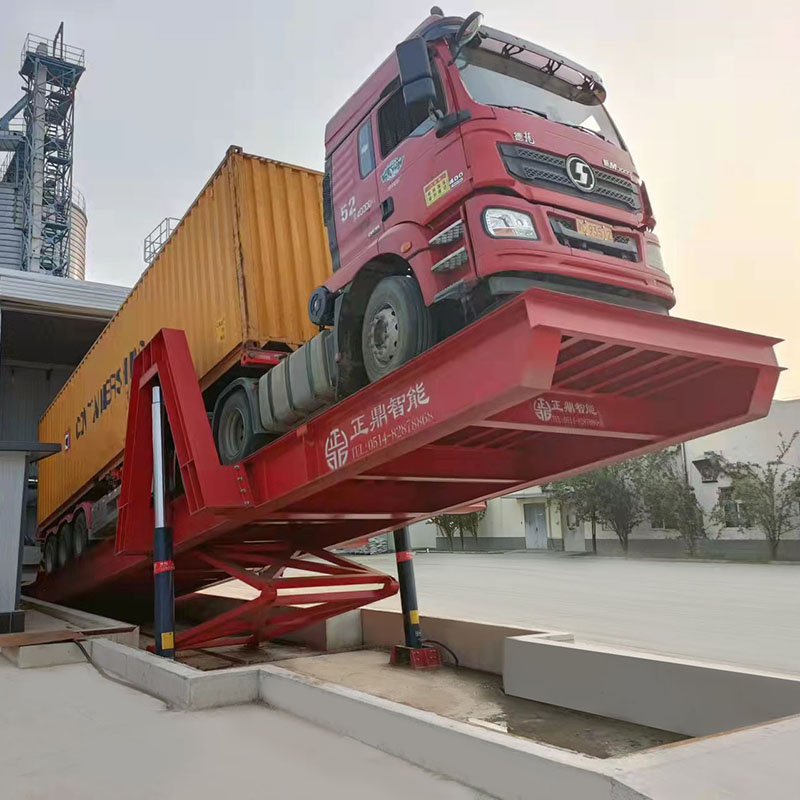
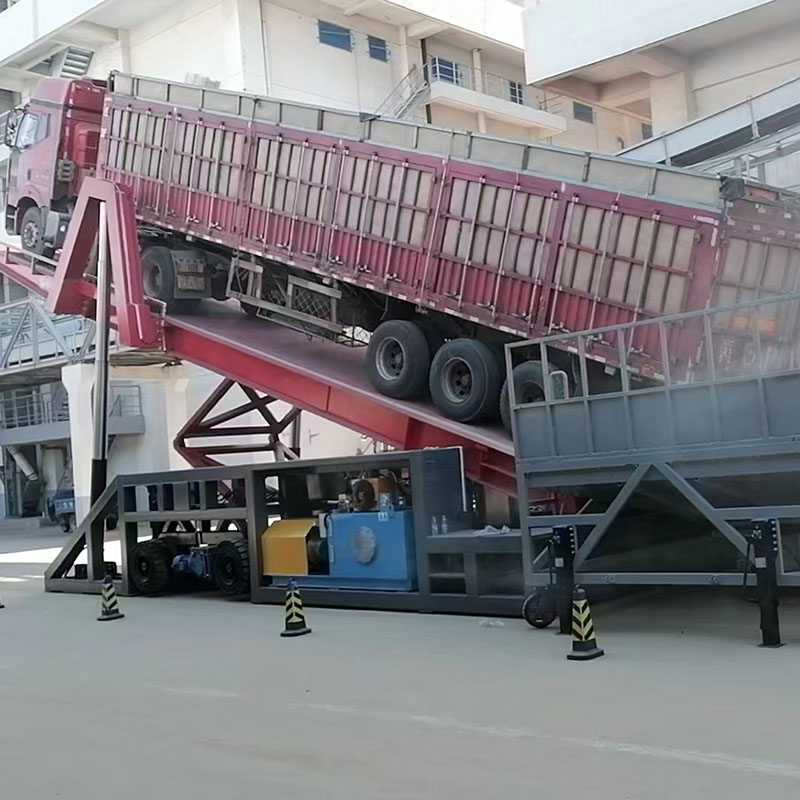
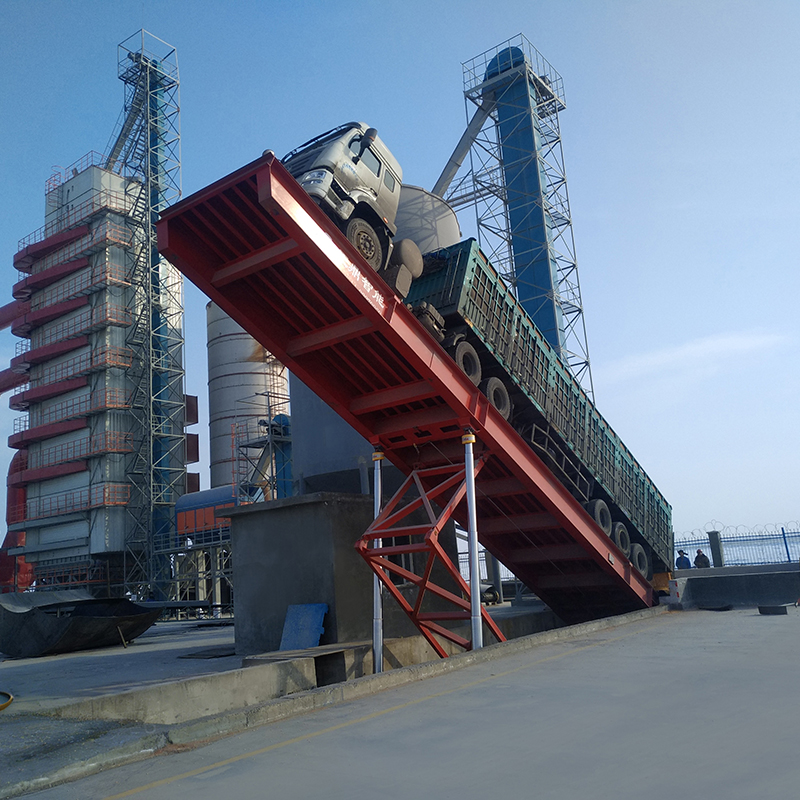
Truck dumpers are essential pieces of industrial loading and unloading equipment for facilities that handle coal, grain, cement, minerals, chemicals, feed, food ingredients, steel products, and other bulk materials. By lifting and tilting a loaded vehicle, a truck dumper can discharge cargo quickly into a receiving hopper, conveyor, storage system, or processing line. Compared with manual unloading or conventional fixed unloading arrangements, a truck dumper can significantly reduce handling time, labor requirements, vehicle waiting periods, and operating costs.
However, the performance of a truck dumper depends on much more than its maximum lifting capacity. The quality of the synchronization system, hydraulic cylinders, pumps, wheel restraint device, control system, structural frame, safety interlocks, and manufacturing process directly affects operating reliability and service life. A poorly synchronized dumper may produce uneven loading on its cylinders, excessive vibration, unstable lifting, and premature component failure. A machine without effective vehicle restraint may expose workers and equipment to serious safety risks.
The Truck Dumpers developed and manufactured by Jiangsu Zhengding Intelligent Equipment Co., Ltd. are designed to address these challenges through mechanical rigid synchronization, high-precision hydraulic stability technology, automatic wheel restraint, imported hydraulic components, and intelligent operating functions. The equipment is suitable for customers seeking a dependable automatic loading and unloading solution with high capacity, controlled movement, reduced operator intervention, and adaptable installation configurations.
Unlike traditional side-turn truck dumpers that synchronize side cylinders mainly by controlling oil flow, this product uses a mechanical rigid synchronization mechanism. The rigid structure maintains coordinated movement between lifting points and reduces dependence on oil-flow balancing alone. This provides a simpler operating principle, higher synchronization accuracy, improved stability, and a stronger foundation for safe long-term operation.
Truck Dumpers
1. The Role of Truck Dumpers in Modern Logistics Operations
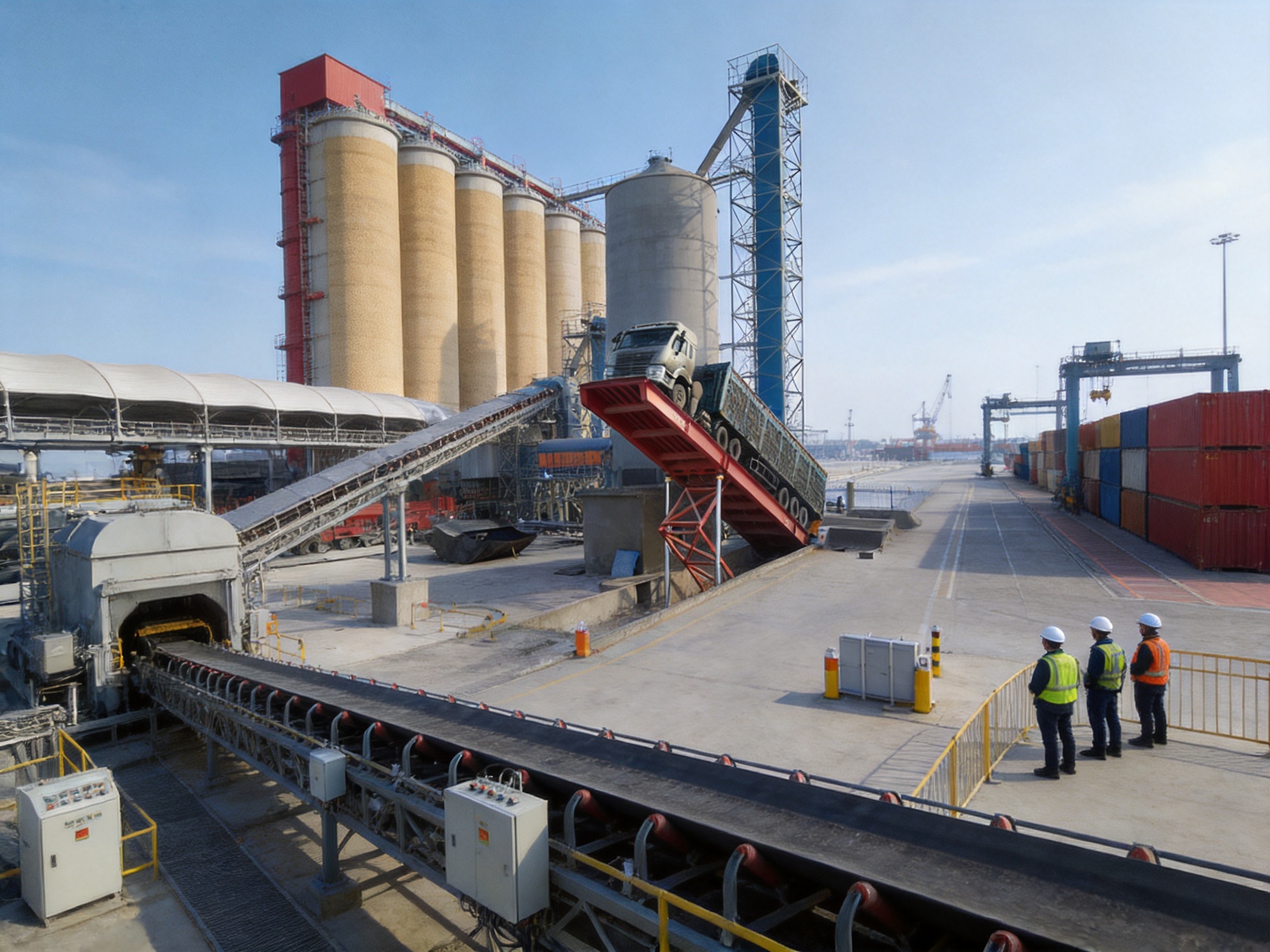
Bulk material logistics often involves the repeated arrival of heavy trucks carrying large quantities of material. If each vehicle must be unloaded manually, tipped using a separate vehicle, or emptied through a slow discharge process, the entire production line may suffer from congestion. Truck dumpers provide a controlled method of unloading by positioning the vehicle on a reinforced platform and lifting it to a specified angle.
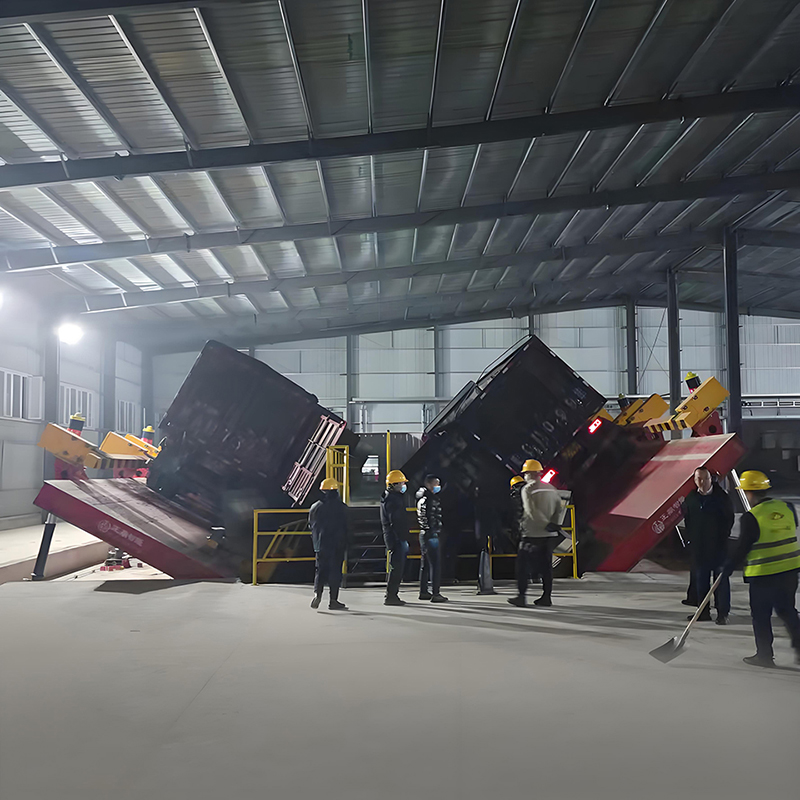
When the platform rises, the cargo moves toward the rear or side discharge area under the force of gravity. The material can then flow into a receiving pit or transfer system. Depending on the application, the equipment may be configured as a rear dumper, side-turn truck dumper, container loading and unloading machine, or another specialized lifting system.
The main benefits of using a truck dumper include:
1. Faster unloading cycles than manual or low-automation methods.
2. Lower dependence on manual labor and professional operators.
3. Improved integration with conveyors, hoppers, silos, crushers, screens, and processing equipment.
4. More consistent unloading performance across different vehicle loads.
5. Better control of the unloading area through restraints, interlocks, warning systems, and emergency stops.
6. Reduced vehicle turnaround time at factories, ports, terminals, mines, grain facilities, and distribution centers.
7. Greater potential for unmanned or semi-automated operation.
In many industries, the dumper is not an isolated machine. It functions as part of an integrated material-handling system. Its dimensions, lifting angle, load rating, discharge direction, foundation arrangement, control method, and interface with downstream equipment must therefore be selected according to the complete process. Jiangsu Zhengding Intelligent Equipment Co., Ltd. focuses on this system-level approach rather than treating the dumper as a standard product with only one fixed configuration.
2. Product Overview and Operating Principle
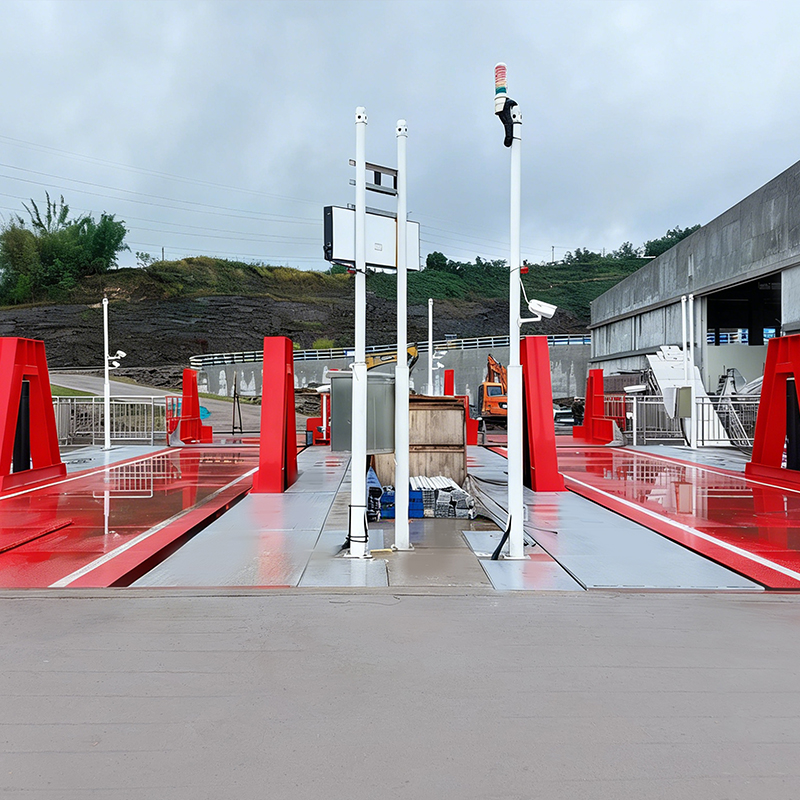
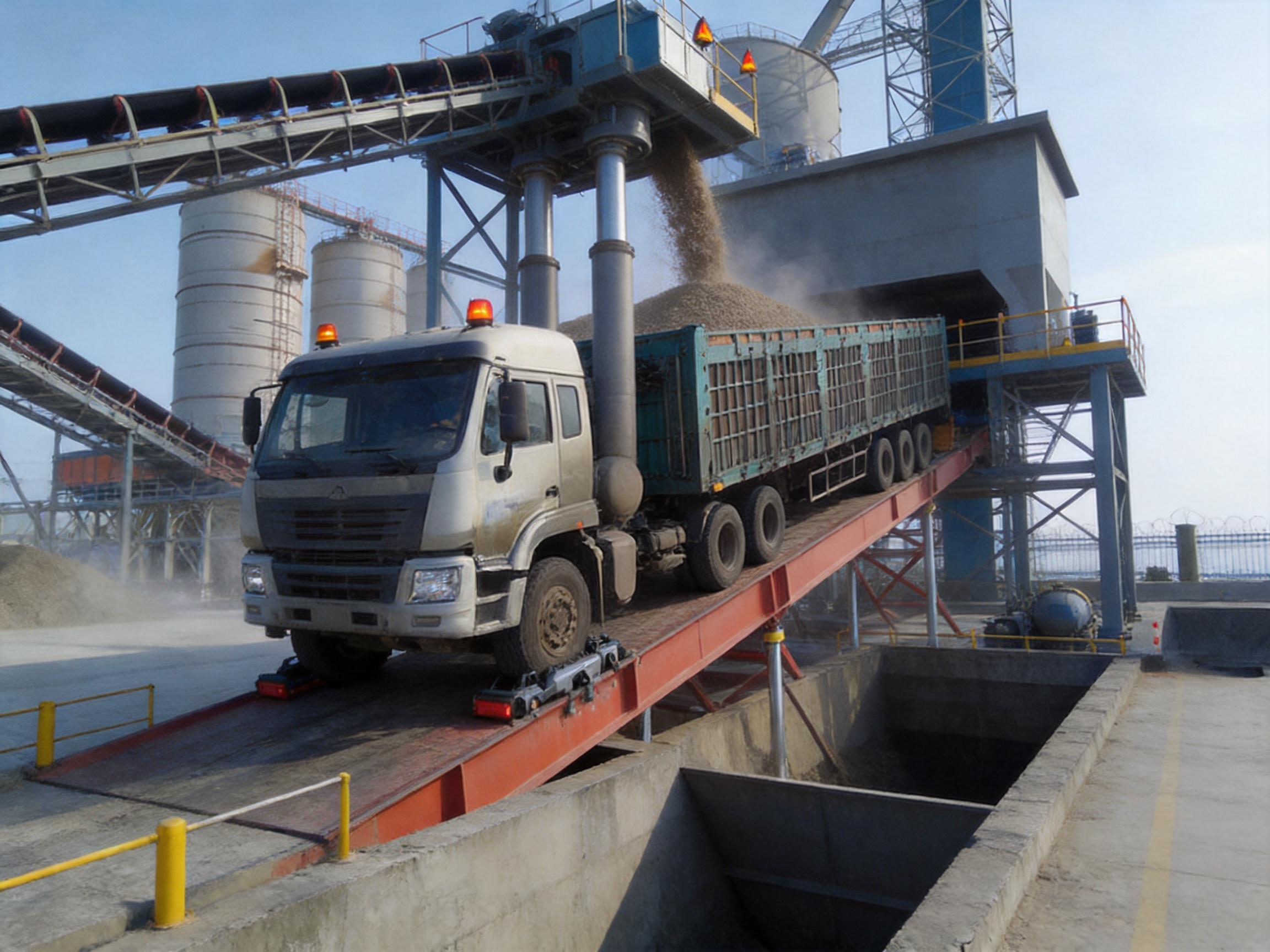
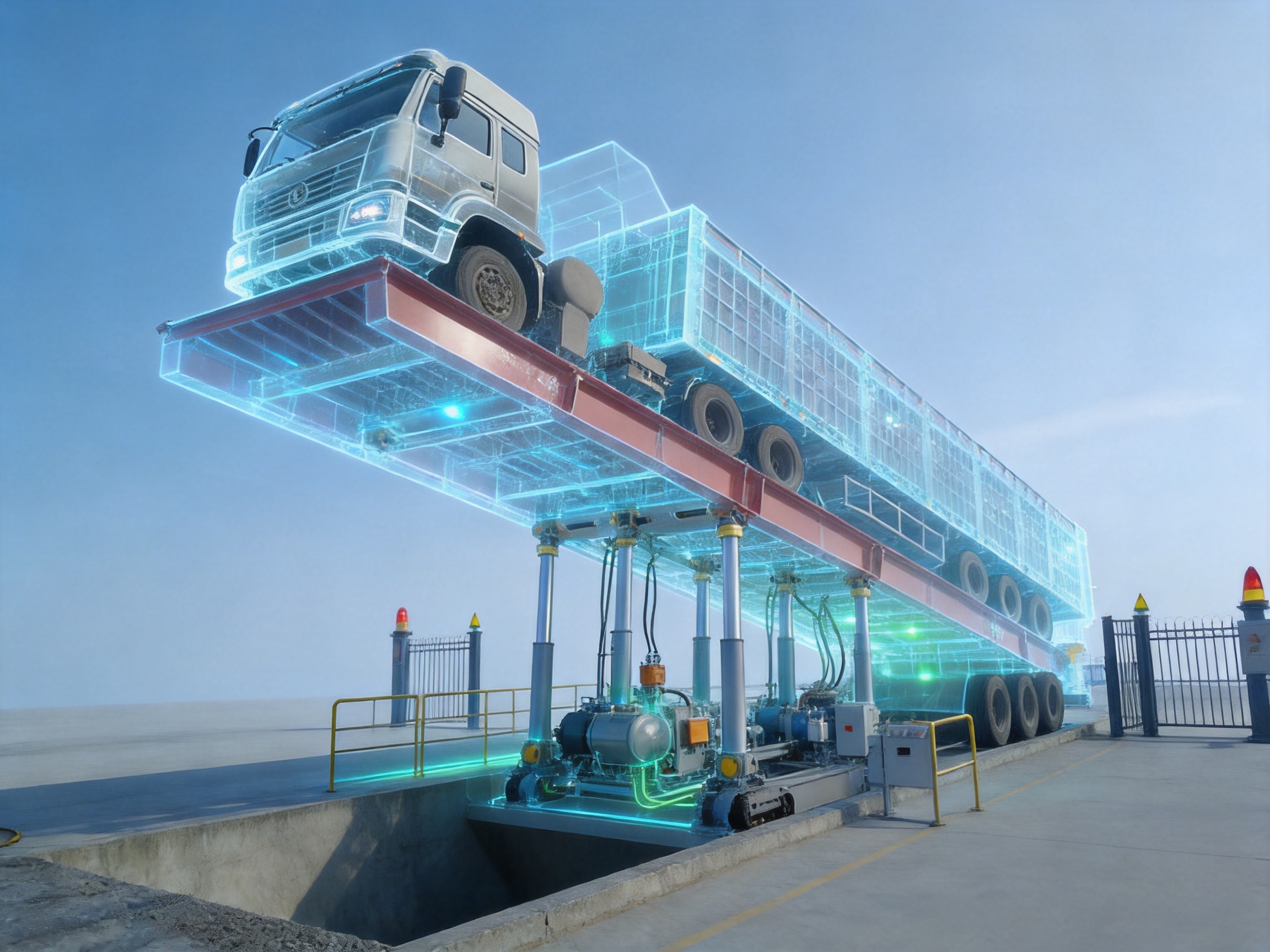
A truck dumper generally consists of a structural platform, lifting mechanism, hydraulic cylinders, hydraulic power unit, synchronization system, vehicle restraint system, control cabinet or remote-control system, safety interlocks, and supporting foundation or frame. The vehicle is driven onto the platform and positioned according to the operating procedure. The restraint system is then engaged before the lifting sequence begins.
During operation, hydraulic pumps supply pressurized oil to the lifting cylinders. The cylinders extend in a coordinated manner, raising the platform and vehicle. When the desired angle is reached, the platform is held in position while the cargo is discharged. After unloading, the hydraulic system retracts the cylinders and returns the platform to its horizontal position. The vehicle restraint is released only when the platform has returned to a safe position and the operating sequence has been completed.
The equipment can be adapted to different truck lengths and load capacities. Depending on the model and installation arrangement, the maximum lifting angle can be 45 degrees or 55 degrees. This angle is selected according to the characteristics of the material, the vehicle body, the receiving hopper, and the required discharge performance.
The mechanical rigid synchronization mechanism is one of the most important design features. In conventional systems, side cylinders may be synchronized primarily by regulating oil flow. Although flow-control synchronization can function under suitable conditions, it may be affected by leakage, temperature changes, valve wear, pressure differences, and variations in cylinder friction. If one side moves faster than the other, the platform may experience torsion or uneven loading.
In the rigid synchronization design, mechanical components connect the lifting points so that their relative movement remains coordinated. The hydraulic system provides the lifting force, while the mechanical structure supports synchronized motion. This division of functions creates a more stable lifting process and reduces the burden placed on hydraulic flow balancing.
For operators and maintenance teams, the rigid synchronization concept also offers practical advantages. The system has a comparatively clear mechanical operating principle, fewer concerns about balancing side-cylinder flow under changing conditions, and improved resistance to uneven motion. It can help reduce vibration, limit impact on the cylinders, and extend the service life of critical hydraulic components when the equipment is correctly installed and maintained.
3. Main Product Advantages Compared with Conventional Truck Dumpers
3.1 Mechanical rigid synchronization for stable lifting
Traditional truck dumpers that rely mainly on oil-flow synchronization may experience differences in cylinder speed. These differences can result from hydraulic leakage, inconsistent valve response, contamination, temperature changes, or unequal loads. Such conditions may produce platform vibration and additional stress on pins, brackets, cylinder rods, and structural connections.
The rigid synchronization mechanism used in this product provides a mechanical reference between lifting sides. It helps the platform rise evenly and reduces the likelihood of one side moving significantly ahead of the other. This is particularly valuable when handling heavy vehicles, uneven cargo, or operating conditions where platform stability is a priority.
Stable synchronization improves more than operator comfort. It also helps protect the oil cylinders, pump system, structural frame, and vehicle. Reduced vibration and lower impact loads can contribute to longer component service life, fewer unscheduled shutdowns, and more predictable maintenance planning.
3.2 High-precision hydraulic stability system
The high-precision oil-cylinder synchronous stability system developed by the company is designed to support smooth and controlled movement. The system coordinates hydraulic power with the mechanical synchronization structure so that lifting and lowering can be completed with limited shock.
Small vibration during operation is an important indicator of a well-controlled dumper. Excessive vibration can make the vehicle unstable, increase noise, accelerate wear, and create uncomfortable or unsafe conditions for nearby personnel. By reducing sudden movement and impact on the cylinders, the stability system supports more dependable operation over repeated lifting cycles.
3.3 Automatic wheel restraint and vehicle positioning
Vehicle movement during lifting is one of the most serious hazards associated with truck dumpers. The product uses a full automatic retaining wheel fixing device to hold the vehicle in position. This feature reduces the need for an operator to manually place or adjust restraints in a dusty or difficult operating environment.
Automatic restraint improves operating efficiency because the driver can complete the positioning and unloading sequence with fewer manual actions. It also supports a more consistent safety procedure. When integrated with the control system, the restraint can be used as part of an interlock sequence that prevents lifting unless the vehicle has been correctly secured.
A reliable restraint system must be matched to the truck type, wheel position, tire condition, platform dimensions, and site layout. For this reason, the final design should be confirmed during the technical planning stage. The automatic wheel fixing device is a major advantage, but it should operate together with warning signals, visual confirmation, operating procedures, and regular inspections.
3.4 Imported hydraulic cylinders and pumps
The oil cylinders and pumps used in the equipment are sourced from imported brands selected for safety, reliability, and long service life. Hydraulic components are exposed to high pressure, repeated cycling, contamination risks, and changing environmental conditions. Using dependable components helps support stable lifting performance and reduces the possibility of early failure.
High-quality pumps help provide consistent hydraulic flow. Reliable cylinders are important for maintaining lifting force, controlled movement, sealing performance, and resistance to pressure-related damage. The use of recognized hydraulic components also assists maintenance teams when replacement parts, inspection procedures, or technical support are required.
3.5 Unmanned and driver-operated functions
The system can support unmanned control, reducing the need for a dedicated professional dumper operator. After receiving appropriate training, the truck driver can complete the unloading operation independently according to the prescribed sequence.
This capability can be valuable at facilities that operate continuously or receive a large number of trucks each day. It may reduce labor costs and simplify traffic management around the unloading area. Automation also helps standardize repeated operations by using programmed interlocks, fixed sequences, warning signals, and controlled lifting parameters.
Unmanned operation does not mean that safety supervision is unnecessary. The site must still provide training, emergency procedures, routine inspections, access control, and clear communication between drivers and other workers. Automation is most effective when it is combined with sound management and well-designed engineering controls.
3.6 Flexible dimensions and lifting capacities
The available models cover different platform lengths and lifting capacities. This allows the equipment to be selected according to vehicle size, material density, daily throughput, and installation conditions rather than forcing every customer to use a single standard configuration.
| Model | Applicable Size, L × W, m | Maximum Lifting Weight, t | Maximum Lifting Angle |
|---|---|---|---|
| TQXHD 50 | 14 × 3, 16 × 3, or 17 × 3 | 80 | 45° or 55° |
| TQXHD 80 | 16 × 3, 17 × 3, or 18 × 3 | 80 | 45° or 55° |
| TQXHD 100 | 17 × 3, 18 × 3, or 20 × 3 | 100 | 45° or 55° |
| TQXHD 150 | 17 × 3, 18 × 3, or 20 × 3 | 150 | 45° or 55° |
The dimensions shown in the table represent available length and width combinations. Final equipment selection should consider the actual truck wheelbase, body length, axle arrangement, payload distribution, discharge direction, foundation, and receiving equipment. The maximum lifting weight must also be evaluated together with the vehicle tare weight and cargo weight so that the total operating load remains within the approved design capacity.
4. Engineering Design for Safety and Reliability
Safety is a fundamental design objective for any machine that lifts a heavy vehicle. The truck dumper must remain stable while the platform rises, hold the vehicle securely, control descent, prevent access to hazardous areas, and provide a rapid means of stopping the equipment during abnormal conditions.
4.1 Vehicle restraint and interlocking
The automatic wheel restraint device helps prevent the truck from rolling or shifting during the lifting cycle. The restraint should be designed to match the vehicle type and should be checked before each operation. A complete control sequence may require confirmation that the vehicle is correctly positioned and restrained before the hydraulic system is allowed to raise the platform.
Interlocking is an important improvement over systems that depend only on operator judgment. A properly configured interlock can prevent lifting when the restraint is not engaged, prevent vehicle release while the platform is elevated, and stop operation if a safety gate or access barrier is open. These controls reduce the chance that a missed manual step will lead directly to an accident.
4.2 Hydraulic holding and load control
Hydraulic holding valves and related safety components help prevent uncontrolled platform descent if a hose, fitting, or control component fails. The holding system should be inspected regularly for leakage, damage, pressure loss, and correct operation.
Controlled lowering is especially important because the platform and vehicle represent a large stored load. The system should not rely only on pump shutdown to hold the platform in place. Appropriate valves, mechanical stops, structural supports, and emergency procedures should be included according to the equipment design and applicable site requirements.
4.3 Limit switches and angle control
Platform limit switches help prevent the dumper from lifting beyond the approved angle. Limiting the movement protects the structure, cylinders, hydraulic hoses, vehicle, and receiving area. The limit device should be tested as part of routine maintenance rather than treated as a component that can be ignored after installation.
The selected maximum angle of 45 degrees or 55 degrees depends on the model and application. A higher angle may improve discharge performance for certain materials, but the angle must always remain within the safe design range. Operators should never attempt to exceed the approved limit to force material out of a vehicle body.
4.4 Emergency stop and warning systems
Emergency stop controls should be accessible from appropriate locations, including the control station and, where required, the platform or nearby operating area. Warning lights, audible alarms, and visible status indicators can alert drivers and workers that the platform is about to move or is currently elevated.
Warnings should be supported by physical separation. A clear danger zone should be established around the platform, and unauthorized personnel should be prevented from entering while the equipment is operating. The exact distance depends on the site layout, truck dimensions, material, platform movement, and local safety requirements. As a general planning principle, many facilities maintain a clear zone of at least three meters around the active platform.
5. Manufacturing Strengths and Quality-Oriented Production
Jiangsu Zhengding Intelligent Equipment Co., Ltd. is a national high-tech enterprise specializing in the research and development, manufacturing, and sales of intelligent loading and unloading equipment. Its product range includes rear truck dumpers, side-turn truck dumpers, vehicle loading equipment, container flippers, and related automated logistics systems.
The company’s manufacturing strength is based on combining product development, mechanical design, hydraulic integration, control engineering, project planning, and after-sales support. This integrated capability is important because an industrial dumper is not simply a welded platform with cylinders. It is a coordinated machine that must function correctly with vehicles, foundations, receiving systems, electrical controls, safety devices, and production schedules.
5.1 Application-oriented product development
Product development begins with the actual material-handling requirement. Engineers need to understand the type of cargo, material flow characteristics, moisture content, bulk density, truck dimensions, unloading frequency, environmental conditions, and connection to downstream equipment.
For example, grain and feed facilities may prioritize clean discharge, controlled dust management, and compatibility with conveyors or storage silos. Coal and mineral facilities may require high load capacity, durable structural components, and resistance to demanding outdoor conditions. Cement and chemical plants may require careful consideration of dust, corrosion, sealing, and process containment. Port and container operations may require specialized dimensions, fast cycle times, and integration with vehicle scheduling.
This application-oriented approach allows the equipment to be adapted rather than installed as a one-size-fits-all machine. It also helps the customer identify potential foundation, traffic, electrical, drainage, and maintenance requirements before construction begins.
5.2 Structural and hydraulic integration
The structural frame must withstand repeated lifting cycles, vehicle loads, torsional forces, impact from loading, and environmental exposure. Correct alignment of the platform, hinges, cylinder mounting points, rigid synchronization mechanism, and restraint components is essential to long-term reliability.
Hydraulic integration involves selecting the appropriate pump capacity, cylinder size, valves, piping, fittings, oil tank, filters, pressure protection, and control logic. The hydraulic system should provide sufficient force without creating unnecessary shock. It should also allow maintenance personnel to inspect, isolate, and service major components efficiently.
The rigid synchronization mechanism adds an important mechanical layer to this integration. Instead of expecting hydraulic flow control to perform all synchronization functions, the design uses mechanical coordination to support the platform. This is a practical engineering advantage over basic systems that may be more sensitive to hydraulic imbalance.
5.3 Control and automation capability
Modern industrial customers increasingly require equipment that can exchange signals with conveyors, hoppers, weighing systems, traffic lights, access gates, and plant management systems. A truck dumper can be configured as part of a wider automated unloading process in which the vehicle is identified, positioned, restrained, lifted, emptied, lowered, and released according to a defined sequence.
Control design should prioritize clear status indication and fault response. The operator should be able to determine whether the platform is ready, the restraint is engaged, the system is lifting, the maximum angle has been reached, or a safety condition has interrupted the cycle. This reduces confusion and helps maintenance personnel diagnose problems more efficiently.
5.4 Factory and project coordination
Industrial equipment quality is influenced not only by component selection but also by coordination between design, fabrication, assembly, testing, transportation, installation, and commissioning. A reliable supplier should coordinate the equipment dimensions with the customer’s civil works and process layout before fabrication is completed.
Important project interfaces may include the foundation depth, pit arrangement, truck approach lane, receiving hopper, conveyor elevation, drainage, power supply, control room, maintenance access, lighting, safety barriers, and emergency evacuation routes. Early coordination reduces the possibility of costly modifications at the installation site.
5.5 International market experience
The company’s equipment has been supplied to users in Japan, Brazil, Egypt, Pakistan, India, the Middle East, and Southeast Asia. Its products serve industries including steel, chemical production, cement, coal, grain, oil, food, feed, ports, papermaking, and new energy.
International projects require attention to different working environments, transportation conditions, electrical standards, language requirements, local installation practices, and customer expectations. Experience across multiple markets helps the manufacturer understand the importance of documentation, communication, spare parts planning, and technical support throughout the project lifecycle.
6. Applications Across Different Industries
6.1 Grain and agricultural material handling
Grain, feed, and agricultural commodities are often delivered by truck in high volumes. A truck dumper can quickly transfer material into a receiving pit connected to a conveyor, elevator, cleaner, dryer, or silo. Faster unloading can reduce truck queues during harvest seasons and help maintain a continuous intake process.
For grain applications, the equipment layout should consider dust control, cleaning access, material segregation, corrosion protection, and compatibility with weighing and sampling systems. Automated operation can also improve traffic flow by allowing drivers to complete unloading without leaving the cab repeatedly.
6.2 Coal, minerals, and mining materials
Coal, ore, aggregates, and other mineral materials may be transported in heavy vehicles with substantial payloads. These applications place high demands on the platform, lifting system, restraints, and receiving structure. The TQXHD models with capacities up to 150 tons can be considered for high-load applications after the complete vehicle and cargo conditions have been reviewed.
Mining and mineral facilities may operate in dusty, wet, cold, or highly abrasive environments. The equipment should therefore be specified with suitable protection, inspection access, drainage, and maintenance procedures. The automatic restraint and stable lifting system are especially valuable where visibility may be reduced by dust or poor weather.
6.3 Cement, chemical, and industrial materials
Cement and chemical facilities require reliable unloading because interruptions may affect batching, storage, or continuous production. Depending on the material, the receiving system may include enclosed hoppers, dust collection, screw conveyors, belt conveyors, or pneumatic transfer equipment.
Material characteristics can influence the required lifting angle. Some cargo flows easily at a moderate angle, while sticky, damp, or cohesive material may require a higher angle or additional discharge measures. The dumper should be selected together with the receiving system so that the lifting operation does not create blockages or uncontrolled material surges.
6.4 Food, oil, and feed industries
Food-related logistics place additional emphasis on cleanliness, inspection access, material compatibility, and prevention of cross-contamination. The unloading system should be integrated into the customer’s sanitation and quality-control procedures.
For oil, feed, and related materials, the equipment may need to work with metering systems, storage tanks, enclosed transfer equipment, or production lines. Automated unloading can support consistent process timing and reduce the number of people required in the vehicle discharge area.
6.5 Ports, containers, and logistics terminals
Container loading and unloading operations often require equipment that can handle standardized units, heavy loads, strict traffic schedules, and integration with cranes or terminal systems. The company also provides container flippers and other automated loading and unloading equipment, allowing customers to consider a coordinated solution for vehicles, containers, and ships.
At busy terminals, cycle time and equipment availability are critical. A reliable dumper can help reduce truck dwell time and improve the movement of cargo through the facility. Safety interlocks, clear traffic signals, automatic restraints, and remote monitoring are particularly useful in areas where many vehicles and workers operate simultaneously.
7. Installation, Commissioning, and Operating Procedures
Successful performance begins before the equipment arrives at the customer’s site. The installation area should be checked for foundation strength, dimensions, levelness, drainage, approach clearance, electrical supply, vehicle turning radius, and access for maintenance.
The truck path should allow the driver to approach and leave the platform without unnecessary reversing or sharp turns. Markings should identify the correct stopping position. Lighting should be adequate for night operations, and signs should clearly identify the danger zone, emergency stop locations, operating instructions, and access restrictions.
During commissioning, the supplier and customer should verify:
1. Platform alignment and structural connections.
2. Hydraulic oil level, pressure, hoses, valves, and fittings.
3. Cylinder movement and mechanical synchronization.
4. Automatic wheel restraint engagement and release.
5. Limit switch operation at the approved lifting angle.
6. Emergency stop response.
7. Warning lights, audible alarms, and status indicators.
8. Interlock logic and fault handling.
9. Communication with conveyors, hoppers, gates, or weighing systems.
10. Operation under a controlled test load before full production use.
Operators should be trained using the actual equipment and site layout. Training should cover vehicle positioning, restraint confirmation, normal lifting, unloading observation, lowering, emergency stop use, abnormal noise or vibration, hydraulic leakage, and reporting procedures.
A recommended operating sequence is as follows:
1. Confirm that the platform is fully lowered and the unloading area is clear.
2. Drive the vehicle onto the platform and stop at the designated position.
3. Apply the vehicle parking brake according to site procedure.
4. Confirm that no person, tool, or obstacle is inside the danger zone.
5. Engage and verify the automatic wheel restraint.
6. Start the lifting cycle from the authorized control station.
7. Observe the platform, vehicle, hydraulic system, and material discharge throughout the cycle.
8. Stop the lift at the approved angle and wait until material discharge is complete.
9. Lower the platform completely and confirm the horizontal position.
10. Release the vehicle restraint only after the system indicates that release is safe.
11. Drive the vehicle away carefully and prepare the platform for the next cycle.
8. Maintenance and Service-Life Management
Regular maintenance protects both safety and productivity. Even high-quality hydraulic cylinders, pumps, valves, and structural components require inspection because the equipment operates under repeated heavy loads.
8.1 Daily operator checks
Before operation, the driver or designated operator should inspect the platform, wheel restraint, visible hydraulic hoses, fittings, cylinder rods, control buttons, warning lights, alarms, and surrounding area. Any oil leakage, unusual deformation, loose component, damaged cable, abnormal noise, or malfunctioning interlock should be reported immediately.
The operator should never bypass a safety device to keep production running. If the restraint, limit switch, emergency stop, or hydraulic holding function does not work correctly, the equipment should be isolated until it has been inspected and repaired by authorized personnel.
8.2 Weekly maintenance checks
Maintenance personnel should inspect visible wear on hinges, pins, brackets, platform connections, restraint components, hydraulic piping, and electrical enclosures. Lubrication points should be serviced according to the manufacturer’s maintenance schedule. The area beneath and around the platform should be cleaned so that material buildup does not interfere with movement or inspection.
8.3 Periodic hydraulic inspections
Hydraulic systems should be checked for pressure stability, oil contamination, filter condition, valve response, hose deterioration, seal leakage, and cylinder alignment. Operators should receive instruction not to touch pressurized leaks because a fine hydraulic jet can penetrate skin and cause serious injury.
Hydraulic safety systems, including holding valves, hoses, and fittings, should be inspected daily for obvious problems, weekly by maintenance staff for visible wear, and in detail at least annually according to the site’s risk assessment and applicable requirements. Annual inspections may include pressure testing, valve function verification, cylinder examination, and review of the control sequence.
Hoses should be replaced according to condition, operating environment, manufacturer recommendations, and site policy. A planned replacement interval may be appropriate for critical hoses even when external damage is not visible.
8.4 Structural inspection
The platform, frame, welds, hinge points, cylinder mounts, and synchronization mechanism should be examined for cracking, deformation, corrosion, loose fasteners, or unusual contact marks. Heavy-duty equipment can accumulate fatigue damage over many operating cycles, so inspection should be based on both calendar time and cycle count where possible.
8.5 Record keeping
Maintenance records should include inspection dates, operating hours or cycles, oil changes, filter replacements, component repairs, safety tests, training records, and abnormal events. Accurate records help identify recurring problems and allow the site to plan spare parts and shutdowns before a failure affects production.
9. Operator Training and Safety Culture
Engineering controls are essential, but they are most effective when supported by a strong safety culture. Every operator should understand that a truck dumper is a heavy lifting machine, not simply a convenient tipping platform.
| Training Topic | Initial Training Duration | Suggested Refresher Frequency | Assessment Method |
|---|---|---|---|
| Equipment familiarization | 4 hours | Annual | Practical demonstration |
| Safe operating procedures | 8 hours | Semi-annual | Written examination |
| Emergency response | 4 hours | Annual | Emergency drill participation |
| Maintenance awareness | 2 hours | Annual | Verbal or written quiz |
Training should include both classroom explanation and practical operation. Operators should demonstrate that they can identify the correct vehicle position, confirm restraint engagement, recognize unsafe conditions, use emergency stops, and respond to hydraulic or electrical abnormalities.
Management should also encourage reporting of near misses. A near miss involving a displaced wheel chock, a person entering the danger zone, a failed alarm, or an unexpected hydraulic movement should be investigated rather than dismissed. Corrective action based on near misses can prevent more serious incidents later.
Safety performance can be improved through regular toolbox meetings, clear responsibility assignments, periodic audits, visual work instructions, operator authorization systems, and cooperation between drivers, maintenance workers, production managers, and safety personnel.
10. Why Choose Jiangsu Zhengding Intelligent Equipment Co., Ltd.
Jiangsu Zhengding Intelligent Equipment Co., Ltd. provides more than individual lifting machines. The company develops systematic automatic loading and unloading solutions for automobiles, containers, ships, and related logistics applications.
Its range includes rear dumpers, side-turn truck dumpers, vehicle loading equipment, container flippers, and customized equipment for different industrial processes. This broad product capability allows customers to work with one experienced supplier when multiple loading and unloading functions must be connected.
The company’s products are used in demanding industries such as steel, chemical production, cement, coal, grain, oil, food, feed, ports, papermaking, and new energy. This application range demonstrates the importance of adapting equipment to different materials, vehicle types, operating frequencies, and production environments.
Key strengths include:
1. A mechanical rigid synchronization mechanism that improves coordinated movement.
2. A high-precision hydraulic stability system designed to reduce vibration and cylinder impact.
3. Automatic wheel restraint that supports safer and simpler vehicle positioning.
4. Imported hydraulic cylinders and pumps selected for reliability and service life.
5. Support for unmanned control and driver-operated unloading.
6. Model options covering lifting capacities up to 150 tons.
7. Maximum lifting angles of 45 degrees or 55 degrees, depending on model and application.
8. Experience in customized automatic loading and unloading systems.
9. International project experience across Asia, South America, Africa, the Middle East, and Southeast Asia.
10. Ability to combine mechanical equipment, hydraulics, control systems, safety functions, and process integration.
Customers can contact the company for project consultation, technical selection, customized design, installation coordination, commissioning, training, and after-sales service.
11. Frequently Asked Questions
Q1: What is the main difference between this truck dumper and a conventional side-turn dumper?
The main difference is the synchronization method. Many conventional side-turn dumpers depend primarily on controlled oil flow to synchronize their side cylinders. This product uses a mechanical rigid synchronization mechanism supported by a high-precision hydraulic stability system. The combined design helps provide more coordinated lifting, lower vibration, reduced cylinder impact, and improved operating reliability.
Q2: Can the dumper operate without a dedicated professional operator?
The system can support unmanned control, allowing a trained truck driver to complete the unloading operation independently. The exact level of automation depends on the project configuration, control system, site management, and connection with other equipment. Driver operation must still follow the approved sequence and safety procedures.
Q3: How is the truck secured during lifting?
The equipment uses a full automatic retaining wheel fixing device. The restraint holds the vehicle in position during the lifting cycle and can be integrated into an interlocked control sequence. The vehicle must still be positioned correctly, and the restraint must be confirmed before lifting begins.
Q4: Are wheel restraints sufficient by themselves?
No. Wheel restraints should work together with interlocks, warning lights, audible alarms, emergency stops, platform limit switches, hydraulic holding valves, physical barriers, and operator training. The site must also control access to the danger zone and conduct regular inspections.
Q5: What lifting capacities are available?
The listed models provide maximum lifting weights of 80, 80, 100, and 150 tons. The correct model depends on the total vehicle and cargo load, platform dimensions, axle arrangement, operating cycle, and site conditions. Technical confirmation is required before final selection.
Q6: What platform sizes are available?
The listed configurations include lengths from 14 to 20 meters and a standard width of 3 meters for the supplied model options. The final size should be selected according to the actual truck dimensions, wheelbase, body length, approach arrangement, and discharge system.
Q7: Can the lifting angle be customized?
The listed models provide maximum lifting angles of 45 degrees or 55 degrees. The appropriate angle depends on cargo flow characteristics, vehicle body design, hopper position, and safety requirements. Any customized angle must remain within the approved structural and hydraulic design limits.
Q8: What industries use these truck dumpers?
Applications include steel, chemical, cement, coal, grain, oil, food, feed, ports, papermaking, new energy, and other bulk material industries. The equipment can also be integrated with container and vehicle loading or unloading systems.
Q9: How often should the hydraulic system be inspected?
Operators should conduct a visual inspection before daily use. Maintenance staff should perform more detailed weekly checks, while a comprehensive inspection should be scheduled at least annually or according to the site’s risk assessment and applicable regulations. Pressure, valve operation, hoses, fittings, seals, cylinders, filters, and oil condition should all be considered.
Q10: What should happen if the dumper makes an unusual noise or vibration?
The operator should stop the cycle if it is safe to do so, keep personnel away from the danger zone, and report the condition to maintenance personnel. Possible causes may include misalignment, loose connections, hydraulic imbalance, worn hinges, damaged restraints, or structural problems. Operation should not resume until the cause has been investigated.
Q11: Does the company provide customized solutions?
Yes. Jiangsu Zhengding Intelligent Equipment Co., Ltd. provides systematic and customized solutions for automatic loading and unloading. Design can consider vehicle dimensions, material type, receiving equipment, throughput, installation conditions, control requirements, and safety interfaces.
Q12: What information should a customer provide for a technical proposal?
Useful information includes vehicle type and dimensions, maximum gross weight, payload, axle arrangement, cargo characteristics, required unloading direction, daily truck volume, desired lifting angle, available foundation space, receiving hopper dimensions, site climate, electrical supply, and desired automation level.
12. Conclusion
A modern truck dumper must deliver more than lifting force. It must provide stable movement, reliable vehicle restraint, controlled hydraulic performance, strong structural support, safe automation, and convenient maintenance. The Truck Dumpers supplied by Jiangsu Zhengding Intelligent Equipment Co., Ltd. are designed around these requirements.
The product’s mechanical rigid synchronization mechanism is a major advantage over systems that depend only on oil-flow control. It helps coordinate movement, reduce vibration, limit impact on cylinders, and support longer service life. The high-precision hydraulic stability system, imported pumps and cylinders, automatic wheel fixing device, interlocks, and unmanned operating capability further strengthen the equipment’s value for industrial users.
With model options covering capacities up to 150 tons and platform configurations from 14 to 20 meters, the equipment can be adapted to many truck unloading applications. Its use in grain, coal, cement, chemicals, food, feed, steel, ports, and other industries demonstrates the flexibility of the design.
For customers planning a new unloading station, expanding a bulk material facility, replacing an unreliable dumper, or integrating automated logistics equipment, the most important step is to evaluate the complete process. Vehicle specifications, material behavior, receiving equipment, foundation design, safety controls, automation requirements, and maintenance resources should all be considered together.
Through its combination of research and development, manufacturing, hydraulic integration, control engineering, project coordination, and international application experience, Jiangsu Zhengding Intelligent Equipment Co., Ltd. provides a practical foundation for safer, faster, and more dependable automatic loading and unloading operations.
References
1. Jiangsu Zhengding Intelligent Equipment Co., Ltd., Truck Dumper Product Information and Main Technical Parameters.
2. Jiangsu Zhengding Intelligent Equipment Co., Ltd., Automatic Loading and Unloading Equipment Application Materials.
3. General industrial guidance on hydraulic lifting equipment inspection and maintenance.
4. General principles for vehicle restraint, machine guarding, emergency stop systems, and interlocked industrial equipment.
5. Bulk material handling engineering practices for truck unloading stations, receiving hoppers, conveyors, and storage systems.
6. Industrial operator training and preventive maintenance management practices for heavy lifting equipment.


