

 English
 русский
 Español
 Français
 Português
 عربى
عربى



+86-13588556918
Content
- 1 1. What Is a Container Flipping Machine?
- 2 2. Why Containerized Bulk Handling Requires Specialized Equipment
- 3 3. Main Advantages Over Traditional Unloading Methods
- 4 4. Product Structure and Working Principle
- 5 5. Technical Parameters and Model Selection
- 6 6. Optional Configurations for Different Industries
- 7 7. Manufacturing Processes and Engineering Strengths
- 8 8. Company Capabilities and Industry Experience
- 9 9. Competitive Advantages of This Equipment Design
- 10 10. Installation and Site Planning
- 11 11. Operation and Safety Management
- 12 12. Maintenance Requirements
- 13 13. Applications Across Bulk-Material Industries
- 14 14. How to Evaluate a Supplier
- 15 15. Economic and Environmental Benefits
- 16 16. Recommended Project Development Process
- 17 17. Frequently Asked Questions
- 17.1 Q1: What container sizes can the machine handle?
- 17.2 Q2: What is the maximum load capacity?
- 17.3 Q3: How much material remains in the container after unloading?
- 17.4 Q4: Can the machine handle cement, fly ash, or other powders?
- 17.5 Q5: Does the machine require workers to enter the container?
- 17.6 Q6: Is automatic container-door operation available?
- 17.7 Q7: Can weighing be integrated?
- 17.8 Q8: Is a mobile version available?
- 17.9 Q9: What maintenance is normally required?
- 17.10 Q10: Can the machine be connected to a dust collector?
- 17.11 Q11: How many containers can the machine process per hour?
- 17.12 Q12: What information should be provided for a quotation?
- 18 18. Conclusion
- 19 References
- 20 Product: Container Flipping Machine
Containerized transportation has become an essential part of modern bulk-material logistics. Grain, cement, minerals, fertilizer, chemicals, food ingredients, recycled materials, and many other products are increasingly shipped in standard containers. Although containers offer flexibility and international compatibility, unloading bulk materials from them can be slow, labor-intensive, dusty, and difficult to automate. A container flipping machine provides an efficient solution by securely rotating a loaded container and using gravity to discharge its contents into a receiving hopper, conveyor, storage system, or processing line.
Designed for 20-foot and 40-foot containers, this type of equipment combines a reinforced steel structure, heavy-duty hydraulic cylinders, container-clamping technology, safety interlocks, and optional weighing and dust-control systems. Instead of relying on manual shoveling, vacuum extraction, or repeated mechanical handling, the machine completes the unloading process through a controlled and repeatable rotation cycle.
Jiangsu Zhengding Intelligent Equipment Co., Ltd. manufactures container flipping machines as part of a broader portfolio of automated loading and unloading equipment. The company develops equipment for containers, trucks, ships, and industrial logistics systems, with solutions suitable for grain, steel, cement, coal, chemicals, food, feed, oil, ports, papermaking, and new energy applications.
This article explains the structure, operating principle, technical advantages, manufacturing strengths, safety systems, customization options, maintenance requirements, and practical applications of modern container flipping equipment.
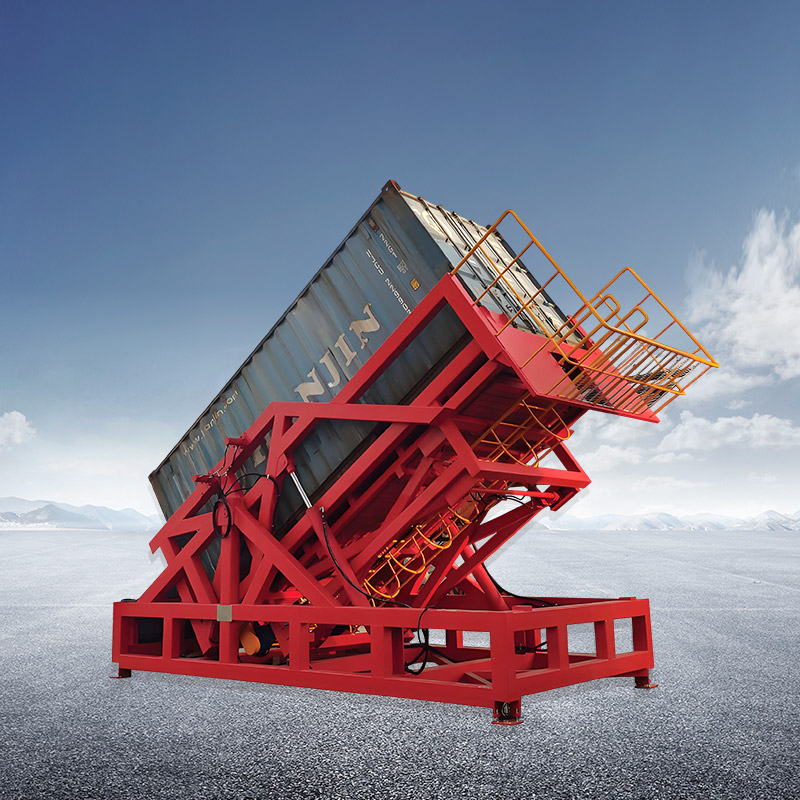
Container Flipping Machine
1. What Is a Container Flipping Machine?
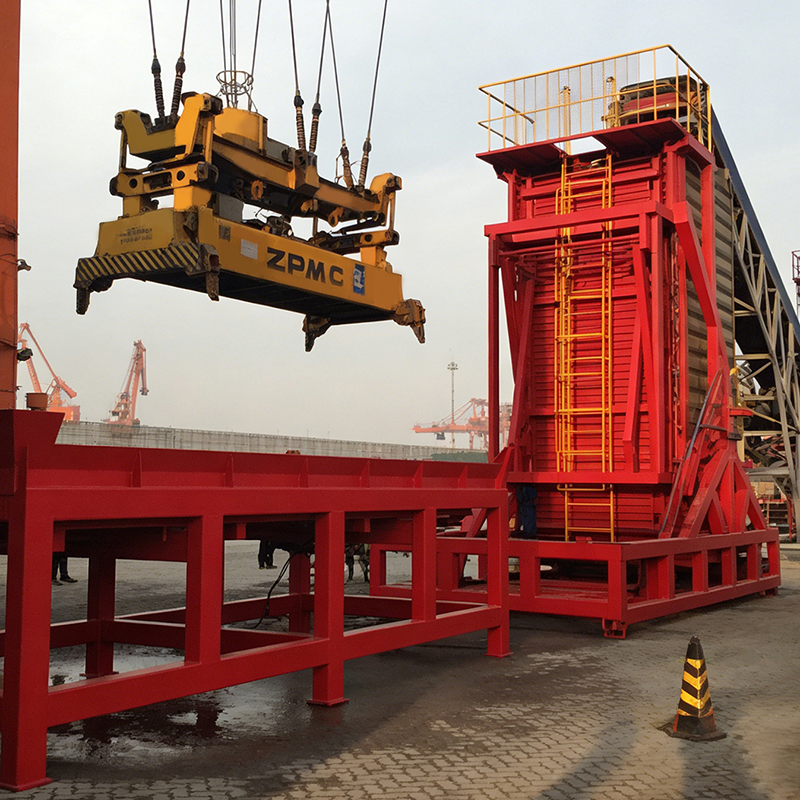
A container flipping machine is an industrial handling system that grips and rotates a shipping container around a horizontal axis. Depending on the material, container design, and unloading arrangement, the equipment can rotate a container to a high angle, commonly up to 90 degrees in the standard product configuration. Certain application-specific designs may use a greater rotation angle when complete discharge or specialized material flow requires it.
The equipment is also known as a container tilter, container rotator, container dumper, or container unloading machine. Its main purpose is to transfer bulk material from a container into a lower receiving point without requiring workers to enter the container or manually remove residual material.
A typical operating cycle consists of the following stages:
1. The container is positioned inside the machine using a truck, trailer, reach stacker, crane, or other site-handling equipment.
2. The container is aligned with the frame and secured at its corner castings or other approved lifting and fastening points.
3. Hydraulic clamping devices engage the container and confirm that it is correctly positioned.
4. The hydraulic rotation system raises and turns the container at a controlled speed.
5. The container door is opened manually or through an optional automatic door-control system.
6. Bulk material flows downward into the receiving hopper or conveying system.
7. The container returns to its original position after discharge.
8. The clamping devices release the empty container, allowing it to be removed and replaced with the next unit.
This process minimizes direct manual contact with the material and reduces the time required for each unloading operation. It is particularly valuable where a large number of containers must be emptied every day or where the material must be handled in a clean, enclosed, and controlled environment.
2. Why Containerized Bulk Handling Requires Specialized Equipment
Standard containers are designed primarily for transport, not for easy bulk-material discharge. A container may be loaded with grain, powder, pellets, mineral products, or other loose materials, but its rectangular shape and enclosed doors can make unloading challenging. Material may bridge at the door, adhere to the floor, or remain in corners. In many facilities, workers must use shovels, portable conveyors, vacuum equipment, or wheel loaders to remove the remaining load.
These conventional approaches create several operational disadvantages. Manual unloading takes time and exposes workers to dust, confined spaces, falling material, and awkward working positions. Vacuum systems can be effective for selected powders but may require substantial energy and may not be suitable for heavy, abrasive, or high-volume materials. Wheel loaders and mechanical grabs can damage containers or require large working areas. Horizontal discharge systems may also produce longer cycle times because the container must be opened, repositioned, and emptied through a relatively small outlet.
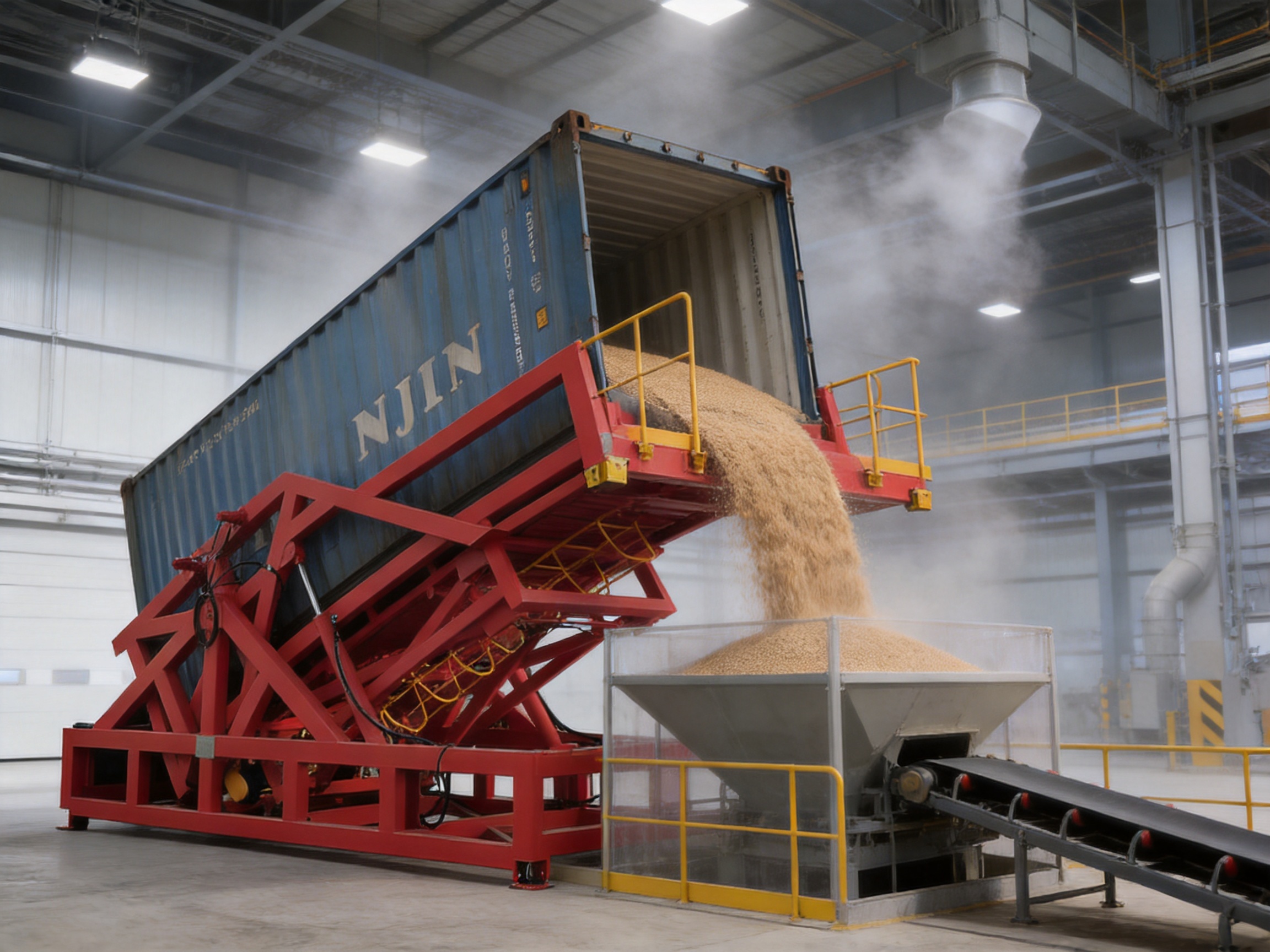
A container flipping machine addresses these limitations by changing the orientation of the container. When the container is tilted, gravity becomes the primary unloading force. The complete container opening can be positioned toward the receiving system, allowing material to flow rapidly and reducing the amount of residual product.
The machine is especially useful where the following conditions apply:
• Large volumes of containers must be processed daily.
• The material is free-flowing or can be discharged through controlled vibration or air assistance.
• The facility requires reduced labor dependence.
• Dust emissions must be controlled.
• The plant needs accurate material measurement during loading or unloading.
• Containers must be handled repeatedly without excessive structural stress.
• The unloading point must be connected to conveyors, silos, crushers, screens, mixers, or production lines.
3. Main Advantages Over Traditional Unloading Methods
3.1 Faster Operating Cycles
The principal advantage of a container flipping machine is its short cycle time. Traditional horizontal unloading may require workers to open the doors, position a receiving device, remove material in stages, clean the container, and handle residual product. With a flipping machine, the container is secured, rotated, emptied, and returned to its original position through a repeatable sequence.
Actual cycle times depend on container loading conditions, material characteristics, rotation speed, hopper capacity, and site layout. In typical bulk-handling operations, the complete unloading process may be completed in approximately 10 to 15 minutes. Optimized systems can support several containers per hour, with throughput commonly ranging from approximately four to nine containers per hour depending on material type and working schedule.
Shorter cycles increase the utilization of unloading bays, conveyors, storage equipment, and downstream processing machinery. They also reduce truck waiting time and improve the overall productivity of the logistics yard.
3.2 Reduced Labor Requirements
Manual unloading often requires several workers to open containers, guide material, remove blockages, clean residual product, and monitor the receiving equipment. A container flipping machine automates most of these activities. Operators can remain in a designated control area while monitoring container alignment, hydraulic pressure, door condition, material flow, and the completion of the unloading cycle.
Reduced labor requirements do not eliminate the need for trained personnel. Instead, they change the operator’s role from direct physical unloading to equipment supervision, inspection, and process control. This creates a safer and more efficient working environment while allowing a facility to allocate its workforce to higher-value tasks.
3.3 Improved Safety
Workers should not normally enter a loaded container to remove material. A container can present confined-space risks, unstable piles, poor visibility, dust exposure, and unexpected material movement. By using hydraulic rotation and automated clamping, the machine allows the container to be emptied without close-range manual entry.
Safety features may include container-presence sensors, clamp-position monitoring, hydraulic locks, emergency-stop circuits, overload protection, anti-fall devices, and interlocked access gates. The automatic control system can prevent rotation when the container is not correctly secured. Emergency braking and hydraulic holding systems help maintain a stable position during unexpected events.
3.4 Lower Dust Emissions
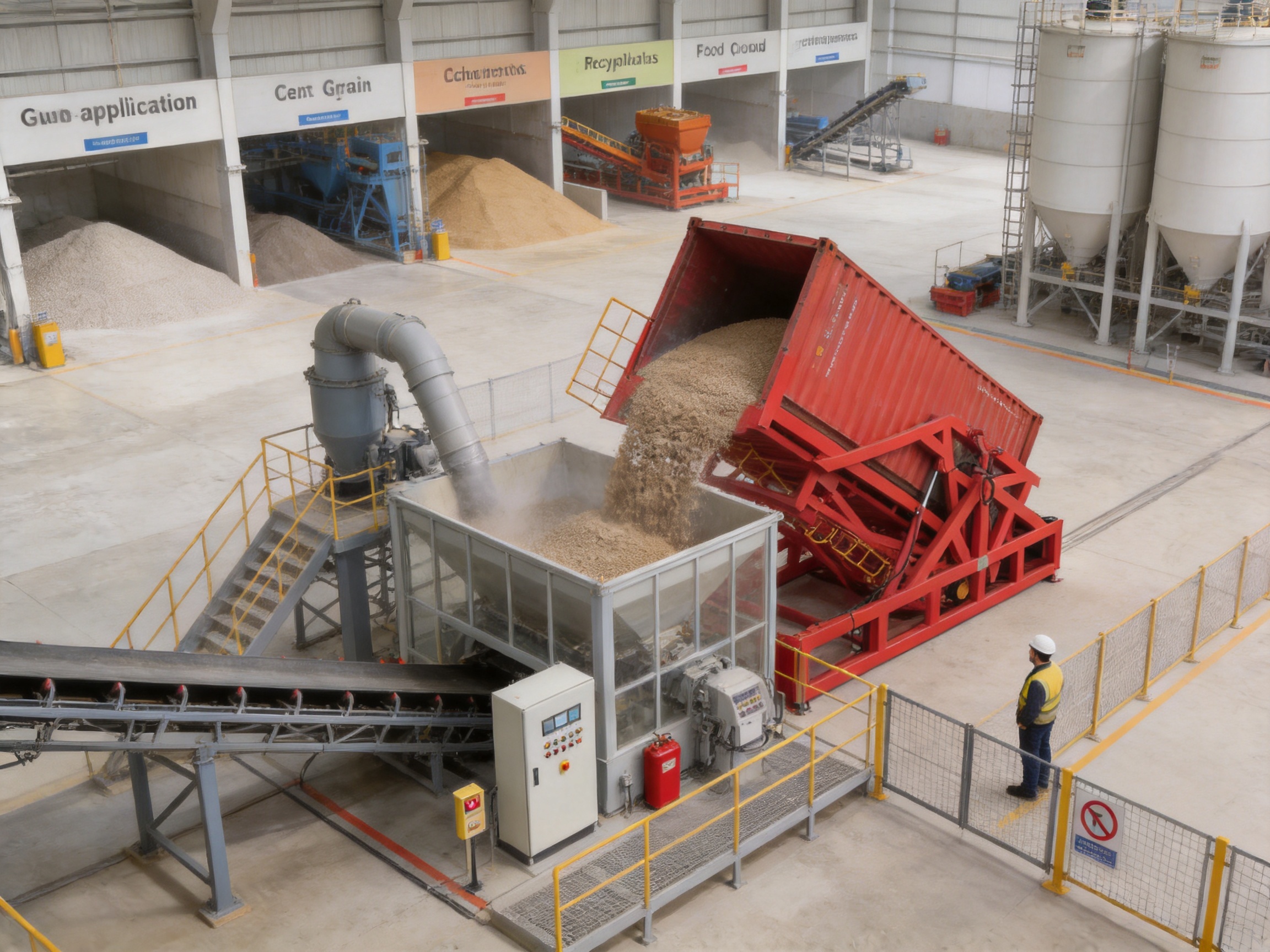
Bulk unloading can generate airborne dust, especially when handling cement, fly ash, flour, starch, mineral powder, and fine agricultural products. Open manual discharge often releases dust into the work area. The container flipping machine can be integrated with an enclosed receiving hopper, flexible seals, local exhaust ventilation, and a dust collector.
Enclosed unloading helps contain the material stream and reduces fugitive emissions. It also improves housekeeping, protects nearby equipment, and supports compliance with workplace and environmental requirements. For food, feed, and pharmaceutical-related materials, the enclosed configuration can also reduce contamination risks.
3.5 Better Material Recovery
Gravity-assisted discharge can remove most free-flowing material from a container in a short time. The final residual quantity depends on material cohesion, moisture, particle size, container-floor condition, and the selected rotation angle. Free-flowing grain, pellets, and dry powders generally discharge more completely than wet clay, sticky concentrate, or compacted material.
Where additional recovery is required, the system may be equipped with vibration devices, air knives, mechanical agitation, special liners, or optimized discharge geometry. These options can reduce the need for manual cleaning and help protect product yield.
3.6 More Consistent Process Control
Manual unloading performance can vary significantly from one operator to another. Rotation equipment provides a consistent operating sequence, adjustable speed, and repeatable positioning. The control system can store operating parameters for different materials or container types, allowing the operator to select an approved program.
Consistent cycles make production planning easier. They also provide a better foundation for integrating conveyors, weighing modules, warehouse systems, supervisory controls, and plant-level data collection.
4. Product Structure and Working Principle
4.1 Reinforced Main Frame
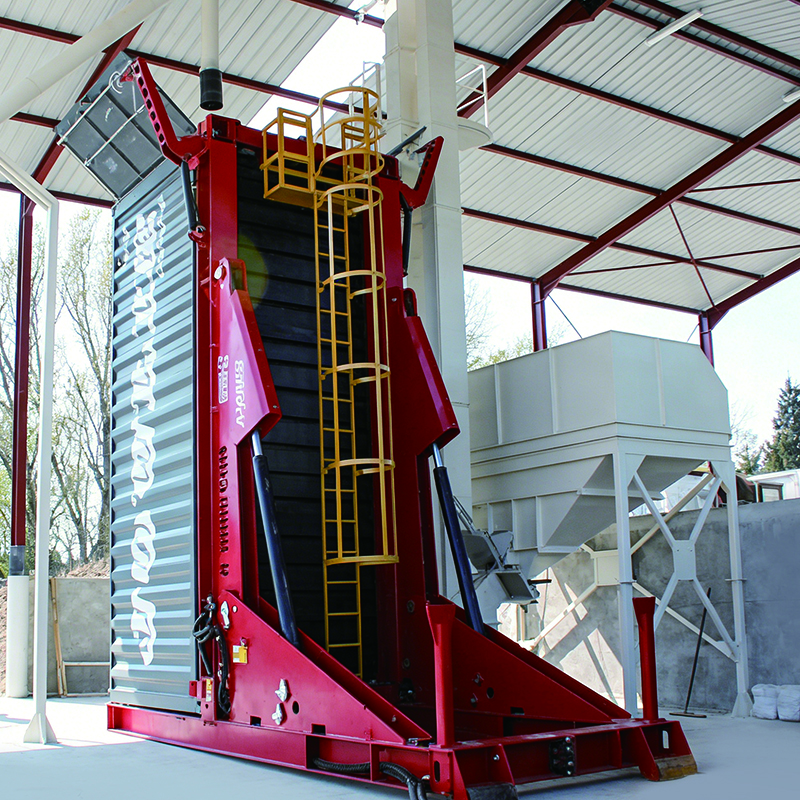
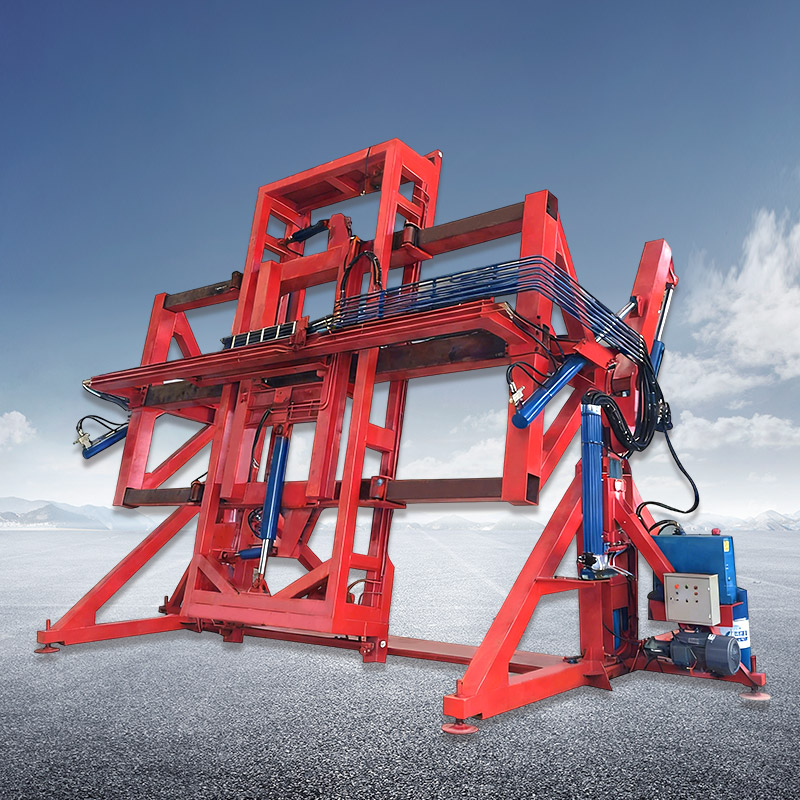
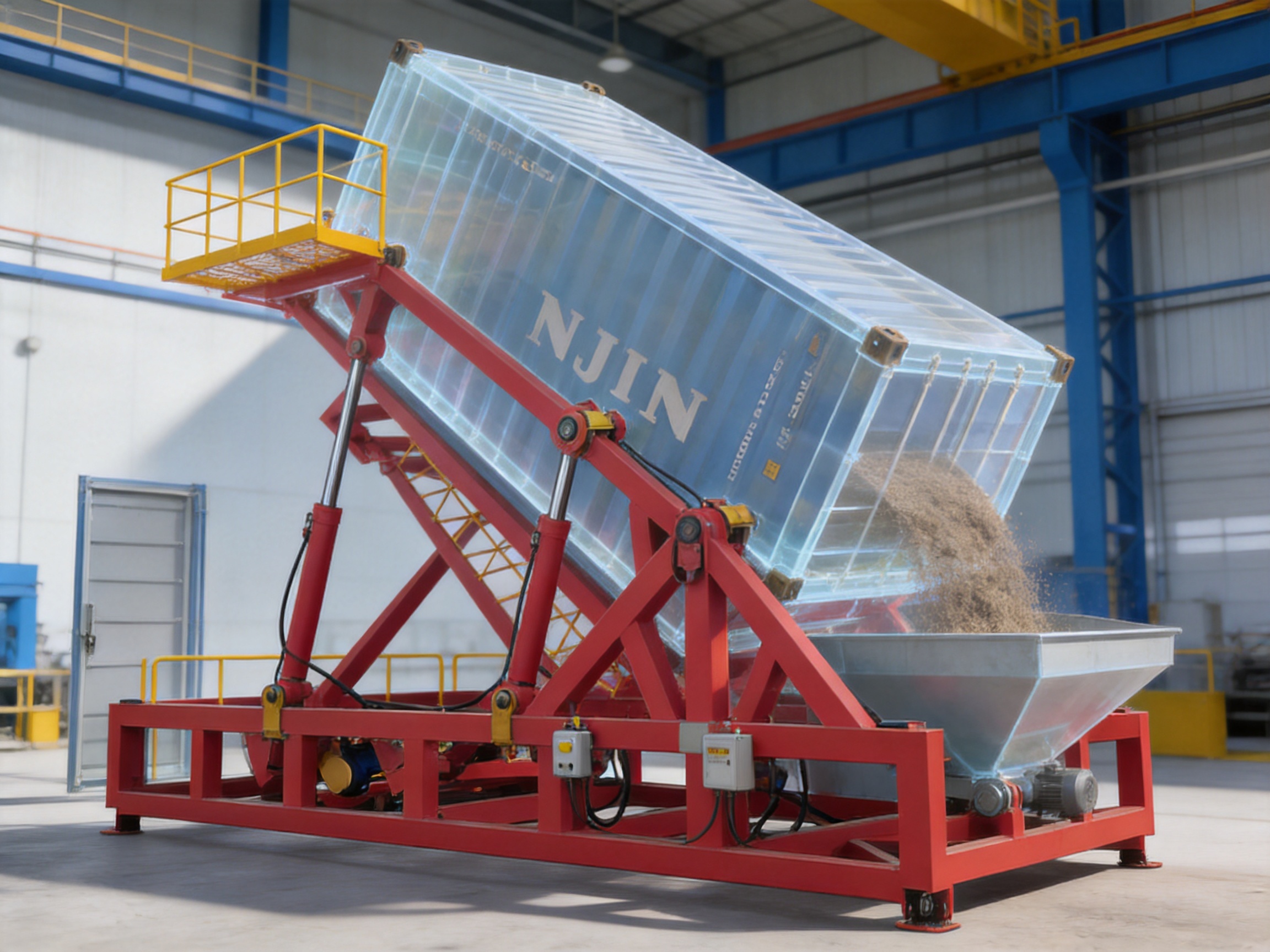
The main frame supports the container, hydraulic equipment, clamping components, safety systems, and rotational loads. It is fabricated from high-strength structural steel and designed to withstand repeated loading and unloading cycles. Finite element analysis can be used during engineering to identify stress concentration areas, verify frame deformation, and optimize material distribution.
A robust frame is essential because the machine experiences changing loads as the container moves from the horizontal position toward the vertical position. The load center also changes during discharge. The structure must therefore tolerate static weight, dynamic forces, impact from shifting material, and repeated fatigue loading.
Surface preparation and protective coatings help defend the frame against moisture, dust, chemical exposure, and outdoor operating conditions. For corrosive applications, the coating system, steel grade, fasteners, seals, and hydraulic components can be selected according to the site environment.
4.2 Container Clamping System
The clamping system holds the container securely during rotation. It is normally designed around the container’s corner castings or other structurally approved connection points. Proper engagement is critical because the container must remain stable while its center of gravity changes.
Clamping components may include hydraulic clamps, mechanical locking elements, guide blocks, positioning stops, and sensor systems. The operator should receive a clear confirmation that the container is correctly seated and locked before rotation begins.
The clamping structure can be customized for 20-foot, 40-foot, or other container formats. Special frames may be developed for nonstandard lengths or unusual container bodies, provided that the container’s structural capacity and lifting points are verified in advance.
4.3 Dual Hydraulic Cylinders
Large-tonnage dual hydraulic cylinders drive the rotation process. Using two cylinders helps distribute the load and maintain balanced movement across the machine. Hydraulic synchronization is important because uneven cylinder movement can cause twisting, excessive stress, or unstable rotation.
The hydraulic system may include a power unit, hydraulic valves, hoses, pressure sensors, flow controls, cylinder-mounted safety devices, and emergency lowering or holding circuits. Rotation speed can be adjusted to match the material and process requirements. Slow, controlled movement is preferred during initial lifting and final positioning, while an optimized speed can be used through the main discharge phase.
Hydraulic locks and explosion-proof or hose-rupture protection valves help prevent uncontrolled movement. In the event of a power failure, the hydraulic circuit is designed to hold the machine in position rather than allowing the container to fall freely.
4.4 Automatic Door Control
Container doors can be opened manually in simple installations, but automatic door control is valuable for high-volume or safety-sensitive facilities. The mechanism can open and close the doors at a controlled point in the rotation cycle, reducing the need for an operator to approach the container.
Door-control systems must account for different door designs, locking bars, door seals, and material pressure. Sensors can confirm the door position and prevent the cycle from continuing if the door is not fully open or properly secured. For dusty applications, door mechanisms should be protected from material accumulation and provided with accessible inspection points.
4.5 Receiving Hopper and Conveying Interface
The container flipping machine is normally installed above or beside a receiving hopper. The hopper collects the discharged product and directs it to a belt conveyor, screw conveyor, bucket elevator, pneumatic system, storage bin, crusher, mixer, or packaging line.
The interface between the machine and the hopper is a key part of the overall project. The hopper must be large enough to receive the material at the expected flow rate. Its geometry should minimize bridging, dead zones, and impact damage. Where dust control is necessary, flexible seals and extraction connections can create an enclosed transfer point.
4.6 Control and Monitoring System
The control system coordinates clamping, door operation, rotation, discharge, return, and release. A programmable logic controller can monitor sensors, hydraulic pressure, motor status, emergency circuits, and cycle completion.
A local control panel may include a touchscreen interface with operating modes, alarm messages, maintenance information, and production counters. Remote monitoring can be added for facilities that want to track machine status from a central control room. Data may include cycle time, container count, weight, alarm history, hydraulic pressure, and operating hours.
5. Technical Parameters and Model Selection
Jiangsu Zhengding’s standard container flipping machine range includes models designed for 20-foot and 40-foot containers. The following table summarizes the principal parameters provided for the standard configurations.
| Model | Applicable Container | Maximum Lifting Weight | Maximum Lifting Angle | Typical Application Considerations |
|---|---|---|---|---|
| TJFJ 20 | 20-foot container | 30 or 40 tonnes, depending on configuration | 0–90 degrees | Grain, powders, minerals, food ingredients, and medium-volume terminals |
| TJFJ 40 | 40-foot container | 30 or 40 tonnes, depending on configuration | 0–90 degrees | High-volume logistics yards, industrial terminals, and large receiving systems |
Model selection should not be based only on container length. Engineers must also evaluate the maximum gross container weight, the tare weight of the container, material bulk density, moisture content, flowability, loading distribution, center of gravity, site foundation, container traffic pattern, and required cycle time.
The machine’s rated capacity must be greater than the actual combined weight of the container and its contents. A safety margin should be maintained for uneven loading and dynamic effects. Customers should provide accurate information about the container types and materials before final engineering begins.
5.1 Material Characteristics
Free-flowing materials such as corn, wheat, soybeans, plastic pellets, and dry granular products generally discharge effectively through gravity. Cement, fly ash, flour, and starch may also be handled efficiently, but dust extraction and anti-bridging measures are often important.
Sticky, wet, compacted, or cohesive materials may require a higher rotation angle, vibration, air assistance, special liners, or a larger receiving opening. Wet clay, mineral concentrate, and some chemical products should be tested before finalizing the equipment design.
5.2 Throughput Planning
Throughput is influenced by more than the rotation speed. The complete cycle includes container arrival, positioning, clamping, door opening, rotation, discharge, return, release, and container removal. Delays outside the machine can reduce the actual plant capacity even when the mechanical cycle is fast.
For this reason, the unloading station should be planned as a complete system. Container traffic, staging space, truck access, hopper capacity, conveyor speed, storage availability, operator workflow, and maintenance access must be considered together.
6. Optional Configurations for Different Industries
6.1 Dynamic Weighing Module
An optional high-precision weighing system can monitor the quantity discharged or loaded during operation. Real-time weighing helps prevent overloading, supports accurate inventory records, and improves commercial measurement.
Weighing equipment may be installed beneath the receiving hopper, integrated into the machine frame, or connected to a downstream conveyor. The final arrangement depends on the required accuracy, material flow, and plant layout. Calibration procedures should be established according to local measurement requirements and the customer’s quality system.
6.2 Mobile Chassis
A mobile design allows the container flipping machine to be transferred between workstations within a facility. This configuration can be useful for seasonal grain handling, temporary projects, multi-product yards, or plants that serve several unloading points.
Mobility may involve wheels, rails, towing components, or a dedicated chassis. The design must include suitable stabilizing devices, wheel brakes, anchoring provisions, and utility connections. The machine should be fully secured before a container is loaded and rotated.
6.3 Dust-Collection Integration
Dust extraction can be integrated into the receiving area through flexible seals, enclosed chutes, negative-pressure ducting, and a filter or dust collector. The extraction capacity should be selected according to the material, discharge rate, hopper geometry, and local environmental requirements.
Dust-control integration is especially important in cement terminals, flour mills, grain facilities, mineral plants, chemical factories, and recycling operations. It reduces cleanup requirements and protects both operators and adjacent equipment.
6.4 Vibration and Air-Assisted Discharge
Some materials do not flow freely after the container is tilted. Vibration devices can help loosen compacted material and reduce bridging. Air knives or fluidizing systems may assist with dry powders when they are compatible with the product and environmental controls.
These systems must be selected carefully. Excessive vibration can affect structural components, damage fragile products, or increase noise. Air assistance may create additional dust if the enclosure and extraction system are not correctly designed.
6.5 Remote Monitoring and Automation
Remote monitoring enables maintenance teams and plant managers to view machine status, alarms, cycle counts, hydraulic conditions, and production data. Integration with a supervisory control and data acquisition system can make the container flipping machine part of a larger automated logistics network.
Advanced automation may include barcode or identification systems, automatic container recognition, recipe-based operating parameters, interconnection with yard-management software, and automated reporting. These functions are particularly valuable in terminals with high container volumes and strict traceability requirements.
7. Manufacturing Processes and Engineering Strengths
The performance of a container flipping machine depends heavily on manufacturing quality. The equipment must carry heavy containers, tolerate repeated dynamic loading, and maintain reliable movement in dusty or demanding environments. Jiangsu Zhengding Intelligent Equipment Co., Ltd. combines engineering design, steel fabrication, hydraulic integration, electrical control, assembly, and commissioning support in one equipment-development process.
7.1 Application-Based Engineering
Manufacturing begins with an assessment of the customer’s actual operating conditions. Engineers review the container size, maximum gross weight, material properties, loading pattern, required capacity, discharge destination, available space, environmental conditions, and automation objectives.
This approach is more effective than supplying a generic machine without considering the complete process. For example, a grain terminal may require a large hopper, gentle material transfer, dust extraction, weighing, and high daily throughput. A cement plant may require wear-resistant surfaces, powder containment, air-fluidization assistance, and a high-capacity dust collector. A recycling facility may require a wider discharge opening and protection against irregular material shapes.
7.2 Finite Element Structural Analysis
High-strength steel alone does not guarantee a reliable machine. The frame must be engineered so that loads are distributed effectively and stress concentrations are controlled. Finite element analysis helps evaluate the main frame, rotating structure, support points, cylinder connections, clamp assemblies, and other critical components.
Analysis can be conducted for horizontal loading, intermediate rotation, maximum lifting angle, uneven material distribution, emergency stopping, and other representative conditions. The results support decisions about steel thickness, reinforcement plates, weld locations, bearing arrangements, and fatigue-sensitive areas.
This design process helps improve structural durability while avoiding unnecessary weight and material consumption. A balanced structure is easier to manufacture, transport, install, and maintain.
7.3 Precision Steel Fabrication
Frame components are cut, formed, positioned, and welded according to approved drawings and production procedures. Dimensional accuracy is important because misalignment can affect hydraulic synchronization, container positioning, bearing life, and clamp engagement.
Welded assemblies should be inspected for penetration, appearance, deformation, and dimensional accuracy. Critical welds may require additional non-destructive testing according to the project specification. After welding, the structure may undergo correction, machining, surface preparation, and protective coating.
7.4 Hydraulic System Assembly
The hydraulic system is assembled using appropriately rated cylinders, valves, pumps, hoses, fittings, and safety components. Hydraulic cleanliness is essential because contamination can damage valves, seals, and pumps. During assembly, pipelines should be cleaned, sealed, and routed to avoid abrasion, excessive bending, or contact with moving parts.
Pressure testing and functional testing verify that the system can raise, hold, rotate, and return the rated load. Safety valves are checked to ensure that the container remains controlled during abnormal conditions such as hose damage, power loss, or emergency stopping.
7.5 Electrical and Control Integration
The control system is tested together with mechanical and hydraulic components. Sensors must correctly identify container presence, clamp engagement, door position, rotation limits, emergency-stop status, and hydraulic conditions. The control logic should prevent unsafe sequences and provide understandable alarm information.
Control panels can be adapted to the customer’s preferred voltage, communication protocol, language, and plant-control standards. Components may be selected for indoor, outdoor, humid, dusty, or corrosive environments.
7.6 Factory Testing
Before shipment, the machine can undergo factory inspection and operational testing. Typical checks include dimensional verification, no-load movement, hydraulic pressure, rotation smoothness, safety-interlock operation, emergency stopping, sensor response, control-panel functions, and coating quality.
Where practical, a simulated or representative load test can be arranged. Factory testing helps identify installation issues before the equipment reaches the customer’s site and provides a basis for commissioning documentation.
8. Company Capabilities and Industry Experience
Jiangsu Zhengding Intelligent Equipment Co., Ltd. is a national high-tech enterprise engaged in the research, development, manufacturing, and sales of intelligent loading and unloading equipment. Its product range includes rear dumpers, side-turn truck dumpers, car loading equipment, container flipping machines, and related automated logistics systems.
The company’s broad product portfolio is an important strength because container unloading projects often involve more than one machine. A customer may need truck unloading, container tipping, conveyor integration, storage transfer, metering, and loading equipment within the same facility. Experience across multiple equipment types allows the manufacturer to understand the interaction between individual machines and the complete material-handling process.
The equipment is used in industries including steel, chemicals, cement, coal, grain, oil, food, feed, ports, papermaking, and new energy. The company also exports equipment to Japan, Brazil, Egypt, Pakistan, India, the Middle East, and Southeast Asia. This international exposure requires attention to different operating environments, electrical standards, installation conditions, safety expectations, and customer service requirements.
Reported international users associated with the company’s wider equipment portfolio include Budweiser, Heineken, Buhler Group, Wilmar International, Cargill, DuPont, Louis Dreyfus, Charoen Pokphand Group, and Saint-Gobain Group. Such project experience supports the development of equipment for demanding industrial applications, although final performance depends on the specific configuration, material, and operating conditions of each installation.
The company’s strengths can be summarized in five areas:
1. A relatively complete range of automated loading and unloading equipment for vehicles and containers.
2. Engineering support for customized structures, dust systems, weighing devices, conveyors, and control interfaces.
3. Experience serving multiple bulk-material industries.
4. Manufacturing capabilities that combine structural fabrication, hydraulic systems, electrical control, and equipment assembly.
5. Export experience and the ability to support projects in different countries and operating environments.
9. Competitive Advantages of This Equipment Design
9.1 Integrated Automation Rather Than Stand-Alone Tipping
Some low-cost unloading solutions provide only a basic tipping frame. A more advanced container flipping machine can be integrated with automatic door control, weighing, dust collection, conveyors, interlocks, remote monitoring, and plant-level controls. This turns the equipment from a simple lifting device into a controlled material-transfer station.
9.2 Balanced Hydraulic Rotation
Dual hydraulic cylinders and hydraulic synchronization provide smoother movement than an inadequately balanced single-point lifting arrangement. Hydraulic locks and protection valves improve stability and reduce the risk of uncontrolled movement. These features are important for heavy 40-foot containers and frequent industrial operation.
9.3 Structural Design for Repetitive Loads
Equipment intended for occasional use may not be suitable for a terminal that handles containers continuously. A reinforced frame designed through stress analysis provides better support for repetitive loading, impact, and fatigue. Proper reinforcement around cylinder mounts, corner supports, bearings, and clamp locations helps extend service life.
9.4 Flexible Installation Options
Fixed, mobile, enclosed, weighed, and fully automated configurations can be developed according to the customer’s facility. This flexibility gives the machine an advantage over rigid systems that cannot adapt to different container sizes, material types, or plant layouts.
9.5 Reduced Total Operating Cost
The purchase price is only one part of equipment economics. A machine that reduces unloading time, labor requirements, product loss, dust cleanup, and container waiting time may deliver greater long-term value than a lower-priced manual or semi-mechanical system.
External lubrication points, accessible hydraulic components, simple structural design, and clear inspection areas also reduce maintenance effort. The result is lower downtime and more predictable operating costs over the equipment’s service life.
10. Installation and Site Planning
Successful installation requires more than placing the machine on a concrete foundation. The project should begin with a site survey covering container arrival routes, staging areas, lifting equipment, receiving-hopper position, conveyor alignment, power supply, drainage, dust extraction, operator access, and emergency escape paths.
The foundation must be designed for the machine’s dead weight, container weight, dynamic forces, and local soil conditions. Anchor bolts and embedded parts should be positioned accurately. If the machine is mobile, the supporting floor or rails must be capable of handling concentrated wheel and stabilizer loads.
Adequate clearance must be maintained around the machine throughout the complete rotation path. This includes overhead structures, lighting, pipework, cable trays, dust ducts, walls, vehicles, and maintenance platforms. The container door must also have sufficient space to open without striking nearby equipment.
Utilities should be planned before delivery. These may include electrical power, hydraulic or pneumatic connections, dust-collector ducting, control-network cables, lighting, drainage, and fire-protection systems. A well-planned layout reduces installation time and makes future maintenance safer.
11. Operation and Safety Management
Operators should receive training before using the machine. Training should cover container identification, rated capacity, material characteristics, inspection procedures, clamping confirmation, emergency stops, door operation, abnormal noise, hydraulic leakage, and safe access rules.
Before each cycle, the operator should confirm that the container is compatible with the machine, the load is within the rated capacity, the container is correctly positioned, the doors and locking bars are in an acceptable condition, and no personnel are inside the operating zone.
The machine should not be operated if the container is visibly damaged in a way that compromises its structural integrity. Uneven or unstable loads require special assessment. The container should be clamped only at approved points, and no person should stand beneath a raised container or within the rotation path.
Emergency-stop devices should be tested at planned intervals. Safety interlocks, sensors, hydraulic locks, limit switches, guardrails, access gates, and warning lights should be inspected according to a documented schedule.
Formal operator training is especially important in facilities where several shifts use the equipment. A consistent operating procedure reduces the chance of incorrect loading, skipped inspection steps, unauthorized adjustments, and unsafe troubleshooting.
12. Maintenance Requirements
12.1 Daily Inspection
Daily checks should include visual inspection of the frame, clamps, hydraulic cylinders, hoses, fittings, pins, bearings, door-control components, sensors, and safety devices. Operators should look for oil leakage, unusual deformation, loose bolts, abnormal wear, damaged seals, and foreign objects in the receiving area.
12.2 Hydraulic Maintenance
Hydraulic oil condition has a direct effect on system reliability. Oil should be checked for contamination, discoloration, water ingress, and abnormal odor. Filters should be replaced according to the service schedule or sooner if pressure indicators show restriction.
Based on the supplied maintenance guidance, hydraulic oil replacement is typically recommended every 3,000 operating hours or every 18 months, subject to the actual environment and oil condition. Cylinder seals may provide a service life of approximately six to eight years under normal duty cycles, although abrasive dust, high temperatures, excessive pressure, and poor maintenance can shorten this period.
12.3 Structural and Mechanical Inspection
Welded areas, pivot points, bearings, clamp assemblies, wear plates, and foundation connections should be inspected periodically. Any crack, deformation, unusual movement, or increased clearance should be investigated immediately.
Lubrication points should remain accessible and clearly identified. One advantage of the equipment’s relatively simple structure is that key lubrication points can be located externally, allowing maintenance personnel to service them without entering difficult or hazardous spaces.
12.4 Electrical and Safety-System Inspection
Electrical cabinets should be protected from dust and moisture. Terminals, cables, sensors, and control components should be checked for loose connections, overheating, corrosion, and physical damage. Emergency circuits and interlocks must be tested rather than assumed to be functional.
Maintenance records should include operating hours, cycle counts, oil changes, filter replacement, inspections, alarms, repairs, and safety tests. Reliable records help identify recurring problems and support preventive maintenance planning.
13. Applications Across Bulk-Material Industries
13.1 Grain and Agribulk
Grain terminals, feed mills, flour plants, and agricultural storage facilities use containerized transport for wheat, corn, rice, soybeans, seeds, and pellets. A container flipping machine can discharge these products into receiving pits, bucket elevators, conveyors, and silos.
Food and agricultural applications generally require careful attention to cleanliness, product segregation, pest control, dust extraction, and gentle transfer. The machine can be configured with a suitable hopper and enclosed discharge area to reduce contamination and material loss.
13.2 Cement and Mineral Products
Cement, fly ash, sand, ores, concentrates, and other mineral products are heavy and often abrasive. The equipment must be designed for high loads, wear resistance, dust control, and reliable hydraulic operation.
In cement terminals, faster unloading can improve truck utilization and storage replenishment. Dust extraction is particularly important because fine mineral particles can affect worker health, equipment cleanliness, and environmental compliance.
13.3 Chemicals and Industrial Powders
Chemical products may require enclosed handling, special surface protection, compatible seals, grounding, and strict contamination control. The machine design should consider whether the material is corrosive, combustible, hygroscopic, toxic, or prone to bridging.
For powder handling, the receiving hopper and extraction system should be designed together. The unloading process should avoid unnecessary turbulence and provide safe access for inspection without exposing workers to the product.
13.4 Food Ingredients
Sugar, flour, starch, salt, grains, and other food ingredients benefit from enclosed and repeatable unloading. A container flipping machine can reduce manual intervention and improve batch traceability when connected to weighing and production-control systems.
Food-related installations may require specific materials, cleanable surfaces, hygienic design, inspection access, and segregation between products. These requirements should be defined during the engineering stage.
13.5 Recycling and Waste Handling
Recycling facilities may receive plastic scrap, paper, packaging waste, electronic waste, or other irregular materials in containers. These materials may have inconsistent shapes and loading distributions. The machine should therefore be evaluated for potential impact, bridging, snagging, and uneven center of gravity.
Protective guards, reinforced receiving areas, wider openings, and customized discharge systems may be necessary. Dust, noise, odor, and fire risks should also be considered in the overall plant design.
14. How to Evaluate a Supplier
Buyers should evaluate a container flipping machine according to the complete project requirement rather than comparing only lifting capacity or price. Important questions include:
• Does the supplier have experience with the intended material?
• Can the frame be engineered for the customer’s container types and gross weights?
• Are hydraulic locks, emergency valves, and container-presence interlocks included?
• Can the equipment connect to an existing hopper, conveyor, or dust collector?
• Is dynamic weighing available?
• Can the machine be supplied as fixed or mobile equipment?
• What factory testing and commissioning support are provided?
• Are spare parts and technical documentation available?
• Can the electrical system match the local power and control standards?
• Does the supplier provide operator training and maintenance guidance?
A supplier with experience in related truck dumpers, container equipment, and automated material-handling systems may be better positioned to design a coordinated solution. The ability to provide both mechanical equipment and system integration can reduce interface problems between different vendors.
15. Economic and Environmental Benefits
The economic value of a container flipping machine comes from several sources. Faster unloading can increase the number of containers processed by one unloading bay. Reduced labor requirements can lower operating costs. Better material recovery can reduce product loss. Enclosed transfer can reduce cleaning and environmental-management expenses. Reliable cycle times can improve the utilization of downstream equipment.
The machine also supports more sustainable logistics by reducing unnecessary handling and limiting the use of energy-intensive manual or vacuum-based unloading methods for applications where gravity discharge is suitable. A compact, well-planned unloading station can reduce the footprint required for temporary storage and manual work areas.
Environmental benefits are strongest when the machine is combined with an appropriately sized dust-collection system. Dust control protects workers, reduces material escaping into the surrounding environment, and helps maintain cleaner equipment and floors.
To calculate the expected return on investment, customers should compare the current cost of labor, unloading time, product loss, dust cleanup, equipment rental, container waiting, and production interruptions against the projected capital and maintenance costs of the automated system.
16. Recommended Project Development Process
A successful project usually follows a series of defined steps:
1. Collect technical information about containers, materials, daily volume, maximum weight, and required throughput.
2. Review the site layout and identify the unloading point, hopper, conveyors, utilities, foundation, and access routes.
3. Select the basic machine model according to container size and capacity.
4. Determine optional functions such as automatic doors, weighing, mobility, dust extraction, vibration, air assistance, and remote monitoring.
5. Complete mechanical, hydraulic, electrical, safety, and structural engineering.
6. Review drawings and operating sequences with the customer.
7. Manufacture and assemble the equipment under controlled procedures.
8. Complete factory testing and documentation.
9. Install, commission, and test the machine at the customer’s facility.
10. Train operators and maintenance personnel.
11. Establish preventive-maintenance schedules and performance records.
This process helps ensure that the machine is matched to the real operating environment rather than selected solely from a standard catalog.
17. Frequently Asked Questions
Q1: What container sizes can the machine handle?
A container flipping machine can be configured for standard 20-foot and 40-foot containers. The supplied standard models include TJFJ 20 for 20-foot containers and TJFJ 40 for 40-foot containers. Special designs may be considered for other container lengths, but the container structure, corner castings, overall dimensions, and load distribution must be reviewed before approval.
Q2: What is the maximum load capacity?
The standard technical information lists maximum lifting weights of 30 or 40 tonnes depending on configuration. The final rated capacity must be confirmed for each project because the total load includes the container and its contents. Material density, loading distribution, dynamic forces, and the selected safety margin all affect the final design.
Q3: How much material remains in the container after unloading?
Residual material depends on flowability, moisture, cohesion, particle size, container-floor condition, and rotation angle. Free-flowing grain and pellets may leave very little residue. Sticky or compacted products can leave more. Vibration, air assistance, special liners, and optimized hopper geometry can be added when low residual levels are required.
Q4: Can the machine handle cement, fly ash, or other powders?
Yes, the machine can be designed for cement, fly ash, mineral powders, flour, starch, and similar products. Powder applications require particular attention to dust extraction, enclosed discharge, material bridging, wear, sealing, and cleaning. The supplier should receive complete information about bulk density, moisture, temperature, abrasiveness, and flow behavior.
Q5: Does the machine require workers to enter the container?
The main purpose of the machine is to eliminate routine manual entry into the container. Operators control the equipment from a safe position while the container is clamped and rotated. Exceptional maintenance or cleaning work must still follow the customer’s confined-space and isolation procedures.
Q6: Is automatic container-door operation available?
Yes. An automatic door-control system can be added to open and close the container doors during the appropriate stages of the cycle. Door position sensors and interlocks help prevent unsafe movement when the doors are not correctly positioned.
Q7: Can weighing be integrated?
Yes. A dynamic weighing module can be configured to monitor material quantity in real time. Weighing integration helps prevent overloading, improve inventory accuracy, and provide reliable outbound or inbound data. The weighing arrangement should be selected according to the required accuracy and hopper configuration.
Q8: Is a mobile version available?
A mobile chassis design can be developed for facilities that need to move the equipment between workstations. Mobile installations require stable travel surfaces, anchoring or braking systems, and safe utility connections. The machine must be secured before container rotation.
Q9: What maintenance is normally required?
Maintenance includes daily visual inspection, hydraulic leakage checks, lubrication, filter inspection, structural examination, sensor testing, safety-interlock testing, and periodic oil replacement. The supplied guidance recommends replacing hydraulic oil every 3,000 operating hours or 18 months, depending on actual operating conditions. Hoses, fittings, cylinder seals, bearings, and welded structures should be inspected regularly.
Q10: Can the machine be connected to a dust collector?
Yes. The discharge area can be enclosed with flexible seals and connected to a dust-collection system. The ducting, extraction volume, filter type, and hopper design should be engineered together to achieve effective containment without disrupting material flow.
Q11: How many containers can the machine process per hour?
Throughput depends on the material, rotation angle, container size, loading condition, operator workflow, and receiving-system capacity. Typical applications may handle approximately four to nine containers per hour. Actual performance should be confirmed through a project-specific cycle-time evaluation.
Q12: What information should be provided for a quotation?
Customers should provide container dimensions, maximum gross weight, material type, bulk density, moisture content, flowability, daily and hourly volume, required discharge point, site drawings, power supply, dust-control requirements, weighing needs, and preferred automation level. Photographs or samples of the material can also help engineers select the correct hopper and optional discharge devices.
18. Conclusion
A container flipping machine provides a practical and highly automated method for unloading bulk materials from shipping containers. By combining hydraulic rotation with secure clamping, gravity discharge, enclosed transfer, optional weighing, and intelligent controls, the equipment can improve productivity, safety, cleanliness, and material recovery.
Compared with manual unloading, vacuum systems, and basic horizontal discharge methods, the machine offers shorter and more consistent cycles, lower labor requirements, reduced confined-space exposure, and better integration with modern logistics systems. Its reinforced structure, dual hydraulic cylinders, hydraulic locks, safety valves, and optional automation functions make it suitable for repetitive industrial operation.
Jiangsu Zhengding Intelligent Equipment Co., Ltd. supports these applications through equipment design, steel fabrication, hydraulic integration, electrical control, customization, and complete loading-and-unloading solutions. Its experience across truck dumpers, side-turn dumpers, container equipment, and other logistics machinery enables customers to develop integrated systems rather than isolated machines.
For companies handling grain, minerals, cement, chemicals, food ingredients, recycling materials, or other bulk products, the correct machine configuration should be selected through a detailed review of container type, material behavior, throughput, site layout, safety requirements, and downstream equipment. When properly engineered and maintained, a container flipping machine can become a dependable central element in an efficient, automated bulk-material handling operation.
References
1. Product technical information for TJFJ-series container flipping machines, Jiangsu Zhengding Intelligent Equipment Co., Ltd.
2. Industrial bulk-material handling and container logistics application data supplied for equipment planning and engineering evaluation.
3. General principles of hydraulic lifting, container handling, industrial machine guarding, and automated material-transfer system design.
4. Finite element analysis practices for welded steel frames subjected to repeated static and dynamic loads.
5. Preventive maintenance principles for hydraulic cylinders, pumps, valves, hoses, filters, bearings, and industrial control systems.
6. Dust-control engineering practices for enclosed transfer points in grain, cement, mineral, chemical, food, and recycling facilities.


