

 English
 русский
 Español
 Français
 Português
 عربى





+86-13588556918
Content
- 1 1. Product Overview and Operating Principle
- 2 2. Technical Configuration and Performance
- 3 3. Efficiency Advantages Compared with Fixed Dumpers
- 4 4. Mobile Design and Maneuverability
- 5 5. Hydraulic Synchronization and Structural Safety
- 6 6. Automatic Wheel Retention and Intelligent Operation
- 7 7. Manufacturing Strengths and Engineering Capability
- 8 8. Industry Applications
- 9 9. Economic Benefits and Return on Investment
- 10 10. Installation, Commissioning, and Maintenance
- 11 11. Frequently Asked Questions
- 11.1 Q1: What is a mobile truck dumper?
- 11.2 Q2: What is the capacity of the representative model?
- 11.3 Q3: What lifting angles are available?
- 11.4 Q4: Can the dumper turn in a narrow work area?
- 11.5 Q5: Can the machine be moved without its own drive system?
- 11.6 Q6: Does a mobile dumper require a concrete foundation?
- 11.7 Q7: How does the automatic wheel-retaining device improve safety?
- 11.8 Q8: What materials can be handled?
- 11.9 Q9: How quickly can the equipment be relocated?
- 11.10 Q10: Can the equipment work with different truck sizes?
- 11.11 Q11: Is remote control included?
- 11.12 Q12: What industries use this equipment?
- 11.13 Q13: Is a mobile dumper better than a fixed dumper in every situation?
- 11.14 Q14: How can customers select the correct configuration?
- 12 12. Why Choose an Integrated Equipment Manufacturer
- 13 13. Conclusion
- 14 References
- 15 Product: Mobile Truck Dumpers
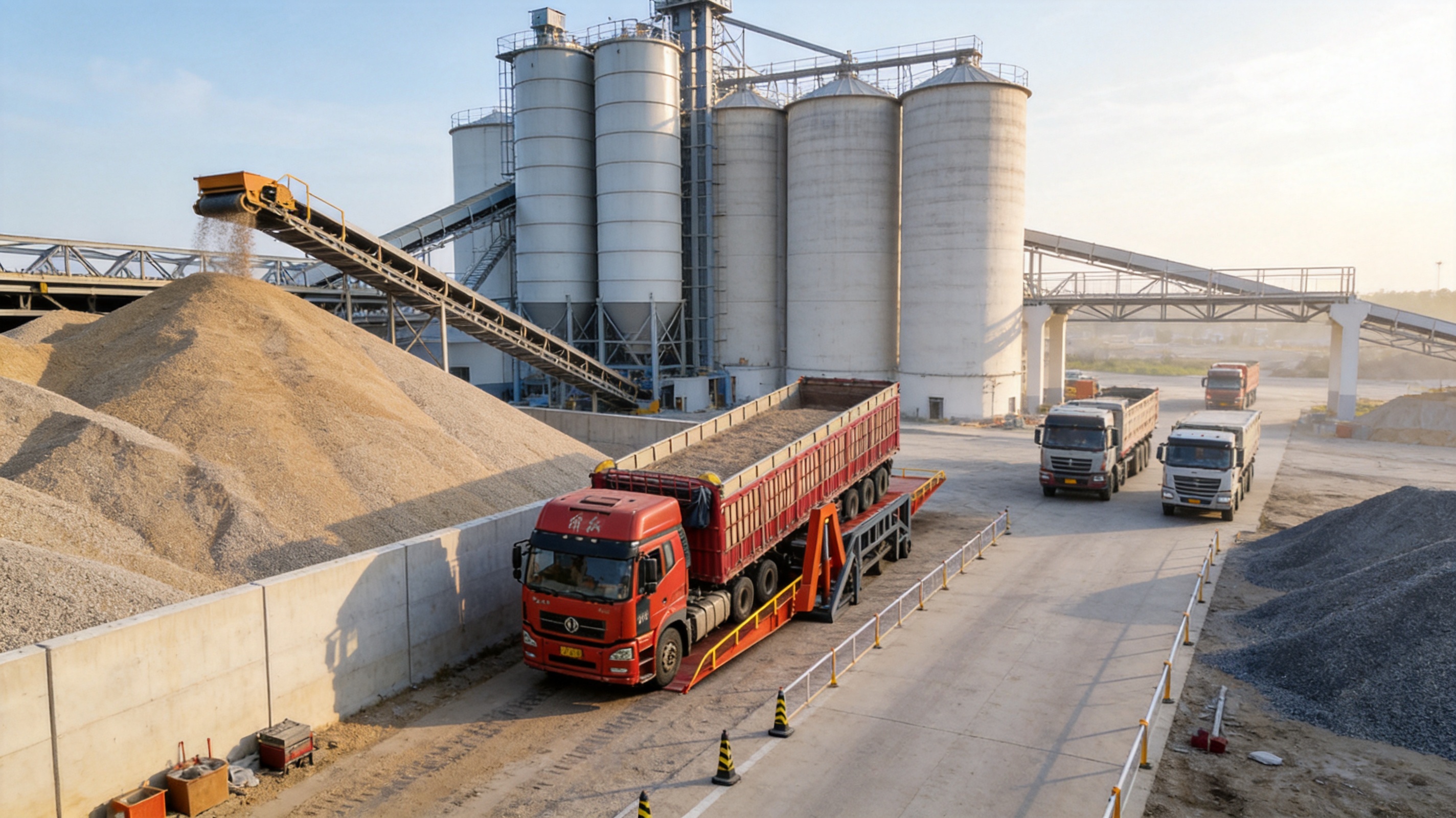
Mobile truck dumpers are engineered unloading platforms designed to improve the speed, safety, and flexibility of bulk-material handling operations. Unlike conventional fixed dumpers that remain permanently installed at one location, mobile units can be repositioned according to production requirements, project schedules, stockpile locations, and seasonal changes in material flow. This mobility makes them particularly valuable for construction contractors, mining operations, agricultural processors, logistics terminals, cement plants, chemical facilities, grain companies, and other industries that need reliable vehicle unloading without extensive civil construction.
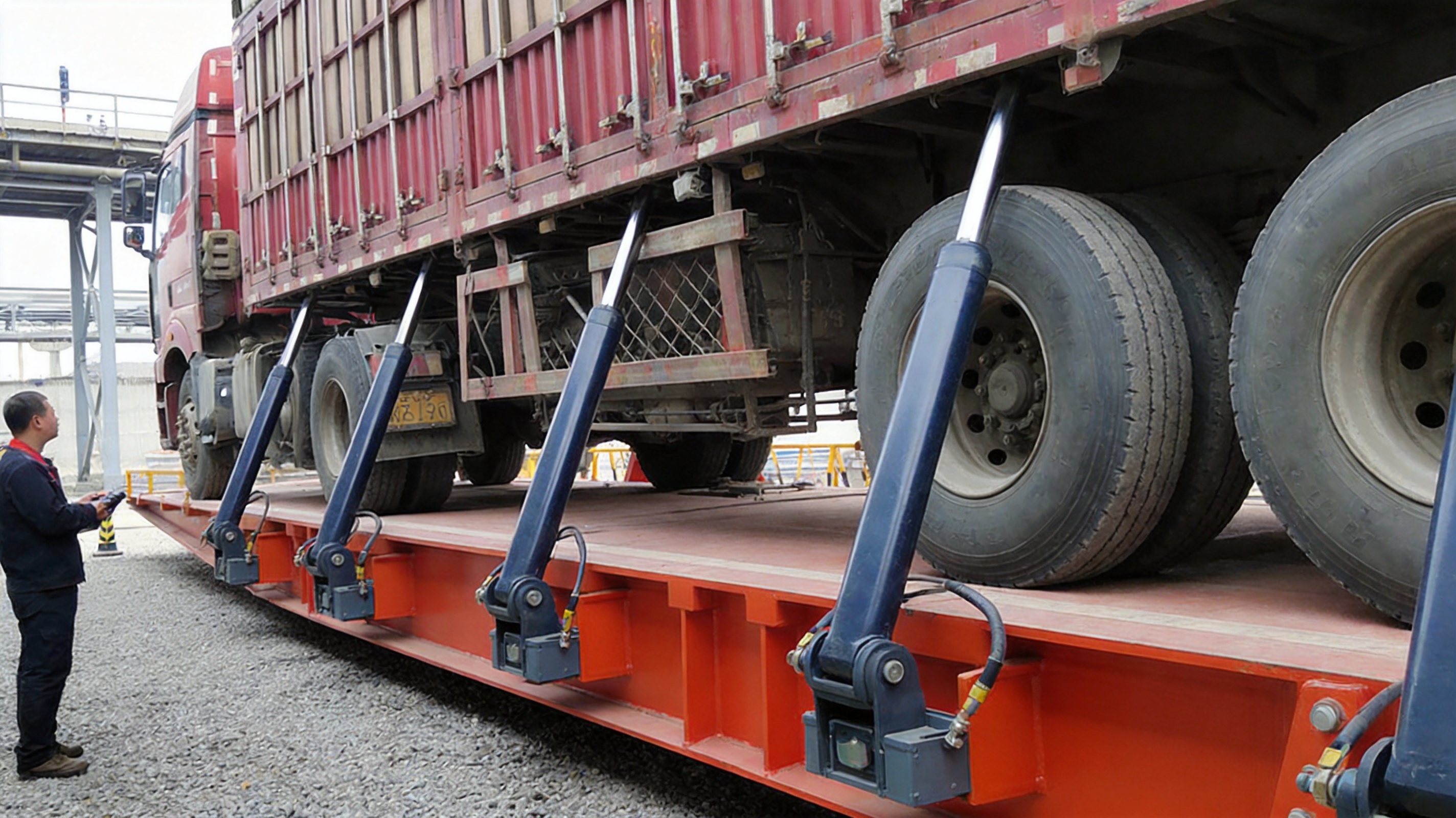
The Mobile Truck Dumpers product combines a mobile chassis, integrated hydraulic lifting equipment, central support architecture, automatic wheel-retaining equipment, and intelligent control functions. It supports self-propelled movement as well as relocation by forklift or other towing equipment. Its centrally positioned drive unit enables the platform to perform an on-the-spot 360-degree turn, greatly reducing the turning radius required at the work site. As a result, the equipment can be deployed in confined yards, temporary projects, stockpile areas, transfer stations, and locations where a permanent foundation is not practical.
The equipment is designed not merely as a movable version of a fixed dumper, but as a complete solution for improving truck-cycle efficiency. By positioning the unloading platform close to the active operating zone, companies can shorten truck travel distances, reduce waiting time, increase the number of loads completed per shift, and use one unloading asset across several work areas. These benefits help operators increase effective capacity without necessarily expanding their truck fleet or constructing multiple permanent unloading stations.
1. Product Overview and Operating Principle
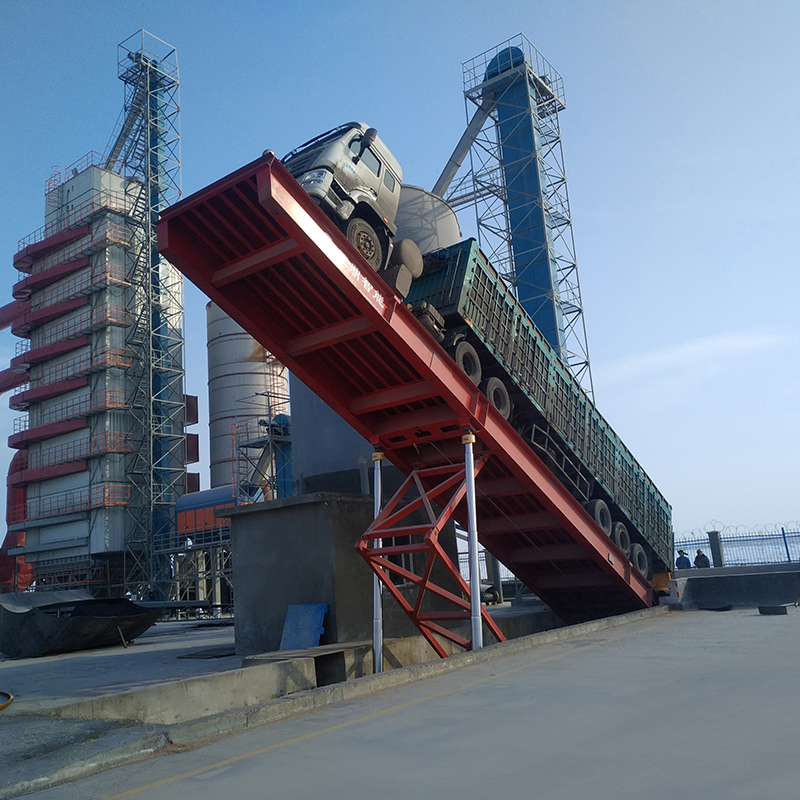
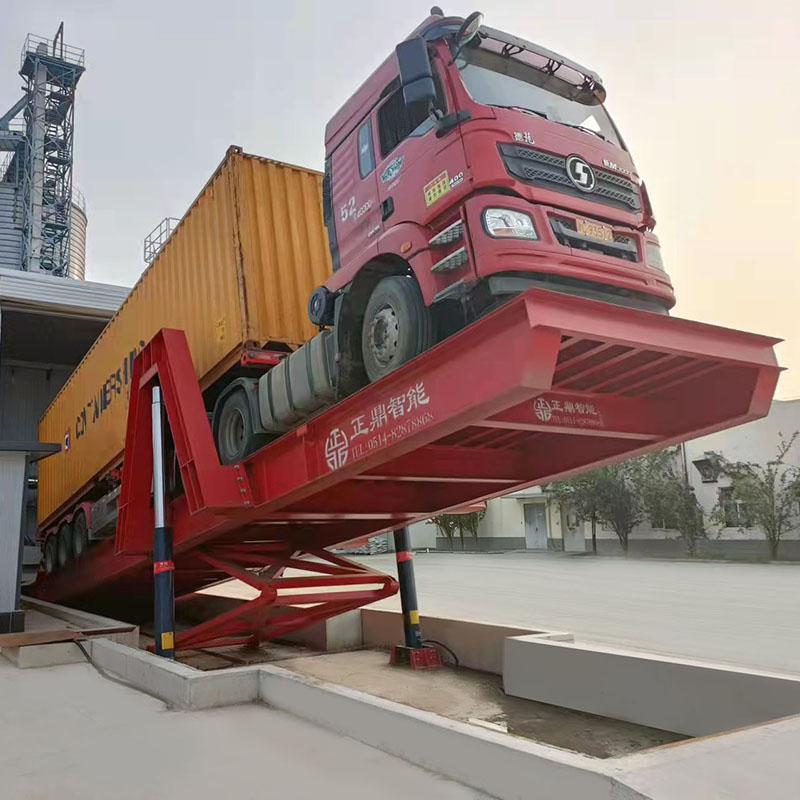
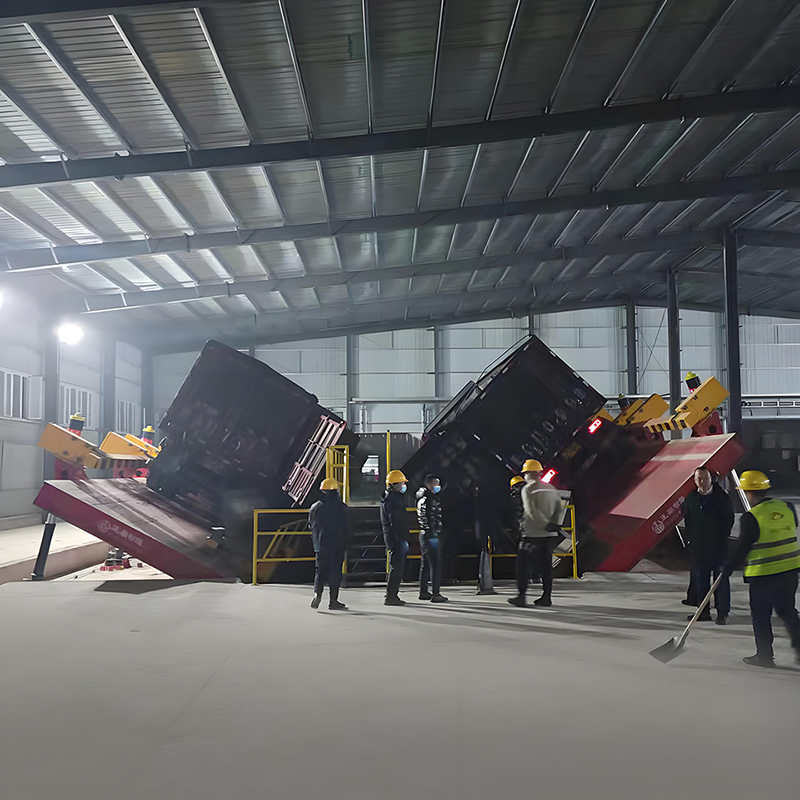
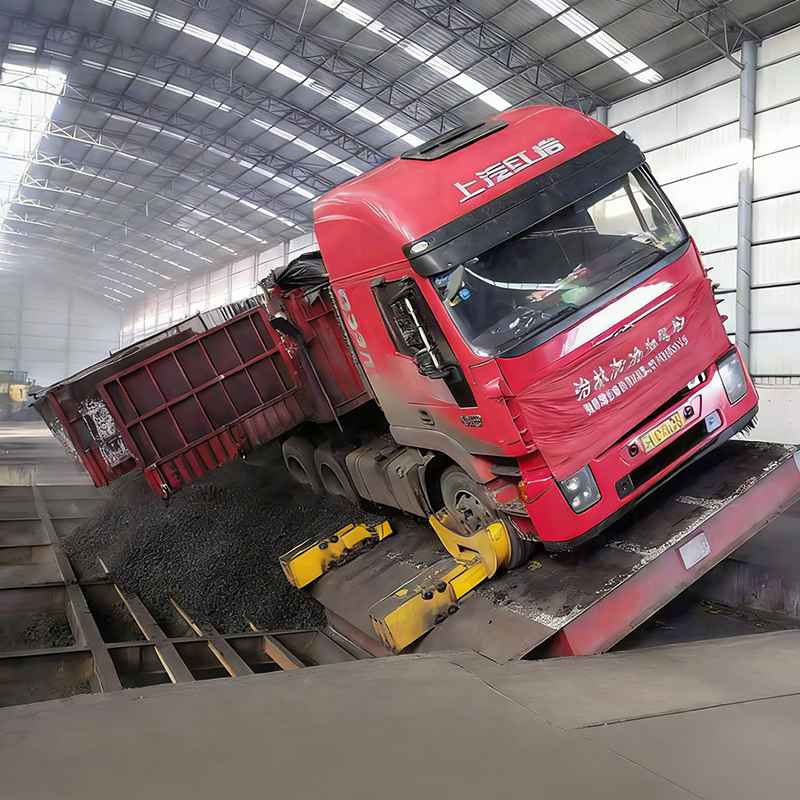
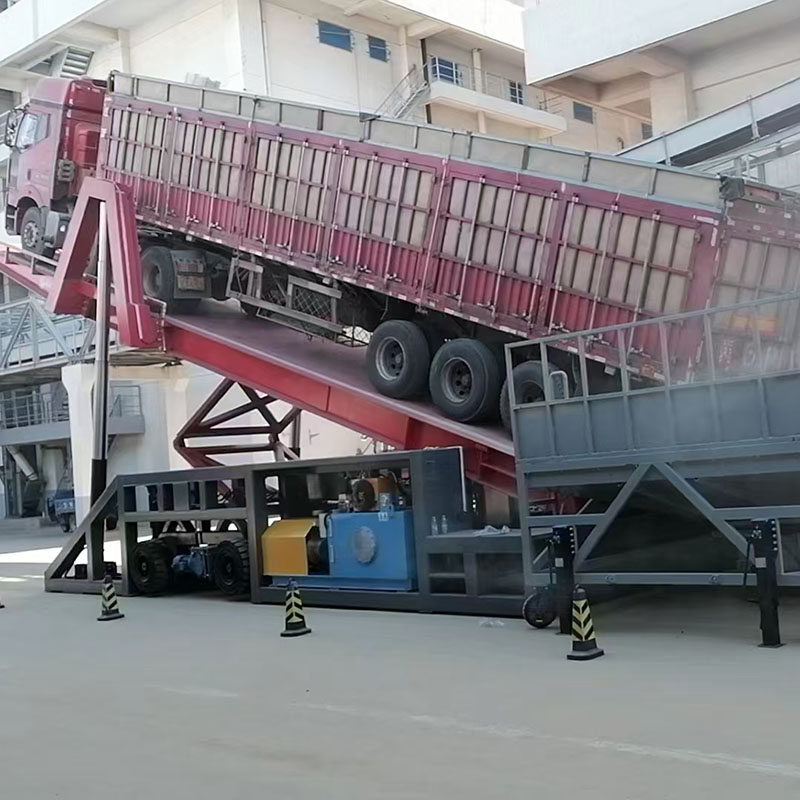
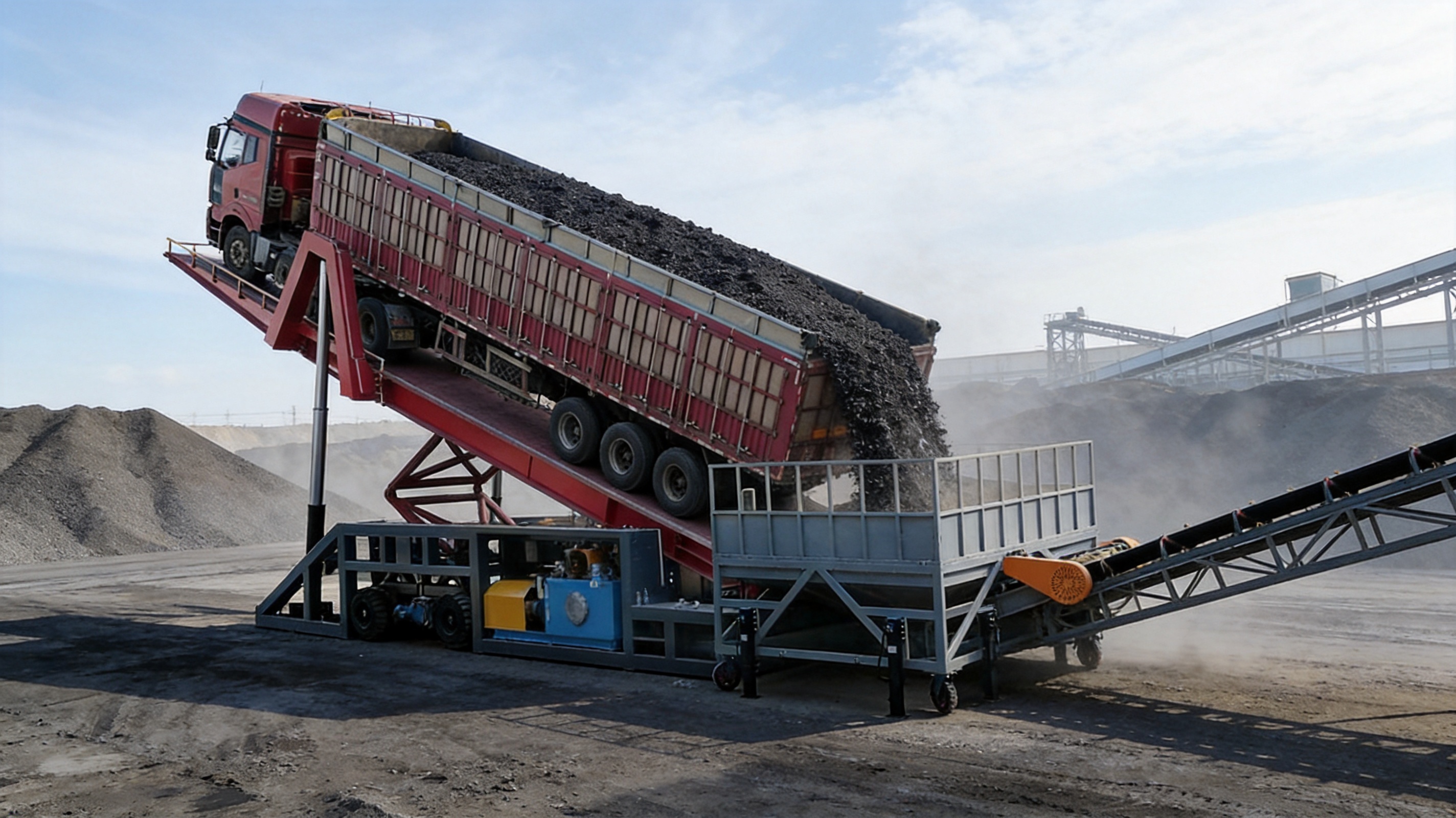
A mobile truck dumper receives a loaded truck, secures the vehicle, raises the platform or truck body to the required angle, and allows bulk material to discharge into a receiving pit, conveyor, stockpile, hopper, or processing line. After unloading, the platform returns to its original position, the retaining system releases the vehicle, and the truck can leave the operating area.
The platform is supported by a high-strength structural frame and hydraulic lifting system. The lifting mechanism is controlled through a precision oil-cylinder synchronization system developed for stable movement. Synchronization is essential because the platform must rise evenly, without excessive torsion, sudden impact, or uneven loading on individual cylinders. Stable lifting protects the truck, the dumper structure, the hydraulic components, and the surrounding foundation or ground surface.
The system uses automatic wheel-retaining equipment to help secure the truck during the dumping cycle. This feature reduces the need for an operator to manually hold a remote control in a dusty or unsafe environment while simultaneously managing vehicle restraints. Automatic wheel retention simplifies the operating sequence and supports safer, more repeatable unloading.
A central support and drive arrangement gives the machine exceptional maneuverability. The equipment can rotate in place through 360 degrees, allowing the operator to change direction without making a wide turning arc. This is especially useful where buildings, conveyors, stockpiles, roads, rail lines, or other equipment restrict movement.
Depending on the operating configuration, the unit may move under its own power or be relocated with a forklift, tractor, or other suitable towing equipment. This gives users flexibility when moving the dumper between production zones, construction sites, temporary storage yards, or maintenance areas.
Main product characteristics
The mobile truck dumper incorporates several features intended to improve safety, productivity, and service life:
High-precision hydraulic synchronization provides controlled and balanced lifting movement.
Low-vibration operation reduces impact on hydraulic cylinders and structural components.
An automatic wheel-retaining device helps secure the vehicle during unloading.
A central support design enables turning in place and reduces the required maneuvering area.
Self-powered travel allows the machine to move independently when site conditions permit.
Forklift or towing relocation provides an alternative method for moving the equipment without permanent installation.
Remote-control operation allows the operator to manage critical functions from a safer position.
The mobile structure supports rapid redeployment when the material flow, work zone, or project location changes.
Mobile Truck Dumpers
2. Technical Configuration and Performance
The representative model identified for this product is TQXHC100. Its listed maximum lifting capacity is 100 metric tons, with maximum lifting angles of 45 degrees or 55 degrees depending on the operating configuration. The size specifications are available in platform arrangements identified as 14 by 3 meters, 16 by 3 meters, and 18 by 3 meters. Final dimensions, lifting angle, vehicle compatibility, and hydraulic configuration should be confirmed according to the customer’s truck types and operating conditions.
| Technical item | Representative specification |
|---|---|
| Model | TQXHC100 |
| Platform size options | 14 x 3 m, 16 x 3 m, or 18 x 3 m |
| Maximum lifting weight | 100 metric tons |
| Maximum lifting angle | 45 degrees or 55 degrees |
| Movement method | Self-propelled movement or towing by forklift and other suitable equipment |
| Turning capability | Central support design with in-place turning capability |
| Control method | Remote control and automatic wheel-retaining operation |
| Hydraulic design | High-precision oil-cylinder synchronization system |
Technical parameters are selected according to the gross vehicle weight, body dimensions, material density, discharge requirements, frequency of operation, and receiving equipment. A dumper used for grain may require a different surface and discharge arrangement from one used for coal, mineral aggregate, fertilizer, cement raw materials, or industrial waste. The equipment configuration can therefore be evaluated as part of a complete unloading system rather than as an isolated lifting platform.
The maximum lifting angle influences the speed and completeness of material discharge. A 45-degree angle may be suitable for many free-flowing bulk materials, while a 55-degree angle can provide additional assistance when the material has a greater tendency to remain in the truck body. Actual performance depends on moisture content, particle size, cohesion, temperature, truck-body design, and the receiving hopper arrangement.
3. Efficiency Advantages Compared with Fixed Dumpers
The most important competitive advantage of a mobile truck dumper is its ability to move the unloading point closer to the active material flow. A fixed dumper may be highly effective when trucks continuously arrive at one location and the surrounding infrastructure is permanent. However, fixed installations can create unnecessary travel when stockpiles, excavation areas, loading zones, or processing lines change position.
A mobile unit allows the unloading platform to follow the work. If a construction project advances along a road, the dumper can be relocated to reduce truck travel. If a mining operation changes its overburden removal area, the unit can be moved closer to the current loading zone. If an agricultural facility experiences seasonal changes in receiving volumes, the dumper can be positioned where it is needed most. This adaptability is one of the main reasons mobile systems can deliver better practical efficiency than a permanently positioned alternative.
Shorter truck travel distances
Truck travel inside a facility consumes fuel, driver time, and road capacity. It also increases traffic risks and can create congestion near the fixed unloading area. By placing the dumper close to a stockpile, conveyor inlet, excavation zone, or temporary receiving point, operators can shorten the distance between loading and unloading activities.
The reduction in travel distance has a direct effect on the complete truck cycle. A truck that spends less time approaching, queuing, maneuvering, unloading, and departing can complete more trips during the same shift. This improvement is achieved without increasing the lifting capacity of the truck or adding another driver.
Reduced waiting and queuing
Fixed dumpers may become bottlenecks when several trucks arrive at the same time. Even if the dumper itself has a short lifting cycle, trucks can spend substantial time waiting in line or traveling from distant work areas. Mobile dumpers can be positioned at active zones, distributed across more than one site, or used as supplementary equipment during peak periods.
Operational data supplied for mobile dumper applications indicates that facilities may reduce average truck waiting time by approximately 45 to 65 percent compared with centralized fixed unloading arrangements. The exact result depends on the number of trucks, site layout, material characteristics, operator skill, and the receiving system. Nevertheless, the principle is consistent: moving the unloading function closer to the point of demand reduces avoidable nonproductive time.
Faster deployment
A fixed dumper normally requires detailed civil engineering, concrete foundations, drainage, electrical connections, access roads, and sometimes alterations to conveyors or storage structures. These works can extend the project schedule and increase the investment required before the first load is processed.
A mobile dumper is designed for faster deployment. It can be transported to a prepared area, positioned, stabilized, connected to the necessary power or control systems, and placed into service without constructing a large permanent foundation. For temporary projects, seasonal operations, rental fleets, and facilities undergoing expansion, this substantially improves the time between equipment delivery and operational use.
Depending on the site and configuration, a mobile unit can be disconnected, towed to a new location, stabilized, and prepared for operation within a short working period. Relocation procedures should always follow the manufacturer’s safety instructions and account for ground conditions, weather, road access, lifting points, and local transportation requirements.
More effective asset utilization
A permanently installed dumper is generally tied to one location. A mobile dumper can be shared between several areas or deployed to the site where it creates the greatest production benefit. Contractors can move the unit between projects, while industrial companies can use it as a backup during maintenance of a fixed dumper or as additional capacity during high-volume periods.
This flexibility improves the utilization rate of the equipment. Instead of purchasing separate fixed dumpers for several locations, an operator may use one mobile unit sequentially or deploy multiple units according to demand. This approach can reduce idle capacity and provide a more adaptable capital investment strategy.
4. Mobile Design and Maneuverability
The mobile architecture is based on more than simply adding wheels to a conventional platform. The chassis, drive system, hydraulic arrangement, support structure, wheel guides, and control functions must work together to maintain stability during both travel and lifting. The machine must be sufficiently robust for heavy vehicle loading while remaining maneuverable in restricted spaces.
The centrally positioned drive unit is a major design feature. With the drive and support arrangement located near the middle of the structure, the equipment can turn around its own central area. In a conventional arrangement, a long platform may require a broad turning arc, which can be difficult in a crowded industrial yard. In-place turning helps the operator align the dumper with approach roads, loading zones, transfer hoppers, or temporary stockpiles.
Reduced turning radius also minimizes the land area required for installation. This can be important in plants where every square meter is already allocated to conveyors, silos, storage piles, workshops, traffic lanes, or buildings. A compact maneuvering pattern improves site planning and can avoid expensive modifications to existing infrastructure.
The ability to move by forklift or towing equipment adds another practical advantage. Self-propelled travel may be suitable for routine repositioning, while a forklift, tractor, or other towing vehicle can be used when the dumper must be moved over a longer distance or when its own drive system is not intended for road travel. This dual relocation method provides operational redundancy and reduces dependence on a single transportation method.
Adaptation to temporary and changing work sites
Construction and mining projects rarely maintain the same material flow throughout their entire life cycle. Excavation points move, access roads change, temporary stockpiles are created, and processing areas may be expanded or relocated. A fixed dumper can become less efficient as the project develops. A mobile dumper can be repositioned as conditions change, preserving the efficiency of the unloading process.
Mobile equipment is also suitable for emergency or interim capacity. If a fixed dumper is undergoing maintenance, if a receiving hopper is being upgraded, or if a new production line has not yet been completed, a mobile unit can provide an alternative unloading point. This continuity helps reduce production interruptions and supports a smoother transition during plant upgrades.
5. Hydraulic Synchronization and Structural Safety
The hydraulic lifting system is one of the most important elements affecting the safety and service life of a truck dumper. Large truck bodies impose substantial loads on the platform, and those loads can shift as the truck rises and material begins to discharge. If the cylinders do not operate in synchronization, the platform may twist, vibrate, or impose uneven stress on the frame.
The high-precision oil-cylinder synchronous stability system used in this equipment is intended to maintain coordinated movement between the lifting cylinders. Balanced hydraulic action helps reduce vibration and impact during operation. It also lowers the mechanical shock transferred to the cylinders, pins, structural members, and truck body.
Lower vibration has several practical benefits. It can reduce wear on seals, hydraulic lines, cylinder mounts, and connection points. It can also help create a smoother unloading cycle, which is beneficial when the material is discharged into a receiving hopper or conveyor that must maintain stable flow. A controlled movement profile gives operators greater confidence when handling high loads and reduces the likelihood of abrupt platform movement.
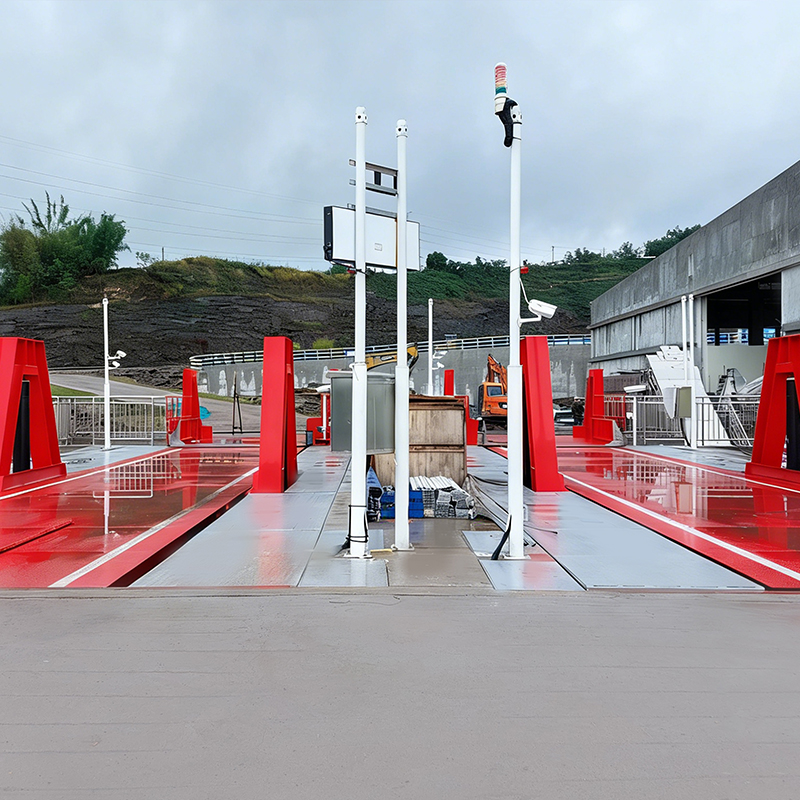
Safety is supported by the coordination of mechanical, hydraulic, and control systems. Wheel retention helps prevent unintended vehicle movement. Stabilizing supports help distribute loads and improve platform stability. Remote operation allows the operator to monitor the vehicle and platform from a safer location rather than standing immediately beside the lifting mechanism.
Importance of ground preparation
Although a mobile dumper does not necessarily require a permanent concrete foundation, it still requires suitable ground conditions. The operating surface should be level, sufficiently compacted, and capable of supporting the combined weight of the equipment, vehicle, and material. Drainage should be considered in outdoor locations, especially where rain, snow, or groundwater may weaken the surface.
Ground preparation is an important part of installation planning. Stabilizer positions, approach lanes, truck alignment, clearance from overhead structures, emergency access, and the location of the receiving equipment should be reviewed before the first unloading operation. A mobile design reduces civil work, but it does not eliminate the need for professional site assessment.
6. Automatic Wheel Retention and Intelligent Operation
Truck retention is critical because a loaded vehicle must remain correctly positioned while the platform is raised. The automatic wheel-retaining device is designed to simplify this operation and reduce reliance on manual intervention. Once the truck reaches the designated position, the retention system can engage according to the programmed operating sequence.
This function is particularly useful in dusty, noisy, or high-traffic environments. Operators do not need to remain directly beside the truck while holding a remote control and manually coordinating every movement. Instead, the control sequence can be managed from a suitable observation point, improving visibility and reducing exposure to moving equipment.
Remote control operation also allows the operator to stand where the entire unloading cycle can be observed. This can improve awareness of truck alignment, wheel position, platform clearance, material discharge, and surrounding traffic. Remote control does not replace training or site safety procedures, but it supports better separation between personnel and hazardous movement zones.
Intelligent control can also improve repeatability. When the same lifting sequence is used for each truck, the risk of inconsistent operation is reduced. Consistent control contributes to predictable unloading times, easier operator training, and more stable coordination with conveyors, hoppers, or downstream production equipment.
Control and safety considerations
Before operation, the control system should be checked for emergency-stop function, remote-control battery condition, communication status, limit switches, wheel-retaining response, hydraulic pressure, and platform position. Operators should be trained to identify abnormal vibration, hydraulic leakage, unusual sounds, uneven lifting, and changes in truck alignment.
The dumper area should be protected from unauthorized entry while the platform is moving. Warning signals, traffic markings, physical barriers, and clear communication procedures can help prevent personnel from entering the danger zone. Truck drivers should follow designated approach and departure paths and should not leave the vehicle unless the operating procedure specifically allows it.
7. Manufacturing Strengths and Engineering Capability
The performance of a mobile truck dumper depends heavily on manufacturing quality. Heavy-duty unloading equipment must withstand repeated loading cycles, vibration, weather exposure, abrasive materials, and demanding operating schedules. A manufacturer with experience in automated loading and unloading equipment can integrate structural design, hydraulics, electrical control, vehicle handling, and site logistics into one solution.
Jiangsu Zhengding Intelligent Equipment Co., Ltd. is a national high-tech enterprise focused on the research, development, manufacturing, and sale of intelligent loading and unloading equipment. Its product scope includes rear dumpers, side-turn truck dumpers, car loading equipment, container flippers, and related systems for vehicles, containers, ships, and industrial logistics applications.
This broad product range is important because many unloading projects require more than one machine. A customer may need a truck dumper, a container turnover system, vehicle loading equipment, weighing integration, conveyor coordination, or automatic control. A manufacturer with experience across these categories can evaluate the entire material-handling process rather than focusing only on the lifting platform.
Research and development orientation
Research and development plays a central role in improving dumper reliability. Hydraulic synchronization, automatic wheel retention, mobile drive systems, structural optimization, control logic, and safety interlocking all require practical engineering experience. Product development should consider not only nominal lifting capacity but also repeated cycle performance, maintenance access, environmental conditions, and integration with upstream and downstream equipment.
The company’s emphasis on intelligent logistics equipment supports the development of systems that combine mechanical strength with automation. Such integration can help customers move from manual unloading procedures toward more consistent, safer, and data-driven operations.
Manufacturing process
The manufacturing process for heavy unloading equipment begins with application analysis and technical design. Engineers review the truck dimensions, axle arrangement, body structure, gross vehicle weight, material characteristics, discharge angle, operating frequency, site layout, and receiving equipment. These factors determine platform dimensions, cylinder capacity, frame strength, wheel-guide arrangement, stabilization method, and control configuration.
Structural components are then manufactured according to approved engineering drawings and quality requirements. High-strength steel is selected for the platform, frame, support members, and load-bearing connections. Welding quality is particularly important because the frame is exposed to repeated dynamic loading. Welded assemblies should be inspected to identify defects that could affect fatigue resistance or structural integrity.
Hydraulic components are selected and assembled according to the required lifting force, speed, working pressure, and synchronization performance. Proper alignment of cylinders, pins, hoses, valves, and mounting points helps prevent unnecessary stress and premature wear. Hydraulic cleanliness is also important because contamination can damage valves, seals, pumps, and control components.
Electrical and control systems are assembled after the mechanical and hydraulic systems are prepared. Remote controls, sensors, limit devices, emergency stops, wheel-retaining actuators, and control cabinets are tested as an integrated system. This ensures that the dumper responds correctly to commands and that safety-related functions operate in the required sequence.
Testing and quality assurance
Before delivery, the equipment should undergo dimensional inspection, hydraulic testing, control testing, no-load movement testing, and load testing according to the agreed technical requirements. The lifting platform should be checked for smooth movement, synchronization, abnormal vibration, and correct return to the lower position.
Testing should also verify the automatic retaining device, travel function, steering or turning capability, remote-control response, emergency-stop performance, stabilizer operation, and limit protection. Where the equipment is integrated with conveyors, hoppers, weighing systems, or plant controls, interface testing should be completed before shipment or during commissioning.
Quality assurance continues through documentation. Technical drawings, operating manuals, maintenance instructions, hydraulic diagrams, electrical schematics, spare-parts lists, inspection records, and training materials help customers operate and maintain the system correctly. Complete documentation is especially valuable when the equipment is deployed across several locations or operated by different teams.
8. Industry Applications
Construction and infrastructure
Construction contractors often move materials between changing work zones. Excavated soil, stone, demolition material, sand, and aggregate may need to be unloaded near roads, foundations, tunnels, bridges, or temporary processing areas. A mobile truck dumper can follow project progress and reduce the distance trucks must travel to a centralized unloading point.
The equipment is also useful on projects where a permanent facility would not be economical. Once the project is complete, the dumper can be moved to another site, helping the contractor use the same asset across multiple contracts.
Mining and quarrying
Mining and quarrying operations handle large quantities of overburden, ore, aggregate, and waste rock. Material flow may change as excavation progresses, and remote work areas can make long truck travel distances expensive. Positioning a mobile dumper near the active zone can improve truck utilization and reduce congestion at a central facility.
Mining applications require careful evaluation of load capacity, ground conditions, dust, weather, slope, truck dimensions, and maintenance access. The equipment should be configured for the specific material and vehicle fleet, with appropriate safety procedures for heavy-duty operation.
Agriculture and grain handling
Grain, feed, oilseed, and other agricultural materials are frequently received during concentrated harvest periods. Facilities may need additional unloading capacity for only part of the year. A mobile dumper can provide seasonal support without requiring a permanent expansion sized for peak demand.
In agricultural applications, the receiving area may be connected to pits, conveyors, cleaners, dryers, silos, or processing lines. The dumper can be positioned to reduce truck congestion during harvest and then relocated or stored when the peak season ends.
Coal, cement, and industrial minerals
Coal, limestone, clinker, gypsum, cement raw materials, and other industrial minerals often arrive by truck and must be discharged rapidly. A mobile dumper can serve as a flexible receiving point during plant expansion, maintenance, or temporary changes in supply logistics.
Dust control, wear resistance, grounding, access control, and equipment compatibility should be evaluated for each material. The dumper may also be integrated with covered receiving systems or dust-collection equipment where environmental conditions require it.
Waste management and recycling
Transfer stations and recycling facilities frequently handle changing volumes and multiple material streams. A mobile truck dumper can support temporary receiving areas, manage peak traffic, or provide unloading capacity while a permanent station is being renovated.
Waste applications may require special attention to impact resistance, contamination, cleaning access, drainage, and protection of hydraulic components. The final design should reflect the size and composition of the waste stream.
Ports, logistics yards, and container operations
Ports and logistics facilities may require flexible equipment to manage bulk materials, vehicles, and containers. Mobile unloading equipment can help operators respond to changing cargo flows, temporary storage arrangements, and maintenance requirements. When combined with container handling or automated loading equipment, the system can form part of a broader logistics solution.
9. Economic Benefits and Return on Investment
The financial value of a mobile truck dumper is generated through several channels. First, reduced truck travel and waiting time can increase the number of loads completed during a shift. Second, the mobile unit may reduce the need for extensive civil construction. Third, one dumper can be shared across multiple locations. Fourth, improved unloading continuity can reduce losses caused by production interruptions.
For example, if a truck fleet previously completed five loads per shift and a mobile dumper reduces travel and waiting time sufficiently to allow eight or nine loads, the effective hauling capacity increases without the immediate purchase of additional trucks. The actual result depends on loading time, road conditions, driving distance, material discharge speed, labor organization, and shift length.
A mobile dumper can also protect production during maintenance. If a fixed dumper is unavailable, a mobile unit may provide temporary capacity. This can be particularly valuable in industries where shutdowns affect many downstream operations or where missed delivery schedules create significant costs.
The investment calculation should include the equipment purchase price, relocation requirements, site preparation, power consumption, maintenance, operator training, expected annual operating hours, and possible resale or redeployment value. Unlike a fixed facility, the mobile unit may continue generating value after the original project ends because it can be transferred to another site.
Comparison with competing approaches
Compared with a conventional fixed dumper, the mobile system offers faster deployment, reduced site dependence, and better seasonal adaptability. Compared with manual unloading, it provides higher lifting capacity, more consistent operation, and improved safety. Compared with purchasing several small unloading stations, it may offer better asset sharing and lower duplication of infrastructure.
Its main limitation is that a fixed installation may be more suitable for extremely high-volume, single-location operations with stable material flow and permanent infrastructure. A mobile dumper is most advantageous when flexibility, rapid deployment, changing site conditions, or multi-location use are important business requirements.
10. Installation, Commissioning, and Maintenance
Installation begins with a site survey. The survey should confirm ground bearing capacity, slope, access roads, truck approach direction, clearance, receiving equipment position, drainage, power availability, and safe personnel routes. The unit should be positioned so that trucks can approach and leave without reversing through unsafe areas whenever the site permits.
During commissioning, technicians verify mechanical connections, hydraulic circuits, control settings, wheel-retaining function, stabilizers, travel controls, and emergency systems. Operators should be trained through practical demonstrations covering normal operation, abnormal conditions, emergency stopping, daily inspections, and relocation procedures.
Daily inspections should include checking hydraulic hoses, cylinder mounts, pins, welds, wheel guides, retaining devices, tires or track components, remote-control equipment, electrical connections, and safety barriers. Any leakage, deformation, unusual noise, uneven lifting, or control fault should be investigated before continued operation.
Planned maintenance should include hydraulic-fluid inspection, filter replacement, lubrication, fastener checks, cylinder seal inspection, control-system testing, and structural examination. The frequency should reflect operating hours, load frequency, material abrasiveness, environmental exposure, and manufacturer recommendations.
Because the machine is mobile, relocation itself should be treated as a controlled maintenance and safety activity. The platform should be lowered, the truck removed, stabilizers secured, loose components checked, and the travel route inspected before movement. Towing speed, turning radius, ground conditions, and clearance must be appropriate for the equipment configuration.
11. Frequently Asked Questions
Q1: What is a mobile truck dumper?
A mobile truck dumper is a transportable hydraulic unloading platform that raises a loaded truck or truck body to discharge bulk material. Unlike a fixed dumper, it can be moved between work zones by self-powered travel, forklift, tractor, or other suitable towing equipment.
Q2: What is the capacity of the representative model?
The representative TQXHC100 model has a listed maximum lifting weight of 100 metric tons. The final capacity must be confirmed according to the truck configuration, material, platform dimensions, operating angle, and customer requirements.
Q3: What lifting angles are available?
The listed maximum lifting angles are 45 degrees and 55 degrees. The appropriate angle depends on material flow characteristics, truck-body design, receiving equipment, and the required discharge performance.
Q4: Can the dumper turn in a narrow work area?
Yes. The central support and drive arrangement enables the dumper to turn in place through approximately 360 degrees. This reduces the turning radius and helps the equipment operate in restricted yards and temporary sites.
Q5: Can the machine be moved without its own drive system?
Yes. In addition to self-powered movement, the equipment can be relocated with a forklift or other suitable towing equipment. The selected method should follow the manufacturer’s relocation instructions and account for equipment weight and ground conditions.
Q6: Does a mobile dumper require a concrete foundation?
A permanent concrete foundation is not always required, especially for temporary installations. However, the equipment still needs a level, compacted, and load-bearing operating surface. Site preparation and ground assessment remain essential for safe operation.
Q7: How does the automatic wheel-retaining device improve safety?
The automatic retaining device helps secure the truck during the lifting cycle and reduces the need for manual intervention beside the equipment. It supports a more consistent operating sequence and allows the operator to manage the machine from a safer observation position.
Q8: What materials can be handled?
Mobile truck dumpers can be used for many bulk materials, including aggregate, soil, coal, grain, feed, cement raw materials, minerals, industrial products, and waste. The final configuration should be selected according to material density, moisture, abrasiveness, temperature, and flow behavior.
Q9: How quickly can the equipment be relocated?
Relocation time depends on the distance, ground conditions, transportation method, site preparation, and configuration. In many temporary applications, a unit can be disconnected, moved, stabilized, and prepared for operation within several hours. A detailed relocation procedure should be established for each site.
Q10: Can the equipment work with different truck sizes?
Compatibility depends on platform length, width, wheel guides, retaining arrangements, truck wheelbase, axle configuration, and gross vehicle weight. Customers should provide truck drawings or fleet information so the dumper can be designed or configured correctly.
Q11: Is remote control included?
The product is designed for remote-control operation. Remote control allows the operator to manage the lifting and related functions from a suitable position, improving visibility and reducing exposure to moving equipment.
Q12: What industries use this equipment?
Applications include construction, mining, quarrying, agriculture, grain handling, coal, cement, chemicals, food processing, waste management, logistics, ports, and other bulk-material industries. It is especially useful where unloading locations change or seasonal capacity is required.
Q13: Is a mobile dumper better than a fixed dumper in every situation?
No. Fixed dumpers can be highly effective for very high-volume, single-location operations with permanent infrastructure. Mobile dumpers are generally more advantageous when rapid deployment, multi-site operation, temporary capacity, seasonal flexibility, and reduced truck travel are important.
Q14: How can customers select the correct configuration?
Selection should consider truck weight, truck-body dimensions, material characteristics, lifting angle, required throughput, operating frequency, site layout, receiving equipment, relocation frequency, climate, and local safety requirements. A technical review with the manufacturer is recommended before final specification.
12. Why Choose an Integrated Equipment Manufacturer
Choosing a manufacturer that develops several categories of intelligent loading and unloading equipment can simplify project coordination. The same engineering team can evaluate vehicle unloading, container handling, truck loading, metering, conveyors, and control integration as parts of one process.
Jiangsu Zhengding Intelligent Equipment Co., Ltd. serves industries including steel, chemical, cement, coal, grain, oil, food, feed, ports, papermaking, and new energy. Its products are supplied to domestic and international markets, including Japan, Brazil, Egypt, Pakistan, India, the Middle East, and Southeast Asia. This range of applications reflects experience with different materials, operating environments, regulations, and customer requirements.
The company’s product portfolio includes rear dumpers, side-turn truck dumpers, vehicle loading equipment, container flippers, and other automated loading and unloading systems. This allows customers to discuss complete logistics workflows rather than purchasing unrelated equipment from multiple suppliers.
Its stated focus on safety, automation, efficiency, customized engineering, and integrated metering and unloading systems is particularly relevant to mobile dumper projects. A successful installation requires more than lifting capacity. It requires correct vehicle positioning, reliable control, safe traffic organization, compatible receiving equipment, and a practical maintenance plan.
13. Conclusion
Mobile truck dumpers provide a flexible alternative to permanent unloading installations. Their ability to move between work areas, operate with self-powered travel or towing equipment, and turn in place allows companies to adapt unloading capacity to changing operational requirements. By placing the dumper closer to active material zones, users can reduce truck travel, lower waiting time, increase loads per shift, and improve the utilization of existing vehicle fleets.
The product’s high-precision hydraulic synchronization system supports stable lifting, low vibration, and reduced impact on oil cylinders. The automatic wheel-retaining device simplifies truck securing and supports safer remote operation. The central support design improves maneuverability, while the mobile architecture reduces dependence on permanent civil construction.
Compared with fixed competitors, the main strengths of this solution are deployment speed, site flexibility, multi-location capability, seasonal adaptability, and the potential to share one asset across several projects. Compared with manual unloading or improvised temporary systems, it offers greater capacity, more consistent operation, improved safety, and better integration with automated logistics processes.
Manufacturing quality remains essential. Structural engineering, hydraulic synchronization, control integration, welding quality, testing, documentation, and after-sales support all influence the long-term value of the equipment. Through its experience in intelligent loading and unloading machinery, broad product portfolio, international applications, and ability to develop systematic solutions, the manufacturer is positioned to support customers seeking reliable mobile unloading capacity.
For contractors, industrial facilities, agricultural processors, mining companies, logistics operators, and other bulk-material users, a mobile truck dumper can be more than a temporary machine. It can become a strategic production asset that follows demand, protects continuity, and improves the efficiency of the complete truck cycle.
References
1. Jiangsu Zhengding Intelligent Equipment Co., Ltd. Product information for Mobile Truck Dumpers, including model data, operating characteristics, and technical parameters.
2. Jiangsu Zhengding Intelligent Equipment Co., Ltd. Corporate information concerning intelligent automated loading and unloading equipment and industrial applications.
3. Manufacturer-provided hydraulic synchronization and automatic wheel-retaining system descriptions.
4. Manufacturer-provided application information for truck dumpers, side-turn dumpers, container handling equipment, and vehicle loading systems.
5. General principles of bulk-material handling, truck-cycle optimization, hydraulic lifting equipment, and industrial machinery safety.


