

 English
 русский
 Español
 Français
 Português
 عربى
عربى




+86-13588556918
Content
- 1 1. What Is a Shallow Foundation Truck Dumper?
- 2 2. Main Advantages Over Conventional Truck Dumpers
- 3 3. Product Structure and Engineering Design
- 4 4. Technical Parameters and Model Selection
- 5 5. Material Compatibility and Unloading Performance
- 6 6. Wear-Resistant and Application-Specific Options
- 7 7. Advanced Manufacturing and Quality Control
- 8 8. Automation, Safety, and Operational Efficiency
- 9 9. Maintenance and Service Life
- 10 10. Application Industries
- 11 11. Why Choose a Complete Equipment Manufacturer?
- 12 12. Project Planning and Installation Considerations
- 13 13. Comparison With Deep-Pit and Basic Manual Dumpers
- 14 14. Frequently Asked Questions
- 14.1 Q1: What materials can a shallow foundation truck dumper handle?
- 14.2 Q2: Can the equipment handle wet or sticky materials?
- 14.3 Q3: What is the maximum particle size?
- 14.4 Q4: Is the dumper suitable for food-grade applications?
- 14.5 Q5: How deep is the foundation pit?
- 14.6 Q6: How much can civil construction costs be reduced?
- 14.7 Q7: Can one driver operate the dumper without a professional operator?
- 14.8 Q8: What lifting angles are available?
- 14.9 Q9: How often should the equipment be maintained?
- 14.10 Q10: Can the dumper be integrated with conveyors and weighing systems?
- 14.11 Q11: What information is needed for a quotation?
- 14.12 Q12: Why is material testing important?
- 15 15. Conclusion
- 16 References
- 17 Product: Shallow Foundation Truck Dumpers
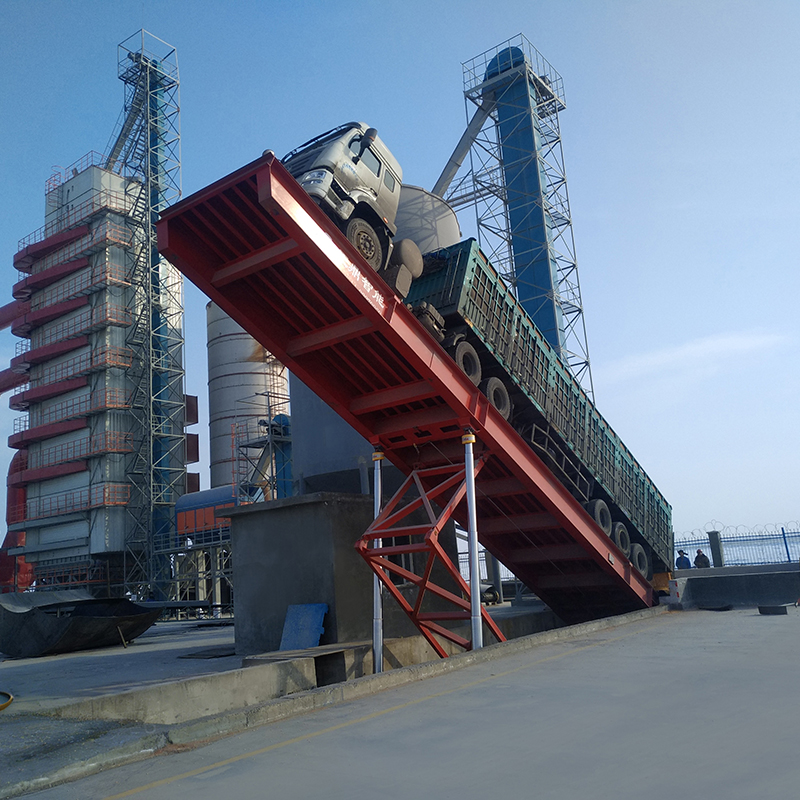
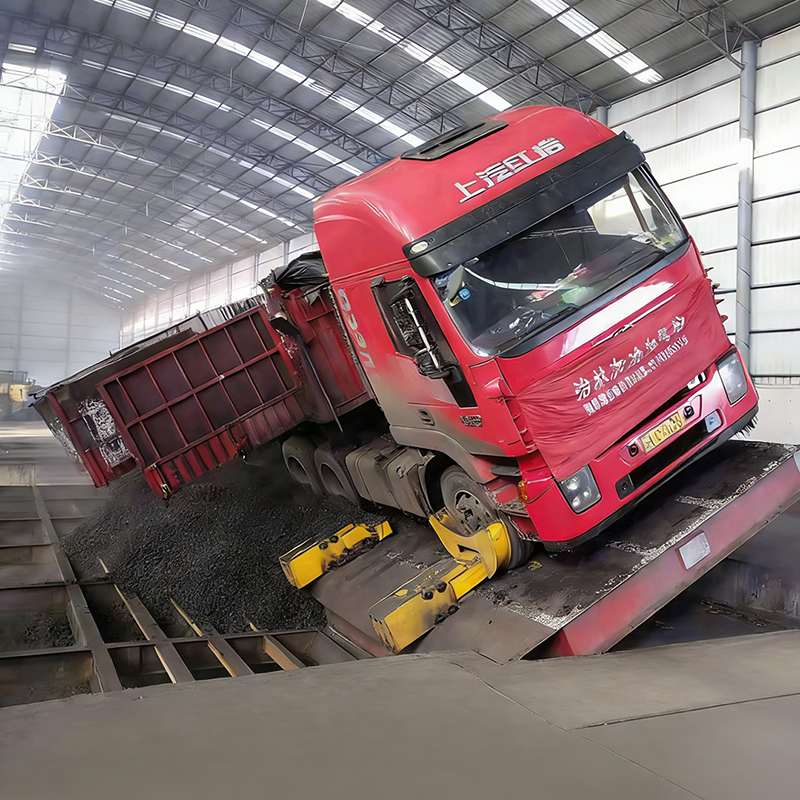
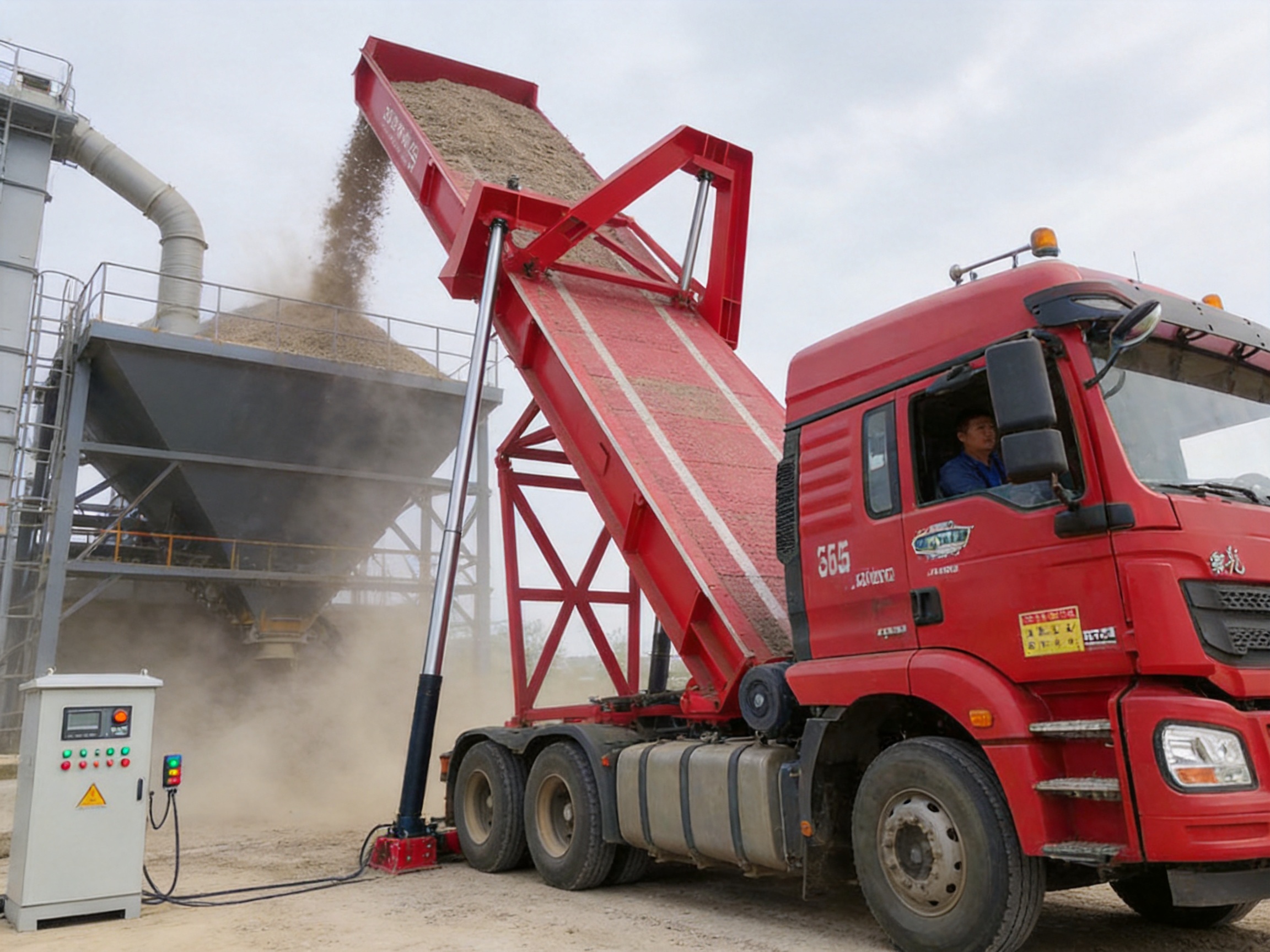
Shallow foundation truck dumpers are engineered unloading systems designed to overturn loaded trucks and discharge bulk materials into receiving equipment, storage facilities, conveyors, or processing lines. Unlike conventional truck dumpers that require deep excavation and extensive civil works, a shallow foundation design places the unloading platform in a low-profile pit. In many installations, the pit depth is approximately 0.5 to 1.2 meters, with the foundation depth largely corresponding to the thickness of the platform.
This structural approach provides an important advantage for factories, grain terminals, cement plants, chemical facilities, ports, and other sites where deep excavation is expensive, technically difficult, or impossible. By reducing excavation and foundation work, the system can lower civil engineering costs by more than 60% compared with traditional deep-pit truck dumpers. Depending on site conditions and project scope, the supplied technical information indicates that civil construction costs may be reduced by approximately 70%.
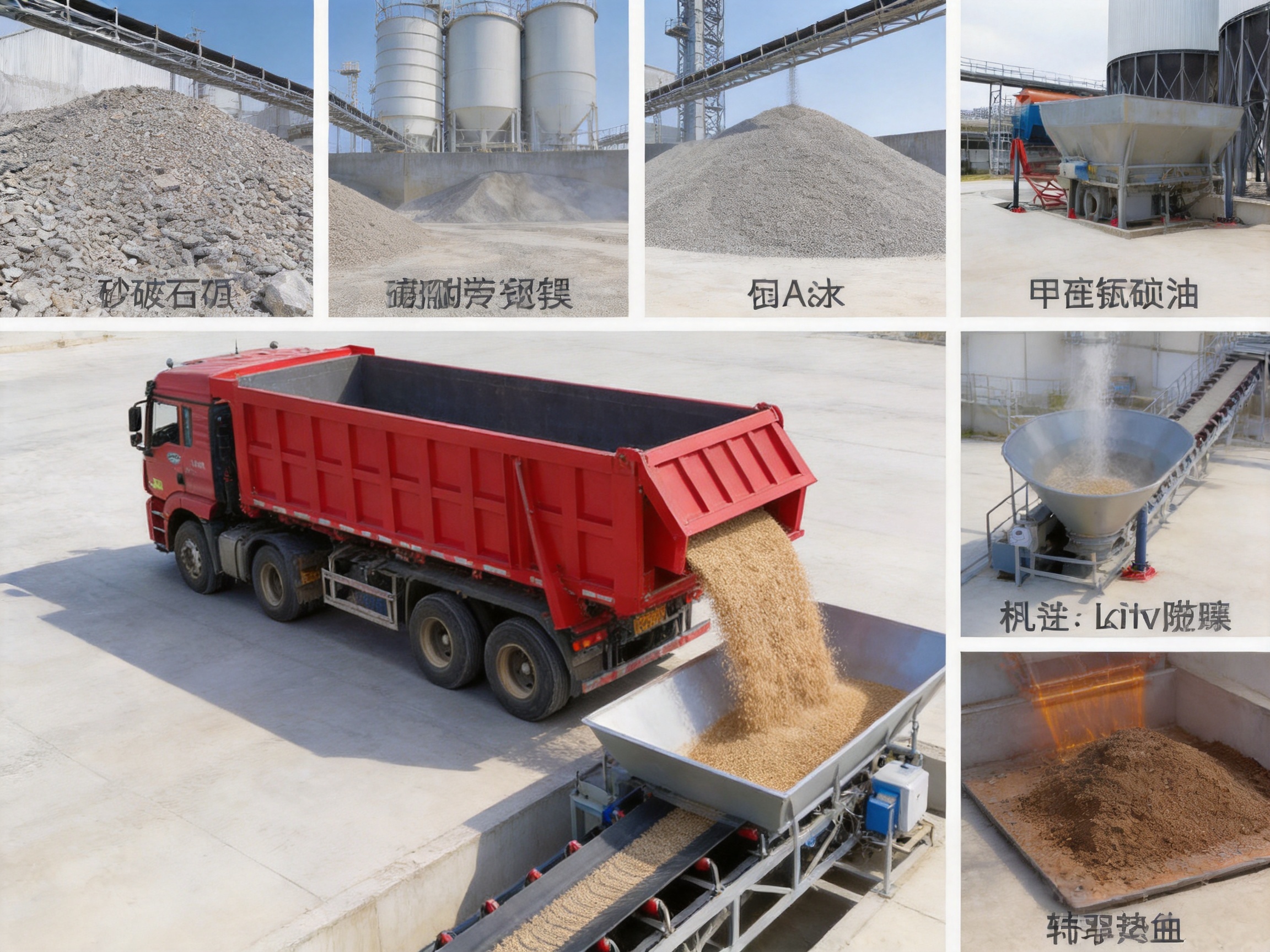
The equipment combines a strong steel platform, hydraulic lifting cylinders, hydraulic pumps, synchronized control technology, automatic wheel-retaining equipment, and remote or unmanned operation. It is suitable for handling grains, oilseeds, coal, sand, gravel, crushed stone, cement, fly ash, lime, fertilizers, plastic pellets, petroleum coke, and many other bulk solids.
For users comparing unloading equipment, the main question is not simply whether a truck dumper can lift a vehicle. The more important issues are installation cost, safety, unloading efficiency, service life, material compatibility, maintenance requirements, automation, and the ability to adapt the equipment to a particular site. A shallow foundation truck dumper addresses these requirements through a combination of low-profile engineering, high-precision hydraulic synchronization, automatic vehicle restraint, and customized wear-resistant options.
1. What Is a Shallow Foundation Truck Dumper?
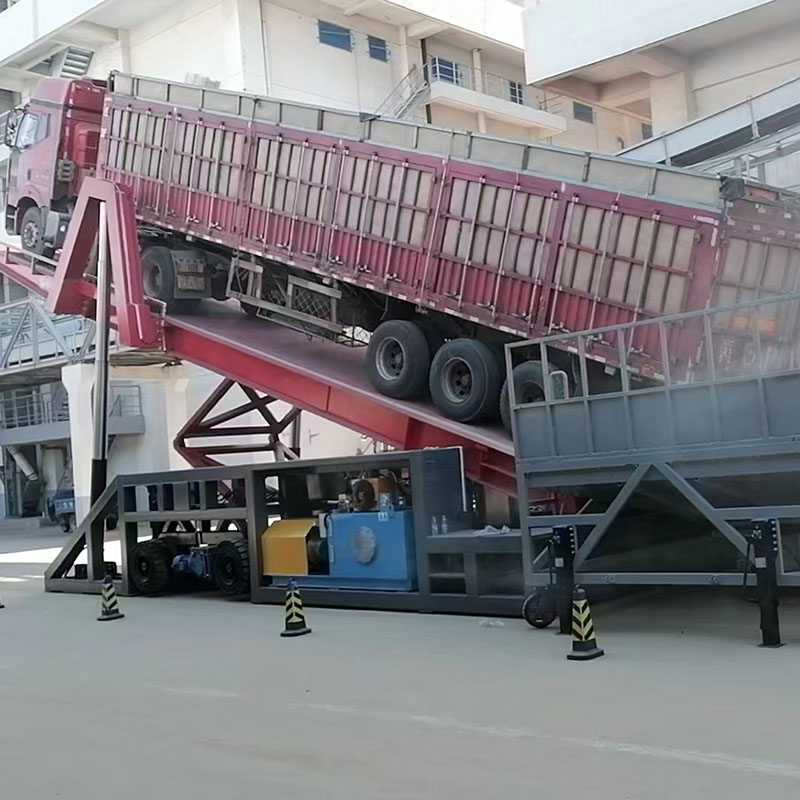
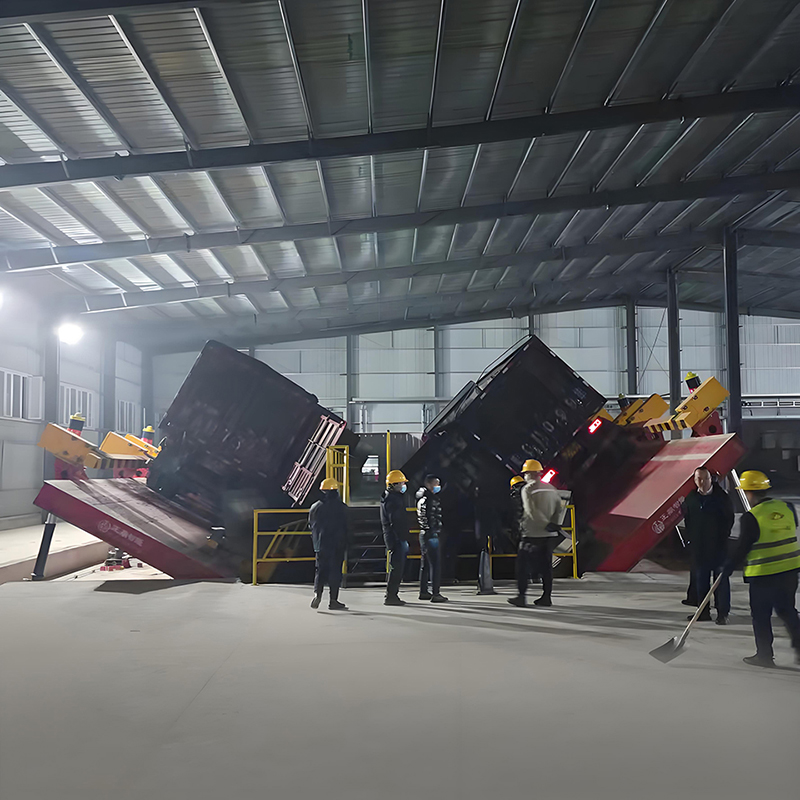
A shallow foundation truck dumper is a hydraulic truck-unloading platform installed in a relatively shallow pit. After a truck is positioned on the platform, the wheels are secured, and the hydraulic lifting system raises one end of the platform. The truck body tilts together with the platform, allowing the load to flow through a discharge opening into a hopper, conveyor, storage pit, or downstream processing system.
In a conventional deep-pit truck dumper, the unloading platform is often installed above a deep concrete structure. This arrangement may require substantial excavation, retaining walls, drainage systems, reinforced concrete, ramps, and other civil construction. Such work increases the project budget and can create complications where groundwater, rock, underground utilities, restricted land, or existing buildings are present.
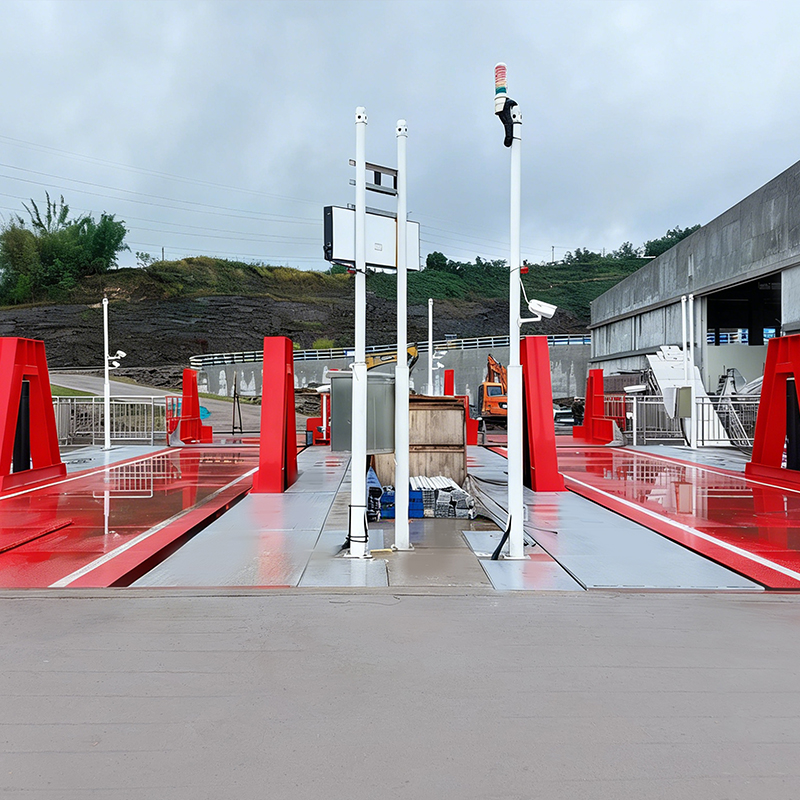
The shallow foundation design changes this project equation. The platform is installed close to ground level, while the receiving hopper or conveyor arrangement is designed to work beneath or alongside the platform. The result is a lower excavation requirement, shorter construction time, and greater flexibility for retrofitting an existing terminal or factory.
The system is particularly suitable for facilities that need truck unloading but do not want to build a large deep foundation. It can also be considered for temporary or semi-permanent logistics sites, expansion projects, material transfer stations, and facilities where civil construction must be completed without interrupting existing operations for an extended period.
Core Operating Sequence
The operating process is designed to be straightforward and safe. First, the truck enters the platform and is positioned according to the equipment layout. The retaining wheel device is then activated to secure the vehicle. The operator or driver starts the lifting cycle using the control system. The hydraulic cylinders raise the platform to the selected angle, generally within the range of 45 to 55 degrees for the listed configurations. Bulk material flows from the truck body into the receiving system.
After discharge, the hydraulic system returns the platform to its horizontal position. The wheel-retaining device releases the vehicle, allowing the truck to leave the platform. Depending on the site control philosophy, the operation may be controlled by an operator from a safe location, by remote control, or through an automated sequence that allows the driver to complete the unloading cycle independently.
Because the equipment can support unmanned or driver-operated unloading, it can reduce the need for a dedicated operator at every platform. This is valuable in dusty environments, where repeatedly standing near a truck dumper may expose personnel to dust, noise, vibration, and moving equipment.
2. Main Advantages Over Conventional Truck Dumpers
The principal competitive advantage of a shallow foundation truck dumper is its low-profile installation. However, the benefits extend beyond construction cost. The system also improves project flexibility, maintenance access, operational safety, and automation potential.
2.1 Reduced Civil Engineering Investment
Deep excavation is one of the most expensive elements of a conventional truck dumper project. It may require soil removal, groundwater control, reinforced concrete construction, retaining structures, protective barriers, and long access ramps. In regions with high labor costs or difficult geological conditions, civil construction can represent a significant portion of the total project budget.
A shallow foundation dumper minimizes the depth of excavation because the pit is designed around the platform thickness rather than a deep below-ground structure. The supplied product information indicates that civil construction costs can be reduced by approximately 60% to 70%, depending on the comparison basis and site conditions. The actual saving will depend on soil conditions, local construction prices, drainage requirements, the receiving hopper design, and the existing foundation.
Lower civil work also means fewer construction risks. A project may require less excavation equipment, less spoil removal, and less time before mechanical installation can begin. Where the facility has limited space, shallow construction can make it possible to install a truck dumper without rebuilding nearby roads or plant structures.
2.2 Easier Installation and Retrofitting
Many operating facilities need additional unloading capacity but cannot shut down for a long construction period. A shallow foundation arrangement is often easier to integrate into an existing logistics yard. It can be installed near existing conveyors, hoppers, silos, loading lines, or processing equipment with less disruption than a deep-pit system.
The low-profile configuration may also reduce the need for long approach ramps. Trucks can access the platform more directly, which can simplify traffic planning and reduce the amount of land allocated to vehicle circulation. This is particularly useful in grain terminals, cement plants, warehouses, and industrial sites where yard space is limited.
2.3 Improved Safety Through Synchronized Hydraulics
The truck dumper uses a high-precision oil-cylinder synchronous stability system developed by the manufacturer. The system is intended to keep the lifting cylinders coordinated during platform movement. Synchronized movement helps reduce uneven loading, platform twisting, sudden movement, and unnecessary shock on the hydraulic components.
Small vibration during operation is beneficial for both safety and service life. When lifting movement is stable, the truck experiences less abrupt motion, and the cylinders, pins, hinges, frame, and platform structure receive lower impact loads. This can help extend cylinder service life and reduce the probability of mechanical damage caused by unbalanced lifting.
A synchronized hydraulic system is especially important when the truck is not perfectly centered, when the load is distributed unevenly, or when the material begins to flow before the platform reaches its final angle. Proper system design, commissioning, inspection, and operator training remain essential, but coordinated hydraulic movement provides a strong technical foundation for safe operation.
2.4 Automatic Wheel Retention
The full-automatic retaining wheel fixing device is another important safety feature. Before the lifting cycle begins, the truck must be prevented from moving or rolling on the platform. A dedicated wheel-retaining system performs this function automatically, reducing reliance on manual positioning and operator judgment.
In dusty environments, manual remote operation can be inconvenient. An operator may need to stand away from the equipment while trying to observe the vehicle and control the lifting cycle. Automatic wheel retention simplifies this process. Once the vehicle is correctly positioned, the system can secure the wheels as part of the operating sequence.
This arrangement improves operational consistency, helps prevent premature vehicle movement, and reduces the number of manual actions required around the platform. The exact safety interlocks should be specified according to the truck types, local regulations, and site risk assessment.
2.5 Unmanned or Driver-Operated Unloading
The system can be configured for unmanned operation, meaning that a professional dumper operator is not necessarily required at the platform. After following the loading and positioning procedure, the driver can complete the unloading cycle through the approved control interface.
Automation may include vehicle detection, wheel-retaining confirmation, platform position monitoring, hydraulic sequencing, discharge completion monitoring, return-to-level control, and release authorization. These functions can also be integrated with access control, weighing systems, barcode systems, plant management software, or central control rooms.
Reducing manual intervention can improve throughput and reduce labor requirements. It may also improve safety by keeping personnel away from the vehicle, hydraulic mechanisms, and dust-producing discharge area. However, unmanned operation should always include emergency stops, interlocks, access protection, fault alarms, and procedures for abnormal conditions.
2.6 Imported Hydraulic Components
The supplied specifications state that imported-brand oil cylinders and hydraulic pumps are used. These components are selected for safe, reliable operation and long service life. Hydraulic components are critical to truck dumper performance because the cylinders must lift heavy platforms and vehicles repeatedly under demanding conditions.
Reliable pumps support stable oil flow and consistent lifting speed. High-quality cylinders help reduce leakage, seal failure, rod damage, and unplanned downtime. In addition, the hydraulic system should be equipped with appropriate relief protection, hose routing, oil filtration, temperature monitoring, and maintenance access.
Component selection is only one part of reliability. The performance of the complete system also depends on cylinder alignment, welding quality, hydraulic circuit design, control logic, installation accuracy, and commissioning. A manufacturer with experience in complete equipment integration can optimize these elements as a unified system rather than treating each component separately.
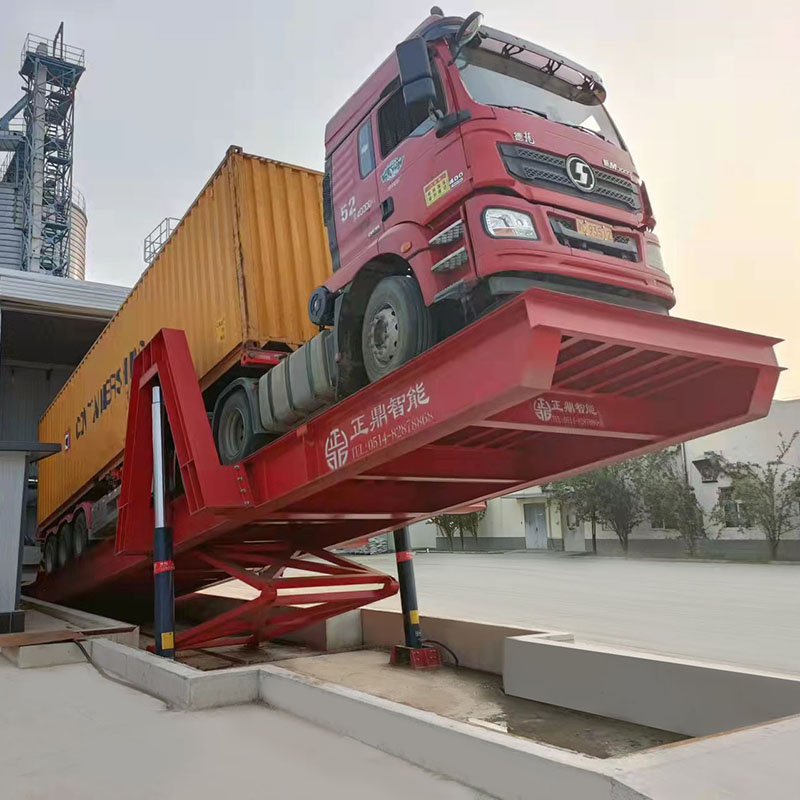
Shallow Foundation Truck Dumpers
3. Product Structure and Engineering Design
A shallow foundation truck dumper consists of several interconnected subsystems. Each one must be designed according to the target truck dimensions, maximum lifting load, material characteristics, unloading frequency, and receiving equipment.
3.1 Heavy-Duty Platform
The platform supports the truck and transfers the lifting forces into the structural frame and foundation. It must withstand the static weight of the truck and material as well as dynamic forces generated during vehicle entry, braking, lifting, material discharge, and platform return.
Platform dimensions are selected according to the truck fleet. The listed equipment configurations generally use lengths from approximately 14 to 20 meters and widths around 3 meters. A platform must provide adequate tire clearance, safe edge protection, suitable wheel-retaining locations, and enough structural strength for the maximum rated load.
The platform surface may be supplied in carbon steel, wear-resistant steel, or stainless steel, depending on the application. Grain and food applications may require smooth, cleanable surfaces, while aggregates, coal, slag, and petroleum coke may require abrasion-resistant liners.
3.2 Hydraulic Lifting Cylinders
The lifting cylinders convert hydraulic pressure into platform movement. The cylinder arrangement must be selected to provide sufficient lifting force while maintaining stability throughout the motion. Cylinder stroke, mounting location, operating pressure, rod diameter, seal selection, and load distribution all influence the service life of the system.
The high-precision synchronous stability system coordinates the cylinders so that the platform rises evenly. This is particularly important when the load is unevenly distributed. A poorly synchronized system can create lateral stress, structural distortion, accelerated pin wear, and unstable movement. The integrated control system is designed to reduce these risks.
3.3 Hydraulic Power Unit
The hydraulic power unit includes pumps, motors, valves, oil tanks, filters, hoses, and control components. It provides the force required to lift the platform and controls the speed of the unloading cycle.
Hydraulic speed should be selected carefully. Excessive speed can cause sudden movement, product surging, truck instability, and high impact loads. A controlled speed allows the material to flow progressively and reduces stress on the truck body and receiving hopper. For sticky or cohesive materials, a slower lifting sequence may be combined with vibration or liner systems.
3.4 Wheel-Retaining System
The automatic wheel-retaining device is installed to prevent the truck from moving during lifting. It should be designed for the wheelbase, tire size, axle arrangement, and vehicle types expected at the facility.
Correct positioning is important. The system may use sensors or visual confirmation to determine whether the truck is properly aligned before the lifting sequence is enabled. In a complete safety design, the dumper should not lift if the retaining device is not engaged, the truck is out of position, an access gate is open, or an emergency stop has been activated.
3.5 Receiving Hopper and Conveyor Interface
The dumper is usually part of a larger material-handling line. Beneath or adjacent to the platform, material may enter a hopper, chain conveyor, belt conveyor, screw conveyor, bucket elevator, crusher, screen, silo, or process feeder.
The interface must be designed according to material flow rate, particle size, moisture content, dust characteristics, and downstream capacity. A truck dumper with excellent lifting performance cannot achieve high overall throughput if the receiving hopper is undersized or the conveyor cannot accept the discharged material.
For dusty materials such as cement, fly ash, fertilizers, and fine minerals, dust-control equipment may include enclosed transfer points, extraction ducts, filters, flexible seals, and negative-pressure systems. For grains and food materials, the transfer design should minimize contamination, cross-contact, and material retention.
4. Technical Parameters and Model Selection
The supplied technical table lists several TQXHC configurations. The correct model should be selected according to truck dimensions, maximum lifting weight, lifting angle, material type, operating frequency, and available space.
| Model | Available Platform Size Options, L × W, m | Maximum Listed Lifting Weight, t | Maximum Lifting Angle |
|---|---|---|---|
| TQXHC 50 | 14 × 3, 16 × 3, or 17 × 3 | 80 | 45° or 55° |
| TQXHC 80 | 16 × 3, 17 × 3, or 18 × 3 | 80 | 45° or 55° |
| TQXHC 100 | 17 × 3, 18 × 3, or 20 × 3 | 100 | 45° or 55° |
| TQXHC 150 | 17 × 3, 18 × 3, or 20 × 3 | 150 | 45° or 55° |
The model designation should not be used as the only basis for selection. The maximum lifting weight listed in the product data may represent the rated lifting capacity rather than the total permissible gross vehicle weight. During technical confirmation, the supplier and buyer should define whether the rating includes the truck tare weight, the payload, or the complete truck-and-load combination.
Platform length is equally important. A platform that is too short may not provide sufficient support for the truck body or may place the axle loads outside the intended structural zones. A platform that is unnecessarily long may increase project cost and occupy valuable yard space. The correct dimensions should be confirmed using actual truck drawings and operating data.
Choosing the Correct Lifting Angle
A lifting angle of 45 degrees may be adequate for many free-flowing products, including grains, pellets, dry fertilizers, and some mineral products. A 55-degree angle may be more suitable for materials that have higher internal friction or are more difficult to discharge.
Angle selection must also consider the truck body design. Some truck bodies discharge efficiently at moderate angles, while others require a greater inclination. Material moisture, particle size, temperature, cohesion, and loading method can all affect the required angle.
Higher lifting angles can improve discharge but may increase structural loads, space requirements, and truck stability considerations. The final operating angle should therefore be established through engineering analysis and material testing where necessary.
5. Material Compatibility and Unloading Performance
Shallow foundation truck dumpers can handle a broad range of bulk solids, granular materials, and free-flowing powders. The most suitable applications are materials that flow under gravity once the truck body is tilted.
| Material Category | Typical Bulk Density, t/m³ | Recommended Tilt Angle | Indicative Discharge Efficiency | Recommended Considerations |
|---|---|---|---|---|
| Corn, soybeans, and wheat | 0.72–0.78 | 40°–45° | Up to 99.5% | Food-grade surfaces and dust control may be required |
| Sand, gravel, and crushed stone | 1.4–1.8 | 50°–55° | Approximately 98.2% | Use abrasion-resistant liners and reinforced wear zones |
| Cement, fly ash, and lime | 0.9–1.2 | 45°–50° | Approximately 97.8% | Use sealed transfer points and dust extraction |
| Granular fertilizers | 0.85–1.1 | 42°–48° | Approximately 99.1% | Protect steel surfaces against corrosion and chemical attack |
| PVC and PE plastic pellets | 0.55–0.65 | 38°–42° | Up to 99.7% | Control static electricity and prevent pellet retention |
| Coal and petroleum coke | 0.75–0.95 | 48°–53° | Approximately 98.5% | Use wear protection and dust-control systems |
The performance figures in the supplied material are indicative application data rather than universal guarantees. Actual discharge efficiency varies according to truck body geometry, material moisture, loading pattern, particle size distribution, temperature, surface condition, and receiving equipment.
5.1 Grains and Oilseeds
Grains and oilseeds are among the most common materials handled by truck dumpers. Corn, wheat, soybeans, rice, barley, and similar products are generally free-flowing and can be discharged efficiently at moderate tilt angles.
For grain facilities, hygiene and contamination control are as important as mechanical capacity. Stainless steel contact surfaces, smooth welds, cleanable designs, sealed bearings, and easy access to retained material can help support food-grade operation. The system may be integrated with weighbridges, sampling stations, conveyors, cleaners, dryers, and silos.
A shallow foundation design is beneficial in grain terminals where rapid truck turnover is required but land and construction time are limited. It can provide a direct route from the truck yard to the receiving pit while reducing the amount of deep concrete work.
5.2 Aggregates and Minerals
Sand, gravel, crushed stone, limestone, slag, and other aggregates are dense and abrasive. These materials place greater demands on the platform surface, hopper, liners, and receiving conveyor.
AR400 wear-resistant steel liners are available for abrasive applications. The supplied information indicates that such liners can support a platform service life of approximately 8 to 10 years under suitable operating and maintenance conditions. Actual life depends on material hardness, particle size, drop height, truck cycle frequency, and liner thickness.
For very large aggregates, reinforced platforms and thicker wear plates may be required. The application information states that standard units can handle particles up to approximately 80 millimeters, while larger aggregates in the 100 to 150 millimeter range may require 12 to 16 millimeter wear plates and structural reinforcement.
5.3 Cement, Fly Ash, and Lime
Powdered materials create special challenges because of dust, air entrainment, and possible material leakage. The truck dumper should be integrated with a sealed receiving hopper and suitable dust extraction system.
Fine powders may flow readily when dry, but moisture can cause buildup and bridging. The platform and receiving system should therefore be designed with smooth surfaces, limited dead zones, and accessible inspection points. Dust-resistant electrical equipment, proper grounding, and appropriate personal protective procedures are also important.
5.4 Fertilizers and Chemicals
Granular fertilizers can be handled efficiently, but some fertilizer products are corrosive or hygroscopic. The choice of steel grade, coating, seals, fasteners, and drainage design must be based on the chemical composition and environmental conditions.
For corrosive chemical applications, stainless steel platforms may be specified. The supplied material identifies stainless steel options for food-grade and corrosive applications within a pH range of approximately 3 to 11. Chemical compatibility should be confirmed for the particular product, concentration, temperature, and exposure time.
5.5 Coal and Petroleum Coke
Coal and petroleum coke are commonly unloaded in power, energy, cement, and industrial facilities. These materials may be abrasive, dusty, and combustible. The equipment arrangement should consider dust suppression, ignition prevention, grounding, ventilation, and compliance with applicable hazardous-area requirements.
Wear-resistant liners can reduce damage to the platform and receiving hopper. The lifting system should be protected from dust accumulation, while hydraulic and electrical components should remain accessible for inspection and maintenance.
5.6 Sticky and Moist Materials
Wet clay, concentrates, moist minerals, and other cohesive materials may not flow as freely as dry granular products. The supplied application data indicates that materials with approximately 15% to 18% moisture can be handled with reduced tilt speed and liner assistance, achieving approximately 94% to 96% discharge efficiency in suitable conditions.
UHMW-PE liners can reduce friction and help material slide from the truck body. The supplied information states that these liners may improve flow by approximately 20% to 30% for sticky materials. Vibration systems can also be added to encourage material release. For extremely sticky clay, a heated platform controlled at approximately 35°C to 45°C may be considered.
Material testing is strongly recommended before final design approval for sticky products. A small change in moisture content can significantly affect flow behavior, and the correct solution may involve a combination of liner material, lifting speed, vibration, heating, and receiving-hopper geometry.
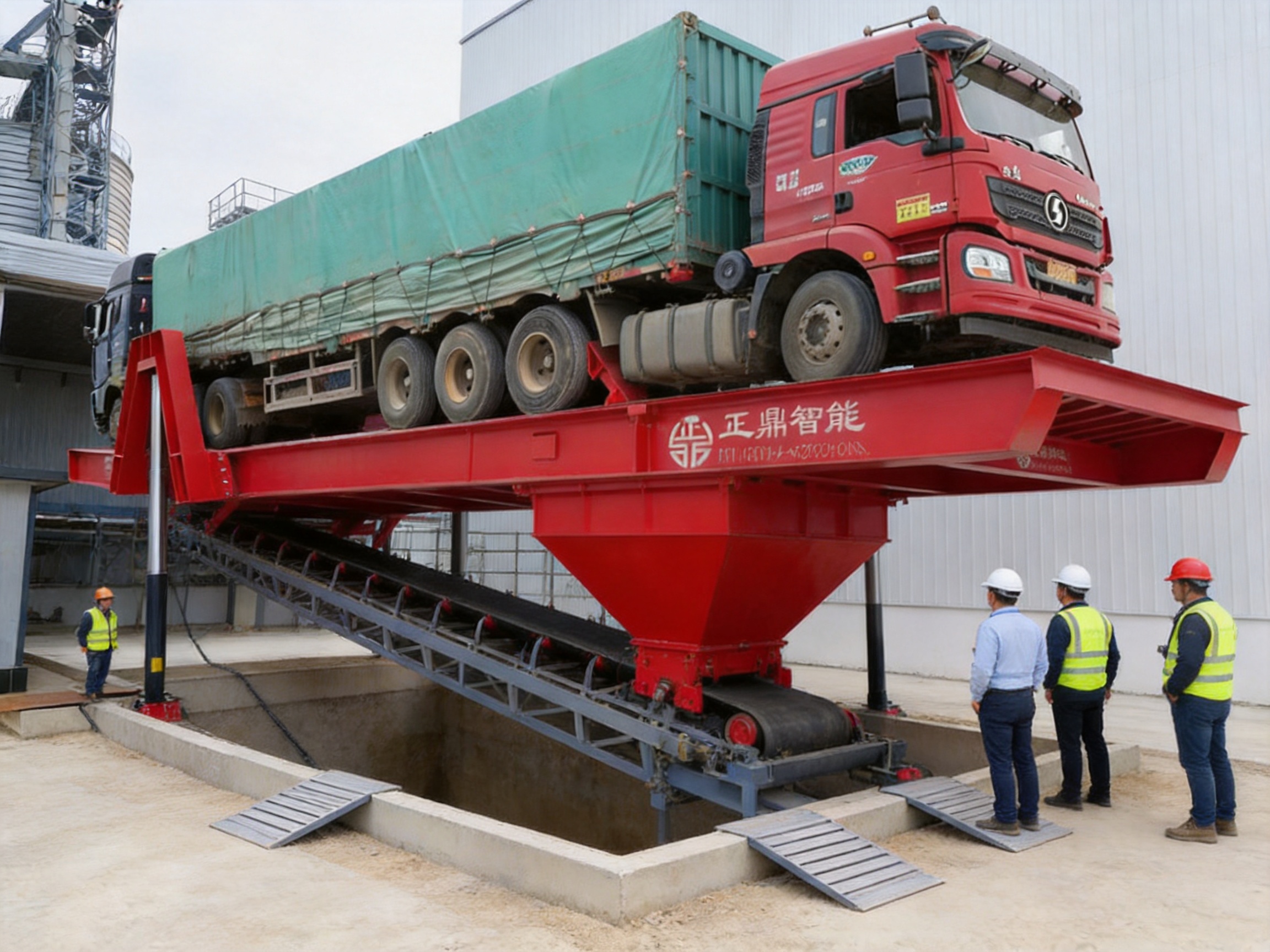
6. Wear-Resistant and Application-Specific Options
One of the main strengths of an engineered truck dumper is the ability to adapt the equipment to the material rather than using one standard platform for every application. A dumper handling wheat has very different requirements from one handling limestone, petroleum coke, wet clay, or corrosive fertilizer.
6.1 AR400 Steel Liners
AR400 steel liners provide protection against impact and sliding abrasion. They are suitable for aggregates, slag, crushed stone, coal, and other abrasive materials. The hardness range is approximately 360 to 440 HB, according to the supplied information.
Liner layout should focus on areas that experience the highest wear, including the first impact zone, side walls, discharge opening, transition areas, and receiving hopper. Replaceable liner sections can make maintenance faster and reduce the need to repair the primary platform structure.
6.2 UHMW-PE Liners
Ultra-high-molecular-weight polyethylene liners offer a low-friction surface for materials that tend to stick. They can be used for wet clay, concentrates, certain fertilizers, and other cohesive products, subject to temperature and chemical compatibility.
These liners are lightweight, corrosion-resistant, and relatively easy to replace. They are not always the best choice for severe impact or extremely abrasive rock, so the final material selection should balance friction reduction against impact resistance.
6.3 Stainless Steel Construction
Stainless steel platforms are available for food-grade and corrosive chemical applications. Grades such as 304 or 316 may be considered depending on the product, cleaning chemicals, chloride exposure, and environmental conditions.
Food-grade construction should include smooth surfaces, sanitary weld treatment, suitable seals, minimized crevices, and a cleaning procedure. For facilities that switch between wheat, corn, soybeans, or other products, cleanability is essential to prevent cross-contamination.
6.4 Heating and Vibration
Heating systems may be integrated when low temperatures or high moisture cause material to adhere to the truck body or platform. Thermostatic control allows the temperature to be managed within a defined range rather than relying on uncontrolled heating.
Vibration systems can assist the discharge of cohesive or compacted loads. Vibration intensity and operating time should be controlled to avoid excessive stress on the truck, platform, and receiving equipment. The best configuration depends on the physical characteristics of the material and the design of the truck body.
7. Advanced Manufacturing and Quality Control
The performance of a truck dumper depends on manufacturing quality as much as on the initial concept. A stable hydraulic design cannot compensate for poor welding, inaccurate assembly, inadequate surface treatment, or weak inspection procedures.
Jiangsu Zhengding Intelligent Equipment Co., Ltd. is described as a national high-tech enterprise focused on the research, development, manufacture, and sale of intelligent logistics equipment. Its product range includes rear dumpers, side-turn truck dumpers, car loading equipment, container flippers, and other automated loading and unloading systems.
7.1 Engineering Design and Application Analysis
Manufacturing begins with application analysis. Engineers should review truck drawings, axle loads, payloads, material properties, cycle times, site conditions, receiving equipment, and local safety requirements before finalizing the equipment design.
For shallow foundation projects, foundation assessment is particularly important. Although the pit is shallow, the foundation must still support the lifting reactions, horizontal forces, truck loads, and repeated dynamic cycles. Soil bearing capacity, drainage, settlement, frost conditions, and existing concrete quality should be evaluated.
Material flow analysis is another important engineering step. The manufacturer can assess whether the selected lifting angle, platform geometry, liners, hopper, and conveyor will provide efficient discharge. This reduces the risk of designing a dumper that meets the lifting requirement but performs poorly with the actual product.
7.2 Structural Fabrication
The platform and support frame must be fabricated with accurate dimensions and controlled welding procedures. Critical joints require proper preparation, suitable welding materials, adequate penetration, and inspection for defects.
Dimensional control is important because misalignment can increase stress on hinges, cylinder mounts, wheel restraints, and platform edges. The finished assembly should be checked for flatness, squareness, cylinder alignment, and proper movement throughout the lifting range.
7.3 Hydraulic System Assembly
Hydraulic cleanliness and assembly quality strongly influence reliability. Pipes and hoses should be cleaned before installation, and hydraulic oil should be filtered during filling. Hose routing should avoid abrasion, excessive bending, heat sources, and areas where trucks or material could cause damage.
The synchronized hydraulic system should be tested under controlled conditions. Engineers should confirm cylinder movement, platform levelness, pressure stability, emergency lowering behavior, and response to uneven loading. Pressure relief settings and overload protection should be verified during commissioning.
7.4 Electrical and Control Integration
Modern truck dumpers require more than a hydraulic power unit. Sensors, programmable controls, safety switches, emergency stops, warning lights, alarms, and communication interfaces may be integrated into the system.
Control logic should prevent unsafe sequences. For example, lifting should not begin until the truck is correctly positioned and the wheel-retaining device is engaged. The platform should not return or release the vehicle until the operating conditions are confirmed. Maintenance modes should be controlled separately from automatic operation.
7.5 Factory Testing and Site Commissioning
Before shipment, the equipment should undergo factory inspection and functional testing. Typical checks include platform dimensions, weld quality, hydraulic leakage, cylinder synchronization, lifting time, lowering time, control response, wheel-retaining operation, and emergency-stop performance.
At the installation site, commissioning should include foundation inspection, mechanical alignment, hydraulic oil verification, electrical testing, no-load operation, partial-load testing, and full-load testing. The customer’s operators and maintenance personnel should receive training on normal operation, emergency procedures, inspection points, and planned maintenance.
8. Automation, Safety, and Operational Efficiency
Automation is a major area in which a modern shallow foundation dumper can outperform basic manually operated equipment. The objective is not merely to automate lifting, but to create a controlled unloading process with fewer manual decisions and better data visibility.
8.1 Automated Vehicle Positioning
Vehicle detection and positioning systems can confirm whether the truck is correctly placed on the platform. Depending on the site, this may involve sensors, cameras, wheel-position indicators, traffic lights, or operator confirmation.
Correct positioning prevents excessive loads on the platform edge and ensures that the wheel-retaining device contacts the intended tire location. It also creates a repeatable operating sequence for different truck types.
8.2 Interlocks and Emergency Protection
A safe automatic system should include interlocks for wheel retention, platform position, access gates, hydraulic pressure, emergency stops, and maintenance access. Audible and visual alarms can warn personnel before movement begins.
Emergency stop buttons should be placed where drivers, operators, and maintenance personnel can reach them quickly. The system should define what happens after an emergency stop, including whether the platform holds position, lowers under controlled conditions, or requires manual reset by authorized personnel.
8.3 Integration With Weighing and Plant Control
The dumper can be integrated with weighing systems so that truck weight, material quantity, and unloading status are recorded automatically. This supports inventory control, purchasing records, dispatch management, and production planning.
Integration with a supervisory control and data acquisition system may provide information such as cycle time, lifting count, hydraulic pressure, alarms, maintenance hours, and equipment availability. Such information enables condition-based maintenance and helps identify abnormal operating patterns.
8.4 Throughput Improvement
Throughput depends on the complete unloading cycle, including truck arrival, positioning, wheel retention, lifting, discharge, lowering, release, and departure. Automation can shorten nonproductive waiting time and reduce variation between cycles.
Where multiple trucks arrive continuously, the dumper can be coordinated with traffic signals, weighbridges, sampling stations, and conveyors. The result is a more predictable flow of vehicles and materials through the facility.
9. Maintenance and Service Life
Routine maintenance is essential for preserving safety and hydraulic performance. A planned maintenance program should cover the platform, hinges, cylinders, pumps, valves, hoses, wheel retainers, sensors, electrical panels, liners, and foundation interface.
9.1 Daily Inspection
Operators should check the platform for material buildup, visible damage, loose components, unusual noise, hydraulic leaks, and obstruction around the receiving area. The wheel-retaining device should be inspected to ensure that it moves fully and returns to its correct position.
Before operation, the emergency stops, warning devices, and control indicators should be checked according to the site procedure. Any hydraulic leak or abnormal movement should be reported immediately rather than ignored until the next scheduled service.
9.2 Hydraulic Maintenance
Hydraulic oil level, oil cleanliness, filter condition, hose condition, and cylinder seals should be inspected regularly. Contaminated oil can damage pumps, valves, and cylinder seals. Excessive oil temperature may indicate overload, poor cooling, internal leakage, or incorrect settings.
Cylinder rods should be kept clean and protected from scratches, corrosion, and impact. Uneven cylinder movement may indicate air in the system, contamination, synchronization problems, mechanical misalignment, or unequal loading.
9.3 Wear-Liner Inspection
For abrasive materials such as sand, cement, coal, and aggregates, the supplied maintenance recommendation is to inspect liners approximately every 1,000 operating hours. The inspection should focus on thickness, cracking, loose fasteners, deformation, and exposed areas of the underlying platform.
The supplied application information indicates that liner life may range from approximately 5,000 to 7,000 hours for aggregates and may exceed 15,000 hours for grains. These figures depend on operating conditions and should be treated as planning references rather than fixed guarantees.
9.4 Food and Chemical Applications
Food-grade platforms should be cleaned and sanitized according to the facility’s hygiene program. The supplied information recommends weekly sanitation for food-material applications, although actual frequency should reflect product type, contamination risk, operating schedule, and applicable regulations.
For corrosive chemicals, seal integrity and exposed surfaces should be checked at least every three months or according to the chemical-handling program. Any corrosion, coating damage, or chemical attack should be addressed before it weakens the structure or contaminates the product.
10. Application Industries
Shallow foundation truck dumpers can be applied across many industries because the basic unloading function can be adapted to different materials and truck types.
10.1 Grain and Feed Processing
Grain elevators, feed mills, oilseed plants, and food-processing facilities use truck dumpers to receive agricultural products efficiently. The shallow foundation design can reduce construction work while supporting integration with intake conveyors, cleaners, dryers, and storage silos.
10.2 Cement and Building Materials
Cement plants, concrete-material suppliers, and building-material terminals can use the equipment for limestone, gypsum, sand, cement additives, fly ash, and other raw materials. Abrasion-resistant liners and dust-control equipment are important for reliable operation.
10.3 Coal and Energy
Coal terminals, power plants, and industrial energy facilities require robust unloading systems that can handle high cycle frequency and dusty materials. The dumper can feed conveyors, crushers, screens, or storage systems while reducing the need for manual unloading.
10.4 Chemical and Fertilizer Plants
Chemical plants and fertilizer terminals may benefit from stainless steel surfaces, corrosion-resistant components, dust containment, and automated vehicle handling. Material compatibility must be reviewed carefully before equipment selection.
10.5 Ports and Logistics Terminals
Ports, transfer stations, and logistics terminals often need high truck throughput in a limited area. A shallow foundation dumper can be installed where deep construction would interfere with existing infrastructure or groundwater management.
10.6 Recycling and Biomass
Recycling materials, biomass, wood products, and other irregular bulk loads may be handled with customized platform protection and receiving equipment. The truck body, material size, moisture, and risk of entanglement should be evaluated during design.
11. Why Choose a Complete Equipment Manufacturer?
A truck dumper is not an isolated machine. It is part of an unloading and logistics system. Selecting a manufacturer capable of supplying multiple types of automated loading and unloading equipment can simplify project coordination and improve system compatibility.
Jiangsu Zhengding Intelligent Equipment Co., Ltd. provides equipment for automatic loading and unloading of automobiles and containers, as well as related logistics applications. Its product range includes rear dumpers, side-turn truck dumpers, car loading equipment, container flippers, and other specialized systems.
This broad product scope provides several potential advantages. First, the company can evaluate different unloading concepts instead of forcing every application into one standard machine. A customer may require a shallow foundation truck dumper for one material, a side-turn dumper for another, and container loading equipment for a separate logistics line.
Second, a complete equipment supplier can coordinate mechanical design, hydraulic systems, electrical controls, automation, material flow, and site installation. This can reduce interface problems between different vendors and create a more unified responsibility structure for commissioning and after-sales service.
The company’s products are described as being used in steel, chemical, cement, coal, grain, oil, food, feed, ports, papermaking, and new energy industries. Its equipment is also reported to have been exported to Japan, Brazil, Egypt, Pakistan, India, the Middle East, and Southeast Asia. International project experience can help a manufacturer understand differences in truck standards, electrical systems, safety expectations, climate, and operating practices.
The company has served or supplied equipment to international users including Budweiser, Heineken, Buhler Group, Wilmar International, Cargill, DuPont, Louis Dreyfus, Charoen Pokphand Group, and Saint-Gobain Group, according to the supplied company information. Such references indicate experience with demanding industrial and food-related applications, although each project should still be evaluated according to its specific technical scope.
12. Project Planning and Installation Considerations
A successful shallow foundation dumper project begins with accurate site and process information. The buyer should provide truck dimensions, total loaded weight, payload, axle arrangement, body type, material properties, daily truck quantity, peak hourly traffic, and desired unloading time.
The site survey should review ground conditions, underground utilities, drainage, access roads, turning radii, overhead clearance, existing conveyors, power supply, control-room location, and environmental requirements. Even a shallow pit requires proper water management and structural support.
The receiving system should be sized according to the maximum discharge rate. A truck dumper may release a large quantity of material within a short period. If the hopper or conveyor is too small, material may back up onto the platform, reducing safety and throughput.
Foundation drawings should define anchor locations, embedded plates, reinforcement, concrete strength, drainage channels, and tolerances. The equipment should not be installed on a foundation that has not reached the required strength or that contains uncorrected settlement or alignment problems.
Commissioning should include a test with the actual truck type and, where possible, the actual material. A dry test may confirm movement, but only a material test can confirm flow, residual material, dust behavior, and receiving-system capacity.
13. Comparison With Deep-Pit and Basic Manual Dumpers
| Evaluation Factor | Shallow Foundation Truck Dumper | Conventional Deep-Pit Dumper | Basic Manual Dumper |
|---|---|---|---|
| Excavation requirement | Low; typically based on shallow pit depth | High; deep foundation and civil structures are usually required | Varies, but may still require significant civil work |
| Civil construction cost | Potentially reduced by more than 60% in suitable projects | Usually higher because of excavation and reinforced structures | Depends on design and site conditions |
| Hydraulic synchronization | High-precision synchronized cylinder system | Depends on supplier and configuration | May be basic or manually controlled |
| Wheel retention | Automatic retaining wheel fixing device | May be automatic or manual | Often more dependent on operator action |
| Operation mode | Remote, automatic, or driver-operated options | Usually operator-controlled, with automation options | Typically manual or semi-automatic |
| Maintenance access | Generally easier because of the low-profile arrangement | May be more difficult inside a deep pit | Depends on construction |
| Material customization | AR400, UHMW-PE, stainless steel, heating, and vibration options | Usually customizable | Often limited unless specially engineered |
| Retrofitting suitability | Strong advantage where deep excavation is restricted | More difficult in existing facilities | Varies by design |
The comparison shows why shallow foundation designs are increasingly attractive. They do not eliminate the need for engineering, but they reduce one of the largest barriers to installation: deep civil construction. They also combine this installation advantage with safety and automation features that may not be available on basic manual equipment.
14. Frequently Asked Questions
Q1: What materials can a shallow foundation truck dumper handle?
A shallow foundation truck dumper can handle many bulk solids and granular materials, including grains, corn, wheat, soybeans, coal, sand, gravel, crushed stone, cement, fly ash, lime, fertilizers, plastic pellets, petroleum coke, and selected construction materials. Material density, moisture, abrasiveness, particle size, and flowability must be reviewed before final equipment selection.
Q2: Can the equipment handle wet or sticky materials?
Yes, with suitable modifications. UHMW-PE liners, vibration systems, reduced lifting speed, and heated platforms can improve the discharge of wet clay, concentrates, and other cohesive materials. For materials with approximately 12% to 18% moisture, the supplied application information indicates that these options may improve discharge efficiency significantly. Actual performance should be confirmed through material testing.
Q3: What is the maximum particle size?
Standard configurations can handle particles up to approximately 80 millimeters under suitable operating conditions. For larger aggregates in the 100 to 150 millimeter range, reinforced platforms and thicker wear plates, typically around 12 to 16 millimeters, may be recommended. The truck body, impact energy, hopper design, and conveyor capacity must also be considered.
Q4: Is the dumper suitable for food-grade applications?
Food-grade configurations are available with stainless steel platforms, including 304 or 316 stainless steel options, food-compatible seals, smooth surfaces, and easier-cleaning designs. The complete intake line, including conveyors, hoppers, transfer points, and cleaning procedures, must also meet the facility’s hygiene requirements.
Q5: How deep is the foundation pit?
The typical shallow foundation pit depth is approximately 0.5 to 1.2 meters, although the final depth depends on the platform structure, receiving hopper, conveyor arrangement, site elevation, and drainage design. The engineering drawing should be used as the final reference for construction.
Q6: How much can civil construction costs be reduced?
The supplied product information indicates reductions of more than 60%, with one product description stating approximately 70% lower civil construction cost compared with conventional deep-pit dumpers. Actual savings vary according to soil conditions, local construction prices, foundation design, drainage, access roads, and the existing site.
Q7: Can one driver operate the dumper without a professional operator?
The system can be configured for driver-operated or unmanned operation. Automatic wheel retention and control interlocks allow the driver to complete the standard cycle after correct positioning. The final operating method should be determined through a site risk assessment and must include training, emergency stops, alarms, and access controls.
Q8: What lifting angles are available?
The listed configurations provide maximum lifting angles of 45 degrees or 55 degrees. The appropriate angle depends on material flowability, truck body design, moisture, particle size, and receiving equipment. A higher angle is not automatically better because structural loads and space requirements must also be considered.
Q9: How often should the equipment be maintained?
Operators should perform basic inspections before each operating shift. Hydraulic oil, hoses, cylinder seals, wheel retainers, hinges, sensors, and safety devices should be inspected according to a planned maintenance schedule. For abrasive materials, the supplied recommendation is to inspect liners every 1,000 operating hours. Food and chemical applications require cleaning or seal inspections according to their specific operating procedures.
Q10: Can the dumper be integrated with conveyors and weighing systems?
Yes. The dumper can be engineered as part of a complete unloading system that includes receiving hoppers, belt conveyors, chain conveyors, crushers, screens, bucket elevators, weighing systems, dust collectors, sampling equipment, and plant-control software. Integration requirements should be defined before manufacturing.
Q11: What information is needed for a quotation?
The supplier should receive the truck length, width, wheelbase, axle configuration, total loaded weight, payload, truck-body type, material name, bulk density, moisture content, particle-size range, required unloading capacity, daily operating hours, peak truck arrivals, preferred lifting angle, site drawings, and local power requirements.
Q12: Why is material testing important?
Material testing helps determine whether the product will flow freely, adhere to surfaces, generate dust, cause abrasion, or require vibration and heating. It also helps engineers select the correct liner, tilt angle, hopper shape, conveyor type, and cleaning method. Testing is especially valuable for wet, cohesive, corrosive, or highly abrasive materials.
15. Conclusion
Shallow foundation truck dumpers offer a practical alternative to conventional deep-pit unloading systems. Their low-profile design reduces excavation and civil engineering requirements, making them attractive for new projects, plant expansions, and retrofit installations. The design can reduce construction costs by more than 60% in suitable applications while simplifying access, maintenance, and site integration.
The equipment’s technical value extends beyond the shallow foundation. A high-precision synchronous hydraulic stability system supports smooth lifting and reduces impact on the cylinders. Automatic wheel retention improves vehicle security during unloading. Imported-brand hydraulic cylinders and pumps support reliable operation, while remote, automatic, and driver-operated control modes reduce labor requirements.
Material adaptability is another major advantage. Through AR400 wear-resistant liners, UHMW-PE low-friction surfaces, stainless steel construction, vibration systems, and heated platforms, the equipment can be configured for grains, aggregates, coal, cement, fertilizers, plastic pellets, chemicals, and selected sticky materials.
Jiangsu Zhengding Intelligent Equipment Co., Ltd. combines equipment manufacturing with application engineering for automated automobile and container loading and unloading systems. Its experience across grain, food, cement, chemical, coal, steel, port, and logistics applications enables it to develop site-specific solutions rather than relying only on standard equipment.
For buyers, the best results come from treating the dumper as part of a complete material-handling system. Correct model selection, foundation design, truck verification, material testing, safety interlocks, receiving-equipment sizing, commissioning, and planned maintenance are all essential. When these factors are properly coordinated, a shallow foundation truck dumper can provide safe, efficient, and cost-effective bulk unloading for many years.
References
1. Product technical information for TQXHC shallow foundation truck dumper configurations.
2. Manufacturer-provided application data for bulk-material compatibility and discharge efficiency.
3. Manufacturer-provided guidance on hydraulic synchronization, automatic wheel retention, and unmanned operation.
4. Manufacturer-provided recommendations for AR400 steel liners, UHMW-PE liners, stainless steel platforms, vibration systems, and heated platforms.
5. Manufacturer-provided company profile and industrial application information for automated loading and unloading equipment.
6. General engineering principles for hydraulic lifting platforms, truck restraint systems, bulk-material flow, and industrial equipment maintenance.
7. Industry field data summarized in the supplied material regarding material categories, discharge efficiency, liner service life, and shallow-versus-deep foundation installations.


