

 English
 русский
 Español
 Français
 Português
 عربى
عربى




+86-13588556918
Content
- 1 1. Product Overview and Processing Purpose
- 2 2. Main Product Advantages
- 3 3. Working Principle
- 4 4. Structural Design and Engineering Details
- 5 5. Technical Parameters
- 6 6. Product Quality and Process Control
- 7 7. Applications in the Food and Grain Industries
- 8 8. Advantages Over Competing Equipment
- 9 9. Manufacturing Process and Quality Assurance
- 10 10. Company Manufacturing and Engineering Strengths
- 11 11. Installation and Commissioning
- 12 12. Operation Guidelines
- 13 13. Maintenance Requirements
- 14 14. Application Selection and Line Integration
- 15 15. Economic and Operational Benefits
- 16 16. Why the Drum Groats Cutter Is Suitable for Modern Processing
- 17 17. Frequently Asked Questions
- 17.1 Q1. What does a drum groats cutter produce?
- 17.2 Q2. Which materials can the machine process?
- 17.3 Q3. What is the output of the YQL50 model?
- 17.4 Q4. How much cutting waste should be expected?
- 17.5 Q5. Can the rotation speed be adjusted?
- 17.6 Q6. Why choose a drum groats cutter instead of a hammer mill?
- 17.7 Q7. Is stainless steel important for oat processing?
- 17.8 Q8. How should the machine be maintained?
- 17.9 Q9. Can the equipment be integrated into an automated production line?
- 17.10 Q10. What information should be supplied when requesting a quotation?
- 18 18. Conclusion
- 19 References
- 20 Product: Drum Groats Cutter
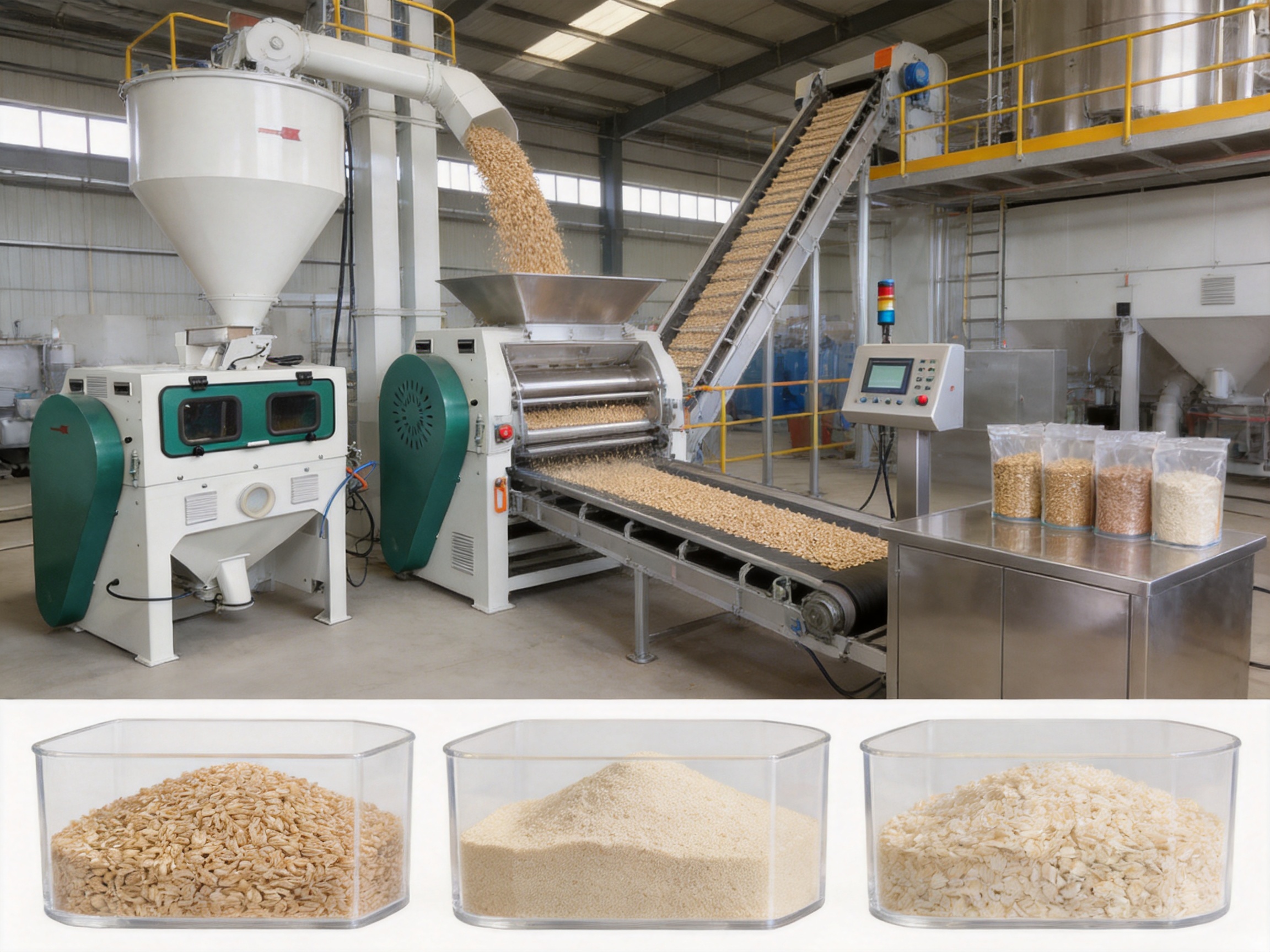
A drum groats cutter is a specialized size-reduction machine designed to divide dehulled oat kernels and other selected grains into accurately controlled pieces. In oat processing, the machine produces steel-cut oats with a consistent appearance, stable cooking performance, and a uniform particle-size distribution. Unlike impact-based milling equipment that can generate a high proportion of powder and irregular fragments, a drum groats cutter uses controlled cutting, shearing, and compression to achieve clean and repeatable grain separation.
The equipment is especially suitable for processors that require fine, medium, or coarse groats. Its principal application is the production of steel-cut oats from dehulled oat kernels, but its operating concept also allows it to process barley, rye, wheat, rice, and other suitably prepared grains. With a stainless-steel cutting drum, adjustable rotation speed, low cutting waste, and a compact industrial design, the machine provides a practical solution for cereal plants, breakfast-food manufacturers, grain processors, and integrated food-processing lines.
Manufactured by Jiangsu Zhengding Intelligent Equipment Co., Ltd., the drum groats cutter forms part of a broader portfolio of automated industrial equipment. The company combines mechanical design, fabrication, assembly, process integration, and logistics automation experience to provide machinery for demanding production environments. Its engineering background in automated loading and unloading equipment also supports the development of complete material-handling solutions around grain-processing machinery, from receiving and weighing to cutting, conveying, packaging, and dispatch.
This article explains the working principle, structural design, process advantages, technical performance, manufacturing strengths, installation considerations, maintenance requirements, and application possibilities of the drum groats cutter.
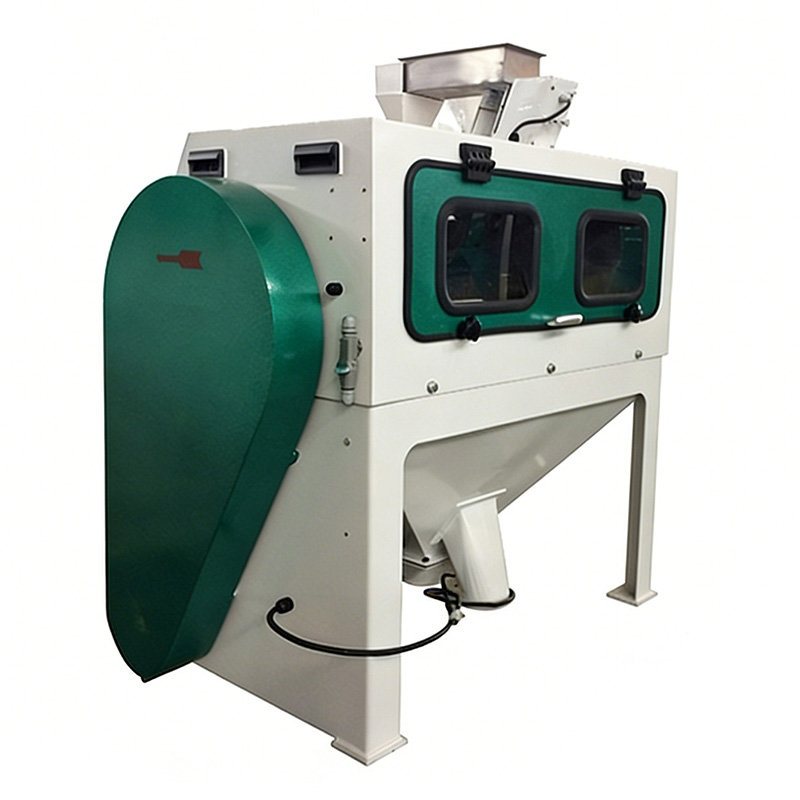
Drum Groats Cutter
1. Product Overview and Processing Purpose
The main purpose of a drum groats cutter is to divide whole dehulled kernels into smaller, uniform segments. For oat processing, the typical result is a kernel divided into three or four pieces. These pieces are commonly known as steel-cut oats or oat groats, depending on the product specification and the stage of processing. The finished material can be directed to subsequent cleaning, grading, weighing, packaging, flaking, or cooking processes.
Uniform cutting is important because particle size affects cooking time, water absorption, texture, visual appearance, packaging consistency, and consumer acceptance. If a cutting machine produces too many fines, the final product may become dusty and cook unevenly. If it generates oversized pieces, the product may fail to meet a specified grade. A well-adjusted drum groats cutter minimizes both problems by applying a controlled cutting action instead of relying primarily on uncontrolled impact.
The machine is designed for dehulled oat kernels and comparable grain materials. Raw material should normally be cleaned and free from stones, metal, excessive husk, and other foreign matter before entering the cutter. Proper upstream cleaning protects the cutting drum and bearings while also improving the consistency of the finished product.
The equipment is suitable for the production of fine, medium, and coarse groats. Product grade can be influenced by the characteristics of the incoming kernel, the number and geometry of working holes, the rotational speed, the feeding rate, and downstream screening. This flexibility enables one machine to support several product specifications without requiring a complete change of processing equipment.
2. Main Product Advantages
2.1 Consistent Cutting Performance
The drum groats cutter is engineered to divide kernels into pieces of comparatively uniform size. Consistency is one of its most important advantages over basic impact crushers, improvised cutting devices, or poorly controlled grain breakers. The cutting drum guides the kernels through working openings and applies a repeatable mechanical action. As a result, the processor can achieve a more stable distribution of fine, medium, and coarse particles.
Uniformity is valuable in both food and industrial applications. In breakfast cereal production, similar-sized pieces improve the appearance and cooking behavior of the final product. In feed preparation, uniform particles contribute to more consistent mixing and reduce segregation during conveying and storage. In malt and grain processing, controlled size reduction supports predictable downstream handling.
2.2 Low Cutting Waste
According to the supplied technical data, the cutting waste of the YQL50 model is no more than one percent. Low waste improves raw-material utilization and helps reduce the amount of material that must be recycled or redirected. This is particularly important when the processed grain has a high purchase cost or when the final product must meet a strict specification.
Low waste is achieved through the combination of drum geometry, controlled rotation, appropriate feeding, and a cutting action suited to the material. Operators should still maintain correct moisture, feed rate, and equipment settings because excessive moisture, foreign matter, or overloading can affect the result. When operated within its intended conditions, the cutter can provide an efficient balance between capacity and product quality.
2.3 Adjustable Rotation Speed
The rotation speed can be adjusted to accommodate kernels of different lengths and materials with different processing characteristics. This feature provides more process control than a machine that operates at only one fixed speed. A lower or higher operating speed can be selected according to the desired cut, material hardness, feed condition, and production target.
Adjustable speed also helps processors change between fine, medium, and coarse products. The exact settings should be established during commissioning because the best combination of speed, feed rate, and screening depends on the raw material. A controlled adjustment procedure can help operators change product grades without excessive trial-and-error production.
2.4 Stainless-Steel Cutting Drum
The cutting drum is manufactured from stainless steel. This material provides long service life and supports the hygiene requirements of food-processing environments. Stainless steel is resistant to corrosion and is easier to clean than many untreated carbon-steel alternatives. It is therefore appropriate for equipment that handles food-grade oats and other grains.
The stainless-steel construction also helps maintain the physical integrity of the working surface. Regular inspection remains necessary, but a durable drum can reduce the frequency of major replacement and help preserve consistent cutting performance over an extended operating period.
2.5 Improved Capacity Through More Working Holes
The equipment design increases production capacity by increasing the number of working holes on the cutting drum. More working holes allow a greater quantity of kernels to enter the cutting zone during each rotation. When supported by suitable drive power and feeding equipment, this design improvement can raise throughput without requiring an unnecessarily large machine footprint.
Increasing the number of working holes must be balanced with structural strength, spacing, cleaning access, and the desired product size. The design therefore requires accurate fabrication and careful quality control. The goal is not simply to create more openings, but to provide a durable drum that maintains the correct working geometry during continuous operation.
2.6 Low Energy Consumption
The drum groats cutter is designed for low energy consumption. Its cutting and shearing action can require less energy than high-speed impact milling when the objective is to divide kernels rather than reduce them to fine flour. Lower energy consumption can reduce the operating cost per tonne and may also lower the thermal load introduced into the product.
Energy performance depends on material moisture, feed rate, kernel hardness, target size, motor loading, and line configuration. Operators can support efficient operation by maintaining a stable feed, preventing foreign objects from entering the machine, and keeping the cutting components in good condition.
3. Working Principle
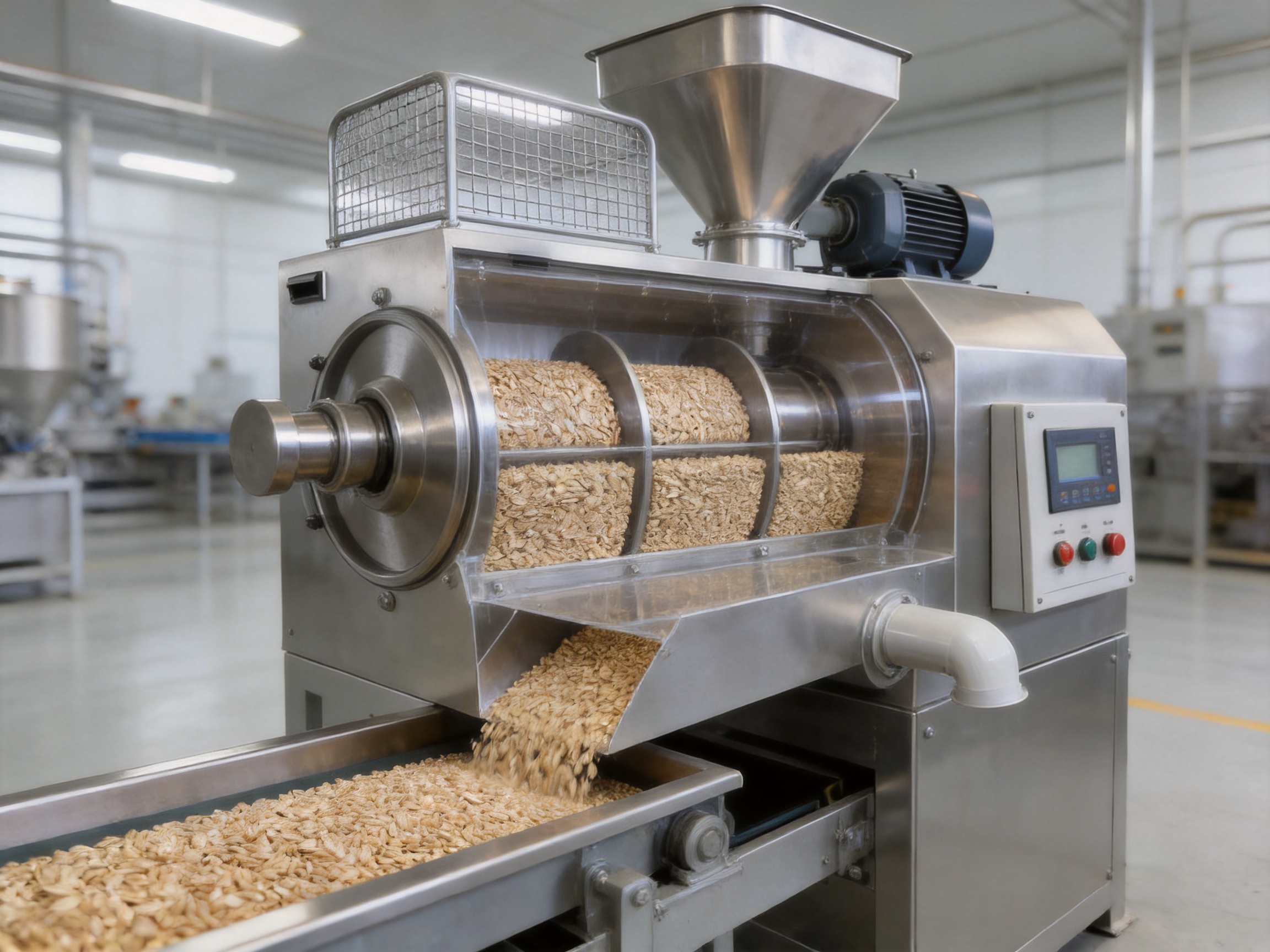
The drum groats cutter operates through the interaction of a rotating cutting drum, working openings, fixed or coordinated cutting surfaces, and a controlled material-feeding system. Cleaned and dehulled kernels enter the machine through the feed inlet. The rotating drum carries the kernels toward the cutting zone, where mechanical forces divide them into smaller pieces.
The primary forces include shearing, compression, and controlled fracture. Shearing creates a cleaner cut than random impact, while compression helps position and stabilize the kernel during separation. The precise balance of these forces depends on the drum design, rotational speed, kernel moisture, kernel structure, and the gap or clearance between cooperating parts.
After being cut, the groats pass through the discharge section. The product can then be conveyed to a screening or grading system. Oversized pieces may be returned for additional processing, while fines can be separated for another product stream. This arrangement allows the cutter to become part of a complete size-classification process rather than functioning as an isolated machine.
For oat kernels, the target result is commonly three to four segments per kernel. However, the actual result may vary according to kernel length, shape, moisture, and the selected operating settings. The adjustable rotation speed is useful because it enables the operator to adapt the cutting action to different raw-material conditions and product requirements.
3.1 Cutting Versus Impact Milling
A conventional hammer mill reduces grain mainly through high-speed impact. This approach is effective when the desired product is a relatively fine meal, but it may create a greater proportion of fines when the required product is a larger, clearly defined groat. It may also produce a wider particle-size distribution and more dust.
A drum groats cutter is intended for a different processing objective. It performs a more controlled division of the kernel, making it suitable for steel-cut oats and other applications where recognizable particles are required. The machine does not replace every type of hammer mill or roller mill; instead, it provides an alternative when the processor prioritizes controlled segmentation, low cutting waste, and product uniformity.
In a properly designed line, the cutter may be used after cleaning, dehulling, and conditioning. It can be followed by screening, aspiration, magnetic separation, weighing, packaging, or further cereal processing. The most effective equipment selection depends on the raw material and the final product specification.
4. Structural Design and Engineering Details
4.1 Cutting Drum
The cutting drum is the central working component. Its stainless-steel construction supports durability, corrosion resistance, and cleanability. The working holes are arranged to provide a controlled path for the kernels and to maintain an effective cutting action throughout the drum rotation.
The number, arrangement, and shape of the working holes affect capacity and product characteristics. A greater number of holes can increase the active processing area, but the drum must retain sufficient material thickness and rigidity. Accurate hole placement is therefore essential. Uneven spacing can create vibration, inconsistent loading, or nonuniform product flow.
4.2 Drive System
The drive system supplies the rotational force required to move the drum and process the kernels. For the YQL50 model, the listed motor power is 1.5 kilowatts. The drive should be selected and operated according to the material, target size, and required throughput. A stable drive system helps maintain consistent speed and reduces fluctuations in the final product.
Speed adjustment may be achieved through a suitable control system connected to the motor. The control arrangement should include appropriate protection against overload, short circuits, and abnormal operating conditions. Where the machine is integrated into an automated line, the drive can be coordinated with upstream feeding and downstream conveying equipment.
4.3 Feeding Section
A stable feeding section is necessary for efficient cutting. If too much material enters at one time, kernels may pass through without complete cutting or cause excessive load on the drive. If the feed is too low, the equipment may not achieve its expected production capacity.
The feed inlet should be designed to distribute kernels evenly across the working width. A controlled feeder, surge bin, or metering conveyor can improve the stability of the process. In larger installations, level sensors and variable-speed feeding devices may be used to maintain a consistent material flow.
4.4 Discharge Section
The discharge section guides the cut product out of the machine without unnecessary damage. It should be accessible for cleaning and inspection. The discharge can be connected to a conveyor, bucket elevator, pneumatic transfer system, or grading unit, depending on the complete plant layout.
Dust control may be added where required. Although the cutting process generally produces less dust than aggressive impact milling, grain-processing facilities should still provide suitable aspiration, enclosure, and housekeeping procedures.
4.5 Safety and Service Access
Rotating machinery must be fitted with guards, covers, emergency-stop provisions, and clear operating instructions. Access doors should be arranged so that operators can inspect and clean the machine without unnecessary difficulty. The equipment should be isolated from its power source before internal inspection, cleaning, adjustment, or maintenance.
Safety design is not limited to the cutter itself. The complete production line should include safe platforms, handrails, access ladders, electrical protection, dust management, and procedures for clearing blockages. Jiangsu Zhengding’s wider experience with automated loading and unloading equipment supports a system-oriented approach in which safety and material flow are considered together.
5. Technical Parameters
The following table presents the principal technical data supplied for the YQL50 drum groats cutter. Actual capacity can vary according to oat variety, kernel moisture, dehulling quality, feeding stability, product grade, and operating settings.
| Item | YQL50 Specification |
|---|---|
| Product model | YQL50 |
| Motor power | 1.5 kW |
| Output based on oats | 0.8–1.0 tonnes per hour |
| Cutting waste | Not more than 1% |
| Primary application | Division of dehulled oat kernels into steel-cut segments |
| Typical oat cut | Approximately three to four segments per kernel |
| Product grades | Fine, medium, and coarse groats |
| Working drum material | Stainless steel |
| Speed control | Adjustable according to material and target product |
The rated output of 0.8 to 1.0 tonnes per hour provides a practical capacity for small and medium cereal-processing operations, pilot plants, specialty food producers, and modular production lines. For larger plants, multiple machines or a customized processing arrangement may be considered after a material test and capacity evaluation.
6. Product Quality and Process Control
Product quality depends on the complete process, not only the cutting machine. The incoming kernels should have a suitable moisture level, consistent size, and good dehulling quality. Foreign materials, excessive husk, stones, and metal particles should be removed before cutting.
Moisture influences kernel flexibility and fracture behavior. A kernel that is too dry may generate more breakage or fines, while material that is too wet may become difficult to cut cleanly and may reduce process stability. The correct condition should be determined through trials using the specific oat variety and product specification.
Operators should periodically inspect the percentage of fines, oversized pieces, and correctly sized groats. A simple sampling plan can identify changes in cutting performance before they become a major quality problem. If the product distribution changes, possible causes include drum wear, an unstable feed rate, incorrect speed, unsuitable moisture, foreign matter, or a blockage in the discharge system.
When several grades are produced, each grade should have a documented operating recipe. The recipe may include drum speed, feeder setting, screening configuration, expected output, and acceptable waste level. Standardized recipes help different operators achieve similar results across shifts.
6.1 Reduced Reprocessing
Stable cutting performance can reduce the amount of product requiring reprocessing. Reprocessing consumes energy, occupies equipment capacity, and may increase mechanical damage. By producing more acceptable groats in the first pass, the cutter can improve overall line efficiency.
Reduced reprocessing is also useful in packaged-food production, where excessive fines can affect package weight, appearance, and consumer perception. A controlled product stream simplifies grading and allows processors to make better use of each material fraction.
7. Applications in the Food and Grain Industries
7.1 Steel-Cut Oat Production
Steel-cut oats are produced by dividing dehulled oat kernels into smaller pieces. The drum groats cutter is directly suited to this task. The machine can produce different groat sizes for retail breakfast products, food-service ingredients, instant cereal blends, bakery formulations, and industrial oat-based foods.
Fine groats may be selected when a shorter cooking time or smoother finished texture is required. Medium groats are widely used for conventional steel-cut oat products, while coarse groats can provide a more substantial texture and longer cooking profile. Final product selection should be supported by screening and quality testing.
7.2 Barley, Rye, Wheat, and Rice
The equipment can also be used for barley, rye, wheat, and rice when the kernels have been suitably cleaned and prepared. Different grains have different hardness, shape, moisture, and internal structures, so the operating speed and feed rate may require adjustment.
Potential applications include cereal ingredients, grain mixes, specialty flours, malt-house preparation, and controlled particle-size reduction before cooking or further milling. A material test is recommended before commercial production, especially when a new grain variety or unusual moisture condition is introduced.
7.3 Cereal and Breakfast-Food Manufacturing
Breakfast-food manufacturers require consistent particles because cooking time and texture are closely related to size. The cutter can be installed upstream of blending, flavoring, cooking, flaking, or packaging systems. Its compact design makes it suitable for dedicated oat lines as well as flexible cereal plants producing multiple products.
7.4 Feed and Agricultural Processing
Controlled grain segmentation can also benefit animal-feed operations. Uniform material is easier to mix with protein sources, minerals, vitamins, and other ingredients. More consistent particles can reduce segregation during transportation and support more predictable pelleting or conditioning.
The machine should be selected according to the feed formulation and required size. It is most appropriate where the processor needs controlled groats or coarse particles rather than very fine meal. The equipment can be combined with a hammer mill, roller mill, mixer, pellet mill, or screening system when a broader range of particle sizes is required.
8. Advantages Over Competing Equipment
8.1 Compared with Basic Impact Crushers
Basic impact crushers are often suitable for rough size reduction, but they may provide limited control over the final particle shape and size. Their high-impact action can create more fines and may damage product surfaces. The drum groats cutter offers a more deliberate cutting action and is therefore better suited to recognizable grain segments.
The advantage is particularly clear when the final product must retain a groat-like appearance. A processor producing steel-cut oats generally does not want the material reduced to flour. The cutting drum provides a balance between throughput and product definition.
8.2 Compared with Traditional Hammer Mills
Hammer mills are versatile and widely used, but they are normally optimized for impact grinding. They can consume more energy when used to create relatively coarse, uniform particles, and they may produce a higher percentage of fines. The drum groats cutter is designed specifically for controlled segmentation and may therefore reduce unnecessary overgrinding.
The two technologies can also complement one another. A hammer mill may be used for a fine fraction, while the drum groats cutter handles the production of steel-cut or coarse groats. The best choice depends on the required particle-size distribution, raw material, production capacity, and downstream process.
8.3 Compared with Fixed-Speed Cutting Machines
A fixed-speed cutter offers limited flexibility when materials or product grades change. The adjustable-speed configuration of the drum groats cutter gives operators more control over the cut. This can be valuable for processors handling different oat varieties, kernel lengths, or product specifications.
8.4 Compared with High-Maintenance Designs
The stainless-steel drum and accessible construction are intended to support long service life and practical maintenance. A durable working surface can reduce premature wear, while accessible inspection points help operators identify problems early. The equipment’s relatively low motor power also contributes to a straightforward utility and maintenance arrangement.
9. Manufacturing Process and Quality Assurance
The quality of a drum groats cutter depends heavily on manufacturing accuracy. The drum, working holes, frame, drive system, guards, and discharge components must work together as a balanced mechanical system. Jiangsu Zhengding Intelligent Equipment Co., Ltd. applies an engineering and manufacturing approach that covers design development, component fabrication, assembly, electrical integration, testing, and customer support.
9.1 Engineering Design
Manufacturing begins with an assessment of the intended material, capacity, product size, and installation environment. Engineers evaluate the required drum dimensions, working-hole arrangement, motor power, speed range, frame strength, feeding method, and discharge connection. This process helps ensure that the machine is matched to the customer’s production line rather than treated as an isolated standard component.
Design review should also consider cleaning access, maintenance clearance, operator safety, dust control, noise, transportation dimensions, and compatibility with upstream and downstream equipment. These factors influence the long-term performance of the machine as much as the nominal capacity.
9.2 Stainless-Steel Fabrication
The cutting drum is fabricated from stainless steel selected for durability and service in grain-processing environments. Fabrication quality is important because deformation, rough edges, or inaccurate openings can affect kernel movement and cutting results. Forming, welding, finishing, and inspection should be controlled to produce a smooth and mechanically stable working surface.
Welded areas should be inspected for strength and finish. Food-processing applications benefit from surfaces that are easy to clean and do not retain material. Proper finishing also reduces the likelihood of product accumulation around the working openings.
9.3 Precision Machining
Machining is used to produce accurate shafts, bearing seats, drive connections, mounting faces, and other critical components. Dimensional accuracy supports smooth rotation and helps control vibration. Balanced rotating parts are particularly important because imbalance can increase bearing load, noise, and wear.
Quality control may include dimensional checks, visual inspection, runout measurement, fastener verification, and trial operation. These checks help confirm that the manufactured machine corresponds to the engineering design.
9.4 Assembly and Alignment
During assembly, the drum, shaft, bearings, motor, guards, and frame are installed in the correct relationship. Alignment affects the efficiency of power transmission and the stability of the cutting action. Incorrect alignment can cause abnormal noise, increased power consumption, uneven wear, or reduced product quality.
Assembly technicians should verify bearing installation, shaft alignment, belt or coupling tension, fastener torque, guard position, and electrical connections. Moving parts should rotate freely before the machine is connected to the production line.
9.5 Factory Testing
Before shipment, the machine should undergo no-load and, where practical, loaded testing. No-load testing verifies rotation direction, vibration, noise, control response, and emergency-stop operation. Loaded testing provides information about capacity, power demand, product flow, and cutting quality.
Testing is especially valuable for customized equipment. If the customer supplies a representative material sample, the manufacturer can evaluate the expected product size and identify suitable operating settings. This approach reduces commissioning time after installation.
10. Company Manufacturing and Engineering Strengths
Jiangsu Zhengding Intelligent Equipment Co., Ltd. is described as a national high-tech enterprise engaged in research and development, manufacturing, and sales of intelligent equipment. Its principal business includes automated loading and unloading systems for automobiles, containers, ships, and industrial logistics applications.
The company offers equipment such as rear dumpers, side-turn truck dumpers, truck loading equipment, and container flippers. Its products serve industries including steel, chemical, cement, coal, grain, oil, food, feed, ports, papermaking, and new energy. This broad industrial exposure provides experience with heavy-duty structures, automated motion, material flow, safety systems, and integration into large production facilities.
Although automated logistics equipment is a major area of specialization, the same engineering capabilities are relevant to grain-processing machinery. A drum groats cutter must be connected reliably to conveyors, elevators, bins, weighing systems, screening machines, and packaging equipment. The ability to understand complete material-flow systems is therefore a significant advantage when a customer requires more than a standalone machine.
The company’s international market experience also supports project coordination across different operating environments. Its products have been exported to Japan, Brazil, Egypt, Pakistan, India, the Middle East, and Southeast Asia. International equipment projects typically require attention to documentation, electrical standards, installation conditions, spare parts, operator training, and after-sales communication.
The company reports service experience with international users and groups in the beverage, grain, agricultural, chemical, construction-material, and food sectors. Such exposure indicates familiarity with customers that value reliability, production continuity, safety, and measurable operating performance.
10.1 Integrated Project Support
For a drum groats cutter installation, integrated support may include process discussion, equipment selection, layout coordination, feeding and discharge design, electrical control, commissioning assistance, and maintenance guidance. A complete solution can reduce the risk of mismatched capacities between machines.
For example, if a cutter is rated for a particular output but the upstream dehulling line feeds material irregularly, the cutter may not achieve stable performance. Similarly, an undersized conveyor or poorly designed discharge point can create back pressure and interrupt production. System-level engineering helps address these issues before installation.
10.2 Customized Solutions
Different customers may require different product grades, materials, capacities, control methods, or hygiene specifications. The manufacturer can evaluate these requirements and recommend suitable machine settings or line arrangements. Customization may involve the feeder, frame height, discharge direction, control panel, guarding, conveyor interface, or connection to a grading system.
Customization should be based on measurable process requirements. A material sample, target capacity, desired particle-size distribution, operating schedule, and available plant space are useful inputs for the engineering review.
11. Installation and Commissioning
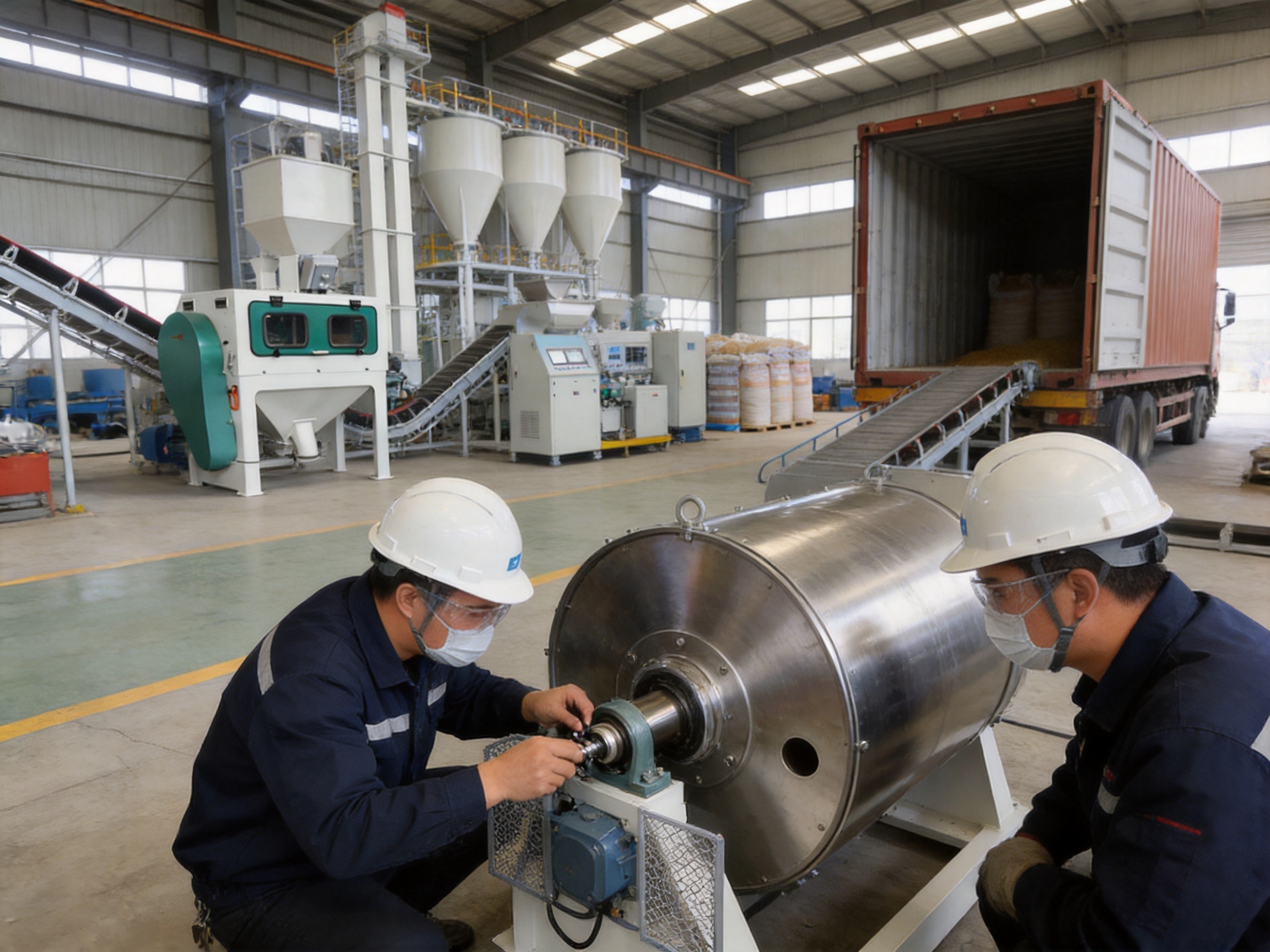
The installation location should provide a stable foundation, sufficient maintenance space, suitable electrical service, and an efficient connection to the material-handling line. The machine should be positioned so that operators can safely access the feed inlet, discharge outlet, inspection covers, motor, bearings, and control components.
Before commissioning, verify that the equipment is level and securely anchored. Check that the drum can rotate freely and that no tools, packaging materials, or foreign objects remain inside the machine. Confirm the direction of rotation before introducing grain.
The first loaded test should use a low and controlled feed rate. Operators can gradually increase the feed while observing motor load, vibration, noise, product flow, and product size. The rotation speed and feed rate should then be adjusted to obtain the required grade.
Commissioning records should include the material condition, operating speed, feed rate, output, cutting waste, product observations, and any corrective adjustments. These records become a useful reference for future production and operator training.
12. Operation Guidelines
Operators should inspect the machine before each shift. The inspection should include the cutting drum, guards, fasteners, bearings, electrical connections, feed inlet, discharge outlet, and surrounding area. Any unusual wear, loose component, oil leakage, or abnormal sound should be addressed before full-load operation.
Material should be introduced gradually rather than as a sudden surge. A stable feed helps maintain cutting quality and prevents overload. If the motor current rises abnormally or the machine vibrates, the feed should be reduced and the cause investigated.
Operators should avoid introducing stones, metal, tools, wet clumps, or other foreign materials. Upstream magnets, stone separators, and cleaning equipment are recommended where the raw-material supply may contain contaminants.
When changing from one product grade to another, the machine should be cleaned and the operating speed adjusted according to the new specification. Product samples should be checked after each changeover until the desired result is confirmed.
13. Maintenance Requirements
Preventive maintenance helps preserve cutting accuracy, reduce unplanned downtime, and extend the life of the equipment. Maintenance frequency depends on operating hours, material abrasiveness, moisture, dust levels, and production intensity.
13.1 Daily Maintenance
Daily tasks may include cleaning the feed and discharge areas, checking for material accumulation, observing bearing temperature, inspecting guards, and listening for abnormal noise. Operators should also check whether the product contains excessive fines or oversized pieces.
13.2 Periodic Inspection
Periodic inspection should include the drum surface, working holes, shaft, bearings, drive components, fasteners, and electrical controls. Wear around the working holes or cutting surfaces can gradually change the product distribution. Early detection allows maintenance to be scheduled before product quality is seriously affected.
13.3 Lubrication
Bearings and other lubrication points should be serviced according to the manufacturer’s maintenance instructions and the selected lubricant specification. Over-lubrication can be as harmful as insufficient lubrication because it may cause heat buildup or attract dust. Lubrication records should be maintained for production equipment operating continuously.
13.4 Cleaning
Food-processing equipment should be cleaned at suitable intervals to prevent accumulation, cross-contamination, and pest risk. Cleaning methods must be compatible with the machine’s electrical and bearing arrangements. Water should not be directed at electrical cabinets or components that are not designed for washdown service.
13.5 Wear Component Replacement
When the cutting drum or related working parts show excessive wear, replacement or refurbishment may be necessary. Using approved replacement parts helps maintain the original geometry and performance. The machine should be isolated from power before any component is removed.
14. Application Selection and Line Integration
Before purchasing a drum groats cutter, the processor should identify the material, moisture range, input kernel size, target product grade, required capacity, working hours, and available plant space. These factors determine whether a single YQL50 unit is appropriate or whether a larger or multiple-machine arrangement is required.
The upstream process may include raw-grain receiving, screening, aspiration, magnetic separation, cleaning, dehulling, and conditioning. The downstream process may include grading, aspiration, weighing, blending, packaging, cooking, flaking, or storage. The cutter should be selected so that its capacity matches the surrounding machines.
Automation can be added through level sensors, controlled feeders, variable-speed drives, motor protection, alarms, and centralized monitoring. In a fully integrated plant, production data can be used to track throughput, downtime, motor load, product grade, and maintenance status.
Jiangsu Zhengding’s experience with automated loading and unloading equipment is relevant to this type of integration. The company’s broader product range includes systems for moving bulk materials in trucks, containers, and industrial facilities. This knowledge can help customers connect processing equipment with receiving, dispatch, and internal logistics systems.
15. Economic and Operational Benefits
The economic value of the drum groats cutter comes from several factors rather than capacity alone. Low cutting waste improves material yield. Low energy consumption can reduce electricity costs. Adjustable speed allows one machine to produce several grades. Durable stainless-steel construction can reduce replacement frequency. Stable product quality can reduce reprocessing and customer complaints.
Maintenance accessibility also affects the total cost of ownership. A machine that is easy to inspect and clean can reduce service time. Clear access to wearing parts helps maintenance personnel identify issues before a failure stops the line.
For a small or medium producer, the compact YQL50 configuration may offer a practical entry point into steel-cut oat production. It can support specialty cereal products without requiring a large industrial milling system. For a larger producer, the same processing principle can be incorporated into a multi-machine or automated line after capacity and material testing.
Energy and waste figures should always be confirmed through a site-specific test because actual performance depends on raw material and operating conditions. Nevertheless, the design objective of controlled cutting provides a sound basis for reducing unnecessary overgrinding and improving product yield.
16. Why the Drum Groats Cutter Is Suitable for Modern Processing
Modern food and grain processors require equipment that combines product quality, energy efficiency, hygiene, safety, flexibility, and automation. The drum groats cutter addresses these requirements through its stainless-steel drum, adjustable rotation speed, controlled cutting action, low stated waste rate, and compatibility with several grains.
The equipment also supports a trend toward product specialization. Consumers increasingly seek steel-cut oats, traditional grain textures, minimally processed ingredients, and clearly defined cereal products. A machine that can produce consistent groats helps manufacturers respond to these market requirements.
At the industrial level, the cutter can support improved material utilization and more predictable downstream operations. Uniform pieces are easier to screen, blend, package, and process. Lower fines can contribute to a cleaner working environment and reduce dust-related product loss, although complete dust-control measures remain necessary in grain facilities.
The machine’s value is greatest when it is treated as part of a process system. Proper cleaning, dehulling, feeding, cutting, screening, weighing, and packaging must work together. A manufacturer with experience in both individual machines and complete automated systems can help reduce integration problems.
17. Frequently Asked Questions
Q1. What does a drum groats cutter produce?
A drum groats cutter divides dehulled kernels into smaller, relatively uniform pieces. In oat processing, it commonly cuts kernels into approximately three or four segments to produce steel-cut oats. Depending on the raw material and settings, the machine can produce fine, medium, or coarse groats.
Q2. Which materials can the machine process?
The primary material is dehulled oat kernels. The equipment can also be used for barley, rye, wheat, and rice when the material is properly cleaned and suitable for the machine. A production test is recommended for new materials because hardness, moisture, kernel shape, and target size affect performance.
Q3. What is the output of the YQL50 model?
The supplied technical specification lists an output of 0.8 to 1.0 tonnes per hour based on oats. Actual output depends on feed stability, kernel condition, target product grade, moisture, and operating speed.
Q4. How much cutting waste should be expected?
The listed cut-off waste for the YQL50 model is no more than one percent. The actual result should be confirmed through sampling because raw-material condition, machine adjustment, and downstream screening influence the percentage of waste.
Q5. Can the rotation speed be adjusted?
Yes. The rotation speed is adjustable, allowing operators to adapt the cutting process to kernels of different lengths and to different product grades. Speed should be adjusted gradually while monitoring output, product size, motor load, and fines.
Q6. Why choose a drum groats cutter instead of a hammer mill?
A drum groats cutter is preferable when the desired product is a controlled coarse or medium groat rather than a fine meal. Its cutting and shearing action can reduce unnecessary overgrinding and help produce a more uniform particle distribution. A hammer mill remains useful for applications requiring fine grinding, so the two machines may also be used together in a complete plant.
Q7. Is stainless steel important for oat processing?
Stainless steel supports corrosion resistance, durability, cleanability, and hygienic operation. It is particularly useful for food-processing equipment that must be cleaned regularly and protected from material contamination.
Q8. How should the machine be maintained?
Maintenance should include routine cleaning, inspection of the drum and working openings, bearing checks, lubrication according to the service schedule, drive inspection, fastener verification, and monitoring of product quality. Any abnormal vibration, noise, temperature, or waste level should be investigated promptly.
Q9. Can the equipment be integrated into an automated production line?
Yes. The cutter can be connected to feeders, conveyors, elevators, screens, weighing systems, packaging equipment, and centralized controls. The required arrangement depends on the production capacity, building layout, material flow, and automation level.
Q10. What information should be supplied when requesting a quotation?
A customer should provide the material type, moisture range, input capacity, desired output size, operating hours, available power supply, installation space, feeding and discharge direction, and required automation level. A representative sample may also help the manufacturer recommend suitable settings and confirm expected performance.
18. Conclusion
The drum groats cutter is a purpose-built solution for producing uniform steel-cut oats and controlled grain groats. Its stainless-steel cutting drum, increased number of working holes, adjustable rotation speed, low energy requirement, and stated cutting waste of no more than one percent make it suitable for modern oat and cereal-processing operations.
Compared with uncontrolled impact-based size reduction, the machine provides a more deliberate cutting action and is better suited to products that must retain a recognizable groat structure. It can process oats, barley, rye, wheat, and rice, while supporting fine, medium, and coarse product grades.
Jiangsu Zhengding Intelligent Equipment Co., Ltd. adds value through its research and development capabilities, manufacturing experience, international project background, and expertise in automated material-handling systems. Its wider work with truck dumpers, side-turn dumpers, container equipment, loading systems, and industrial logistics provides a foundation for designing complete and reliable processing solutions.
For processors seeking improved oat-product consistency, lower cutting waste, flexible grade production, and practical line integration, the drum groats cutter offers an efficient and adaptable option. Final selection should be based on material testing, capacity confirmation, product-size requirements, plant layout, and the desired level of automation.
References
1. Manufacturer-supplied product specification for the YQL50 Drum Groats Cutter.
2. Manufacturer-supplied technical information on oat, barley, rye, wheat, and rice processing applications.
3. General principles of cereal cleaning, dehulling, cutting, grading, and steel-cut oat production.
4. Industrial guidance on grain-processing equipment maintenance, food-hygiene practices, and machinery safety.
5. General engineering principles for mechanical shearing, compression, particle-size control, and material-handling integration.


