

 English
 русский
 Español
 Français
 Português
 عربى





+86-13588556918
Content
- 1 1. The Role of Truck Dumpers in Modern Logistics
- 2 2. What Is a Shallow Foundation Truck Dumper?
- 3 3. Main Advantages Over Conventional Deep-Pit Dumpers
- 4 4. Hydraulic Synchronous Stability System
- 5 5. Automatic Wheel-Fixing and Unmanned Operation
- 6 6. Material Compatibility
- 7 7. Wear-Resistant and Application-Specific Options
- 8 8. Product Models and Technical Parameters
- 9 9. Engineering and Manufacturing Strengths
- 10 10. Installation and Site Planning
- 11 11. Safety Design and Operating Discipline
- 12 12. Maintenance and Service Life
- 13 13. Integration with Complete Loading and Unloading Systems
- 14 14. Economic Evaluation
- 15 15. Application Selection Guide
- 16 16. Frequently Asked Questions
- 16.1 Q1. What is the main difference between a shallow foundation dumper and a conventional truck dumper?
- 16.2 Q2. Can the dumper handle heavy trucks?
- 16.3 Q3. What materials can be unloaded?
- 16.4 Q4. Can wet or sticky materials be handled?
- 16.5 Q5. What is the maximum particle size?
- 16.6 Q6. Is the equipment suitable for food-grade materials?
- 16.7 Q7. How does shallow foundation design affect unloading efficiency?
- 16.8 Q8. Can one driver operate the dumper without a professional operator?
- 16.9 Q9. What maintenance is required for abrasive materials?
- 16.10 Q10. How long does installation take?
- 16.11 Q11. Can the dumper be connected to a weighing system?
- 16.12 Q12. What makes this equipment competitive?
- 17 17. Conclusion
- 18 References
- 19 Product: Shallow Foundation Truck Dumpers
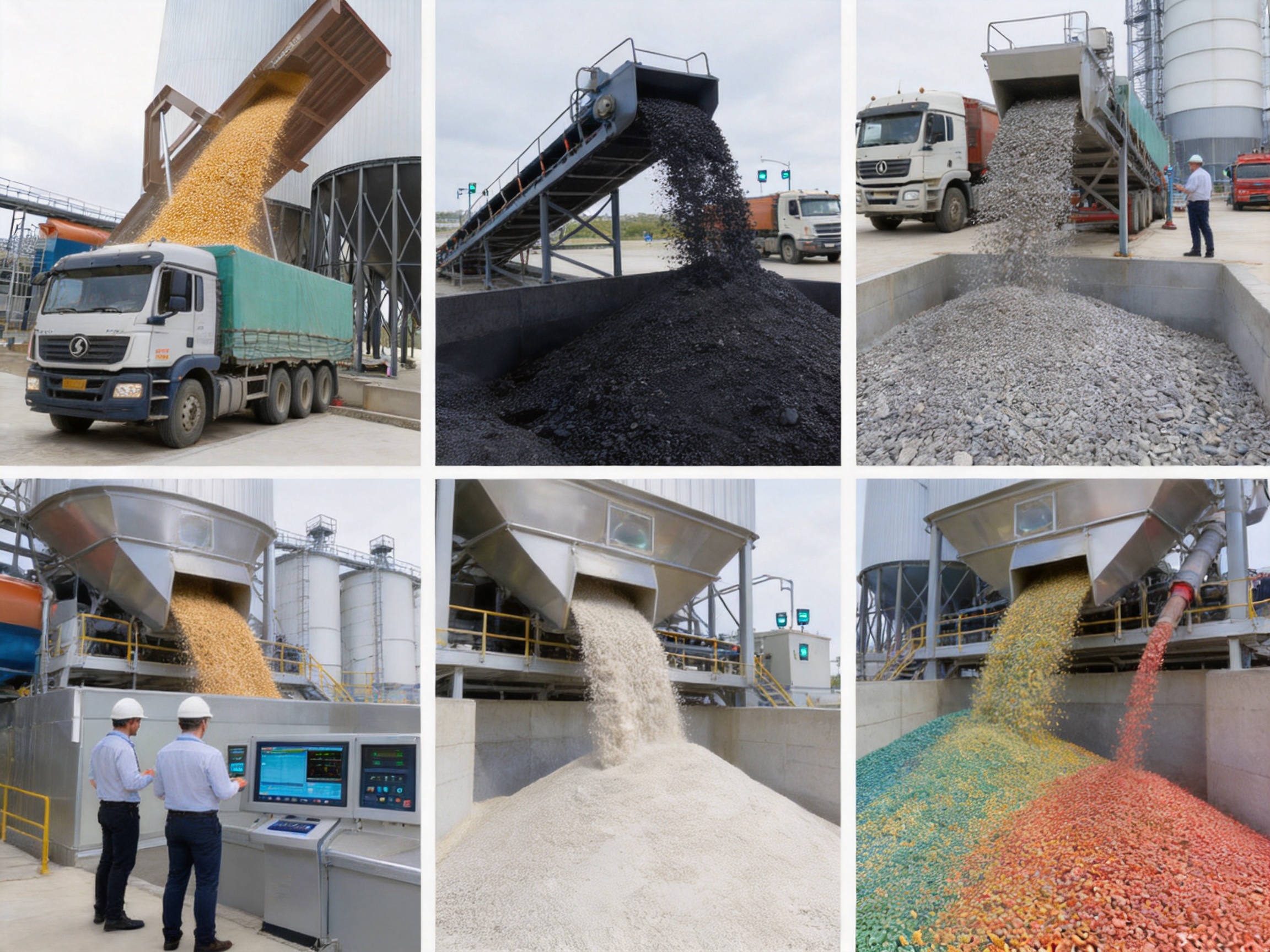
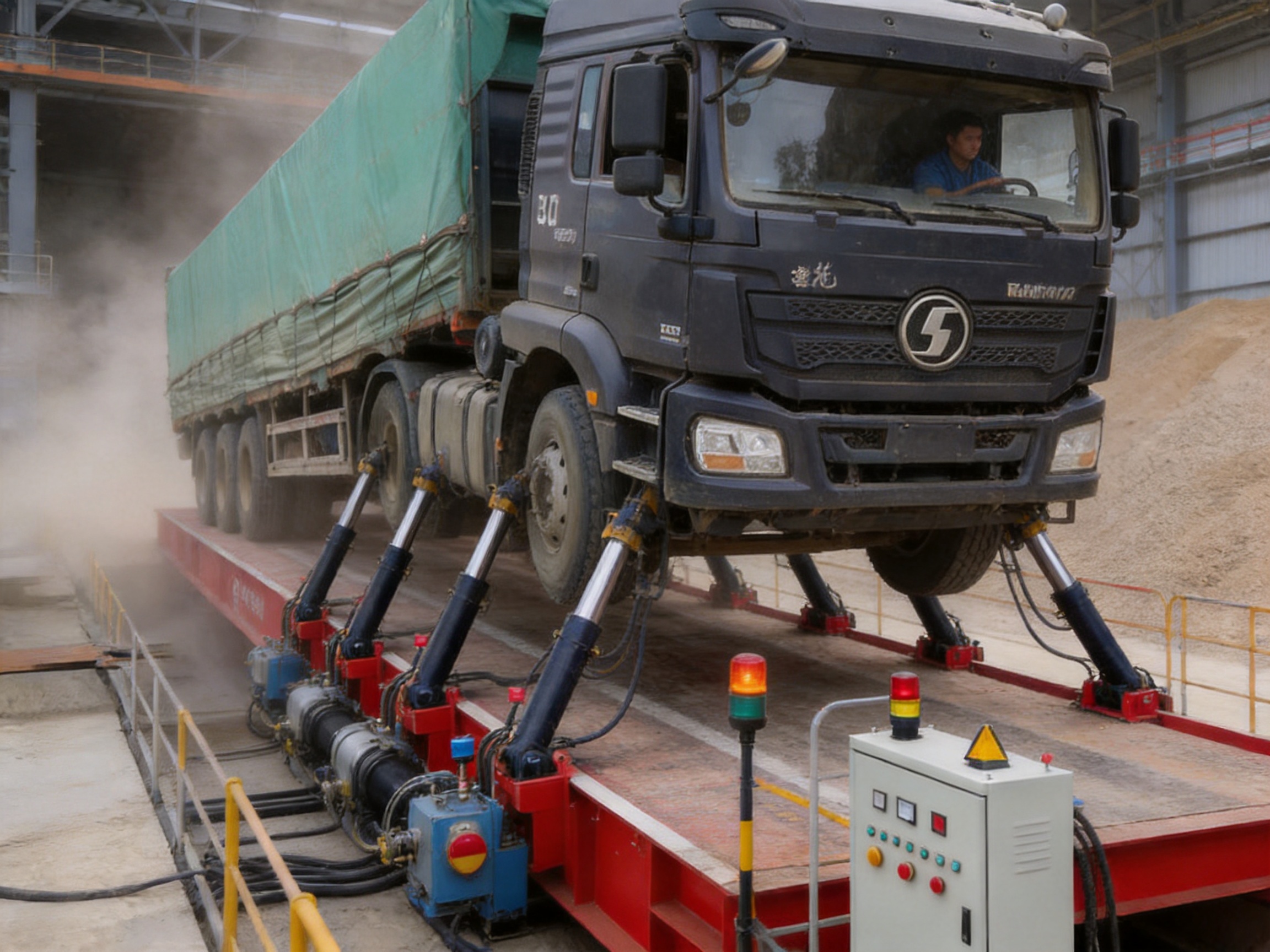
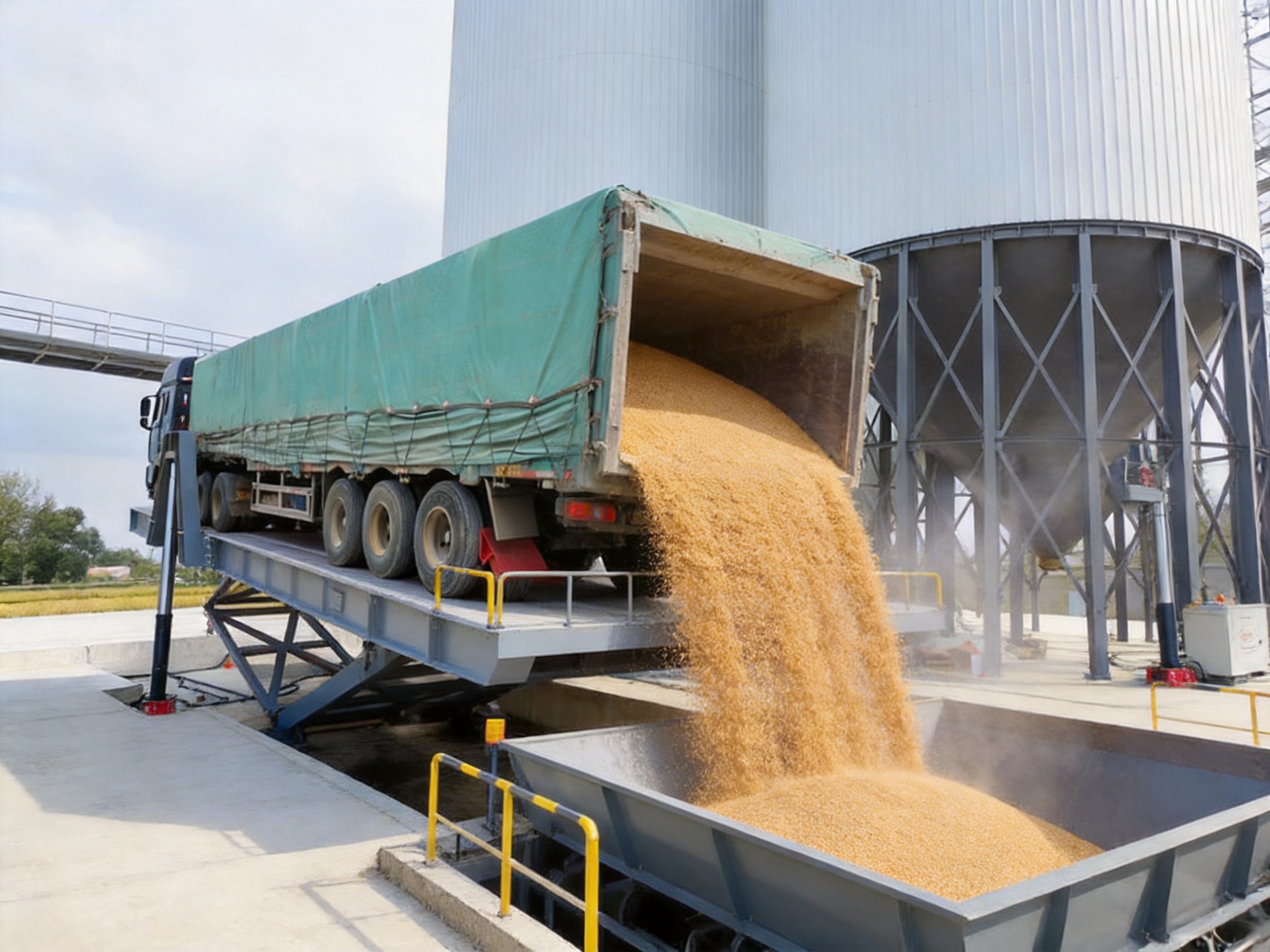
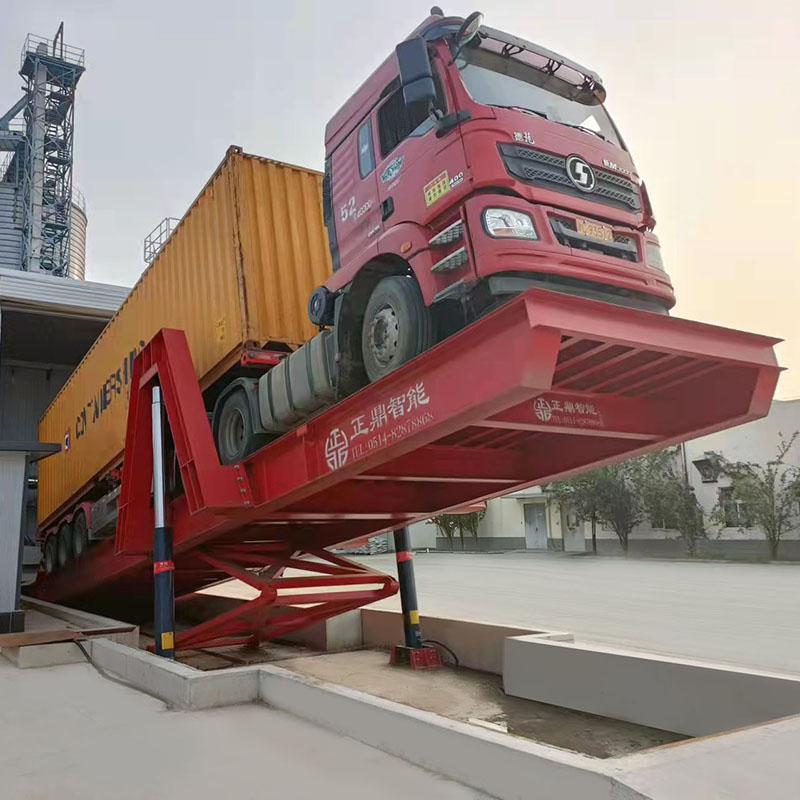
Shallow Foundation Truck Dumpers
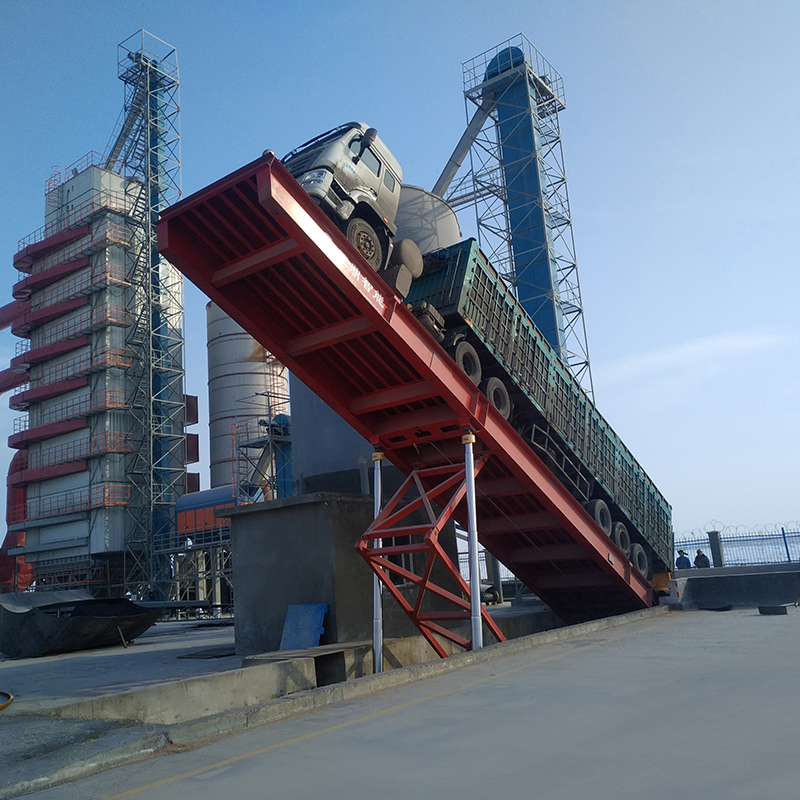
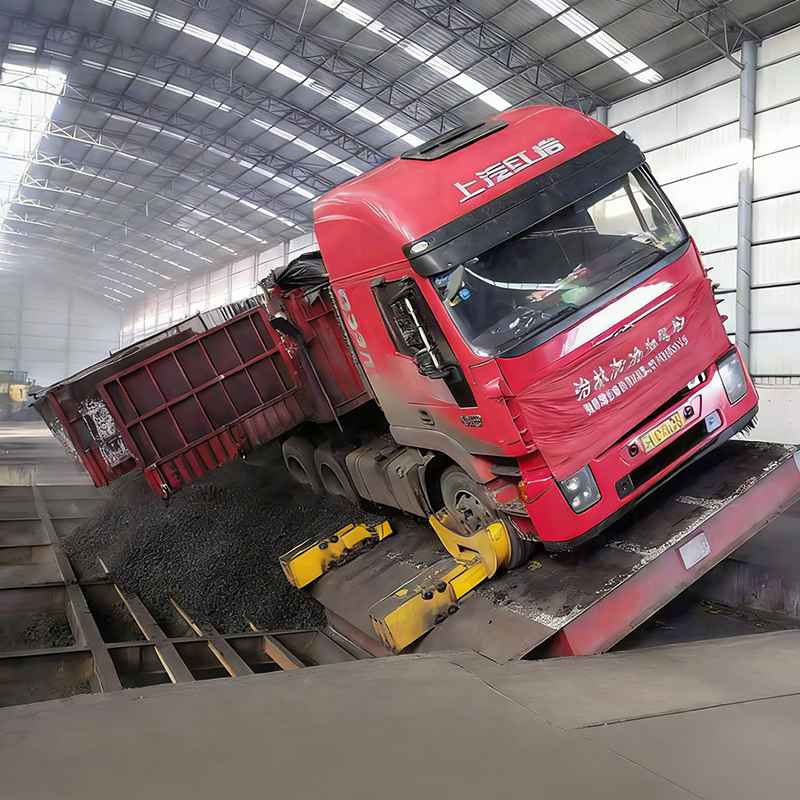
Shallow foundation truck dumpers are engineered unloading systems designed to receive loaded trucks, raise the vehicle platform hydraulically, and discharge bulk materials into a receiving hopper, conveyor, storage system, or processing line. Unlike conventional truck dumpers that require a deep excavation, a shallow foundation model uses a low-profile pit whose depth is generally limited to the thickness of the unloading platform or a shallow structural foundation. This design can significantly reduce excavation, concrete work, construction time, drainage requirements, and total project cost.
For grain terminals, feed mills, cement plants, coal handling facilities, chemical factories, ports, recycling centers, and aggregate yards, the unloading station is a critical connection between road transportation and downstream processing. A truck dumper must therefore do more than lift a vehicle. It must provide stable lifting, controlled discharge, high throughput, safe truck positioning, reliable operation in dusty environments, and convenient access for inspection and maintenance.
The shallow foundation truck dumper described in this article combines a low-cost structural concept with a high-precision hydraulic synchronization system, automatic wheel restraint, imported hydraulic components, and unmanned operating capability. These features give it a strong competitive position where conventional deep-pit dumpers are too expensive, difficult to install, or unsuitable for sites with groundwater, rock, limited space, or strict construction restrictions.
1. The Role of Truck Dumpers in Modern Logistics
Bulk materials are often transported by dump trucks, semi-trailers, rigid trucks, and specialized road vehicles. Manually unloading these vehicles requires significant labor and creates inconsistent discharge times. It can also expose workers to dust, moving vehicles, unstable loads, and difficult working conditions. A truck dumper provides a controlled unloading interface that converts vehicle tipping into a repeatable industrial process.
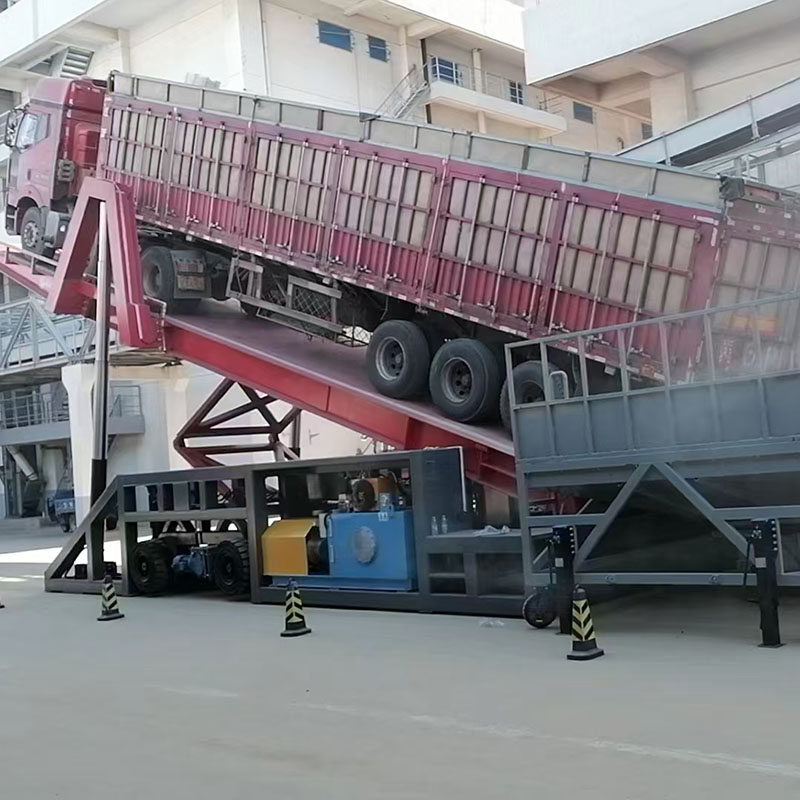
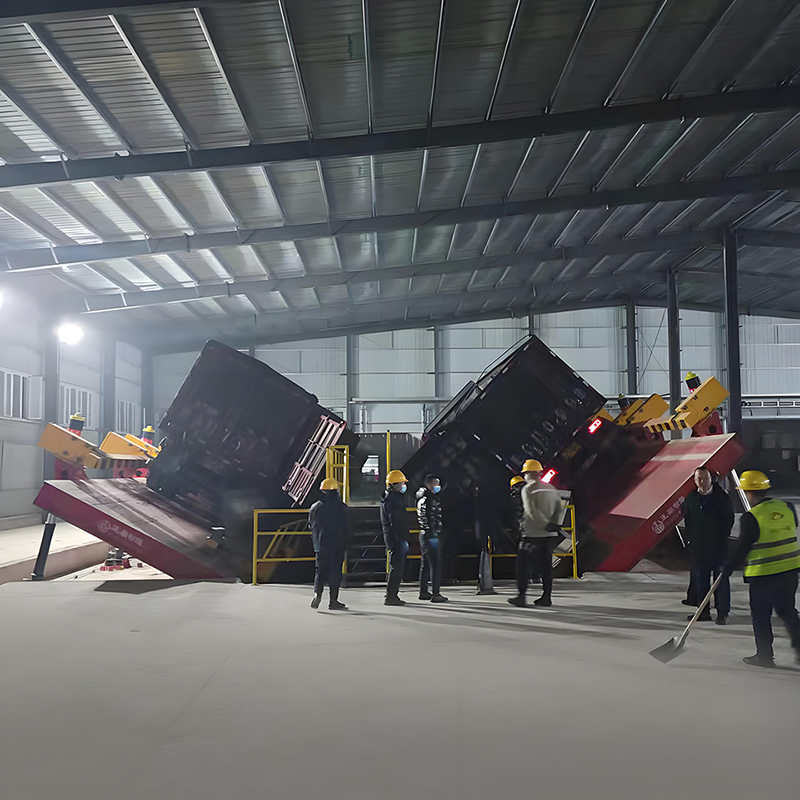
During a typical unloading cycle, the truck drives onto the platform and stops at a defined position. A retaining or wheel-fixing system secures the vehicle. Hydraulic cylinders then raise the platform to a predetermined angle, allowing the cargo to flow from the truck body into a receiving structure. After discharge, the platform returns to its horizontal position, the retaining system releases the vehicle, and the truck exits the station.
The quality of this process directly influences plant productivity. If lifting is uneven, the truck may experience excessive stress. If the retaining device is difficult to operate, cycle times increase. If the receiving pit is poorly designed, material accumulation, dust, bridging, and cleanup problems can reduce efficiency. A modern dumper therefore needs to integrate mechanical design, hydraulic engineering, control technology, civil construction, safety protection, and material-flow planning.
Shallow foundation truck dumpers are particularly valuable when the unloading function is required but a conventional deep pit is impractical. They are suitable for new facilities and for modernization projects in which an existing yard, warehouse, or production building cannot accommodate extensive excavation.
2. What Is a Shallow Foundation Truck Dumper?
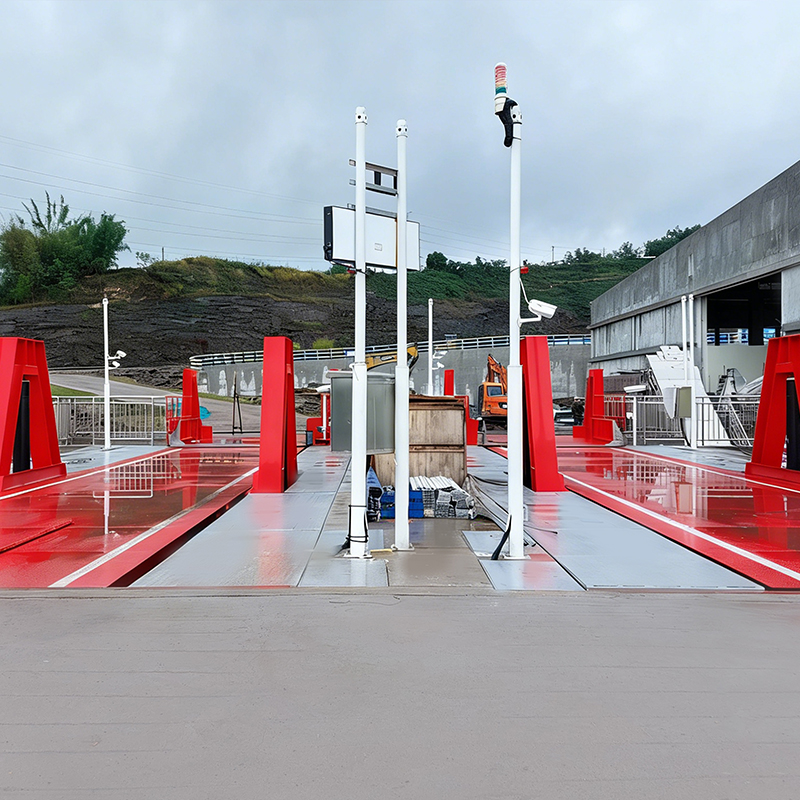
A shallow foundation truck dumper is a hydraulic truck unloading platform installed in a low-depth foundation. In many applications, the pit depth is approximately 0.5 to 1.2 meters, although the final structural arrangement depends on truck dimensions, receiving equipment, site conditions, discharge direction, and required lifting geometry.
The low-profile design means that the foundation does not need to extend deeply into the ground. This reduces the amount of soil removal and minimizes the volume of concrete, reinforcement, waterproofing, drainage, and retaining-wall construction. In locations with a high groundwater level, shallow bedrock, buried utilities, weak soil, or limited construction access, the reduction in excavation can simplify the entire project.
A conventional dumper may require a deep structural pit with extensive retaining walls, a sump pump, waterproofing layers, access stairs, and additional safety measures around the excavation. A shallow model reduces these requirements while preserving the essential unloading function. As a result, the equipment can often be installed more quickly and with less disruption to an operating facility.
The shallow foundation concept does not mean that the equipment is lightweight or limited to small trucks. Depending on the selected model and configuration, the system can be designed for maximum lifting capacities of approximately 80 to 150 tons. Platform lengths may be selected from approximately 14 to 20 meters, with widths around 3 meters for many standard configurations. The lifting angle can be configured for approximately 45 or 55 degrees, subject to the specific model and material-handling requirements.
3. Main Advantages Over Conventional Deep-Pit Dumpers
3.1 Reduced Civil Engineering Cost
The most visible advantage is the reduction in civil construction. The shallow foundation design can reduce civil engineering costs by more than 60 percent compared with conventional deep-pit truck dumpers, while the supplied product information indicates that the foundation concept may reduce civil construction costs by approximately 70 percent in suitable applications. Actual savings depend on soil conditions, local construction prices, groundwater treatment, foundation reinforcement, drainage, and the receiving system.
Cost savings come from several sources. First, less soil must be excavated and transported away. Second, the volume of reinforced concrete is reduced. Third, deep retaining walls and complex waterproofing are minimized. Fourth, the need for permanent pumping and deep access structures may be reduced. Finally, a shorter construction period can lower labor, equipment rental, project management, and site-disruption costs.
For companies comparing equipment quotations, the purchase price of the dumper is only one part of the investment. A deep-pit dumper may appear competitive when evaluated as a standalone machine, but the complete project may require substantial additional expenditure for excavation, shoring, groundwater control, concrete structures, drainage, and restoration of surrounding roads. A shallow foundation truck dumper should therefore be evaluated on a total installed cost basis.
3.2 Faster Installation and Easier Site Adaptation
Shallow foundation systems are generally easier to integrate into existing yards and buildings. Their low profile reduces the amount of work required to alter truck approaches and may eliminate the need for long ramps. This is especially useful when the available site is narrow, the traffic route cannot be relocated, or the customer wants to retain existing roads and storage areas.
A shallow structure can also be more practical in areas with complicated underground conditions. Buried pipelines, electrical cables, drainage channels, foundations from old buildings, and compacted rock layers can make deep excavation difficult. A low-depth installation allows the engineering team to work around these obstacles more easily, subject to a professional site survey and structural assessment.
3.3 Lower Groundwater and Waterproofing Risk
Deep pits are more exposed to groundwater intrusion. Even a well-designed deep structure may require permanent drainage, sump pumps, waterproof membranes, and regular inspection of underground walls. If drainage systems fail, water can damage hydraulic components, corrode structural elements, contaminate materials, and interrupt unloading operations.
Because a shallow foundation dumper requires less excavation depth, the risk and cost associated with groundwater are often reduced. This does not eliminate the need for suitable drainage and weather protection, but it can make the foundation easier to seal, inspect, and maintain. The advantage is especially important in coastal areas, flood-prone regions, and locations with seasonally rising groundwater.
3.4 Convenient Maintenance
Maintenance personnel can access many components from ground level or from a shallow service area. This improves visibility during inspections and reduces the need to enter deep pits. Hydraulic cylinders, hose connections, wheel-fixing components, platform structures, safety devices, and receiving interfaces can be inspected more efficiently when they are not surrounded by a deep excavation.
Maintenance accessibility affects both safety and operating cost. A component that is easy to reach is more likely to be inspected on schedule. Small leaks, loose fasteners, worn liners, damaged seals, and abnormal cylinder movement can be identified before they become serious failures. The shallow design therefore supports preventive maintenance rather than emergency repair.
3.5 Safer Truck Positioning and Operation
The equipment uses a fully automatic retaining wheel-fixing device to secure the vehicle during lifting. This reduces the need for an operator to stand in a dusty environment while holding a remote control and manually managing the wheel restraint. Automatic positioning and retention help create a consistent unloading sequence and reduce exposure to moving vehicles and elevated platforms.
Unmanned control can also be implemented so that a professional dumper operator is not required for every cycle. After the truck is correctly positioned and the operating conditions are confirmed, the driver can complete the unloading process independently according to the configured control logic. The exact level of automation depends on the site layout, interlocks, control system, traffic management, and customer requirements.
4. Hydraulic Synchronous Stability System
The hydraulic system is one of the most important technical features of a truck dumper. A platform carrying a heavy truck must rise smoothly and remain stable throughout the lifting cycle. Uneven movement can create torsional stress in the platform, transfer excessive loads to the cylinders, damage hydraulic components, or make the driver feel that the vehicle is unstable.
The shallow foundation dumper uses a high-precision oil-cylinder synchronous stability system developed by the manufacturer. The system is designed to coordinate the movement of multiple hydraulic cylinders so that the platform maintains balanced motion during lifting and lowering. Synchronization can be achieved through hydraulic circuit design, flow control, mechanical coordination, position monitoring, or a combination of these methods.
Stable synchronization provides several operational benefits. It reduces vibration during movement, lowers impact loading on the cylinders, improves the service life of seals and pins, and makes the lifting cycle more predictable. Smooth operation also helps protect the truck body and chassis from unnecessary shock loads.
The system is particularly important when the load is unevenly distributed. Bulk material may shift inside the truck body as the angle changes. A truck may also arrive with a partial load or with material concentrated toward one side. The hydraulic system must provide sufficient stability for these normal operating conditions while safety interlocks prevent lifting when the vehicle is incorrectly positioned or the operating area is not clear.
Hydraulic Components and Reliability
The oil cylinders and pumps use imported-brand components selected for safety, reliability, and long service life. High-quality hydraulic components can provide more consistent pressure control, better sealing performance, improved resistance to contamination, and greater availability of replacement parts. Their performance is also influenced by correct installation, filtration, oil cleanliness, temperature control, and routine inspection.
Hydraulic reliability is not determined by the pump or cylinder alone. The complete system includes reservoirs, valves, hoses, pressure protection devices, control elements, seals, pipe fittings, filters, and electrical monitoring. The manufacturer’s engineering approach combines these elements with a lifting platform designed for the intended truck weight and operating cycle.
Regular maintenance should include checking hydraulic oil level and condition, inspecting hoses for abrasion or leakage, examining cylinder rods for scoring or corrosion, verifying pressure settings, cleaning filters, and checking mounting pins and bushings. Maintenance intervals should be adjusted according to operating hours, dust levels, material abrasiveness, ambient temperature, and the number of daily cycles.
5. Automatic Wheel-Fixing and Unmanned Operation
Truck positioning is a fundamental safety requirement. Before the platform is raised, the truck must be correctly aligned, stopped within the designated area, and secured against unintended movement. The automatic wheel-fixing device supports this process by reducing dependence on manual intervention.
Compared with a manual retaining method, an automatic system can improve consistency. It helps ensure that the wheel restraint is engaged before lifting and released only after the platform has returned to a safe position. Interlocking the retaining system with the hydraulic controls can prevent operation when the truck is not secured.
In a dusty grain, cement, coal, mineral, or fertilizer environment, minimizing human exposure is a practical advantage. Dust can reduce visibility, affect remote-control equipment, and create health concerns. Automatic control allows the driver to operate from a defined position while the system handles the standard retaining and lifting sequence.
Unmanned operation does not mean that safety supervision is unnecessary. The station should still include emergency-stop devices, audible or visual alarms, access controls, traffic signals, platform position sensors, overload protection, and clearly marked exclusion zones. Cameras, intercoms, vehicle detection sensors, and central control interfaces can be added when required by the site.
6. Material Compatibility
Shallow foundation truck dumpers are suitable for many bulk solids, granular materials, and free-flowing powders. Typical materials include grains, oilseeds, coal, sand, gravel, crushed stone, cement, fly ash, lime, fertilizers, plastic pellets, petroleum coke, limestone, and selected construction aggregates.
The performance of any dumper depends on the material’s bulk density, moisture content, particle size, cohesion, temperature, abrasiveness, corrosiveness, and flowability. The platform angle, receiving hopper geometry, liner material, vibration assistance, and discharge speed should be selected according to these characteristics.
| Material Category | Typical Bulk Density | Recommended Tilt Angle | Typical Discharge Efficiency | Important Design Considerations |
|---|---|---|---|---|
| Corn, soybeans, and wheat | 0.72–0.78 t/m³ | 40–45 degrees | Approximately 99.5% | Food-grade surfaces, dust control, and easy cleaning |
| Sand, gravel, and crushed stone | 1.4–1.8 t/m³ | 50–55 degrees | Approximately 98.2% | Wear-resistant liners and reinforced structural areas |
| Cement, fly ash, and lime | 0.9–1.2 t/m³ | 45–50 degrees | Approximately 97.8% | Sealed transfer points, dust extraction, and abrasion protection |
| Granular fertilizers | 0.85–1.1 t/m³ | 42–48 degrees | Approximately 99.1% | Corrosion-resistant surfaces and moisture protection |
| Plastic pellets | 0.55–0.65 t/m³ | 38–42 degrees | Approximately 99.7% | Cleanable surfaces and protection against contamination |
| Coal and petroleum coke | 0.75–0.95 t/m³ | 48–53 degrees | Approximately 98.5% | Wear liners, dust control, and fire-prevention planning |
The values in the table are reference ranges rather than universal guarantees. Actual performance depends on truck body geometry, load condition, material moisture, receiving-hopper design, operating speed, and the completeness of the unloading system. A site-specific test or engineering review is recommended for unusual materials.
Grains and Oilseeds
Grains and oilseeds are among the most common applications for truck dumpers. Corn, wheat, rice, soybeans, rapeseed, and similar materials generally flow well when moisture is controlled. A smooth platform, suitable receiving hopper, and properly designed transfer opening can achieve high discharge efficiency while minimizing residual material.
Food and feed facilities may require stainless steel surfaces, food-compatible seals, easy-clean geometry, and measures to prevent cross-contamination. The system can be integrated with dust collection and screening equipment. Sanitation procedures should be established according to the plant’s quality-management requirements, especially when multiple products are unloaded through the same station.
Aggregates, Minerals, and Abrasive Materials
Sand, gravel, crushed stone, limestone, slag, and petroleum coke can place high wear loads on the platform and receiving structure. For these materials, the equipment can be fitted with abrasion-resistant liners such as AR400 steel. Depending on the impact conditions and material properties, liner thickness and fastening methods should be selected to balance service life, platform weight, and ease of replacement.
Wear-resistant design should cover more than the main platform. The receiving hopper, transition sections, side walls, impact zones, and conveyor inlet may also require protection. A properly planned liner system can reduce maintenance frequency and protect the main structural frame from direct abrasion.
Cement, Fly Ash, and Fine Powders
Fine powders can flow efficiently but may generate significant dust. The dumper should be coordinated with enclosed receiving points, dust extraction, flexible seals, and appropriate ventilation. Cement and fly ash can also become cohesive when exposed to moisture, so drainage and weather protection are important.
For powder applications, the receiving equipment must be designed to prevent excessive air displacement and uncontrolled dust release as the truck body empties. A truck dumper is only one component of the environmental-control system, and its performance should be evaluated together with hoppers, filters, conveyors, and transfer chutes.
Fertilizers and Corrosive Materials
Granular fertilizers can be handled efficiently when the platform angle and receiving arrangement are matched to the product. Certain fertilizers can absorb moisture, become sticky, or promote corrosion. Protective coatings, stainless steel components, sealed electrical equipment, and proper housekeeping may be required.
Where chemicals or corrosive powders are unloaded, material compatibility should be assessed for platform surfaces, liners, hydraulic hoses, seals, fasteners, and drainage components. Stainless steel platforms are available for food-grade or corrosive applications, with grades such as 304 or 316 selected according to the chemical environment.
Wet and Sticky Materials
Wet clay, concentrate, damp biomass, and other cohesive materials may not discharge as easily as dry granular products. In such applications, the system can be configured with a UHMW-PE liner to reduce friction, a vibration device to encourage flow, or a heated platform where technically justified. Reduced lifting speed and a carefully selected tilt angle can also improve discharge.
Materials with approximately 12 to 18 percent moisture may require special attention. The operating result depends strongly on cohesion, particle size, temperature, and the shape of the truck body. A preliminary material-flow assessment is recommended rather than relying only on nominal moisture content.
7. Wear-Resistant and Application-Specific Options
A major strength of a professionally engineered dumper is the ability to adapt the equipment to the material rather than forcing every customer to use the same standard configuration.
AR400 steel liners are suitable for applications involving aggregates, slag, limestone, coal, and other abrasive products. Their high hardness can extend platform service life and reduce the frequency of structural repairs. The liners should be installed in locations exposed to direct impact and sliding abrasion, with replaceable sections used where practical.
UHMW-PE liners provide a low-friction surface for sticky or cohesive materials. They can improve sliding behavior and reduce material buildup. Because polymer liners have different temperature, impact, and chemical limitations from steel, the final selection should consider the material temperature, particle size, impact energy, and cleaning chemicals.
Stainless steel platforms and components can support food-grade, hygienic, or corrosive-material applications. Stainless surfaces are easier to clean and can reduce the risk of rust contamination. Surface finish, weld quality, seal design, drainage, and access for sanitation are important in addition to the basic metal grade.
Other possible options include dust covers, vibration systems, heated surfaces, reinforced platform plates, larger receiving hoppers, customized side guards, traffic lights, camera systems, weighing integration, barcode or vehicle identification, and interfaces with plant-wide supervisory control systems.
8. Product Models and Technical Parameters
The available models provide different platform length options and lifting capacities. The correct model should be selected according to the maximum gross vehicle weight, truck body size, material density, daily throughput, required lifting angle, and site layout.
| Model | Available Platform Size Options, L × W, meters | Maximum Lifting Weight | Maximum Lifting Angle |
|---|---|---|---|
| TQXHC 50 | 14 × 3, 16 × 3, or 17 × 3 | 80 tons | 45 or 55 degrees |
| TQXHC 80 | 16 × 3, 17 × 3, or 18 × 3 | 80 tons | 45 or 55 degrees |
| TQXHC 100 | 17 × 3, 18 × 3, or 20 × 3 | 100 tons | 45 or 55 degrees |
| TQXHC 150 | 17 × 3, 18 × 3, or 20 × 3 | 150 tons | 45 or 55 degrees |
The model names and capacities should be confirmed during technical discussions because the final design may include different structural, hydraulic, and control configurations. Maximum lifting weight refers to the equipment’s rated lifting capability and should not be confused with the payload alone. Gross vehicle weight, axle loading, truck positioning, load distribution, and dynamic operating conditions must all be considered.
9. Engineering and Manufacturing Strengths
Jiangsu Zhengding Intelligent Equipment Co., Ltd. is a national high-tech enterprise focused on research, development, manufacturing, and sales of intelligent logistics equipment. Its product range includes rear dumpers, side-turn truck dumpers, automobile loading equipment, container flippers, and related automatic loading and unloading systems.
The company’s strength lies in providing complete equipment solutions rather than isolated mechanical products. A successful truck dumper project may require site planning, foundation assessment, truck-flow analysis, hydraulic selection, material-flow evaluation, control integration, safety design, installation guidance, commissioning, and after-sales support. Combining these activities through one engineering organization can reduce interface problems between civil contractors, equipment suppliers, and plant operators.
The company serves industries including steel, chemical, cement, coal, grain, oil, food, feed, ports, papermaking, and new energy. This broad industrial exposure is valuable because each sector places different requirements on equipment cleanliness, abrasion resistance, corrosion protection, dust control, throughput, and automation.
Its products have been supplied to international markets including Japan, Brazil, Egypt, Pakistan, India, the Middle East, and Southeast Asia. International project experience requires attention to different operating environments, vehicle dimensions, electrical standards, safety expectations, climate conditions, transport requirements, and installation practices.
Research and Development
Research and development is particularly important for truck dumpers because the equipment must coordinate structural strength, hydraulic motion, control logic, and material flow. A design that performs well for grain may require substantial modification for wet clay, crushed stone, fertilizer, or corrosive chemicals.
The company’s high-precision hydraulic synchronization system reflects an emphasis on controlled movement and service life. Automatic wheel fixing and unmanned operation show a parallel focus on safety and labor efficiency. These features are not independent additions; they are integrated into the operating sequence so that the platform, vehicle restraint, hydraulic system, and control system work together.
Manufacturing Quality
Reliable performance starts with the quality of fabrication. The platform frame must be accurately assembled to maintain structural alignment. Welded joints must be designed and inspected for the expected static and dynamic loads. Hydraulic cylinder mounting points must remain correctly positioned throughout the lifting cycle. Machined pins, bushings, brackets, and bearing surfaces must be manufactured with suitable tolerances.
Manufacturing control should include incoming inspection of steel, hydraulic components, electrical equipment, seals, and purchased parts. Fabricated assemblies require dimensional checks, weld inspection, surface preparation, coating control, and final verification. Hydraulic systems should be cleaned and tested to limit contamination. Control panels and safety circuits should be checked before shipment and again during commissioning.
A complete factory acceptance process may include no-load lifting tests, simulated load tests, synchronization checks, emergency-stop verification, wheel-fixing interlock tests, platform position checks, pressure checks, and inspection of abnormal vibration or noise. Documentation should record test results and identify the final settings for the delivered equipment.
Customization Capability
Truck bodies and site layouts vary considerably. A dumper designed for a short rigid truck may not be suitable for a long semi-trailer. Similarly, grain unloading requires different material-flow and hygiene provisions from coal or crushed stone. Customization may include platform length, lifting capacity, lifting angle, receiving hopper dimensions, liner materials, hydraulic configuration, control logic, and traffic arrangements.
The company can provide site-specific engineering that includes foundation assessment, material-flow analysis, liner selection, and integration with automatic loading and unloading systems. This approach helps the customer avoid the common mistake of selecting a machine based only on nominal lifting capacity without considering the complete operating environment.
10. Installation and Site Planning
Although a shallow dumper reduces civil work, professional site planning remains essential. The installation area must support the combined weight of the equipment, truck, and material. Soil bearing capacity, drainage, settlement risk, vehicle approach geometry, foundation flatness, and access for maintenance should be assessed before construction.
The truck approach should allow the driver to enter and exit without excessive reversing or sharp turns. Guide markings, traffic lights, wheel stops, barriers, and communication systems can improve positioning. The platform should be aligned with the receiving hopper so that the discharged material enters the downstream process without excessive spillage or impact.
Drainage should be provided around the platform and receiving area even when the pit is shallow. Rainwater, wash water, product leakage, and emergency cleaning water must be directed away from hydraulic equipment and electrical components. In cold regions, frost protection and anti-freezing measures may be required.
The installation sequence generally includes site preparation, foundation construction, embedded parts or anchor installation, equipment positioning, hydraulic connection, electrical connection, control-system setup, safety-device installation, and commissioning. Coordination between the equipment supplier and civil contractor is important because anchor locations, platform elevations, receiving-hopper dimensions, and access clearances must match the final design.
11. Safety Design and Operating Discipline
A truck dumper lifts a large vehicle and must be treated as heavy lifting equipment. Operators should never enter the platform or receiving area during lifting unless the system is fully isolated, locked out, and supported according to approved maintenance procedures.
Recommended safety provisions include automatic wheel restraints, emergency-stop buttons, audible alarms, warning beacons, platform position sensors, overload protection, hydraulic pressure protection, access barriers, anti-fall provisions, clear floor markings, and interlocked control logic. The exact provisions should comply with applicable local standards and the customer’s industrial safety rules.
The operating sequence should confirm that the truck is correctly positioned, the wheel-fixing device is engaged, the discharge area is clear, downstream equipment is ready, and no maintenance personnel are inside the restricted zone. Only then should the lifting cycle begin.
Drivers and maintenance personnel should receive documented training. Training should cover normal operation, emergency stopping, vehicle positioning, recognition of abnormal noise or vibration, hydraulic leak response, cleaning procedures, and lockout requirements. Safety performance depends on both equipment design and disciplined operation.
12. Maintenance and Service Life
Preventive maintenance is essential for maintaining lifting accuracy, hydraulic reliability, and structural safety. Daily checks may include visual inspection of the platform, wheel-fixing device, hydraulic hoses, cylinder rods, guards, alarms, and signs of material buildup. Operators should report unusual movement, oil leakage, vibration, noise, or incomplete platform return.
Periodic service should include checking hydraulic oil, filters, pressure settings, cylinder mounting points, pins, bushings, welds, fasteners, sensors, cables, and safety interlocks. Abrasive-material applications require more frequent liner inspection. Corrosive environments require attention to coatings, seals, drainage, and stainless or protected components.
For abrasive materials such as sand, cement, coal, and aggregates, liner inspection may be scheduled at approximately 1,000 operating hours or adjusted according to actual wear. Aggregate liner life can vary widely, with reference experience indicating approximately 5,000 to 7,000 operating hours in some applications. Grain-handling liners may last significantly longer because grains create less abrasion.
Food and feed facilities should establish cleaning and sanitation schedules. A weekly sanitation routine may be appropriate for certain operations, but the correct frequency depends on product type, contamination risk, moisture, and plant standards. Cleaning should not introduce water into hydraulic or electrical components.
Service life is influenced by correct capacity selection, structural loading, material characteristics, maintenance quality, operating frequency, and environmental conditions. A dumper used within its rated capacity and maintained according to a planned schedule can provide long-term service with predictable operating costs.
13. Integration with Complete Loading and Unloading Systems
A truck dumper rarely operates alone. It normally forms part of a complete material-handling line that may include a receiving hopper, feeder, belt conveyor, scraper conveyor, bucket elevator, screening system, magnetic separator, weighing system, dust collector, storage bin, or production line.
Integration should be considered during the initial design. The receiving hopper must accept the material at the selected tilt angle and truck body geometry. The downstream conveyor must handle the peak discharge rate. Dust collection should be synchronized with the unloading cycle. Weighing and identification systems may be connected to the plant management system.
Automatic control can create a clear sequence: vehicle identification, truck positioning, wheel restraint, permission to lift, platform raising, discharge confirmation, platform lowering, release of the vehicle, and data recording. Such integration improves traceability and helps the operator monitor throughput, cycle times, alarms, and maintenance conditions.
For facilities handling multiple materials, the control system can also support recipe management, product identification, cleaning instructions, and liner-selection records. These functions help reduce cross-contamination and ensure that the equipment is operated according to the requirements of each product.
14. Economic Evaluation
The economic value of a shallow foundation truck dumper should be evaluated through the entire project life cycle. Initial equipment cost, civil construction, installation, labor, maintenance, energy consumption, downtime, product loss, and future expansion should all be considered.
The shallow foundation can provide immediate savings through reduced construction. Automatic operation can lower labor requirements and reduce the time spent on manual wheel restraint and remote control. High discharge efficiency can reduce residual material and cleanup. Stable hydraulic operation can reduce component wear and unplanned downtime.
There may also be indirect benefits. A shorter installation period can allow a facility to begin production or seasonal receiving earlier. Reduced excavation can lower the risk of delays caused by groundwater or unexpected underground conditions. A compact layout may preserve valuable yard space for storage, traffic, or future equipment.
When comparing suppliers, buyers should request a complete technical offer rather than comparing only rated lifting capacity. The offer should identify platform dimensions, lifting angle, hydraulic components, control functions, wheel-fixing method, safety devices, liner options, foundation requirements, installation scope, commissioning procedures, and warranty conditions.
15. Application Selection Guide
A shallow foundation truck dumper is a strong choice when the customer needs to reduce civil construction, has limited excavation depth, operates above a high groundwater table, wants to modernize an existing site, or requires a compact unloading station.
A project review should begin with the following questions:
- What truck types and maximum gross weights will be handled?
- What are the vehicle dimensions, wheelbases, body shapes, and discharge directions?
- What materials will be unloaded, and what are their density, moisture, temperature, particle size, and abrasiveness?
- What throughput and daily operating hours are required?
- What lifting angle is needed for complete discharge?
- What is the available site width, length, and approach clearance?
- Are there restrictions caused by groundwater, rock, buried utilities, or existing foundations?
- Is food-grade, corrosion-resistant, or wear-resistant construction required?
- What degree of automation and plant-control integration is expected?
- How will dust, noise, rainwater, product residue, and maintenance access be managed?
The answers determine the proper model, platform dimensions, hydraulic capacity, liner materials, control arrangement, and civil design. A technical survey is preferable to selecting equipment solely from a catalog.
16. Frequently Asked Questions
Q1. What is the main difference between a shallow foundation dumper and a conventional truck dumper?
The primary difference is the depth of the foundation and receiving pit. A shallow foundation dumper uses a low-profile structure that requires substantially less excavation, while a conventional dumper generally uses a deeper pit. The shallow configuration can reduce civil costs, simplify installation, lower groundwater exposure, and make maintenance easier.
Q2. Can the dumper handle heavy trucks?
Yes. The available models include lifting capacities of approximately 80, 100, and 150 tons, depending on configuration. The correct capacity must be selected according to the total gross vehicle weight, not only the payload. Truck size, load distribution, platform dimensions, and operating conditions must also be reviewed.
Q3. What materials can be unloaded?
The equipment can handle grains, oilseeds, coal, sand, gravel, crushed stone, cement, fly ash, lime, fertilizers, plastic pellets, petroleum coke, limestone, and other suitable bulk solids. Special engineering may be required for wet clay, sticky concentrate, corrosive chemicals, very large aggregate, or high-temperature products.
Q4. Can wet or sticky materials be handled?
Yes, but the equipment may require modifications. UHMW-PE liners can reduce friction, vibration systems can encourage discharge, and heated platforms can be considered for extremely sticky materials. The tilt speed and angle should be selected according to the actual material. A material-flow assessment is recommended before final design.
Q5. What is the maximum particle size?
Standard systems can handle particles up to approximately 80 millimeters in many applications. Larger aggregates in the range of 100 to 150 millimeters may require reinforced platforms and thicker wear plates, commonly around 12 to 16 millimeters depending on impact conditions. The receiving hopper and downstream equipment must also be checked.
Q6. Is the equipment suitable for food-grade materials?
Food-grade configurations can include 304 or 316 stainless steel platforms, compatible seals, cleanable surfaces, and hygienic drainage arrangements. The final design should also consider dust control, inspection access, sanitation procedures, product changeover, and prevention of cross-contamination.
Q7. How does shallow foundation design affect unloading efficiency?
The lower platform arrangement may slightly change the flow geometry compared with a deep-pit system, but properly designed shallow dumpers can achieve high discharge efficiency. The final result depends on the material, tilt angle, truck body, receiving hopper, liner, and operating speed. The shallow design does not inherently prevent efficient unloading.
Q8. Can one driver operate the dumper without a professional operator?
Unmanned control can be provided so that the driver completes the standard unloading cycle. The system can automatically manage wheel fixing and lifting after the required conditions are confirmed. Site-specific safety interlocks, emergency controls, training, and traffic procedures remain necessary.
Q9. What maintenance is required for abrasive materials?
Wear liners, impact areas, receiving hoppers, platform welds, and fasteners should be inspected regularly. A reference maintenance interval is approximately every 1,000 operating hours, although actual frequency depends on material abrasiveness and operating intensity. Replaceable AR400 liners can help protect the primary structure.
Q10. How long does installation take?
Installation time depends on the civil foundation, equipment size, site access, electrical work, receiving system, and commissioning requirements. Because the foundation is shallow, excavation and concrete construction can generally be reduced compared with deep-pit projects. A project schedule should be prepared after a site survey and equipment configuration review.
Q11. Can the dumper be connected to a weighing system?
Yes. A truck dumper can be integrated with weighing equipment, vehicle identification, barcode systems, cameras, plant control systems, conveyors, dust collectors, and storage systems. The required interface should be defined during engineering so that the control sequence and data exchange are reliable.
Q12. What makes this equipment competitive?
Its competitive advantages include shallow foundation construction, reduced civil cost, easier maintenance, hydraulic synchronization, automatic wheel fixing, unmanned operation, imported hydraulic components, customizable liners, and engineering support for different industries. The combination of structural economy, safety, automation, and material adaptability distinguishes the system from a basic lifting platform.
17. Conclusion
Shallow foundation truck dumpers provide an efficient alternative to conventional deep-pit unloading systems. Their low-profile foundation can reduce excavation and construction costs while making installation more practical in locations with groundwater, rock, buried utilities, limited space, or operating facilities that cannot tolerate extensive civil work.
The equipment described here combines a high-precision hydraulic oil-cylinder synchronization system, automatic wheel-fixing technology, imported hydraulic components, and unmanned control capability. These features support stable lifting, reduced vibration, improved safety, simpler operation, and longer component life.
Material adaptability is another important advantage. With suitable design choices, the dumper can handle grains, oilseeds, aggregates, coal, cement, fertilizers, plastic pellets, petroleum coke, and other bulk solids. AR400 liners, UHMW-PE surfaces, stainless steel construction, vibration assistance, heated platforms, and reinforced structures allow the system to be adapted to abrasive, sticky, corrosive, hygienic, or difficult materials.
Jiangsu Zhengding Intelligent Equipment Co., Ltd. strengthens this product offering through research and development, equipment manufacturing, system integration, customized engineering, and international project experience. Its broader range of rear dumpers, side-turn truck dumpers, automobile loading equipment, and container-handling machinery allows customers to obtain coordinated solutions for different logistics and production requirements.
For any project, the best result comes from evaluating the complete unloading system rather than the dumper alone. Truck dimensions, material properties, throughput, foundation conditions, dust control, downstream conveying, safety interlocks, maintenance access, and future expansion should all be considered. When these factors are properly matched, a shallow foundation truck dumper can provide a safe, economical, and durable foundation for automated bulk-material logistics.
References
1. Jiangsu Zhengding Intelligent Equipment Co., Ltd., Product Information for Shallow Foundation Truck Dumpers.
2. Jiangsu Zhengding Intelligent Equipment Co., Ltd., Technical Materials for Automatic Truck and Container Loading and Unloading Equipment.
3. General industrial practice for hydraulic truck dumper design, bulk-material handling, and receiving-hopper integration.
4. Reference data on bulk density, flowability, abrasiveness, moisture behavior, and discharge efficiency for common industrial materials.
5. General principles of preventive maintenance for hydraulic cylinders, pumps, liners, lifting platforms, and industrial safety interlocks.
6. Reference practices for food-grade stainless steel equipment, dust control, material segregation, and hygienic bulk-material handling.


