

 English
 русский
 Español
 Français
 Português
 عربى





+86-13588556918
Content
- 1 1. The Role of an Oat Dehuller in Modern Grain Processing
- 2 2. Product Construction and Operating Principle
- 3 3. Main Advantages of the Oat Dehuller
- 4 4. Model Selection and Technical Parameters
- 5 5. Comparison with Alternative Dehulling Methods
- 6 6. Manufacturing Strengths and Engineering Capabilities
- 7 7. Installation, Commissioning, and Operating Best Practices
- 8 8. Maintenance and Wear-Part Management
- 9 9. Application Areas and System Integration
- 10 10. Economic Benefits for Processors
- 11 11. Practical Selection Checklist
- 12 12. Frequently Asked Questions
- 12.1 Q1: What is the main function of an oat dehuller?
- 12.2 Q2: What dehulling rate can the machine achieve?
- 12.3 Q3: How can operators reduce groat breakage?
- 12.4 Q4: Can the machine process different oat varieties?
- 12.5 Q5: Can the Oat Dehuller process grains other than oats?
- 12.6 Q6: What are the available models?
- 12.7 Q7: Which model is suitable for a small farm?
- 12.8 Q8: Which components require the most attention during maintenance?
- 12.9 Q9: Does the dehuller separate the hulls from the groats by itself?
- 12.10 Q10: Can the company provide a complete grain-handling solution?
- 12.11 Q11: What information should be provided when requesting a quotation?
- 13 13. Conclusion
- 14 References
- 15 Product: Oat Dehuller
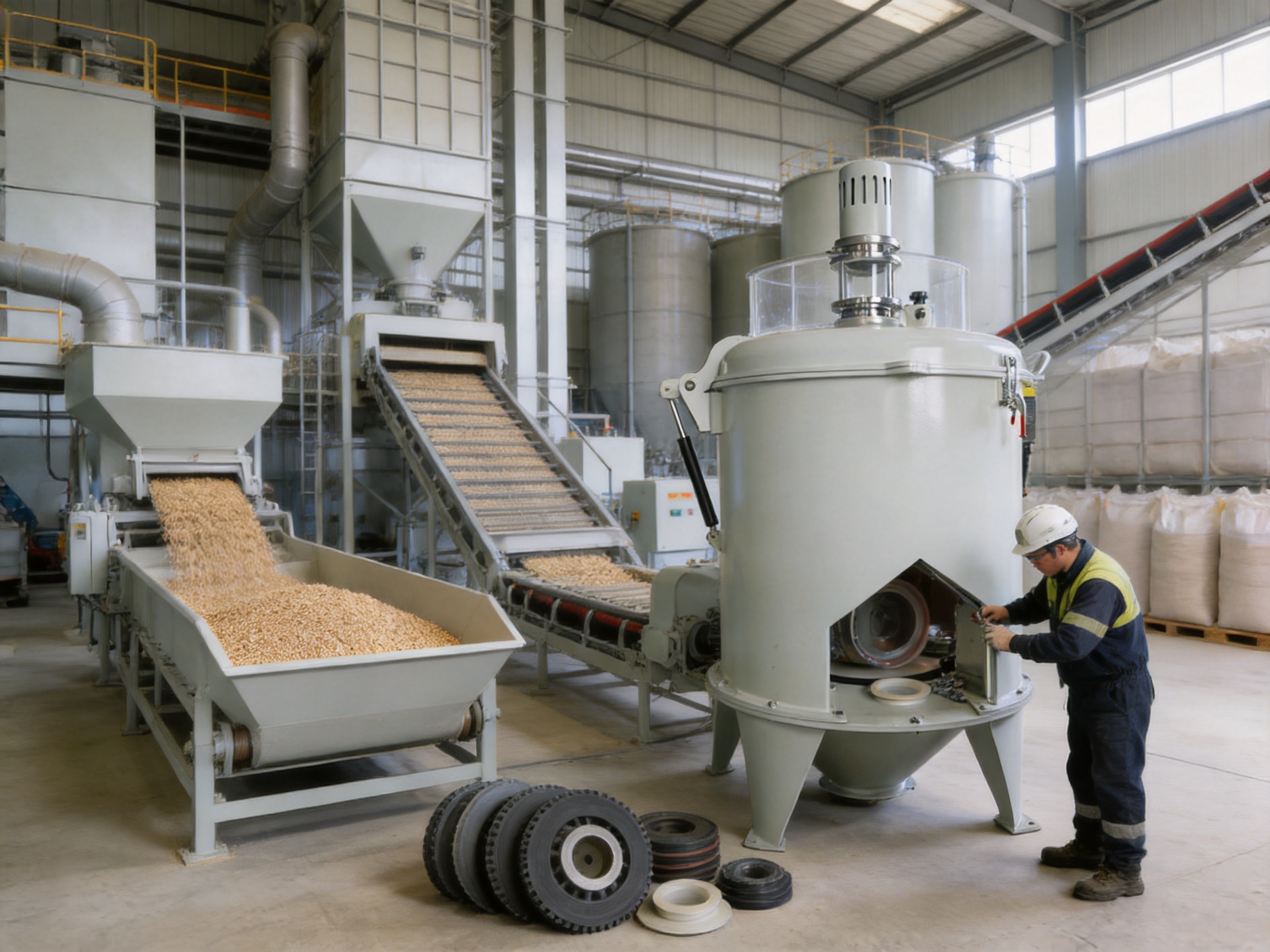
Oat processing begins with a difficult separation task. Unlike many cereal grains, oats have a tough outer hull that is firmly attached to the kernel. Removing this hull without damaging the groat requires controlled impact, stable feeding, suitable rotational speed, and carefully selected wear-resistant components. An oat dehuller must therefore do more than simply break the husk. It must separate the hull efficiently while preserving as much of the valuable oat groat as possible.
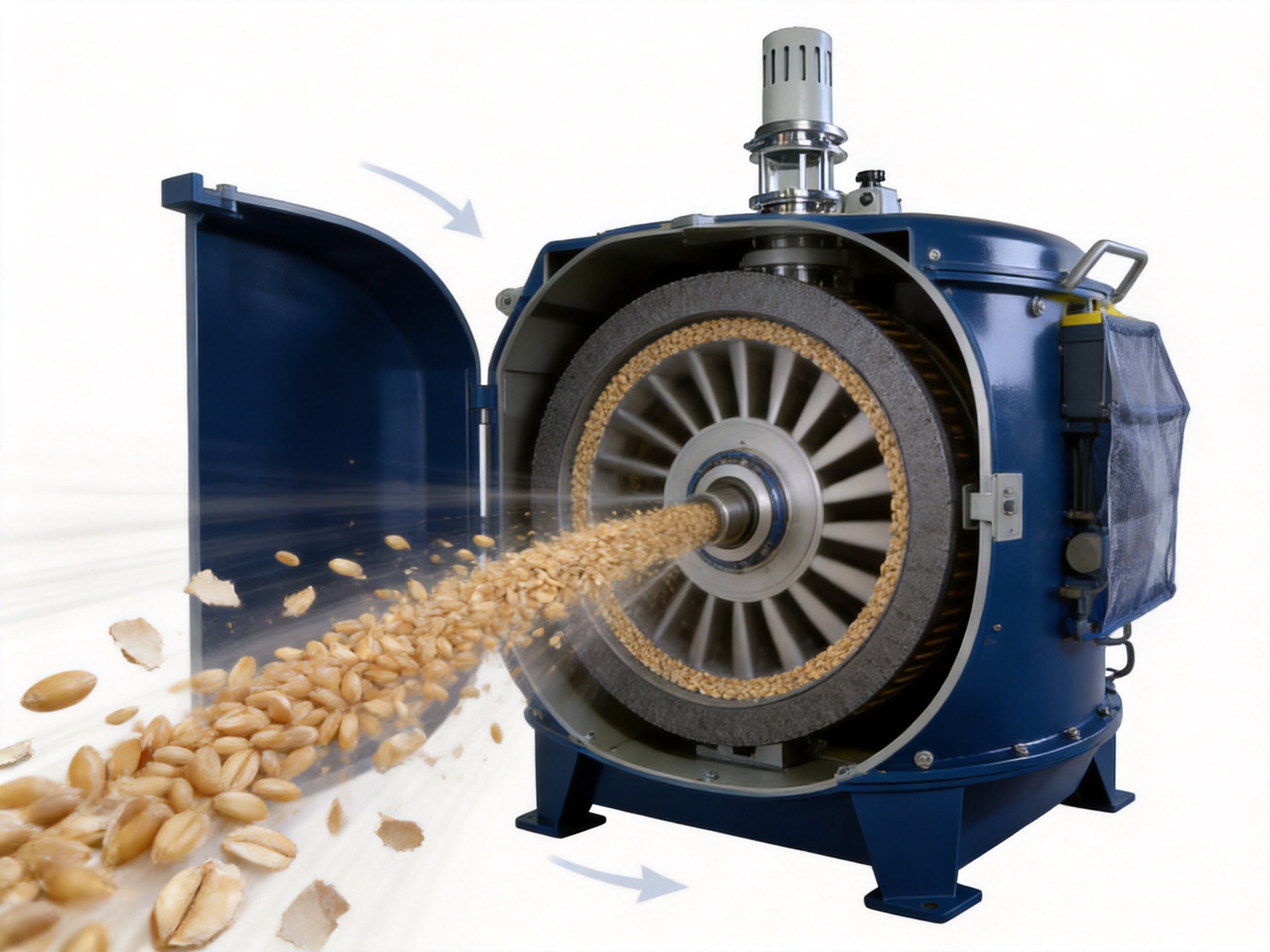
The Oat Dehuller is a centrifugal dehulling machine developed for this purpose. It uses a high-speed rotating centrifugal disk to accelerate oat kernels toward an impact ring. Guide slots inside the centrifugal disk control the direction of movement, helping the kernels strike the ring at a consistent angle and velocity. The impact causes the hulls to crack and break into smaller pieces, allowing the oat groats and husks to be separated in subsequent processing stages.
This operating principle gives the machine several advantages over less adjustable dehulling systems. The rotational speed can be changed according to oat moisture, variety, kernel size, and hull attachment strength. This flexibility helps operators balance dehulling efficiency and groat integrity instead of relying on one fixed operating condition. The same centrifugal principle can also be adapted for other difficult-to-dehull coarse grains, including barley, rye, and broomcorn millet.
Designed and manufactured by Jiangsu Zhengding Intelligent Equipment Co., Ltd., the Oat Dehuller is suitable for grain processing facilities that need dependable dehulling, moderate energy consumption, adjustable operation, and simplified maintenance. Its compact product range includes the TTK56 and TTK60 models, with different power and output ratings for varied processing requirements.
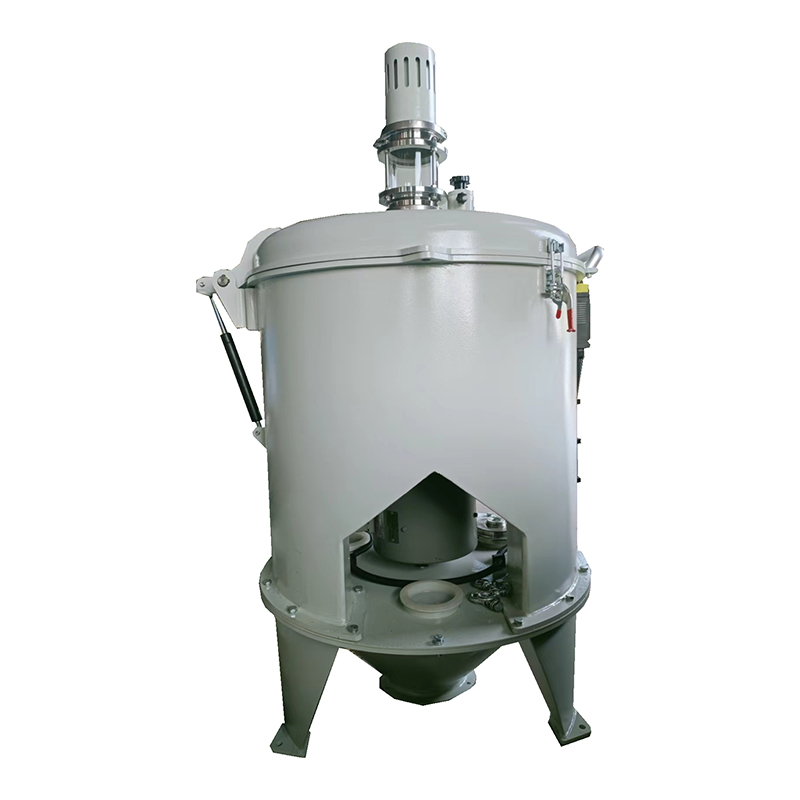
Oat Dehuller
1. The Role of an Oat Dehuller in Modern Grain Processing
Oat dehulling is one of the most important steps in producing food-grade oat groats, rolled oats, oat flour, oat flakes, and other oat-based ingredients. Raw oats generally contain an outer hull that is not suitable for direct human consumption. The hull must be removed before further processing, but the groat beneath it is relatively delicate. Excessive force can fracture the groat, while insufficient force leaves hulls attached to the grain.
A complete oat processing line may include cleaning, grading, aspiration, conditioning, dehulling, separation, drying, polishing, flaking, milling, and packing. The dehuller is positioned at the center of this sequence because its performance influences nearly every downstream operation. Poor dehulling can create excessive waste, increase recirculation, overload aspiration equipment, and reduce the proportion of whole groats available for premium products.
Whole groats generally have greater commercial value than broken groats because they can be used for rolled oats, oat kernels, cereal mixes, and other products that require an attractive appearance. Broken material remains useful for flour, meal, porridge ingredients, and feed, but it normally receives a lower selling price. A machine that removes hulls efficiently while controlling breakage can therefore improve both product yield and operating economics.
The Oat Dehuller addresses this challenge through a controlled centrifugal impact process. Instead of applying random or poorly directed force, the machine guides kernels through defined slots in the rotating disk. The kernels then contact the impact ring in a controlled manner. The objective is to fracture the hull while limiting the transfer of excessive stress to the groat.
How centrifugal dehulling works
After entering the machine, cleaned and appropriately prepared oats move toward the rotating centrifugal disk. The disk operates at high speed and generates centrifugal force. As kernels travel outward, the internal guide slots maintain their movement direction and help regulate the point at which they meet the impact ring.
The collision between the kernel and the impact ring creates a sudden mechanical force. Because the oat hull is brittle compared with the groat, the hull cracks and separates into multiple pieces. The groat and broken hull then leave the dehuller and proceed to aspiration, screening, or another separation process. The dehuller itself performs the fracture step; downstream separation equipment removes the lighter hull fragments from the heavier groats.
This distinction is important when evaluating equipment. Dehulling rate and final hull separation rate are related but not identical. A machine may crack a high percentage of hulls, while the complete line must still use air separation, screening, or recirculation to achieve the required final purity. Performance should therefore be assessed using representative oat samples and the complete processing configuration.
Why adjustable impact matters
Oats differ in moisture content, kernel size, variety, maturity, and hull attachment strength. A speed that works well for one batch may be too aggressive or too weak for another. Excessive speed can increase groat breakage, while insufficient speed can leave a high percentage of partially hulled kernels.
The adjustable centrifugal disk allows operators to respond to these differences. Speed can be selected according to the material condition and the desired balance between dehulling rate and breakage. This is a significant advantage over fixed-speed equipment, particularly for facilities handling oats from multiple suppliers or regions.
2. Product Construction and Operating Principle
The Oat Dehuller is built around several functional assemblies that work together to deliver stable dehulling performance. The main components include the feeding section, centrifugal disk, guide slots, impact ring, drive system, housing, discharge section, and access points for inspection and maintenance.
High-speed centrifugal disk
The centrifugal disk is the primary working component. It receives the oat kernels and accelerates them outward through rotation. Its geometry determines how the material is distributed and how consistently the kernels reach the impact ring.
A properly designed disk must provide sufficient acceleration without creating unnecessary turbulence or uncontrolled collisions. The balance of disk diameter, rotational speed, guide slot arrangement, and feed rate affects the impact energy applied to each kernel. The disk must also remain dynamically balanced because vibration at high speed can shorten bearing life, increase noise, and reduce operating stability.
Internal guide slots
Guide slots are formed within the centrifugal disk to control the trajectory of the kernels. They help prevent random movement and maintain a fixed direction as the grain travels toward the impact ring. Consistent movement contributes to more uniform impact conditions and reduces the chance that some kernels receive excessive force while others receive too little.
The guide slots are exposed to continuous contact with moving grain. For this reason, their wear resistance is essential. The machine uses special wear-resistant materials in these high-contact areas to reduce dimensional changes during operation. Maintaining the original geometry of the slots helps preserve the designed material trajectory and supports consistent performance over a longer maintenance cycle.
Impact ring
The impact ring receives the accelerated kernels and provides the surface required to crack the hull. Its surface condition, material hardness, and dimensional stability directly affect dehulling results. A worn or damaged ring may change the impact angle and energy, potentially increasing incomplete dehulling or groat breakage.
The impact ring is manufactured from wear-resistant material to withstand repeated high-speed contact. Its replaceable design also helps simplify maintenance. Instead of replacing the entire machine or major housing assembly, operators can inspect and replace the working wear component when required.
Drive and speed adjustment system
The drive system supplies power to the centrifugal disk and allows the operator to select a suitable rotational speed. Speed adjustment is particularly useful when processing oats with different moisture levels or kernel characteristics. It also allows the user to conduct controlled tests during commissioning and identify the best operating point for a specific raw material.
The rated power of the available models is designed to provide effective dehulling without excessive energy demand. Actual energy consumption depends on feed rate, material condition, operating speed, and the configuration of the complete processing line. Even so, the centrifugal design is intended to deliver a strong dehulling effect with a relatively efficient use of installed power.
Housing and access design
The housing encloses the rotating components and supports safe operation. It also helps control dust and directs the processed material toward the discharge outlet. Access covers and inspection points are important because operators need to examine the disk, guide slots, impact ring, bearings, and internal surfaces during scheduled maintenance.
A practical dehuller should not only perform well when new. It should also be easy to inspect, clean, adjust, and repair. Good access reduces maintenance time and makes it more likely that operators will perform routine inspections before small issues become major failures.
3. Main Advantages of the Oat Dehuller
High dehulling rate
The machine can achieve a one-time dehulling rate of up to 80 percent under suitable operating conditions. The final result depends on oat variety, moisture content, feed preparation, kernel size distribution, and speed selection. When the feed is properly cleaned and conditioned, the centrifugal impact process can remove a high proportion of hulls in a single pass.
The technical table for the TTK56 and TTK60 models lists a cut-off waste or dehulling-related performance value of at least 75 percent. This specification should be interpreted together with sample testing and the complete line arrangement. Different customers may define dehulling rate, waste removal, and finished groat purity differently, so a final performance guarantee should be established using the customer’s material and agreed testing method.
Low groat breakage
High capacity alone is not enough for an oat dehuller. If a machine removes hulls by applying excessive mechanical force, it may produce a large percentage of broken groats. The Oat Dehuller is designed to concentrate impact on the hull while controlling the operating speed and material trajectory.
The guided centrifugal process helps reduce uncontrolled impacts. Operators can lower or increase disk speed to match the toughness of the hull and the fragility of the groat. This adjustable operation provides a practical way to protect product appearance and maintain the value of whole groats.
Breakage results should always be verified through product sampling. Factors outside the dehuller, such as grain moisture, pre-cleaning quality, kernel damage, feed surges, and improper aspiration, can also influence the proportion of whole groats. Correct machine adjustment and stable feeding are therefore essential to achieving low breakage.
Low energy consumption
Energy efficiency is a central concern for both small farms and industrial processing plants. Electricity costs influence the cost of every ton of finished product, while inefficient machines may require larger motors, additional recirculation, or repeated processing passes.
The centrifugal dehulling design uses rotational energy to create the required impact. The machine is engineered to deliver effective kernel acceleration without relying on unnecessarily complex processing stages. The TTK56 model uses a 3 kilowatt motor, while the TTK60 model uses a 5.5 kilowatt motor. Their rated outputs are 0.8 to 1.5 tons per hour and 2.5 to 3.2 tons per hour respectively, based on oats.
Actual specific energy consumption should be measured under the customer’s operating conditions. Nevertheless, the combination of controlled impact, adjustable speed, and moderate motor power makes the equipment suitable for operations seeking a practical balance between capacity and energy use.
Adjustable rotational speed
One fixed operating condition cannot provide optimum results for every oat batch. Moisture changes the flexibility and impact behavior of the hull. Kernel size influences the way material travels through the guide slots. Variety affects hull attachment strength. The adjustable speed function allows operators to respond to these variations.
When hulls are difficult to remove, a higher speed may be selected, subject to breakage monitoring. When the groat is fragile or the material has already been conditioned for easier dehulling, a lower speed may protect product quality. Operators can gradually adjust the speed while examining the percentage of hulled kernels, partially hulled kernels, broken groats, and unhulled material.
Wear-resistant working parts
The guide slots and impact ring experience repeated high-speed contact with grain. Ordinary materials may wear quickly, changing the internal geometry and increasing maintenance frequency. The Oat Dehuller uses special wear-resistant materials in these critical areas.
Wear-resistant construction provides several benefits. It reduces the frequency of consumable replacement, helps preserve operating consistency, extends the maintenance cycle, and lowers the risk of unexpected interruptions. It also supports predictable maintenance planning because operators can inspect the condition of the working parts and replace them before performance falls significantly.
Adaptability to other grains
Although optimized for oats, the machine can also be used for other difficult-to-dehull coarse grains, including barley, rye, and broomcorn millet. The correct speed, feed rate, and material preparation may differ for each grain. Trial processing is recommended before commercial production.
Multi-grain capability can be valuable for processors who handle seasonal crops or operate a diversified grain business. It may reduce the need to purchase separate dehulling equipment for every grain type. However, facilities requiring highly consistent industrial output should confirm performance for each target grain through sample testing.
4. Model Selection and Technical Parameters
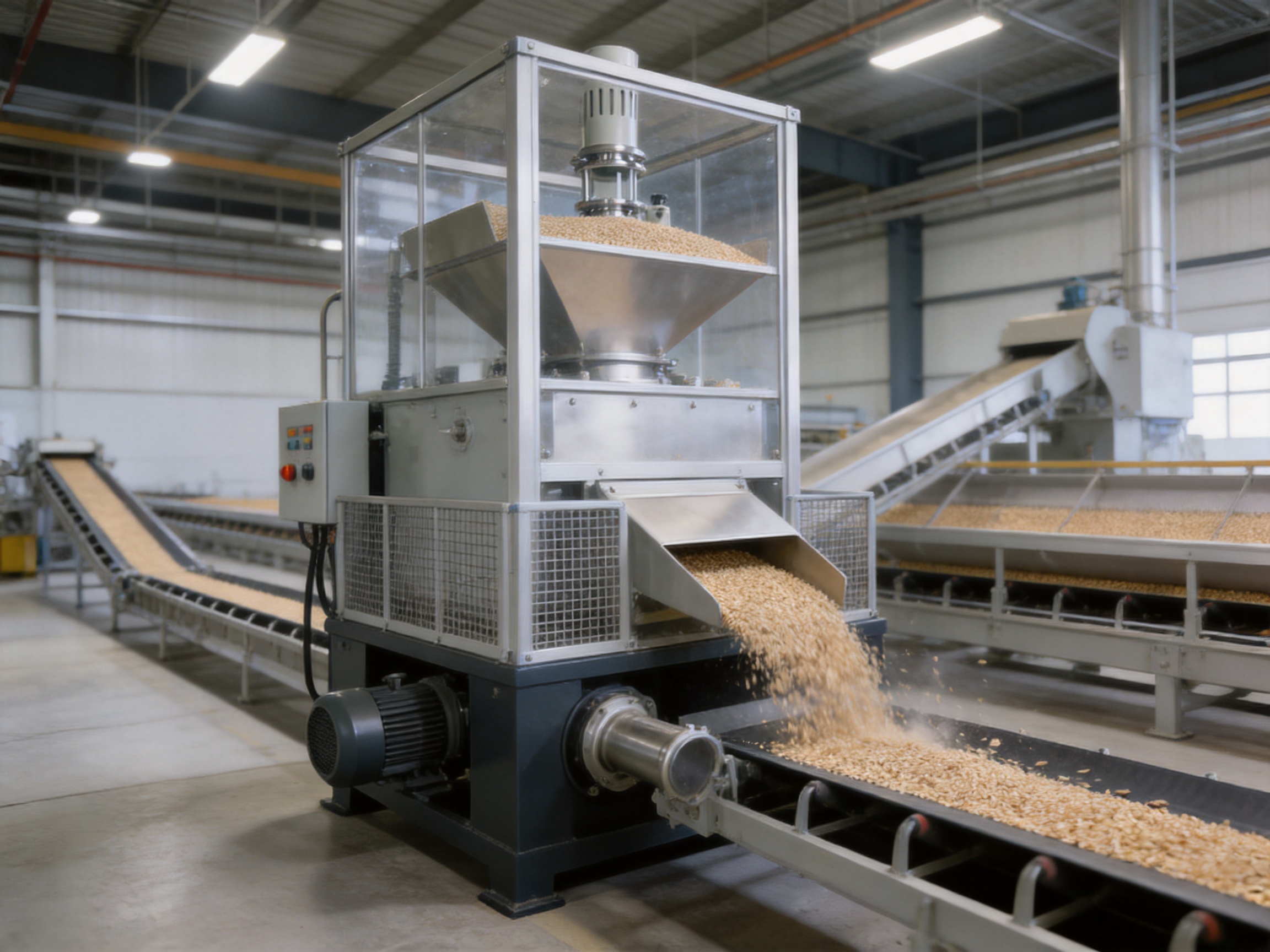
The available Oat Dehuller models are designed for different throughput requirements. Selecting the correct model helps prevent bottlenecks, excessive capital cost, unstable feeding, and unnecessary recirculation.
| Product Model | Installed Power | Rated Output Based on Oats | Cut-Off Waste or Dehulling-Related Performance |
|---|---|---|---|
| TTK56 | 3 kilowatts | 0.8 to 1.5 tons per hour | At least 75 percent |
| TTK60 | 5.5 kilowatts | 2.5 to 3.2 tons per hour | At least 75 percent |
The figures above are reference values based on oats. Actual capacity may change according to moisture content, kernel size, cleaning quality, feeding method, operating speed, and the required dehulling result. A customer should not select a model based only on the maximum nominal output. The correct selection must also consider the desired whole-groat yield, allowable breakage, available floor space, upstream cleaning capacity, downstream separation capacity, and expected future expansion.
TTK56 for smaller operations
The TTK56 is suitable for smaller farms, pilot plants, specialty grain processors, and compact production lines. Its 3 kilowatt power rating and 0.8 to 1.5 tons per hour oat capacity make it appropriate where moderate throughput is required without installing a large machine.
This model can be useful for seasonal processing, contract dehulling, research and development work, and operations that produce several types of grain. Its smaller capacity may also simplify integration into an existing facility where space and electrical supply are limited.
TTK60 for higher throughput
The TTK60 provides a higher rated oat output of 2.5 to 3.2 tons per hour and uses a 5.5 kilowatt motor. It is suitable for larger farm operations, commercial grain processors, and production lines requiring higher single-pass throughput.
When selecting the TTK60, operators should ensure that the upstream cleaning and feeding equipment can supply material consistently. The downstream aspiration and separation equipment must also be sized to handle the increased flow of groats and hull fragments. A dehuller can only deliver stable performance when the complete line is properly balanced.
Capacity planning
A simple planning formula is to divide the annual volume by the expected annual operating hours, then add a safety margin. For example, a facility processing 500 metric tons annually and operating for approximately 700 hours per year would require an average capacity of about 0.71 tons per hour before adding reserve capacity. A machine in the 0.8 to 1.5 tons per hour range may therefore be appropriate, subject to operating conditions.
Facilities processing several thousand tons annually should evaluate whether one machine, multiple machines, or a staged dehulling arrangement is most appropriate. Multiple units can provide redundancy and flexible scheduling, while a larger integrated system may reduce the number of transfer points. The best approach depends on production hours, product specifications, maintenance strategy, and future growth.
5. Comparison with Alternative Dehulling Methods
Oat processors may consider stone mills, abrasive systems, impact machines, fixed-speed dehullers, or centrifugal equipment. Each approach has different characteristics. The most appropriate choice depends on the raw material, capacity, product quality target, and available technical support.
Compared with traditional stone mill systems
Stone mill systems can be familiar and relatively simple, but they may provide less precise control over the dehulling force. Contact surfaces can wear, and adjustment may be less responsive when the oat variety or moisture changes. They may also generate more frictional heat or produce inconsistent results if the feed is not uniform.
A centrifugal dehuller offers a more direct method of controlling impact through disk speed. The guided trajectory also provides a more repeatable path for the kernel. For processors handling several raw material conditions, this adjustability can be a major operational advantage.
Compared with fixed-speed impact machines
Fixed-speed impact machines may have a straightforward design, but their operating range is limited. If the speed is optimized for one oat variety, it may not be suitable for another. Operators may have to accept higher breakage or incomplete dehulling when raw material conditions change.
The adjustable centrifugal design gives operators more control. It does not eliminate the need for testing and correct preparation, but it provides more tools for managing variation. This is especially valuable for commercial processors that purchase oats from different farms, regions, or harvest periods.
Compared with multi-pass systems
Multi-pass dehulling can increase final dehulling efficiency, but it also adds conveyors, elevators, aspiration equipment, recirculation points, energy use, and maintenance requirements. A high-performing single-pass machine may reduce the amount of material that must be returned for another treatment.
The Oat Dehuller is designed to achieve a high one-time dehulling rate. Depending on the raw material and finished-product requirements, a processor may still choose to include recirculation for partially hulled kernels. However, stronger first-pass performance can reduce the load on the recirculation system and improve overall plant efficiency.
Comparison of important performance criteria
| Evaluation Criterion | Traditional Stone System | Fixed-Speed Impact System | Adjustable Centrifugal Oat Dehuller |
|---|---|---|---|
| Control of impact intensity | Moderate | Limited | Adjustable through rotational speed |
| Adaptability to oat varieties | Moderate | Limited to moderate | High when correctly adjusted |
| Wear-part focus | Grinding or contact surfaces | Impeller and impact surfaces | Guide slots and impact ring |
| Potential for single-pass processing | Moderate | Moderate to high | High under suitable conditions |
| Energy control | Depends on design | Depends on fixed speed and load | Supported by moderate motor power and speed adjustment |
| Suitability for changing raw material | Moderate | Lower | Higher |
These comparisons are general engineering observations rather than universal performance guarantees. Actual results depend on machine size, raw material, operating practice, and line design. Sample testing remains the most reliable way to compare different systems for a specific application.
6. Manufacturing Strengths and Engineering Capabilities
The performance of an oat dehuller depends not only on its operating principle but also on how accurately the machine is manufactured. High-speed rotating equipment requires attention to material selection, machining accuracy, dynamic balance, assembly quality, safety protection, and inspection procedures.
Jiangsu Zhengding Intelligent Equipment Co., Ltd. is a national high-tech enterprise engaged in the research, development, manufacturing, and sales of intelligent equipment for logistics and material handling applications. Its broader product portfolio includes rear dumpers, side-turn truck dumpers, vehicle loading equipment, container flippers, and related automated loading and unloading systems.
Research and development orientation
The company’s engineering experience in automated equipment supports a practical approach to product development. Equipment is designed not only as an individual machine but also as part of a larger material-handling system. This systems perspective is important for grain processing because dehulling performance depends on stable infeed, controlled discharge, dust management, and efficient integration with separation and conveying equipment.
Product development can include mechanical design, operating parameter analysis, wear-part evaluation, safety review, and customer-specific adaptation. For an oat dehuller, development priorities include stable material movement, controlled impact, convenient speed adjustment, long service life, and accessible maintenance.
Precision manufacturing of rotating assemblies
The centrifugal disk must be manufactured accurately and assembled carefully. Dimensional errors or uneven mass distribution can create vibration at operating speed. Precision machining and balancing help improve the stability of the rotating assembly and reduce stress on bearings and supporting structures.
Manufacturing control is also important for the guide slots. Their shape and position influence the direction of kernel movement. Consistent machining helps ensure that different sections of the disk perform in a similar manner, which supports uniform dehulling across the material stream.
Wear-resistant material application
The guide slots and impact ring are among the most heavily loaded components. Selecting suitable wear-resistant materials helps preserve their working geometry. Material selection must consider hardness, toughness, impact resistance, grain abrasion, replacement cost, and compatibility with the machine structure.
A component that is extremely hard but brittle may not be suitable for repeated impact. A material that is tough but too soft may wear rapidly. The best solution balances resistance to abrasion and impact with practical replacement requirements. This engineering balance contributes to longer service intervals and more predictable maintenance.
Quality inspection and assembly control
Quality control for an oat dehuller should include dimensional inspection, examination of machined surfaces, verification of rotating-part assembly, fastening checks, electrical inspection, and trial operation. Particular attention should be given to disk balance, shaft alignment, bearing condition, protective guards, and speed-control functions.
Factory testing can identify abnormal vibration, unusual noise, unstable feeding, or excessive temperature before delivery. It also provides an opportunity to verify that the machine responds correctly to operating adjustments. A well-controlled manufacturing and testing process helps reduce commissioning risk at the customer’s facility.
Customized system integration
Different customers have different oat cleaning standards, building layouts, electrical systems, capacities, and finished-product specifications. The company can support customized solutions involving hoppers, conveyors, loading systems, container packing equipment, and other material-handling units.
For grain processors, the dehuller may be integrated with a hopper loader, belt conveyor, bucket elevator, aspiration system, screening machine, storage bin, or packing line. Proper integration reduces transfer losses, simplifies operator control, and helps maintain a stable feed rate.
7. Installation, Commissioning, and Operating Best Practices
Preparing the installation site
Before installation, the customer should confirm the required floor area, machine height, maintenance clearance, power supply, material flow direction, dust collection arrangement, and access for lifting or replacement of wear parts. The foundation or support structure must be strong enough to carry the machine and resist vibration.
Maintenance access should be considered from the beginning. Operators need enough space to open inspection covers, remove the impact ring, examine the centrifugal disk, check bearings, and clean internal surfaces. A compact installation that prevents safe maintenance can create higher long-term costs.
Preparing the oat feed
Oats should be cleaned before entering the dehuller. Stones, metal, oversized foreign material, and excessive dust can damage working parts, contaminate the product, or create safety risks. Grading may also be useful when the incoming crop contains a wide range of kernel sizes.
Moisture conditioning should be controlled according to the overall process design. Very dry oats may be more susceptible to groat breakage, while excessive moisture may make hull separation more difficult or affect downstream aspiration. The best moisture condition should be established through sample testing.
Starting the machine
The machine should be inspected before startup. Confirm that the housing is closed, guards are installed, fasteners are secure, the discharge path is clear, and the rotating assembly can operate without obstruction. Start the machine without feed when appropriate, listen for abnormal noise, and confirm stable operation before introducing grain.
Feed should be introduced gradually rather than suddenly. A stable feed rate helps maintain consistent impact conditions. Sudden surges can overload the dehuller, reduce dehulling efficiency, increase breakage, and cause unnecessary stress on the drive system.
Adjusting operating speed
Operators should begin with a moderate speed and evaluate the discharged product. Check the proportion of fully dehulled groats, partially dehulled kernels, remaining hulls, broken groats, and foreign material. If too many kernels remain unhulled, speed or conditioning may need adjustment. If breakage is excessive, reduce speed or review feed conditions.
Changes should be made gradually and recorded. Keeping an operating log helps identify the best settings for each oat variety and moisture range. It also supports consistent production when different operators work on different shifts.
Managing downstream separation
After dehulling, the product contains groats, hull fragments, and possibly partially dehulled kernels. Air aspiration is commonly used because hulls are lighter than groats. Screens or gravity separation may also be included depending on the required product purity.
The air system should be adjusted carefully. Excessive air can remove valuable groats with the hull fraction, while insufficient air may leave hull fragments in the groat stream. Separation performance should be evaluated together with dehuller settings because both stages affect final product quality.
8. Maintenance and Wear-Part Management
Regular maintenance protects performance, extends service life, and improves operating safety. The inspection interval depends on throughput, grain abrasiveness, operating hours, and the condition of the raw material. Facilities processing large volumes should establish a preventive maintenance schedule rather than waiting for a visible decline in output.
Daily checks
Daily inspections should include checking for unusual vibration, abnormal noise, overheating, material leakage, loose fasteners, and blocked discharge points. Operators should also examine the product for changes in dehulling rate or groat breakage. A sudden performance change may indicate wear, feed instability, or a problem elsewhere in the line.
Periodic inspection
The centrifugal disk, guide slots, impact ring, shaft, bearings, housing, and protective covers should be inspected at scheduled intervals. The guide slots should retain their original shape and should not have deep grooves, sharp damage, or excessive rounding. The impact ring should be checked for uneven wear, cracks, deformation, or surface damage.
Bearings should be monitored for noise, heat, vibration, and lubrication condition. The drive system should be inspected for alignment and fastening. Electrical components and speed-control devices should be checked by qualified personnel.
Replacing wear components
Wear parts should be replaced when their condition begins to affect dehulling consistency or safety. Continuing to operate with severely worn guide slots or an impact ring may increase energy use, reduce the dehulling rate, and raise groat breakage. Replacement timing should be based on inspection results, throughput history, and product-quality records.
The use of wear-resistant components reduces replacement frequency, but it does not eliminate the need for inspection. Even highly durable parts eventually wear under continuous high-speed contact. Keeping replacement parts available can reduce downtime during harvest season or high-demand production periods.
Cleaning and food-processing hygiene
Residual grain and hull dust should not be allowed to accumulate inside the machine. Cleaning reduces cross-contamination between grain types and helps prevent pest problems. Before cleaning, the machine must be stopped, isolated from the power supply, and allowed to come to a complete standstill.
Cleaning procedures should follow the customer’s food-safety requirements. Materials used in contact with the product should be maintained in good condition, and damaged surfaces should be repaired or replaced. Dust collection and housekeeping are also important for worker safety and fire-risk management.
9. Application Areas and System Integration
The Oat Dehuller can be used in a variety of grain-processing environments. Small farms may use it to process their own harvest, while commercial processors may incorporate it into a continuous oat line. Specialty food manufacturers can use the machine to prepare groats for rolled oats, cereal products, flour, and other ingredients.
Farm and cooperative processing
Farm-scale users often value compact equipment, moderate power requirements, flexible operation, and straightforward maintenance. A smaller dehuller can allow a cooperative or group of farms to share processing resources. The ability to adjust speed is helpful when the source and quality of oats vary from one harvest to another.
Commercial food processing
Commercial facilities typically focus on throughput, repeatability, whole-groat yield, product cleanliness, and integration with automated conveying and separation equipment. In these applications, the dehuller should be connected to a stable feeding system and supported by appropriate aspiration and grading equipment.
Grain storage and logistics systems
The company’s broader expertise in automated loading and unloading equipment can support the movement of grain before and after dehulling. Hopper loaders, belt conveyors, container packing systems, and related transfer equipment can help create a coordinated material flow from receiving to processing and dispatch.
This capability is valuable for customers seeking more than a standalone machine. A properly designed system can reduce manual handling, improve workplace safety, simplify weighing and metering, and make it easier to expand capacity in the future.
10. Economic Benefits for Processors
The economic value of an oat dehuller is determined by more than its purchase price. The important factors include whole-groat yield, dehulling efficiency, energy consumption, labor requirements, wear-part cost, downtime, product quality, and compatibility with existing equipment.
Improved saleable yield
Controlling groat breakage helps preserve the portion of production that can be sold as whole or premium-grade material. Even a modest improvement in whole-groat yield can have a meaningful financial impact when processing hundreds or thousands of tons annually.
For example, if a processor handles 1,000 tons of raw oats and improves saleable whole-groat recovery by 3 percent, approximately 30 additional tons may be available for higher-value products, depending on the actual product specification and material balance.
Lower recirculation demand
A high first-pass dehulling rate reduces the amount of material that must return to the dehuller. Lower recirculation can reduce conveyor loading, energy use, wear, and processing time. It can also simplify the separation system and improve the stability of the complete line.
Reduced maintenance interruption
Wear-resistant guide slots and impact rings can extend service intervals. Planned replacement is generally less expensive than an unplanned shutdown during peak production. Maintenance accessibility further reduces labor time when inspections or component changes are required.
Flexible production capability
The ability to process oats and selected coarse grains can help a processor use its equipment for more months of the year. Diversification may improve equipment utilization and create additional contract-processing opportunities. Before changing grain types, the machine should be cleaned and tested, and the operating parameters should be adjusted.
11. Practical Selection Checklist
Before purchasing an oat dehuller, a customer should prepare detailed information about the intended application. This allows the supplier to recommend a suitable model and identify any required auxiliary equipment.
Define the annual and hourly processing volume.
Identify the oat varieties, average kernel size, and expected moisture range.
State the desired dehulling rate and finished-groat purity.
Define the maximum acceptable groat breakage rate.
Confirm whether the machine will process barley, rye, broomcorn millet, or other grains.
Check the available electrical power and voltage.
Measure the installation area, height, access routes, and maintenance clearance.
Review upstream cleaning and feeding capacity.
Review downstream aspiration, screening, storage, and packing capacity.
Request sample testing using representative raw material.
Confirm spare-part availability and technical support.
Establish a preventive maintenance and operator-training plan.
Sample testing is especially important. A representative sample should be processed at different speeds and feed rates. The test should record dehulling rate, whole-groat yield, breakage, hull separation, power behavior, and product cleanliness. These results provide a better basis for equipment selection than nominal capacity alone.
12. Frequently Asked Questions
Q1: What is the main function of an oat dehuller?
An oat dehuller removes the tough outer hull from oat kernels while protecting the edible groat. The Oat Dehuller uses a rotating centrifugal disk and impact ring to crack the hull so it can be separated from the groat by downstream aspiration or screening.
Q2: What dehulling rate can the machine achieve?
The machine can achieve a one-time dehulling rate of up to 80 percent under suitable operating conditions. The technical parameters list a dehulling-related cut-off waste or performance value of at least 75 percent for the available models. Actual results depend on oat variety, moisture, feed preparation, operating speed, and separation equipment.
Q3: How can operators reduce groat breakage?
Operators should use clean, properly conditioned oats, maintain a stable feed rate, and adjust the centrifugal disk speed gradually. If breakage is high, the speed may be too aggressive, the oats may be too dry, or the machine may be overloaded. Product sampling should be used to identify the best setting.
Q4: Can the machine process different oat varieties?
Yes. The adjustable rotational speed allows the machine to respond to differences in moisture, kernel size, variety, and hull attachment strength. Each variety should be tested because the optimum speed and feed rate may not be identical.
Q5: Can the Oat Dehuller process grains other than oats?
It can also be used for difficult-to-dehull coarse grains such as barley, rye, and broomcorn millet. The settings may need to be changed for each grain, and trial processing is recommended before full-scale production.
Q6: What are the available models?
The available models include the TTK56 and TTK60. The TTK56 uses 3 kilowatts of power and has an oat capacity of 0.8 to 1.5 tons per hour. The TTK60 uses 5.5 kilowatts and has an oat capacity of 2.5 to 3.2 tons per hour.
Q7: Which model is suitable for a small farm?
The TTK56 is generally more suitable for a small farm or compact processing line because of its lower power requirement and moderate capacity. The final choice should consider annual volume, operating hours, available electricity, and future growth.
Q8: Which components require the most attention during maintenance?
The guide slots and impact ring receive repeated high-speed contact with grain and should be inspected regularly. Operators should also monitor the centrifugal disk, bearings, shaft, drive system, housing, fasteners, and safety guards.
Q9: Does the dehuller separate the hulls from the groats by itself?
The dehuller cracks and loosens the hulls. Final separation normally requires aspiration, screening, or another downstream separation method. The dehuller and separation equipment should be selected as a coordinated system.
Q10: Can the company provide a complete grain-handling solution?
Yes. In addition to dehulling-related equipment, Jiangsu Zhengding Intelligent Equipment Co., Ltd. provides automated material-handling and loading systems, including hopper loaders, conveyors, vehicle loading equipment, container flippers, rear dumpers, and side-turn truck dumpers. These systems can be adapted to support grain receiving, transfer, storage, packing, and dispatch operations.
Q11: What information should be provided when requesting a quotation?
A quotation request should include the target grain, annual and hourly capacity, moisture range, required dehulling rate, acceptable breakage, power supply, installation conditions, upstream and downstream equipment, and whether automation or system integration is required. Providing a representative sample can improve the accuracy of the recommendation.
13. Conclusion
The Oat Dehuller provides a controlled centrifugal solution for one of the most demanding stages in oat processing. Its high-speed disk, internal guide slots, and impact ring work together to crack difficult hulls while limiting unnecessary damage to the groat. Adjustable speed allows operators to respond to changes in moisture, variety, and kernel size, while wear-resistant working components help extend service intervals.
With a one-time dehulling rate of up to 80 percent under suitable conditions, moderate power requirements, and model options for different capacities, the machine can serve small farms, commercial processors, specialty grain plants, and integrated food-processing facilities. Its ability to process selected grains beyond oats further increases its operational flexibility.
The value of the machine is strengthened by the manufacturing and engineering capabilities of Jiangsu Zhengding Intelligent Equipment Co., Ltd. The company combines equipment research and development, precision manufacturing, wear-resistant component selection, factory inspection, and system integration. Its wider experience in automated loading and unloading equipment allows it to support complete material-handling solutions rather than only individual machines.
For the best result, customers should select the dehuller according to actual throughput, raw material characteristics, product-quality goals, electrical capacity, maintenance requirements, and the design of the complete processing line. Sample testing and careful commissioning can help establish the correct operating speed and confirm the expected balance between dehulling efficiency, whole-groat yield, and energy consumption.
References
1. Food and Agriculture Organization, general principles of cereal grain cleaning, conditioning, dehulling, and separation.
2. International Association for Cereal Science and Technology, guidance on cereal processing quality evaluation.
3. American Association of Cereal Chemists, analytical methods for oats, groats, hull content, and broken kernels.
4. Standard mechanical engineering practices for the design, balancing, guarding, and inspection of high-speed rotating equipment.
5. Manufacturer technical data for centrifugal oat dehulling equipment, including TTK56 and TTK60 model specifications.
6. Industrial grain-processing engineering principles covering aspiration, screening, material conveying, equipment integration, and preventive maintenance.


