

 English
 русский
 Español
 Français
 Português
 عربى





+86-13588556918
Content
- 1 1. What Is a Shallow Foundation Truck Dumper?
- 2 2. Main Advantages Over Conventional Deep-Pit Dumpers
- 3 3. Hydraulic Lifting and Synchronous Stability Technology
- 4 4. Automatic Wheel Retention and Intelligent Controls
- 5 5. Material Compatibility and Performance
- 6 6. Engineering for Wet, Sticky, or Difficult Materials
- 7 7. Platform Construction and Wear-Resistant Options
- 8 8. Manufacturing Strengths and Quality Control
- 9 9. Applications Across Multiple Industries
- 10 10. Installation, Commissioning, and Maintenance
- 11 11. Economic and Operational Benefits
- 12 12. How to Select the Correct Configuration
- 13 13. Frequently Asked Questions
- 13.1 Q1. What is the main difference between a shallow foundation dumper and a conventional dumper?
- 13.2 Q2. How much can a shallow foundation design reduce construction cost?
- 13.3 Q3. Can the dumper handle wet or sticky materials?
- 13.4 Q4. What is the maximum particle size that can be unloaded?
- 13.5 Q5. Can the equipment be used for food-grade materials?
- 13.6 Q6. Does the shallow design reduce unloading efficiency?
- 13.7 Q7. Is a dedicated operator required?
- 13.8 Q8. What maintenance is required?
- 13.9 Q9. Can the dumper be installed at an existing facility?
- 13.10 Q10. What information is needed for a quotation?
- 14 14. Why Choose an Integrated Equipment Manufacturer?
- 15 Conclusion
- 16 References
- 17 Product: Shallow Foundation Truck Dumpers
Shallow foundation truck dumpers are designed for industrial sites that require fast, safe, and efficient unloading without the cost and complexity of a conventional deep-pit dumper. By using a low-profile foundation, the system can reduce excavation, concrete construction, ramp development, and installation time while still providing the lifting strength and discharge performance required for demanding bulk-material applications.
Modern unloading facilities must handle increasingly diverse materials, including grain, oilseeds, coal, cement, fertilizer, aggregates, minerals, plastic pellets, biomass, and chemical products. At the same time, plant owners are seeking equipment that occupies less space, requires fewer civil works, and can be operated with minimal labor. A shallow foundation truck dumper addresses these requirements through a combination of hydraulic lifting technology, automatic wheel retention, intelligent controls, durable platform construction, and application-specific engineering.
Jiangsu Zhengding Intelligent Equipment Co., Ltd. develops and manufactures automated loading and unloading equipment for trucks, containers, ships, and logistics facilities. Its shallow foundation truck dumpers are engineered for customers that need dependable unloading performance but cannot justify, or cannot construct, a deep underground pit. The equipment is suitable for new plants, brownfield upgrades, temporary terminals, warehouses, grain depots, cement facilities, ports, and industrial sites with restrictions on excavation depth.
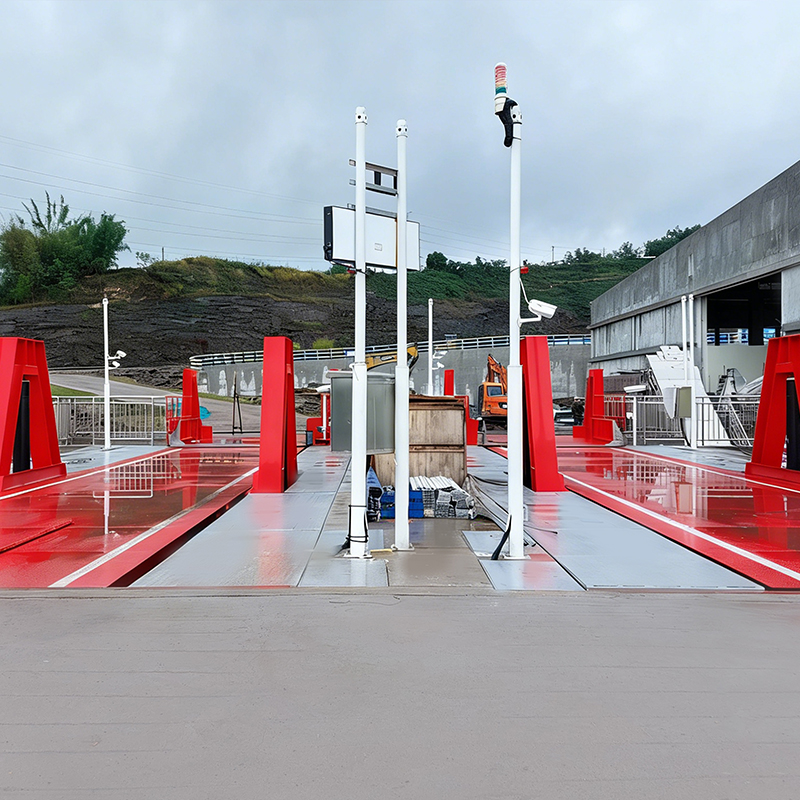
Compared with many conventional truck dumpers, the shallow foundation design provides a strong economic advantage. The pit depth is generally limited to the thickness of the lifting platform or a low-profile foundation of approximately 0.5 to 1.2 meters, depending on the model and site conditions. This can reduce civil construction costs by approximately 60% to 70% compared with traditional deep-pit arrangements. The final saving depends on soil conditions, drainage requirements, local construction prices, equipment capacity, and the required access arrangement.
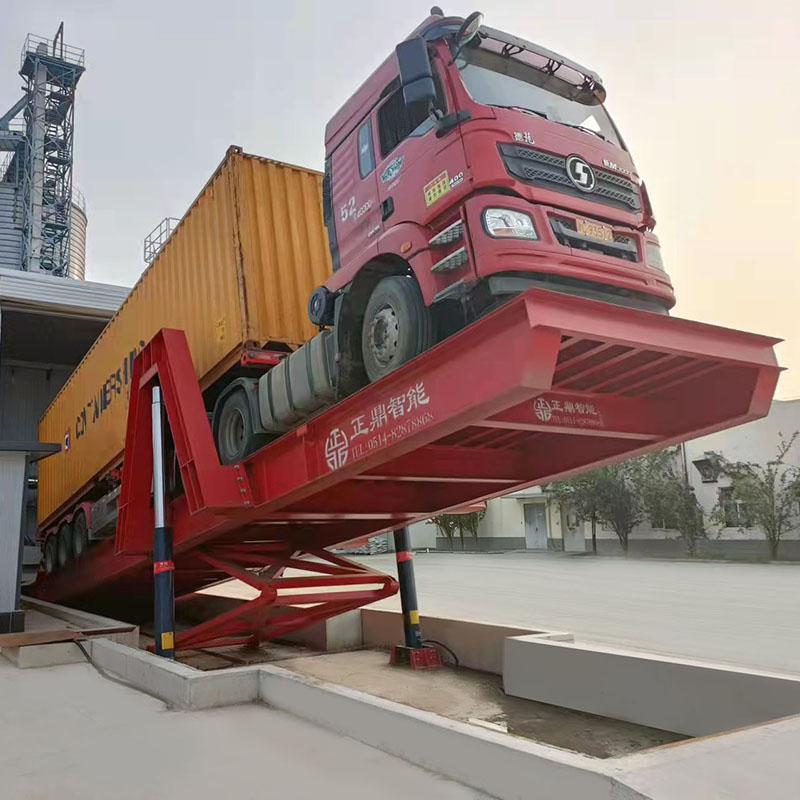
Shallow Foundation Truck Dumpers
1. What Is a Shallow Foundation Truck Dumper?
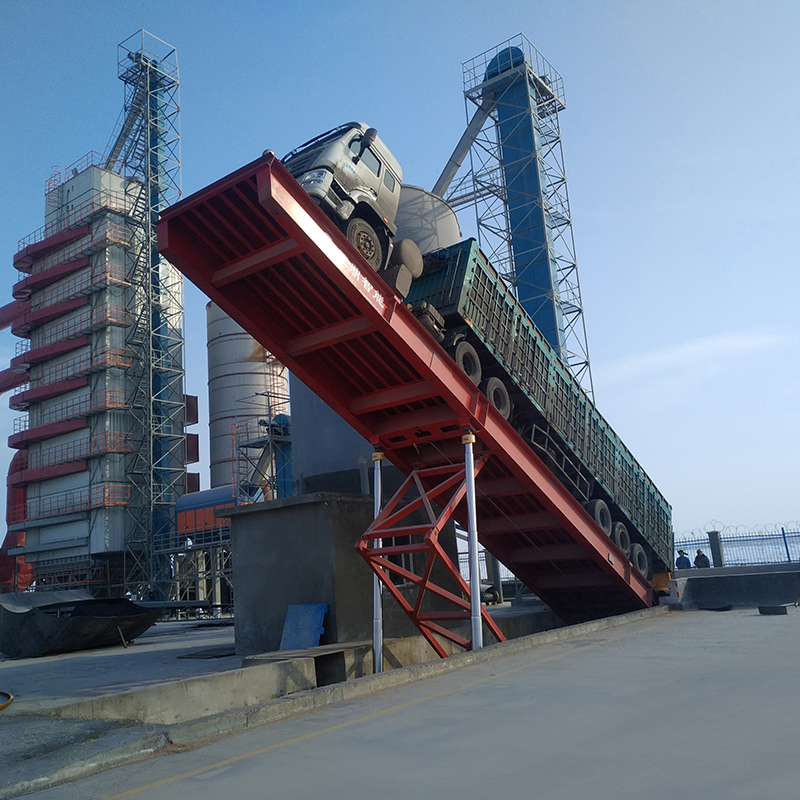
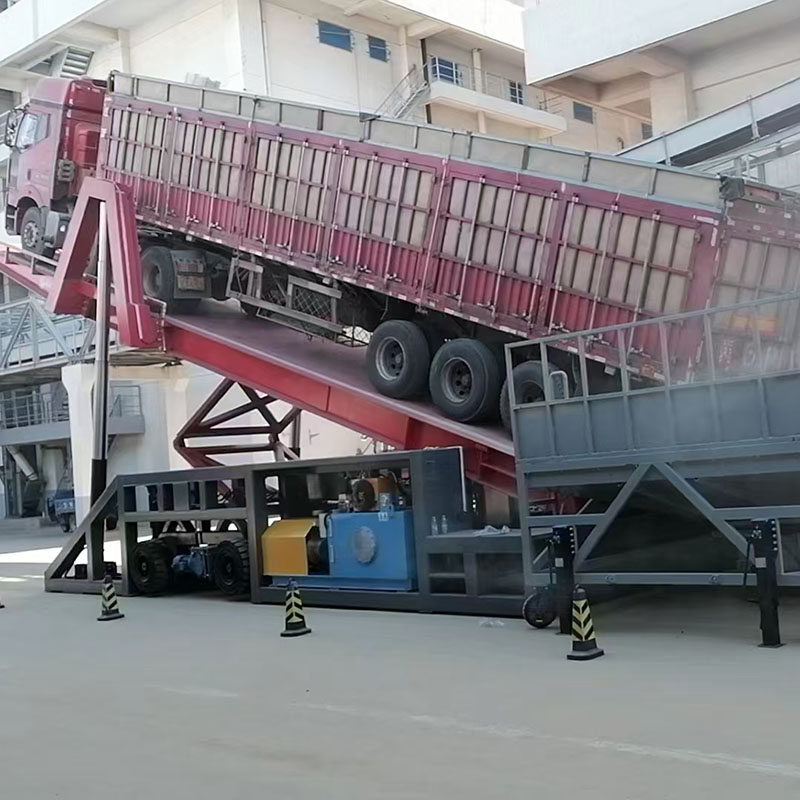
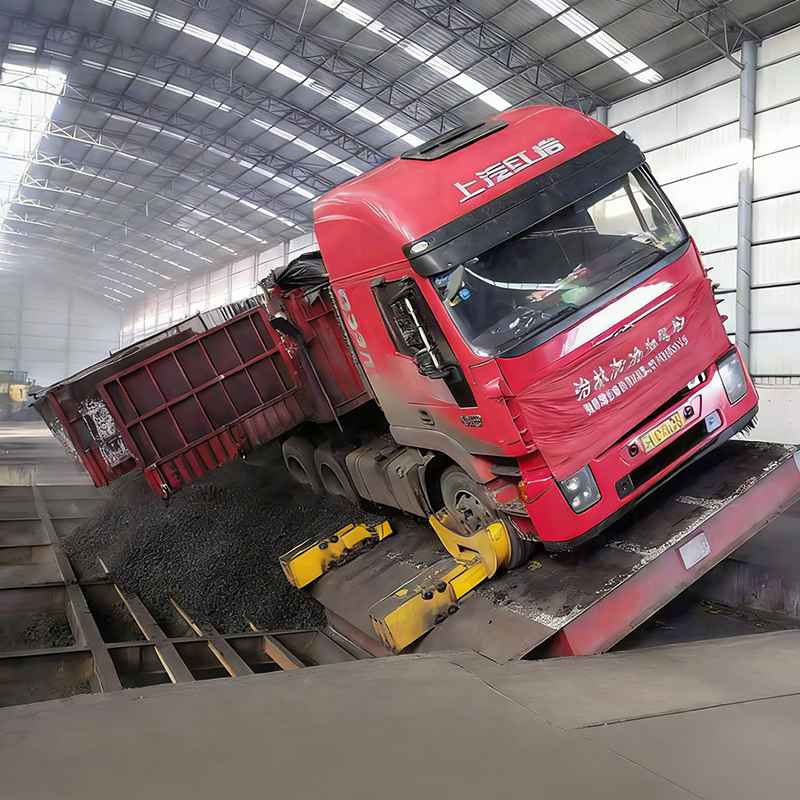
A shallow foundation truck dumper is a hydraulic unloading platform that raises and tilts an entire truck, trailer, or vehicle body so that bulk material can discharge through the rear or side of the vehicle. Instead of placing the lifting platform inside a deep excavation, the equipment uses a low-profile support structure and a shallow foundation. The truck drives onto the platform at ground level or with only a short approach transition, is secured automatically, and is then lifted to the selected discharge angle.
The equipment typically consists of a heavy-duty steel platform, hydraulic cylinders, hydraulic pumps, synchronized lifting controls, a wheel-retaining device, a hydraulic power unit, electrical control cabinet, safety sensors, remote or automatic controls, and structural foundations. Depending on the application, the platform can be equipped with wear-resistant liners, stainless steel surfaces, vibration systems, heated sections, dust-control equipment, and customized discharge interfaces.
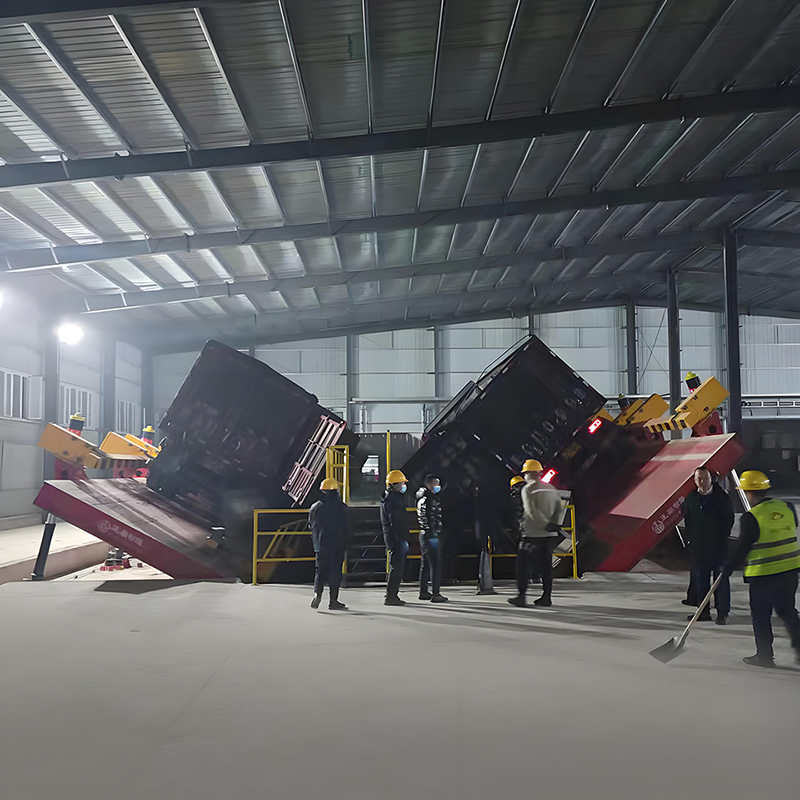
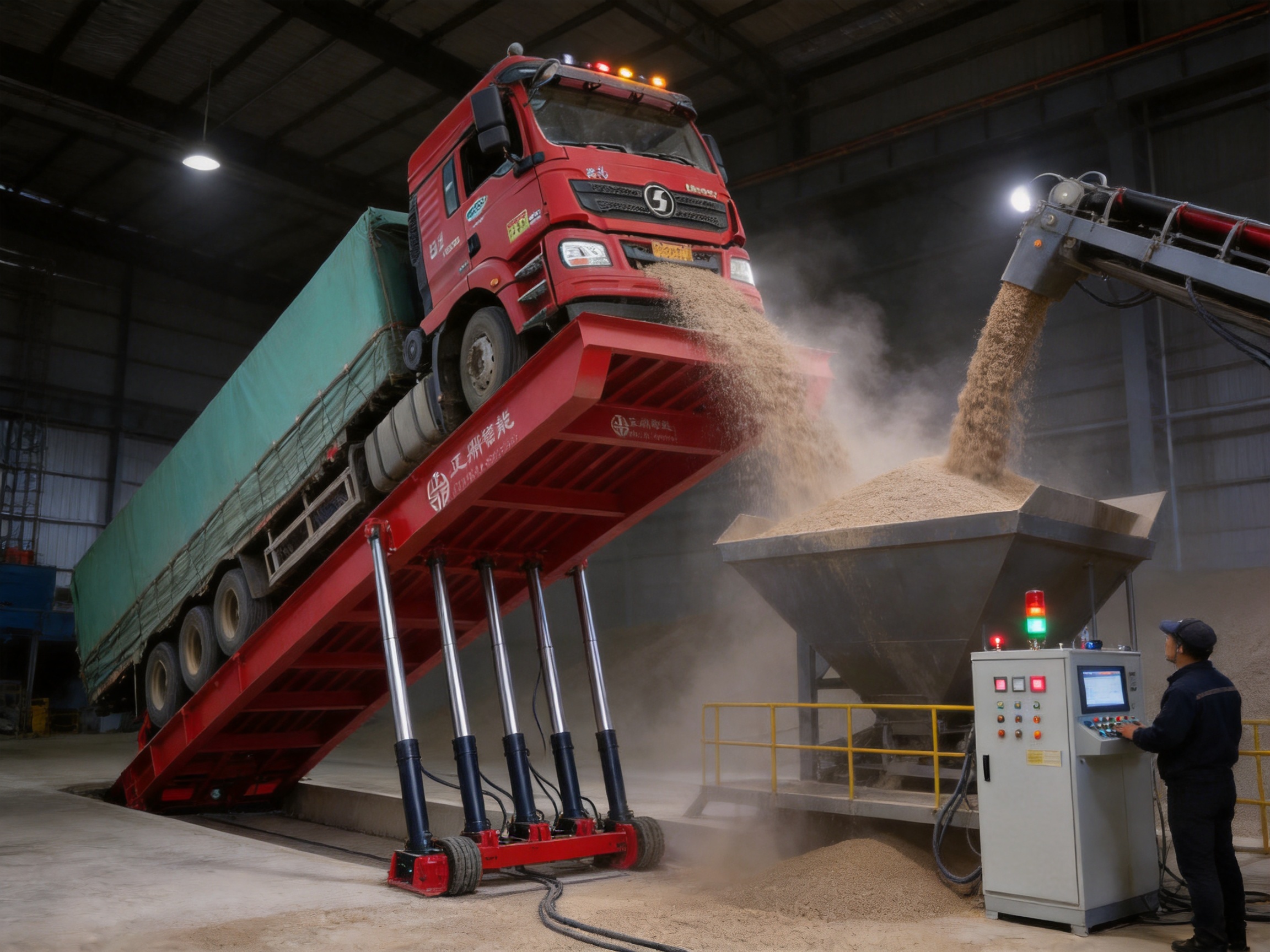
The basic operating cycle is straightforward. The vehicle enters the platform and stops at the designated position. The automatic retaining wheel device secures the vehicle and prevents unintended movement. After the operator or driver confirms the safety conditions, the hydraulic system lifts the platform. As the vehicle reaches the preset angle, the cargo flows into a receiving hopper, conveyor, storage pit, or other downstream system. Once unloading is complete, the platform returns to its horizontal position, the retaining system releases the vehicle, and the truck exits the station.
This arrangement is especially valuable where deep excavation is undesirable. Examples include sites with a high groundwater table, rocky ground, buried utilities, limited construction access, weak soil, existing buildings, leased industrial premises, or strict environmental and construction restrictions. The shallow design can also simplify future relocation or expansion compared with a large permanent concrete pit.
2. Main Advantages Over Conventional Deep-Pit Dumpers
2.1 Reduced Civil Engineering Requirements
The most visible advantage is the reduction in foundation depth. Conventional dumpers often require a deep reinforced-concrete pit, extensive excavation, retaining walls, waterproofing, drainage pumps, ramps, and protective structures. These works can represent a substantial portion of the total project budget, particularly when the site has difficult soil or groundwater conditions.
A shallow foundation dumper minimizes these requirements. The foundation is designed around the equipment’s low-profile structure, reducing excavation volume and concrete consumption. In many projects, the truck can approach the unloading platform directly from the existing yard, eliminating the need for long access ramps. This can preserve valuable site space for storage, traffic circulation, or future production expansion.
Although the exact saving must be confirmed through a project-specific quotation and civil design, the shallow configuration can reduce civil engineering costs by more than 60% compared with conventional installations. The shorter construction period can also reduce the indirect costs associated with site disruption, temporary traffic routes, contractor management, and production downtime.
2.2 Faster Installation and Site Preparation
Deep-pit construction requires excavation, earth removal, structural reinforcement, concrete curing, waterproofing, and installation of drainage systems. Each stage can delay commissioning. A shallow foundation system generally requires less excavation and fewer complex underground works, allowing the equipment installation team to begin mechanical and electrical work earlier.
For customers upgrading an operating plant, this reduced construction scope is particularly important. The unloading station can often be integrated into an existing traffic layout with fewer changes to roads and foundations. The equipment may be installed beside an existing receiving system, allowing the customer to retain more of its current conveyors, storage bins, and control infrastructure.
2.3 Easier Maintenance Access
Hydraulic cylinders, pumps, valves, sensors, and retaining mechanisms are more accessible in a shallow design than in a deep underground pit. Maintenance technicians can inspect components from ground level or from designated service areas without entering a deep confined space. This improves service efficiency and reduces the risks associated with underground maintenance.
Routine tasks such as checking hydraulic oil levels, inspecting cylinder seals, examining electrical cables, tightening structural connections, cleaning the platform, and replacing wear liners can be organized more efficiently. Better visibility also helps technicians identify abnormal wear, leakage, loose fasteners, or damaged safety components before they develop into major failures.
2.4 Improved Site Safety
A low-profile dumper can reduce risks related to open pits, deep access areas, water accumulation, and vehicle misalignment. The automatic retaining wheel fixing device holds the truck in place during lifting, reducing dependence on manual wheel chocking. Safety interlocks can be configured to prevent lifting unless the truck is correctly positioned and the retaining mechanism is engaged.
The shallow structure also makes the surrounding area easier to supervise. Operators have better visibility of the vehicle, platform, traffic route, and receiving equipment. Guardrails, warning lights, audible alarms, emergency-stop buttons, position sensors, and control interlocks can be integrated into the system to create a controlled unloading environment.
2.5 Lower Operator Workload
The system is designed for automatic or semi-automatic operation. Once the truck is positioned, the driver can complete the unloading cycle using a local control panel, remote control, or automated sequence, depending on the plant configuration. This reduces the need for a dedicated dumper operator and minimizes the time personnel spend in dusty, noisy, or high-traffic areas.
Unmanned operation can be integrated with vehicle identification, weighing systems, traffic lights, gates, moisture sensors, material-recognition systems, and plant-level supervisory controls. The final automation level can be selected according to the customer’s production volume, safety policy, labor model, and existing digital infrastructure.
3. Hydraulic Lifting and Synchronous Stability Technology
The lifting system is the central mechanical component of a truck dumper. It must raise a heavy vehicle and its cargo smoothly, maintain platform stability, and return the load to the horizontal position in a controlled manner. Jiangsu Zhengding’s system uses a high-precision oil-cylinder synchronous stability system developed for controlled lifting and lowering.
Synchronized hydraulic movement helps ensure that the platform remains balanced during the entire operating cycle. If the cylinders do not move consistently, the platform may experience twisting, uneven loading, vibration, or excessive stress on the frame. A stable hydraulic sequence reduces these conditions and supports reliable operation with different truck lengths and load distributions.
Low vibration is another important benefit. Excessive vibration can affect the truck chassis, platform structure, cylinder pins, seals, and hydraulic piping. It can also cause cargo to shift unpredictably during unloading. The synchronous stability system is designed to reduce operating shock and cylinder impact, helping extend the service life of the hydraulic components and supporting structures.
The hydraulic cylinders and pumps are selected from established industrial suppliers and configured according to the lifting capacity, platform length, cycle frequency, operating environment, and material characteristics. Imported hydraulic components may be used where the project requires specific performance, availability, or reliability standards. Hydraulic hoses, valves, seals, and protective arrangements are selected to withstand the pressure, temperature, dust, and duty cycle of the installation.
Control precision is particularly important near the beginning and end of the lifting cycle. A gradual start reduces sudden loading on the vehicle and frame. Controlled deceleration before the platform reaches the target angle reduces impact. During lowering, the system must prevent uncontrolled descent and provide stable positioning at the horizontal loading level.
3.1 Capacity and Operating Range
The product range includes models designed for different vehicle sizes and lifting requirements. Representative models include TQXHC 50, TQXHC 80, TQXHC 100, and TQXHC 150. Depending on the selected configuration, platform lengths may range from approximately 14 to 20 meters, while platform widths are commonly around 3 meters.
The supplied technical data lists maximum lifting capacities from 80 to 150 tons and maximum lifting angles of 45 or 55 degrees. Actual capacity selection must consider the truck’s tare weight, maximum cargo weight, axle distribution, platform length, center of gravity, discharge material, local safety requirements, and the receiving equipment arrangement.
| Model | Representative Platform Size | Maximum Lifting Capacity | Maximum Lifting Angle | Typical Application Considerations |
|---|---|---|---|---|
| TQXHC 50 | 14 × 3 m, 16 × 3 m, or 17 × 3 m | 80 tons | 45° or 55° | General bulk materials and medium-duty truck unloading |
| TQXHC 80 | 16 × 3 m, 17 × 3 m, or 18 × 3 m | 80 tons | 45° or 55° | Longer trailers and higher-volume receiving stations |
| TQXHC 100 | 17 × 3 m, 18 × 3 m, or 20 × 3 m | 100 tons | 45° or 55° | Heavy trucks, aggregates, grain, cement, and industrial materials |
| TQXHC 150 | 17 × 3 m, 18 × 3 m, or 20 × 3 m | 150 tons | 45° or 55° | High-capacity industrial, mining, port, and bulk logistics operations |
The dimensions and capacities in the table are representative product configurations. Final engineering parameters should be confirmed against the customer’s truck drawings, axle loads, payload requirements, unloading cycle, foundation conditions, and local regulations.
4. Automatic Wheel Retention and Intelligent Controls
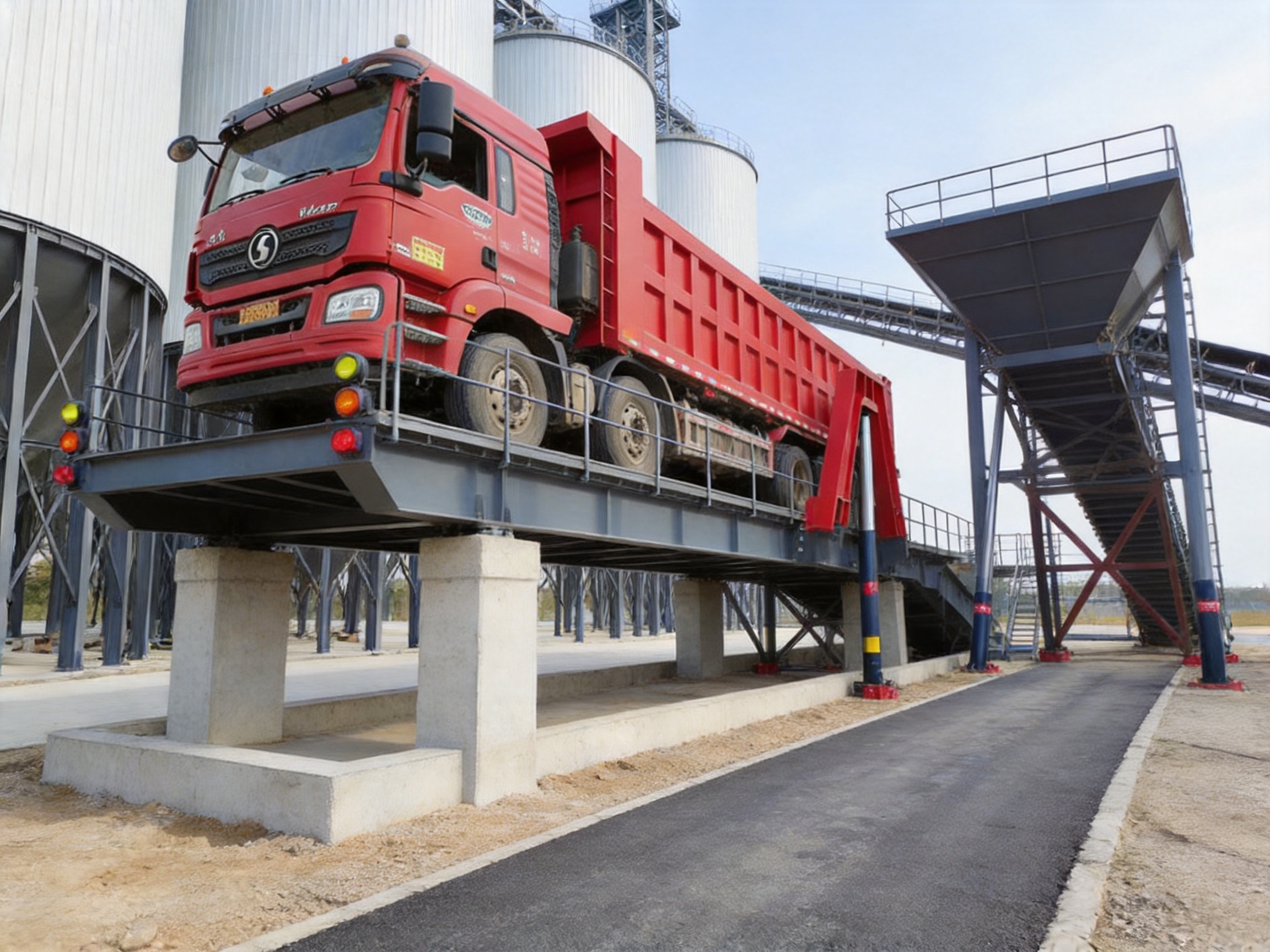
Vehicle movement during lifting is a major safety concern in any dumper installation. The automatic retaining wheel fixing device is designed to secure the truck without requiring an operator to manually hold a remote control in a dusty or hazardous area while positioning mechanical restraints.
When the vehicle reaches the correct location, sensors or positioning markers can confirm alignment. The retaining mechanism then moves into position and holds the wheel or designated vehicle structure. The control system can verify that the retaining device is fully engaged before permitting the platform to lift. If the safety conditions are not satisfied, the lifting sequence can be blocked.
This arrangement provides several advantages. It reduces manual intervention, helps prevent vehicle rollback, improves cycle consistency, and simplifies operation for drivers who may not have specialist equipment training. It also allows the unloading station to be designed around a clear and repeatable traffic procedure.
Automatic control can include the following functions:
- Vehicle-entry signal control using traffic lights or warning indicators.
- Vehicle-position detection and alignment confirmation.
- Automatic wheel retention and release.
- Hydraulic lifting and lowering sequence control.
- Preset angle selection for different materials.
- Emergency-stop control at multiple accessible locations.
- Overload, over-angle, and abnormal-position protection.
- Interlocking with receiving conveyors, gates, and storage equipment.
- Cycle recording and operating-time monitoring.
- Remote diagnostics and maintenance alerts where specified.
The control architecture can be adapted to a customer’s automation platform. For example, a grain terminal may connect the dumper to truck scales, laboratory quality systems, storage-bin controls, and a supervisory control and data acquisition system. A cement plant may connect the unit with dust collection, silo-level monitoring, and receiving conveyor controls. A logistics terminal may use barcode, RFID, or dispatch-management information to authorize the unloading operation.
5. Material Compatibility and Performance
Shallow foundation truck dumpers can handle a wide range of bulk solids, granular materials, and free-flowing powders. Typical bulk densities range from approximately 0.4 to 2.5 tons per cubic meter, although the correct platform, liner, and lifting configuration must be selected for each material.
Common applications include corn, soybeans, wheat, rice, oilseeds, coal, petroleum coke, sand, gravel, crushed stone, cement, fly ash, lime, granular fertilizer, plastic pellets, biomass, and selected chemical products. The equipment can also be adapted for materials that are abrasive, corrosive, dusty, hygroscopic, or moderately cohesive.
Free-flowing products generally discharge quickly and leave little residual material on the truck body. Grains, plastic pellets, and many dry granular products can achieve very high discharge efficiency when the tilt angle and receiving hopper are correctly designed. Aggregates, coal, and other heavy materials may require a higher angle and reinforced wear surfaces.
5.1 Grain and Oilseed Applications
Grain facilities require high throughput, low product loss, protection against cross-contamination, and easy cleaning. A suitable shallow dumper can unload corn, soybeans, wheat, and similar products at angles commonly ranging from 40 to 45 degrees. Stainless steel or food-grade contact surfaces can be specified when hygiene, corrosion resistance, or product changeover is important.
For grain handling, the platform should be designed to avoid areas where material can accumulate. Smooth transitions, accessible cleaning points, sealed hydraulic components, and appropriate dust-control connections can reduce housekeeping requirements. The system can also be integrated with sampling, weighing, intake, and grain-quality management procedures.
5.2 Aggregates, Minerals, and Coal
Sand, gravel, crushed stone, limestone, coal, and petroleum coke place greater demands on wear resistance. These materials may require AR400 steel liners, reinforced platform sections, thicker wear plates, and structural protection around the discharge area. The unloading angle may range from approximately 48 to 55 degrees depending on the material’s particle size, moisture, friction, and flow behavior.
Wear-resistant liners protect the main platform from impact and abrasion. Replaceable liner sections can simplify maintenance because damaged areas can be removed without replacing the entire platform. For extremely abrasive applications, the equipment design should also consider the receiving hopper, conveyor inlet, side skirts, and transfer points, since wear may occur throughout the material path rather than only on the dumper platform.
5.3 Cement, Fly Ash, Lime, and Fertilizer
Powdered and granular products require attention to dust management, sealing, corrosion resistance, and flow behavior. Cement, fly ash, and lime may be handled at angles of approximately 45 to 50 degrees. Granular fertilizers may require angles of 42 to 48 degrees, depending on composition and moisture content.
Dust extraction hoods, sealed transfer points, and compatible coatings can be added to reduce airborne material. For corrosive products, stainless steel components, protective coatings, and chemical-resistant seals may be selected. The material compatibility review should include pH, chloride content, moisture, temperature, and cleaning chemicals.
5.4 Plastic Pellets and Specialty Products
Plastic pellets such as PVC and polyethylene are relatively light and free-flowing. They can be unloaded efficiently at lower angles, often between 38 and 42 degrees. Smooth surfaces and careful control of impact points help reduce pellet breakage, contamination, and static-related housekeeping problems.
Specialty chemicals, food ingredients, biomass, and recycled materials require a more detailed review. The customer should provide information about bulk density, particle size, moisture, temperature, abrasiveness, corrosiveness, flowability, and any relevant hygiene or hazardous-area requirements. The dumper manufacturer can then recommend the correct platform surface, seals, sensors, controls, and safety measures.
6. Engineering for Wet, Sticky, or Difficult Materials
Dry free-flowing materials are the simplest products to unload. Wet or cohesive materials require additional engineering because they may adhere to the truck body, bridge across openings, or remain on the platform after the main discharge has finished.
Materials with approximately 12% to 18% moisture can often be handled with modifications such as a vibration system, low-friction UHMW-PE lining, controlled lifting speed, or a higher discharge angle. These solutions help material separate from the truck body and maintain a more consistent flow.
UHMW-PE liners reduce friction and can improve material movement where sticky products are present. They are suitable for selected applications involving wet clay, concentrates, sticky minerals, and other cohesive materials. The liner thickness and fixing method must be chosen according to the material’s impact energy and abrasion level.
For extremely sticky materials, heated platforms can be considered. Thermostatically controlled heating at approximately 35°C to 45°C may reduce adhesion in cold or damp conditions. Heating is not suitable for every product, so the design must consider fire risk, material temperature sensitivity, energy consumption, and local safety regulations.
Vibration systems can be used to encourage residual material to leave the vehicle body. The vibration frequency, amplitude, mounting position, and operating duration must be controlled to avoid excessive stress on the truck, platform, hydraulic cylinders, and receiving structure.
7. Platform Construction and Wear-Resistant Options
The platform is manufactured as a load-bearing steel structure designed to distribute the truck’s weight and payload safely through the frame and foundation. Reinforcement patterns, cross-members, support points, side protection, and cylinder attachment locations are calculated according to the selected capacity and operating conditions.
For abrasive applications, AR400 steel liners can be installed on impact and sliding areas. With appropriate operating practices and scheduled replacement, these liners may support a platform service life of approximately eight to ten years in demanding aggregate or slag applications. The actual life depends on throughput, particle size, impact height, moisture, material hardness, and maintenance quality.
Stainless steel platform surfaces are available for food-grade and corrosive applications. Stainless steel can support easier cleaning, improve resistance to selected chemicals, and reduce the risk of surface contamination. The appropriate grade, such as 304 or 316 stainless steel, should be selected based on the material and cleaning environment.
Protective coatings may be applied to exposed structural surfaces. Coating selection should consider outdoor weather, salt exposure, chemical vapor, humidity, temperature variation, and cleaning agents. Areas around hydraulic cylinders and electrical cabinets should be protected from direct impact, dust accumulation, and water ingress.
8. Manufacturing Strengths and Quality Control
The performance of a truck dumper depends not only on its design but also on manufacturing accuracy. A platform that is not fabricated, welded, assembled, and tested correctly may experience uneven loading, excessive deflection, premature fatigue, hydraulic leakage, or poor alignment.
Jiangsu Zhengding Intelligent Equipment Co., Ltd. operates as a national high-tech enterprise focused on the research, development, manufacturing, and sales of intelligent logistics equipment. Its product scope includes rear dumpers, side-turn truck dumpers, car loading equipment, container flippers, and related automatic loading and unloading systems.
One of the company’s strengths is its ability to provide a complete equipment solution rather than a single isolated machine. The project can include site evaluation, equipment selection, foundation recommendations, hydraulic design, control integration, material-flow analysis, installation guidance, commissioning, and after-sales support. This integrated approach is particularly useful when the dumper must work with conveyors, hoppers, scales, storage systems, dust extraction, or factory automation.
8.1 Structural Fabrication
Structural steel components must be cut, formed, positioned, and welded according to controlled drawings and process requirements. Large platform assemblies require careful dimensional control to maintain flatness, alignment, cylinder mounting accuracy, and wheel-retention positioning.
Welded assemblies should be inspected for dimensional accuracy, weld continuity, visible defects, and appropriate surface preparation. Critical load-bearing areas may require additional inspection according to the customer’s quality requirements. Proper welding procedures help reduce distortion and ensure that the platform maintains its designed strength over repeated lifting cycles.
8.2 Hydraulic Assembly and Testing
Hydraulic components are assembled in a clean and controlled manner to reduce the risk of contamination. Cylinder installation must maintain correct alignment so that side loading is minimized. Hydraulic hoses should be routed with adequate bend radius, abrasion protection, and access for inspection and replacement.
Before shipment or commissioning, the hydraulic system can be tested for pressure stability, synchronized movement, leakage, abnormal vibration, emergency lowering, and repeatability. The platform should be operated through multiple lifting and lowering cycles to verify that the control system and hydraulic components work together as intended.
8.3 Electrical and Automation Integration
The electrical cabinet and control system are configured around the customer’s operating sequence. Sensors, limit switches, wheel-retention controls, emergency-stop circuits, warning devices, and communication interfaces are checked during factory testing and site commissioning.
Where required, the equipment can be prepared for integration with programmable logic controllers, plant management systems, weighing systems, access control, production databases, and remote service platforms. A clear control philosophy improves operator training and makes future expansion easier.
8.4 Application-Based Engineering
Every project is reviewed according to site and material conditions. The engineering process may include measurement of the available area, truck and trailer drawings, traffic-flow assessment, foundation review, groundwater evaluation, receiving-equipment analysis, material testing, and maintenance-access planning.
This application-based approach is a major advantage over standard equipment that is selected only by nominal lifting capacity. A dumper can have sufficient rated capacity and still perform poorly if the platform is too short, the angle is unsuitable, the receiving hopper is undersized, or the material requires special liners. Proper engineering connects the dumper’s mechanical design with the complete unloading process.
9. Applications Across Multiple Industries
Shallow foundation truck dumpers are used in many industries because the equipment can be customized for different vehicles, materials, and unloading rates.
9.1 Grain and Food Processing
Grain elevators, feed mills, flour mills, oilseed plants, and food ingredient facilities use truck dumpers to receive agricultural products efficiently. The shallow foundation design is useful where an existing intake area must be upgraded without constructing a large new pit.
Food-grade configurations can include stainless steel contact surfaces, hygienic seals, smooth cleanable areas, and controls that support product changeover. Proper cleaning procedures remain essential, especially when the facility handles allergenic or sensitive materials.
9.2 Cement and Building Materials
Cement plants, ready-mix facilities, block manufacturers, and building-material distributors may use dumpers for sand, gravel, cementitious products, fly ash, lime, and other materials. Abrasion-resistant liners and dust-control interfaces help the equipment withstand demanding conditions.
9.3 Coal, Mining, and Minerals
Coal terminals, mineral processing sites, quarries, and power-generation facilities often require heavy-duty unloading equipment. The high-capacity models can be configured for large trucks and trailers, while reinforced platforms and wear liners protect against impact and abrasion.
9.4 Chemical and Fertilizer Operations
Chemical plants and fertilizer terminals require careful selection of materials, seals, coatings, and electrical equipment. Stainless steel or corrosion-resistant surfaces may be used where the product or cleaning environment is aggressive. Dust control, containment, and safety interlocks are important parts of the overall system.
9.5 Ports, Warehouses, and Logistics Terminals
Ports and logistics facilities often handle multiple products and vehicle types. A shallow dumper can support flexible traffic planning and may be installed where underground construction is difficult. The equipment can be connected to storage, conveying, weighing, and loading systems to create an integrated material-handling route.
10. Installation, Commissioning, and Maintenance
Installation begins with a review of the foundation drawings, equipment dimensions, access route, lifting method, electrical supply, hydraulic power requirements, drainage, and receiving equipment. The customer should complete the required civil works according to the approved drawings before the mechanical installation team arrives.
During commissioning, technicians inspect platform alignment, cylinder connections, hydraulic pressure, electrical wiring, sensors, wheel retention, warning systems, emergency stops, and the interaction with upstream and downstream equipment. Test runs should be completed without load and then with representative loads.
Routine maintenance includes visual inspection, hydraulic oil checks, seal inspection, lubrication of pins and moving joints, fastener checks, wheel-retention inspection, sensor cleaning, electrical cabinet inspection, and wear-liner measurement. A preventive maintenance schedule is more effective than waiting for a failure, especially in high-cycle operations.
For abrasive products such as sand, cement, coal, and crushed stone, wear liners should be inspected regularly. An inspection interval of approximately every 1,000 operating hours may be suitable as a starting point, although actual frequency must be adjusted according to material characteristics and throughput.
For corrosive materials, seals, coatings, and exposed structural areas should be checked at least every three months or according to the site’s chemical-management procedure. Food-processing facilities should establish documented cleaning and sanitation routines, with particular attention to corners, joints, platform edges, and receiving points.
Maintenance personnel should never work beneath a raised platform unless the equipment has been fully isolated, mechanically supported, and secured according to an approved lockout and safety procedure. Hydraulic pressure must be released where applicable, and all stored energy must be controlled before service work begins.
11. Economic and Operational Benefits
The economic value of a shallow foundation dumper is not limited to the purchase price. Total cost of ownership includes civil construction, installation, energy consumption, labor, maintenance, downtime, product loss, cleaning, and future expansion.
Reduced excavation can lower the initial project cost. Faster construction can shorten the period before the facility begins generating revenue. Easier maintenance access can reduce service hours and improve equipment availability. Automatic operation can lower labor requirements while creating a more consistent unloading cycle.
Efficient discharge also reduces residual material left in truck bodies. For free-flowing materials, discharge efficiency can exceed 99% when the equipment, vehicle, material, and receiving system are properly matched. Less residual material means less manual cleaning, lower product loss, and reduced contamination between loads.
The equipment may also create value by enabling a facility to use an existing yard or building. Where a deep pit would require relocation of roads, utilities, drainage, or structural foundations, a shallow dumper can provide a practical alternative. This flexibility can be decisive in brownfield projects and leased facilities.
12. How to Select the Correct Configuration
Customers should provide complete technical information before selecting a model. Important details include truck type, trailer length, vehicle tare weight, maximum payload, axle arrangement, body dimensions, material density, particle size, moisture content, abrasiveness, corrosiveness, daily throughput, peak hourly throughput, unloading frequency, ambient temperature, and available installation area.
The receiving system must also be considered. The platform angle does not guarantee good unloading if the hopper opening is too small, the conveyor cannot accept the flow rate, or the discharge route creates a blockage. The dumper, hopper, conveyor, dust-control system, and storage equipment should be designed as one material-flow system.
The customer should also define the preferred operating mode. Options may include manual control, driver-operated control, semi-automatic operation, automatic vehicle identification, or fully integrated unmanned operation. Safety requirements, staffing levels, and plant automation standards will influence the final choice.
Foundation conditions are equally important. Soil bearing capacity, groundwater, drainage, frost depth, seismic conditions, existing utilities, and local building regulations may affect the recommended structure. A professional site survey helps prevent unexpected construction changes during installation.
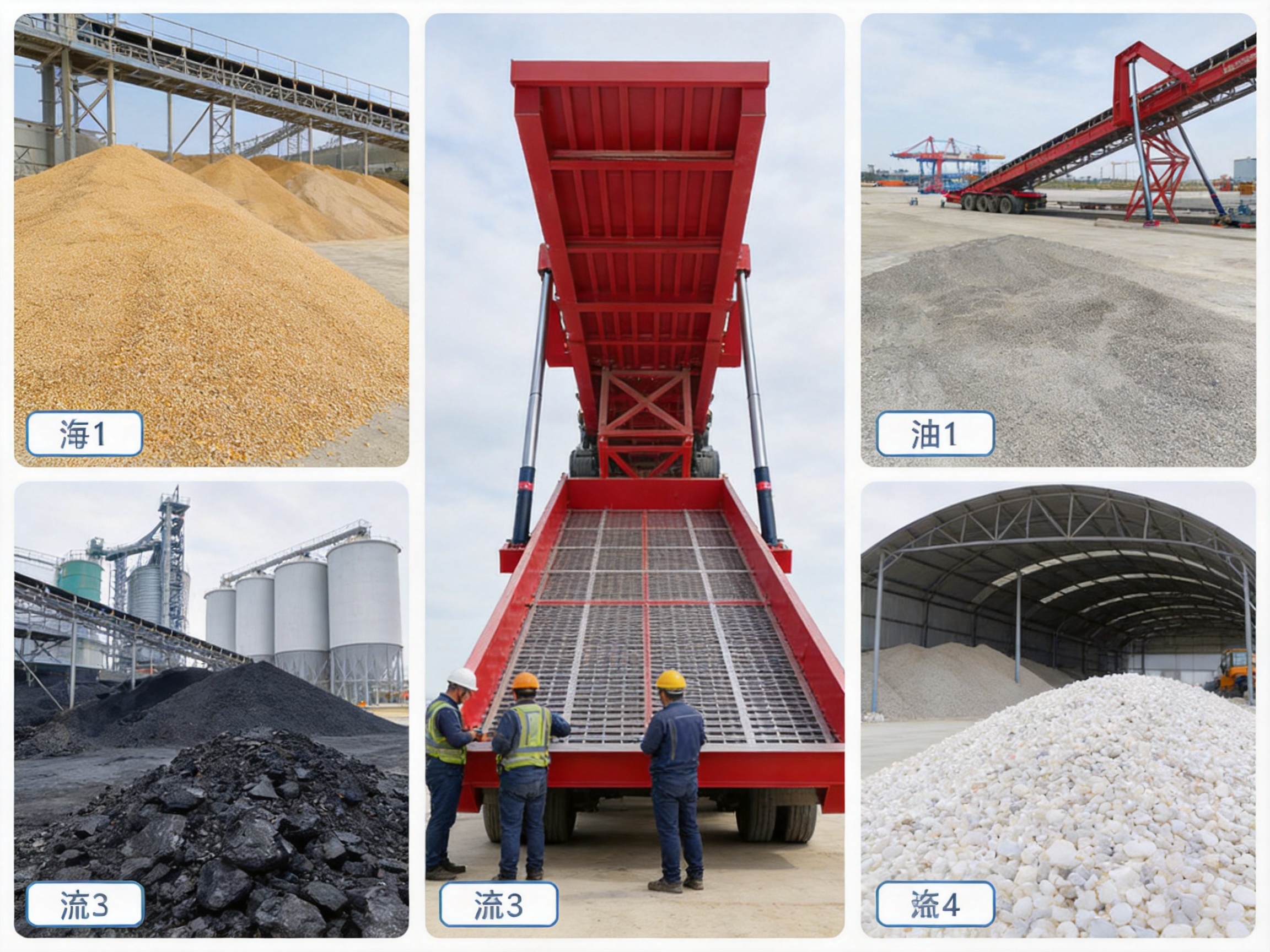
13. Frequently Asked Questions
Q1. What is the main difference between a shallow foundation dumper and a conventional dumper?
The main difference is the foundation arrangement. A conventional dumper commonly uses a deep underground pit, while a shallow foundation dumper uses a low-profile platform and a shallow foundation. This reduces excavation, concrete work, ramp requirements, and underground maintenance exposure.
Q2. How much can a shallow foundation design reduce construction cost?
Depending on soil conditions, foundation requirements, local construction prices, and site layout, the design may reduce civil engineering costs by approximately 60% to 70% compared with a conventional deep-pit system. A project-specific civil estimate is required to confirm the actual saving.
Q3. Can the dumper handle wet or sticky materials?
Yes. Wet or sticky materials may require UHMW-PE liners, vibration assistance, controlled lifting speed, a higher discharge angle, or a heated platform. Material testing and application engineering are recommended before finalizing the configuration.
Q4. What is the maximum particle size that can be unloaded?
Standard configurations can commonly handle particles up to approximately 80 millimeters. Larger aggregates in the range of 100 to 150 millimeters may require reinforced platforms and thicker wear plates, typically around 12 to 16 millimeters in selected areas.
Q5. Can the equipment be used for food-grade materials?
Yes. Food-grade versions can be manufactured with 304 or 316 stainless steel contact surfaces, suitable seals, smooth cleanable areas, and hygiene-oriented design features. Cleaning and product-changeover procedures must be established by the facility.
Q6. Does the shallow design reduce unloading efficiency?
A correctly engineered shallow dumper can provide unloading efficiency comparable to a deeper unit. The final result depends on material flowability, vehicle body design, tilt angle, platform surface, receiving hopper geometry, and operating speed. Free-flowing materials generally achieve the highest performance.
Q7. Is a dedicated operator required?
Not necessarily. The system can support unmanned or driver-operated unloading, depending on the selected automation package. Automatic wheel retention, safety interlocks, preset lifting sequences, and integrated controls can reduce the need for a dedicated operator.
Q8. What maintenance is required?
Maintenance includes inspection of hydraulic cylinders, pumps, hoses, seals, pins, platform welds, retaining devices, sensors, electrical cabinets, and wear liners. Abrasive applications require more frequent liner inspection, while corrosive and food-grade applications require additional seal, coating, and cleaning checks.
Q9. Can the dumper be installed at an existing facility?
Yes. The low-profile design is well suited to brownfield upgrades and sites where deep excavation is impractical. A site survey is required to confirm truck access, foundation conditions, receiving equipment, drainage, electrical supply, and available maintenance space.
Q10. What information is needed for a quotation?
The manufacturer normally needs the truck or trailer drawings, maximum gross weight, payload, dimensions, material details, required lifting angle, expected throughput, site layout, preferred automation level, and any food-grade, corrosion-resistant, dust-control, or hazardous-area requirements.
14. Why Choose an Integrated Equipment Manufacturer?
A truck dumper is only one component of a larger receiving operation. Choosing an equipment manufacturer with experience in truck loading, unloading, container handling, hydraulic systems, automation, and material-flow engineering can reduce interface problems during project execution.
Jiangsu Zhengding Intelligent Equipment Co., Ltd. has developed a broad range of intelligent loading and unloading equipment for automobiles and containers. Its products are used in steel, chemical, cement, coal, grain, oil, food, feed, port, papermaking, and new energy applications. The company serves domestic and international markets, including customers in Japan, Brazil, Egypt, Pakistan, India, the Middle East, and Southeast Asia.
The company’s experience with different industries supports the development of equipment for varied material properties and operating conditions. Its customer experience includes internationally recognized users in brewing, grain processing, agricultural commodities, chemicals, cement, and food-related industries. This broad application background helps inform platform design, automation planning, wear protection, and site integration.
For shallow foundation truck dumper projects, the company can provide site-specific engineering, foundation assessment, material-flow analysis, liner selection, equipment manufacturing, installation support, commissioning, and technical service. This integrated approach allows the final system to be matched to the customer’s actual trucks and materials rather than relying only on a standard catalog configuration.
Conclusion
Shallow foundation truck dumpers provide a practical alternative to conventional deep-pit unloading systems. Their low-profile design can reduce civil construction cost, simplify installation, preserve site space, and improve access for inspection and maintenance. Automatic wheel retention, synchronized hydraulic lifting, imported hydraulic components, and intelligent control options support safe and reliable operation with reduced operator involvement.
The equipment can handle a wide range of bulk materials, from grain and plastic pellets to cement, fertilizer, coal, minerals, and aggregates. Wear-resistant liners, stainless steel surfaces, UHMW-PE coatings, vibration systems, and heated platforms allow the design to be adapted to abrasive, corrosive, wet, sticky, or hygiene-sensitive products.
The greatest advantage is achieved when the dumper is engineered as part of a complete unloading system. Truck dimensions, material behavior, receiving equipment, foundation conditions, safety procedures, and automation requirements must all be considered together. With application-specific design and controlled manufacturing, a shallow foundation truck dumper can provide a durable, economical, and intelligent solution for modern bulk-material logistics.
References
1. Product technical information for TQXHC shallow foundation truck dumper models, including platform dimensions, lifting capacities, and lifting angles.
2. Manufacturer-provided information on hydraulic synchronous stability systems, automatic wheel-retaining devices, shallow foundation construction, and intelligent loading and unloading equipment.
3. Bulk-material handling engineering principles for truck dumpers, receiving hoppers, conveyors, and transfer systems.
4. Industrial guidance on wear-resistant steels, UHMW-PE liners, stainless steel equipment surfaces, and corrosion-resistant material-handling components.
5. General preventive-maintenance practices for hydraulic lifting platforms, industrial control systems, and bulk-material unloading equipment.
6. Application data supplied for grain, aggregates, cement, fertilizer, plastic pellets, coal, petroleum coke, and other bulk-solid handling operations.


