

 English
 русский
 Español
 Français
 Português
 عربى




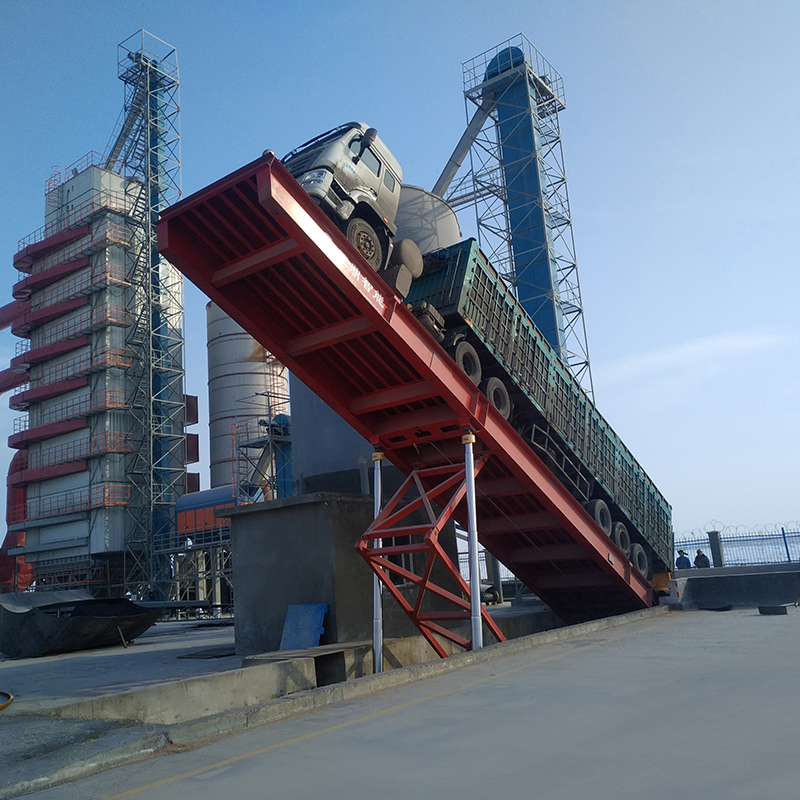
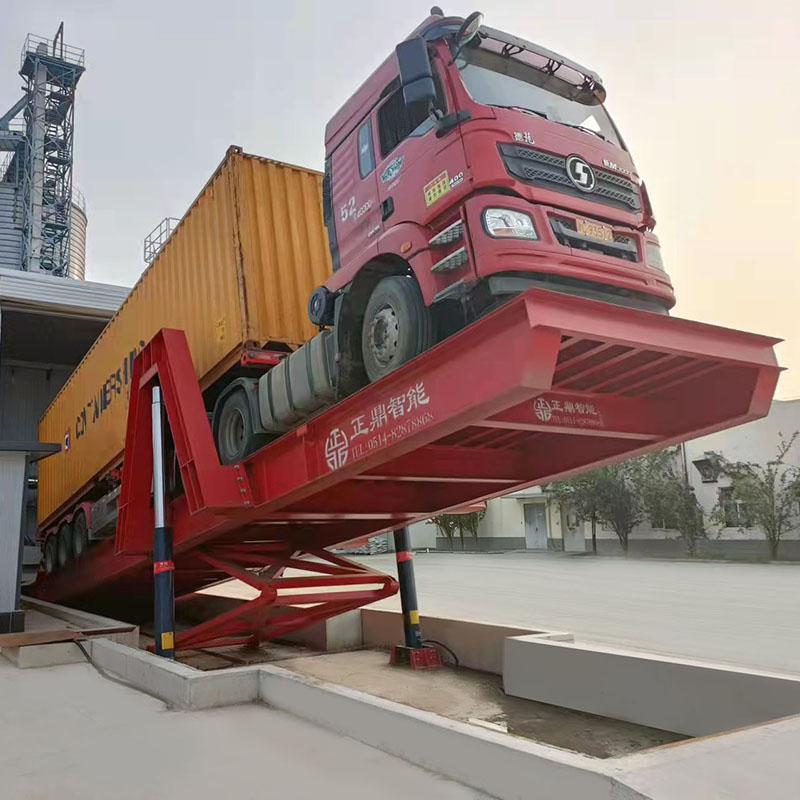
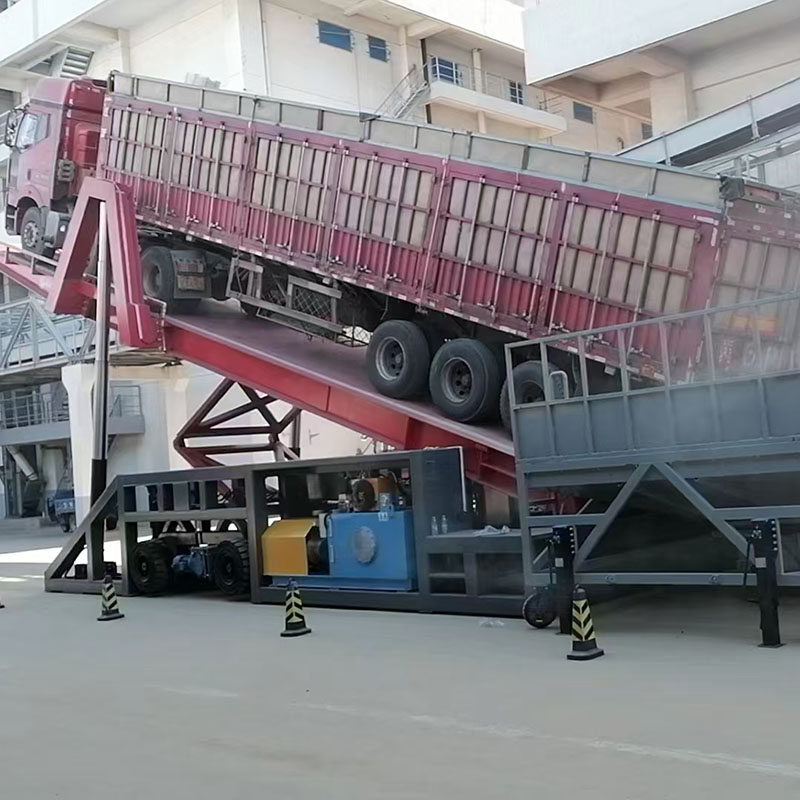
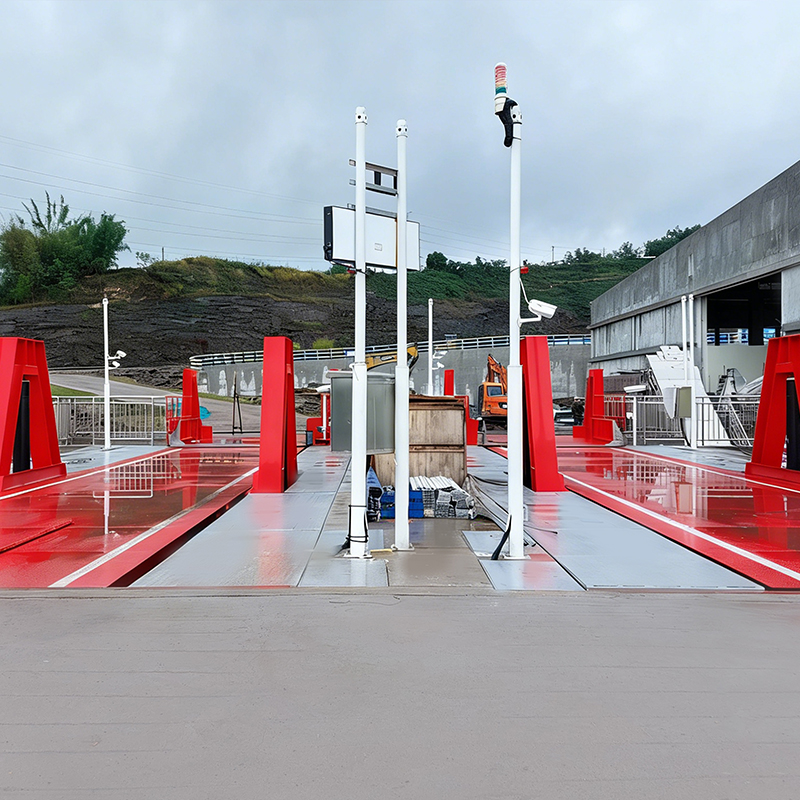

+86-13588556918
Content
- 1 1. What Is a Pitless Truck Dumper?
- 2 2. Why the Pitless Design Is an Advantage
- 3 3. Product Characteristics and Engineering Features
- 4 4. Technical Specifications
- 5 5. Site Planning and Installation Requirements
- 6 6. Installation Cost and Schedule Advantages
- 7 7. Manufacturing Strengths and Engineering Capability
- 8 8. Automation and Operating Workflow
- 9 9. Maintenance, Reliability, and Service Life
- 10 10. Comparison with Conventional Pit Dumpers
- 11 11. Recommended Project Evaluation Process
- 12 12. Frequently Asked Questions
- 12.1 Q1: What foundation does a pitless truck dumper require?
- 12.2 Q2: Is a pitless dumper suitable for a high groundwater site?
- 12.3 Q3: How high is the platform above the ground?
- 12.4 Q4: Can the dumper handle different truck types?
- 12.5 Q5: What lifting angles are available?
- 12.6 Q6: Does the equipment require an operator to hold a remote control during unloading?
- 12.7 Q7: Can a pitless dumper be moved later?
- 12.8 Q8: Is a pitless dumper less reliable than a pit dumper?
- 12.9 Q9: What materials can be unloaded?
- 12.10 Q10: Can the dumper be connected to an automated plant?
- 13 13. Conclusion
- 14 References
- 15 Product: Pitless Truck Dumper
Modern bulk-material facilities are under increasing pressure to unload trucks quickly, safely, and economically. Whether the material is grain, feed, coal, cement, chemical products, minerals, food ingredients, or industrial waste, the truck unloading station has a direct influence on the total efficiency of the plant. Delays at the unloading point create traffic congestion, increase labor costs, reduce vehicle utilization, and may interrupt production further downstream.
The pitless truck dumper provides an effective alternative to conventional in-ground unloading systems. Instead of requiring a deep excavation, reinforced concrete pit, extensive waterproofing, and prolonged civil construction, the pitless design is installed above ground on a prepared base, ramp, or customized support structure. This configuration greatly reduces civil engineering requirements while allowing the equipment to be integrated with existing hoppers, conveyors, silos, and production lines.
The pitless truck dumper described in this article is designed for rapid deployment, dependable hydraulic operation, automated vehicle restraint, and flexible adaptation to different site conditions. Its design is especially valuable for brownfield projects, plant upgrades, facilities with high groundwater levels, temporary or seasonal operations, and locations where stopping production for major construction work is not practical.
Manufactured by Jiangsu Zhengding Intelligent Equipment Co., Ltd., the equipment combines structural engineering, hydraulic lifting technology, automation, modular installation, and customized project support. The company develops and manufactures automatic loading and unloading equipment for vehicles, containers, ships, and industrial logistics applications. Its experience across grain, food, feed, coal, cement, chemical, steel, port, and other industries supports the development of unloading solutions adapted to different materials and operating environments.
Pitless Truck Dumper
1. What Is a Pitless Truck Dumper?
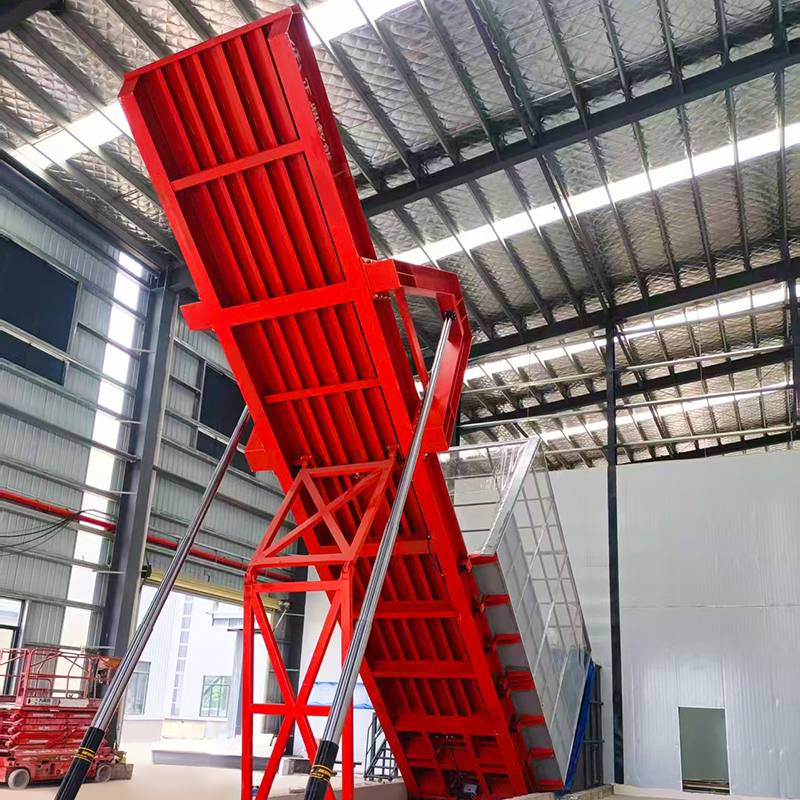
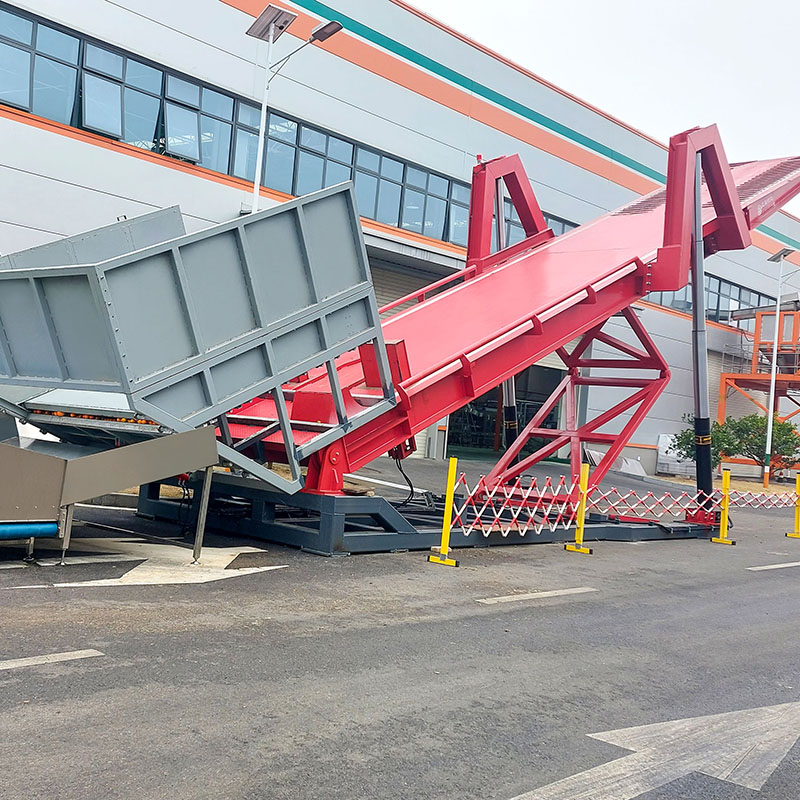
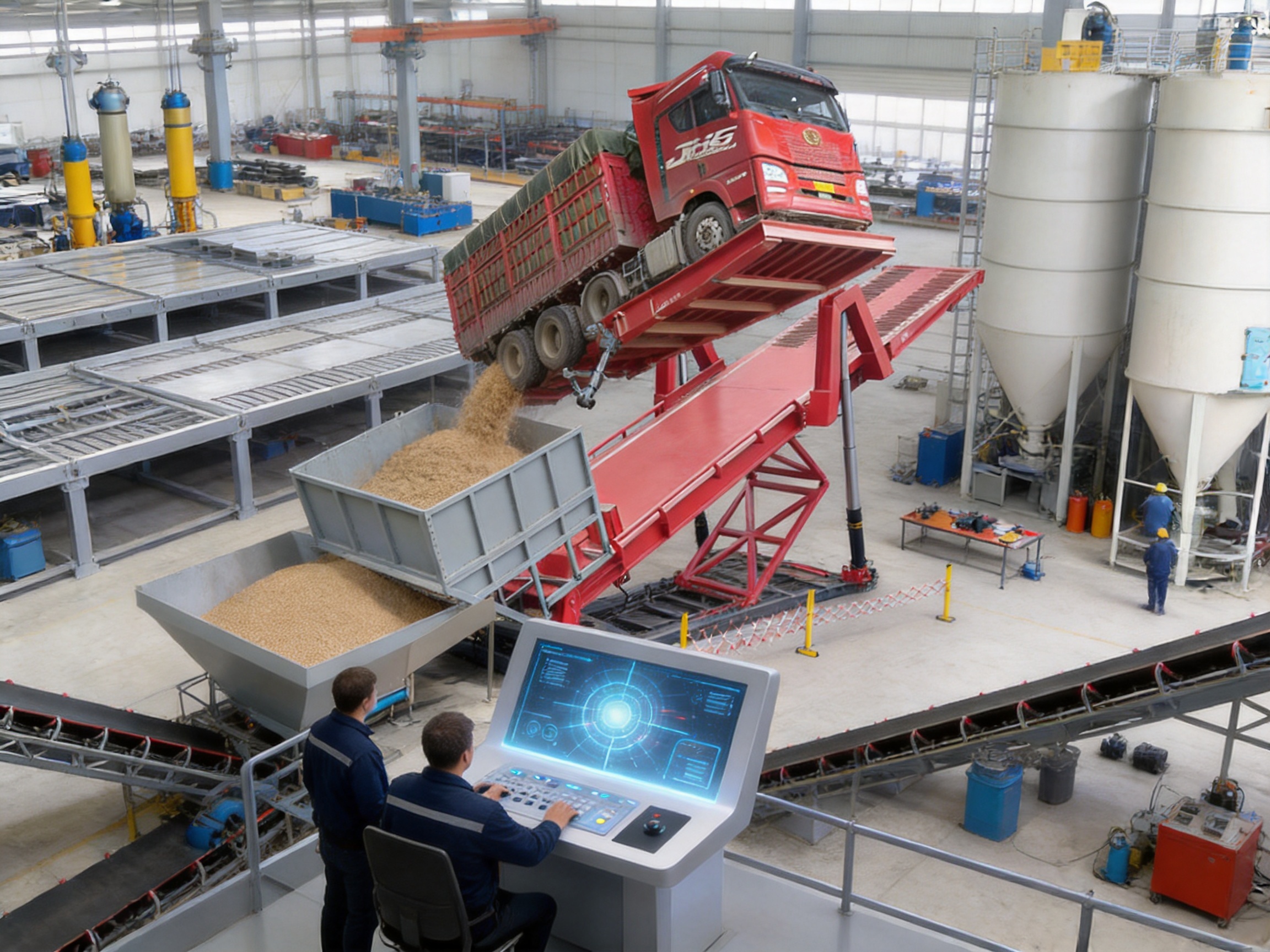
A pitless truck dumper is an above-ground truck unloading machine that tilts or raises a loaded vehicle so that bulk material can discharge into a receiving hopper or conveyor system. Unlike a traditional pit dumper, the platform is not installed inside a deep recessed foundation. The supporting base and approach structure are positioned above ground and can be designed according to the terrain, soil conditions, discharge elevation, and available site space.
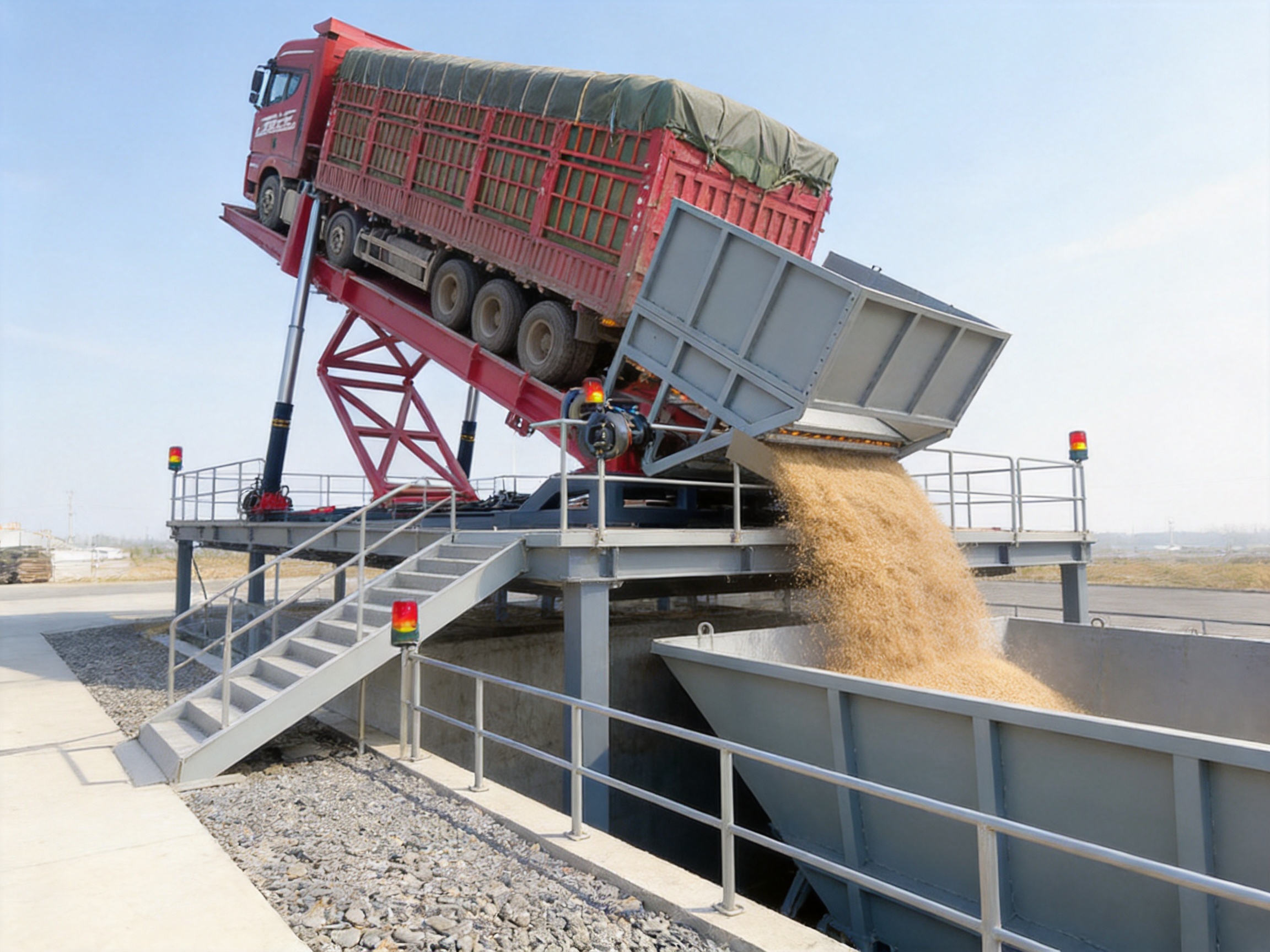
During operation, the truck is driven onto the platform and positioned against the retaining system. Once the vehicle is secured, the hydraulic cylinders raise one end of the platform. The truck body then reaches the required discharge angle, allowing the load to flow into the receiving hopper. After unloading, the platform returns smoothly to its original position and the vehicle can leave the station.
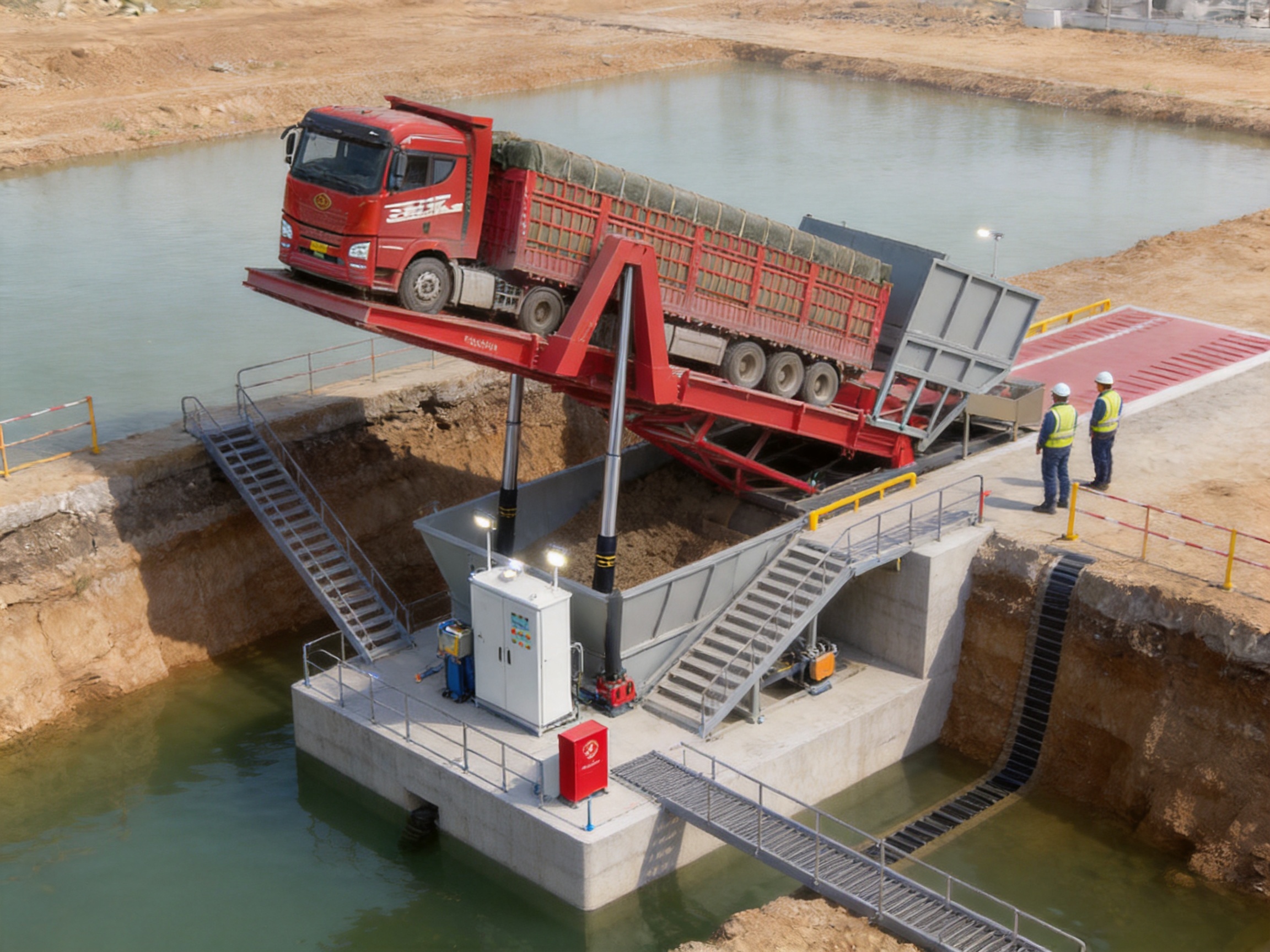
The absence of a deep pit is the defining feature of this product. A conventional pit-style dumper commonly requires excavation, retaining walls, reinforced concrete, drainage, waterproofing, dewatering, backfilling, and carefully coordinated civil engineering. The pitless model minimizes or eliminates many of these requirements. Depending on soil conditions and equipment capacity, the site may require compacted crushed stone, a concrete pad, shallow footings, or another engineered support base.
This design is not simply a smaller version of a pit dumper. It represents a different approach to site planning and plant integration. The equipment is engineered around an elevated discharge arrangement, approach ramps, structural supports, and an above-ground hydraulic platform. Consequently, the system can be installed where excavation is difficult, expensive, or disruptive.
Primary applications
Pitless truck dumpers are suitable for many industries that receive bulk materials by road. Typical applications include:
- Grain receiving and agricultural storage facilities.
- Feed mills and food-processing plants.
- Cement, limestone, gypsum, and mineral-handling facilities.
- Coal yards and power-generation support systems.
- Chemical-material unloading stations.
- Ports, transfer terminals, and logistics centers.
- Recycling and waste-processing facilities.
- Steel plants and foundries.
- Oilseed, flour, starch, and other agricultural-processing operations.
- Seasonal collection centers and temporary receiving stations.
The machine can be configured for different truck dimensions, payloads, wheel arrangements, discharge heights, and material-flow requirements. A site assessment is normally required before final specification because the ideal ramp length, platform size, lifting capacity, hopper height, and safety arrangement depend on the complete unloading process.
2. Why the Pitless Design Is an Advantage
The most important advantage of a pitless truck dumper is the reduction in civil engineering work. Deep excavation is often one of the most expensive and time-consuming parts of a truck dumper installation. It may also create risks related to groundwater, unstable soil, buried utilities, drainage, traffic access, and interruption of existing operations.
By placing the unloading platform above ground, the pitless design can reduce the amount of excavation and concrete construction required. The supplied project information indicates that civil engineering costs may be reduced by more than 90 percent in suitable applications compared with traditional pit construction. Actual savings vary according to local labor rates, soil conditions, groundwater levels, structural requirements, and the existing receiving system, but the potential economic benefit is significant.
Reduced excavation and foundation work
Traditional in-ground systems normally require a large excavation to accommodate the platform and truck body. The excavation must then be stabilized and converted into a durable, safe, and watertight structure. In contrast, a pitless dumper can be supported by an engineered above-ground base. This may involve compacted granular material, a concrete slab, steel supports, or a combination of these elements.
For most projects, the correct foundation should be determined through a site survey and, where necessary, a geotechnical evaluation. The provided technical guidance indicates that approximately 300 to 450 millimeters of compacted crushed stone may be adequate for many applications, while heavier units or weaker soils may require geotextile reinforcement, concrete footings, or a reinforced pad.
Lower groundwater risk
Groundwater is a major concern for in-ground equipment. A high water table can require continuous dewatering during construction and may create long-term leakage, corrosion, concrete deterioration, or pump-maintenance problems. Waterproofing membranes, drainage pumps, sump systems, and sealed joints add both capital and maintenance costs.
Because the pitless dumper does not depend on a deep underground chamber, it is particularly suitable for sites with shallow groundwater. It also reduces exposure to flooding and makes inspection of structural and hydraulic components easier. Facilities located near rivers, coastal areas, irrigation zones, or reclaimed land can benefit from this above-ground configuration.
Shorter installation time
A conventional pit dumper may require several weeks of excavation and concrete work before the mechanical equipment can be installed. The pitless system can often be assembled and commissioned much faster. Industry comparisons indicate that pitless dumpers may be installed in approximately 5 to 10 days in suitable projects, while pit-style installations may require 6 to 12 weeks, depending on construction complexity.
Shorter installation allows a facility to begin receiving revenue-generating operations sooner. It can also reduce the duration of production interruptions and lower the cost of temporary unloading arrangements. This benefit is especially important for seasonal grain facilities, rapidly expanding logistics sites, and factories that must continue operating while new unloading capacity is added.
Improved suitability for brownfield projects
Brownfield projects involve the upgrading or expansion of an existing facility. Such sites often contain buried pipes, electrical cables, drainage systems, foundations, roadways, and operating equipment. Excavating a deep pit can interfere with these assets and may require extensive relocation work.
A pitless dumper can often be installed beside an existing receiving area with fewer underground conflicts. Its base and approach ramps can be adapted to the available terrain. This flexibility makes the design suitable for plant modernization, capacity expansion, and replacement of outdated unloading equipment.
Potential for relocation
Some pitless dumpers can be designed for semi-mobile or mobile operation. A semi-mobile unit may be relocated by crane and low-bed trailer after disconnecting the required utilities. According to the supplied project information, certain configurations can be moved within approximately one to two days, although the actual time depends on size, transport regulations, site preparation, and the number of connected systems.
This relocation potential is a major advantage over a permanent pit structure. A company may move the equipment to another storage yard, construction site, seasonal collection point, or production facility as business needs change.
3. Product Characteristics and Engineering Features
The pitless truck dumper incorporates several technical features intended to improve operating stability, safety, service life, and ease of use. These features are based on the supplied product information and can be adapted during engineering design to meet particular customer requirements.
High-precision hydraulic cylinder synchronization
The lifting system uses a high-precision oil-cylinder synchronous stability system developed by the manufacturer. Synchronization is important because the platform must rise evenly on both sides. Uneven movement can create torsional stress, excessive vibration, unstable vehicle positioning, and additional loading on the hydraulic structure.
A synchronized lifting system helps maintain controlled platform movement throughout the lifting cycle. It also reduces sudden impact on the cylinders and supporting structure. Lower mechanical shock can extend the service life of hydraulic components and reduce wear on pins, bushings, brackets, hoses, and platform connections.
Stable movement is especially important when unloading vehicles with unevenly distributed loads. Bulk materials may shift as the truck body rises, causing changes in the center of gravity. Controlled hydraulic synchronization helps the platform respond safely to these changing conditions.
Automatic wheel-retaining device
The dumper includes a fully automatic wheel-retaining and vehicle-fixing device. Its purpose is to prevent unwanted vehicle movement during the lifting and discharge process. Once the truck reaches the correct position, the retaining system can secure the wheels without requiring an operator to hold a remote control continuously in a dusty or difficult environment.
This feature improves operating convenience and reduces the risk of human error. In conventional arrangements, an operator may need to remain close to the vehicle while simultaneously observing platform position, wheel alignment, hydraulic movement, and discharge behavior. Automatic wheel restraint simplifies the sequence and allows the operator to focus on overall process supervision.
Safety interlocks can be integrated into the control system so that lifting cannot begin unless the truck is correctly positioned and the retaining device is engaged. The final control logic should be customized according to the site risk assessment, local regulations, and customer operating procedures.
Imported hydraulic cylinders and pumps
The supplied product information states that imported hydraulic cylinders and pumps are used in the system. High-quality hydraulic components can provide stable pressure, accurate movement, reliable sealing, and long service life when properly selected and maintained.
The hydraulic power unit is a critical part of any truck dumper. It must deliver sufficient force to raise the platform and loaded vehicle while controlling movement during the complete lifting and lowering process. Proper hydraulic design also includes pressure protection, filtration, hose routing, emergency stopping, oil-temperature management, and access for inspection.
Component selection is matched to the dumper’s lifting capacity, platform dimensions, duty cycle, operating environment, and required lifting angle. Maintenance recommendations should include regular inspection of hydraulic oil, filters, hoses, cylinder seals, mounting pins, and pressure settings.
Above-ground base configuration
The base of the equipment can be designed according to the terrain and installation conditions. Since no deep foundation pit is required, the customer can select an appropriate support arrangement based on soil bearing capacity, local drainage, platform height, approach road geometry, and the receiving hopper location.
The above-ground design also simplifies visual inspection. Operators and maintenance personnel can more readily access the external structure, hydraulic equipment, and safety devices. Where protective covers or barriers are required, they can be included in the layout without compromising access.
Discharge-angle flexibility
The listed models offer maximum lifting angles of 45 degrees or 55 degrees. The required angle depends on material characteristics, truck-body geometry, moisture content, hopper design, and the desired discharge rate. Free-flowing grain may require a different angle from wet soil, sticky fertilizer, coal fines, or cohesive industrial by-products.
The platform and hydraulic system should be selected so that the dumper can achieve the required discharge angle without exceeding structural, hydraulic, or vehicle stability limits. The receiving hopper should also be designed to prevent bridging, excessive impact, dust release, and material accumulation.
4. Technical Specifications
The following table summarizes the main technical parameters provided for the standard pitless truck dumper models. The dimensions are presented as supplied and should be confirmed during the engineering stage because final platform size may vary according to truck type, local transport requirements, and the selected configuration.
| Model | Available Size L × W, m | Maximum Lifting Weight, t | Maximum Lifting Angle |
|---|---|---|---|
| TQXHC 60 | 14 × 3; 16 × 3; 18 × 3 | 80 | 45° / 55° |
| TQXHC 100 | 14 × 3; 16 × 3; 18 × 3 | 100 | 45° / 55° |
| TQXHC 120 | 16 × 3; 18 × 3; 20 × 3 | 120 | 45° / 55° |
The maximum lifting weight should not be confused with the material payload alone. The final engineering calculation must consider the combined weight of the truck, body, material, wheel loads, dynamic effects, and safety factors. Customers should provide the manufacturer with information about the heaviest truck, axle configuration, wheelbase, body dimensions, tare weight, maximum payload, and operating frequency.
Capacity selection
Capacity selection is one of the most important decisions in the purchasing process. A unit that is too small may create safety risks and operational bottlenecks. An excessively large unit may increase the initial investment and require unnecessary structural work.
| Truck Type | Typical Recommended Dumper Capacity | Important Considerations |
|---|---|---|
| Light-duty two-axle truck | 30 to 35 tons | Confirm vehicle length, wheelbase, and discharge-body dimensions. |
| Standard dump truck | 40 to 50 tons | Provide allowance for varying payloads and future fleet changes. |
| Heavy three-axle truck | 55 to 70 tons | Check axle loads, platform deflection, and hydraulic duty cycle. |
| Mining or off-road truck | 80 to 100 tons or more | Require detailed structural, foundation, and vehicle compatibility analysis. |
A practical selection principle is to specify capacity approximately 15 to 20 percent above the maximum expected operating load where appropriate. This allowance can accommodate occasional load variation and future fleet upgrades. The margin should not be used to justify routine overloading. Safe working limits remain essential for protecting personnel and equipment.
5. Site Planning and Installation Requirements
Although a pitless truck dumper reduces civil work, it is not a foundation-free machine. Correct site preparation is essential for safe operation, long-term stability, and accurate alignment with the receiving system.
Ground bearing capacity
The supporting ground must withstand the combined static and dynamic loads generated by the dumper, vehicle, and material. Soil investigations may be necessary for heavy units, weak ground, reclaimed land, or sites with variable soil layers. The design may include compacted aggregate, reinforced concrete, steel support frames, piles, geotextiles, or other engineered solutions.
Approach ramp design
The approach ramp must allow trucks to climb onto the platform safely. Ramp length directly influences the incline angle. A longer ramp generally creates a gentler approach, which is beneficial for low-clearance vehicles, long-wheelbase trucks, trailers, and vehicles with a high center of gravity.
| Factor | Lower Requirement | Higher Requirement | Design Response |
|---|---|---|---|
| Daily truck volume | Fewer than 50 trucks | More than 150 trucks | Consider automatic controls and optimized traffic flow for high volume. |
| Groundwater level | More than 3 meters below grade | Less than 1.5 meters below grade | Pitless configuration is strongly advantageous at shallow water tables. |
| Relocation requirement | Permanent installation | Possible relocation within three years | Specify modular or semi-mobile construction. |
| Available approach space | More than 30 meters | Less than 15 meters | Review ramp geometry or compare with alternative layouts. |
Discharge height and hopper alignment
A pitless dumper usually positions the truck platform approximately 0.6 to 1.2 meters above the surrounding ground, depending on the project design. This elevated arrangement must be coordinated with the receiving hopper, conveyor intake, dust-control system, and maintenance access.
Although the additional elevation may require modifications to an existing hopper, it can also improve material transfer. A correctly designed elevated discharge can reduce unnecessary impact, improve conveyor feeding, and limit dust generation. The transition between truck body, hopper, grating, and conveyor should be designed to prevent material spillage and buildup.
Traffic and safety layout
The unloading area should include adequate space for vehicle approach, alignment, stopping, exit, maintenance, and emergency access. Traffic routes should minimize reversing wherever possible. Clear signs, barriers, wheel guides, lighting, and pedestrian separation should be included in the site plan.
Safety measures may include emergency-stop stations, audible or visual warning devices, hydraulic overload protection, wheel restraints, access gates, guardrails, anti-slip surfaces, platform limit switches, and control-system interlocks. The specific arrangement should comply with applicable national and local safety requirements.
6. Installation Cost and Schedule Advantages
The economic value of a pitless truck dumper includes more than the purchase price. Customers should evaluate civil construction, project management, downtime, equipment commissioning, temporary unloading arrangements, future maintenance, and the potential cost of relocating the system.
An indicative comparison supplied for a typical project shows the following costs for a pit-style system: approximately 45,000 dollars for excavation, 65,000 dollars for concrete work, 25,000 dollars for dewatering, and 180,000 dollars for the dumper, producing a total of approximately 315,000 dollars. A corresponding pitless arrangement was estimated at approximately 8,000 dollars for grading, 15,000 dollars for the base, and 195,000 dollars for the dumper, producing a total of approximately 218,000 dollars.
These figures are examples rather than guaranteed quotations. Local construction costs, transport, steel prices, foundation requirements, automation level, hopper modifications, electrical work, and installation conditions can significantly affect the final project budget. Nevertheless, the comparison demonstrates how reduced civil engineering can create substantial savings.
The indicative difference between the two examples is approximately 97,000 dollars, or about 31 percent of the pit-style total. In sites with difficult groundwater conditions or major underground obstructions, the difference may be greater. A professional project estimate should be prepared after reviewing drawings, soil information, operating requirements, and existing plant conditions.
Installation sequence
A typical pitless dumper installation may include the following stages:
- Site survey and collection of vehicle, material, and process information.
- Confirmation of the equipment layout, ramp geometry, discharge height, and hopper interface.
- Preparation of the foundation or compacted support base.
- Delivery of modular structural sections and hydraulic components.
- Assembly and alignment of the platform, ramps, restraints, and safety equipment.
- Connection of hydraulic, electrical, control, and communication systems.
- No-load testing of lifting, lowering, synchronization, and emergency functions.
- Loaded testing with an approved vehicle under controlled conditions.
- Operator training, documentation review, and final commissioning.
Because the pitless configuration requires fewer underground operations, the construction cycle can be significantly shorter than that of a pit dumper. This does not eliminate the need for careful engineering. Faster installation is achieved through planning, modularity, factory preparation, and reduced civil scope.
7. Manufacturing Strengths and Engineering Capability
The quality of a truck dumper depends not only on its final assembly but also on the manufacturer’s ability to manage design, material selection, fabrication, hydraulic integration, electrical control, testing, and after-sales support as one complete process.
Jiangsu Zhengding Intelligent Equipment Co., Ltd. is a national high-tech enterprise engaged in the research, development, manufacturing, and sales of intelligent logistics equipment. The company provides automatic loading and unloading solutions for automobiles, containers, ships, and related material-handling applications.
Integrated product development
An integrated development approach allows the manufacturer to coordinate the mechanical platform, hydraulic system, wheel-retaining device, control panel, receiving hopper, and site layout. This is important because a dumper rarely operates as an isolated machine. Its performance depends on how effectively it connects with conveyors, elevators, storage bins, metering equipment, dust collectors, and plant-control systems.
The company’s product range includes rear dumpers, side-turn truck dumpers, vehicle loading equipment, container flippers, and other automated loading and unloading systems. Experience with different equipment types supports the development of project-specific configurations rather than one fixed design for every customer.
Hydraulic and structural engineering
The pitless dumper requires a carefully engineered relationship between platform structure, hydraulic cylinders, pump capacity, hinge points, support frames, and load distribution. During design, engineers must consider the position of the truck wheels, the center of gravity, the changing load path during lifting, platform deflection, fatigue, vibration, and emergency lowering.
High-precision cylinder synchronization is a key part of this engineering process. The lifting system must maintain balanced movement even when the load is not perfectly uniform. The use of reliable hydraulic cylinders and pumps, combined with suitable control logic and routine inspection, contributes to stable long-term operation.
Modular manufacturing
Modular ramp sections and structural components can simplify transport, installation, maintenance, and future relocation. Modularization also allows the manufacturer to configure different platform lengths and widths according to truck dimensions and site limitations.
Factory-based modular production can improve dimensional consistency and reduce the amount of cutting, welding, and adjustment required at the customer’s facility. It also makes it easier to inspect components before shipment and to prepare installation documentation for the field team.
Application experience across industries
The company’s equipment is used in steel, chemical, cement, coal, grain, oil, food, feed, port, papermaking, and new energy applications. Each industry presents different challenges. Grain and feed require attention to dust, sanitation, and flow continuity. Coal and minerals demand abrasion resistance and heavy-duty structural design. Chemical plants may require special material compatibility and environmental protection. Port and logistics applications often prioritize throughput, vehicle diversity, and continuous operation.
Experience across these sectors helps engineers identify practical issues before equipment delivery. These issues may include material bridging, dust escape, truck-body interference, poor traffic flow, inadequate maintenance access, excessive ramp slope, or insufficient receiving-hopper volume.
International project capability
The company’s equipment has been exported to Japan, Brazil, Egypt, Pakistan, India, the Middle East, Southeast Asia, and other markets. International project experience requires attention to different vehicle standards, electrical systems, documentation requirements, climate conditions, shipping methods, and local safety expectations.
The company has supplied equipment to or worked with recognized users and groups in beverage, grain, agricultural, food, chemical, industrial, and building-material sectors. This background demonstrates the ability to support projects where reliability, process continuity, and safety are essential.
8. Automation and Operating Workflow
A pitless dumper can be operated through a local control station, remote control, or an integrated plant automation system. The appropriate control level depends on daily truck volume, labor availability, safety policy, and the customer’s broader logistics strategy.
A typical automated sequence begins when a truck enters the receiving area. The driver follows the traffic guidance and positions the vehicle on the platform. Sensors or operator confirmation verify the position. The wheel-retaining device engages, and the system checks safety interlocks. If all conditions are satisfied, the hydraulic platform raises to the programmed angle.
During unloading, the operator monitors platform status, hydraulic pressure, material flow, and hopper level. Once the material has discharged, the platform lowers to its horizontal position. The retaining device releases only after the platform has reached the safe return position. Visual and audible signals can guide the driver during entry, unloading, and departure.
For high-throughput facilities, the dumper can be coordinated with conveyor start-up, hopper-level monitoring, dust collection, truck identification, weighing, and production-control systems. Automatic controls reduce repetitive manual operations and can improve consistency between unloading cycles.
Dust and material-flow control
Dust management should be considered at the design stage. The receiving hopper may be equipped with covers, skirts, aspiration points, filters, flexible seals, or other controls according to material characteristics. A smooth and appropriately controlled discharge can reduce impact and limit dust release.
Material flow depends on moisture, particle size, cohesion, temperature, and truck-body design. The hopper should be sized and shaped to avoid bridging and buildup. For sticky or difficult materials, liners, vibrators, air cannons, agitators, or specialized hopper geometry may be necessary.
9. Maintenance, Reliability, and Service Life
Reliable operation depends on proper maintenance as well as robust initial design. The operator should conduct routine inspections before each shift or operating period. These inspections may include checking wheel restraints, platform condition, hydraulic hoses, oil leaks, safety guards, warning devices, control buttons, emergency stops, and visible structural damage.
Regular maintenance should include hydraulic-oil inspection, filter replacement, cylinder-seal checks, lubrication of pins and bearings, examination of welds and bolted joints, and verification of limit switches. The maintenance schedule should be adjusted according to operating frequency, climate, dust level, load intensity, and material characteristics.
Dusty environments require particular attention to hydraulic seals, electrical enclosures, sensors, and moving joints. In cold regions, hydraulic-oil viscosity and starting procedures must be considered. In hot or humid environments, oil temperature, corrosion protection, and electrical cabinet ventilation may require additional measures.
The automatic wheel-retaining system should be tested regularly because it is a primary safety component. The platform should never be operated if the restraint device, emergency stop, hydraulic pressure protection, or position sensor is malfunctioning.
Design factors that support long service life
- Balanced hydraulic lifting reduces uneven cylinder loading.
- Controlled acceleration and deceleration reduce impact forces.
- Appropriate structural safety factors protect against repeated fatigue loads.
- Imported or high-quality hydraulic components improve reliability when maintained correctly.
- Modular construction simplifies replacement of worn sections.
- Above-ground accessibility supports faster inspection and repair.
- Automatic restraints reduce dependence on continuous manual positioning.
10. Comparison with Conventional Pit Dumpers
Both pit and pitless dumpers can provide effective truck unloading when correctly designed. The best choice depends on available space, discharge elevation, soil conditions, truck fleet, throughput, and the customer’s long-term plans.
| Evaluation Area | Pitless Dumper | Conventional Pit Dumper |
|---|---|---|
| Civil construction | Limited excavation; usually requires prepared base or shallow foundation. | Requires deep excavation, concrete structures, drainage, and often waterproofing. |
| Installation speed | Generally faster, especially for retrofit projects. | Usually slower because civil work must be completed first. |
| Groundwater suitability | Strong suitability for shallow water tables. | May require dewatering and waterproofing. |
| Discharge elevation | Elevated above ground; hopper alignment must be planned. | Closer to ground level in many installations. |
| Relocation | Possible with modular or semi-mobile configurations. | Normally permanent after construction. |
| Brownfield installation | Well suited to many existing facilities. | May interfere with underground utilities and structures. |
| Approach space | May require additional ramp length. | Can be advantageous where approach space is restricted. |
| Maintenance access | Above-ground components are generally easier to inspect. | Some components may be located inside or below grade. |
The pitless design is particularly competitive when the project emphasizes rapid installation, low civil cost, water-table avoidance, future relocation, or continued plant operation during construction. A pit dumper may remain appropriate where approach space is severely limited, an existing pit is already available, or the process requires a very low discharge arrangement.
11. Recommended Project Evaluation Process
Before ordering a pitless truck dumper, the customer should prepare a complete technical brief. The manufacturer can then evaluate the application and recommend the correct configuration.
- List all truck types, dimensions, tare weights, payloads, axle arrangements, and wheelbases.
- Record the maximum expected gross vehicle weight and operating frequency.
- Describe the material, including bulk density, moisture, particle size, abrasiveness, temperature, and flow behavior.
- Measure the available site length, width, elevation, turning radius, and approach space.
- Identify the receiving hopper, conveyor, silo, or processing system that will accept the discharged material.
- Determine the required discharge height and maximum lifting angle.
- Investigate soil conditions, groundwater depth, drainage, flood risk, and seismic requirements.
- Define the required automation level, weighing system, access control, and communication interface.
- Establish local safety, electrical, environmental, and construction requirements.
- Review maintenance access, spare parts, operator training, and service arrangements.
This information allows the engineering team to avoid common design errors. For example, a ramp may be too steep for a low-clearance vehicle, the receiving hopper may be too small for the selected payload, the platform may not accommodate the longest truck, or the foundation may not support the combined operating load.
12. Frequently Asked Questions
Q1: What foundation does a pitless truck dumper require?
A pitless dumper generally requires a compacted granular base, concrete pad, shallow foundation, steel support structure, or another engineered support arrangement. A typical project may use 300 to 450 millimeters of compacted crushed stone when soil conditions are suitable. Heavier equipment or weak ground may require geotextiles, reinforced concrete, footings, or a more detailed geotechnical solution.
Q2: Is a pitless dumper suitable for a high groundwater site?
Yes. The above-ground design is particularly advantageous where the groundwater table is shallow. It reduces the need for deep excavation, dewatering, waterproofing, and underground drainage. However, the site should still be evaluated for flooding, surface-water drainage, soil bearing capacity, and corrosion protection.
Q3: How high is the platform above the ground?
The platform is commonly positioned approximately 0.6 to 1.2 meters above ground, depending on the equipment layout and receiving-hopper elevation. The final height must be coordinated with the hopper, conveyor, truck body, ramp, and maintenance access.
Q4: Can the dumper handle different truck types?
Yes, provided that the platform dimensions, capacity, wheel-retaining arrangement, ramp design, and hydraulic system are specified for the vehicle fleet. Customers should provide complete truck information before design. If the fleet includes low-clearance vehicles, long chassis, trailers, or off-road trucks, the ramp and platform configuration may need to be customized.
Q5: What lifting angles are available?
The listed models provide maximum lifting angles of 45 degrees or 55 degrees. The appropriate angle depends on the material, truck-body geometry, hopper design, moisture, and required discharge performance.
Q6: Does the equipment require an operator to hold a remote control during unloading?
The automatic wheel-retaining device is designed to reduce the need for an operator to continuously hold a remote control in a dusty environment. The exact operating sequence depends on the selected control system, safety interlocks, and customer procedures. Operators must still supervise the process and respond to alarms or emergency conditions.
Q7: Can a pitless dumper be moved later?
Some semi-mobile configurations can be relocated using a crane and low-bed trailer. Certain units may be moved within approximately one to two days after utilities and connected equipment are disconnected. Relocation time depends on machine size, transport requirements, site preparation, and local regulations. A mobile-ready configuration should be specified before manufacture.
Q8: Is a pitless dumper less reliable than a pit dumper?
Reliability depends on structural design, hydraulic quality, installation, operating discipline, and maintenance rather than simply on whether the dumper is above ground or in a pit. The pitless arrangement can improve access to equipment for inspection and reduce exposure to underground water. Correct capacity selection and regular maintenance remain essential.
Q9: What materials can be unloaded?
The equipment can be configured for many bulk materials, including grain, feed, coal, cement, minerals, chemical products, food ingredients, oilseed products, and industrial materials. Material flowability, abrasiveness, moisture, temperature, and dust characteristics must be reviewed so that the hopper, liners, seals, and dust-control system are correctly selected.
Q10: Can the dumper be connected to an automated plant?
Yes. The dumper can be integrated with conveyors, hopper-level sensors, dust collectors, weighing systems, vehicle identification, local control panels, and broader plant-control systems. The required communication protocol and control sequence should be agreed during the engineering stage.
13. Conclusion
The pitless truck dumper offers a practical and technically advanced alternative to conventional in-ground unloading equipment. Its above-ground design reduces excavation, shortens installation, limits groundwater risk, and supports installation in existing facilities where major civil construction would be disruptive or expensive.
The product’s high-precision hydraulic synchronization system promotes stable lifting and reduces impact on the oil cylinders. Its automatic wheel-retaining device improves operational safety and convenience, while reliable hydraulic pumps and cylinders support long-term performance. Modular ramp sections, customizable platform dimensions, and semi-mobile options provide additional flexibility for customers with changing site or fleet requirements.
The equipment is particularly suitable for brownfield upgrades, high-water-table locations, seasonal facilities, logistics centers, grain and feed plants, mineral-handling operations, and industrial projects that need to begin operation quickly. It can be designed for capacities ranging from standard truck applications to heavy-duty vehicles of up to 120 tons of maximum lifting weight in the listed model range.
Jiangsu Zhengding Intelligent Equipment Co., Ltd. strengthens the product with integrated research and development, manufacturing, hydraulic engineering, automation capability, modular construction, project customization, and international application experience. Its wider product portfolio includes rear dumpers, side-turn truck dumpers, vehicle loading equipment, container flippers, and other automated loading and unloading systems.
For a successful project, customers should evaluate the truck fleet, material properties, site conditions, discharge elevation, ramp space, foundation requirements, automation level, and future relocation plans before final selection. With proper engineering and maintenance, a pitless truck dumper can reduce project complexity while improving unloading efficiency, safety, and long-term operational flexibility.
References
1. Product technical information for the TQXHC series pitless truck dumper, including model capacity, platform dimensions, and lifting-angle data.
2. Manufacturer-provided descriptions of hydraulic cylinder synchronization, automatic wheel-retaining systems, hydraulic components, and above-ground foundation design.
3. Manufacturer-provided company profile and industrial application information for Jiangsu Zhengding Intelligent Equipment Co., Ltd.
4. General engineering guidance for truck-dumper capacity selection, vehicle approach-ramp planning, hopper integration, and foundation assessment.
5. General industrial practice for hydraulic lifting equipment inspection, overload protection, emergency stopping, and vehicle restraint safety.
6. Comparative project estimates supplied for pit and pitless dumper civil construction, installation cost, and deployment schedule.


