

 English
 русский
 Español
 Français
 Português
 عربى





+86-13588556918
Content
- 1 What Is a Mobile Truck Dumper?
- 2 Why Mobility Matters in Truck Unloading
- 3 Core Design Features
- 4 Operational Advantages Over Fixed Dumpers
- 5 Capacity and Technical Performance
- 6 Applications Across Different Industries
- 7 Manufacturing and Engineering Strengths
- 8 Comparison With Conventional Fixed and Less Flexible Systems
- 9 How Mobile Dumpers Improve Throughput
- 10 Installation, Relocation, and Commissioning
- 11 Maintenance and Service Practices
- 12 Safety Requirements for Operators
- 13 Selecting the Right Configuration
- 14 Frequently Asked Questions
- 14.1 How quickly can a mobile truck dumper be moved to another location?
- 14.2 Can the dumper move under its own power?
- 14.3 What is the maximum capacity of the TQXHC100 model?
- 14.4 What lifting angles are available?
- 14.5 Can the equipment handle different truck sizes?
- 14.6 Does the machine require a permanent concrete foundation?
- 14.7 How does the automatic wheel-retaining device improve safety?
- 14.8 What industries can use mobile truck dumpers?
- 14.9 How should the dumper be maintained?
- 14.10 Can a mobile dumper support a facility during fixed dumper maintenance?
- 15 Supplier Capabilities and Customer Support
- 16 Conclusion
- 17 References
- 18 Product: Mobile Truck Dumpers
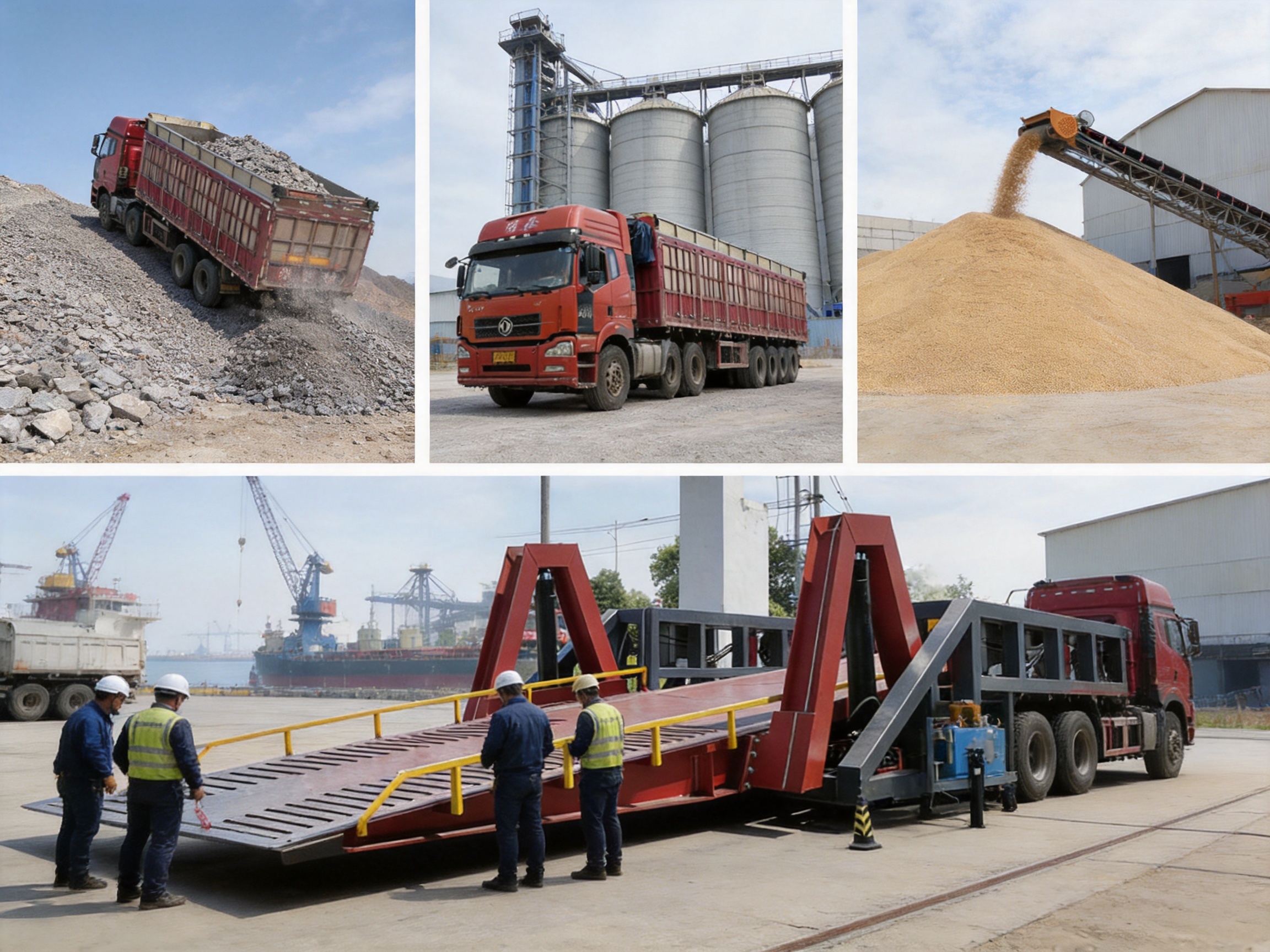
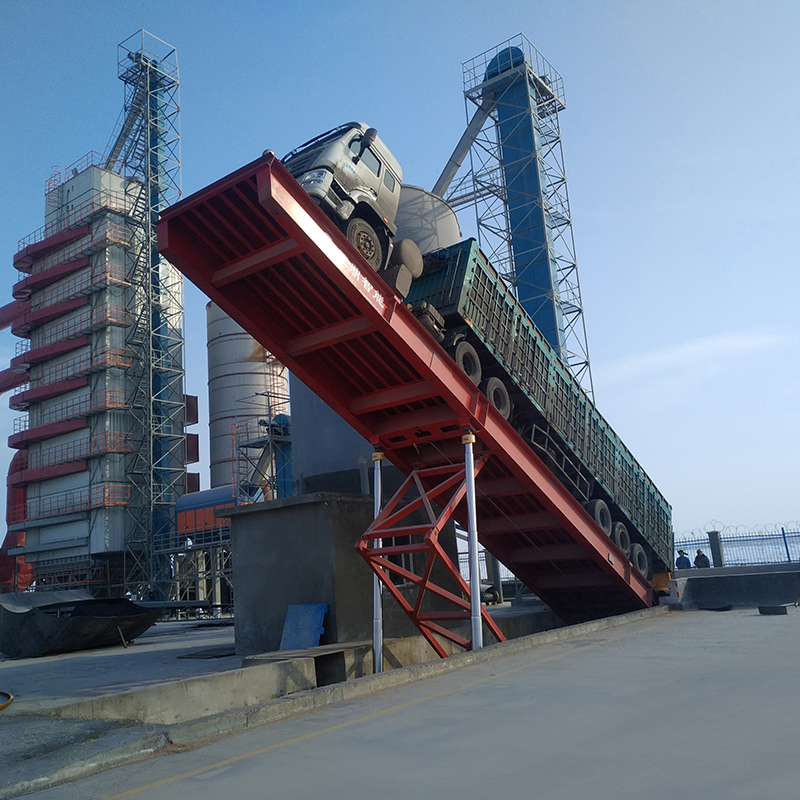
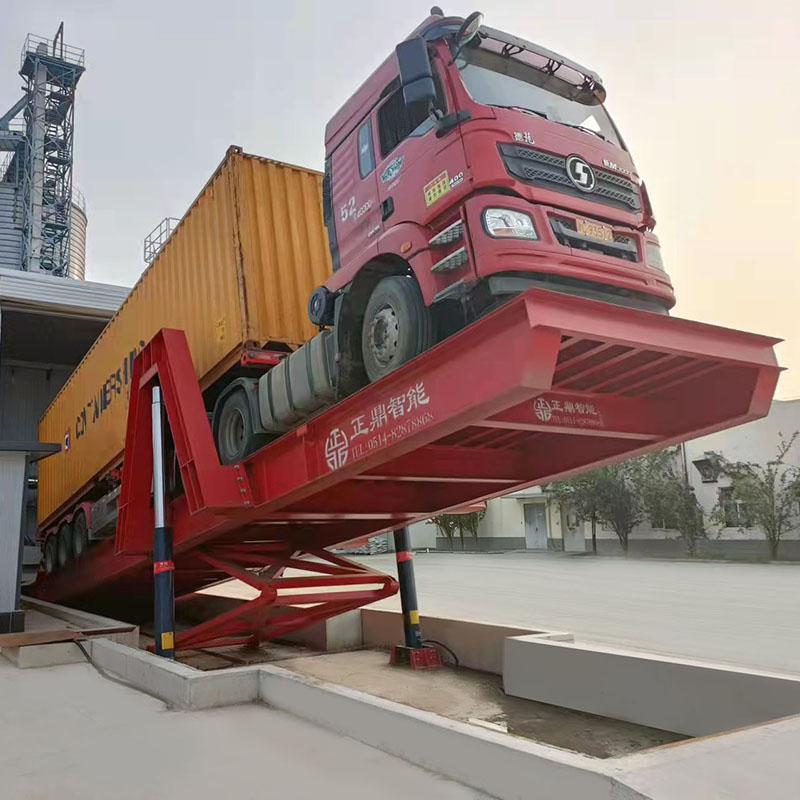
Mobile truck dumpers are changing the way bulk materials are unloaded at construction sites, mines, grain terminals, industrial plants, ports, and temporary logistics facilities. Instead of requiring every unloading point to be built around a permanent foundation, a mobile dumper can be transported, positioned, stabilized, and placed into service where the current material flow requires it. This combination of mobility, lifting capacity, hydraulic stability, and operational flexibility makes the equipment particularly valuable for businesses that manage several sites or experience seasonal changes in production volume.
A mobile truck dumper is more than a conventional unloading platform mounted on wheels. It is an integrated handling system that combines a heavy-duty structural platform, hydraulic lifting equipment, synchronized cylinders, wheel-retaining devices, control systems, mobility equipment, and safety features. The result is a machine that can move between operating zones while still delivering the controlled and powerful tipping performance expected from a fixed truck dumper.
The equipment described in this article is manufactured by Jiangsu Zhengding Intelligent Equipment Co., Ltd., a Chinese high-tech enterprise specializing in automated loading and unloading equipment for vehicles, containers, ships, and industrial logistics applications. Its product range includes rear dumpers, side-turn truck dumpers, container flippers, vehicle loading equipment, and related systems for bulk material handling.
Compared with conventional fixed dumpers, mobile truck dumpers provide significant advantages in deployment speed, site adaptability, truck routing, asset utilization, and temporary capacity expansion. Compared with less integrated mobile platforms, their advantages include a central support structure, on-the-spot turning capability, a high-precision cylinder synchronization system, automatic wheel-retaining equipment, and the option of either self-propelled travel or towing by a forklift and other traction equipment.
Mobile Truck Dumpers
What Is a Mobile Truck Dumper?
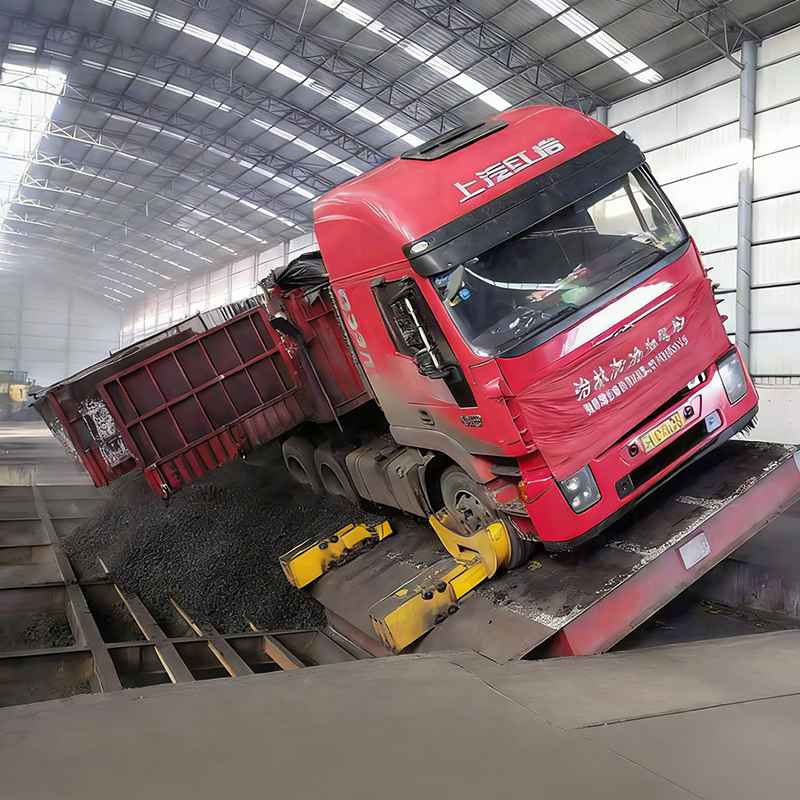
A mobile truck dumper is a transportable hydraulic unloading machine designed to raise a truck or vehicle platform to a specified angle so that bulk materials can discharge by gravity. Depending on the application, the material may include grain, feed, coal, cement, minerals, aggregates, chemicals, agricultural products, waste, or other free-flowing commodities.
Unlike a fixed dumper, which is permanently installed in a prepared civil foundation, a mobile dumper is designed for relocation. It can be moved to different unloading areas, project sites, stockpiles, processing lines, or temporary storage zones. This allows the unloading point to follow the material flow rather than forcing every truck to travel to a single permanent location.
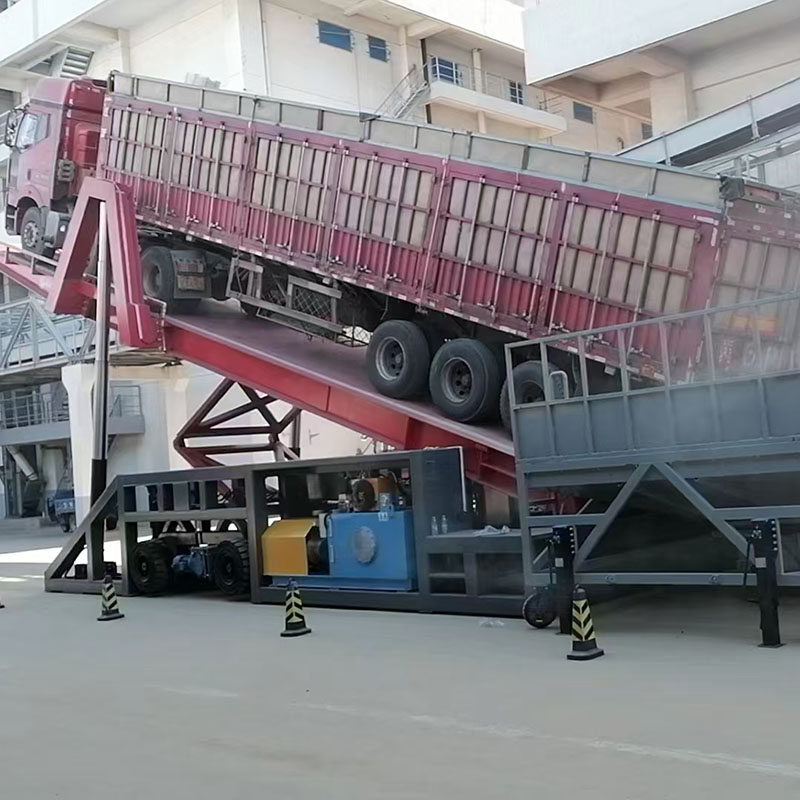
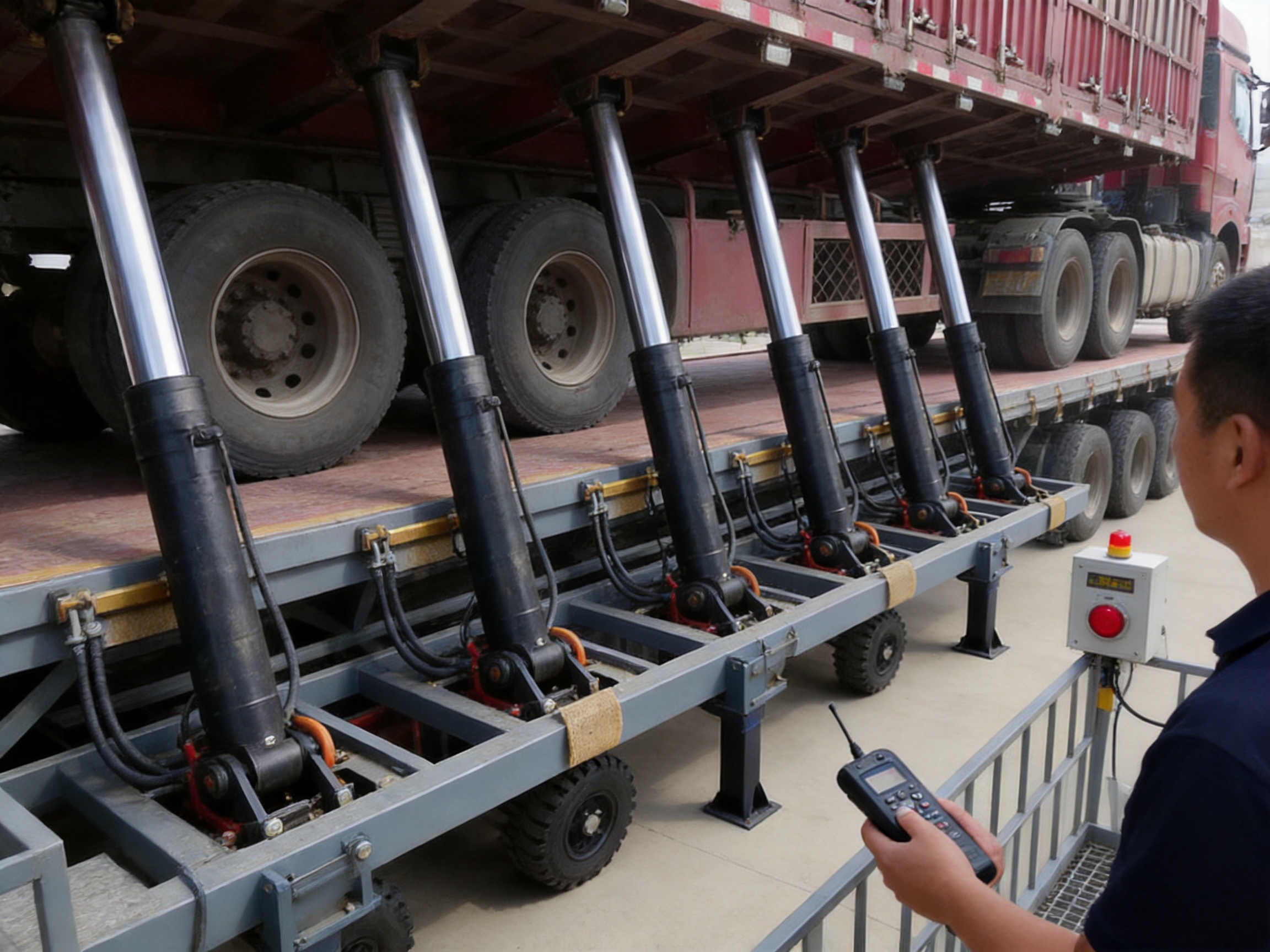
The mobile design typically incorporates a chassis, wheels or other transport components, hydraulic lifting equipment, stabilizing supports, ramps, wheel guides, a control system, and a power unit. Depending on the model and configuration, movement may be powered by the dumper itself or performed with a forklift, tractor, towing vehicle, or other suitable traction equipment.
The TQXHC100 model listed for this product has a maximum lifting capacity of 100 metric tons and maximum lifting angles of 45 degrees or 55 degrees, depending on the selected configuration. Its listed platform size options include lengths of 14, 16, and 18 meters with a width of 3 meters. Final specifications should be confirmed according to the truck dimensions, axle configuration, material characteristics, site conditions, and required unloading cycle.
Why Mobility Matters in Truck Unloading
Many industrial facilities are designed around a fixed material flow. Trucks enter the site, drive to a designated dumper, unload, and then travel to a stockpile, hopper, conveyor, or processing plant. This arrangement can work efficiently when production remains stable and all material is handled at one location. However, it creates limitations when the active work zone changes or when the distance between the dumper and the material destination becomes excessive.
A fixed unloading point may be inconvenient for construction contractors working on several projects. In mining and quarrying operations, extraction zones can move as the working face advances. In agriculture, collection points may change according to harvest conditions. In waste handling, temporary transfer areas can be established and removed as required. A mobile dumper allows the unloading system to be repositioned in response to these changes.
Positioning the dumper closer to the active work area can reduce internal truck travel. A shorter approach route reduces fuel use, lowers tire wear, decreases traffic congestion, and allows each truck to complete more unloading cycles during a shift. The benefit is especially important when the facility operates a large truck fleet or when the fixed dumper is located several hundred meters from the stockpile or processing equipment.
Mobility also improves business continuity. If a permanent dumper is being repaired, upgraded, or replaced, a mobile unit can provide temporary unloading capacity. It can also be deployed during peak seasons, construction phases, emergency material transfers, or production expansions before a permanent installation is completed.
Core Design Features
Central Support for a Small Turning Radius
The middle support design is one of the important features of this mobile truck dumper. By positioning the primary support structure centrally, the machine can perform turning movements around its middle section rather than requiring a large sweeping area. This enables on-the-spot 360-degree turning and significantly reduces the turning radius.
A small turning radius is valuable in crowded industrial yards, temporary construction sites, narrow access roads, and facilities where the dumper must be repositioned between buildings, storage piles, conveyors, or loading areas. The operator can make better use of the available space and spend less time preparing a long route for relocation.
The central support arrangement also contributes to balanced load distribution during lifting. The structural frame, hydraulic cylinders, and support points must work together to manage the weight of the truck and its cargo. A properly engineered central support structure helps maintain stability while the platform rises and while the load is discharged.
Self-Propelled Movement and Towing Capability
The equipment supports two basic relocation methods. When site conditions and configuration permit, the dumper can move under its own power. Alternatively, it can be towed by a forklift or another suitable traction unit. This dual approach gives operators greater flexibility when moving the machine across different work areas.
Self-propelled movement is useful when the dumper must be repositioned frequently or when no separate towing unit is immediately available. Towing is practical for planned relocation over a short distance, for transport within a plant, or for situations where the dumper’s own drive system is not required. The selected method should always comply with the operating manual, rated towing conditions, ground requirements, and applicable safety procedures.
Compared with fixed unloading equipment, this mobility eliminates much of the civil work associated with permanent installations. There is no need to construct a dedicated concrete pit every time the unloading point changes. The unit can be positioned on suitable compacted ground, stabilized, and prepared for operation according to the project requirements.
High-Precision Hydraulic Cylinder Synchronization
The hydraulic lifting system is central to the performance and safety of any truck dumper. The mobile dumper uses a high-precision oil cylinder synchronous stability system developed by the manufacturer. The system is designed to coordinate the movement of multiple hydraulic cylinders so that the platform rises in a controlled and balanced manner.
Synchronization reduces uneven loading between cylinders. When cylinders move at different speeds, the platform can experience twisting, vibration, or localized stress. These conditions increase the mechanical load on the cylinders and structural components. A coordinated system helps reduce such effects, allowing the platform to lift more smoothly.
According to the product information, the synchronous stability system provides high safety, low vibration during operation, and reduced impact on the oil cylinders. Lower vibration improves the working environment, reduces shock loads, and can extend the service life of hydraulic components when the dumper is operated and maintained correctly.
Hydraulic synchronization is especially important when the truck is loaded unevenly or when the material begins to shift during tipping. The control system must maintain stable lifting behavior while the center of gravity changes. Correct loading procedures, wheel retention, stabilizer deployment, and operator training remain essential, but the synchronized hydraulic design provides an important engineering foundation.
Automatic Wheel-Retaining Device
The dumper uses a fully automatic wheel-retaining and fixing device. Its purpose is to help secure the vehicle during the lifting and tipping cycle. The automatic arrangement reduces the need for an operator to manually perform additional wheel-fixing actions while holding a remote control in a dusty or difficult environment.
This feature improves operational simplicity. Once the truck is correctly positioned, the wheel-retaining mechanism can be engaged as part of the normal operating sequence. The operator can control the dumper from a safer position and does not need to remain beside the vehicle during every stage of the lifting process.
Automatic retention also supports consistency between operating cycles. Manual procedures can vary between operators, particularly during busy shifts or adverse weather. A properly designed automatic device helps standardize the securing process and reduces the likelihood of an incomplete manual action. Operators must still confirm that the truck is correctly aligned, the retaining device is engaged, and all safety conditions are satisfied before lifting.
Remote Control Operation
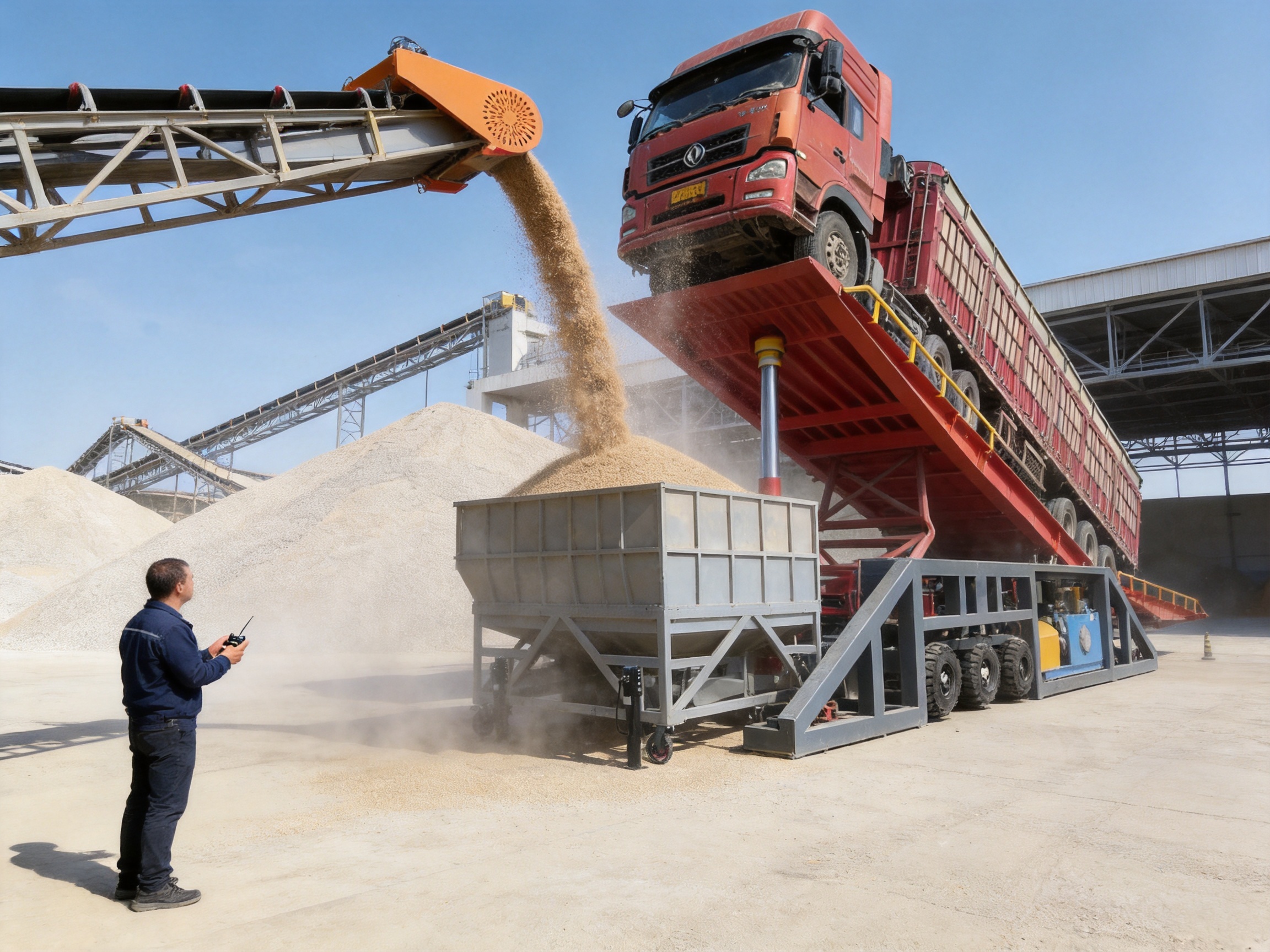
Remote control operation allows the dumper to be managed from a suitable distance. This is valuable in environments with dust, noise, moving vehicles, falling material, or restricted visibility. Remote operation can improve the operator’s ability to observe the overall lifting area rather than standing directly beside the platform.
A remote control system can also support more efficient positioning and monitoring. The operator may select the lifting, lowering, movement, or stopping functions while maintaining a clear view of the truck, wheel guides, ramps, and surrounding area. The exact control functions depend on the configuration supplied with the machine.
Remote operation does not eliminate the need for trained personnel. The operating zone should be controlled, unauthorized people should be kept away, and emergency stop functions should be checked regularly. Wireless control equipment should also be inspected for battery condition, signal reliability, physical damage, and correct function before each shift.
Operational Advantages Over Fixed Dumpers
Faster Deployment
A fixed dumper may require site surveys, foundation construction, drainage arrangements, electrical or hydraulic connections, and other civil works before it can operate. These steps can extend the time between purchasing the equipment and receiving the first productive unloading cycle.
A mobile unit is designed to reduce this delay. After transportation to the site, the equipment can be positioned, stabilized, connected or started, and tested. The exact preparation time depends on the ground, transport method, model, weather, and local safety requirements, but the basic concept is much faster than constructing a permanent unloading foundation.
This shortened deployment period is useful for contractors who need equipment at a new project quickly. It also benefits manufacturers that want to increase unloading capacity while a permanent plant expansion is still being designed. Seasonal businesses can deploy the machine during high-demand periods and relocate or store it when demand decreases.
Reduced Truck Travel Distance
Truck travel inside a facility is often an overlooked source of operating cost. Even when a vehicle is moving at low speed, every additional route adds fuel consumption, driving time, traffic interaction, and tire wear. The time becomes significant when multiplied by hundreds of trips per day.
A mobile dumper can be placed near the current stockpile, conveyor feed point, processing plant, or temporary storage area. This reduces the distance between the truck arrival point and the unloading location. The truck can complete its unloading cycle sooner and return to loading operations more quickly.
Shorter travel routes can also reduce congestion. When vehicles do not need to cross the entire yard, there are fewer interactions between loaded trucks, empty trucks, forklifts, loaders, and service vehicles. Better traffic flow can improve site safety and increase the predictability of the daily production schedule.
Multi-Site Asset Utilization
A fixed dumper is normally tied to one location. A mobile dumper can serve multiple locations sequentially or be combined with other mobile units during periods of high demand. This makes it possible to share equipment between project sites rather than installing a complete unloading system at every site.
For a contractor with several active operations, the dumper can be assigned to the site with the greatest immediate need. After the work phase changes, it can be moved to another location. This improves asset utilization and reduces the risk of owning equipment that remains idle outside the peak season.
Multiple-unit deployment can also support simultaneous operations. For example, a company may use one mobile dumper at a primary project and another at a secondary site. The equipment can be added or removed according to demand, providing a scalable alternative to a permanently oversized installation.
Support During Maintenance and Expansion
Industrial facilities cannot always stop production while a fixed dumper is repaired or upgraded. A mobile truck dumper can provide temporary unloading capacity during maintenance. It may also serve as a bypass unit while a conveyor, receiving pit, or permanent dumper is being modified.
This flexibility reduces the operational impact of planned shutdowns. It can also help a company continue receiving raw materials during an unexpected equipment failure, provided that the mobile unit is correctly matched to the required capacity and site conditions.
Capacity and Technical Performance
The TQXHC100 model is specified with a maximum lifting weight of 100 metric tons. This rating indicates that the dumper is designed for demanding vehicle and cargo combinations, although the actual allowable load must be determined from the complete operating specification. Vehicle tare weight, cargo weight, axle distribution, approach position, surface conditions, and lifting angle all influence safe operation.
The listed platform width is 3 meters, with platform length options of 14, 16, or 18 meters. These dimensions allow the machine to accommodate different truck configurations, subject to detailed engineering confirmation. Before ordering, users should provide truck drawings, wheelbase, axle spacing, overall length, tire dimensions, body shape, and expected loading conditions.
The maximum lifting angles are listed as 45 degrees and 55 degrees. A 45-degree angle may be appropriate for materials that discharge readily, while a 55-degree angle can provide additional assistance for materials with greater friction or cohesion. The correct angle depends on the material, truck body design, moisture content, temperature, and unloading requirements.
| Technical Item | Listed Specification or Feature | Operational Significance |
|---|---|---|
| Model | TQXHC100 | Heavy-duty mobile truck dumper configuration |
| Maximum lifting weight | 100 metric tons | Supports high-capacity vehicle and cargo combinations when correctly configured |
| Platform width | 3 meters | Provides a broad working surface for compatible truck types |
| Platform length options | 14, 16, or 18 meters | Allows adaptation to different vehicle dimensions |
| Maximum lifting angle | 45 degrees or 55 degrees | Supports gravity-assisted discharge for different materials |
| Movement method | Self-propelled or towed | Enables flexible relocation between operating areas |
| Turning capability | Central support with on-the-spot turning | Reduces turning space and improves site maneuverability |
| Hydraulic stability | High-precision cylinder synchronization system | Reduces vibration and uneven cylinder loading |
| Vehicle retention | Fully automatic wheel-fixing device | Improves consistency and simplifies operation |
| Control method | Remote control operation | Allows operation from a safer observation position |
The listed specifications should be treated as a starting point for engineering selection. A professional supplier should confirm the final configuration after reviewing the truck fleet, material properties, daily throughput, unloading frequency, ground bearing capacity, climate, and local regulatory requirements.
Applications Across Different Industries
Construction and Aggregates
Construction projects often move through several phases. During excavation, the active loading area may be far from the eventual stockpile or processing zone. A mobile dumper can be positioned near the current work area, reducing truck travel and helping the contractor maintain a predictable hauling cycle.
Aggregates producers may also use mobile dumpers near temporary storage areas or mobile crushing and screening equipment. When the processing line moves, the unloading point can move with it. This reduces the need for repeated civil construction and allows the material handling arrangement to remain aligned with production.
Mining and Quarrying
Mining operations require equipment that can withstand demanding loads and changing site conditions. As the working face advances, haul routes and material collection points can change. A mobile truck dumper provides an adaptable receiving point for overburden, ore, coal, or other bulk materials.
In quarrying, the dumper may be positioned near a crusher feed system, stockpile, or temporary transfer area. The machine’s high lifting capacity, synchronized cylinders, automatic wheel retention, and remote operation are valuable when working with heavy vehicles and large material volumes.
Grain, Feed, and Agricultural Materials
Agricultural businesses often experience major seasonal changes in truck arrivals. During harvest, receiving capacity may need to increase rapidly, while the same equipment may be used less intensively during the rest of the year. A mobile dumper can support temporary receiving points or be relocated between farms, grain terminals, and storage facilities.
Grain and feed materials generally flow effectively at suitable tipping angles, but moisture, contamination, and material bridging must still be considered. The receiving system should be integrated with conveyors, pits, screens, dust-control equipment, and storage systems according to the specific product.
Cement, Coal, and Mineral Products
Bulk mineral products can be heavy and abrasive, requiring robust structural components and carefully selected wear surfaces. A mobile truck dumper can be used to feed storage yards, conveyors, hoppers, or processing equipment. The final design should account for material density, impact loading, dust, corrosion, and cleaning procedures.
For coal and similar products, dust control and ignition prevention are important. The dumper should be integrated into the site’s environmental, electrical, and fire-safety procedures. The mobile design provides logistical flexibility, but it does not replace the need for a properly engineered material handling system.
Waste Management and Recycling
Waste transfer operations may change as collection volumes, sorting lines, and temporary storage zones change. Mobile dumpers can support flexible unloading at transfer stations, recycling plants, demolition projects, and temporary recovery facilities.
Waste streams may contain irregular objects, moisture, corrosive substances, or materials that do not flow uniformly. The truck body, tipping angle, receiving hopper, and cleaning arrangements should therefore be selected according to the waste type. Remote operation can provide additional separation between personnel and the unloading zone.
Ports and Temporary Logistics Areas
Ports, construction terminals, and temporary logistics hubs often need to handle bulk materials without committing immediately to a permanent civil installation. A mobile dumper can support temporary storage, ship-to-land transfer operations, construction supply chains, and seasonal cargo handling.
The machine can also serve as part of an emergency logistics plan. If a fixed receiving system becomes unavailable, a mobile unit may help maintain a basic unloading function while repairs or alternative arrangements are organized.
Manufacturing and Engineering Strengths
The performance of a mobile truck dumper depends not only on its basic concept but also on the quality of engineering, fabrication, assembly, hydraulic integration, and final testing. Jiangsu Zhengding Intelligent Equipment Co., Ltd. focuses on the research, development, manufacturing, and sales of intelligent loading and unloading equipment. This specialization allows the company to approach the dumper as part of a complete logistics system rather than as an isolated lifting platform.
Application-Oriented Engineering
Each unloading project has different requirements. A truck used for grain may have different dimensions and discharge behavior from a truck used for coal, aggregates, chemicals, or waste. The company’s equipment development approach covers vehicle loading and unloading, container handling, rear dumping, side-turn dumping, and related automation.
This broad product experience supports application-oriented design. The equipment can be evaluated according to truck geometry, load distribution, material characteristics, discharge direction, available space, operating frequency, and integration with conveyors or storage equipment. A project-specific approach is often more effective than using a standard machine without considering the surrounding process.
Structural and Hydraulic Integration
A mobile dumper must combine structural strength with transportability. The platform needs to carry heavy loads and withstand repeated lifting cycles, yet the chassis and support arrangement must remain suitable for relocation. Hydraulic cylinders, pins, hinges, wheel guides, stabilizers, and locking devices must work together without creating unnecessary stress concentrations.
The manufacturer’s high-precision cylinder synchronization system reflects the importance of hydraulic integration. Instead of treating the cylinders as independent lifting components, the design coordinates their movement to improve stability and reduce vibration. This approach can reduce shock loading and support longer component service life when maintenance and operating procedures are followed.
Safety-Centered Equipment Development
Safety is built into several aspects of the design. The automatic wheel-retaining device helps secure the truck. The central support structure improves maneuverability and supports stable positioning. Remote control operation permits the operator to remain away from the immediate lifting area. Hydraulic synchronization helps reduce uneven movement and sudden vibration.
These features work together as a safety system. No single component can replace correct site preparation, load verification, traffic control, emergency procedures, inspection, and operator training. However, equipment that incorporates multiple protective functions can reduce dependence on manual actions and improve consistency between unloading cycles.
Manufacturing Quality Control
Reliable heavy equipment requires controlled manufacturing from material preparation through final assembly. Important quality activities include reviewing engineering drawings, checking structural dimensions, inspecting welds, verifying hydraulic connections, testing control functions, and confirming that safety devices respond correctly.
For mobile truck dumpers, quality control should also address wheel alignment, chassis movement, stabilizer operation, cylinder synchronization, platform travel, limit protection, emergency stopping, remote control communication, and load-related testing. The final inspection should confirm that the machine behaves predictably under operating conditions representative of the intended application.
Because the company manufactures several types of automated loading and unloading equipment, it can apply experience from rear dumpers, side-turn dumpers, container flippers, and vehicle loading systems to the development of mobile truck dumper solutions. This product breadth supports the design of complete material handling arrangements when customers require more than one piece of equipment.
International Project Experience
The company reports that its products are used in steel, chemical, cement, coal, grain, oil, food, feed, port, papermaking, and new energy applications. Its equipment has also been exported to Japan, Brazil, Egypt, Pakistan, India, the Middle East, and Southeast Asia.
International project experience requires attention to different truck designs, operating practices, climates, safety expectations, and logistics conditions. It also encourages the manufacturer to develop equipment that can be adapted to diverse site requirements. Reported users include companies such as Budweiser, Heineken, Bühler Group, Wilmar International, Cargill, DuPont, Louis Dreyfus, Charoen Pokphand Group, and Saint-Gobain Group.
Comparison With Conventional Fixed and Less Flexible Systems
| Comparison Point | Fixed Truck Dumper | Basic Mobile Platform | Integrated Mobile Truck Dumper |
|---|---|---|---|
| Installation approach | Permanent civil foundation usually required | May require external preparation | Designed for transportable deployment and site repositioning |
| Relocation | Generally impractical | May require lifting equipment | Self-propelled movement or towing capability |
| Turning space | Determined by fixed site layout | Depends on chassis design | Central support enables a reduced turning radius |
| Hydraulic movement | May use fixed synchronized systems | Feature level varies | High-precision cylinder synchronization system |
| Vehicle securing | Often integrated into the pit or platform | May rely on manual procedures | Fully automatic wheel-retaining device |
| Control method | Local or remote, depending on installation | Varies by model | Remote operation for improved operating distance |
| Multi-site use | Limited to one site | Possible but may be difficult | Designed for relocation between operating zones |
| Temporary capacity | Not easily added or removed | Possible with additional handling arrangements | Suitable for temporary, seasonal, and emergency capacity |
The comparison shows that the main advantage of an integrated mobile dumper is not simply the presence of wheels. The value comes from combining mobility with controlled lifting, automatic securing, centralized support, remote operation, and high-capacity structural design. These features allow the machine to function as a practical production asset rather than merely as a transportable platform.
How Mobile Dumpers Improve Throughput
Truck throughput is determined by more than the time required to raise and lower the platform. The complete cycle includes vehicle arrival, positioning, wheel retention, lifting, unloading, lowering, release, departure, and travel to the next loading point. A mobile dumper can reduce the travel and queuing portions of this cycle by operating close to the active material zone.
For example, if a fixed dumper requires a truck to travel several hundred meters across a plant before unloading, every trip includes additional approach and departure time. If the mobile dumper is positioned near the stockpile or receiving hopper, the same vehicle can return to loading sooner. Across a fleet of trucks, a small reduction in each cycle can create a substantial increase in daily output.
Mobile deployment can also reduce queue formation. When the dumper is placed at the active zone, trucks do not need to converge on one distant unloading point. Multiple mobile units can be used during peak periods, allowing the operator to distribute unloading demand across different work areas.
Actual productivity depends on many variables, including truck capacity, material flowability, loader performance, road conditions, driver behavior, dumper cycle time, receiving equipment, and site organization. Therefore, performance improvements should be calculated using project-specific data rather than assumed as a universal percentage.
Installation, Relocation, and Commissioning
The first step in deploying a mobile dumper is selecting a suitable operating surface. The ground must be sufficiently firm, level, and capable of supporting the equipment, truck, and material load. Drainage, access, overhead clearance, underground services, and traffic routes should be reviewed before positioning the machine.
After the unit arrives, the operator should inspect the chassis, platform, hydraulic lines, support components, wheel-retaining system, controls, emergency stops, and safety signage. Stabilizers or support legs should be deployed according to the instructions. Ramps and wheel guides should be checked for correct alignment before the first truck enters.
Relocation should be planned rather than treated as an improvised movement. The area should be cleared of personnel and obstacles. If towing is used, the towing vehicle must be suitable for the machine’s weight and ground conditions. Connections, brakes, lighting, travel locks, and clearance should be inspected before movement.
After relocation, the dumper should be stabilized again and function-tested. The truck approach path should be checked, and the wheel-retaining device should be tested before a loaded vehicle is lifted. Commissioning procedures should include a no-load test followed by a controlled operational test, subject to the manufacturer’s instructions.
Maintenance and Service Practices
Regular maintenance protects the hydraulic system, structural frame, control equipment, and mobility components. Daily inspections should look for oil leakage, damaged hoses, loose fasteners, abnormal noises, damaged cables, worn wheel guides, and deformation around the platform and support points.
Hydraulic oil level and condition should be checked at the intervals specified by the manufacturer. Contaminated oil can damage valves, pumps, cylinders, and seals. Hydraulic connections should be kept clean, and any leak should be repaired before continued operation.
The cylinder synchronization system should be monitored for uneven movement, unusual vibration, delayed response, or abnormal pressure behavior. These symptoms may indicate a hydraulic, sensor, mechanical, or control issue. The dumper should be removed from service until the cause is identified and corrected.
Wheel-retaining devices require regular inspection because they are directly related to vehicle security. The mechanism should move freely, engage completely, and release only when the platform is in the correct safe position. Remote controls, batteries, emergency stops, and signal functions should be tested routinely.
Maintenance records should include inspection dates, operating hours, hydraulic service, component replacement, safety tests, and reported faults. Good documentation helps identify recurring problems and supports preventive maintenance planning.
Safety Requirements for Operators
Only trained and authorized personnel should operate a mobile truck dumper. Operators should understand the lifting sequence, load limits, truck positioning requirements, emergency stopping procedure, and site traffic rules. Training should include practical operation as well as inspection and hazard recognition.
No person should remain beneath or beside the raised platform unless the machine is fully secured according to an approved maintenance procedure. Personnel should stay outside the danger zone during lifting and unloading. The remote control should be used from a position with a clear view of the truck and platform.
The truck must be centered correctly, and its load should be distributed within the approved limits. An uneven or unstable load can shift during lifting and create additional forces. The wheel-retaining device must be engaged before the lifting cycle begins.
Wind, rain, snow, ice, poor visibility, soft ground, and nearby vehicle movement can affect safe operation. The equipment should not be used when conditions exceed the manufacturer’s permitted limits. Emergency procedures should cover power loss, hydraulic failure, truck movement, material blockage, communication failure, and unauthorized entry into the operating area.
Selecting the Right Configuration
Purchasers should begin with the truck fleet rather than selecting a dumper based only on nominal lifting capacity. Important information includes truck length, width, wheelbase, axle spacing, tire type, tare weight, gross vehicle weight, body height, body hinge position, and discharge direction.
Material properties are equally important. Bulk density, moisture, particle size, temperature, abrasiveness, cohesion, and flow behavior influence the required lifting angle and receiving arrangement. A material that flows freely at 45 degrees may require a greater angle or additional assistance under different moisture conditions.
Daily throughput should be calculated from the number of trucks, load size, shift duration, arrival pattern, loading rate, and unloading cycle. The dumper should not be selected solely for the largest occasional load if the normal operation has different requirements. At the same time, adequate capacity should be reserved for dynamic effects and future operating changes.
Site conditions should include ground bearing capacity, available turning space, approach road width, slopes, overhead structures, drainage, dust control, electrical supply, and access for maintenance. The mobility advantage is greatest when the machine can be moved safely and efficiently between practical operating areas.
Frequently Asked Questions
How quickly can a mobile truck dumper be moved to another location?
Relocation time depends on the distance, ground conditions, transport method, site preparation, and model configuration. In a typical planned move, the machine can be disconnected or prepared for towing, transported to the new position, stabilized, and function-tested. The supplied product information indicates that many mobile dumpers can be made operational within approximately two to four hours when handled by two trained workers, although actual time should be confirmed for the specific project.
Can the dumper move under its own power?
Yes. The product is designed to support self-powered movement. It can also be moved with a forklift or other suitable traction equipment. The appropriate method depends on the machine configuration, travel distance, ground conditions, and site safety plan.
What is the maximum capacity of the TQXHC100 model?
The listed maximum lifting weight of the TQXHC100 model is 100 metric tons. The final allowable operating load must be confirmed according to the complete technical documentation, truck geometry, load distribution, lifting angle, and ground conditions.
What lifting angles are available?
The listed maximum lifting angles are 45 degrees and 55 degrees. The suitable angle depends on the material and truck body. Materials with different moisture, density, or cohesiveness may require different tipping conditions.
Can the equipment handle different truck sizes?
It can be configured for different vehicle dimensions, subject to engineering confirmation. Truck length, width, axle arrangement, wheelbase, tire size, body shape, and gross weight should be submitted before final selection. Platform dimensions and wheel guides must match the vehicles that will use the dumper.
Does the machine require a permanent concrete foundation?
The mobile design is intended to reduce or eliminate the need for a permanent foundation in suitable temporary applications. However, the equipment still requires a firm, stable, and appropriately prepared operating surface. Ground preparation and support requirements should be confirmed for each site.
How does the automatic wheel-retaining device improve safety?
The device helps secure the truck during lifting and reduces reliance on manual wheel-fixing actions. It also allows the operator to control the equipment remotely from a safer observation position. Operators must still verify correct truck alignment and complete engagement before lifting.
What industries can use mobile truck dumpers?
Typical applications include construction, aggregates, mining, quarrying, grain, feed, cement, coal, chemicals, food materials, waste management, recycling, ports, papermaking, and new energy material handling. The correct configuration depends on the vehicle and bulk material.
How should the dumper be maintained?
Maintenance should include hydraulic oil and hose inspection, cylinder and synchronization checks, wheel-retaining device testing, structural and weld inspection, control system testing, remote-control inspection, chassis and wheel checks, lubrication, and review of emergency stops. The manufacturer’s maintenance schedule should take priority.
Can a mobile dumper support a facility during fixed dumper maintenance?
Yes. A mobile unit can provide temporary unloading capacity while a fixed dumper, receiving pit, conveyor, or related system is under maintenance or upgrade. The temporary arrangement must be evaluated for capacity, traffic flow, ground conditions, and integration with the receiving process.
Supplier Capabilities and Customer Support
Jiangsu Zhengding Intelligent Equipment Co., Ltd. provides automated loading and unloading equipment for vehicles, containers, ships, and industrial logistics systems. Its product portfolio includes rear dumpers, side-turn truck dumpers, vehicle loading equipment, container flippers, and customized unloading solutions.
The company’s focus on multiple industries enables it to address complete handling requirements rather than only supplying a lifting platform. Depending on the project, the solution may include truck positioning, vehicle retention, hydraulic lifting, remote control, metering, conveyors, hoppers, storage interfaces, and automated process coordination.
Its reported export markets and industrial applications demonstrate experience with different operating environments. Customers evaluating a mobile dumper should request a technical proposal based on their actual truck drawings, material data, required throughput, and site layout. A detailed proposal should clarify capacity, platform size, lifting angle, movement method, power supply, control functions, safety devices, delivery scope, installation support, commissioning, and spare parts.
For technical discussions, the company can be contacted through its commercial channels. The listed company address is 217 Kaifa West Road, Hanjiang District, Yangzhou City, Jiangsu Province, China. Contact details provided for the company include the telephone number +86-13588556918 and the email address cnwzb@163.com.
Conclusion
Mobile truck dumpers provide a practical response to the changing requirements of modern bulk logistics. They reduce dependence on permanent unloading locations, shorten truck travel routes, support temporary and seasonal operations, and allow unloading capacity to follow the active work zone.
The equipment described here combines self-propelled or towed movement, central support, on-the-spot turning, a high-precision hydraulic cylinder synchronization system, automatic wheel retention, and remote control operation. The TQXHC100 model offers a listed maximum lifting capacity of 100 metric tons, platform width of 3 meters, several platform length options, and lifting angles of 45 or 55 degrees.
Its competitive value lies in the integration of mobility and heavy-duty unloading performance. A mobile platform without reliable hydraulic synchronization may compromise stability. A dumper without automatic vehicle retention may depend too heavily on manual procedures. A large machine without a compact turning arrangement may be difficult to reposition. By combining these functions, the system is designed to provide flexibility without sacrificing controlled operation.
Jiangsu Zhengding Intelligent Equipment Co., Ltd. strengthens this product offering through specialized experience in automated vehicle and container loading and unloading equipment, application-oriented engineering, hydraulic and structural integration, manufacturing capability, and international project experience. For companies seeking faster deployment, multi-site asset utilization, temporary capacity, or improved truck-cycle efficiency, a properly selected mobile truck dumper can become an important part of a safer and more adaptable material handling system.
References
1. Jiangsu Zhengding Intelligent Equipment Co., Ltd., Mobile Truck Dumpers Product Information and Technical Parameters.
2. Jiangsu Zhengding Intelligent Equipment Co., Ltd., Company Profile and Automated Loading and Unloading Equipment Overview.
3. International Organization for Standardization, General Principles for the Safety of Machinery and Industrial Equipment.
4. International Labour Organization, Guidelines for Occupational Safety in Material Handling Operations.
5. CEMA, Bulk Material Handling and Conveyor System Engineering Principles.
6. Manufacturer operating, inspection, maintenance, and safety documentation for hydraulic truck dumpers.


