

 English
 русский
 Español
 Français
 Português
 عربى





+86-13588556918
Content
- 1 1. The Role of a Drum Groats Cutter in Modern Grain Processing
- 2 2. Product Overview and Main Processing Function
- 3 3. Stainless-Steel Cutting Drum and Hygienic Construction
- 4 4. Working Principle of the Cutting Process
- 5 5. Adjustable Rotation Speed for Different Kernel Sizes
- 6 6. Product Uniformity and Steel-Cut Oat Quality
- 7 7. Low Cutting Waste and Efficient Use of Raw Material
- 8 8. Energy Consumption and Operating Economy
- 9 9. Comparison with Conventional Crushing and Impact Equipment
- 10 10. Multi-Grain Application Capability
- 11 11. Position in a Complete Oat-Processing Line
- 12 12. Manufacturing Strengths and Engineering Capability
- 13 13. Installation and Commissioning Recommendations
- 14 14. Maintenance and Service Life
- 15 15. Safety Considerations
- 16 16. Economic Benefits for Processors
- 17 17. Recommended Operating Practices
- 18 18. Questions and Answers
- 18.1 Q1: What is the primary function of the Drum Groats Cutter?
- 18.2 Q2: What output can the YQL50 model achieve?
- 18.3 Q3: How much cutting waste should be expected?
- 18.4 Q4: Can the machine process grains other than oats?
- 18.5 Q5: Why is the cutting drum made from stainless steel?
- 18.6 Q6: Can one machine produce different groat sizes?
- 18.7 Q7: Is a separate screening machine required?
- 18.8 Q8: What raw-material preparation is recommended?
- 18.9 Q9: How should the equipment be maintained?
- 18.10 Q10: What types of companies can benefit from this equipment?
- 18.11 Q11: How does the equipment compare with a hammer mill?
- 18.12 Q12: Can the machine be integrated into an automated production line?
- 19 19. Conclusion
- 20 References
- 21 Product: Drum Groats Cutter
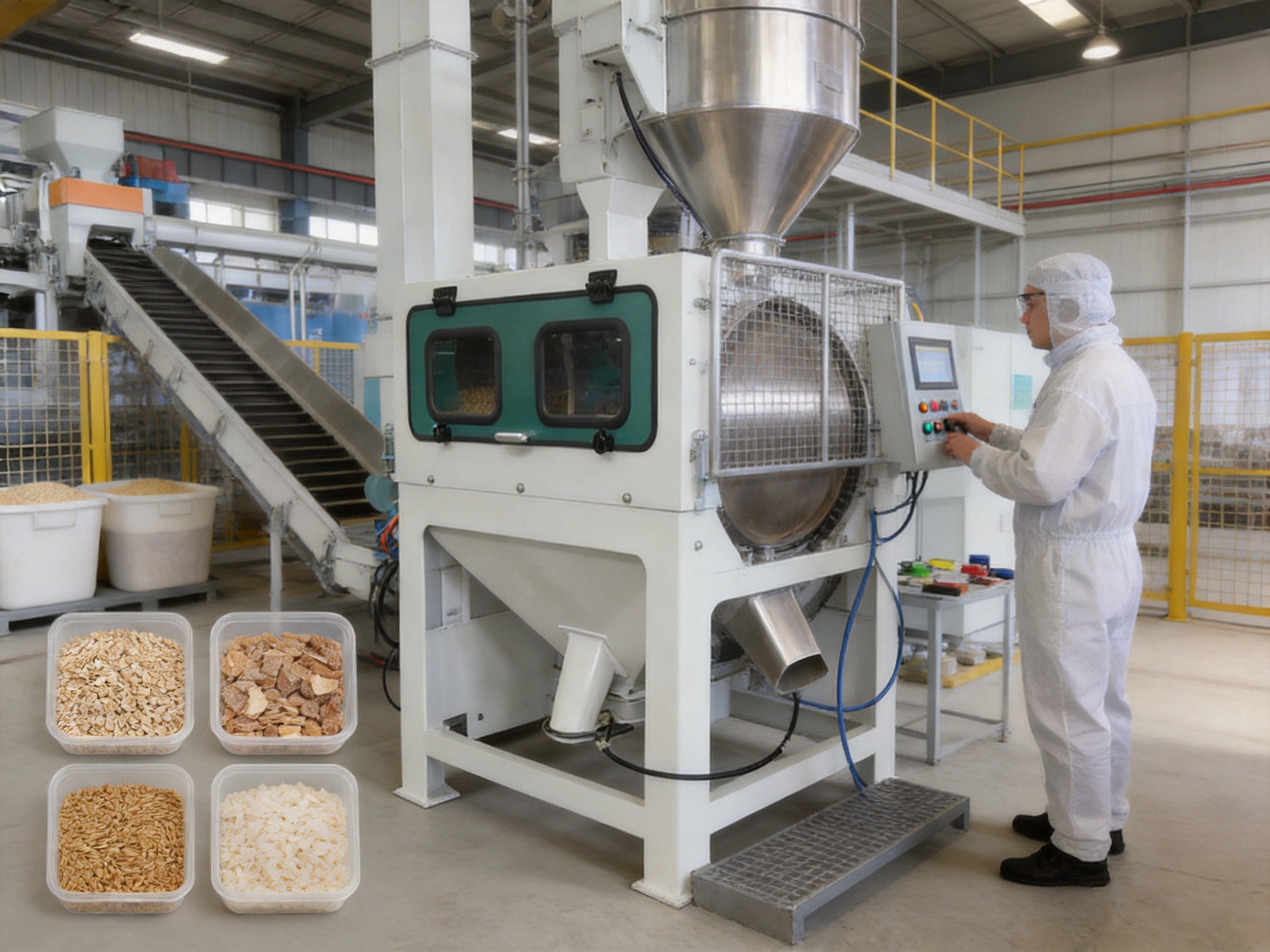
In modern grain-processing plants, the quality of the cutting stage has a direct influence on product appearance, cooking performance, downstream packaging, and customer acceptance. Oat kernels must be cut into consistent segments to produce steel-cut oats with a stable particle-size distribution. If the cutting process is poorly controlled, the finished product may contain excessive fines, oversized pieces, irregular fragments, and unnecessary waste. These problems can reduce production efficiency and make it difficult to supply fine, medium, and coarse groats according to market requirements.
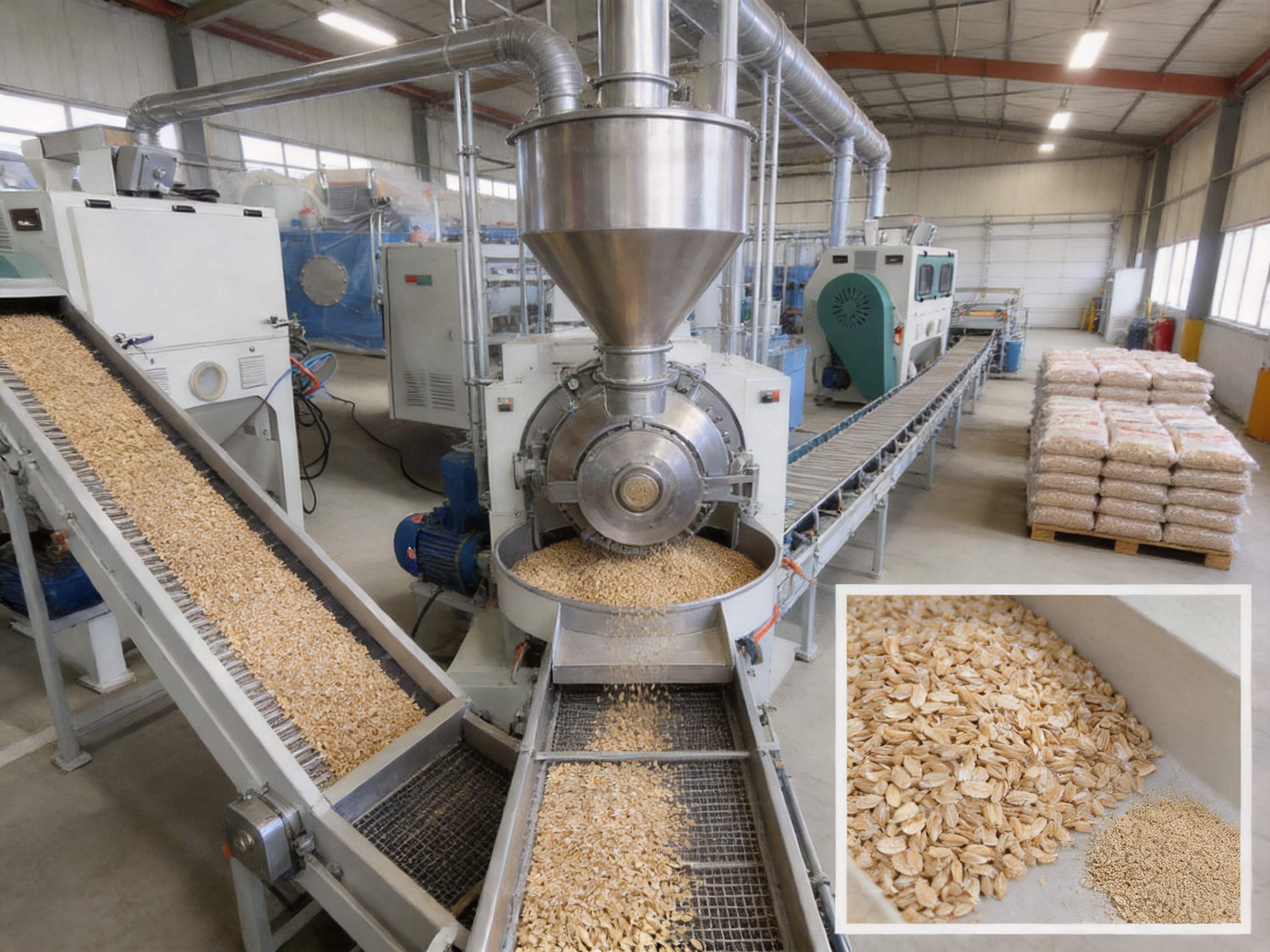
The Drum Groats Cutter is designed to address these challenges. It is an oat-processing machine that cuts dehulled oat kernels into approximately three to four segments of relatively uniform size. Its stainless-steel cutting drum provides durability and corrosion resistance, while the increased number of working holes improves production capacity. Adjustable rotational speed allows operators to process kernels with different lengths and adapt the machine to different product specifications.
Although primarily developed for oats, the equipment can also be applied to barley, rye, wheat, and rice. This multi-grain capability gives processors greater flexibility when planning production lines. A single machine can support several product categories without requiring a completely different cutting system for every grain. For companies seeking reliable, economical, and hygienic size reduction, the Drum Groats Cutter offers an efficient solution that combines a practical mechanical design with straightforward operation and maintenance.
1. The Role of a Drum Groats Cutter in Modern Grain Processing
Groats are whole or partially processed cereal kernels that have had the outer husk or hull removed. In the case of oats, dehulled kernels can be sold as whole groats, rolled into flakes, milled into flour, or cut into smaller pieces for steel-cut oat products. The cutting process is particularly important because the final size of the pieces influences cooking time, texture, water absorption, appearance, and packaging performance.
A traditional size-reduction process may produce a mixture of large fragments, small particles, and fines. Such a mixture can be unsuitable for premium breakfast cereals, where consumers expect a clean and consistent appearance. It can also create difficulties in subsequent processing. Fine particles may generate dust, while oversized pieces may require screening and return to the production line. Every additional recycle step increases energy use and reduces effective capacity.
The Drum Groats Cutter is designed specifically to make a clean and controlled cut through dehulled kernels. Instead of relying primarily on impact or uncontrolled crushing, the cutting drum separates kernels through a coordinated cutting action. This approach helps produce segments with a more consistent size and limits cutting waste to less than 1 percent under suitable operating conditions.
For oat processors, this performance is valuable in several ways. First, a higher proportion of the raw material can be converted into saleable steel-cut oats. Second, the product requires less correction after cutting. Third, the processor can more easily maintain separate grades for fine, medium, and coarse groats. Finally, lower waste and low energy consumption help reduce the cost per ton of finished product.
2. Product Overview and Main Processing Function
The Drum Groats Cutter is an industrial oat-processing machine developed to cut dehulled kernels into three to four segments. The machine is suitable for the production of uniform steel-cut oats and can be installed as part of a complete grain-processing line. Depending on the desired finished product, it can produce fine, medium, or coarse kernel pieces.
The central working component is a rotating cutting drum. The drum is manufactured from stainless steel, a material selected for long service life, good resistance to corrosion, and suitability for food-processing environments. By increasing the number of working holes on the drum, the equipment provides more active cutting positions during operation. This design improvement increases the volume of material that can be processed during each rotation and contributes to higher production capacity.
During operation, cleaned and dehulled kernels enter the cutting chamber. The rotating drum guides the kernels toward the cutting openings, where the mechanical cutting action divides them into smaller sections. The rotation speed can be adjusted according to kernel length, hardness, moisture condition, and required product grade. This flexibility is important because different grain varieties do not always respond identically to the same cutting speed.
The machine is not limited to one final particle size. By selecting an appropriate rotational speed and matching the operating conditions to the raw material, processors can manufacture different grades. Fine groats may be used in quick-cooking cereal products, medium pieces may be used for standard steel-cut oats, and coarse pieces may be preferred for products emphasizing texture and extended cooking performance.
The standard product model supplied in the available technical information is YQL50. It uses a 1.5 kW motor and offers an output of approximately 0.8 to 1.0 tons per hour when processing oats. The specified cutting waste is no more than 1 percent. Actual capacity may vary according to kernel moisture, cleaning quality, feed consistency, operator settings, and the required degree of size uniformity.
| Item | Technical Specification |
|---|---|
| Product | Drum Groats Cutter |
| Model | YQL50 |
| Primary material | Dehulled oat kernels |
| Compatible grains | Oats, barley, rye, wheat, and rice |
| Motor power | 1.5 kW |
| Output based on oats | 0.8–1.0 tons per hour |
| Cutting waste | Not more than 1 percent |
| Finished products | Fine, medium, and coarse groats |
| Speed control | Adjustable rotation speed |
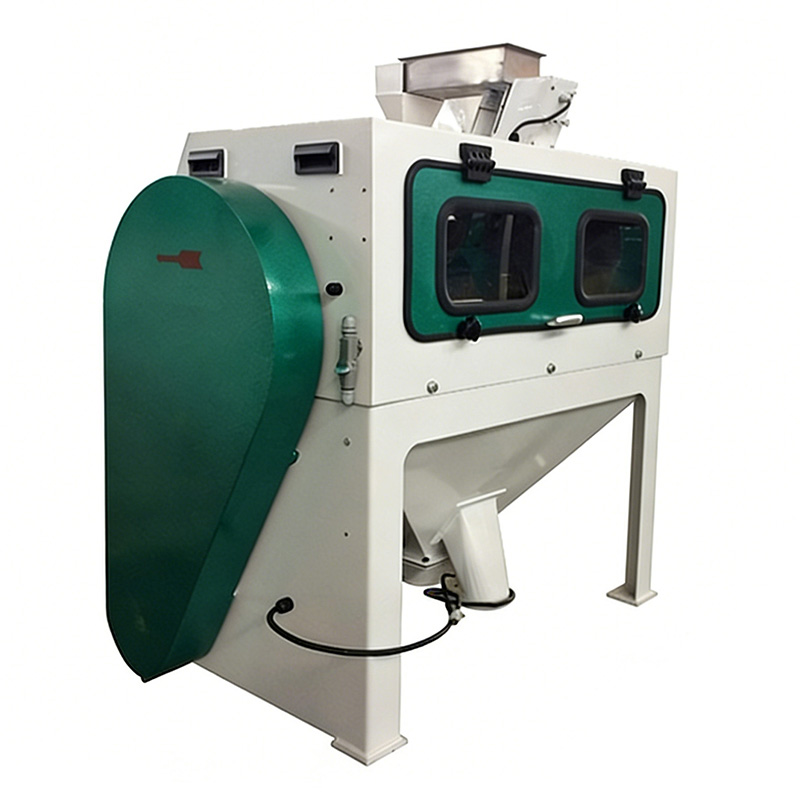
Drum Groats Cutter
3. Stainless-Steel Cutting Drum and Hygienic Construction
Material selection is one of the most important factors in the construction of food-processing machinery. The cutting drum of this equipment is designed with stainless steel to support long-term operation in a grain-processing environment. Stainless steel offers several advantages over ordinary carbon steel. It is less vulnerable to rust, easier to clean, and better suited to applications where equipment surfaces may come into contact with food materials.
A stainless-steel working surface also helps reduce the risk of contamination caused by corrosion or flaking coatings. In a food-processing plant, the machine must be cleaned regularly and maintained in a condition that supports product safety. Smooth and durable metal surfaces simplify inspection and help operators identify accumulated material, abnormal wear, or foreign particles before these problems affect production.
The drum is not merely a passive conveying component. Its working holes are central to the machine’s productivity. Increasing the number of holes creates more opportunities for kernels to enter the cutting zone during each rotation. This allows the machine to process a greater quantity of grain without relying only on a substantial increase in motor power. The result is a balanced combination of capacity and energy efficiency.
The cutting drum must also withstand repeated mechanical loading. During normal production, kernels continuously contact the drum, and the drum rotates at a controlled speed for extended periods. A robust stainless-steel construction helps maintain the geometry of the working openings and supports stable performance over the operating life of the machine.
For processors, the benefits of this design extend beyond service life. A durable drum reduces the frequency of replacement, lowers maintenance interruptions, and helps preserve product consistency. When the cutting openings remain in good condition, the machine is more likely to produce a stable distribution of kernel segments. This is especially important for premium food products, where variation in size can be immediately visible.
4. Working Principle of the Cutting Process
The operating principle of the Drum Groats Cutter is based on controlled mechanical cutting. Dehulled kernels are fed into the cutting section, where the rotating drum directs them through the working holes and applies a cutting force. The kernels are divided into smaller pieces rather than being subjected only to random impact.
Several factors affect the final result. Kernel length determines how many segments can be produced from each individual kernel. Moisture influences flexibility and fracture behavior. Kernel hardness affects the required cutting force. Feed rate influences how fully the working openings are utilized. Rotation speed controls the residence time and cutting frequency. For this reason, the machine is equipped with adjustable speed to allow operators to match the equipment to different raw materials and specifications.
When processing oats, the objective is generally to obtain three to four segments from each dehulled kernel. A stable cutting action helps produce pieces that are more uniform than those obtained through uncontrolled breaking. Uniform pieces cook at a more predictable rate, absorb water more consistently, and provide a more attractive appearance in retail packages.
The cutting process should be supported by proper upstream preparation. Oats should be cleaned to remove stones, metal, dust, and other foreign materials. Dehulling should be completed before cutting, and the feed should be as consistent as possible in moisture and size. These steps reduce the load on the cutting mechanism and help ensure that the machine performs within its intended capacity.
Downstream screening may still be used where a specific commercial specification requires a narrow size range. However, a cutting machine that produces uniform segments reduces the quantity of material requiring separation and recirculation. This can simplify the overall line layout and improve the effective output of the complete plant.
5. Adjustable Rotation Speed for Different Kernel Sizes
One of the principal advantages of the equipment is adjustable rotational speed. Grain processors frequently work with raw materials that differ in variety, length, hardness, moisture, and end-use requirements. A fixed-speed cutter may perform well under one set of conditions but produce excessive fines or incomplete cuts when the material changes.
By adjusting the rotation speed, operators can adapt the cutting action to the physical characteristics of the kernels. Longer or harder kernels may require a different operating condition from shorter, softer kernels. Similarly, a coarse groat specification may be better achieved with a different speed than a fine groat specification. The ability to tune the process allows one machine to support a wider range of products.
Speed adjustment also supports production trials and product development. A processor introducing a new oat variety can test several operating conditions and identify the setting that produces the desired balance between capacity, uniformity, and waste. This is useful for companies that manufacture private-label products or supply multiple customers with different size requirements.
Operators should make adjustments gradually rather than changing speed abruptly during a production run. The effect should be evaluated using samples taken from the discharge. Operators can check the percentage of correctly cut pieces, oversized particles, fines, and uncut kernels. Recording these observations creates a practical operating reference for future batches.
Although rotation speed is adjustable, it should not be considered a substitute for proper feeding and cleaning. Overloading the inlet, feeding material with excessive foreign matter, or processing kernels outside the recommended condition can negatively affect performance at any speed. The best results are achieved when speed control is combined with stable material preparation and routine inspection.
6. Product Uniformity and Steel-Cut Oat Quality
Uniformity is a key quality characteristic in steel-cut oat production. Consumers generally expect the pieces in a package to have a similar appearance and cooking behavior. If some pieces are very small and others remain nearly whole, the smaller particles may become soft before the larger pieces are fully cooked. This produces an inconsistent eating experience.
Uniform cut size also benefits industrial customers. Food manufacturers can calculate cooking times more reliably, design more consistent formulations, and reduce variation between production batches. In breakfast cereal applications, consistent pieces may improve the visual appearance of the finished product. In foodservice applications, predictable cooking performance can simplify preparation instructions.
The Drum Groats Cutter contributes to uniformity by using a dedicated cutting mechanism rather than relying solely on crushing. The machine is designed to produce three to four segments from dehulled oat kernels. Its adjustable rotation speed allows the cutting conditions to be modified for different kernel lengths. Its stainless-steel drum and increased number of working holes support stable operation across the production cycle.
Uniformity should be evaluated through sampling. A processor can collect samples at regular intervals and classify the output into properly cut pieces, oversized pieces, fines, and foreign material. The sampling results can be compared with the customer’s product specification. This simple quality-control practice helps identify changes in feed condition or cutting performance before a large batch is affected.
Where the production line includes a grader or sifter, the cutter should be evaluated together with the screening system. A well-adjusted cutter reduces the load on the grader, while an appropriately configured grader removes occasional out-of-specification particles. The combination can provide a stable finished product without excessive recycling.
7. Low Cutting Waste and Efficient Use of Raw Material
Cutting waste is an important economic factor in grain processing. Every fragment lost as dust or unusable residue represents raw material that cannot be sold as the intended product. High waste also makes housekeeping more difficult and may increase the load on dust-collection systems.
The specified cutting waste of the Drum Groats Cutter is less than 1 percent. This low figure indicates that the machine is designed to make efficient use of dehulled kernels and minimize unnecessary breakage. The result is particularly valuable when raw-material costs are high or when the product is positioned as a premium cereal.
Low waste does not mean that no fines will ever be produced. Grain is a natural material, and variation in kernel structure is unavoidable. Some kernels may have pre-existing cracks or weak points. However, a controlled cutting process can limit the additional fines generated by the machine. Proper cleaning, dehulling, moisture control, and speed selection further support low-waste operation.
Improved raw-material utilization also helps simplify production planning. If the processor knows that the cutting stage produces a high percentage of usable product, it can more accurately calculate packaging requirements, expected output, and inventory levels. This improves coordination between purchasing, production, and sales departments.
8. Energy Consumption and Operating Economy
The machine uses a 1.5 kW motor for the YQL50 model, making it suitable for processors seeking a relatively low-power cutting solution. Low energy consumption is beneficial for small and medium-sized oat lines, where the cost of electricity can have a significant influence on the total processing cost.
Energy efficiency should be assessed in relation to usable output, not only motor rating. A machine that consumes modest power but produces excessive waste may not be economical. The Drum Groats Cutter combines low motor power with a stated output of 0.8 to 1.0 tons per hour based on oats and a cutting waste of no more than 1 percent. This combination supports a favorable relationship between energy use and saleable production.
The increased number of working holes on the cutting drum also contributes to efficient operation. More active openings allow the machine to process more kernels during each rotation. In practical terms, this can improve throughput without requiring a disproportionate increase in installed power.
Energy performance depends on operating conditions. A stable feed rate, properly adjusted speed, sharp and correctly maintained cutting components, and appropriate kernel moisture can all reduce unnecessary load. Conversely, irregular feeding, foreign materials, or excessive moisture may increase resistance and reduce effective capacity.
Plant managers can monitor energy performance by comparing production output with operating hours and electricity consumption. This information helps identify changes caused by wear, blockages, poor feeding, or unsuitable raw material. The machine’s relatively simple design makes it practical to include these checks in routine production management.
9. Comparison with Conventional Crushing and Impact Equipment
Conventional hammer mills and other impact-based machines are widely used for reducing the size of grains and other materials. They are effective for producing flour, meal, and small particles, but they are not always the best choice when the objective is to create cleanly cut groats with a controlled size range.
Impact equipment breaks kernels through high-speed contact with hammers, screens, and internal surfaces. This process can create a broad particle-size distribution. It may produce a combination of fines, irregular fragments, and larger pieces. Such equipment remains useful where fine grinding is required, but it may not provide the appearance and texture expected from steel-cut oat products.
A dedicated groats cutter uses a more controlled cutting action. Its purpose is not to reduce every particle to flour, but to divide kernels into larger, recognizable segments. This helps preserve the desired structure of the grain and supports a more uniform final product.
The Drum Groats Cutter also offers a practical advantage in product flexibility. Its rotation speed can be adjusted for fine, medium, and coarse groats. A processor can therefore use one machine for several grades rather than relying on separate equipment for every product size.
| Performance Consideration | Drum Groats Cutter | General Impact Crusher or Hammer Mill |
|---|---|---|
| Primary action | Controlled cutting of dehulled kernels | Impact and fracture |
| Typical target product | Uniform groats and steel-cut oats | Meal, flour, or mixed-size fragments |
| Adjustment method | Adjustable rotation speed and operating conditions | Often dependent on screen and rotor configuration |
| Fines control | Designed to limit unnecessary cutting waste | May produce more fines during impact grinding |
| Product flexibility | Fine, medium, and coarse groats | Generally optimized for a selected grinding range |
| Food-contact construction | Stainless-steel cutting drum | Construction varies by machine and application |
| Best application | Steel-cut oats and controlled grain segmentation | General size reduction and flour or meal production |
The choice between machines should always be based on the required product. If a processor needs flour or very fine meal, an impact mill may be more appropriate. If the objective is to produce recognizable, uniform oat segments with low waste, the Drum Groats Cutter offers a more specialized solution.
10. Multi-Grain Application Capability
Although the equipment is identified as an oat-processing machine, it can also be used for barley, rye, wheat, and rice. This multi-grain capability allows food processors and grain handlers to improve equipment utilization throughout the year. The machine can support different production campaigns without requiring major changes to the basic installation.
Barley can be cut for cereal products, brewing-related preparation, or other food applications. Rye and wheat can be processed into controlled kernel segments for specialty foods or further milling. Rice can also be processed when the required product specification is compatible with the machine’s cutting action.
Each grain should be evaluated before full-scale production. Kernel size, moisture, hardness, and surface characteristics differ significantly between materials. The operating speed and feed conditions may therefore need to be adjusted. Trial production is recommended to establish the best setting and confirm the achievable capacity.
Multi-grain use is especially valuable for contract processors and companies with diversified product lines. Rather than maintaining separate cutting systems for every grain, the plant can use one adaptable machine and organize production schedules around thorough cleaning between materials. Proper cleaning is essential where allergen control or product identity must be maintained.
The machine can also be considered for applications involving cereal ingredients and selected agricultural materials when the required particle size and material condition are suitable. A technical evaluation should be completed before processing any material outside the normal grain range.
11. Position in a Complete Oat-Processing Line
The Drum Groats Cutter is normally installed after the raw oats have been cleaned and dehulled. A typical process may include receiving, pre-cleaning, destoning, grading, dehulling, aspiration, kernel separation, cutting, screening, weighing, and packaging. The exact line arrangement depends on the raw material and the finished product.
Upstream cleaning protects the cutter from stones, metal, dust, and other foreign substances. Dehulling is necessary because the machine is intended to cut kernels after the outer hull has been removed. If hulls are present, they may interfere with feeding, affect the cutting result, and increase the amount of unwanted material in the discharge.
A controlled feeding system is also important. The cutter should receive a stable flow rather than intermittent surges. A uniform feed helps use the available working holes effectively and reduces the risk of overloading. If the line includes a buffer hopper, the hopper should be designed to prevent bridging and uneven discharge.
After cutting, the material may pass through a grader or sifter. This equipment can separate fines and oversized pieces according to the customer’s specification. Where necessary, oversized material can be returned to the cutter for additional processing. Because the Drum Groats Cutter is designed to produce relatively uniform segments, the recycle quantity can be kept under control.
Accurate weighing and packaging complete the process. Stable product size improves the consistency of bulk density and can make filling operations more predictable. For retail products, the cut oats can be packed in bags, cartons, pouches, or other formats according to market requirements.
12. Manufacturing Strengths and Engineering Capability
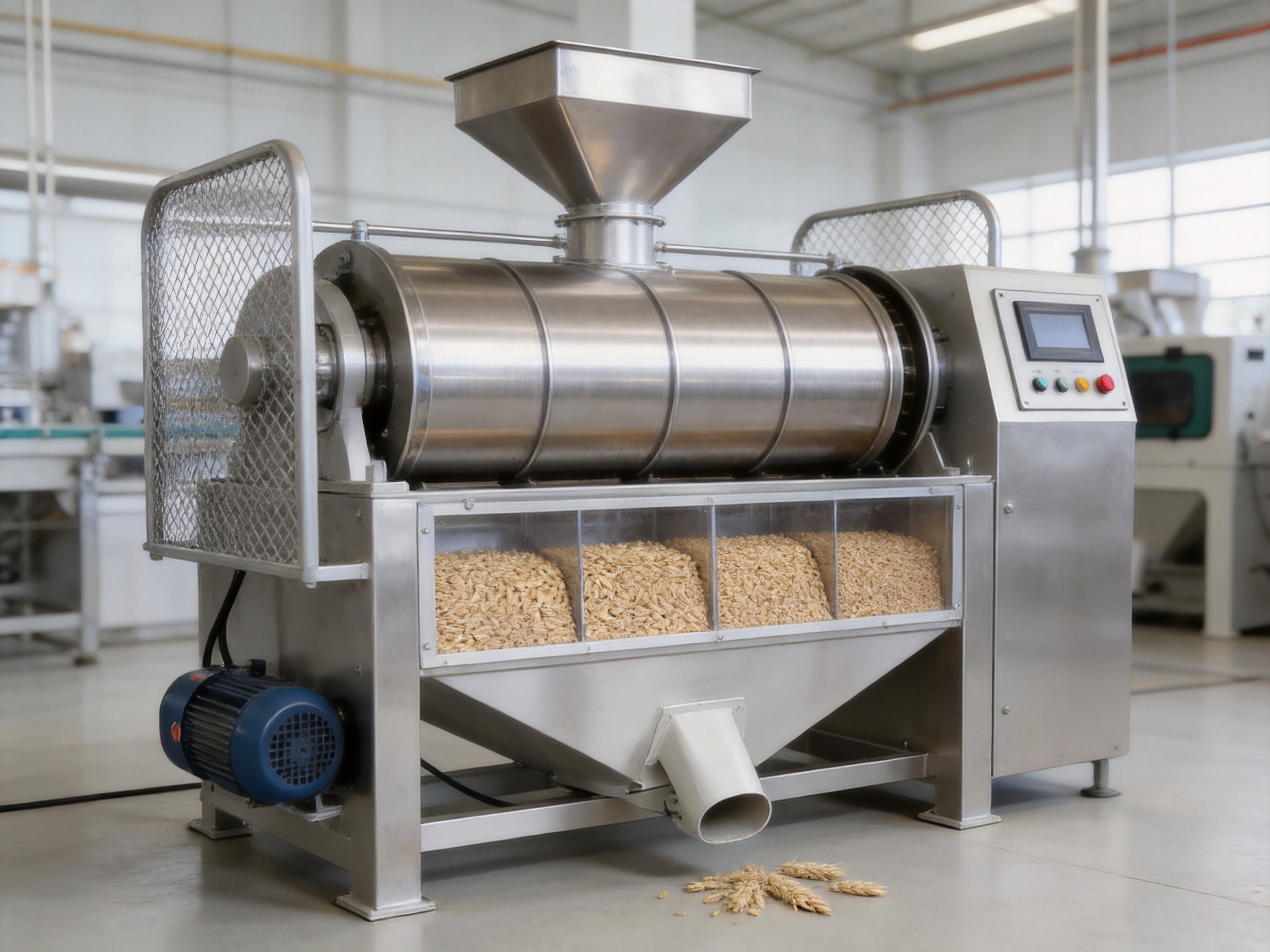
The quality of a processing machine depends not only on its final design but also on the manufacturing systems used to produce it. Jiangsu Zhengding Intelligent Equipment Co., Ltd. is a national high-tech enterprise engaged in research and development, manufacturing, and sales of intelligent equipment. Its broader business focuses on automated loading and unloading equipment for automobiles, containers, ships, and related logistics applications.
This background gives the company experience in mechanical engineering, structural fabrication, drive systems, equipment integration, and industrial automation. These capabilities are relevant to the development of grain-processing machinery because reliable operation requires more than an isolated cutting mechanism. The machine must be structurally stable, practical to install, safe to operate, and suitable for integration into a complete production line.
The company supplies rear dumpers, side-turn truck dumpers, car-loading equipment, container flippers, and other automated loading and unloading systems. Its products serve industries such as steel, chemical production, cement, coal, grain, oil, food, feed, ports, papermaking, and new energy. Working across these sectors requires attention to different materials, environmental conditions, load characteristics, safety standards, and customer production requirements.
For the Drum Groats Cutter, the company’s engineering approach can be applied to the selection of materials, the arrangement of the cutting chamber, the design of the rotating drum, motor matching, speed adjustment, and integration with upstream and downstream machinery. The objective is to provide a practical machine that performs consistently in industrial environments rather than a device intended only for laboratory trials.
Manufacturing strength is also reflected in the ability to customize equipment to customer requirements. Different facilities may have different building heights, material flows, electrical standards, feed systems, and packaging arrangements. A supplier with experience in complete equipment solutions can evaluate the cutter as part of the line and recommend appropriate interfaces.
12.1 Research and Development Orientation
Research and development is important for improving cutting capacity, reducing waste, extending component life, and adapting the machine to additional grains. The increased number of working holes in the cutting drum is an example of a design direction focused on improving productivity. Adjustable rotation speed is another example of engineering development aimed at expanding application flexibility.
Future improvements may include more precise speed control, improved monitoring of motor load, easier access for cleaning, optimized feeding systems, and additional drum configurations for different kernel sizes. Such improvements should be evaluated against real production requirements, including maintenance time, sanitation, energy use, and total ownership cost.
12.2 Manufacturing and Quality Control
Manufacturing quality begins with material inspection. Stainless steel used for the cutting drum should meet the intended mechanical and hygienic requirements. Components must be dimensionally accurate so that the drum rotates smoothly and the working openings remain correctly positioned.
Assembly accuracy is also essential. Misalignment can increase vibration, noise, bearing load, and wear. Proper alignment of rotating parts and reliable installation of guards help support safe and stable operation. Before delivery, the machine should be checked for mechanical movement, drive operation, speed adjustment, discharge performance, and basic safety functions.
Quality control should continue through installation and commissioning. The customer’s material should be used for trial operation where possible, because performance can vary according to kernel properties. The final operating parameters should be documented so that production operators have a clear starting point.
12.3 International Project Experience
The company’s equipment has been exported to Japan, Brazil, Egypt, Pakistan, India, the Middle East, and Southeast Asian markets. International project experience requires attention to different regulations, voltage standards, languages, installation conditions, logistics requirements, and customer expectations.
The company has also served or been associated with users and groups in brewing, food, grain, agricultural, chemical, and industrial sectors. This range of applications demonstrates experience in supplying equipment for demanding production environments. Although each project must be evaluated individually, a supplier with international engineering experience can provide useful support during technical communication, layout planning, shipment, and commissioning.
13. Installation and Commissioning Recommendations
The machine should be installed on a stable foundation capable of supporting its operating weight and vibration loads. Adequate space should be left around the equipment for inspection, cleaning, motor access, and removal of wear components. The inlet and outlet should be aligned with the conveying equipment to avoid material accumulation.
Electrical installation should be completed by qualified personnel. The motor, control system, grounding arrangement, and protective devices must comply with the applicable local requirements. Before starting the machine with product, operators should verify the direction of rotation, check for abnormal noise, and confirm that all guards are securely fitted.
Initial commissioning should begin with an empty running test. This allows the operator to inspect bearings, drive components, drum movement, vibration, and safety devices without the additional load of grain. After the no-load test is satisfactory, a small quantity of clean dehulled kernels can be introduced.
The first product trial should use a moderate feed rate. Operators can then adjust the rotation speed and observe the discharge. Samples should be collected and examined for segment size, uncut kernels, fines, and waste. The final setting should be recorded for each grain type and product grade.
Stable performance normally depends on preventing feed surges. If a conveyor, feeder, or hopper supplies material unevenly, the cutter may alternate between underloading and overloading. A properly designed feed system helps the drum work continuously and supports consistent output.
14. Maintenance and Service Life
Routine maintenance is necessary to preserve cutting quality and protect the machine from avoidable downtime. Operators should inspect the cutting drum, bearings, drive system, fasteners, guards, and discharge area at regular intervals. Any accumulation of grain dust should be removed according to the plant’s sanitation and safety procedures.
The drum should be checked for deformation, excessive wear, blocked working holes, and damage caused by foreign materials. Blocked openings can affect throughput and create an uneven cutting result. Cleaning should be performed only after the machine has been stopped, isolated from its power supply, and secured against accidental startup.
Bearings and other moving parts should be lubricated according to the manufacturer’s instructions. Over-lubrication can be as undesirable as insufficient lubrication, particularly in food-processing environments where excess lubricant may attract dust or create contamination risks. The correct lubricant and application quantity should always be used.
Motor load, vibration, and noise should be monitored. A sudden increase may indicate a blocked cutting opening, misalignment, bearing wear, foreign material, or an unsuitable feed condition. Early detection allows maintenance personnel to correct the problem before it causes a serious failure.
Service life depends on the operating environment and maintenance quality. Clean grain, proper feeding, suitable speed, and regular inspection can extend the useful life of the cutting drum and drive components. If the machine processes abrasive or contaminated material, wear may occur more quickly and inspection intervals should be shortened.
Replacement parts should be selected according to the machine model and original technical requirements. Using unsuitable components can change the cutting geometry, increase vibration, or reduce product uniformity. A documented spare-parts program helps minimize downtime during scheduled maintenance.
15. Safety Considerations
The Drum Groats Cutter contains rotating components and must be operated with appropriate safeguards. Guards should remain in place during operation, and personnel should never reach into the inlet, cutting chamber, or discharge while the machine is running. Lockout and tagout procedures should be followed before cleaning, inspection, or maintenance.
Dust control is also important in grain-processing facilities. Fine grain dust can affect housekeeping, worker comfort, and, in certain concentrations, create a combustible atmosphere. The complete line should be designed with suitable aspiration, ventilation, cleaning, and dust-collection measures. Operators should follow the plant’s established grain-dust safety program.
Training should cover normal startup and shutdown, emergency stopping, blockage removal, speed adjustment, sample collection, cleaning, and reporting of abnormal conditions. Only authorized personnel should modify electrical settings or perform mechanical repairs.
Safety signs should be visible near rotating parts, electrical enclosures, cleaning access points, and emergency-stop devices. A clear operating procedure reduces the risk of mistakes and supports consistent product quality.
16. Economic Benefits for Processors
The economic value of a groats cutter should be considered across the complete production cycle. Purchase price is only one factor. Other factors include raw-material utilization, energy consumption, capacity, maintenance frequency, cleaning time, product flexibility, and the ability to meet customer specifications.
The Drum Groats Cutter supports economic performance through its low stated cutting waste, modest motor power, and adjustable operating conditions. Producing three to four uniform segments from dehulled kernels allows more of the raw material to become saleable product. The stainless-steel drum supports long service life and reduces the risk of corrosion-related replacement.
Product flexibility can also improve return on investment. A processor can produce multiple grades of oat groats and potentially process barley, rye, wheat, and rice. This may increase equipment utilization and reduce the need to purchase separate machines for different grain products.
Maintenance simplicity is another consideration. A machine that is easy to inspect and clean can reduce labor requirements and shorten scheduled downtime. The design should be evaluated not only by maintenance personnel but also by production operators, because daily access and cleaning influence actual operating cost.
For a complete economic evaluation, the processor should compare expected output with the cost of electricity, labor, raw materials, packaging, maintenance, and waste disposal. Production trials using the customer’s own grain are the best way to confirm the expected result.
17. Recommended Operating Practices
Before feeding material into the machine, confirm that the grain has been properly cleaned and dehulled. Remove stones, metal, and other foreign materials through the appropriate upstream equipment. Check that the moisture condition is suitable for cutting and that the feed system is free from blockages.
Start the machine according to the recommended sequence. Allow the drum to reach stable operating speed before introducing grain. Introduce material gradually and monitor the motor load, product flow, and discharge appearance.
When changing from one product grade to another, adjust the rotation speed in small steps. Collect samples after each adjustment. Do not rely solely on visual observation from the discharge; use a simple sieve or grading method to quantify the size distribution.
When changing from one grain to another, clean the feed hopper, cutting chamber, drum, discharge, and nearby conveying equipment. This prevents cross-contamination and maintains product identity. Cleaning procedures should comply with the plant’s food-safety management system.
At the end of production, stop the material feed first and allow the machine to clear remaining grain. Then stop the machine according to the recommended shutdown sequence. Inspect the equipment and report any unusual wear, vibration, or change in product quality.
18. Questions and Answers
Q1: What is the primary function of the Drum Groats Cutter?
The primary function is to cut dehulled oat kernels into approximately three to four uniform segments for the production of steel-cut oats. The machine can produce fine, medium, and coarse groats according to the selected operating conditions.
Q2: What output can the YQL50 model achieve?
The YQL50 model has a rated motor power of 1.5 kW and an output of approximately 0.8 to 1.0 tons per hour when processing oats. Actual output depends on kernel characteristics, feed stability, moisture, cutting requirements, and operator settings.
Q3: How much cutting waste should be expected?
The specified cutting waste is no more than 1 percent under suitable operating conditions. Actual results can be influenced by the quality of dehulling, the presence of cracked kernels, moisture, foreign material, and the selected rotation speed.
Q4: Can the machine process grains other than oats?
Yes. The equipment can be used for barley, rye, wheat, and rice in addition to oats. Each material should be tested to determine the appropriate speed, feed rate, and product specification.
Q5: Why is the cutting drum made from stainless steel?
Stainless steel supports long service life, corrosion resistance, easier cleaning, and suitability for food-processing environments. It also helps maintain a durable working surface under repeated contact with grain kernels.
Q6: Can one machine produce different groat sizes?
Yes. The rotation speed is adjustable, allowing operators to adapt the cutting process for fine, medium, and coarse products. The final result also depends on kernel size, moisture, feed rate, and the condition of the cutting drum.
Q7: Is a separate screening machine required?
A screening machine may be used when the customer requires a narrow particle-size range or when the complete line includes grading and recycling. The Drum Groats Cutter is designed to produce uniform segments, which can reduce the load on downstream screening equipment.
Q8: What raw-material preparation is recommended?
The grain should be cleaned, free from stones and metal, and properly dehulled before entering the cutter. A stable feed rate and reasonably consistent moisture condition also help improve cutting uniformity and reduce waste.
Q9: How should the equipment be maintained?
Maintenance should include regular inspection of the cutting drum, working openings, bearings, motor, drive components, guards, and discharge area. The machine should be cleaned and isolated from power before inspection or servicing. Lubrication and replacement of worn parts should follow the manufacturer’s instructions.
Q10: What types of companies can benefit from this equipment?
Oat processors, breakfast cereal manufacturers, grain-processing plants, food ingredient suppliers, contract processors, and diversified agricultural product companies can benefit from the equipment. Its adjustable operation and multi-grain capability are useful for plants producing several product grades.
Q11: How does the equipment compare with a hammer mill?
A hammer mill is generally intended for impact grinding and may produce meal, flour, and a broad mixture of particle sizes. The Drum Groats Cutter is designed for controlled kernel segmentation, making it more suitable for uniform steel-cut oats and recognizable groats. The best choice depends on the required finished product.
Q12: Can the machine be integrated into an automated production line?
Yes. It can be installed after cleaning and dehulling and before screening, weighing, and packaging. Integration should consider the feed hopper, conveyors, electrical controls, dust collection, discharge arrangement, and the required production capacity of the complete line.
19. Conclusion
The Drum Groats Cutter is a specialized solution for producing uniform steel-cut oats and controlled grain segments. Its stainless-steel cutting drum, increased number of working holes, adjustable rotation speed, low cutting waste, and low energy demand make it suitable for modern oat-processing operations.
The equipment can cut dehulled oat kernels into three to four segments and support fine, medium, and coarse product grades. It can also be applied to barley, rye, wheat, and rice, giving processors greater flexibility and improving the utilization of installed equipment.
Compared with general impact-based size-reduction equipment, the machine is designed around controlled cutting rather than uncontrolled crushing. This makes it especially appropriate when product appearance, segment uniformity, cooking performance, and low waste are important. Proper cleaning, stable feeding, correct speed selection, and regular maintenance will help the machine achieve its intended performance.
Jiangsu Zhengding Intelligent Equipment Co., Ltd. complements the product with experience in industrial machinery, intelligent equipment, mechanical integration, and automated logistics systems. Its manufacturing and engineering capabilities support the development of practical equipment for demanding industrial environments. For processors seeking a reliable method to produce uniform groats and improve the efficiency of their grain-processing lines, the Drum Groats Cutter provides a durable and adaptable foundation.
References
1. Product technical information for the YQL50 Drum Groats Cutter, including motor power, output, cutting waste, compatible grains, and adjustable rotation speed.
2. Internal product description concerning stainless-steel cutting drum construction and increased working-hole design.
3. General principles of oat dehulling, kernel cutting, groat grading, and steel-cut oat production.
4. Food-processing equipment hygiene and preventive-maintenance practices for grain-processing machinery.
5. Industrial guidance on grain cleaning, dust control, equipment guarding, and safe operation of rotating machinery.


