

 English
 русский
 Español
 Français
 Português
 عربى
عربى



+86-13588556918
Content
- 1 1. The Role of Hydrothermal Treatment in Oat Processing
- 2 2. What Is a Kiln Granotherm?
- 3 3. Process Principle and Operating Sequence
- 4 4. Main Product Advantages
- 5 5. Advantages Compared with Conventional Thermal Treatment Equipment
- 6 6. Technical Parameters and Capacity Selection
- 7 7. Advanced Manufacturing and Engineering Strengths
- 8 8. Application in Oat Processing Lines
- 9 9. Hygiene, Cleaning, and Preventive Maintenance
- 10 10. Energy Efficiency and Operating Economy
- 11 11. Quality Control and Process Monitoring
- 12 12. Installation and Commissioning Considerations
- 13 13. Why Choose an Integrated Equipment Manufacturer?
- 14 14. Customization and Project Support
- 15 15. Frequently Asked Questions
- 15.1 Q1: What materials can be processed in the Kiln Granotherm?
- 15.2 Q2: Why is a conditioner often used before the Kiln Granotherm?
- 15.3 Q3: How does the equipment help control microbial contamination?
- 15.4 Q4: What are the output capacities of the available models?
- 15.5 Q5: What is the listed steam consumption?
- 15.6 Q6: How does the design reduce condensation problems?
- 15.7 Q7: Is the equipment difficult to clean?
- 15.8 Q8: Can the Kiln Granotherm be connected to an existing oat processing line?
- 15.9 Q9: What information is needed for a quotation or technical proposal?
- 15.10 Q10: Does the manufacturer provide equipment for material handling as well as oat processing?
- 16 16. Conclusion
- 17 References
- 18 Product: Kiln Granotherm
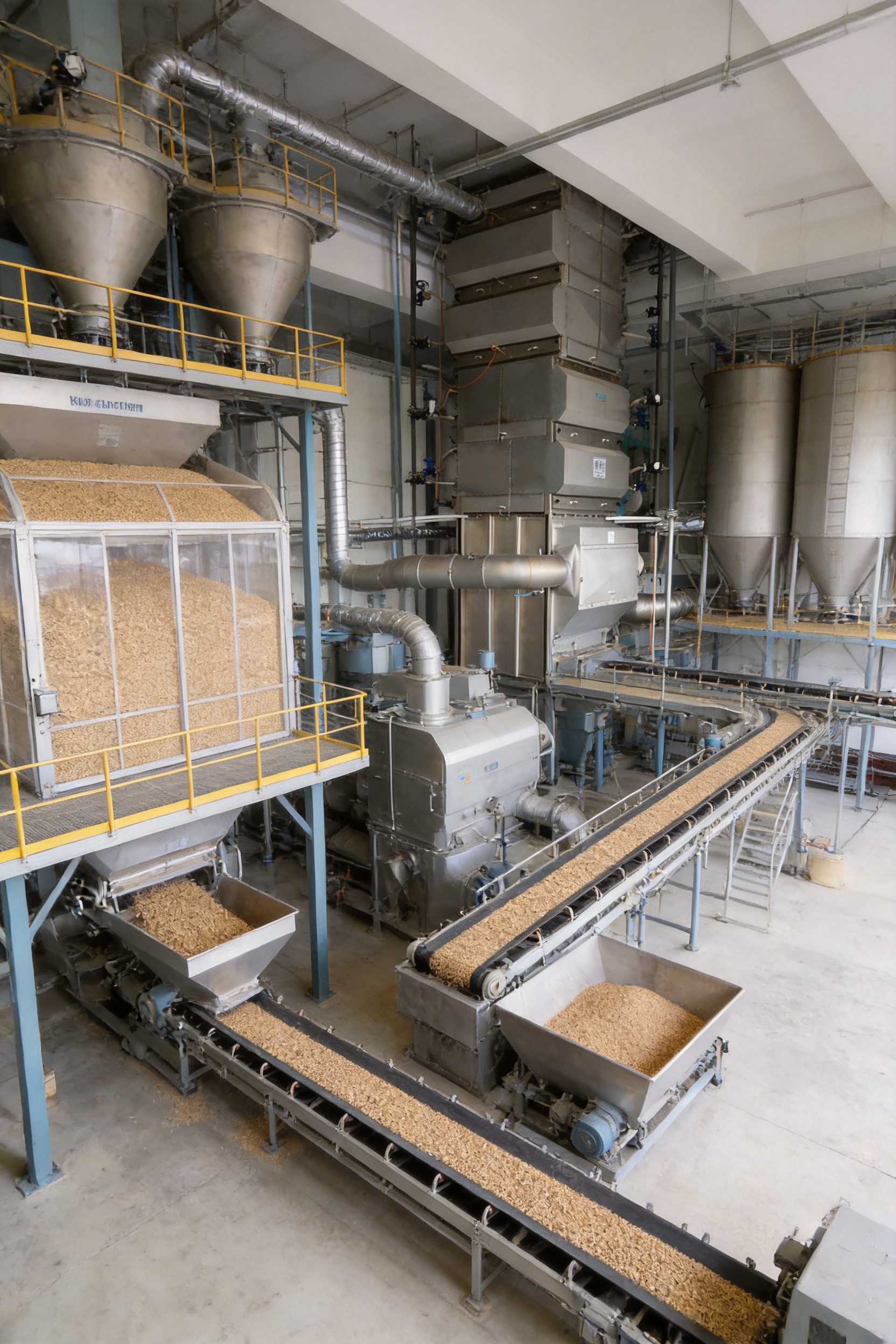
The Kiln Granotherm is a specialized oat processing machine designed for the controlled hydrothermal treatment of dehulled oats and legumes. By combining accurately controlled moisture addition, steam heating, residence time management, and cooling, the equipment helps inactivate naturally occurring enzymes, reduce microbial contamination, stabilize the finished product, and improve flavor. It is particularly suitable for modern oat processing lines that require reliable product quality, hygienic operation, low maintenance, and efficient use of thermal energy.
Hydrothermal treatment is an important stage in the production of stable oat flakes, oat ingredients, oat flour, and other processed cereal products. Dehulled oats contain natural enzymes that can contribute to undesirable changes in flavor, aroma, color, and storage stability if they are not sufficiently controlled. The Kiln Granotherm provides a carefully regulated thermal environment so that processors can apply the required treatment consistently without unnecessarily damaging the raw material.
Developed and manufactured by Jiangsu Zhengding Intelligent Equipment Co., Ltd., the equipment reflects the company’s experience in industrial automation, bulk material handling, vehicle loading and unloading systems, and specialized food and grain equipment. Its design emphasizes hygienic construction, simple maintenance, accurate process control, and dependable integration with upstream conditioners and downstream cooling or conveying equipment.
1. The Role of Hydrothermal Treatment in Oat Processing
Oats are valued for their nutritional profile, pleasant taste, dietary fiber, beta-glucan content, and wide range of food applications. However, freshly dehulled oats are not automatically ready for long-term storage or direct use in every finished product. Their natural enzyme activity and moisture characteristics must be managed carefully during processing.
Hydrothermal treatment uses a combination of heat, moisture, and time to modify the condition of the raw material. When the process is correctly controlled, the treatment can reduce enzyme activity while preserving desirable nutritional and physical characteristics. It can also contribute to the development of a more pleasant roasted or cooked flavor in the finished oat product.
The principal objectives of hydrothermal processing commonly include:
1. Inactivating enzymes that may contribute to rancidity or off-flavors.
2. Reducing microbial contamination on the surface and within the material flow.
3. Stabilizing the product for improved storage performance.
4. Improving the flavor and aroma of processed oats.
5. Creating consistent conditions for later flaking, milling, blending, or packaging.
6. Managing moisture content in preparation for downstream processing.
7. Producing a repeatable thermal profile across the entire material stream.
A key challenge is that oats are sensitive to excessive thermal exposure. Too little treatment may leave unwanted enzyme activity, while too much heat or moisture can reduce product quality, create unnecessary energy consumption, or affect color and texture. The Kiln Granotherm is therefore designed to provide controlled treatment rather than simply applying the highest possible temperature.
2. What Is a Kiln Granotherm?
The Kiln Granotherm is an oat and legume hydrothermal treatment system used after dehulling and, in many installations, in combination with a conditioner. The conditioner prepares the material by adding a controlled amount of moisture and heat. The Kiln Granotherm then provides the required retention time and thermal exposure so that the material receives a uniform and effective treatment.
Unlike equipment that relies on uncontrolled bulk heating, the system is configured to maintain a stable flow of material through the treatment chamber. Its process arrangement supports accurate retention time settings, controlled steam and air management, and practical separation between hot exhaust air and cold exhaust air.
The equipment is especially appropriate for facilities that need:
1. Stable enzyme inactivation.
2. Improved hygienic control.
3. Consistent flavor development.
4. Flexible capacity for different production requirements.
5. Easy access for cleaning and inspection.
6. Integration with automated grain handling systems.
7. Low thermal loss and economical operation.
The system is available in different models to match production capacity. The listed YZZ90 model provides an oat-based output of approximately 1.0 to 2.0 tons per hour, while the YZZ140 model provides approximately 2.0 to 4.0 tons per hour. Both listed models have a steam consumption specification of 200 kilograms per ton under the stated operating conditions.
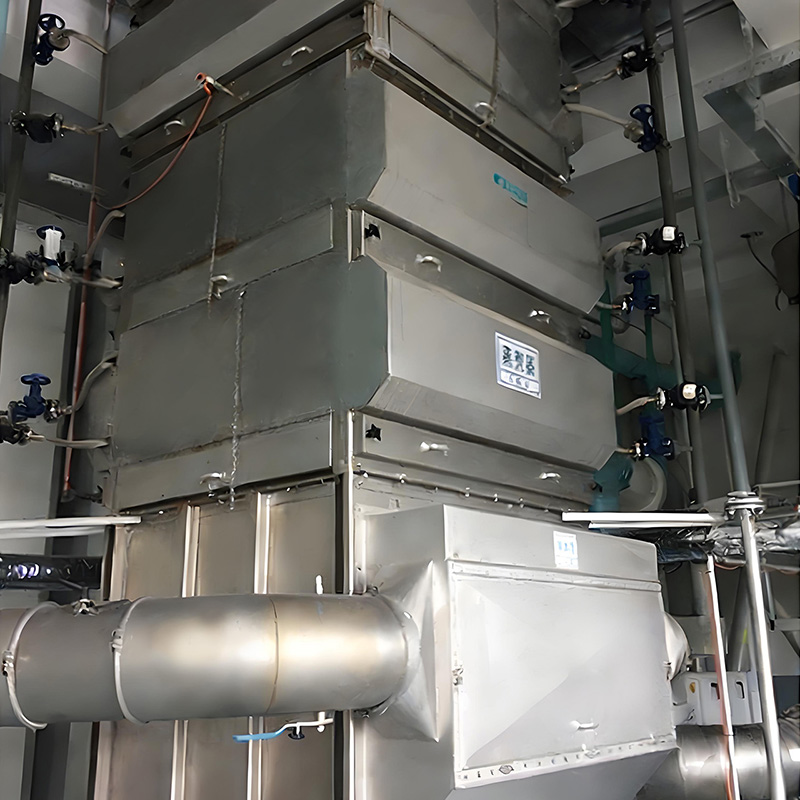
Kiln Granotherm
3. Process Principle and Operating Sequence
The Kiln Granotherm operates through the coordinated management of material flow, steam, moisture, heat, air movement, and retention time. The exact operating recipe depends on the oat variety, initial moisture, particle size, intended product, and required degree of stabilization. Nevertheless, the general process sequence is straightforward.
3.1 Material preparation
Before entering the hydrothermal treatment stage, oats are typically cleaned and dehulled. Foreign material, stones, metal, dust, and other contaminants should be removed through the appropriate upstream cleaning equipment. Dehulling exposes the oat kernel and prepares it for the controlled addition of moisture and heat.
Legumes and other suitable materials can also be processed when the equipment is configured for their specific physical characteristics. The feed should be reasonably uniform so that each portion receives a similar treatment intensity.
3.2 Conditioning
The Kiln Granotherm is often used with a conditioner. The conditioner adds moisture and heat before the material enters the main treatment section. This step can improve heat penetration and help establish the desired material condition before the retention stage.
Accurate moisture addition is important because water affects thermal transfer, product temperature, residence behavior, and final moisture content. An uneven moisture profile can cause some material to remain insufficiently treated while other material receives excessive heat. The conditioner and Kiln Granotherm should therefore be operated as an integrated process rather than as isolated machines.
3.3 Controlled hydrothermal treatment
After conditioning, the material enters the treatment chamber. Steam and heated air provide the thermal energy required for enzyme inactivation and product stabilization. The equipment is designed to support accurate retention time settings, allowing operators to match the treatment period to the characteristics of the raw material and the production target.
During this stage, the material is exposed to a controlled combination of moisture and heat. The process should be sufficiently intense to achieve the required stabilization effect, but not so aggressive that it causes unnecessary color change, nutrient loss, excessive cooking, or product damage.
3.4 Cooling
After thermal treatment, the product must be cooled in a controlled manner. Cooling reduces the product temperature and helps prepare the material for conveying, flaking, milling, storage, or packaging. The cooling stage also contributes to process stability by preventing excess heat and moisture from remaining in the finished material.
The Kiln Granotherm design separates hot exhaust air from cold exhaust air. This arrangement helps prevent condensation in areas where condensation could otherwise create a favorable environment for microbial growth. The separation of air streams is therefore both a thermal management feature and an important hygienic advantage.
4. Main Product Advantages
4.1 Reliable enzyme inactivation
The primary purpose of the equipment is to provide a stable hydrothermal environment for enzyme inactivation. The process can be adjusted according to the raw material and required final quality. By combining controlled moisture, steam, and retention time, processors can establish a repeatable treatment profile rather than depending on irregular heating conditions.
Reliable enzyme control is especially important for oats because residual enzyme activity may contribute to deterioration during storage. A properly stabilized product can show improved flavor retention and better suitability for longer supply chains, larger production schedules, and value-added food applications.
4.2 Improved microbial control
Thermal treatment can reduce microbial contamination associated with raw agricultural materials. The Kiln Granotherm supports this objective through controlled heat exposure and hygienic equipment construction. The system does not replace good raw material handling, cleaning, sanitation, or quality management procedures, but it provides an important processing barrier within the production line.
The separation of hot and cold exhaust air is particularly useful. When hot moist air comes into contact with cold surfaces or cold exhaust streams, condensation may occur. Condensation can create wet areas that are difficult to clean and may support microbial growth. By keeping the air systems separated, the equipment helps maintain a cleaner and more stable operating environment.
4.3 Enhanced flavor
Hydrothermal treatment can improve the flavor of finished oats by producing a controlled cooked or toasted character. The flavor result depends on temperature, moisture, retention time, raw material quality, and downstream processing. Because the Kiln Granotherm allows these factors to be managed more precisely, it can help processors develop a more consistent flavor profile.
This is valuable in products such as oat flakes, breakfast cereals, oat flour, bakery ingredients, nutrition products, plant-based foods, and blended grain products. Consistency is especially important for manufacturers supplying retail brands or industrial customers with fixed sensory specifications.
4.4 Hygienic stainless steel construction
All parts that come into contact with the material are made of stainless steel. This construction helps resist corrosion and reduces the risk of contamination caused by surface deterioration. Stainless steel is also easier to clean and better suited to food, grain, and ingredient processing environments than untreated carbon steel in direct product-contact areas.
The internal design contains no drive components or moving parts within the material flow. This reduces the possibility of mechanical contamination and simplifies inspection. It also limits the number of components that may trap material or require frequent replacement inside the product zone.
4.5 Reduced material accumulation
Material accumulation can create several problems in cereal processing equipment. It may reduce effective capacity, affect residence time, cause cross-contamination between batches, increase cleaning labor, and create locations where moisture or microorganisms can remain.
The Kiln Granotherm uses a design intended to prevent material from collecting in unsuitable areas. This supports more stable operation and reduces the effort required to return the equipment to a hygienic condition after production or during product changeover.
4.6 Convenient maintenance
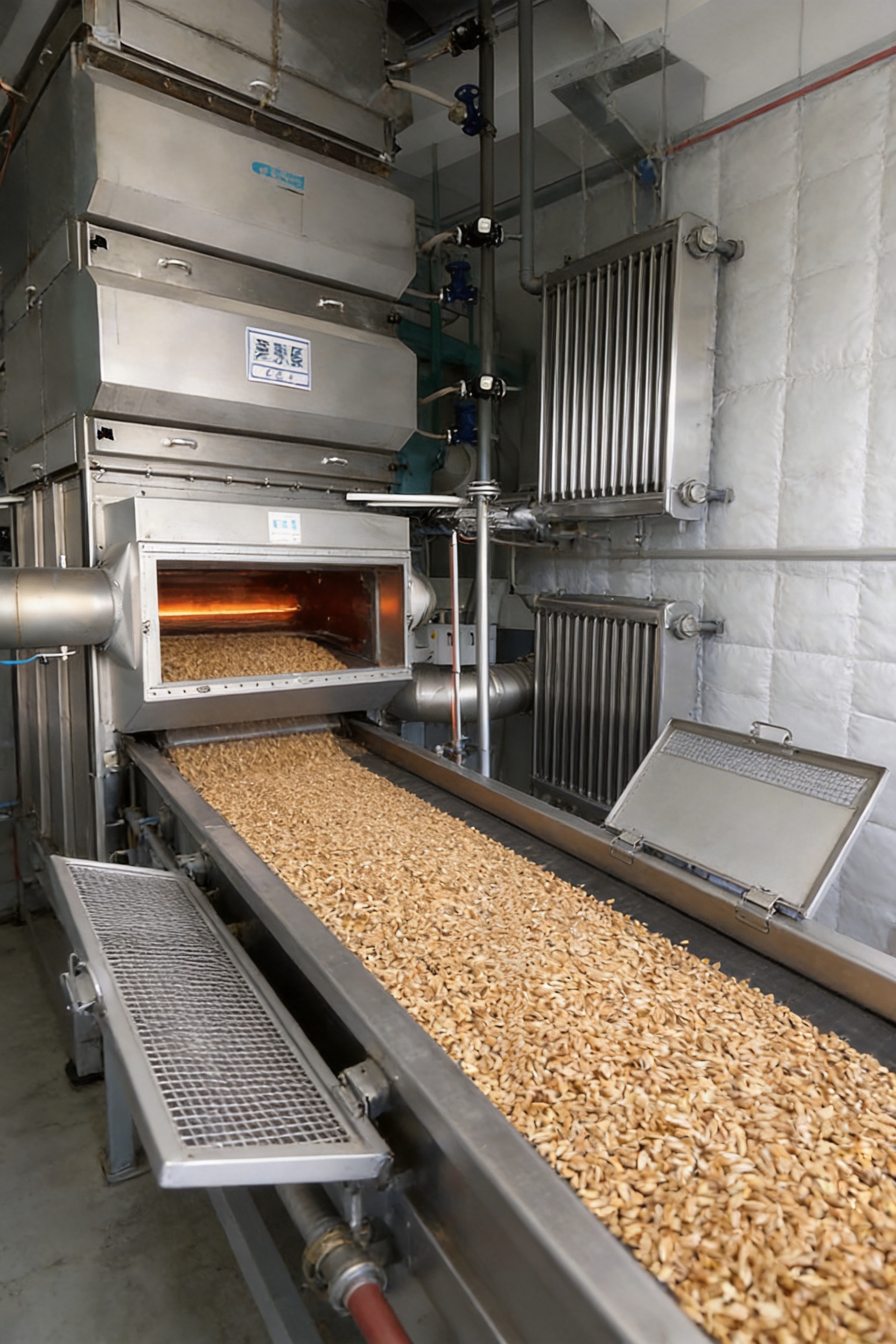
The cooling chamber includes hinged cleaning flaps and quick-release closures on the air outlet guards. These features provide easier access for inspection and cleaning than permanently fixed covers. Maintenance teams can open the relevant areas without carrying out unnecessary disassembly.
The stainless steel radiators are of a pull-out type. This makes inspection, cleaning, repair, and replacement more convenient. The design is particularly helpful in production environments where equipment downtime must be minimized and maintenance work has to be planned around production schedules.
4.7 Removable utility pipelines
Air, steam, and condensate pipelines are designed to be easily removable. Removable pipelines support cleaning and inspection, helping operators identify deposits, blockages, leaks, or corrosion before they develop into larger problems.
Easy removal also improves access during periodic maintenance. Instead of treating the utility system as a permanent and inaccessible part of the machine, operators can inspect the lines as part of a defined sanitation and preventive maintenance program.
4.8 Thermal insulation and low energy consumption
Effective thermal insulation helps retain heat inside the treatment system and reduces energy loss to the surrounding environment. Lower external surface temperatures may also improve workplace safety around the machine.
Although actual energy performance depends on the raw material, ambient conditions, steam quality, production rate, and operating recipe, good insulation can support lower overall thermal consumption. This is important for processors seeking to reduce operating costs and improve the environmental performance of their production lines.
5. Advantages Compared with Conventional Thermal Treatment Equipment
Different thermal processing systems can be used in grain and ingredient manufacturing, but they are not equally suited to oat hydrothermal stabilization. Conventional heating arrangements may provide heat without offering the same level of control over moisture, retention time, cleaning access, or exhaust air management.
The Kiln Granotherm offers several practical advantages over less specialized alternatives.
5.1 More suitable for moisture-and-steam treatment
Some drying or heating machines are primarily designed to remove moisture. Oat stabilization, however, requires more than simple drying. It involves the controlled addition and distribution of moisture and heat to achieve enzyme inactivation and flavor development. The Kiln Granotherm is designed around this hydrothermal objective.
5.2 Better control of residence time
In a poorly controlled heating system, material may pass through too quickly or remain in the thermal zone for too long. Both conditions can reduce product consistency. The Kiln Granotherm supports accurate retention time settings, allowing operators to establish a repeatable treatment period that is appropriate for the product recipe.
5.3 Improved hygienic design
Stainless steel product-contact surfaces, the absence of internal drive parts, removable pipelines, cleaning flaps, and separation of hot and cold exhaust air all contribute to hygienic operation. These features distinguish the system from equipment designed primarily for general-purpose bulk heating without the same focus on food and grain sanitation.
Condensation is a common concern in systems that combine steam, hot air, cold air, and changing product temperatures. The separated exhaust arrangement reduces the chance that hot moist air will mix with cold air and form water droplets in unsuitable areas. This can help reduce microbial risks and simplify cleaning management.
5.5 Easier maintenance access
Pull-out radiators, hinged panels, quick-release closures, and removable pipelines reduce the time required for routine inspection and cleaning. In comparison, equipment with inaccessible heating surfaces or permanently installed utility lines may require more labor and longer shutdowns.
5.6 Better integration with automated production lines
The Kiln Granotherm can be incorporated into a wider automated system that includes conditioners, conveyors, dosing equipment, storage bins, cooling units, packing lines, and material handling equipment. This allows processors to reduce manual intervention and improve the stability of material flow from one stage to the next.
6. Technical Parameters and Capacity Selection
Capacity selection should be based on the required oat throughput, operating schedule, raw material characteristics, desired treatment intensity, and the layout of the complete production line. The following specifications are the principal listed parameters for the two available models.
| Product Model | Steam Consumption | Output Based on Oats | Typical Application |
|---|---|---|---|
| YZZ90 | 200 kilograms per ton | 1.0 to 2.0 tons per hour | Small and medium-capacity oat processing lines |
| YZZ140 | 200 kilograms per ton | 2.0 to 4.0 tons per hour | Medium-capacity and higher-throughput oat processing lines |
The output figures are based on oats and should be treated as reference values. Actual performance may vary according to initial moisture, bulk density, feed uniformity, steam conditions, operating temperature, retention time, and the required level of stabilization.
For a new installation, capacity planning should consider both current production and future expansion. Selecting a machine that is too small may create a bottleneck, while selecting an oversized machine may increase capital cost and reduce operating efficiency when the line runs below its intended capacity. A technical evaluation should therefore include the full material balance, expected operating hours, cleaning schedule, product changeover requirements, and downstream equipment capacity.
7. Advanced Manufacturing and Engineering Strengths
7.1 Product-contact engineering
Manufacturing food and grain processing equipment requires more than assembling structural components. Product-contact surfaces must be selected and finished with attention to corrosion resistance, cleanability, durability, and contamination prevention. The use of stainless steel in all material-contact areas demonstrates an engineering approach adapted to hygienic processing requirements.
Proper product-contact construction also contributes to a longer service life. Oats and legumes may contain dust, fine particles, and moisture that can accelerate wear or corrosion in unsuitable materials. Stainless steel surfaces help maintain equipment integrity under these operating conditions.
7.2 Separation of process zones
The separation of hot and cold exhaust air reflects careful process engineering. Thermal zones are not treated as a single undifferentiated air circuit. Instead, air movement is managed to reduce condensation and preserve hygienic conditions in the cooling area.
This type of separation requires attention to duct routing, pressure balance, insulation, condensate handling, access for cleaning, and connection with external air treatment systems. It demonstrates that the equipment has been designed for complete process performance rather than for heating alone.
7.3 Maintenance-oriented construction
Equipment reliability depends partly on how easily operators can inspect and maintain it. Hinged cleaning flaps, quick-release closures, pull-out radiators, and removable pipelines are practical manufacturing decisions that reduce maintenance complexity.
Maintenance-oriented construction can provide several benefits:
1. Shorter planned cleaning periods.
2. Faster access to heating and cooling components.
3. Better visibility during inspection.
4. Reduced risk that minor faults will remain undetected.
5. Lower labor requirements for routine service.
6. Easier replacement of wear or heat-exposed components.
7.4 Process integration capability
Jiangsu Zhengding Intelligent Equipment Co., Ltd. specializes in intelligent logistics equipment and automated loading and unloading systems for vehicles, containers, and related material handling applications. This wider engineering background is valuable when a customer requires more than a standalone processing machine.
The company can support integrated solutions involving automated feeding, conveying, bulk transfer, loading, unloading, metering, and discharge. This experience can help connect the Kiln Granotherm with upstream grain preparation equipment and downstream storage or packaging systems.
7.5 Experience across demanding industries
The company’s products are used in industries including steel, chemical production, cement, coal, grain, oil, food, feed, ports, papermaking, and new energy. These industries often require robust equipment capable of handling dust, large material volumes, demanding operating schedules, and complex logistics.
Experience across these applications supports a practical understanding of industrial reliability, safety, automation, and material flow. Although the Kiln Granotherm is intended for oat and legume processing, the engineering capabilities developed through other industries can contribute to its structural design, control integration, and customization potential.
8. Application in Oat Processing Lines
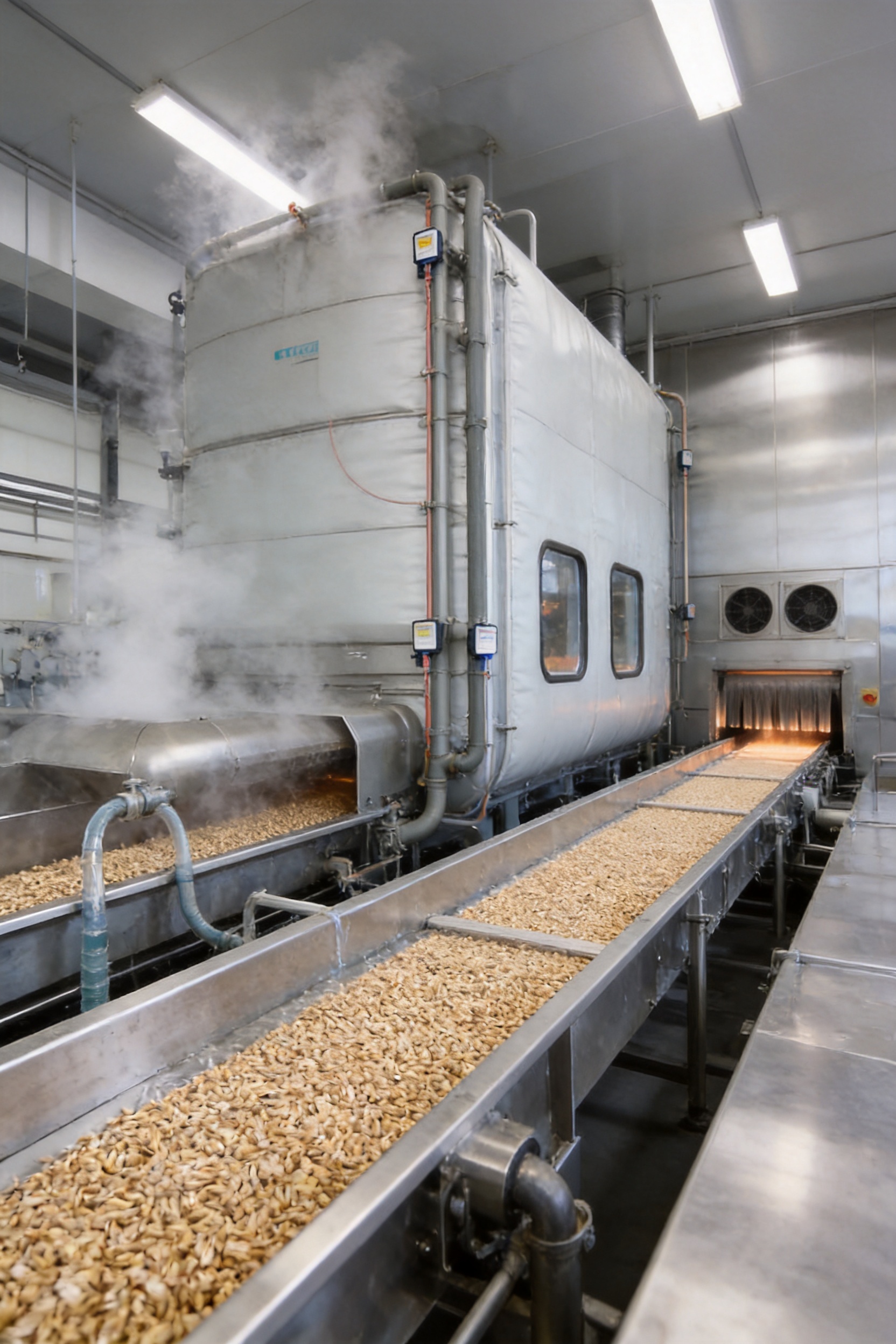
The Kiln Granotherm can be used in a complete oat processing line with equipment arranged according to the required final product. A typical process may include raw oat receiving, cleaning, impurity removal, dehulling, separation, conditioning, hydrothermal treatment, cooling, flaking, milling, blending, storage, and packing.
For oat flakes, the hydrothermal treatment can stabilize the groat before flaking. Stable material can provide more predictable behavior during subsequent rolling and drying. For oat flour, the treatment can help improve flavor and storage performance before milling. For food ingredient production, the machine can support a repeatable thermal profile that helps manufacturers meet customer specifications.
The unit may also be used for legumes where controlled heat and moisture are required. However, each material should be evaluated before production because legumes differ from oats in shape, density, moisture absorption, thermal response, and tendency to split or agglomerate.
8.1 Integration with conditioning equipment
Conditioning is important because the Kiln Granotherm is most effective when the feed enters with a reasonably consistent moisture and temperature profile. The conditioner can be configured to add water and steam in a controlled manner, while the Granotherm provides the retention and thermal stabilization stage.
Instrumentation may be used to monitor water flow, steam pressure, material temperature, exhaust temperature, and product moisture. These measurements help operators maintain a repeatable process and identify deviations before they affect a large quantity of product.
8.2 Integration with cooling equipment
After treatment, the product should be cooled sufficiently for the next stage. The cooling section must be designed to avoid recontamination and to prevent excess moisture from condensing inside the equipment. The Kiln Granotherm’s exhaust air arrangement supports this requirement.
Cooling capacity should be matched to the thermal load leaving the treatment zone. If downstream cooling is insufficient, the product may enter storage or conveying systems at an excessively high temperature. If cooling is too aggressive, condensation or uneven moisture distribution may occur. A balanced system design is therefore essential.
8.3 Integration with automated material handling
Consistent feeding and discharge are essential for consistent residence time. Feed surges can overload the treatment chamber, while interruptions can create excessive treatment for material already inside the equipment. Automated conveyors, feeders, level controls, and metering devices help maintain a stable material flow.
The manufacturer’s background in automated loading and unloading equipment provides a useful foundation for designing material transfer systems around the processing line. This may include bulk loading equipment, container handling systems, truck dumpers, transfer conveyors, and other systems used to move raw materials and finished products.
9. Hygiene, Cleaning, and Preventive Maintenance
Hygiene management should be considered from the beginning of equipment selection and line design. A hygienic machine is easier to clean, but proper operating procedures remain necessary. Operators should establish documented cleaning schedules based on the material, production frequency, allergen controls, and product changeover requirements.
The Kiln Granotherm supports cleaning through several design features:
1. Stainless steel surfaces in contact with the material.
2. No drive components or moving parts inside the product flow.
3. Hinged cleaning flaps in the cooling chamber.
4. Quick-release air outlet guard closures.
5. Pull-out stainless steel radiators.
6. Removable air, steam, and condensate pipelines.
7. A design that limits material accumulation.
Cleaning should remove dust, fines, condensed moisture, and any deposits that could affect product quality. Inspection should pay particular attention to corners, transitions, access doors, air outlets, condensate lines, seals, and areas near the cooling section.
Preventive maintenance should include inspection of seals, closures, pipelines, radiators, insulation, temperature sensors, steam connections, condensate drainage, and structural supports. The frequency should be determined by operating hours, thermal conditions, material characteristics, and the plant’s maintenance policy.
Before maintenance begins, the machine should be isolated from electrical, steam, pneumatic, and mechanical energy sources according to the site’s lockout and isolation procedures. Hot surfaces must be allowed to cool, and residual pressure must be released safely.
10. Energy Efficiency and Operating Economy
Thermal processing represents a significant portion of the operating cost in many grain and ingredient plants. Energy efficiency is influenced by equipment insulation, steam quality, condensate recovery, air balance, feed moisture, production rate, and the selected treatment recipe.
The Kiln Granotherm contributes to efficient operation through excellent thermal insulation and controlled process conditions. Insulation reduces heat loss through the equipment walls, while accurate retention time and moisture control reduce the risk of overprocessing. The separation of exhaust air streams can also help maintain more stable thermal conditions.
Steam consumption is listed at 200 kilograms per ton for both the YZZ90 and YZZ140 models under the stated oat-based reference conditions. Actual consumption should be verified during commissioning because it can change with product moisture, treatment requirements, ambient temperature, steam pressure, and heat recovery arrangements.
Plants can further improve economy by:
1. Maintaining clean heat transfer surfaces.
2. Inspecting insulation and repairing damaged sections.
3. Preventing steam leaks.
4. Ensuring condensate lines remain unobstructed.
5. Operating near the intended capacity range.
6. Avoiding excessive moisture addition.
7. Monitoring exhaust temperatures.
8. Using process data to optimize the treatment recipe.
9. Coordinating the conditioner, Granotherm, and cooler.
10. Scheduling maintenance before efficiency declines become significant.
11. Quality Control and Process Monitoring
A successful hydrothermal process should be evaluated through both equipment data and product testing. Important process measurements may include feed rate, material temperature, steam pressure, water addition, exhaust temperature, cooling air temperature, residence time, and final product moisture.
Product testing may include enzyme activity, moisture content, microbial indicators, color, flavor, bulk density, particle condition, and storage stability. The appropriate tests depend on the final application and customer requirements.
Operators should establish a standard operating window rather than relying on a single temperature number. The correct window may include acceptable ranges for material temperature, moisture, retention time, and exhaust conditions. This approach provides more robust control when raw material characteristics change slightly from one delivery to another.
Data recording is also valuable for troubleshooting. If product flavor changes, the operator can compare the current material moisture, steam conditions, retention time, and cooling performance with previous production records. This helps identify whether the issue originated in raw material quality, conditioning, thermal treatment, or cooling.
12. Installation and Commissioning Considerations
Before installation, the plant should confirm the required floor area, equipment elevation, access routes, utility connections, ventilation, drainage, electrical supply, steam supply, condensate return, and downstream conveying arrangement.
The equipment should be installed on a stable foundation that can support the machine and operating loads. Access should be provided around cleaning flaps, radiators, inspection doors, pipeline connections, and control components. Sufficient clearance is important because a machine that cannot be safely accessed will be more difficult to maintain.
Commissioning should begin with a mechanical inspection and utility verification. The team should check fasteners, seals, guards, steam lines, condensate lines, air ducts, sensors, control signals, and emergency stop functions. The system can then be tested without material before gradually introducing product.
Initial production trials should verify:
1. Feed stability.
2. Steam and moisture distribution.
3. Residence time.
4. Product temperature.
5. Cooling performance.
6. Final moisture.
7. Enzyme inactivation results.
8. Microbial control indicators.
9. Flavor and appearance.
10. Energy and steam consumption.
Trial data should be used to establish the final operating recipe. Operators should be trained in startup, shutdown, cleaning, adjustment, alarm response, and safe maintenance before the equipment enters routine production.
13. Why Choose an Integrated Equipment Manufacturer?
Purchasing a hydrothermal treatment machine from an integrated equipment manufacturer can simplify project coordination. Instead of managing separate suppliers for processing equipment, conveying systems, loading and unloading equipment, and automation, customers may be able to obtain a more coordinated solution.
Jiangsu Zhengding Intelligent Equipment Co., Ltd. is a national high-tech enterprise engaged in the research, development, manufacturing, and sales of intelligent equipment. Its product range includes rear dumpers, side-turn truck dumpers, car loading equipment, container flippers, automated loading and unloading systems, and related logistics machinery.
This product range provides several potential advantages for industrial customers:
1. Broader understanding of bulk material movement.
2. Experience in automated loading and unloading.
3. Ability to coordinate equipment interfaces.
4. Support for customized layouts.
5. Experience in grain, food, chemical, cement, coal, and other demanding sectors.
6. Familiarity with export requirements and international project communication.
7. Capability to combine processing and logistics functions in one project plan.
The company’s equipment has been exported to markets including Japan, Brazil, Egypt, Pakistan, India, the Middle East, and Southeast Asia. Its international customer experience includes major companies in brewing, grain processing, food, agricultural commodities, chemicals, and building materials.
For a plant using the Kiln Granotherm, this background can be useful when the project includes raw material receiving, bulk transfer, storage, container loading, truck handling, or finished product dispatch. A well-coordinated material flow can improve overall plant efficiency and reduce transfer losses between process stages.
14. Customization and Project Support
Every oat processing facility has different raw materials, building dimensions, production targets, utility conditions, and product requirements. Customization may therefore be needed for equipment arrangement, feeding elevation, discharge direction, control integration, insulation, pipeline routing, cleaning access, and connection with existing machinery.
Technical discussions should address the following information:
1. Oat or legume type.
2. Initial moisture and bulk density.
3. Required hourly output.
4. Desired final moisture.
5. Enzyme inactivation target.
6. Available steam pressure and quality.
7. Existing conditioner and cooling equipment.
8. Factory floor plan and elevation.
9. Automation and data recording requirements.
10. Cleaning and allergen control procedures.
11. Product changeover frequency.
12. Local electrical and safety standards.
With this information, the manufacturer can evaluate the appropriate model, supporting equipment, connection points, and operating conditions. A complete engineering review is preferable to selecting a machine based only on nominal output.
15. Frequently Asked Questions
Q1: What materials can be processed in the Kiln Granotherm?
The equipment is primarily intended for the hydrothermal treatment of dehulled oats and legumes. Other granular agricultural materials may be considered after technical evaluation. Suitability depends on particle size, moisture absorption, thermal response, flowability, and the required treatment objective.
Q2: Why is a conditioner often used before the Kiln Granotherm?
A conditioner helps add moisture and heat in a controlled way before the material enters the main treatment chamber. This improves the uniformity of the feed condition and supports more effective enzyme inactivation during the retention stage.
Q3: How does the equipment help control microbial contamination?
Controlled thermal treatment can reduce microbial contamination, while the hygienic design helps prevent recontamination. Stainless steel product-contact surfaces, limited material accumulation, removable pipelines, and separated hot and cold exhaust air all support hygienic operation. Proper cleaning and raw material control are still essential.
Q4: What are the output capacities of the available models?
The YZZ90 model has a listed oat-based output of approximately 1.0 to 2.0 tons per hour. The YZZ140 model has a listed oat-based output of approximately 2.0 to 4.0 tons per hour. Actual output depends on the material and operating conditions.
Q5: What is the listed steam consumption?
The listed steam consumption for both models is 200 kilograms per ton under the stated reference conditions. Actual consumption should be confirmed during process trials because it varies with moisture, temperature, steam quality, and production rate.
Q6: How does the design reduce condensation problems?
Hot exhaust air and cold exhaust air are separated. This reduces the possibility of hot, moisture-laden air mixing with cold air and forming condensation in the cooling or exhaust areas. Lower condensation risk helps support better hygiene and easier maintenance.
Q7: Is the equipment difficult to clean?
The equipment is designed to simplify cleaning. It includes hinged cleaning flaps, quick-release closures on cooling chamber air outlet guards, pull-out stainless steel radiators, and removable air, steam, and condensate pipelines. Cleaning procedures should still be established according to the plant’s hygiene plan.
Q8: Can the Kiln Granotherm be connected to an existing oat processing line?
It can be evaluated for integration with existing conditioners, conveyors, coolers, storage systems, and control systems. The feasibility depends on available space, material elevation, throughput, utility conditions, and the interface requirements of the existing equipment.
Q9: What information is needed for a quotation or technical proposal?
Important information includes the raw material, required capacity, initial moisture, target product, available steam conditions, existing line equipment, building layout, automation requirements, and cleaning procedures. Providing detailed process information allows for a more accurate equipment recommendation.
Q10: Does the manufacturer provide equipment for material handling as well as oat processing?
Yes. The company manufactures automated loading and unloading equipment, rear dumpers, side-turn truck dumpers, car loading equipment, container flippers, and other intelligent logistics systems. These products can support integrated material receiving, transfer, loading, and dispatch operations.
16. Conclusion
The Kiln Granotherm provides a specialized solution for controlled hydrothermal treatment of dehulled oats and legumes. Its principal value lies in the coordinated control of moisture, steam, heat, and retention time. This enables processors to inactivate enzymes, reduce microbial contamination, stabilize products, and improve flavor while maintaining a practical and hygienic operating environment.
Compared with general-purpose thermal equipment, the system offers clear advantages in product-contact construction, condensation prevention, cleaning access, maintenance convenience, material accumulation control, and thermal insulation. The YZZ90 and YZZ140 models provide capacity options for different oat processing requirements, while the equipment can also be evaluated for integration into broader automated production systems.
Jiangsu Zhengding Intelligent Equipment Co., Ltd. strengthens the product offering through its manufacturing capabilities, experience in intelligent logistics, broad industrial application background, and ability to provide automated loading and unloading solutions. For customers planning a new oat processing line or upgrading an existing facility, the combination of hydrothermal treatment and integrated material handling can improve process consistency, hygiene, efficiency, and long-term operational value.
References
1. Product technical information for the Kiln Granotherm, including product features, model specifications, steam consumption, and oat-based output data.
2. General principles of hydrothermal stabilization in cereal and legume processing.
3. Food and grain processing equipment hygiene and cleanability practices.
4. Industrial steam systems, condensate management, and thermal insulation principles.
5. Preventive maintenance practices for continuous thermal processing equipment.
6. Technical information concerning automated loading, unloading, conveying, and bulk material handling equipment.


