

 English
 русский
 Español
 Français
 Português
 عربى
عربى




+86-13588556918
Content
- 1 1. The Role of a Drum Groats Cutter in Grain Processing
- 2 2. Product Design and Operating Principle
- 3 3. Main Advantages of the Drum Groats Cutter
- 4 4. Product Specifications and Technical Parameters
- 5 5. Comparison with Conventional Size-Reduction Equipment
- 6 6. Manufacturing Quality and Engineering Strengths
- 7 7. Advanced Manufacturing Processes and Production Control
- 8 8. Integration into an Oat-Processing Line
- 9 9. Application Range Beyond Oats
- 10 10. Operating Guidelines for Consistent Results
- 11 11. Maintenance and Service Considerations
- 12 12. Safety and Hygiene in Food-Processing Applications
- 13 13. Why Equipment Supplier Capability Matters
- 14 14. Customization and Project Selection
- 15 15. Economic Benefits for Processors
- 16 16. Quality Control of Finished Groats
- 17 17. Troubleshooting Common Operating Problems
- 18 18. Frequently Asked Questions
- 18.1 Q1. What does a drum groats cutter produce?
- 18.2 Q2. Which materials can be processed?
- 18.3 Q3. Can the machine produce different groat grades?
- 18.4 Q4. What is the output of the YQL50 model?
- 18.5 Q5. How much cutting waste should be expected?
- 18.6 Q6. Why is adjustable speed useful?
- 18.7 Q7. Is stainless steel important for oat processing?
- 18.8 Q8. Can the cutter replace a hammer mill?
- 18.9 Q9. What moisture range is generally suitable?
- 18.10 Q10. How often should the equipment be inspected?
- 18.11 Q11. Can the machine be integrated into an automated line?
- 18.12 Q12. What support should a customer request from the supplier?
- 19 19. Conclusion
- 20 References
- 21 Product: Drum Groats Cutter
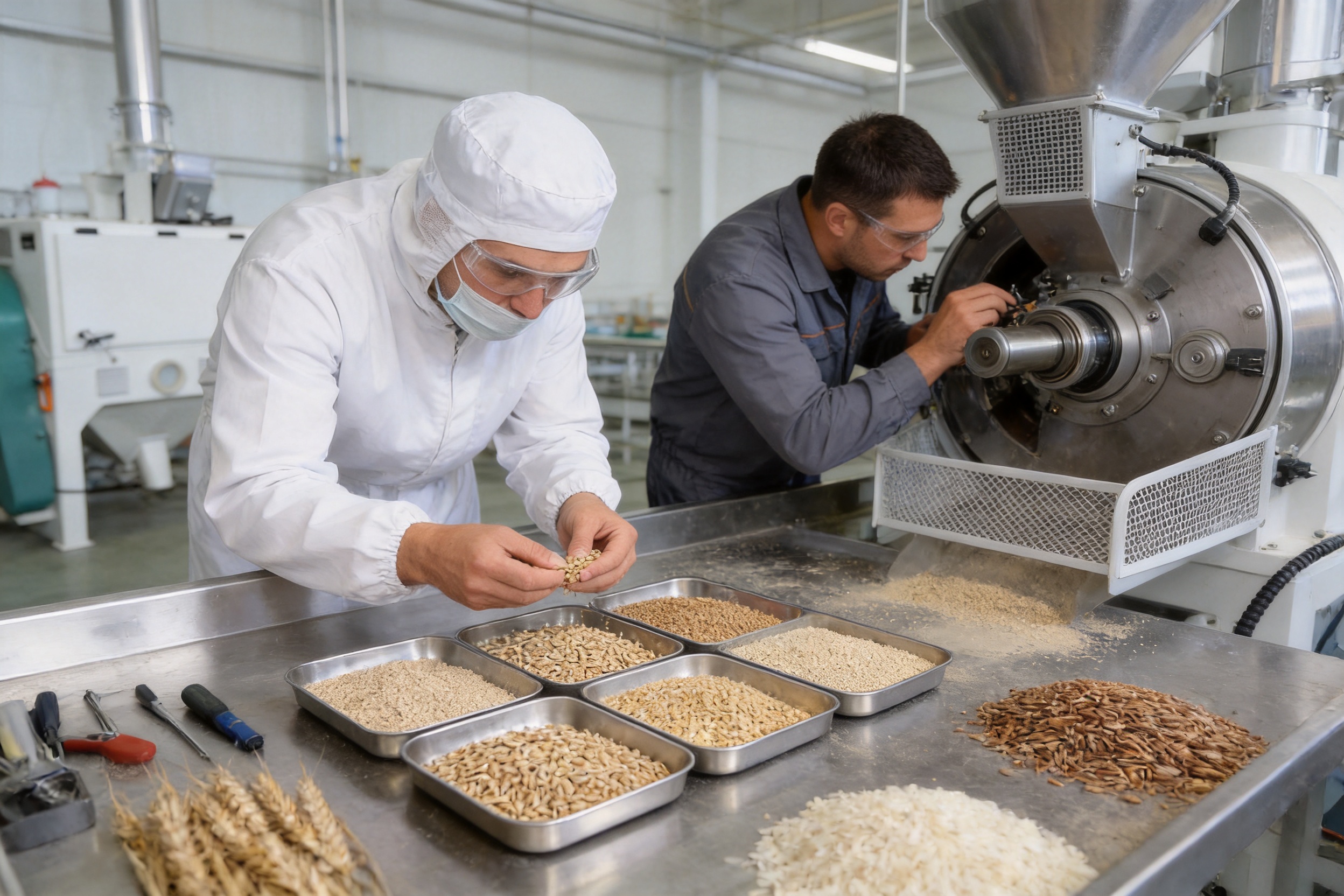
Modern grain processors require equipment that can deliver consistent particle size, high production efficiency, low operating cost, and reliable long-term performance. These requirements are especially important when producing steel-cut oats, groats, cereal ingredients, and carefully sized grain products. A drum groats cutter addresses these needs by applying controlled cutting and shearing to dehulled kernels instead of relying primarily on uncontrolled impact. The result is a more uniform product, reduced cutting waste, and improved process stability.
The drum groats cutter discussed in this article is designed for the uniform cutting of dehulled oat kernels into three to four segments. It can produce fine, medium, and coarse groats and is also suitable for barley, rye, wheat, and rice. Its cutting drum is manufactured from stainless steel, supporting durability, hygiene, and long service life in food-processing environments. The number of working holes on the drum has been increased to improve production capacity while maintaining controlled cutting performance.
Although the machine is compact in concept, its role within an oat-processing line is important. A poorly controlled cutting stage can produce excessive fines, irregular groats, unnecessary recycling, and inconsistent cooking performance. By contrast, a properly engineered drum groats cutter can support predictable downstream operations, including grading, packaging, flaking, blending, and breakfast-cereal production.
1. The Role of a Drum Groats Cutter in Grain Processing
A drum groats cutter is a specialized size-reduction machine for converting whole or dehulled kernels into smaller, relatively uniform pieces. In oat processing, the machine receives dehulled oat kernels and cuts them into segments that are commonly known as steel-cut oats or oat groats. The cutting action is designed to create clean, controlled divisions rather than randomly fractured particles.
The term “groats” generally refers to kernels that have been cleaned and dehulled but have not yet been rolled, flaked, milled, or otherwise extensively processed. A groats cutter therefore occupies an important position between dehulling and final product preparation. The quality of the cutting operation influences the appearance, cooking time, texture, bulk density, and uniformity of the finished product.
In an oat-processing line, the normal process sequence may include raw-material intake, cleaning, magnetic separation, grading, conditioning, dehulling, aspiration, kernel separation, cutting, screening, and packaging. The drum groats cutter is usually installed after dehulling and before final grading or packaging. Its performance must therefore be compatible with the capacity and material flow of the surrounding equipment.
The machine can also be applied to other grains. Barley, rye, wheat, and rice may be processed when their physical condition, moisture content, and kernel dimensions are appropriate for the selected cutting configuration. In each application, the operator must consider kernel size, moisture, hardness, feed rate, desired cut length, and the characteristics of the finished product.
2. Product Design and Operating Principle
The cutting drum is the central working component of the equipment. It is designed with a series of working holes through which kernels are guided and divided. As the drum rotates, kernels are brought into contact with the cutting elements. The interaction between the rotating drum, the kernel, and the cutting structure produces a controlled shearing action.
Unlike a conventional hammer mill, which relies mainly on high-speed impact, the drum groats cutter is intended to make a more deliberate cut. Impact-based equipment can be effective for general grinding, but it may generate a broad particle-size distribution and a relatively high percentage of fines. A cutter designed for groats production places greater emphasis on segment length and uniformity.
The rotation speed can be adjusted according to the length, hardness, and moisture condition of the kernels. This adjustment allows the operator to process different grain varieties and to produce different grades of groats. A lower or higher operating speed may be selected depending on whether the target is a coarse, medium, or fine product, subject to the recommendations established during commissioning.
When dehulled oat kernels enter the machine at a controlled feed rate, the rotating cutting drum separates them into segments. The number of working holes affects the quantity of kernels that can be processed during each rotation. Increasing the number of holes improves the machine’s potential capacity, provided that the feed system, motor power, discharge path, and downstream equipment can handle the increased material flow.
The supplied model, YQL50, is rated at 1.5 kilowatts and has an output of approximately 0.8 to 1.0 tons per hour when processing oats. Its specified cut-off waste is no more than 1 percent. Actual performance can vary according to kernel moisture, raw-material cleanliness, feed stability, required cut grade, and installation conditions.
3. Main Advantages of the Drum Groats Cutter
3.1 Uniform Groat Size
The most important advantage of the machine is its ability to produce relatively uniform groats. Uniformity is essential for commercial steel-cut oats because consumers expect a consistent appearance and predictable cooking behavior. When pieces vary substantially in size, smaller particles may become soft or overcooked while larger pieces remain firm.
A controlled cutting process also benefits manufacturers of cereal mixes, instant oat products, porridge ingredients, and food-service products. More consistent pieces can improve blending accuracy and reduce separation during transport and storage. Uniform particle dimensions may also simplify screening and reduce the quantity of material that must be returned for reprocessing.
3.2 Low Cutting Waste
The specified cutting waste is less than or equal to 1 percent for the YQL50 model under appropriate operating conditions. Low waste improves raw-material utilization and helps manufacturers control production costs. It also reduces the burden on dust collection, screening, and waste-handling systems.
Waste levels are influenced by the condition of the kernels and the operating parameters. Excessively dry or brittle material may generate more small particles, while oversized or damaged kernels may not be cut as expected. Stable feeding and correctly adjusted rotation speed are therefore essential for achieving the best result.
3.3 Adjustable Rotation Speed
The adjustable rotation speed allows the machine to accommodate kernels with different lengths and physical properties. Oats, barley, rye, wheat, and rice do not behave identically during cutting. Their hardness, shape, surface condition, and moisture content affect the cutting force and the resulting product.
Speed adjustment also provides flexibility when the processor changes product specifications. A producer may require coarse groats for one product and finer segments for another. Instead of relying on a single fixed operating condition, the operator can adjust the machine to support a broader range of finished products.
3.4 Low Energy Consumption
The drum groats cutter is designed to achieve its cutting function without the high-speed impact energy associated with many conventional grinding machines. The 1.5-kilowatt motor rating of the YQL50 reflects its focus on controlled cutting rather than intensive pulverization.
Lower power demand can reduce electricity consumption, heat generation, and the cost of operating auxiliary systems. In food-processing plants where several machines run continuously, the cumulative energy savings can be meaningful. Reduced heat generation may also help preserve the physical characteristics of sensitive grain products.
3.5 Stainless-Steel Cutting Drum
The stainless-steel cutting drum supports long service life and is well suited to hygienic processing environments. Stainless steel is resistant to corrosion and can be cleaned more easily than many untreated carbon-steel surfaces. This is particularly valuable in oat and cereal applications, where the equipment must be maintained in a clean condition to protect product quality.
The drum is also exposed to repeated mechanical contact with grain kernels. Its material selection must therefore balance corrosion resistance, surface durability, dimensional stability, and ease of maintenance. A durable drum can reduce unplanned downtime and delay the need for major component replacement.
3.6 Compact Integration into Processing Lines
The machine can be integrated into a larger oat-processing system without requiring a complex operating concept. It can be positioned after dehulling and before screening, classification, or packaging. Its integration may include a controlled feed hopper, aspiration, product discharge, dust collection, and inspection access.
For a complete installation, the processor should evaluate the equipment layout, elevation, conveying requirements, electrical supply, dust-control provisions, maintenance clearance, and compatibility with upstream and downstream machinery. Proper integration is important because the performance of a cutting machine depends not only on its internal design but also on the stability of the entire material-flow system.
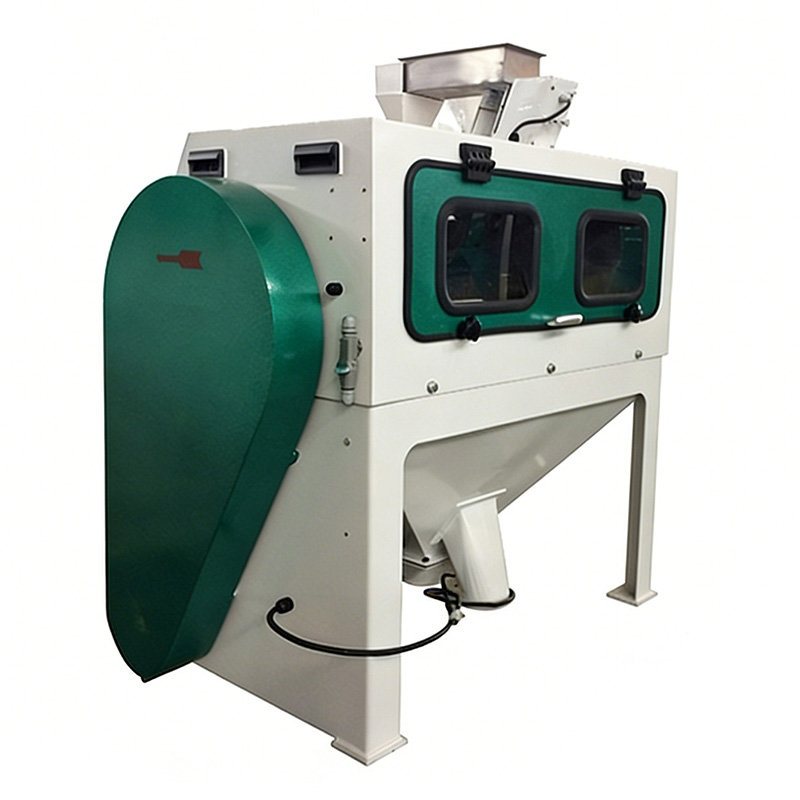
Drum Groats Cutter
4. Product Specifications and Technical Parameters
The following table summarizes the principal technical information supplied for the YQL50 drum groats cutter. The output is stated on an oat-processing basis and should be confirmed during technical selection and commissioning.
| Item | Specification |
|---|---|
| Product model | YQL50 |
| Application | Cutting dehulled kernels into groats or steel-cut segments |
| Recommended materials | Oats, barley, rye, wheat, and rice |
| Motor power | 1.5 kW |
| Output based on oats | 0.8–1.0 tons per hour |
| Typical oat cut | Three to four segments per dehulled kernel |
| Cutting waste | Not more than 1 percent |
| Product grades | Fine, medium, and coarse groats |
| Speed control | Adjustable rotation speed |
| Cutting drum material | Stainless steel |
The output range should not be interpreted as an unconditional production guarantee for every material. Grain variety, kernel size distribution, moisture content, cleanliness, feed consistency, and desired particle size can all influence capacity. During project planning, the processor should provide representative samples and define the required product specification so that the machine can be selected and adjusted correctly.
For plants with higher production requirements, several machines may be installed in parallel, or the drum groats cutter may be incorporated into a larger processing line with coordinated feeding and grading. Parallel installation can provide additional capacity and operational redundancy, although it requires careful balancing of the upstream and downstream conveyors.
5. Comparison with Conventional Size-Reduction Equipment
Many grain-processing plants use hammer mills or other impact-based machines for general size reduction. These machines have their own applications and can be effective when the target is flour, meal, or a broad crushed product. However, a hammer mill is not always the best choice when the product must consist of recognizable, uniform groat segments.
A hammer mill breaks kernels through repeated impact between swinging hammers and a screen or liner. This process can produce a mixture of large particles, medium pieces, and fines. The final distribution is influenced by hammer speed, screen opening, material moisture, residence time, and wear condition. While screening can remove some of the unwanted fractions, additional recycling may be necessary to reach a narrow product specification.
A drum groats cutter applies a more controlled cutting action. The purpose is not to pulverize the material but to divide kernels into defined segments. This can reduce the percentage of very small particles and provide a more consistent product shape. For steel-cut oats and similar cereal products, this difference is commercially significant.
In broader industrial size-reduction applications, drum-style groats cutters are also described as equipment that can use grooved rotating surfaces to apply compression and shearing forces. Such designs can be adapted for selected granular materials, including certain feed ingredients and fertilizer granules. However, the machine configuration, cutting surface, feed system, and product requirements must be evaluated for each material rather than assuming that one setting is suitable for all applications.
Compared with a general-purpose hammer mill, the key advantages of the drum groats cutter include:
- More controlled cutting of kernels into segments.
- Lower risk of excessive fines in steel-cut oat production.
- Better suitability for fine, medium, and coarse groat grades.
- Lower motor power for the specified oat-cutting application.
- Adjustable rotation speed for different kernel lengths and product requirements.
- Stainless-steel construction for improved hygiene and corrosion resistance.
- Low specified cutting waste of no more than 1 percent.
These advantages do not mean that the cutter replaces every other milling machine. A hammer mill may remain the correct choice for flour production, very fine grinding, or applications where particle shape is not important. The drum groats cutter is strongest when the desired result is a cleanly divided, relatively uniform kernel product.
6. Manufacturing Quality and Engineering Strengths
The performance of a grain-processing machine depends on more than the motor rating or nominal output. Manufacturing accuracy, material selection, assembly quality, component alignment, surface finishing, and inspection procedures all affect the machine’s service life and cutting consistency.
The stainless-steel cutting drum is one of the most important manufacturing features. Its working surfaces must maintain the correct geometry as the machine operates. Dimensional variation, poor balance, or uneven finishing could cause vibration, irregular cutting, or accelerated wear. Precision fabrication and careful assembly are therefore essential.
The increase in working holes on the cutting drum is another example of capacity-oriented engineering. More working holes can allow more kernels to be processed during each revolution. However, the drum must still retain adequate strength and stiffness. The arrangement of holes, spacing between working areas, material thickness, and balance of the rotating assembly must be considered together.
Reliable manufacturing also requires attention to the bearing system, shaft alignment, drive connection, fasteners, protective guards, and discharge structure. These components may not directly touch the grain, but they influence the stability and safety of the equipment. A properly aligned shaft reduces vibration and helps protect bearings and couplings.
Equipment intended for food and cereal processing should also be designed with cleanability in mind. Product-contact surfaces should avoid unnecessary recesses where grain dust or fragments can accumulate. Access panels and inspection points should allow operators to check the cutting chamber, remove foreign material, and perform routine cleaning.
Jiangsu Zhengding Intelligent Equipment Co., Ltd. is described as a national high-tech enterprise focused on research and development, manufacturing, and sales of intelligent logistics equipment. Its broader manufacturing experience includes automated truck loading and unloading equipment, rear dumpers, side-turn truck dumpers, car loading equipment, and container flippers. This background demonstrates capabilities in heavy equipment design, structural fabrication, automation, system integration, and industrial project delivery.
Although the company is widely associated with logistics automation, its engineering approach can also support grain-processing equipment and complete material-handling systems. A drum groats cutter does not operate in isolation in a modern factory. It must receive material consistently, discharge product without blockages, connect with conveyors or elevators, and operate within the plant’s dust-control and safety systems.
The company’s ability to develop systematic solutions is therefore an important strength. Customers may require more than an individual cutter. They may need equipment selection, process consultation, layout planning, feeding arrangements, discharge conveyors, electrical control, weighing, packaging connections, and after-sales support. An engineering supplier capable of considering the complete process can reduce integration risks.
7. Advanced Manufacturing Processes and Production Control
A dependable machine begins with a controlled manufacturing process. The first stage is engineering design, where the intended material, output, cut size, operating speed, and installation conditions are defined. For oat processing, the design must account for the size and physical behavior of dehulled kernels. The machine should provide sufficient cutting force while avoiding unnecessary crushing.
Material preparation is also important. Stainless-steel components must be cut, formed, drilled, welded, and finished according to controlled drawings. The working drum requires accurate hole placement so that the cutting pattern remains consistent around the circumference. Any imbalance in the rotating drum can lead to vibration, noise, and uneven loading of the drive system.
Welding quality affects both mechanical strength and sanitation. Welded joints should be properly formed and finished, especially in areas that may contact grain or be exposed to moisture during cleaning. Sharp projections, rough surfaces, and poorly finished seams can create hygiene problems and make inspection more difficult.
Machining operations must maintain the required tolerances for shafts, bearing seats, coupling interfaces, and other critical components. The quality of these surfaces affects alignment and service life. Accurate machining also supports easier assembly and replacement of wear components during maintenance.
Assembly is performed by positioning the drum, shaft, bearings, motor, transmission components, guards, and frame in the correct relationship. The rotating assembly should be checked for balance and free movement. Fasteners must be tightened correctly, and protective covers must be fitted before the machine is released for testing.
Factory testing provides an opportunity to identify problems before shipment. Typical checks may include no-load rotation, vibration, noise, motor current, emergency stopping, guard installation, drum rotation direction, and discharge behavior. Where possible, material testing with representative grain can be used to verify output, cutting quality, and waste level.
Quality control should continue after the machine leaves the factory. Installation supervision, operator training, commissioning adjustments, and performance feedback can help ensure that the equipment is used within its intended operating range. A technically sound machine can still perform poorly if it is overfed, operated at an unsuitable speed, or supplied with material containing excessive foreign matter.
8. Integration into an Oat-Processing Line
The drum groats cutter is most effective when it is integrated into a balanced production system. The upstream cleaning and dehulling equipment should deliver kernels with stable moisture, limited contamination, and a suitable size range. If the feed contains stones, metal, excessive husk, or oversized pieces, the cutter may experience abnormal wear or blockage.
A controlled feeding system is recommended. Sudden surges can overload the cutting chamber, while an insufficient feed rate may reduce production efficiency. A hopper with level control, a regulated screw conveyor, or another metering device can help maintain a steady supply.
After cutting, the product may pass through a grading or screening system. Screening can separate fine particles, correctly sized groats, and oversized pieces. Depending on the product specification, oversized pieces may be returned to the cutter for additional processing, while fines can be directed to another product stream.
Dust control should be considered during layout design. Even when the cutting process generates less dust than impact grinding, oat and grain handling can produce airborne particles. Enclosed transfer points, aspiration, filters, and appropriate housekeeping procedures can improve workplace conditions and protect product quality.
The electrical control system may include a motor starter, overload protection, speed adjustment, emergency stop, level sensors, and interlocks with upstream and downstream machines. Interlocking prevents the cutter from operating when the discharge conveyor is stopped or when the feed system is unavailable. This reduces the risk of accumulation and blockage.
For automated plants, the cutter may be connected to a central control system. Operators can monitor motor load, operating status, alarms, production rate, and maintenance conditions. Data collection can support preventive maintenance and help identify changes in raw-material behavior or cutting performance.
9. Application Range Beyond Oats
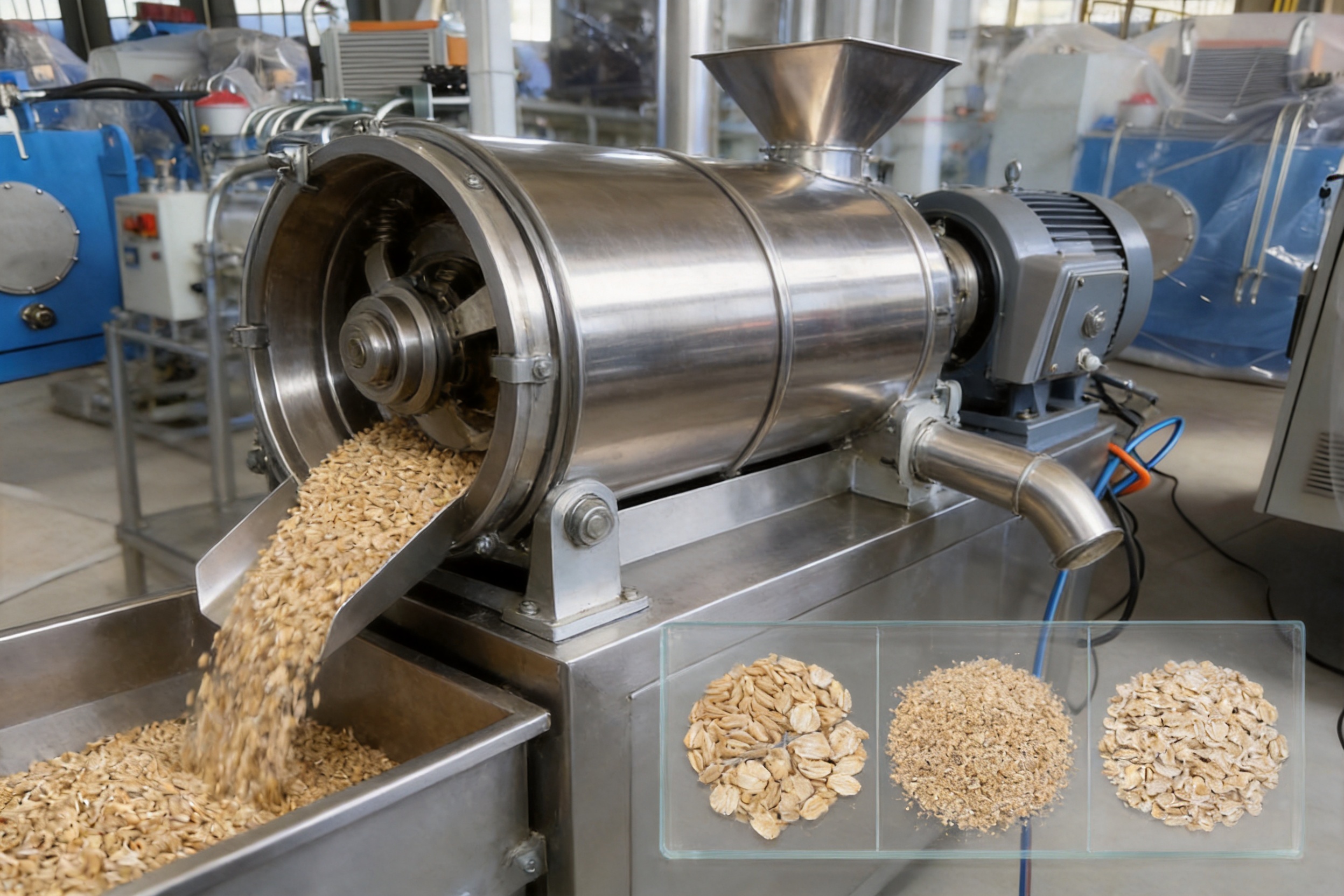
Oats are the primary application described for the drum groats cutter, but the equipment can also be used for other suitable grains. Barley may be cut for cereal products, brewing-related preparation, or specialty food ingredients. Rye and wheat can be processed when the desired output is a segmented kernel rather than flour or meal. Rice can also be considered for selected applications.
Each material requires its own operating assessment. Kernel dimensions affect the contact between the material and the cutting drum. Harder grains may require different speed or feed conditions. Moisture influences toughness and fracture behavior. A slightly conditioned kernel may cut differently from a dry, brittle kernel.
For this reason, processors should define the required product before selecting operating parameters. Important questions include whether the product should contain three, four, or another number of segments; whether fines must be minimized; whether a narrow size range is required; and whether the finished product will be screened after cutting.
Some industrial drum-style size-reduction designs may also be considered for feed ingredients, fertilizer granules, and selected chemical or biomass materials. These applications require careful review of material hardness, abrasiveness, moisture, dust characteristics, corrosion risk, and safety requirements. Food-grade oat processing and industrial chemical processing should not be treated as identical operating conditions.
When the material is abrasive, wear protection and inspection intervals may need to be increased. When the material is hygroscopic or prone to sticking, the feeding and discharge areas require special attention. When the material creates combustible dust, the complete installation must be reviewed for appropriate explosion-prevention and electrical protection measures.
10. Operating Guidelines for Consistent Results
10.1 Prepare the Raw Material
Only clean, properly dehulled kernels should be sent to the cutter. Stones, metal, glass, and other foreign material must be removed by upstream cleaning and magnetic separation. Excessive husk can affect the cutting result and increase dust generation.
10.2 Control Moisture
Moisture has a direct influence on cutting behavior. Material that is excessively dry may fracture into more fines, while material that is too moist may deform, stick, or reduce cutting efficiency. The appropriate moisture range depends on the grain, product specification, and process design.
For general grain-processing applications, an operating range of approximately 8 to 15 percent moisture is commonly referenced. Higher-moisture material may be processed in some cases, but capacity and consistency can decline. Trial testing is recommended before establishing a production setting.
10.3 Adjust the Rotation Speed
The operator should adjust rotation speed according to the required groat grade and material characteristics. A speed that is too high may increase fines or impose unnecessary mechanical stress. A speed that is too low may reduce capacity or produce incomplete cuts.
Speed changes should be made gradually while the operator observes the product, motor load, vibration, and discharge flow. The final setting should be recorded for each major raw-material type and product specification.
10.4 Maintain Stable Feeding
A stable feed rate helps the cutting drum work consistently. Overfeeding can cause blockage, excessive motor load, and irregular cutting. Underfeeding can reduce efficiency and make the product distribution less stable. Feed-control equipment should be checked regularly to prevent bridging, surging, or starvation.
10.5 Inspect the Product
Operators should regularly inspect the cut groats for segment length, fines, uncut kernels, discoloration, and foreign material. A simple sampling routine can identify changes before they become a major quality problem. If the product changes, the operator should check feed rate, moisture, speed, drum condition, and upstream dehulling performance.
11. Maintenance and Service Considerations
Preventive maintenance protects cutting quality and extends equipment life. Before maintenance begins, the machine must be stopped, isolated from the power supply, and secured against accidental restart. Operators should follow the plant’s lockout and safety procedures.
Routine inspection should include the cutting drum, working holes, shaft, bearings, motor, couplings, fasteners, guards, and discharge outlet. Product buildup should be removed from areas where it could interfere with movement or create sanitation concerns.
Bearings should be lubricated according to the manufacturer’s recommendations and the operating environment. Over-lubrication can be as problematic as insufficient lubrication, particularly when heat or dust is present. Abnormal noise, temperature, or vibration should be investigated promptly.
The cutting drum should be examined for wear, deformation, corrosion, and blocked working holes. A damaged or worn drum may produce irregular groats and increase waste. If the drum surface no longer maintains the required cutting geometry, it should be repaired or replaced.
The supplied technical information recommends routine inspection at intervals of approximately 500 operating hours for comparable drum groats cutter applications. Bearing lubrication may be performed at longer intervals depending on the bearing type, operating conditions, and maintenance program. More frequent inspection may be necessary for abrasive materials or high-dust installations.
Maintenance records should include operating hours, lubrication activities, component replacements, product-quality observations, motor-current readings, and any abnormal events. This information helps the plant predict wear and schedule service during planned shutdowns instead of waiting for an unexpected failure.
12. Safety and Hygiene in Food-Processing Applications
Safety begins with mechanical guarding. Rotating drums, shafts, couplings, and drive components must be enclosed so that operators cannot contact moving parts during operation. Inspection doors should be designed to prevent access while the machine is running, or they should be connected to suitable safety interlocks.
Emergency-stop devices should be accessible from the operating area. The control system should be arranged so that the machine cannot restart unexpectedly after a power interruption or fault. Clear operating instructions and warning labels should be provided during installation.
Grain dust requires attention because it can affect breathing conditions, housekeeping, and, under certain circumstances, combustible-dust risk. The machine should be connected to a suitable aspiration or dust-collection system where required. Regular cleaning prevents dust accumulation on floors, platforms, motors, and structural surfaces.
For food applications, the equipment should be cleaned according to the plant’s sanitation program. Product-contact surfaces should be inspected for accumulation, corrosion, damaged finishes, and loose material. Cleaning methods should be compatible with the materials of construction and should not damage bearings or electrical components.
Operators should receive training in startup, shutdown, emergency stopping, product inspection, cleaning, and basic troubleshooting. Training is particularly important when the machine is installed as part of an automated system with multiple conveyors and interlocked devices.
13. Why Equipment Supplier Capability Matters
Purchasing a groats cutter is not only a decision about a single machine. It is also a decision about engineering support, manufacturing reliability, installation coordination, spare parts, and long-term service. A supplier with experience in industrial equipment can help the customer avoid mismatches between capacity, layout, control systems, and material flow.
Jiangsu Zhengding Intelligent Equipment Co., Ltd. has experience in developing and manufacturing equipment for automated loading and unloading of trucks, containers, and other logistics applications. Its product range includes rear dumpers, side-turn truck dumpers, car loading equipment, and container flippers. These products require robust frames, hydraulic or mechanical systems, control technology, safety protection, and coordination with customer facilities.
This industrial background supports several strengths relevant to grain-processing projects. First, the company has experience with large-scale equipment engineering and structural manufacturing. Second, it understands the importance of system integration rather than treating each machine as an isolated unit. Third, its international project experience provides exposure to different operating environments, customer standards, and installation conditions.
The company serves industries including steel, chemicals, cement, coal, grain, oil, food, feed, ports, papermaking, and new energy. Such cross-industry exposure can be useful when a customer requires a combination of grain processing and automated material handling. For example, a processing facility may need intake logistics, truck unloading, storage transfer, grain preparation, cutting, weighing, and packaging in one coordinated project.
The company’s reported export markets include Japan, Brazil, Egypt, Pakistan, India, the Middle East, and Southeast Asia. International delivery requires attention to documentation, electrical standards, packaging, spare parts, commissioning, and communication. These capabilities can provide value to customers seeking equipment for plants outside the domestic market.
A supplier with in-house or closely coordinated engineering and manufacturing resources can also respond more effectively to customization requests. Possible project-specific requirements may include altered feed and discharge heights, special electrical voltages, stainless-steel contact surfaces, dust-collection connections, different hopper arrangements, or integration with a customer’s existing control system.
14. Customization and Project Selection
Before ordering a drum groats cutter, the customer should provide detailed process information. The supplier should understand the material name, kernel dimensions, moisture content, bulk density, required capacity, target segment size, acceptable fines level, operating hours, and installation environment.
Representative material samples can be valuable. Laboratory or factory trials may show how the kernels behave under different speeds and feed rates. Testing can also help determine whether screening, recirculation, aspiration, or additional conditioning is necessary.
Space limitations should be considered early. The customer should provide available floor area, ceiling height, access routes, maintenance clearances, and the locations of nearby conveyors or elevators. A machine that fits dimensionally may still be difficult to maintain if inspection doors cannot be opened or components cannot be removed.
Electrical and control requirements should also be defined. These may include supply voltage, frequency, motor protection, speed-control method, communication protocols, emergency circuits, and integration with a plant-wide automation system. The control philosophy should identify what happens during a blockage, overload, power failure, or downstream stoppage.
For export projects, the customer should confirm local standards and documentation requirements. These may include motor specifications, control-panel standards, safety labeling, operating manuals, packing requirements, and inspection certificates. Early clarification reduces delays during shipment and installation.
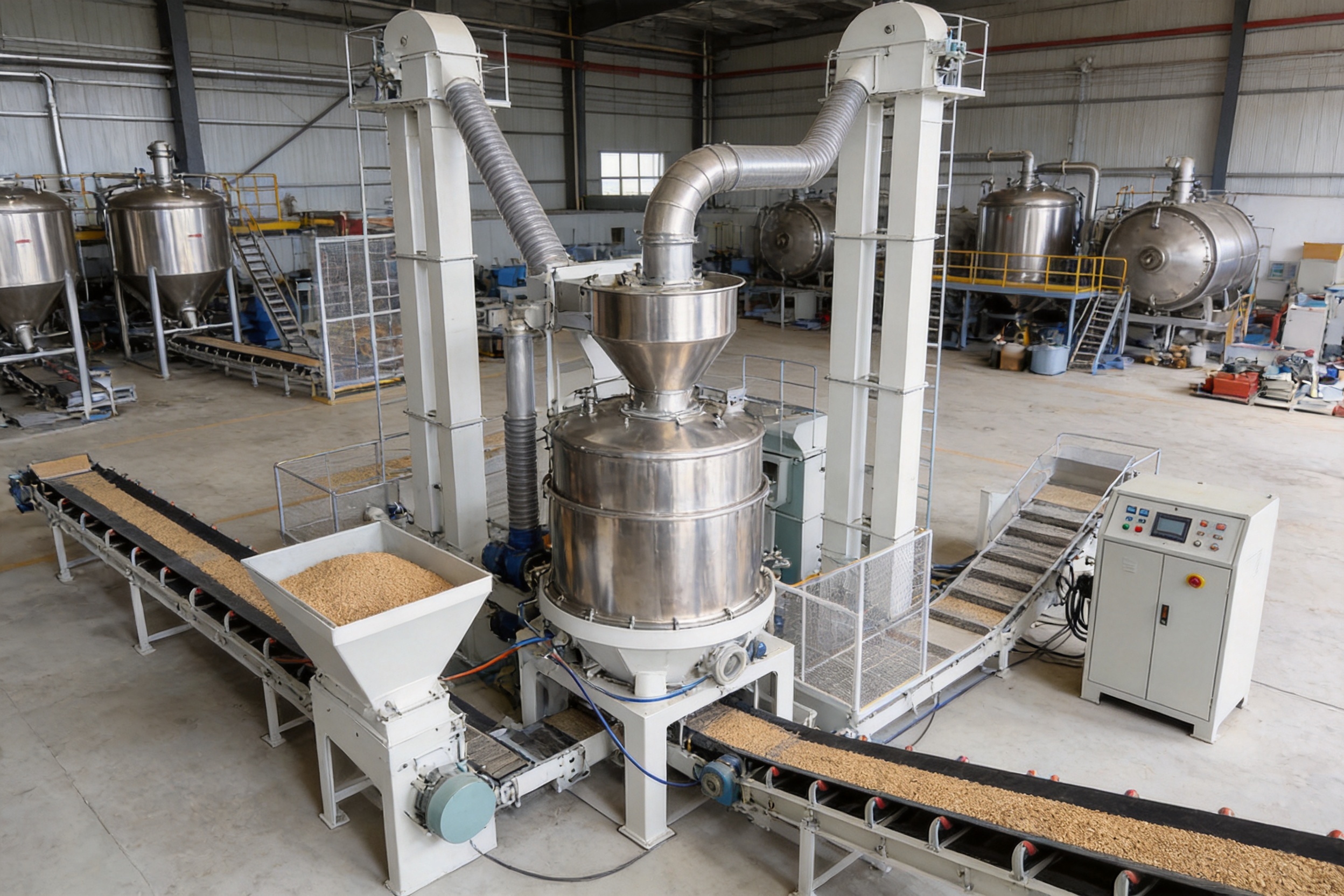
15. Economic Benefits for Processors
The economic value of a drum groats cutter comes from several combined factors rather than one specification. Low cutting waste improves yield. Low power consumption reduces utility costs. Consistent particle size can reduce rework and improve the efficiency of downstream screening and packaging. Stable operation can also reduce production interruptions.
Product uniformity may create additional commercial value. Steel-cut oats with a consistent appearance can be more suitable for branded retail products, food-service ingredients, and premium cereal formulations. Predictable cut size can also support standardized cooking instructions and more consistent consumer experience.
Maintenance costs are influenced by the durability of the cutting drum, bearings, shaft, and wear components. A stainless-steel drum with a long service life can reduce the frequency of replacement. Easy access for inspection and cleaning can reduce labor time during planned maintenance.
Energy savings should be calculated across the complete process. The motor rating is only one part of energy consumption. Conveyors, aspiration fans, elevators, screens, and packaging equipment also use power. A cutter that produces fewer fines may reduce the load on some downstream systems, but the actual result depends on the complete line design.
Return on investment should therefore be evaluated using the plant’s actual operating data. Relevant variables include annual throughput, raw-material cost, product selling price, electricity rate, labor cost, waste percentage, maintenance expenses, and production hours. A technical quotation should be accompanied by a process assessment rather than evaluated solely on purchase price.
16. Quality Control of Finished Groats
Finished groats should be checked against the customer’s product specification. Important quality indicators may include segment length, percentage of whole kernels, fines content, moisture, color, cleanliness, bulk density, and presence of foreign material.
Screen analysis can be used to determine particle-size distribution. Samples should be collected at regular intervals and tested using a repeatable method. The testing frequency may be increased during startup, after a speed adjustment, after raw-material changes, or when the cutting drum has been serviced.
Visual inspection remains useful. Uniform pieces should have clean edges and a consistent appearance. Excessive powder, crushed fragments, uncut kernels, or darkened material may indicate a problem with the cutting conditions or upstream processing.
Oat products may also be evaluated after cooking. Cut size affects hydration, cooking time, texture, and mouthfeel. A product that meets a nominal particle-size range may still require adjustment if the finished food does not meet the customer’s sensory requirements.
Quality-control data should be connected to operating records. If the fines level increases, the plant should be able to review the relevant feed rate, speed, moisture, raw-material lot, motor load, and maintenance history. This traceability supports continuous improvement and makes troubleshooting more systematic.
17. Troubleshooting Common Operating Problems
Excessive Fines
Excessive fines may result from material that is too dry, excessive rotation speed, overfeeding, worn cutting surfaces, or unsuitable kernel condition. The operator should first check the material moisture and speed setting. If the condition continues, the drum and bearings should be inspected, and the feed rate should be verified.
Too Many Uncut Kernels
Uncut kernels may indicate an unsuitable feed rate, insufficient contact with the cutting structure, oversized material, or an incorrect operating speed. Upstream grading should also be checked. If the incoming kernels vary substantially in size, the machine may not produce a uniform cut without additional classification.
Reduced Capacity
Reduced capacity can be caused by bridging in the hopper, restricted discharge, blocked working holes, excessive moisture, or a motor that is not operating correctly. Product buildup and dust accumulation should be removed safely. The operator should not increase the feed rate until the cause has been identified.
Abnormal Noise or Vibration
Noise or vibration may indicate an unbalanced drum, loose fasteners, bearing wear, shaft misalignment, foreign material, or an incorrect installation foundation. The machine should be stopped and isolated before inspection. Continued operation under abnormal vibration can damage the drive system and reduce cutting accuracy.
Motor Overload
Motor overload may occur when the machine is overfed, when material is too hard or too wet, when the discharge is blocked, or when a mechanical component is binding. The overload protection should not simply be bypassed. The feed path, drum, bearings, and electrical system should be checked by qualified personnel.
18. Frequently Asked Questions
Q1. What does a drum groats cutter produce?
A drum groats cutter produces segmented kernels, commonly called groats or steel-cut grains. In oat processing, dehulled oat kernels can be cut into approximately three to four segments, depending on the selected operating conditions and product requirements.
Q2. Which materials can be processed?
The equipment is primarily intended for oats and can also be used for suitable barley, rye, wheat, and rice applications. Material testing is recommended when the grain differs significantly in hardness, moisture, size, or surface condition from standard oat kernels.
Q3. Can the machine produce different groat grades?
Yes. The machine is suitable for fine, medium, and coarse kernel products. Rotation speed and feed conditions can be adjusted to support different product grades. Final classification by screening may be used when a narrow size distribution is required.
Q4. What is the output of the YQL50 model?
The YQL50 model has a stated output of approximately 0.8 to 1.0 tons per hour based on oats. Actual output depends on kernel moisture, feed stability, material quality, required cut size, and the condition of the cutting drum.
Q5. How much cutting waste should be expected?
The specified cut-off waste is no more than 1 percent under appropriate operating conditions. Actual waste should be verified through production testing because raw-material condition and operating parameters affect the amount of fines and rejected material.
Q6. Why is adjustable speed useful?
Adjustable speed allows the operator to adapt the cutting action to different kernel lengths, grain varieties, moisture levels, and product grades. It also makes the equipment more flexible when a plant produces several types of groats.
Q7. Is stainless steel important for oat processing?
Stainless steel offers corrosion resistance, a durable working surface, and improved cleanability. These characteristics are valuable in food and cereal-processing environments where hygiene, long service life, and resistance to moisture are important.
Q8. Can the cutter replace a hammer mill?
It can replace or supplement a hammer mill in applications where controlled kernel segmentation is more important than pulverization. A hammer mill may still be more appropriate for flour, meal, or very fine grinding. The correct choice depends on the intended product and process requirements.
Q9. What moisture range is generally suitable?
A general operating range of approximately 8 to 15 percent moisture is commonly referenced for grain-cutting applications. Higher moisture may reduce consistency or capacity, while very dry material may create additional fines. The correct range should be established through material testing.
Q10. How often should the equipment be inspected?
Routine inspection should be scheduled according to operating hours, material abrasiveness, dust conditions, and the plant’s maintenance program. The supplied information references inspection at approximately 500 operating hours for comparable applications. Bearings, fasteners, the drum, guards, discharge path, and drive system should all be checked.
Q11. Can the machine be integrated into an automated line?
Yes. The drum groats cutter can be integrated with feeding equipment, conveyors, elevators, screens, aspiration, weighing, packaging, and a central control system. Interlocks and emergency-stop circuits should be designed as part of the complete line rather than added after installation.
Q12. What support should a customer request from the supplier?
The customer should request technical selection, layout advice, power and control information, installation guidance, operating instructions, spare-parts recommendations, commissioning support, and maintenance guidance. Material testing and performance confirmation are also valuable for specialized applications.
19. Conclusion
The drum groats cutter is a practical solution for processors that need to divide dehulled kernels into consistent, commercially useful segments. Its principal strengths include uniform cutting, low specified waste, adjustable rotation speed, low energy consumption, and a stainless-steel cutting drum. The YQL50 model provides a stated oat-processing output of 0.8 to 1.0 tons per hour with a motor power of 1.5 kilowatts.
Compared with general-purpose impact grinding, the cutter is better suited to applications where product shape, segment size, and low fines are important. It can support steel-cut oat production as well as selected barley, rye, wheat, and rice applications. Proper raw-material preparation, stable feeding, moisture control, and regular inspection are essential for achieving the expected results.
The equipment is also strengthened by the engineering and manufacturing capabilities of Jiangsu Zhengding Intelligent Equipment Co., Ltd. The company’s experience in intelligent logistics equipment, truck and container loading and unloading, heavy structural systems, automation, and project integration provides a foundation for supplying complete industrial solutions. Its experience serving grain, food, feed, chemical, cement, steel, port, and other industries is particularly relevant to customers developing integrated processing and material-handling facilities.
For processors planning a new oat line or upgrading an existing one, the best approach is to evaluate the cutter as part of the entire production system. When correctly selected, manufactured, installed, and maintained, a drum groats cutter can improve product consistency, reduce waste, lower energy demand, and provide a dependable foundation for modern steel-cut grain production.
References
1. Product technical information for the YQL50 Drum Groats Cutter, including rated power, oat-processing output, cutting waste, material suitability, and operating features.
2. Industrial grain-processing engineering principles concerning kernel conditioning, dehulling, cutting, screening, aspiration, and product classification.
3. General maintenance practices for rotating food-processing machinery, including bearing lubrication, inspection, guarding, vibration monitoring, and preventive service.
4. Food-processing equipment design principles relating to stainless-steel construction, cleanability, corrosion resistance, and hygienic product-contact surfaces.
5. Industrial size-reduction technology references covering cutting, shearing, compression, impact milling, particle-size distribution, and fines control.
6. Company information concerning Jiangsu Zhengding Intelligent Equipment Co., Ltd., its research and development activities, manufacturing capabilities, logistics equipment, international markets, and industry applications.


