

 English
 русский
 Español
 Français
 Português
 عربى
عربى




+86-13588556918
Content
- 1 1. The Role of Truck Dumpers in Modern Industrial Logistics
- 2 2. Product Overview and Operating Principle
- 3 3. Mechanical Rigid Synchronization Compared with Conventional Oil-Flow Synchronization
- 4 4. High-Precision Hydraulic Stability System
- 5 5. Automatic Wheel Retaining and Vehicle Restraint
- 6 6. Safety Engineering Built into the Dumper
- 7 7. Unmanned and Driver-Operated Unloading
- 8 8. Main Technical Parameters and Model Selection
- 9 9. Advantages over Conventional and Competing Designs
- 10 10. Advanced Manufacturing and Engineering Strengths
- 11 11. Industry Applications
- 12 12. Installation Planning and System Integration
- 13 13. Maintenance and Service-Life Management
- 14 14. Operator Training and Safe Working Procedures
- 15 15. Dust, Noise, and Environmental Considerations
- 16 16. How to Select the Correct Truck Dumper
- 17 17. Company Manufacturing and Market Experience
- 18 18. Frequently Asked Questions
- 18.1 Q1: What is the main difference between this truck dumper and a conventional side dumper?
- 18.2 Q2: What maximum lifting capacities are available?
- 18.3 Q3: Can the dumper be operated without a dedicated operator?
- 18.4 Q4: Is automatic wheel restraint better than manual wheel chocks?
- 18.5 Q5: What lifting angles are available?
- 18.6 Q6: What safety devices should be included?
- 18.7 Q7: How often should the hydraulic system be inspected?
- 18.8 Q8: How much clearance should be kept around the platform?
- 18.9 Q9: Can the dumper be connected to a conveyor or weighing system?
- 18.10 Q10: What information is required for a quotation and technical proposal?
- 19 19. Conclusion
- 20 References
- 21 Product: Truck Dumpers
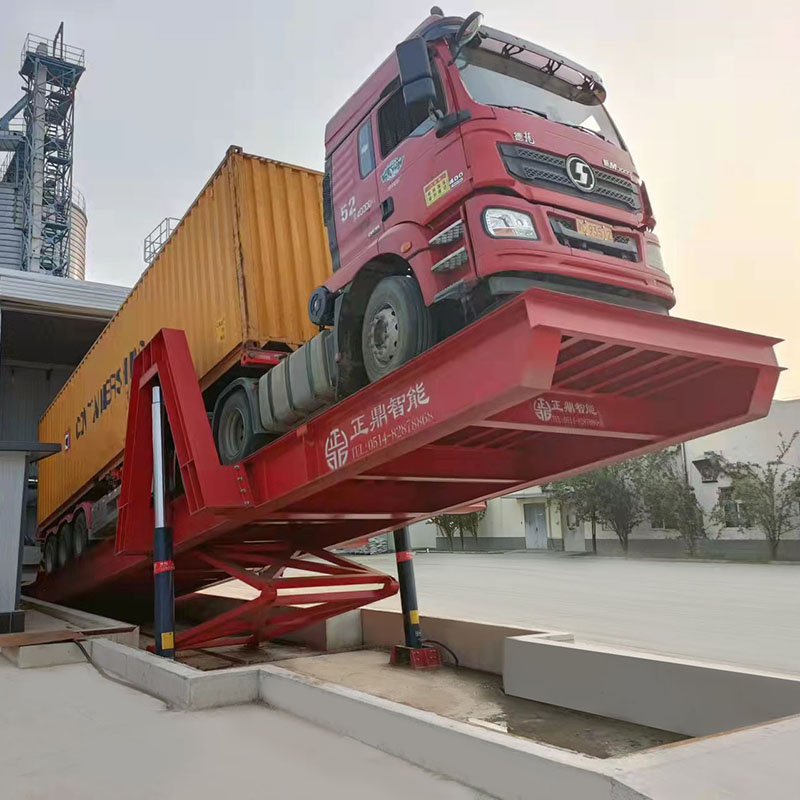
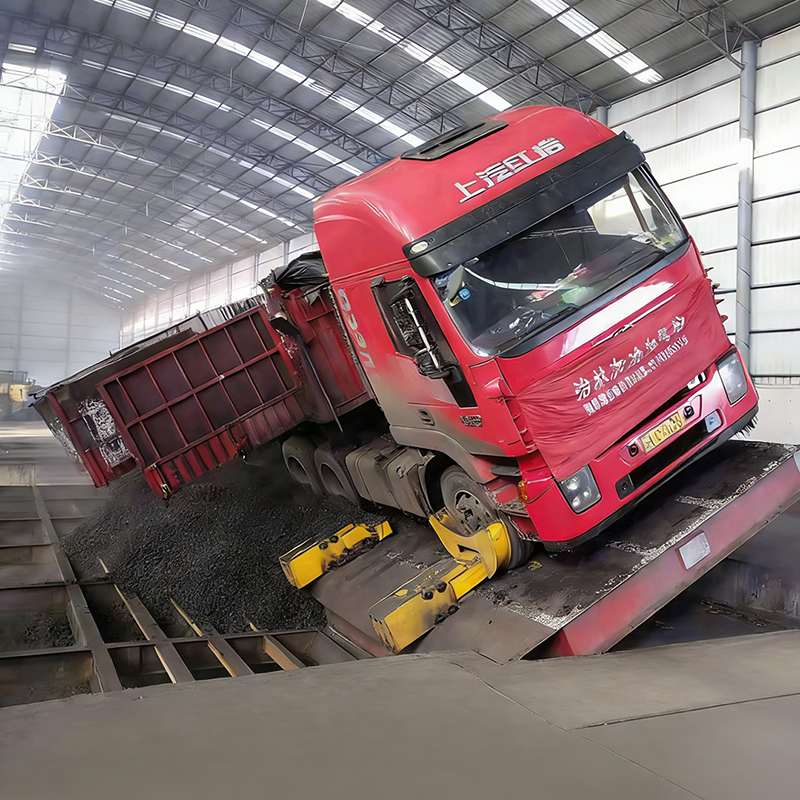
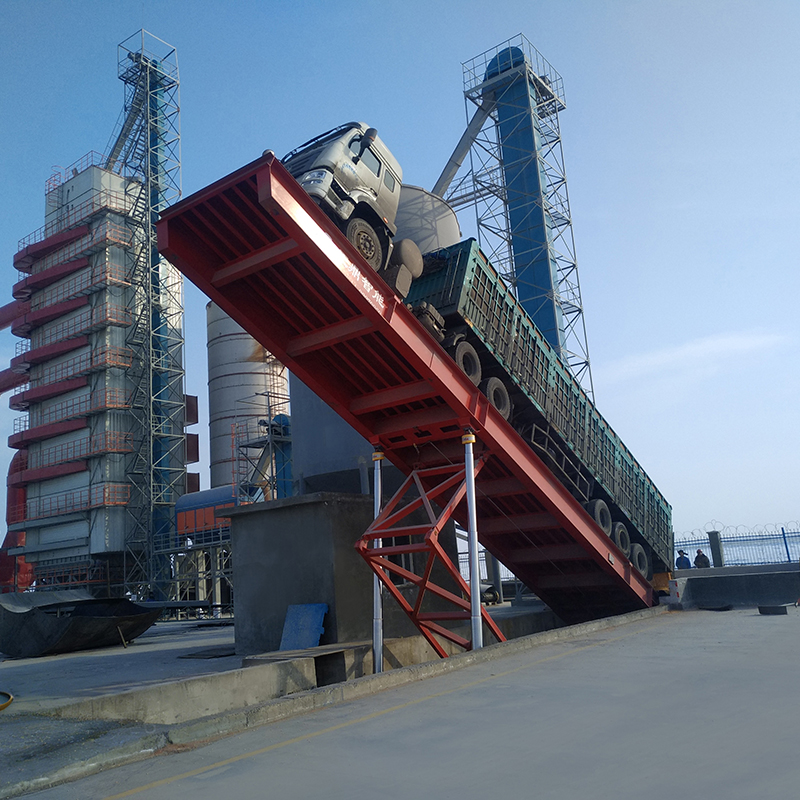
Truck dumpers are essential handling systems for industries that move large quantities of bulk materials by road. They provide a controlled method for unloading trucks carrying grain, feed, coal, cement, minerals, chemicals, oil products, food ingredients, and other materials. Instead of requiring a truck to discharge its load through a conventional manual process, a truck dumper raises and tilts the vehicle so that gravity can transfer the material into a receiving hopper, conveyor, silo, or processing line.
As production facilities increase their demand for automation, safety, and continuous throughput, truck dumper design has become more sophisticated. Modern equipment must do more than lift a heavy vehicle. It must restrain the truck securely, synchronize hydraulic movement, prevent uncontrolled descent, protect personnel, reduce loading-cycle time, and integrate smoothly with the wider material-handling system.
The advanced truck dumper range supplied by Jiangsu Zhengding Intelligent Equipment Co., Ltd. is designed around these requirements. The equipment combines mechanical synchronization, high-precision hydraulic stability, automatic wheel restraint, imported hydraulic components, and unmanned operating functions. This approach creates a truck unloading solution that is safer and more dependable than conventional systems that rely only on oil-flow balancing between side cylinders.
With models capable of handling maximum lifting weights from 80 to 150 metric tons and lifting angles of 45 or 55 degrees, the equipment can be adapted to different truck dimensions, receiving arrangements, and material characteristics. Its structure is intended for demanding industrial applications where reliability, controlled movement, and high availability are essential.
Truck Dumpers
1. The Role of Truck Dumpers in Modern Industrial Logistics
Bulk-material logistics often begins with a truck arriving at a plant, warehouse, port, or processing facility. The truck may carry raw materials from a mine, farm, refinery, cement plant, grain terminal, chemical supplier, or distribution center. Once it reaches the receiving area, the material must be unloaded quickly and safely before the vehicle leaves for its next assignment.
Traditional unloading methods can be slow and labor-intensive. Some vehicles require manual opening of discharge doors. Others need to reverse into a pit or use a separate tipping arrangement. In facilities with high traffic volumes, these methods may create congestion, expose workers to dust and moving vehicles, and increase the possibility of spillage or uneven unloading.
A truck dumper provides a centralized and repeatable unloading process. The vehicle is driven onto the dumper platform, positioned against the required restraint system, and secured before the lifting cycle begins. The platform then raises the truck to a controlled angle. Bulk material flows from the truck body into the receiving system, while the operator or automated control system monitors the movement.
This process offers several operational benefits:
- Shorter unloading cycles and improved vehicle turnover.
- Reduced manual handling of bulk materials.
- Better control of dust, spillage, and material flow.
- Improved integration with conveyors, hoppers, silos, and processing equipment.
- Greater safety when mechanical restraints and hydraulic protection systems are properly applied.
- Lower dependence on specialized operators.
- More consistent unloading performance across different shifts.
Truck dumpers are especially valuable in facilities where the incoming material must be unloaded continuously. Grain terminals, feed mills, coal yards, cement plants, chemical factories, steel works, ports, and food-processing plants can all benefit from automated or semi-automated tipping equipment.
2. Product Overview and Operating Principle
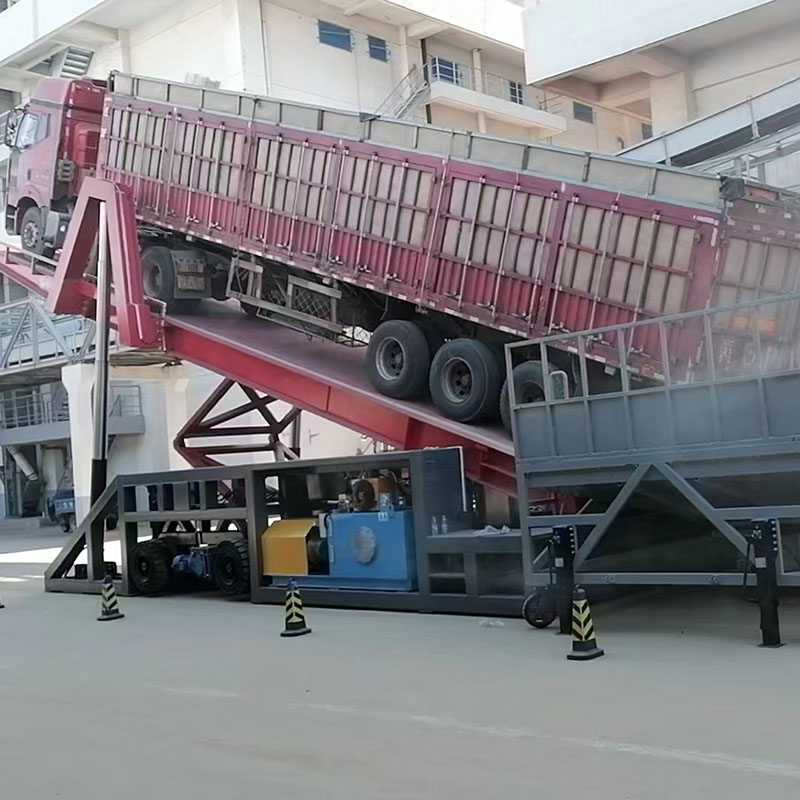
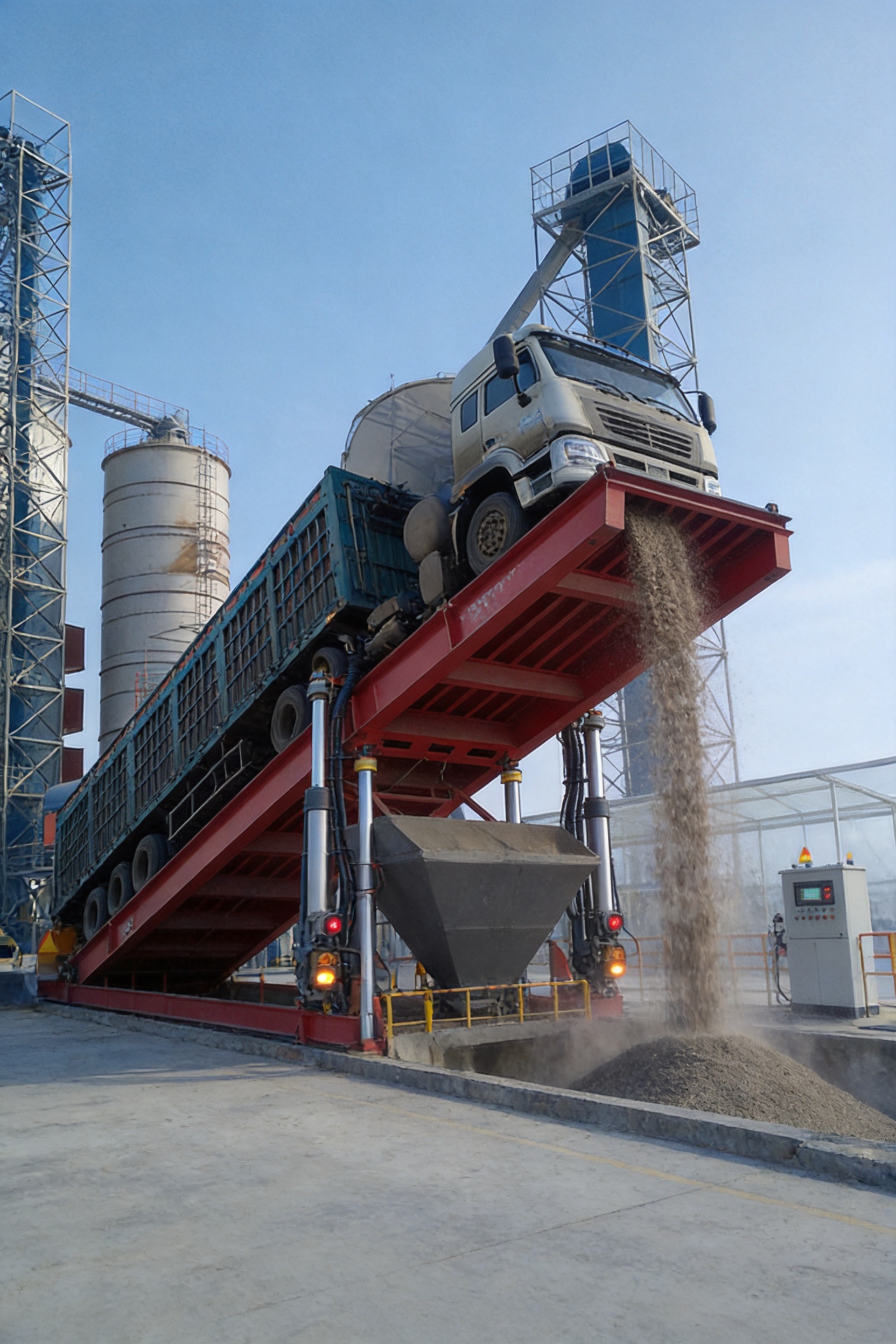
The truck dumper consists of a structural platform, lifting mechanism, hydraulic power unit, vehicle-restraint system, control system, and safety devices. The platform supports the truck during the lifting process. Hydraulic cylinders generate the force required to raise the platform and vehicle. The restraint system prevents unwanted truck movement, while the control system coordinates the sequence of operation.
In a typical operating cycle, the truck enters the platform area and stops at the designated position. The automatic retaining-wheel device is engaged to secure the vehicle. The system verifies the necessary conditions before permitting the lifting cycle. Once the interlock sequence is satisfied, the hydraulic cylinders raise the platform gradually.
As the platform reaches the required angle, material leaves the truck body and enters the receiving hopper or conveyor. The operator can stop the platform at a suitable position when the material characteristics, truck structure, or receiving equipment require a specific discharge angle. When unloading is complete, the platform returns to its original position under controlled hydraulic operation.
The truck dumper is not simply a lifting machine. It is a coordinated system in which structural design, hydraulic control, mechanical synchronization, vehicle restraint, electrical interlocks, and operator procedures work together. A weakness in any one of these areas can reduce productivity or create unnecessary risk. For this reason, the equipment is designed as an integrated solution rather than as a collection of independent components.
3. Mechanical Rigid Synchronization Compared with Conventional Oil-Flow Synchronization
One of the most important design advantages of this truck dumper is its mechanical rigid synchronization mechanism. Many traditional side-turn dumpers synchronize their lifting cylinders mainly by controlling oil flow. While oil-flow synchronization can function under certain conditions, it may be sensitive to hydraulic resistance, component wear, temperature changes, leakage, valve response, and uneven loading.
When two side cylinders do not move at exactly the same rate, the platform can experience twisting, vibration, or uneven movement. Even a small difference in cylinder travel can create additional stress on the platform, pins, cylinder mounts, and structural members. Over time, this may contribute to accelerated wear, seal damage, inaccurate positioning, and increased maintenance requirements.
The rigid mechanical synchronization system addresses this problem by mechanically coordinating the movement of the lifting structure. Instead of depending solely on the hydraulic circuit to keep both sides aligned, the mechanical system helps maintain synchronized motion through a robust structural connection. This reduces the possibility of unequal lifting and provides a more stable platform throughout the operating cycle.
The advantages of mechanical rigid synchronization include:
- More consistent movement between the two sides of the platform.
- Reduced platform twisting and structural vibration.
- Lower impact loads on hydraulic cylinders and connection points.
- Improved lifting precision under changing load conditions.
- Less dependence on fine hydraulic-flow adjustment.
- Improved operational stability over long service periods.
- A simpler and more reliable synchronization principle.
This design is particularly valuable for heavy-duty applications. When a truck and its load reach tens or even more than one hundred metric tons, uneven motion can generate significant forces. Mechanical synchronization provides an additional layer of control that complements the hydraulic system and improves the overall behavior of the dumper.
Compared with a system that relies only on hydraulic balancing, the rigid synchronization arrangement can reduce the risk associated with unequal cylinder movement. It also simplifies the relationship between the structural mechanism and the control system. The result is a truck dumper that is easier to operate and less vulnerable to instability caused by minor hydraulic differences.
4. High-Precision Hydraulic Stability System
The hydraulic system is responsible for lifting, holding, and lowering the truck dumper platform. Because the equipment handles heavy vehicles, hydraulic stability is central to safety and service life. The product uses a high-precision oil-cylinder synchronous stability system developed to support controlled movement and reduce mechanical shock.
The system is designed to maintain stable cylinder operation during lifting and lowering. Small vibration during operation helps reduce sudden force changes in the cylinders and structural frame. Lower impact loads are beneficial for cylinder seals, mounting brackets, pins, hoses, valves, and other hydraulic components.
Hydraulic stability is important at several stages of the cycle. During initial lifting, the system must overcome the static weight of the truck and its load without an abrupt start. During the main lifting movement, it must maintain a controlled speed and balanced motion. Near the maximum angle, it must prevent excessive movement or overshoot. During lowering, it must control the descent rather than allowing the platform to fall rapidly under its own weight.
The hydraulic design supports these requirements through coordinated cylinder operation, reliable pumps, control valves, holding functions, and properly selected hydraulic components. The use of imported-brand cylinders and pumps provides a further focus on component quality, reliability, and long operating life.
The benefits of the hydraulic stability system include:
- Reduced vibration during platform movement.
- Lower impact on the oil cylinders.
- Improved control during starting, lifting, stopping, and lowering.
- Longer expected service life for hydraulic components.
- Reduced risk of uneven movement caused by cylinder differences.
- More predictable operation for automated control sequences.
Hydraulic stability does not replace the need for regular inspection. Hoses, fittings, seals, pumps, valves, and cylinder surfaces must still be checked according to an appropriate maintenance schedule. However, a stable hydraulic design reduces unnecessary mechanical stress and provides a stronger foundation for long-term reliability.
5. Automatic Wheel Retaining and Vehicle Restraint
Vehicle restraint is one of the most important safety functions of a truck dumper. Once a truck is on the platform, it must remain in the intended position throughout the lifting and unloading process. Uncontrolled movement can lead to roll-off, structural impact, material spillage, equipment damage, or serious injury.
The product adopts a fully automatic retaining-wheel fixing device. This system reduces the need for an operator to stand near the platform and manually position or adjust wheel restraints. In dusty, noisy, or high-traffic environments, limiting unnecessary personnel movement is a major operational advantage.
The automatic retaining device is designed to make vehicle securing simpler, safer, and more efficient. It can be incorporated into an interlocked operating sequence so that the dumper cannot begin lifting until the required restraint condition has been confirmed. This principle helps prevent a dangerous situation in which the platform starts to rise before the truck is properly secured.
Compared with manual chocking alone, an automatic mechanical restraint can provide more consistent positioning and reduce the possibility of human error. Manual chocks may be misplaced, incompletely engaged, displaced by vibration, or used inconsistently during busy production periods. Automatic restraint does not eliminate the need for operator awareness, but it reduces dependence on individual judgment during each unloading cycle.
A comprehensive restraint arrangement may include wheel-retaining mechanisms, bumper positioning, wheel chocks, limit switches, sensors, and control interlocks. The exact configuration can be selected according to truck type, platform length, operating environment, and local safety requirements.
The automatic retaining-wheel device delivers several practical benefits:
- Reduced operator exposure to the dusty platform environment.
- Faster vehicle positioning and preparation.
- More consistent truck restraint from one cycle to the next.
- Improved compatibility with automated operation.
- Lower risk of beginning a lift with incomplete restraint.
- Improved working conditions for drivers and plant personnel.
6. Safety Engineering Built into the Dumper
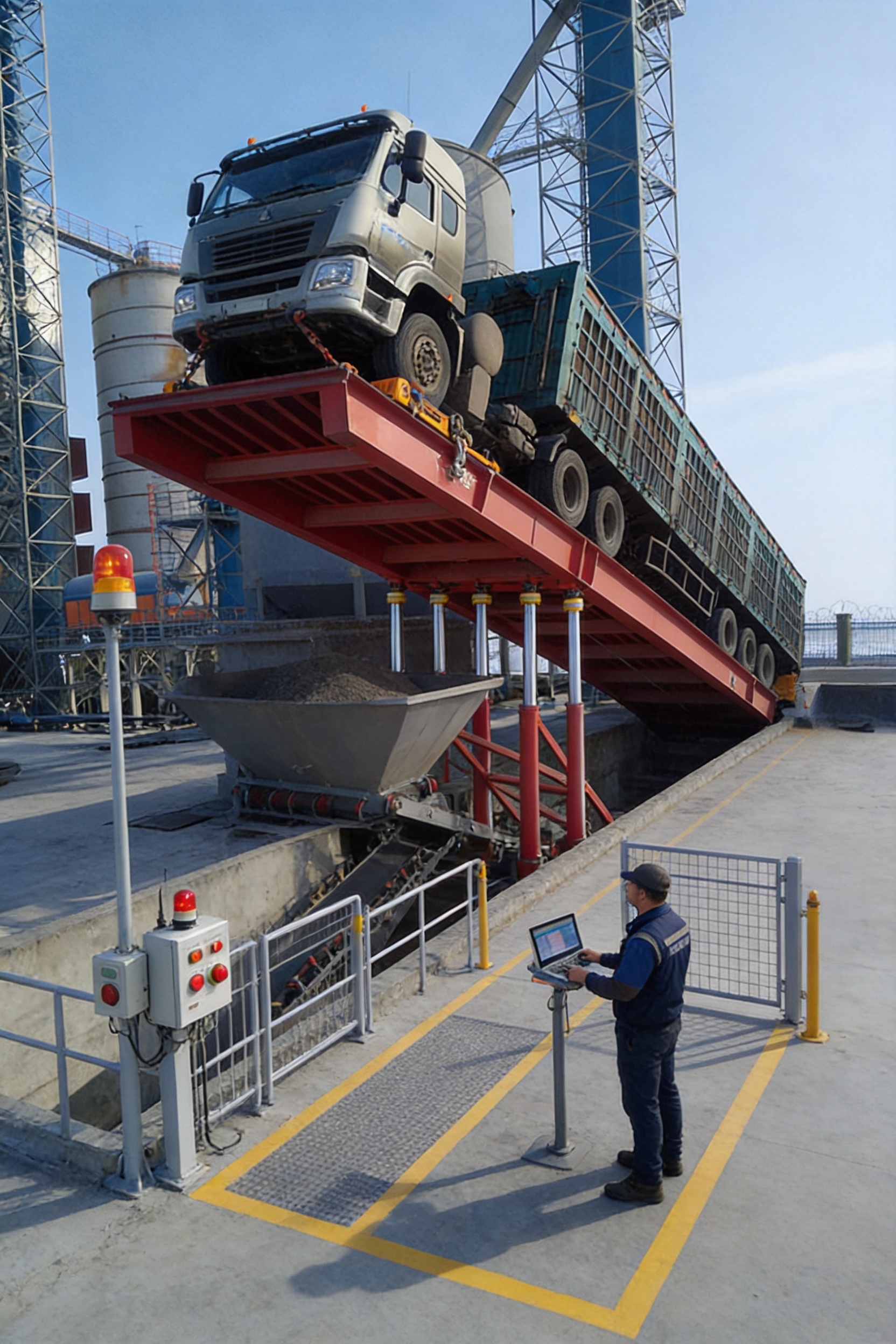
Safety must be treated as a complete system rather than as a single accessory. A reliable truck dumper should include several independent protective functions so that one component failure or one operator mistake does not immediately result in a hazardous event.
Important safety functions for a truck dumper include hydraulic holding, controlled lowering, platform travel limits, emergency stopping, vehicle restraint, audible and visual warnings, and access control. These functions should be arranged so that the equipment can only operate when essential conditions are satisfied.
Hydraulic holding and anti-drop protection
Hydraulic holding valves and related safety devices help prevent uncontrolled platform descent if a hose, fitting, or hydraulic circuit component fails. The platform should remain supported or descend in a controlled manner rather than dropping suddenly. This is particularly important when personnel may be working near the equipment during inspection or maintenance.
Platform limit control
Limit switches or position sensors can prevent the platform from exceeding its designed lifting angle. Limiting travel protects the structure, cylinders, vehicle, and receiving equipment. It also provides repeatable positioning for automated production cycles.
Emergency stop functions
Emergency stop controls should be accessible from appropriate operating and inspection locations. If an abnormal movement, unexpected obstruction, vehicle shift, or other emergency occurs, the operator must be able to stop the system quickly. Emergency controls should be inspected regularly and tested according to the plant safety program.
Warning lights and audible alarms
Visual and audible signals alert drivers, operators, maintenance personnel, and nearby workers when the platform is about to move or is in a raised condition. Warning systems are especially useful in facilities with high background noise, dust, multiple vehicles, or limited visibility.
Interlock sequence control
Interlocks coordinate the operating sequence. For example, the system can prevent lifting when the retaining-wheel device is not engaged, when an access gate is open, or when the emergency circuit is active. Interlocks are an important engineering control because they reduce reliance on memory and individual operating habits.
Restricted operating zones
The platform area should be clearly marked as a danger zone. Personnel should remain outside the designated clearance area during operation. Physical barriers, gates, warning signs, cameras, and access-control systems can further reduce the chance of accidental entry.
7. Unmanned and Driver-Operated Unloading
The truck dumper is designed to support unmanned operation, meaning that a professional full-time dumper operator is not necessarily required for every unloading cycle. With the appropriate control configuration, the truck driver can position the vehicle and complete the operating sequence independently after receiving proper training.
This function can significantly improve plant logistics. Drivers do not need to wait for an operator to become available, and the facility can reduce staffing requirements at remote or dusty unloading points. The system can also support automated coordination with conveyors, hoppers, gates, material-level sensors, and plant-control systems.
Unmanned operation does not mean that safety supervision is unnecessary. Drivers and authorized personnel must still understand the equipment sequence, warning signals, emergency procedures, vehicle positioning requirements, and prohibited actions. Automation is most effective when supported by clear operating instructions, physical safeguards, and regular inspection.
The main advantages of driver-operated unloading include:
- Reduced waiting time for trucks.
- Fewer personnel required in dusty or hazardous areas.
- More consistent unloading procedures.
- Improved operation at remote receiving stations.
- Better potential for integration with automatic weighing and plant-control systems.
- Greater flexibility during different production shifts.
Facilities may select fully automatic, semi-automatic, or supervised operating modes depending on the material, truck fleet, safety policy, and production process. This flexibility allows the equipment to be adapted to different industrial environments rather than forcing every customer to use the same operating method.
8. Main Technical Parameters and Model Selection
The truck dumper range includes several models designed for different platform dimensions and lifting capacities. The listed sizes are expressed as length by width in meters, with alternative platform lengths available for certain models. Final selection should consider truck dimensions, axle arrangement, body design, loading weight, receiving-hopper geometry, site restrictions, and required discharge angle.
| Model | Available Platform Size, L × W (m) | Maximum Lifting Weight (t) | Maximum Lifting Angle |
|---|---|---|---|
| TQXHD 50 | 14 × 3, 16 × 3, or 17 × 3 | 80 | 45° or 55° |
| TQXHD 80 | 16 × 3, 17 × 3, or 18 × 3 | 80 | 45° or 55° |
| TQXHD 100 | 17 × 3, 18 × 3, or 20 × 3 | 100 | 45° or 55° |
| TQXHD 150 | 17 × 3, 18 × 3, or 20 × 3 | 150 | 45° or 55° |
The model number should not be used as the only basis for selecting equipment. A complete technical review is necessary before final production. The maximum lifting weight, for example, must be evaluated together with the truck tare weight, payload distribution, wheelbase, body dimensions, and the expected center of gravity during tipping.
The 45-degree lifting angle may be suitable for materials that flow easily or for sites with limited vertical clearance. The 55-degree configuration can provide stronger discharge performance for materials that are more cohesive or difficult to release. However, the correct angle depends on material properties, truck-body geometry, hopper design, and the desired unloading rate.
Platform length is also significant. A platform that is too short may not support the vehicle correctly, while an unnecessarily long platform can increase construction cost and space requirements. The appropriate width and length should be determined from the truck fleet rather than from a single vehicle whenever multiple truck types will use the same facility.
9. Advantages over Conventional and Competing Designs
Customers comparing truck dumpers should examine more than rated lifting capacity. Two machines may have similar capacity figures but differ significantly in synchronization, restraint, hydraulic quality, automation, maintenance needs, and safety integration.
The advanced design presented here offers several advantages over conventional oil-flow-synchronized dumpers and manually operated tipping systems.
Improved synchronization reliability
Mechanical rigid synchronization provides a structural method of maintaining balanced movement. This can reduce the sensitivity of the platform to hydraulic flow differences and support smoother operation under heavy loads.
Lower cylinder impact
High-precision hydraulic stability and controlled movement reduce vibration and sudden impact. Lower shock loading can help protect cylinders, mounts, pins, and seals, contributing to longer component life.
More consistent vehicle restraint
The automatic retaining-wheel device provides a repeatable method of securing trucks. Compared with manual chocking alone, automatic restraint can reduce variation between operators and support interlocked operation.
Reduced labor dependence
Driver-operated or unmanned functions can reduce the need for a dedicated operator at every unloading station. This is particularly valuable for facilities that operate continuously or have multiple truck-receiving points.
Better operational safety
Hydraulic protection, emergency controls, limit devices, warning systems, and interlocks create multiple safety layers. A multi-layer approach is more reliable than relying only on signs, training, or operator attention.
Suitable for demanding industrial conditions
The equipment can be applied in industries where dust, vibration, heavy loads, and frequent operating cycles are normal. The use of durable structural components and imported-brand pumps and cylinders supports long-term industrial service.
Adaptable system configuration
Different platform sizes, lifting capacities, angles, control modes, and receiving arrangements allow the equipment to be configured for individual projects. This is important because truck fleets and unloading conditions vary considerably between facilities.
10. Advanced Manufacturing and Engineering Strengths
Truck dumper reliability begins before installation. Manufacturing quality, engineering verification, component selection, welding practices, assembly accuracy, hydraulic testing, electrical inspection, and final commissioning all influence the equipment’s service performance.
Jiangsu Zhengding Intelligent Equipment Co., Ltd. is a national high-tech enterprise focused on the research, development, manufacturing, and sales of intelligent logistics equipment. Its product range covers automated loading and unloading equipment for automobiles, containers, ships, and related material-handling applications.
The company’s manufacturing strength is based on combining equipment design with application engineering. Rather than supplying only a standard lifting platform, it can provide systematic loading and unloading solutions for different industries. This approach allows the dumper to be considered together with the truck, hopper, conveyor, metering system, control arrangement, and plant workflow.
Application-oriented engineering
Every project begins with a review of the customer’s operating conditions. Engineers may assess truck dimensions, load types, daily traffic volume, material flow characteristics, site elevation, foundation conditions, dust-control requirements, and downstream equipment. This information helps determine the correct platform structure, lifting capacity, restraint configuration, and control method.
Structural design for heavy loading
The platform and supporting frame must withstand repeated loading and unloading cycles. Structural design must consider static loads, dynamic forces, uneven material distribution, braking forces, wind exposure, and the stress created during tipping. Proper reinforcement and accurate fabrication are essential to maintaining alignment over the service life of the machine.
Hydraulic component selection
Hydraulic cylinders and pumps are critical components. The use of imported brands helps support dependable performance and long service life. Component selection should account for pressure, flow rate, operating frequency, ambient temperature, dust, contamination control, and maintenance access.
Manufacturing quality control
Quality control should extend from raw materials to final assembly. Important activities include dimensional inspection, weld-quality checks, alignment verification, hydraulic pressure testing, electrical continuity checks, interlock testing, emergency-stop testing, and functional operation under representative conditions.
Integrated automation
The company’s focus on intelligent logistics equipment supports the development of automated operating sequences. The truck dumper can be coordinated with vehicle detection, automatic restraint, platform-position sensors, hopper gates, conveyors, weighing systems, and central plant controls. Integrated automation reduces manual steps and improves data visibility.
Project customization
Industrial sites rarely have identical layouts. Some customers require a surface-mounted dumper, while others need a pit arrangement or a customized receiving interface. Platform length, truck approach direction, control-station position, safety barriers, access routes, and discharge equipment may all need to be adapted to the site.
This combination of manufacturing capability, engineering development, and application knowledge gives the supplier a stronger position than a manufacturer that provides only a basic mechanical tipping platform.
11. Industry Applications
Grain and feed processing
Grain and feed plants frequently receive raw materials such as corn, wheat, soybean meal, rice, barley, and other agricultural products by truck. A truck dumper can transfer these materials into intake pits or conveyors with less manual handling. Automated operation can also be integrated with weighing, sampling, screening, and storage systems.
Coal and mineral handling
Coal yards, mining operations, and mineral-processing facilities handle heavy loads and often operate in dusty conditions. A reliable dumper with automatic restraint and hydraulic protection can improve unloading efficiency while reducing the number of personnel required near the platform.
Cement and construction materials
Cement plants and construction-material facilities may receive limestone, gypsum, clinker additives, sand, aggregate, and other materials. High-capacity models can support heavy vehicles and frequent cycles, while controlled tipping helps direct material into the receiving system.
Chemical and petrochemical industries
Chemical plants require careful control of material handling. The dumper itself may need to be integrated with dust collection, enclosed receiving hoppers, grounding systems, restricted-access controls, and site-specific safety procedures. The equipment can be configured as part of a broader automated unloading system.
Steel and metallurgical operations
Steel facilities often receive raw materials in large quantities and under demanding environmental conditions. Robust construction, stable lifting, dependable hydraulic components, and straightforward maintenance are important for maintaining production continuity.
Food and ingredient logistics
Food-processing and ingredient-handling facilities require clean, organized, and traceable material movement. The dumper can support automated unloading while helping reduce unnecessary human contact with incoming materials. Site-specific hygiene, enclosure, cleaning, and contamination-control requirements should be considered during design.
Ports and multimodal logistics
Ports and distribution centers may use truck dumpers to connect road transportation with storage, conveyors, ships, or other handling systems. Rapid truck turnover is important in these environments because vehicle queues can affect the entire logistics chain.
12. Installation Planning and System Integration
Successful installation requires more than placing the dumper on a foundation. The equipment must be coordinated with truck access roads, traffic direction, receiving hoppers, conveyors, electrical power, hydraulic service areas, drainage, dust-control equipment, and maintenance access.
The foundation must be designed to support the static and dynamic loads generated during operation. Ground conditions, drainage, settlement risk, and equipment alignment should be evaluated before construction. In areas with heavy rainfall, snow, freezing conditions, or corrosive materials, environmental protection should be incorporated into the civil and mechanical design.
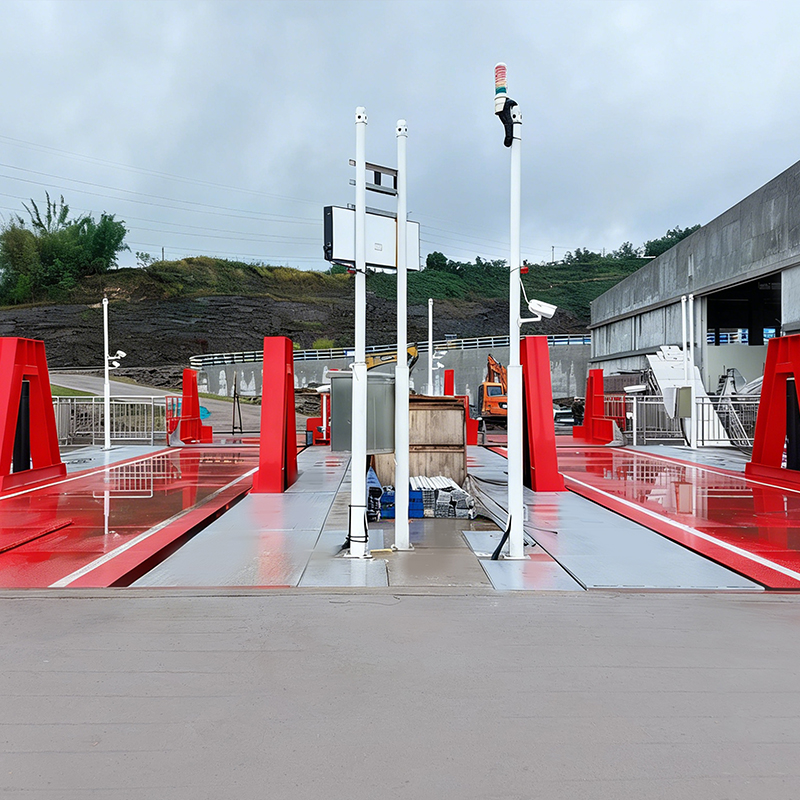
Truck approach and departure paths should allow drivers to align the vehicle without excessive reversing or complex maneuvers. Adequate clearance must be provided around the raised platform. Lighting, traffic signs, barriers, cameras, and pedestrian routes should be planned as part of the complete installation.
The dumper should be integrated with the downstream receiving system. The hopper opening, conveyor capacity, material flow rate, and discharge angle must be compatible. If the receiving equipment cannot accept material at the rate delivered by the dumper, the unloading cycle may be interrupted or material may accumulate in an unsafe manner.
Electrical and control integration may include local control panels, remote controls, programmable logic controllers, level sensors, weighing equipment, vehicle identification, access gates, and plant-management software. A properly integrated system can provide operating records, alarm information, maintenance reminders, and production data.
13. Maintenance and Service-Life Management
Regular maintenance is necessary even when the dumper uses high-quality components and advanced safety systems. Preventive maintenance helps identify wear before it becomes a failure and supports stable performance over many operating cycles.
Daily operator inspection
Before operation, the operator should check the platform, vehicle-restraint device, visible hydraulic hoses, oil leakage, warning lights, emergency stops, control functions, and surrounding area. Any unusual noise, vibration, movement, or structural damage should be reported immediately.
Weekly maintenance inspection
Maintenance staff should examine pins, bushings, cylinder mounts, welds, guards, bolts, hydraulic fittings, electrical cabinets, sensors, and restraint components. Dust and material accumulation should be removed where it could interfere with movement or sensor operation.
Periodic hydraulic inspection
Hydraulic oil level and condition should be checked according to the equipment manual. Filters, hoses, fittings, seals, pumps, and valves should be inspected for leakage, contamination, abrasion, or pressure abnormalities. Holding valves and anti-drop functions should be tested regularly.
Annual detailed inspection
A detailed annual inspection may include pressure testing, cylinder-function verification, structural examination, alignment checks, limit-switch testing, emergency-circuit verification, and inspection of the automatic restraint sequence. The inspection interval should be adjusted for operating frequency, load severity, environmental conditions, and local regulations.
Maintenance records should identify inspection dates, findings, corrective actions, replacement parts, and responsible personnel. Good records help operators recognize performance trends and support effective planning for replacement components.
Hydraulic hoses are safety-critical components. Even when no visible damage is present, hoses may deteriorate internally because of pressure cycles, temperature, vibration, chemical exposure, or aging. A replacement program should be established according to service conditions and manufacturer recommendations. The supplied material indicates that hose replacement is typically considered within a five-to-seven-year period, subject to actual operating conditions and inspection results.
14. Operator Training and Safe Working Procedures
Automation improves safety, but trained personnel remain essential. Drivers and operators must understand the machine’s operating sequence, platform limits, restraint requirements, warning signals, emergency stops, and prohibited actions.
| Training Topic | Suggested Initial Duration | Refresher Frequency | Assessment Method |
|---|---|---|---|
| Equipment familiarization | 4 hours | Annual | Practical demonstration |
| Safe operating procedures | 8 hours | Semi-annual | Written examination |
| Emergency response | 4 hours | Annual | Emergency drill participation |
| Maintenance awareness | 2 hours | Annual | Verbal or written quiz |
Training should be specific to the installed equipment and site layout. General awareness is not enough. Operators should practice positioning vehicles, confirming restraint engagement, responding to alarms, stopping the system during abnormal conditions, and reporting defects.
Only authorized personnel who have completed initial training and passed the required assessment should operate the truck dumper. Training documentation should be maintained for each person, including the date of instruction, topics covered, assessment results, and refresher-training history.
A safe operating procedure should normally include the following sequence:
- Confirm that the operating area is clear of unauthorized personnel.
- Check the dumper, restraint device, controls, alarms, and emergency-stop system.
- Position the truck fully on the platform according to the site procedure.
- Apply the required vehicle braking system.
- Engage and verify the automatic retaining-wheel device.
- Confirm that all interlock conditions are satisfied.
- Start the lifting cycle from the authorized control station.
- Monitor platform movement, vehicle position, hydraulic behavior, and material discharge.
- Stop the cycle if abnormal vibration, noise, leakage, movement, or obstruction occurs.
- Lower the platform fully before releasing the vehicle restraint and allowing the truck to depart.
No person should stand beneath a raised platform, between the truck and fixed structures, or inside the platform danger zone during operation. Maintenance work beneath or near the raised platform must follow a documented lockout, isolation, blocking, and verification procedure.
15. Dust, Noise, and Environmental Considerations
Bulk-material unloading can generate dust, noise, vibration, and spillage. The truck dumper should therefore be considered together with environmental-control equipment. Enclosed receiving hoppers, dust-collection systems, covers, skirts, water suppression where appropriate, and properly designed transfer points can improve workplace conditions.
Reducing the number of people required near the platform is another advantage. Driver-operated and automated functions can limit exposure to dust and noise. The control station can be positioned away from the immediate unloading area, and cameras or sensors can provide visibility without requiring personnel to stand near moving equipment.
Material spillage should be removed promptly. Accumulated material can interfere with restraints, limit switches, hydraulic components, and access routes. A clean operating area also improves the visibility of leaks, cracks, loose fasteners, and other maintenance issues.
Noise and vibration should be considered during foundation design and equipment layout. Stable mechanical synchronization and controlled hydraulic movement help reduce unnecessary vibration, while proper structural installation prevents additional noise caused by looseness or misalignment.
16. How to Select the Correct Truck Dumper
Choosing the correct model requires a complete evaluation of the application. The following questions should be answered before final specification:
- What is the maximum gross weight of the truck and payload?
- What are the shortest and longest vehicles that will use the dumper?
- What are the wheelbase, axle arrangement, tire dimensions, and body shape?
- What material will be unloaded, and how easily does it flow?
- What unloading angle is required?
- How many truck cycles are expected per hour and per day?
- What are the local temperature, humidity, dust, and corrosion conditions?
- Will the dumper be surface-mounted, pit-mounted, or integrated into a special structure?
- What receiving hopper, conveyor, silo, or ship-loading system will be connected?
- Is manual, semi-automatic, driver-operated, or fully automated control preferred?
- What safety standards and local regulations apply?
- How will maintenance access and spare parts be managed?
Capacity should include an appropriate engineering margin. Selecting equipment based only on the average payload may create problems when the truck fleet includes heavier vehicles or uneven load distribution. Similarly, platform dimensions should accommodate the full fleet while preserving adequate clearances for safe positioning.
The supplier’s engineering team can use these details to recommend the appropriate model, lifting angle, restraint arrangement, foundation configuration, controls, and auxiliary equipment.
17. Company Manufacturing and Market Experience
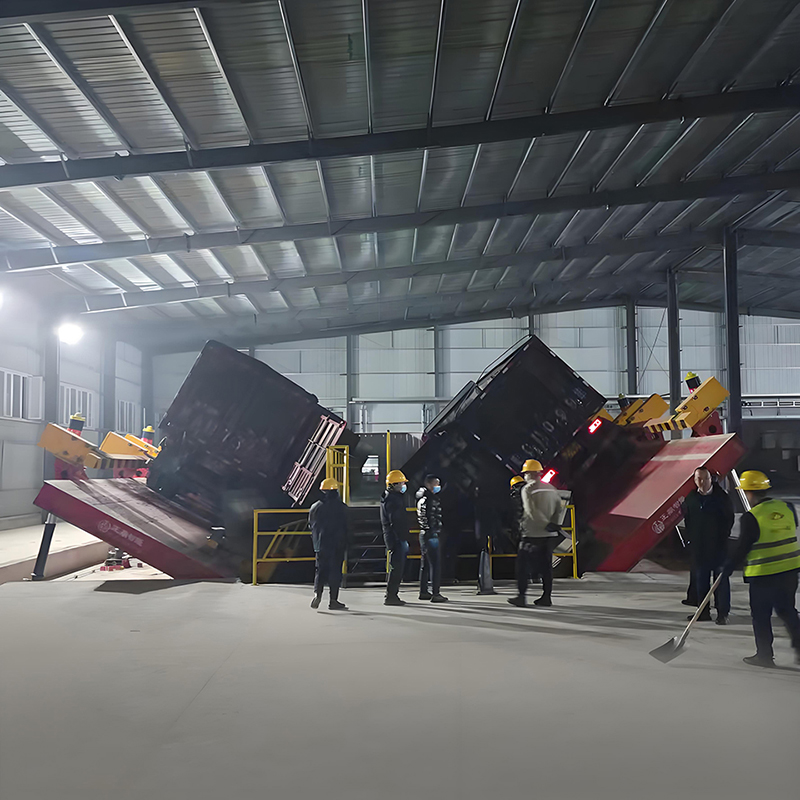
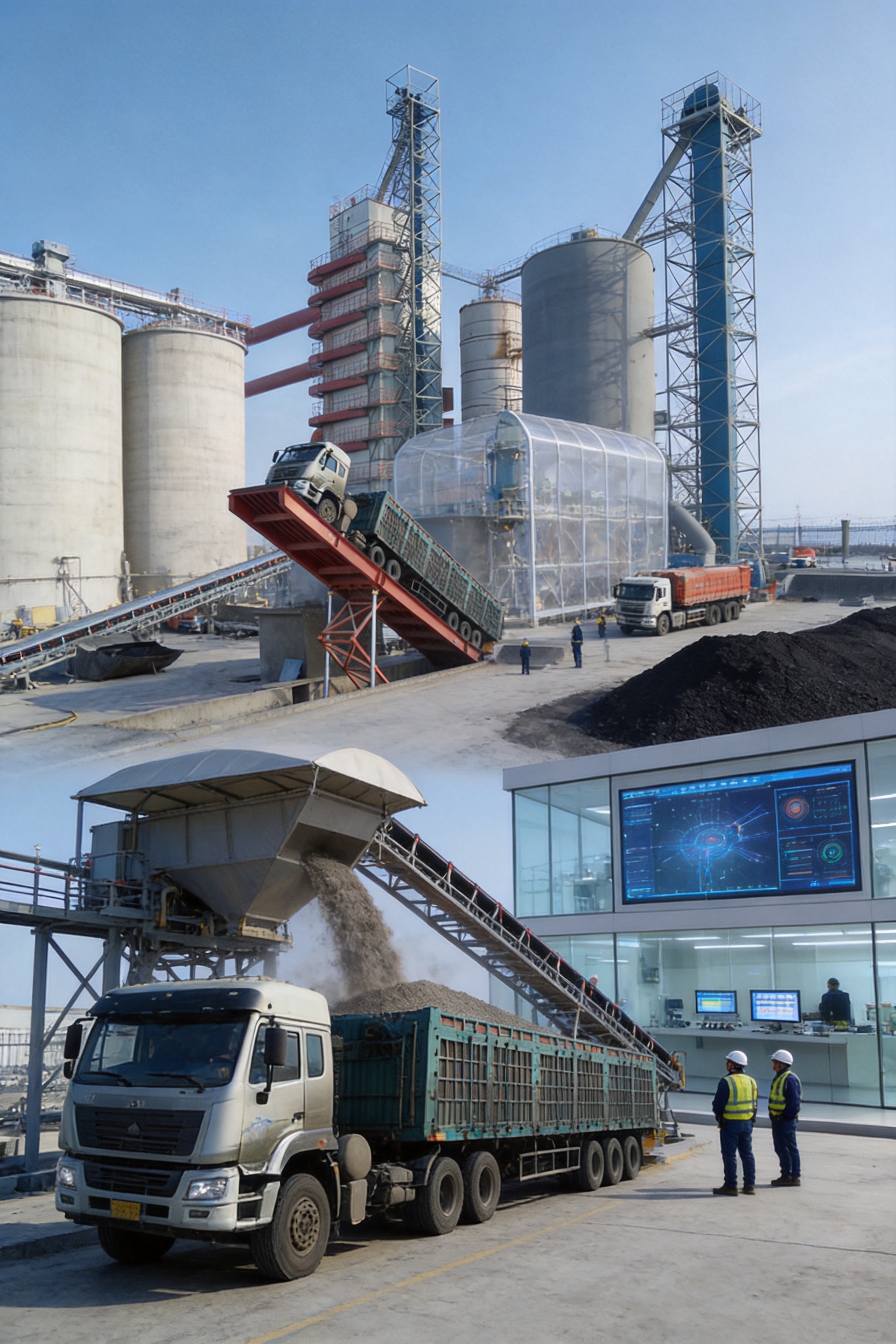
Jiangsu Zhengding Intelligent Equipment Co., Ltd. develops and manufactures intelligent logistics equipment for automated loading and unloading. The company provides equipment for automobiles, containers, ships, and related logistics applications, including rear dumpers, side-turn truck dumpers, car loading systems, and container flippers.
Its products are used across steel, chemical, cement, coal, grain, oil, food, feed, port, papermaking, and new-energy industries. This broad application experience is valuable because each industry presents different material, environmental, safety, and production requirements.
The company has supplied equipment to international markets including Japan, Brazil, Egypt, Pakistan, India, the Middle East, and Southeast Asia. Its customer experience includes recognized users and industrial groups in beverage, grain processing, agriculture, food ingredients, chemicals, construction materials, and manufacturing.
The company’s strengths include research and development, manufacturing, application engineering, system integration, customized design, and after-sales support. Instead of treating a truck dumper as an isolated machine, the company can develop a complete unloading solution around the customer’s logistics process.
This system-oriented approach helps customers address multiple objectives at the same time: improving vehicle turnover, reducing labor requirements, strengthening safety controls, stabilizing material flow, and connecting unloading equipment with existing plant automation.
18. Frequently Asked Questions
Q1: What is the main difference between this truck dumper and a conventional side dumper?
The main difference is the use of a mechanical rigid synchronization mechanism rather than relying only on oil-flow control to synchronize side cylinders. Mechanical synchronization helps maintain balanced platform movement, reduce vibration, lower cylinder impact, and improve operational reliability.
Q2: What maximum lifting capacities are available?
The listed models provide maximum lifting capacities of 80, 100, or 150 metric tons. The correct selection depends on the combined weight of the truck and load, vehicle dimensions, load distribution, duty cycle, and site conditions.
Q3: Can the dumper be operated without a dedicated operator?
Yes. The equipment can support unmanned or driver-operated unloading when configured with the appropriate automatic restraint, interlocks, controls, and safety devices. Drivers must complete the required training before operating the equipment independently.
Q4: Is automatic wheel restraint better than manual wheel chocks?
Automatic wheel restraint provides more consistent securing and can be linked to the lifting interlock. Manual chocks may still be used as part of a complete safety arrangement, but they should not be considered the only protection against vehicle movement.
Q5: What lifting angles are available?
The listed equipment can be configured for maximum lifting angles of 45 or 55 degrees. The best angle depends on material flow characteristics, truck-body design, receiving-hopper dimensions, available clearance, and required unloading performance.
Q6: What safety devices should be included?
A complete system should include a positive vehicle-restraint system, hydraulic holding or anti-drop protection, platform limit switches, emergency stops, warning lights, audible alarms, interlocks, and clear danger-zone controls. The final arrangement should comply with applicable local requirements.
Q7: How often should the hydraulic system be inspected?
Operators should perform a visual inspection before daily use. Maintenance personnel should conduct more detailed inspections at regular weekly or scheduled intervals. A comprehensive annual inspection should include pressure testing, holding-valve verification, cylinder checks, hose inspection, and functional testing of safety devices.
Q8: How much clearance should be kept around the platform?
A clear operating zone should be established around the dumper. The supplied safety guidance recommends maintaining at least three meters of clear distance around the platform during operation, although the final distance should be determined by the equipment layout, risk assessment, and local regulations.
Q9: Can the dumper be connected to a conveyor or weighing system?
Yes. Truck dumpers can be integrated with receiving hoppers, conveyors, silos, weighing systems, level sensors, vehicle identification, and plant-control systems. Integration details should be defined during the engineering stage.
Q10: What information is required for a quotation and technical proposal?
Important information includes truck dimensions, maximum gross weight, payload, wheelbase, body type, material properties, required unloading rate, platform location, preferred lifting angle, daily operating hours, environmental conditions, receiving equipment, automation expectations, and local electrical and safety requirements.
19. Conclusion
A truck dumper is a critical part of the bulk-material receiving process. Its value depends not only on lifting capacity, but also on synchronization accuracy, hydraulic stability, vehicle restraint, automation, safety engineering, maintainability, and integration with the rest of the facility.
The advanced truck dumper design described in this article addresses these requirements through a mechanical rigid synchronization system, high-precision oil-cylinder stability control, automatic retaining-wheel fixing, imported hydraulic pumps and cylinders, unmanned operating capability, and multiple safety-control functions.
Compared with conventional systems that depend mainly on oil-flow synchronization or manual vehicle chocking, this approach offers more stable operation, lower mechanical impact, improved restraint consistency, reduced labor dependence, and stronger support for automated logistics. The available TQXHD models cover maximum lifting weights from 80 to 150 metric tons, with platform sizes and lifting angles that can be selected according to individual project requirements.
Jiangsu Zhengding Intelligent Equipment Co., Ltd. strengthens the product through application-focused engineering, intelligent equipment development, customized system design, and experience across numerous industries and international markets. Its manufacturing and integration capabilities allow customers to obtain more than a standalone dumper; they can receive a coordinated loading and unloading solution designed around their vehicles, materials, plant layout, and production objectives.
For facilities seeking safer and more efficient truck unloading, the correct solution begins with a detailed review of operating conditions. When the dumper is properly selected, installed, integrated, trained, and maintained, it can become a dependable foundation for automated bulk-material logistics.
References
1. Manufacturer-provided product specifications for TQXHD truck dumper models.
2. Manufacturer-provided technical information on mechanical rigid synchronization and hydraulic stability systems.
3. Manufacturer-provided safety guidance for automatic vehicle restraint, hydraulic holding, platform limits, and emergency controls.
4. Industrial guidelines for the safe operation and maintenance of lifting and tipping equipment.
5. General principles of bulk-material handling, truck restraint, hydraulic-system inspection, and operator training.
6. Manufacturer information concerning intelligent automated loading and unloading equipment for automobiles, containers, ships, and industrial logistics applications.


