

 English
 русский
 Español
 Français
 Português
 عربى
عربى


+86-13588556918
Content
- 1 1. The Role of Container Loaders in Modern Logistics
- 2 2. Main Product Features
- 3 3. Technical Parameters and Model Selection
- 4 4. Advantages Compared with Conventional and Competing Solutions
- 5 5. Advanced Manufacturing and Engineering Strengths
- 6 6. Application Sectors
- 7 7. Automation, Data, and Operational Control
- 8 8. Installation, Training, and Maintenance
- 9 9. Implementation Strategy for Customers
- 10 10. Frequently Asked Questions
- 10.1 Q1: What types of goods can the container loader handle?
- 10.2 Q2: Can one machine handle both loading and unloading?
- 10.3 Q3: Does the equipment support both 20-foot and 40-foot containers?
- 10.4 Q4: Is automatic door operation included as standard?
- 10.5 Q5: How does the weighing function prevent overloading?
- 10.6 Q6: Can weighing data be connected to a management system?
- 10.7 Q7: What is the typical loading speed?
- 10.8 Q8: How many operators are needed?
- 10.9 Q9: Can the loader be integrated with existing equipment?
- 10.10 Q10: What training is required?
- 10.11 Q11: How does the system protect cargo from damage?
- 10.12 Q12: What information is needed for a quotation?
- 11 11. Why Choose an Integrated Manufacturing Partner
- 12 12. Conclusion
- 13 References
- 14 Product: Container Loaders
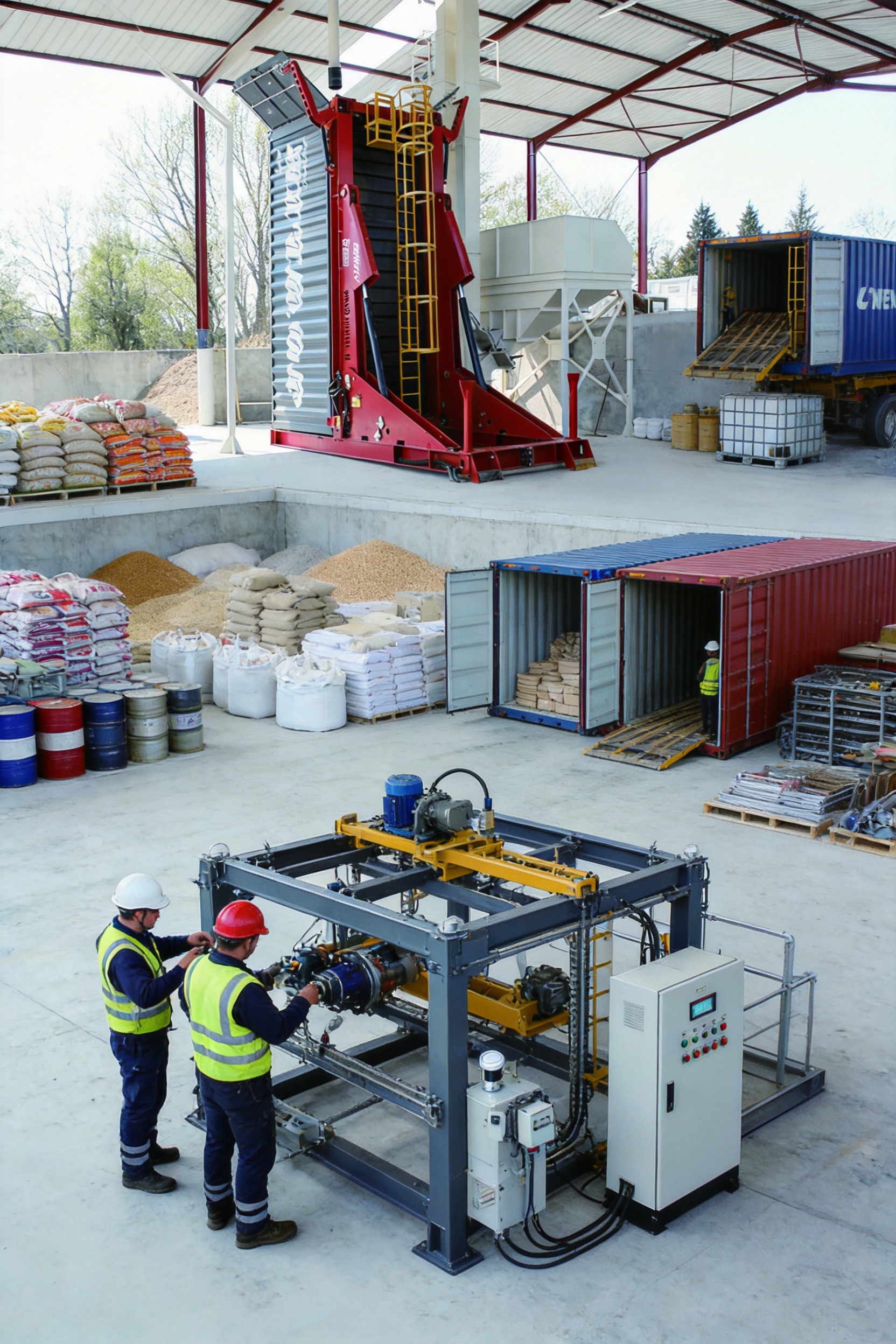
Container loading is one of the most important activities in modern logistics. It directly affects warehouse productivity, shipment safety, labor requirements, cargo utilization, transportation costs, and the speed at which goods move through the supply chain. Although traditional loading methods remain common in many facilities, manual handling and conventional forklift operations can create serious limitations. They often require large numbers of workers, involve repeated movement inside confined container spaces, produce inconsistent cargo distribution, and increase the risk of product damage and workplace accidents.
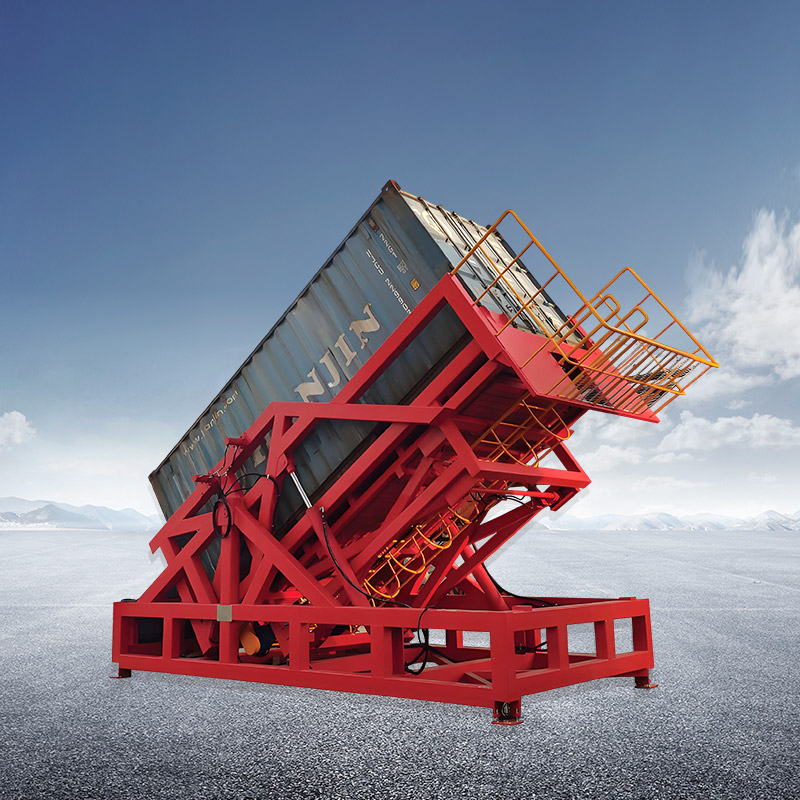
Modern container loaders provide a more integrated alternative. By combining mechanical lifting, controlled movement, automatic door operation, precision weighing, and adaptable container positioning, an advanced system can perform loading and unloading with considerably less manual intervention. The equipment described in this article is designed for both 20-foot and 40-foot standard containers and provides a unified solution for one-click entry and exit of goods. Its integrated structure supports efficient cargo transfer while improving safety, load accuracy, and operational consistency.
Manufactured by Jiangsu Zhengding Intelligent Equipment Co., Ltd., this container loader forms part of a broader range of automated loading and unloading equipment for vehicles, containers, ships, and industrial logistics applications. The company combines mechanical engineering, automation control, weighing technology, manufacturing expertise, and site-specific system design to address the needs of customers in industries such as grain, food, feed, cement, chemicals, coal, steel, oil, ports, papermaking, and new energy.
Unlike simple conveyor extensions or basic loading platforms, the system is developed as an integrated loading and unloading solution. It can be configured with an automatic container door mechanism, real-time weighing, adjustable support structures, and precision drive controls. These capabilities allow the equipment to compete not only on loading speed, but also on flexibility, safety, cargo protection, and total operating efficiency.
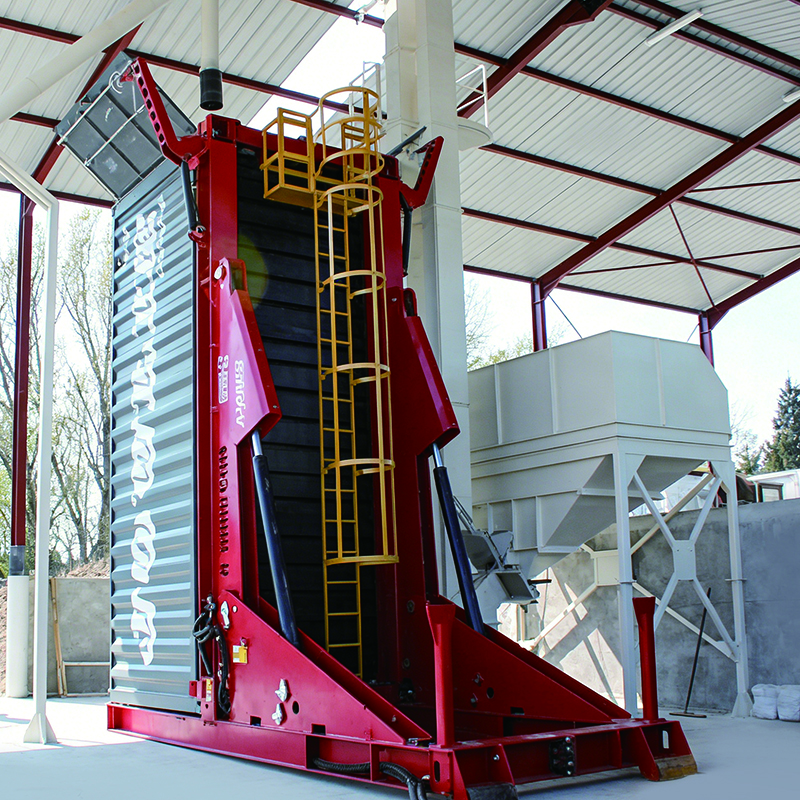
Container Loaders
1. The Role of Container Loaders in Modern Logistics
Shipping containers are designed to standardize international transport, but loading them efficiently remains a complex operational challenge. A container must be filled without exceeding weight limits, damaging the cargo, obstructing the doors, or creating an unstable distribution of weight. The process must also accommodate different product forms, package sizes, loading patterns, and warehouse layouts.
Manual loading generally depends on workers, forklifts, pallet trucks, portable conveyors, or a combination of these methods. While such equipment may be suitable for low-volume operations, it becomes less efficient as shipment frequency increases. Workers may need to enter the container repeatedly, move products over long distances, reposition cargo by hand, and check the load manually. These activities increase cycle time and expose personnel to collision, falling cargo, slips, musculoskeletal strain, and other hazards.
A container loader changes the process by bringing the loading mechanism directly into alignment with the container. Instead of relying entirely on manual placement, the equipment can guide, lift, move, weigh, and position goods according to a planned operating sequence. The loader can also support the unloading process, allowing the same machine to manage cargo movement in both directions.
This dual-purpose capability is particularly valuable for facilities that handle return cargo, reusable packaging, raw materials, finished products, or mixed logistics flows. A single integrated machine can reduce the need for separate loading and unloading equipment, simplify maintenance planning, and improve the utilization of available floor space.
1.1 Integrated handling instead of isolated equipment
Many conventional logistics systems are assembled from separate components. A facility may use a dock leveler, a forklift, a conveyor, a weighing station, and manual door handling as independent operations. Each additional step creates a potential delay or coordination problem. It may also require different operators and separate control procedures.
The container loader brings several functions together in one coordinated system. The loading and unloading structure, lifting mechanism, drive system, weighing option, and door operation can work as parts of a common process. This reduces unnecessary transfers between machines and helps operators manage the operation from a centralized control interface.
Integrated operation can also improve accountability. When weighing, movement, and loading sequences are coordinated, the facility can collect more reliable process information. Depending on the selected configuration, weight data may be transmitted to a warehouse, production, or logistics management system in real time.
1.2 Supporting both 20-foot and 40-foot containers
Container fleets are not uniform. A logistics facility may handle 20-foot containers one day and 40-foot containers the next. Equipment that supports only one format can create bottlenecks, require additional machinery, or force operators to use temporary adaptations.
The container loader is equipped with a flexible adjustment mechanism designed to adapt to both 20-foot and 40-foot standard containers. The TJXH 20 model has a listed size of approximately 6 by 3 meters, while the TJXH 40 model has a listed size of approximately 12 by 3 meters. This model selection enables customers to match the equipment length and lifting capability to their specific operating requirements.
Adaptability is more than a dimensional advantage. It gives a facility greater freedom when scheduling containers, planning loading bays, and expanding future operations. It also allows the same equipment concept to be applied across different warehouses and production sites with appropriate engineering adjustments.
2. Main Product Features
2.1 Integrated loading and unloading
The primary feature of the system is its ability to perform both loading and unloading with one piece of equipment. The same structure can be used to move goods into a container or remove them from a container, reducing the need for separate machines and minimizing transfer points.
This arrangement is useful for bulk materials, packaged goods, sacks, cartons, palletized units, and other cargo formats that can be handled through a suitable conveyor, lifting, or pushing configuration. The exact feeding and discharge method can be selected according to the product’s characteristics, including weight, shape, surface condition, flowability, packaging strength, and sensitivity to impact.
Integrated operation also supports better use of personnel. Instead of assigning different teams to separate loading and unloading stages, a smaller number of trained operators can supervise the complete process. This does not eliminate the need for safe working procedures or qualified personnel, but it can reduce repetitive manual handling and improve labor allocation.
2.2 Automatic container door mechanism
Container doors are often heavy, difficult to maneuver, and positioned in areas where forklifts and workers operate close to one another. Manual opening and closing can add time to every cycle and expose workers to pinch points, unexpected movement, and awkward lifting positions.
The loader can be configured with an automatic opening and closing mechanism for container doors. This option allows door operation to become part of the loading sequence rather than a separate manual task. By reducing direct handling of the doors, the system can lower labor intensity and help reduce safety risks around the container entrance.
Automatic door operation also improves process consistency. When the door movement is controlled by the machine, operators can follow a repeatable sequence, reducing the likelihood that a door will be left partially open, incorrectly secured, or closed before the cargo has been positioned safely.
2.3 Precision weighing and real-time monitoring
Weight control is essential for container logistics. Overloading may lead to regulatory problems, transportation delays, uneven axle loading, or additional handling costs. Underutilization, on the other hand, may waste valuable container capacity and increase the cost per unit of cargo.
The container loader can integrate a high-precision weighing function to monitor cargo weight during loading and unloading. Real-time weight information helps operators confirm the loading status and stop the operation before the maximum permitted weight is exceeded. When connected to a management system, the data can also support inventory records, shipment documentation, production reporting, and logistics analysis.
Weighing during the handling process is more efficient than relying only on a separate weighing stage. It reduces additional cargo movement and helps operators make decisions while the load is being built. The weighing configuration should be selected and calibrated according to the required accuracy, environmental conditions, product characteristics, and applicable operating standards.
2.4 Flexible adjustment mechanism
The adjustment mechanism allows the loader to align with containers of different lengths. This flexibility is essential for sites that handle both 20-foot and 40-foot containers or that must accommodate variations in loading bay arrangements.
A properly adjusted machine improves the alignment between the loader and the container floor. Better alignment supports smoother cargo transfer, reduces unnecessary gaps, and minimizes the possibility of collision between the equipment and the container structure. It also helps maintain a stable and predictable loading path.
Flexible adjustment is especially valuable in facilities where container positions vary slightly because of yard conditions, dock design, vehicle placement, or loading schedule changes. The engineering design can be adapted to the site so that adjustment remains practical for daily operation rather than becoming a time-consuming setup task.
2.5 Precision drive control
Fast movement is not sufficient if the cargo is exposed to sudden starts, abrupt stops, or uncontrolled acceleration. Fragile packaging, stacked cartons, bags, and irregular products can be damaged when the loading mechanism moves too aggressively.
The system uses a precision drive control concept to support smooth movement during loading and unloading. Controlled acceleration and deceleration help reduce cargo collisions and provide better positioning accuracy. This is particularly important when goods must be moved through narrow clearances or placed close to the front wall and side walls of a container.
Precision drive control also improves the operator experience. A machine that responds predictably is easier to supervise, easier to integrate with sensors, and easier to coordinate with automatic door operation and weighing functions. The result is a more stable process with fewer unexpected interruptions.
3. Technical Parameters and Model Selection
The product range includes models designed for different container lengths and lifting requirements. The principal listed technical parameters are summarized below.
| Model | Approximate Size L × W | Maximum Lifting Weight | Maximum Lifting Angle | Typical Container Application |
|---|---|---|---|---|
| TJXH 20 | 6 × 3 meters | 50 tons | 45° / 60° | 20-foot standard containers |
| TJXH 40 | 12 × 3 meters | 100 tons | 45° / 60° | 40-foot standard containers |
These parameters provide a starting point for equipment selection. The final configuration should be determined through an engineering assessment that considers container dimensions, cargo weight, loading rate, ground conditions, plant layout, electrical supply, environmental conditions, and the required automation level.
The listed maximum lifting weight should not be interpreted as a universal operating capacity for every loading condition. Actual performance depends on load distribution, center of gravity, container positioning, lifting angle, equipment configuration, and site safety requirements. A professional technical evaluation is therefore important before installation.
3.1 Selecting the correct model
The TJXH 20 model is suitable for operations centered on 20-foot containers and moderate lifting requirements. It can be appropriate for facilities with shorter loading bays, limited yard space, or shipment flows based primarily on compact container formats.
The TJXH 40 model is intended for longer containers and higher lifting capacity. It is more suitable for high-volume export facilities, larger production sites, and operations where 40-foot containers represent a substantial share of shipments.
Customers handling mixed container sizes may select a configuration with adjustment capability or develop a site-specific arrangement that allows efficient changeover. The engineering objective is to ensure that model selection supports both present requirements and anticipated future growth.
4. Advantages Compared with Conventional and Competing Solutions
4.1 Reduced manual intervention
A basic conveyor or loading platform may move goods, but it does not necessarily automate the full handling cycle. Operators may still need to open doors, reposition the conveyor, guide cargo manually, check weight separately, and correct uneven distribution inside the container.
The integrated container loader addresses more of these tasks within one operating system. Automatic door operation, optional weighing, adjustable container alignment, and precision movement reduce the number of manual actions required for each cycle. This can provide a competitive advantage over systems that automate only the conveying stage.
Reduced manual intervention is also useful when companies face labor shortages, rising wages, or difficulty maintaining consistent staffing. Operators can focus on monitoring, quality checks, and exception handling rather than repetitive physical work.
4.2 Faster container turnaround
Traditional manual loading may require approximately 15 to 25 minutes per container, depending on the product, number of workers, container condition, and loading pattern. A conveyor-assisted process may reduce the time, but the final stage often still depends on manual arrangement.
Automated loading systems commonly achieve cycle times in the range of approximately 3 to 6 minutes for suitable products and properly configured operations. A fully automatic loader may achieve an average loading time of about 4.5 minutes in representative conditions, while semi-automatic equipment may require around 8 minutes. Actual results vary according to cargo characteristics and process design.
Faster turnaround means that a loading bay can process more containers during the same shift. It may also reduce waiting time for trucks, improve dock utilization, and lower the risk of demurrage or scheduling penalties. For high-volume facilities, even a small reduction in cycle time can produce significant annual benefits.
4.3 Better container utilization
Uneven manual loading can leave voids, create unstable piles, or place excessive weight in one area. These problems reduce the practical capacity of a container and may require workers to rearrange the cargo before the doors can be closed.
A controlled loading sequence can distribute products more evenly and use available container space more effectively. Programmable movement, adjustable positioning, and controlled discharge patterns can improve the fill rate, especially for bagged materials, cartons, and consistent packaged products.
Typical comparisons indicate that manual loading may achieve a container fill rate of approximately 82 to 88 percent, while automated systems may reach approximately 92 to 96 percent under suitable conditions. These values are illustrative operating ranges rather than guaranteed results. Product shape, packaging, stacking strength, and container dimensions remain important factors.
4.4 Improved cargo protection
Cargo damage can result from impact, uncontrolled dropping, excessive compression, unstable stacking, or repeated manual movement. Damage creates direct costs through product loss and indirect costs through customer complaints, claims, rework, and delayed shipments.
The precision drive system is designed to provide smoother movement and reduce collisions. Controlled transfer is especially beneficial for products that are vulnerable to tearing, crushing, leakage, or deformation. When the loading path is stable and repeatable, the facility can also establish standard operating parameters for different product types.
Compared with a simple forklift-based method, an integrated loader can reduce the number of vehicle entries into the container. This lowers the risk of contact between the forklift, container walls, cargo, and workers. It also helps preserve the container floor and loading area when the system is correctly installed and operated.
4.5 Improved workplace safety
Container interiors are confined working environments. Visibility may be limited, ventilation may vary, and workers may need to work around moving equipment or stacked cargo. Forklift entry increases the possibility of collision and may create additional emissions or ventilation concerns in enclosed areas.
Automated container loading reduces the need for workers to enter the container repeatedly. It can also reduce manual lifting, pulling, pushing, and door handling. These changes help address common risks such as struck-by accidents, pinch injuries, slips, falls, and repetitive strain.
Safety performance still depends on proper guarding, emergency stops, access control, operator training, maintenance, and compliance with applicable local requirements. Automation is most effective when it is combined with a complete safety management program.
4.6 Greater process consistency
Manual loading quality can vary between shifts, operators, and working conditions. One team may load quickly but leave voids, while another may focus on careful arrangement but require more time. Such variation makes production planning and shipment scheduling more difficult.
A programmable automated system can establish repeatable operating sequences. Operators can use defined settings for different products, container sizes, and weight targets. Consistent processing improves planning and makes performance easier to measure over time.
| Performance Metric | Manual Loading | Automated Loading | Typical Improvement |
|---|---|---|---|
| Time per container | 18 to 25 minutes | 3 to 6 minutes | Approximately 70 to 80 percent faster |
| Workers required per shift | 4 to 6 people | 1 to 2 operators | Approximately 60 to 75 percent less labor |
| Container fill rate | 82 to 88 percent | 92 to 96 percent | Approximately 5 to 8 percent better utilization |
| Product damage rate | 2.5 to 4.0 percent | 0.5 to 1.2 percent | Potential reduction of 60 to 80 percent |
The comparison demonstrates why integrated container loaders are increasingly attractive to high-volume logistics operations. The most valuable advantage is not always a single feature. Instead, the benefit comes from the combined effect of faster processing, lower labor dependence, safer operation, more accurate weighing, improved fill rates, and reduced product handling.
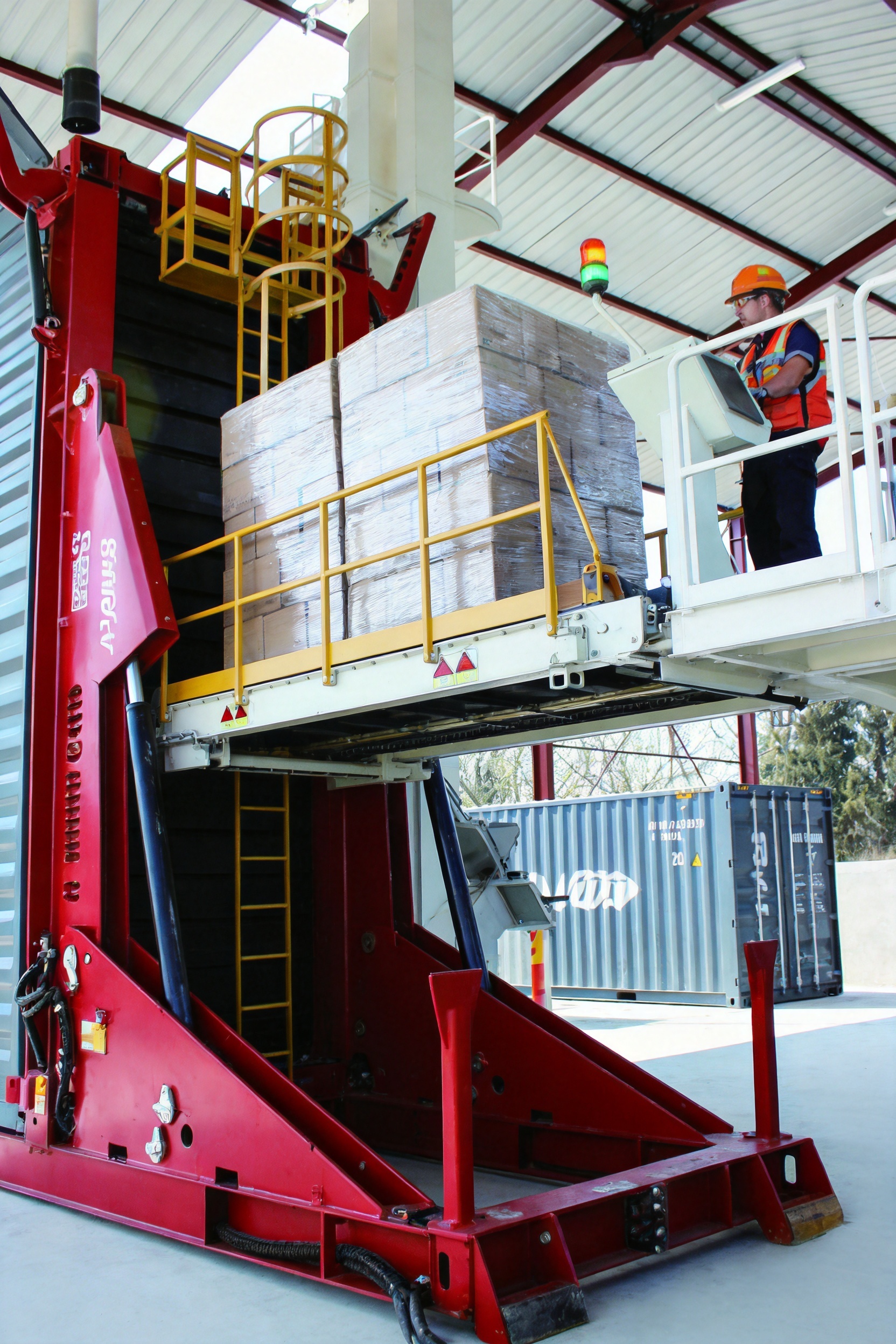
5. Advanced Manufacturing and Engineering Strengths
The performance of an automated container loader depends heavily on manufacturing quality. A loading system must carry substantial loads, withstand repeated operating cycles, maintain alignment, and perform reliably in industrial environments. Poor fabrication, insufficient structural analysis, or inconsistent assembly can reduce accuracy and increase maintenance requirements.
Jiangsu Zhengding Intelligent Equipment Co., Ltd. focuses on the research, development, manufacturing, and sales of intelligent loading and unloading equipment. Its product range includes rear dumpers, side-turn truck dumpers, vehicle loading equipment, container flippers, and other systems for automated logistics. This broad product experience supports the development of container loaders that combine heavy mechanical structures with intelligent control functions.
5.1 Engineering design based on application conditions
Container loading systems are not equally suitable for every facility. A professional manufacturer must evaluate the product, container, warehouse, loading bay, traffic flow, power supply, and operational targets before confirming the final design.
The engineering process may include site measurements, equipment layout planning, container positioning analysis, lifting load assessment, conveyor interface design, safety-zone planning, control-system integration, and maintenance-access review. This application-based approach helps ensure that the machine fits the real working environment rather than being treated as a standard product with limited adjustment.
Customized engineering is particularly important for industries with unusual cargo characteristics. Grain and feed products may require dust-control measures. Food products may require attention to hygiene and contamination prevention. Chemical materials may require specialized sealing, protection, and safety procedures. Cement and mineral products may require structures capable of operating in dusty and abrasive conditions.
5.2 Heavy-duty structural manufacturing
The loader structure must support its rated load while remaining stable during lifting and movement. Manufacturing quality begins with suitable material selection, accurate cutting, controlled welding, dimensional inspection, and appropriate surface treatment.
Critical structural components should be fabricated according to approved drawings and verified for dimensional accuracy. Welded joints require careful preparation and consistent workmanship because they transfer significant forces during lifting and lowering. Proper alignment of frames, guide rails, supports, and drive components is necessary to prevent uneven loading and premature wear.
For industrial equipment, structural quality is not limited to maximum load. Fatigue resistance, repeated cycling, vibration, environmental exposure, and maintenance access also influence long-term performance. A well-designed structure provides suitable safety margins and allows inspection of important components throughout the equipment’s service life.
5.3 Precision integration of mechanical and electrical systems
An automated loader is a combination of mechanical, electrical, hydraulic, weighing, and control technologies. These systems must work together accurately. A mechanical structure may be strong, but without reliable sensing and control, the machine cannot achieve smooth operation or consistent positioning.
The precision drive control system coordinates movement and helps manage acceleration, deceleration, stopping, and positioning. Sensors may be used to confirm container position, door status, load condition, travel limits, and safety-zone access. The control architecture can be configured to support automatic sequences while allowing operators to intervene when necessary.
Integration testing is an important part of manufacturing. The drive system, control cabinet, sensors, emergency stops, weighing module, door mechanism, and operator interface should be tested as a complete system rather than only as individual components. This reduces the possibility of incompatibility during site installation.
5.4 Weighing system integration and calibration
Accurate weighing requires more than installing a load cell. The weighing system must be mechanically isolated from unwanted forces, correctly positioned, protected from damage, and calibrated under appropriate conditions. Vibrations, uneven support, temperature changes, and product movement may affect measurements if they are not considered during design.
Integrated weighing allows weight information to become part of the loading logic. The system can monitor the increasing load, issue warnings, prevent overloading, and record the final shipment weight. Where required, data communication can support connection with a plant management platform or logistics information system.
Weighing performance should be verified during commissioning and checked periodically during operation. Maintenance teams should follow the recommended inspection and calibration schedule to preserve accuracy and maintain reliable shipment records.
5.5 Factory inspection and commissioning preparation
Before shipment, a manufacturer can conduct factory inspections covering mechanical movement, lifting functions, control responses, safety circuits, door operation, weighing functions, and communication interfaces. Factory testing helps identify issues before the machine reaches the customer’s site.
Where the project requires it, customers may participate in a factory acceptance test. The test can be based on agreed technical criteria, operating sequences, load conditions, documentation, and safety requirements. This approach improves transparency and gives operators an opportunity to understand the equipment before installation.
After delivery, installation supervision and commissioning help ensure that the machine is correctly aligned with the site. Operator training can cover startup and shutdown procedures, container positioning, automatic cycles, emergency operation, daily inspection, cleaning, lubrication, and fault response.
6. Application Sectors
6.1 Food, grain, and feed processing
Food ingredients, grain, feed, flour, malt, and other agricultural materials are often shipped in bags, bulk packaging, or palletized formats. These products may require controlled handling to reduce contamination, leakage, dust generation, and packaging damage.
A container loader can be configured with suitable conveyors, chutes, loading patterns, and weighing functions for the product. In food-related operations, the equipment layout should also support cleaning, inspection, and hygienic management. Real-time weighing helps confirm shipment quantities and supports accurate inventory control.
6.2 Cement, minerals, and construction materials
Cement, minerals, powders, and other construction materials can be heavy, abrasive, and dusty. These conditions place additional demands on structural strength, sealing, wear protection, and maintenance access.
An integrated loader can help reduce manual handling of heavy bags and improve the consistency of container loading. When combined with appropriate dust-control and cleaning measures, the system can contribute to a safer and more efficient material transfer process.
6.3 Chemical and industrial products
Chemical products require careful attention to packaging integrity, safe access, spill prevention, and operating procedures. The loading equipment must be selected according to the product’s properties and the applicable site safety requirements.
Controlled movement and accurate weighing are valuable in these applications because they help reduce package impact and support precise shipment quantities. Additional protective measures may be incorporated into the system design based on the material being handled.
6.4 Steel, coal, oil, and port logistics
Heavy industries and port facilities often process high volumes of cargo under demanding conditions. The equipment must be durable, reliable, and capable of integrating with existing loading bays, storage systems, conveyors, and vehicle traffic routes.
The container loader’s ability to work with different container lengths and its optional weighing capability can help improve flexibility at industrial sites. The manufacturer’s experience with vehicle and container loading and unloading equipment provides a foundation for developing coordinated logistics solutions for these environments.
6.5 Papermaking and new energy industries
Paper products, packaging materials, battery-related materials, and other new energy products may require careful handling because of their size, weight, surface characteristics, or packaging sensitivity. A controlled loading process can reduce compression, impact, and unstable stacking.
As these industries expand their export operations, container loading systems must support reliable shipment preparation and traceable process data. Automated weighing and programmable loading sequences can contribute to better control over both product quality and logistics documentation.
7. Automation, Data, and Operational Control
The value of automation increases when equipment data can be used to improve decisions. A container loader may collect information about weight, cycle time, container type, loading status, alarms, and operating frequency. This information can help supervisors identify bottlenecks and plan maintenance.
Real-time data communication allows the weighing result to be uploaded to a management system. Depending on the customer’s software environment, the data may be used for inventory updates, shipment verification, production records, and performance reporting.
Remote monitoring capabilities can also be incorporated into an automation project when required. Remote access should be designed with appropriate cybersecurity, authorization, and operational safeguards. It should support maintenance and management without weakening local emergency control or operator safety.
Automation does not mean that every operation must be fully automatic. Many facilities prefer a semi-automatic configuration in which the operator confirms container placement, product selection, or loading parameters while the machine performs the repetitive movement. This approach can provide a practical balance between flexibility and productivity.
7.1 One-click operation
One-click rapid entry and exit of goods simplifies the loading sequence. After the container is correctly positioned and the operating conditions are confirmed, the machine can execute a programmed process with limited operator input.
A simplified interface reduces the possibility of operating errors and shortens training time. However, one-click operation should be supported by interlocks, status displays, alarm messages, emergency stops, and clear confirmation steps. The objective is simple operation without compromising safety or control.
7.2 Performance monitoring
Facilities can monitor average cycle time, weight accuracy, container throughput, equipment availability, and alarm frequency. These indicators help management evaluate whether the equipment is achieving its expected benefits.
Performance data also supports continuous improvement. If cycle time increases, the cause may be product flow, container positioning, operator delay, mechanical wear, or a control setting. Data helps maintenance and production teams investigate the issue rather than relying only on informal observations.
8. Installation, Training, and Maintenance
A successful container loader project begins before the equipment arrives. The customer should prepare the installation area, confirm foundation requirements, provide suitable utilities, establish safe access routes, and coordinate the positions of upstream and downstream equipment.
Site installation may involve mechanical assembly, electrical connection, control-system testing, weighing calibration, container alignment, safety inspection, and trial operation. Installation supervision from the manufacturer can help reduce commissioning time and ensure that the equipment matches the approved layout.
8.1 Operator training
Basic operator training typically covers two to four days, depending on the system configuration and the operator’s previous experience. Training may include normal operation, container positioning, automatic door use, weighing procedures, startup and shutdown, alarm response, emergency stops, and daily checks.
Advanced programming, parameter adjustment, and troubleshooting may require additional training. Maintenance personnel should receive separate instruction on lubrication, inspection points, drive components, sensors, electrical cabinets, weighing equipment, and safe isolation procedures.
8.2 Preventive maintenance
Preventive maintenance protects both productivity and safety. Daily checks may include inspection of guards, emergency stops, unusual noise, loose fasteners, sensor condition, hydraulic or electrical components, and visible structural damage.
Periodic maintenance should address drive systems, bearings, guide components, lifting mechanisms, door actuators, weighing equipment, control cabinets, and communication interfaces. The inspection frequency should reflect operating hours, environmental conditions, load cycles, dust levels, and product characteristics.
Keeping the container loader clean is also important. Accumulated product, dust, or packaging debris can interfere with sensors, increase wear, obstruct moving components, and affect weighing accuracy. A planned cleaning routine should be developed according to the material being handled.
9. Implementation Strategy for Customers
Customers considering an automated container loader should begin with a detailed review of their current process. Important questions include how many containers are loaded per day, which container sizes are used, what products are handled, how much labor is required, how often damage occurs, and where delays arise.
The next step is to define the desired automation level. Some customers may need only an automated loading movement, while others may require automatic doors, integrated weighing, data communication, and programmable recipes. Establishing priorities helps create a cost-effective configuration.
A site assessment should then review container approach routes, loading bay dimensions, floor strength, overhead clearance, electrical supply, drainage, weather exposure, worker access, and emergency evacuation paths. The assessment should also consider how the loader will connect with existing conveyors, palletizers, bagging machines, storage systems, and warehouse management procedures.
After technical requirements are confirmed, the manufacturer can prepare a system design, equipment layout, operating sequence, safety concept, and project schedule. Factory testing, installation supervision, operator training, and after-sales support should be included in the implementation plan.
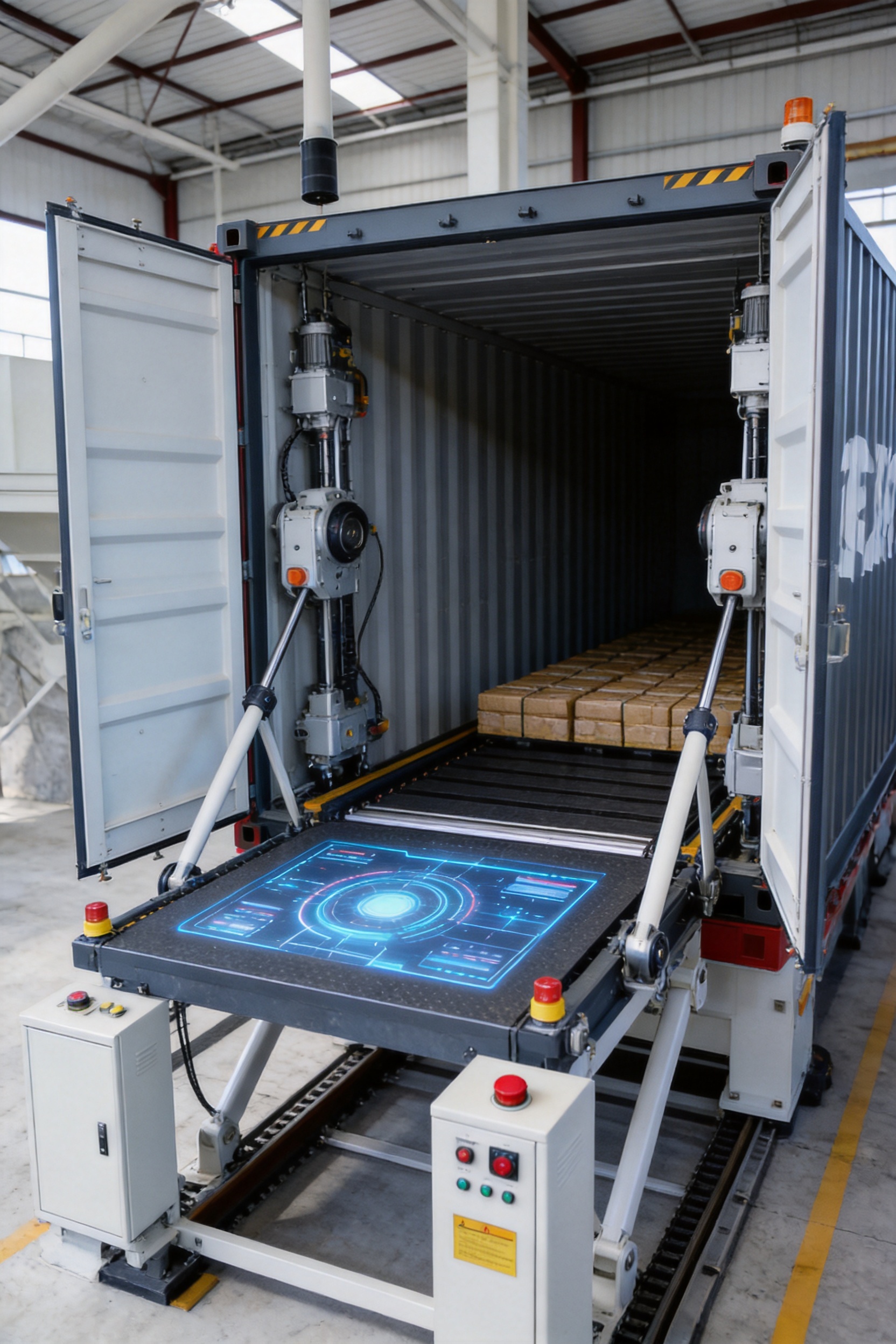
10. Frequently Asked Questions
Q1: What types of goods can the container loader handle?
The equipment can be configured for various cargo forms, including bags, sacks, cartons, palletized units, bulk granules, powders, and selected irregular products. The appropriate conveyor, chute, lifting arrangement, and loading pattern depend on product weight, packaging, flowability, dimensions, and sensitivity to impact.
Q2: Can one machine handle both loading and unloading?
Yes. The system is designed as an integrated loading and unloading solution. Its configuration allows goods to be moved into or out of the container, reducing the need for separate equipment and minimizing unnecessary manual transfers.
Q3: Does the equipment support both 20-foot and 40-foot containers?
Yes. The system includes a flexible adjustment mechanism designed to adapt to both 20-foot and 40-foot standard containers. The TJXH 20 and TJXH 40 models are selected according to container length, lifting requirements, and site conditions.
Q4: Is automatic door operation included as standard?
Automatic opening and closing of container doors is a configurable function. Customers can select this option when they want to reduce manual door handling, shorten the loading cycle, and improve safety around the container entrance.
Q5: How does the weighing function prevent overloading?
The integrated weighing system monitors cargo weight during loading and provides real-time information to the operator or control system. The loading sequence can be stopped or adjusted when the target weight or permitted limit is reached. Proper calibration and periodic verification are necessary to maintain weighing accuracy.
Q6: Can weighing data be connected to a management system?
Yes. The weighing function can be configured to upload data to a management system in real time. The specific communication method and software interface should be confirmed during the engineering and project design stage.
Q7: What is the typical loading speed?
Loading speed depends on product type, package size, loading pattern, container condition, and the selected automation level. Representative automated operations may achieve approximately 3 to 6 minutes per container, although actual performance must be verified through a product and site assessment.
Q8: How many operators are needed?
Many automated container loading systems can be supervised by one or two trained operators, depending on the configuration and site procedures. Personnel may still be required for product preparation, quality checks, traffic management, maintenance, and exception handling.
Q9: Can the loader be integrated with existing equipment?
Yes. The system can be engineered to connect with existing warehouse, dock, conveyor, bagging, palletizing, and management-system infrastructure. Integration requirements should be reviewed during the site assessment to confirm dimensions, interfaces, control signals, and operating sequences.
Q10: What training is required?
Basic operation and daily maintenance commonly require approximately two to four days of training. Advanced programming and troubleshooting may require additional instruction. Training can be provided during commissioning and should be supported by operating manuals and maintenance documentation.
Q11: How does the system protect cargo from damage?
The precision drive control system supports smooth acceleration, deceleration, and positioning. This reduces sudden movement and collisions during loading and unloading. Appropriate loading patterns and product-specific settings further help protect cargo.
Q12: What information is needed for a quotation?
Important information includes container sizes, cargo type, package dimensions, maximum cargo weight, target throughput, loading and unloading direction, site layout, available utilities, required weighing accuracy, desired automation level, and data-integration requirements. Photos, drawings, and operating videos can also help the engineering team prepare a suitable proposal.
11. Why Choose an Integrated Manufacturing Partner
Selecting a container loader is not only a purchase of mechanical equipment. It is an investment in a complete logistics process. A supplier with experience in multiple categories of loading and unloading equipment can evaluate the relationship between the container loader, vehicles, conveyors, dumpers, storage systems, and plant controls.
Jiangsu Zhengding Intelligent Equipment Co., Ltd. is a national high-tech enterprise focused on intelligent logistics equipment. Its product portfolio covers automated loading and unloading equipment for automobiles, containers, and ships, as well as rear dumpers, side-turn truck dumpers, vehicle loading equipment, and container flippers.
The company serves industries including steel, chemicals, cement, coal, grain, oil, food, feed, ports, papermaking, and new energy. Its equipment has been supplied to international markets including Japan, Brazil, Egypt, Pakistan, India, the Middle East, and Southeast Asia. The company also reports experience serving recognized users in brewing, food ingredients, agriculture, chemicals, and industrial materials.
This combination of industry coverage and equipment diversity supports a complete project approach. Customers can receive assistance with site assessment, system design, equipment manufacturing, installation supervision, commissioning, operator training, and ongoing technical support.
The main strength of the product is its combination of heavy-duty handling capability and intelligent process control. It is not limited to moving cargo from one point to another. It is designed to improve the entire container handling sequence through automatic doors, integrated weighing, adjustable container compatibility, controlled movement, and reduced manual intervention.
12. Conclusion
Container logistics is becoming more demanding as companies seek higher throughput, lower labor dependence, improved shipment accuracy, and safer working environments. Traditional manual loading methods can remain useful in small or irregular operations, but they become increasingly costly and inconsistent when container volumes rise.
An integrated container loader provides a practical solution by combining loading and unloading functions, optional automatic door operation, precision weighing, flexible adjustment for 20-foot and 40-foot containers, and smooth drive control. These capabilities help improve loading speed, cargo protection, container utilization, worker safety, and process consistency.
The TJXH 20 and TJXH 40 models provide different dimensions and lifting capacities for different container applications. With a listed maximum lifting weight of 50 tons for the TJXH 20 and 100 tons for the TJXH 40, the equipment can be evaluated for a wide range of industrial loading requirements, subject to detailed engineering confirmation.
The long-term value of the system depends on more than its headline specifications. Manufacturing accuracy, structural strength, control integration, weighing calibration, site adaptation, commissioning, training, and preventive maintenance all contribute to reliable operation. Jiangsu Zhengding Intelligent Equipment Co., Ltd. combines these capabilities with experience in automated loading and unloading systems for multiple industries and international markets.
For facilities seeking to modernize container handling, reduce repetitive labor, improve loading accuracy, and build a more dependable logistics process, an integrated container loader represents an important step toward intelligent material handling. The most effective solution is one designed around the customer’s product, container fleet, throughput targets, site conditions, and future expansion plans.
References
1. Jiangsu Zhengding Intelligent Equipment Co., Ltd. Product information for container loading and unloading equipment.
2. Jiangsu Zhengding Intelligent Equipment Co., Ltd. Technical parameters for TJXH 20 and TJXH 40 container loader models.
3. International container logistics and cargo-handling practices for 20-foot and 40-foot standard containers.
4. Industrial automation principles for conveyor systems, lifting equipment, precision drive control, and process monitoring.
5. General workplace safety practices for automated material handling and confined container loading operations.
6. General engineering practices for industrial weighing systems, equipment commissioning, preventive maintenance, and operator training.


