

 English
 русский
 Español
 Français
 Português
 عربى
عربى


+86-13588556918
Content
- 1 1. The Role of Automated Container Loaders in Modern Logistics
- 2 2. Product Design and Core Operating Principle
- 3 3. Major Product Advantages Over Conventional Loading Systems
- 4 4. Intelligent Functions and Process Control
- 5 5. Manufacturing and Engineering Strengths
- 6 6. A Complete Solution from Site Assessment to Operation
- 7 7. Applications Across Key Industries
- 8 8. Operating Data and Potential Efficiency Improvements
- 9 9. Why Integrated Equipment Can Outperform Standard Alternatives
- 10 10. Maintenance, Reliability, and Long-Term Value
- 11 11. Company Capabilities and International Service Strength
- 12 12. Frequently Asked Questions
- 12.1 Q1: What types of containers can the equipment handle?
- 12.2 Q2: Can the same machine perform both loading and unloading?
- 12.3 Q3: Can the container doors be operated automatically?
- 12.4 Q4: Is weighing included as standard?
- 12.5 Q5: What products can be handled?
- 12.6 Q6: How does the loader improve container fill rate?
- 12.7 Q7: Does automation eliminate the need for operators?
- 12.8 Q8: How long does operator training usually take?
- 12.9 Q9: Can the loader be connected to an existing warehouse system?
- 12.10 Q10: What information is required for a quotation and technical proposal?
- 12.11 Q11: How does the system improve safety?
- 12.12 Q12: Can the equipment be customized?
- 13 13. Conclusion
- 14 References
- 15 Product: Container Loaders
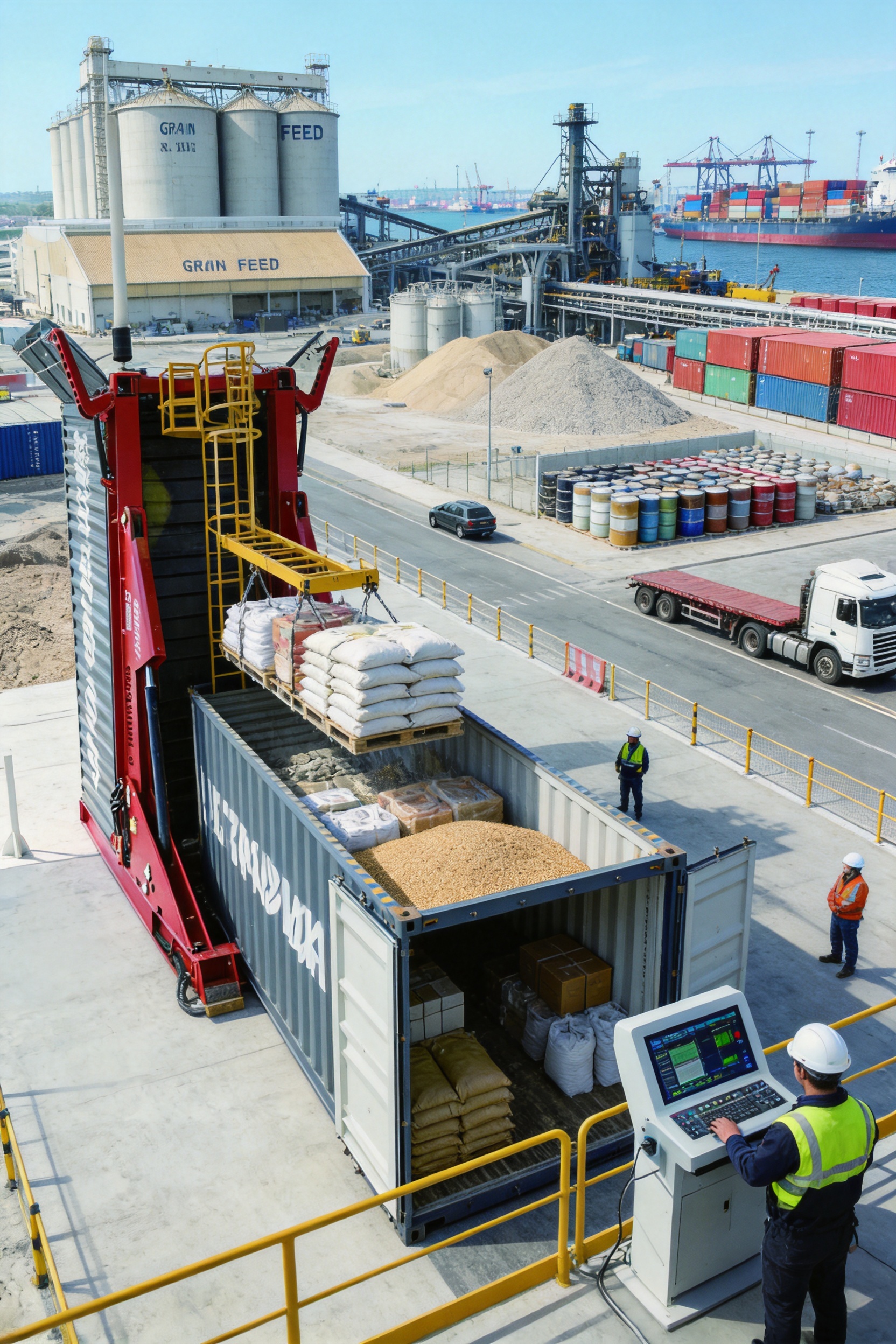
Container loading is one of the most important stages in modern logistics. It directly affects warehouse productivity, labor requirements, cargo safety, transport capacity, and the overall speed of supply chain operations. Conventional loading methods often depend on forklifts, manual positioning, temporary conveyor extensions, and repeated adjustments inside the container. These methods can be slow, labor-intensive, and difficult to control, particularly when the cargo must be distributed evenly or when the facility handles a high number of containers every day.
Automated container loaders provide a more efficient alternative. By combining mechanical loading and unloading functions, intelligent drive control, optional automatic door operation, and precision weighing, a modern container loader can create a safer and more consistent loading process. The equipment described in this article is designed for both 20-foot and 40-foot standard containers and can be configured for different materials, cargo forms, loading patterns, and warehouse layouts.
Jiangsu Zhengding Intelligent Equipment Co., Ltd. develops and manufactures automated loading and unloading systems for automobiles, containers, ships, and industrial logistics applications. Its container loader product line reflects the company’s focus on integrated equipment, customized engineering, intelligent control, and reliable operation in demanding industrial environments.
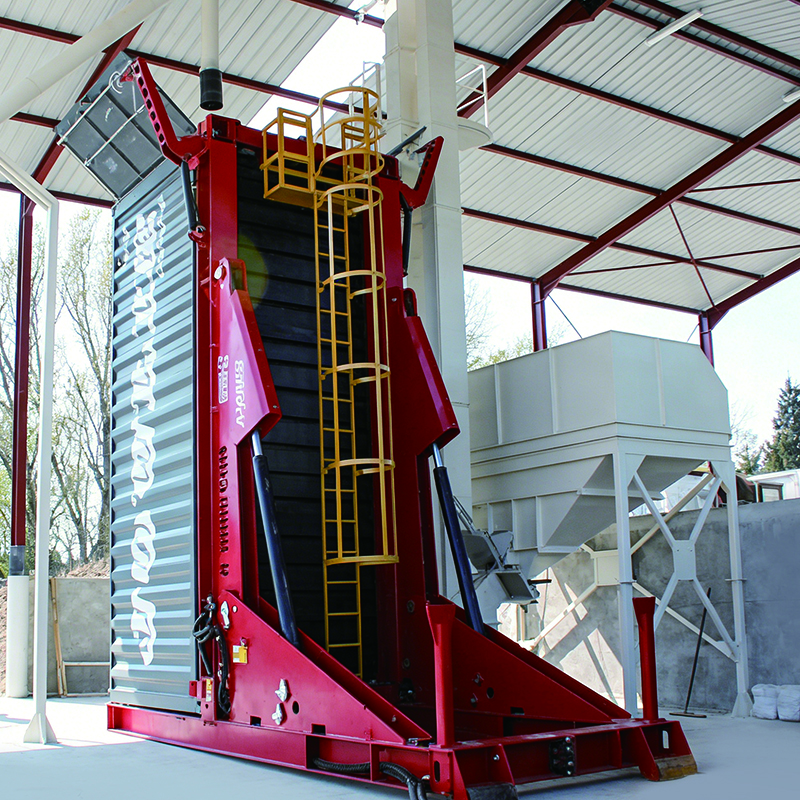
Container Loaders
1. The Role of Automated Container Loaders in Modern Logistics
An automated container loader is an integrated logistics machine used to move goods into or out of shipping containers with reduced manual intervention. Depending on the application, the equipment may work with conveyors, telescopic loading devices, lifting mechanisms, positioning systems, weighing modules, automatic door mechanisms, or other material-handling components.
The central purpose of the system is to establish a controlled connection between the warehouse, production line, loading dock, and container. Instead of requiring workers and forklifts to repeatedly enter the container and arrange the cargo manually, the loader provides a more structured material flow. Cargo can be delivered, positioned, weighed, and distributed according to a planned operating sequence.
This approach offers several important benefits. Loading time can be reduced, container space can be used more effectively, and the risk of cargo damage caused by collisions or rough handling can be lowered. In addition, operators can supervise the process from a safer position outside the container rather than performing repeated manual tasks in a confined space.
Automated loading is especially valuable in facilities that handle food ingredients, grain, feed, chemical products, cement, minerals, consumer goods, packaged materials, and other products transported in large quantities. It is also suitable for ports, distribution centers, manufacturing plants, warehouses, and industrial sites where a reliable connection between internal logistics and container transportation is required.
1.1 From manual handling to integrated automation
Traditional container loading often includes several separate operations. Workers may need to open the container doors, position a forklift or conveyor, move goods into the container, distribute the cargo, confirm the weight, and remove the equipment after loading. Each separate activity creates opportunities for delay, error, or unsafe conditions.
An integrated container loader combines many of these activities into one coordinated system. The machine can be designed to support loading and unloading with the same main structure. This reduces the need for separate equipment and helps create a repeatable workflow. Automatic door-opening and closing functions may also be added, allowing the loading cycle to begin and end with less manual handling.
For high-volume sites, the difference between a fragmented process and an integrated one can be substantial. A standardized loading sequence improves coordination between warehouse personnel, production systems, transport operators, and shipping schedules. It also makes operating data easier to collect and transmit to a management platform.
1.2 Suitable cargo and operating environments
Container loaders can be configured for various cargo types. Typical applications include bagged products, sacks, cartons, packaged food, palletized goods, bulk granules, powders, industrial materials, and other products that can be moved by a conveyor or controlled transfer device.
The exact configuration depends on product characteristics such as weight, dimensions, flowability, moisture content, packaging strength, dust generation, temperature, and sensitivity to impact. A system for bagged grain may require different conveying and positioning components from a system for cartons or chemical materials. This is why site assessment and application engineering are important parts of a successful installation.
A well-designed system can also be adapted to existing warehouse infrastructure. The loader may be integrated with an upstream conveyor, storage hopper, palletizing line, production line, weighing station, or warehouse management system. This flexibility allows customers to improve a specific bottleneck without necessarily rebuilding the entire facility.
2. Product Design and Core Operating Principle
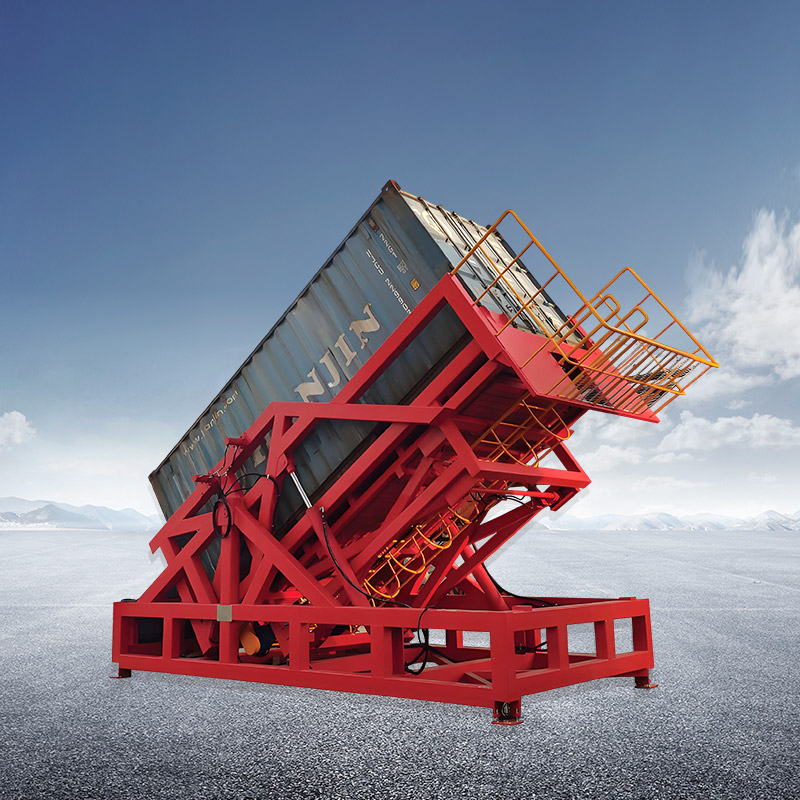
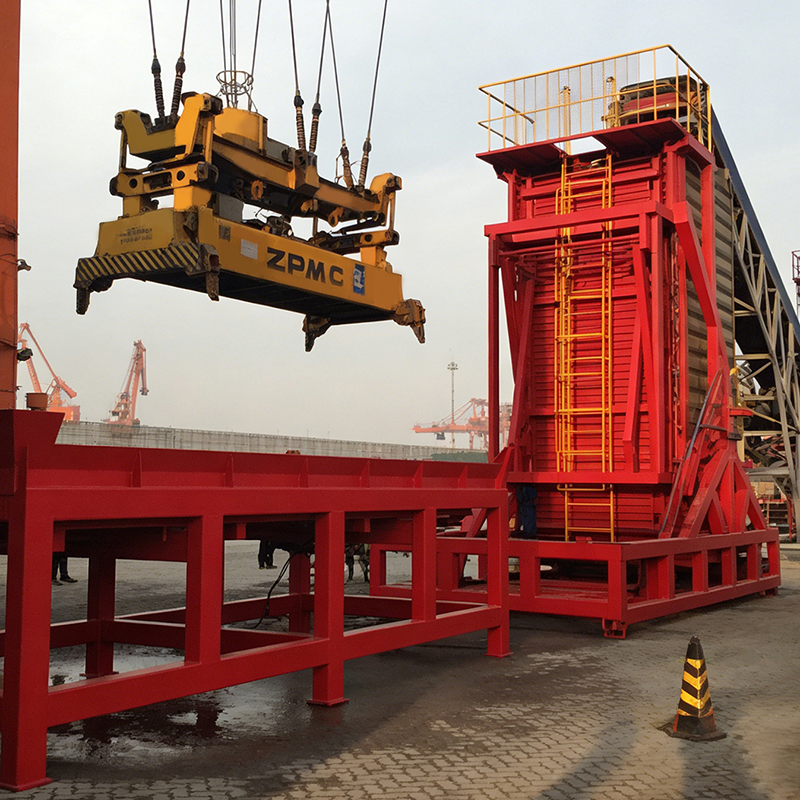
The container loader uses an integrated design for container loading and unloading. It is suitable for 20-foot and 40-foot standard containers and uses a flexible adjustment mechanism to accommodate the different container lengths. The equipment is designed to support rapid entry and exit of goods, helping reduce the time required for each container cycle.
During operation, the container is positioned in the designated loading area. The machine adjusts its working configuration according to the container size and the required loading position. Cargo is then transferred through the controlled conveying or loading mechanism. The precision drive system manages the movement of the equipment and cargo so that the goods enter the container smoothly and are distributed according to the selected operating sequence.
When weighing is included, the system can monitor the cargo weight during loading and unloading. This function helps operators control the total load, reduce the risk of overloading, and improve the accuracy of shipment records. Data may be uploaded to a management system in real time, supporting traceability and production planning.
The machine can also be configured with an automatic container-door mechanism. This reduces the need for workers to open and close heavy doors manually. Besides improving convenience, automatic door operation can reduce exposure to pinch points, awkward postures, traffic movement, and other risks around the container entrance.
2.1 Main technical parameters
| Model | Applicable Container | Approximate Size L × W | Maximum Lifting Weight | Maximum Lifting Angle |
|---|---|---|---|---|
| TJXH 20 | 20-foot container | 6 × 3 m | 50 t | 45° / 60° |
| TJXH 40 | 40-foot container | 12 × 3 m | 100 t | 45° / 60° |
The listed parameters provide a basic reference for equipment selection. The final configuration should be determined according to the container type, cargo weight, loading method, site conditions, foundation design, required cycle time, safety requirements, and the customer’s material-handling process.
2.2 One machine for loading and unloading
One of the most important design advantages is the dual-purpose function. A single piece of equipment can handle both loading and unloading rather than requiring separate machines for opposite directions of cargo movement. This can reduce equipment duplication and simplify the layout of the loading area.
Using one integrated system may also reduce changeover time. Operators do not need to move a separate machine into position every time the direction of material flow changes. The result is a more compact and organized work area, particularly where dock space is limited.
For facilities handling return cargo, recyclable materials, raw materials, or finished products, the ability to perform both operations can improve equipment utilization. The loader can be incorporated into a planned inbound and outbound logistics schedule, helping the same loading bay support more applications throughout the day.
3. Major Product Advantages Over Conventional Loading Systems
3.1 Faster container turnaround
Loading time is directly connected to vehicle utilization, container availability, labor cost, and potential demurrage expenses. Manual loading with forklifts can take approximately 18 to 25 minutes per container, depending on the cargo and the number of workers. A conveyor-assisted manual process may reduce the time, but workers may still need to enter the container and distribute the products.
Semi-automatic equipment can commonly reduce the loading cycle to approximately eight minutes, while a fully automated system may achieve a typical cycle of around 3 to 6 minutes when the cargo, layout, and operating conditions are suitable. The exact result depends on the material and the required loading pattern, but the general advantage is clear: automation creates a more predictable and repeatable process.
| Loading Method | Typical Time per Container | Manual Intervention | Process Consistency |
|---|---|---|---|
| Manual loading with forklift | 18–25 minutes | High | Dependent on operators |
| Manual loading with conveyor extension | Approximately 16 minutes | Moderate to high | Variable |
| Semi-automatic loader | Approximately 8 minutes | Moderate | Improved |
| Automated container loader | Approximately 3–6 minutes | Low to moderate | Programmable and repeatable |
Faster loading can allow a facility to process more containers within the same working period. It may also help reduce waiting time for trucks, improve dock scheduling, and make better use of warehouse personnel. In high-volume operations, even a small reduction in average cycle time can produce a significant annual capacity increase.
3.2 Reduced labor requirements
Manual loading requires multiple workers for cargo movement, positioning, supervision, door operation, and final arrangement. Labor requirements may increase further when the cargo is heavy, dusty, awkwardly shaped, or difficult to distribute evenly.
Automated equipment reduces the amount of repetitive physical handling. A facility that previously required four to six workers for a loading shift may be able to operate the system with one or two trained operators, depending on the process and local safety requirements. The workers are not eliminated from the operation; instead, their roles become more focused on monitoring, control, quality checks, exception handling, and routine maintenance.
This change can improve labor efficiency while reducing the physical burden associated with lifting, pushing, climbing, bending, and working inside confined container spaces. It also helps facilities manage labor shortages and maintain stable production during periods of high demand.
3.3 Better container space utilization
Uneven manual loading can create empty spaces, unstable stacks, and irregular weight distribution. These conditions reduce the effective capacity of the container and may increase the risk of cargo movement during transport. A programmable loader can use controlled movement and planned positioning to distribute products more evenly.
Depending on the cargo type and loading pattern, automated systems may improve container fill rates by approximately 5 to 8 percent compared with conventional manual loading. Better space utilization means that more products can be shipped in the same container, which may reduce the number of containers required for a given volume of goods.
The improvement is particularly valuable for products packed in bags, cartons, or other standardized units. The system can be designed to move cargo in layers, rows, zones, or other sequences. Sensors and position controls can help operators adjust the loading pattern as the container becomes full.
3.4 Improved cargo protection
Cargo damage often occurs when products are dropped, pushed too quickly, struck by forklifts, or stacked unevenly. Fragile packages may be crushed, while bags can tear when dragged against container floors or walls. Repeated impact can also damage pallets, cartons, and packaging seals.
The precision drive control system is designed to ensure smooth movement during loading and unloading. Controlled acceleration and deceleration can reduce sudden movement and help avoid collisions between the cargo, the equipment, and the container structure. This contributes to more consistent loading quality and may reduce product loss and customer claims.
For sensitive products such as food ingredients, packaged chemicals, or premium consumer goods, maintaining package integrity is especially important. A stable mechanical process also makes quality inspection easier because the loading pattern is more uniform from one container to the next.
3.5 Enhanced workplace safety
Container interiors are confined workspaces. Workers may face limited visibility, restricted movement, uneven floors, poor ventilation, moving forklifts, falling cargo, and awkward access to the container entrance. Manual door operation can also expose workers to pinch points and heavy moving components.
An automated container loader reduces the need for forklift entry and repeated manual activity inside the container. Operators can remain near the control station while monitoring the loading sequence. Automatic door mechanisms can further reduce exposure to door-related hazards.
Safety is not achieved by automation alone. A complete installation should include guarding, emergency-stop devices, interlocks, warning signals, safe access platforms, maintenance isolation procedures, operator training, and appropriate site traffic management. However, automation provides a stronger foundation for controlling risk than a process that relies primarily on manual handling.
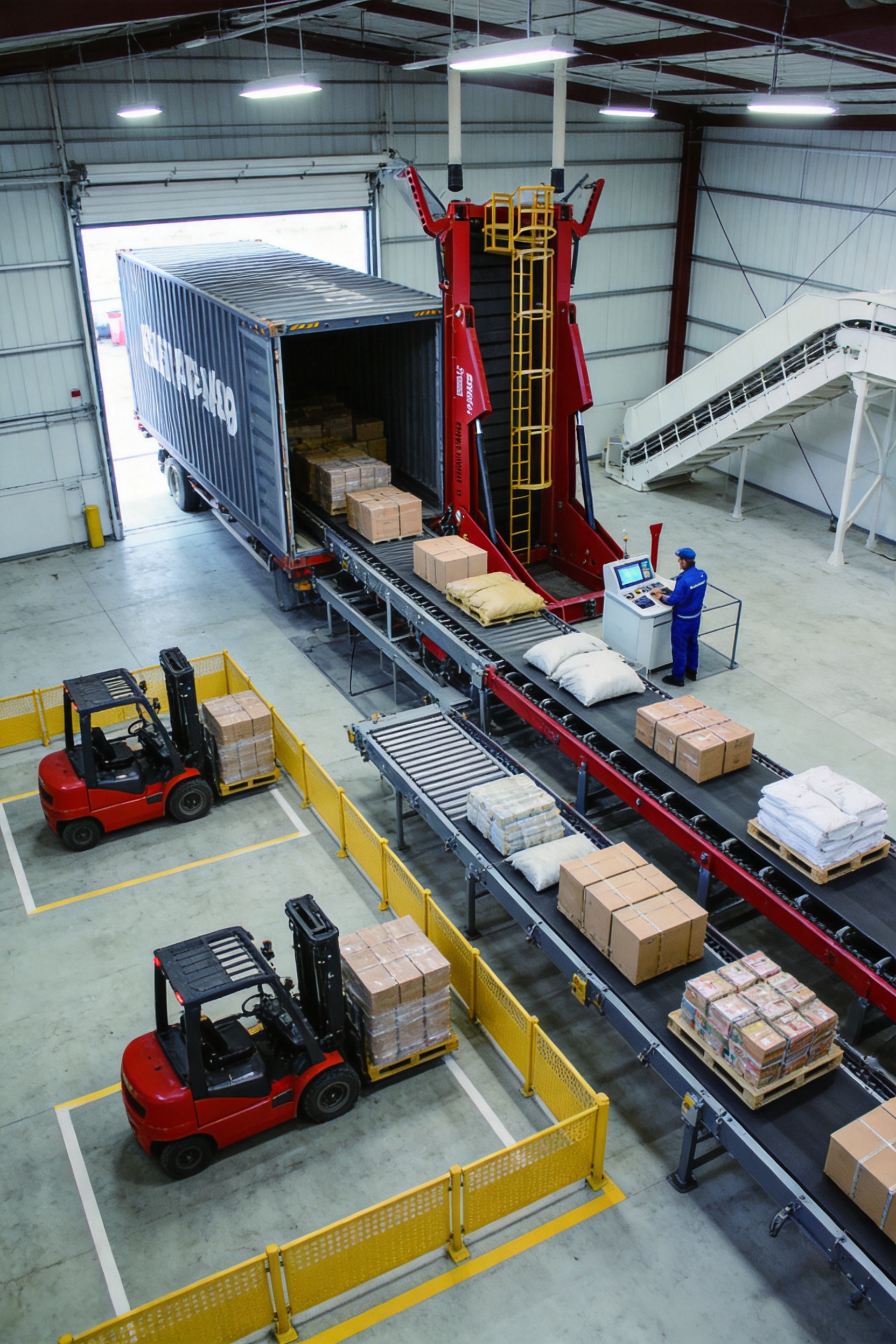
4. Intelligent Functions and Process Control
4.1 Automatic door-opening and closing
The container door mechanism can be configured to open and close automatically as part of the operating cycle. This function helps remove a repetitive manual step and supports a more consistent sequence from container positioning to cargo transfer.
Automatic door operation can be coordinated with safety sensors and system controls. The equipment can be arranged so that loading does not begin until the door is in the correct position and the operating area is clear. At the end of the cycle, the door can be closed according to the selected procedure, reducing the need for workers to approach the container repeatedly.
The mechanism should be selected according to the container door structure, local operating environment, door condition, and maintenance requirements. Where containers vary significantly, the engineering team can assess the required adjustment range and operating clearances before finalizing the design.
4.2 Precision weighing and overload prevention
Accurate weight control is essential for safe transport and regulatory compliance. Overloading can create problems for vehicles, roads, lifting equipment, container structures, and shipping schedules. Inaccurate records can also lead to disputes between suppliers, carriers, and customers.
The container loader can integrate a high-precision weighing function to monitor cargo weight during loading and unloading. Operators can view the weight in real time and use the information to control the final quantity. The system can be configured to provide warnings when a preset limit is approached or reached.
When connected to a management platform, weighing information can be uploaded in real time. This supports electronic records, production reporting, shipment traceability, and centralized supervision. Weight information may also be combined with container identification, product batch information, operator records, and loading timestamps.
4.3 Flexible adjustment for 20-foot and 40-foot containers
Container length is a major consideration in loading equipment design. A system designed only for one container size may require relocation, replacement, or extensive manual adjustment when another container is introduced. The flexible adjustment mechanism of this equipment allows the same product family to accommodate both 20-foot and 40-foot standard containers.
The TJXH 20 model is intended for 20-foot containers, while the TJXH 40 model is intended for 40-foot containers. The design approach enables customers to select the appropriate model according to their container fleet and loading capacity requirements. For facilities handling both sizes, a broader system plan can be developed to coordinate equipment, positioning, and workflow.
4.4 Controlled drive movement
A precision drive control system helps the loader move smoothly during the loading and unloading process. Smooth movement is important for cargo protection, operator confidence, mechanical life, and repeatable positioning.
Controlled drive operation can include regulated starting and stopping, accurate positioning, speed adjustment, and coordinated movement between loading components. These functions help prevent abrupt movement and reduce the possibility of cargo collision. They also make it easier to implement repeatable loading patterns.
For a site handling different cargo types, the drive parameters may be adjusted according to product sensitivity and operating requirements. Heavy materials, fragile packages, and dust-generating products may require different speeds, transfer methods, or protective arrangements.
5. Manufacturing and Engineering Strengths
The performance of an automated container loader depends not only on the concept of automation but also on the quality of engineering, manufacturing, assembly, testing, installation, and after-sales support. Jiangsu Zhengding Intelligent Equipment Co., Ltd. focuses on the research, development, manufacture, and sale of intelligent logistics equipment, providing integrated solutions for automatic loading and unloading.
5.1 Experience across multiple equipment categories
The company’s product portfolio includes rear dumpers, side-turn truck dumpers, car loading equipment, container flippers, and other automated systems for vehicles and containers. This broad range of equipment experience is valuable because many logistics projects require more than one type of handling technology.
Knowledge of truck unloading, container handling, lifting systems, and industrial material transfer allows the engineering team to evaluate the complete logistics process rather than treating the container loader as an isolated machine. The result can be a more coherent solution from receiving and unloading through storage, processing, loading, and dispatch.
5.2 Application-oriented product development
Industrial loading equipment must operate in real working environments, not only in controlled demonstration conditions. Product development therefore needs to consider dust, humidity, temperature, corrosive materials, uneven operating cycles, vehicle variation, limited space, and the specific behavior of the customer’s cargo.
An application-oriented design process begins with understanding the material and the workflow. Engineers may review product packaging, container dimensions, loading capacity, cycle-time targets, upstream and downstream equipment, foundation conditions, electrical supply, operator access, and maintenance requirements. These factors influence the selection of conveyors, drives, structural components, weighing systems, protective devices, and control logic.
5.3 Structural design and fabrication
The loader must withstand repeated loading cycles and the forces created by heavy cargo, lifting operations, movement, and container positioning. Structural components therefore require careful design, material selection, fabrication, and inspection.
A robust manufacturing process typically includes detailed engineering drawings, controlled material procurement, component cutting and forming, welding, dimensional inspection, surface treatment, mechanical assembly, electrical installation, and functional testing. Critical structural connections and moving assemblies require particular attention because their quality affects the safety and service life of the equipment.
Manufacturing consistency is especially important when a customer operates several machines at different sites. Standardized components, documented assembly procedures, and repeatable inspection criteria can make spare-parts management, operator training, and maintenance planning easier.
5.4 Integration of mechanical, electrical, and control systems
An automated loader combines mechanical structures with motors, drive systems, sensors, control panels, safety circuits, weighing equipment, and communication interfaces. The performance of the complete machine depends on the coordination of these subsystems.
Mechanical components must provide accurate movement and adequate load capacity. Electrical components must be correctly selected for the operating environment. Control software must coordinate the sequence and respond appropriately to sensor signals, operator commands, abnormal conditions, and emergency stops.
Integrated engineering helps avoid the problems that can occur when mechanical equipment, controls, and weighing functions are supplied as unrelated parts. A unified system can provide clearer diagnostics, more reliable operation, and simpler communication with the customer’s management system.
5.5 Factory inspection and commissioning preparation
Before delivery, the equipment should undergo factory inspection and functional verification. Testing may include unloaded movement, loaded movement, lifting operation, position adjustment, door mechanism operation, emergency-stop response, sensor confirmation, weighing calibration, control-panel operation, and communication checks.
Factory testing helps identify design or assembly issues before the machine reaches the customer’s site. It also provides an opportunity to confirm that the equipment meets the agreed technical requirements. For customized projects, test procedures can be developed around the customer’s container type, cargo, operating sequence, and acceptance criteria.
After installation, site commissioning confirms the equipment’s performance under actual working conditions. This stage may include alignment, foundation checks, electrical connection, sensor adjustment, software parameter setting, trial loading, operator instruction, and final performance verification.
6. A Complete Solution from Site Assessment to Operation
6.1 Site assessment
A successful container-loading project begins with a detailed site assessment. The assessment should consider the available loading area, container approach route, truck movement, floor capacity, drainage, overhead clearance, electrical power, access for maintenance, and the relationship between the loader and existing warehouse equipment.
Container positioning is particularly important. The machine must be aligned accurately with the container so that loading equipment can enter or reach the required working area without interference. The site plan should also provide sufficient room for workers to perform inspections and maintenance safely.
6.2 System design
Following the site assessment, the engineering team can develop a system design that reflects the customer’s actual process. This may include the main loader, conveyors, transfer points, weighing equipment, container-positioning devices, safety barriers, automatic doors, control cabinets, operator stations, and data interfaces.
The design should define the expected loading sequence, operating capacity, cargo flow, control responsibilities, and emergency procedures. It should also identify how the system will respond to common exceptions, such as an incorrectly positioned container, a blocked transfer point, an abnormal weight reading, or a sensor fault.
6.3 Installation supervision
Installation quality affects the long-term reliability of the equipment. The company can provide installation supervision to support mechanical assembly, alignment, electrical connection, control-system setup, and initial testing. Professional supervision is particularly valuable for systems integrated into complex production or warehouse lines.
During installation, attention should be given to foundation accuracy, anchor points, conveyor alignment, cable routing, protective guarding, emergency access, and the calibration of measuring devices. A correctly installed machine is more likely to operate smoothly and maintain its rated performance.
6.4 Operator training
Operators need to understand normal operation, loading procedures, alarm conditions, emergency stops, daily inspection, cleaning, and basic troubleshooting. Most modern automated loading systems are designed with user-friendly interfaces, and basic operator training commonly requires two to four days depending on system complexity.
Advanced programming, parameter adjustment, and troubleshooting may require additional instruction. Training should be supported by operating manuals, maintenance schedules, electrical documentation, spare-parts information, and safety procedures. Clear training helps ensure that the benefits of automation continue after commissioning.
7. Applications Across Key Industries
7.1 Food and beverage
Food and beverage facilities often handle large quantities of bags, cartons, ingredients, bottles, packaged products, or palletized goods. Automated container loading can improve hygiene control by reducing unnecessary human contact with the cargo and reducing forklift traffic near the loading area.
Consistent handling is also important for package protection. Controlled movement can help reduce damaged bags, crushed cartons, and unstable arrangements. When integrated weighing is used, the system can support accurate shipment quantities and batch traceability.
7.2 Grain, feed, and agricultural products
Grain and feed operations may load bags, bulk products, or other agricultural materials. These facilities often require high throughput and reliable operation during seasonal peaks. An automated loader can help maintain a consistent loading rate while reducing dust exposure and manual handling.
Weighing integration is useful for controlling shipment quantities and preventing overload. Depending on the material, the system may also be designed with dust-control measures, enclosed transfer points, or cleaning access.
7.3 Chemical materials
Chemical products require careful attention to packaging integrity, weight control, worker protection, and contamination prevention. Automated handling reduces the amount of direct manual contact and can provide a more stable process for bags, drums, cartons, or other approved packaging.
The final design should reflect the chemical properties of the product, including corrosiveness, flammability, dust generation, and sensitivity to impact. Appropriate electrical, material, ventilation, and safety requirements must be evaluated for each project.
7.4 Cement, minerals, and industrial materials
Cement, mineral products, and other industrial materials are often heavy and may be supplied in bags, bulk form, or large packages. Manual loading can place significant demands on workers and lifting equipment. An automated loader can improve throughput and reduce repetitive physical work.
The structural capacity, wear resistance, dust management, and maintenance access of the system are important in these environments. A suitable design should support high-duty operation and allow inspection of wear components without excessive downtime.
7.5 Steel, ports, and large-scale distribution
Steel plants, ports, and large distribution centers typically operate with complex vehicle and material flows. Container loading equipment must coordinate with cranes, trucks, conveyors, storage areas, and shipping schedules. A well-integrated system can reduce congestion and improve visibility across the loading operation.
In these environments, safety control, equipment communication, container positioning, and operating reliability are especially important. The loader can become part of a wider intelligent logistics system that connects physical handling with digital management.
8. Operating Data and Potential Efficiency Improvements
Industry comparisons commonly show significant advantages for automated container loading. Facilities that adopt automated loading systems may experience productivity improvements of approximately 40 to 65 percent compared with manual processes, although actual results depend on cargo, layout, work schedule, and equipment configuration.
Labor handling requirements may be reduced by approximately 60 to 80 percent. Typical automated cycle times may fall within the range of 3 to 6 minutes per container, compared with 15 to 25 minutes for many manual processes. Container fill rates may improve by approximately 5 to 8 percent when the loading pattern is optimized.
| Performance Area | Conventional Manual Process | Automated Process | Potential Result |
|---|---|---|---|
| Time per container | 18–25 minutes | 3–6 minutes | Approximately 70–80% faster |
| Workers per shift | 4–6 people | 1–2 operators | Approximately 60–75% less labor |
| Container fill rate | 82–88% | 92–96% | Approximately 5–8% better utilization |
| Product damage rate | 2.5–4.0% | 0.5–1.2% | Approximately 60–80% reduction |
These figures should be treated as general industry references rather than guaranteed results for every application. A professional feasibility study should calculate the expected return based on the customer’s actual container volume, labor cost, loading schedule, product value, demurrage exposure, and maintenance plan.
For example, a food ingredient facility processing approximately 200 containers per week may reduce loading labor from eight workers per shift to two operators after adopting automated loading equipment. At the same time, the facility may increase throughput because each container spends less time in the loading bay.
9. Why Integrated Equipment Can Outperform Standard Alternatives
Many standard loading solutions focus on one function, such as conveying, lifting, or extending into the container. These components can be useful, but they may require additional manual coordination. The integrated design of this container loader combines loading and unloading functions with adjustment, weighing, and control options in one coordinated system.
Compared with a basic conveyor extension, the equipment offers stronger process control and a more organized loading sequence. Compared with forklift-based loading, it can reduce traffic inside the container and reduce collision risks. Compared with separate loading and unloading machines, it can simplify the layout and improve equipment utilization.
The ability to accommodate both 20-foot and 40-foot containers is another important advantage for customers with mixed container fleets. Automatic door operation and real-time weighing further reduce manual steps. The precision drive system supports smooth movement, while the company’s application engineering capabilities allow the machine to be adapted to different industries and site conditions.
The strongest competitive advantage is therefore not a single component. It is the combination of integrated mechanical design, flexible container compatibility, intelligent control, weighing, safety features, application engineering, and manufacturing support.
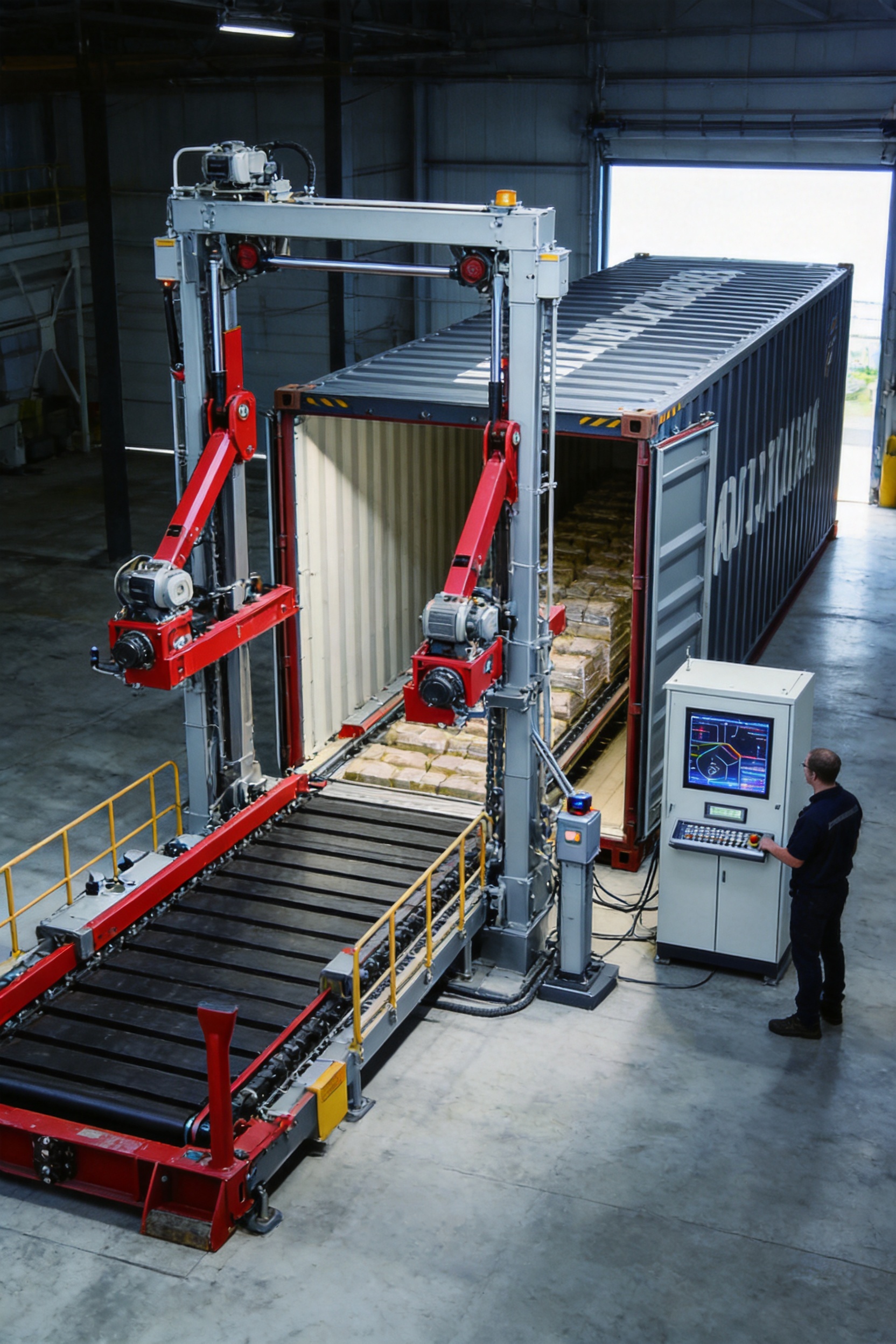
10. Maintenance, Reliability, and Long-Term Value
Reliable operation depends on preventive maintenance and correct operating practices. Daily checks should include the condition of moving components, safety devices, sensors, conveyor surfaces, door mechanisms, fasteners, electrical cabinets, and emergency-stop functions. Operators should also inspect for abnormal noise, vibration, leakage, cargo accumulation, or unexpected movement.
Scheduled maintenance may include lubrication, tightening, alignment checks, calibration, wear-part inspection, electrical testing, and software or control-system verification. The maintenance interval should be established according to operating hours, cargo characteristics, environmental conditions, and the manufacturer’s recommendations.
Dusty or corrosive environments require additional attention. Cleaning procedures should prevent material accumulation around sensors, drives, transfer points, and moving structures. In food-related applications, the cleaning plan should also reflect hygiene and contamination-control requirements.
Proper maintenance can extend service life, reduce unplanned downtime, and preserve loading accuracy. It also helps maintain the performance advantages that justified the original investment. A lower purchase price is not necessarily the lowest total cost if the machine requires frequent repairs, has limited support, or cannot be adapted to process changes.
11. Company Capabilities and International Service Strength
Jiangsu Zhengding Intelligent Equipment Co., Ltd. is a national high-tech enterprise engaged in the research and development, manufacturing, and sales of intelligent automated loading and unloading equipment. The company provides systematic solutions for automobiles, containers, ships, and related logistics applications.
Its products are used in steel, chemical, cement, coal, grain, oil, food, feed, ports, papermaking, and new energy industries. The company’s equipment has been exported to Japan, Brazil, Egypt, Pakistan, India, the Middle East, and Southeast Asia. This international application experience gives the engineering team exposure to different working environments, technical requirements, and customer expectations.
The company has supplied equipment to well-known users and groups including Budweiser, Heineken, Buhler Group, Wilmar International, Cargill, DuPont, Louis Dreyfus, Charoen Pokphand Group, and Saint-Gobain Group. Such project experience demonstrates the relevance of its equipment to large-scale industrial and commercial operations.
For container loading projects, the company can support site assessment, system design, equipment manufacturing, installation supervision, commissioning, and operator training. This complete project approach reduces the communication gap between separate suppliers and provides customers with a clearer path from initial concept to production operation.
The company’s location in Yangzhou, Jiangsu Province, places it within a major Chinese manufacturing region with access to industrial supply chains, engineering resources, transportation infrastructure, and equipment-production capabilities. Its focus on customized solutions, safety, automation, efficiency, and integrated metering and unloading systems supports the requirements of modern logistics facilities.
12. Frequently Asked Questions
Q1: What types of containers can the equipment handle?
The equipment is designed to accommodate 20-foot and 40-foot standard containers. The TJXH 20 model is intended for 20-foot containers, while the TJXH 40 model is intended for 40-foot containers. The final selection should consider container dimensions, cargo weight, loading angle, site layout, and the customer’s operating process.
Q2: Can the same machine perform both loading and unloading?
Yes. The container loader adopts an integrated design capable of handling both loading and unloading operations. This dual-purpose structure can reduce the need for separate equipment and simplify the layout of the loading area.
Q3: Can the container doors be operated automatically?
Yes. An automatic opening and closing mechanism can be configured for the container doors. This reduces manual door handling, lowers labor intensity, and can reduce risks associated with heavy doors, pinch points, and repeated worker movement around the container entrance.
Q4: Is weighing included as standard?
The weighing function is configurable. When selected, the system can integrate high-precision weighing to monitor cargo weight in real time during loading and unloading. The data can also be uploaded to a management system, depending on the customer’s communication and software requirements.
Q5: What products can be handled?
The equipment can be adapted for bagged products, sacks, cartons, palletized units, bulk granules, powders, and other suitable cargo forms. The correct configuration depends on product weight, packaging, dimensions, flowability, dust characteristics, fragility, and required loading pattern.
Q6: How does the loader improve container fill rate?
The loader uses controlled movement, planned positioning, and programmable loading sequences to distribute products more evenly. This can reduce empty spaces and unstable arrangements. In suitable applications, automated loading may achieve approximately 5 to 8 percent better container utilization than manual loading.
Q7: Does automation eliminate the need for operators?
No. Operators are still required to supervise the process, confirm operating conditions, respond to alarms, perform inspections, and carry out routine maintenance. Automation changes the operator’s role from repetitive manual handling to monitoring and process control. Depending on the system and facility, one or two trained operators may be sufficient for normal operation.
Q8: How long does operator training usually take?
Basic operation and daily maintenance training commonly requires two to four days. Advanced programming, parameter adjustment, and troubleshooting may require additional training. The supplier can provide operating documents and on-site instruction during commissioning.
Q9: Can the loader be connected to an existing warehouse system?
Yes. The equipment can be designed to integrate with existing conveyors, warehouse layouts, production lines, weighing systems, and management platforms. Communication requirements should be defined during the engineering stage so that data exchange, container identification, weight records, and operating status can be coordinated.
Q10: What information is required for a quotation and technical proposal?
Important information includes container sizes, cargo type, package dimensions, maximum cargo weight, target cycle time, required loading pattern, daily or monthly container volume, site drawings, available power supply, operating environment, automatic door requirements, weighing requirements, and the desired data interface.
Q11: How does the system improve safety?
The loader reduces the need for forklift entry and repeated manual work inside confined containers. Automatic door operation can reduce manual door handling, while controlled movement can lower collision risks. A complete safety design should also include guarding, emergency stops, interlocks, warning devices, safe access, and operator training.
Q12: Can the equipment be customized?
Yes. Customization may involve the loading method, conveyor arrangement, weighing system, automatic doors, container adjustment mechanism, control system, safety protection, operating height, site layout, cargo characteristics, and connection with existing equipment. Engineering customization should be based on a complete application and site assessment.
13. Conclusion
Automated container loaders provide a practical way to improve the efficiency, safety, and consistency of container logistics. By integrating loading and unloading functions, automatic door operation, configurable weighing, flexible adjustment for 20-foot and 40-foot containers, and precision drive control, the equipment addresses many of the limitations associated with manual loading and basic conveyor systems.
The advantages include faster container turnaround, lower labor requirements, improved cargo protection, better space utilization, more accurate weight control, and reduced exposure to confined-space handling risks. These benefits are particularly valuable for high-volume facilities in food, grain, feed, chemical, cement, minerals, steel, ports, manufacturing, and distribution industries.
Jiangsu Zhengding Intelligent Equipment Co., Ltd. strengthens the product with application-focused engineering, integrated mechanical and electrical development, industrial manufacturing experience, installation supervision, commissioning, and training. Its broader range of automated loading and unloading equipment enables the company to design solutions that connect container handling with truck, warehouse, production, and port logistics.
For customers seeking to modernize a loading bay or develop a new automated logistics line, the most important step is to evaluate the complete process. Container type, cargo characteristics, site conditions, desired capacity, weighing requirements, safety objectives, and data management needs should all be considered. With the correct design and implementation, an automated container loader can become a long-term productivity asset rather than simply a replacement for manual labor.
References
1. Product technical information for TJXH 20 and TJXH 40 automated container loaders, supplied in the project materials.
2. Jiangsu Zhengding Intelligent Equipment Co., Ltd., corporate product and company information concerning automated loading and unloading equipment.
3. General industrial material-handling principles for container loading, conveyor integration, weighing control, and workplace safety.
4. Comparative operating data for manual, semi-automatic, and fully automated container-loading processes, as provided in the supplied product materials.
5. General engineering practices for industrial equipment design, factory inspection, installation commissioning, preventive maintenance, and operator training.


