

 English
 русский
 Español
 Français
 Português
 عربى
عربى



+86-13588556918
Content
- 1 Product Overview and Processing Purpose
- 2 Why Uniform Cutting Matters in Oat Processing
- 3 Main Technical Characteristics
- 4 Advantages Over Conventional Cutting and Crushing Methods
- 5 Role in a Complete Oat Processing Line
- 6 Company Manufacturing Strengths and Engineering Capability
- 7 Advanced Manufacturing Processes Behind Reliable Performance
- 8 Food Safety and Hygienic Design Considerations
- 9 Energy Efficiency and Cost Control
- 10 Flexibility for Fine, Medium, and Coarse Kernels
- 11 Comparison With Competitor Approaches
- 12 Operational Recommendations for Best Results
- 13 Maintenance and Long-Term Reliability
- 14 Integration With Automated Material Handling
- 15 Applications Beyond Oats
- 16 Customer Value and Return on Investment
- 17 Quality Control in Finished Steel-Cut Oats
- 18 Safety Considerations During Operation
- 19 Why This Cutter Fits Modern Grain Processing Trends
- 20 Q&A Section
- 20.1 Q1: What is the primary function of the Drum Groats Cutter?
- 20.2 Q2: What materials can the machine process?
- 20.3 Q3: What is the capacity of the YQL50 model?
- 20.4 Q4: How much power does the machine require?
- 20.5 Q5: What is the cutting waste rate?
- 20.6 Q6: Why is the stainless-steel cutting drum important?
- 20.7 Q7: Can the machine produce different grades of cut kernels?
- 20.8 Q8: How does the machine compare with general crushing equipment?
- 20.9 Q9: What should operators monitor during production?
- 20.10 Q10: How does the manufacturer’s broader engineering background benefit customers?
- 21 Conclusion
- 22 References
- 23 Product: Drum Groats Cutter
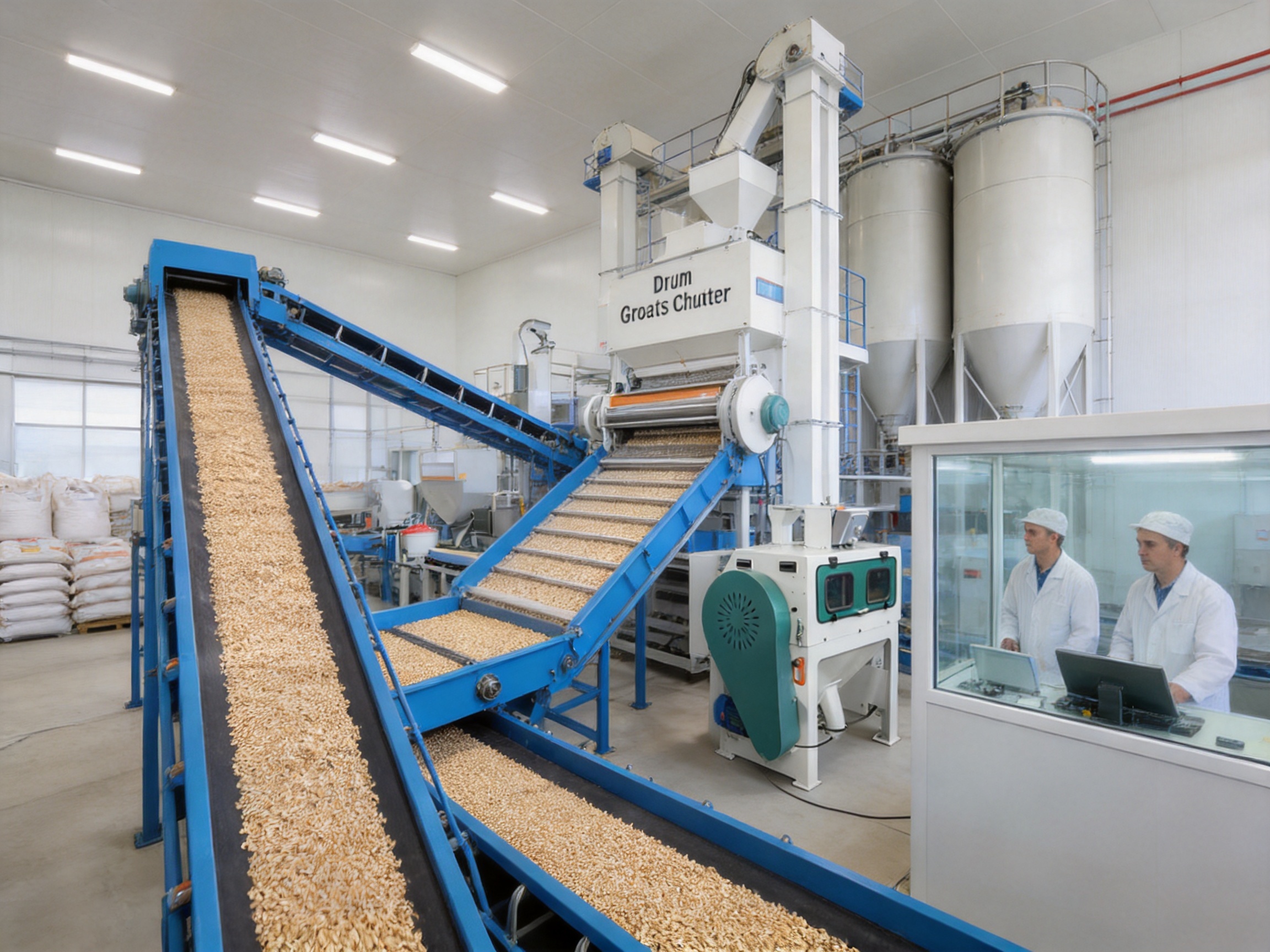
In modern oat processing, the difference between an ordinary cutting process and a precision cutting process can be seen in the finished product: particle size consistency, low broken powder content, stable cooking behavior, attractive appearance, and improved downstream packaging efficiency. The Drum Groats Cutter is designed for producers who need to transform dehulled oat kernels into uniform steel-cut oats, typically by cutting each kernel into three to four segments. It is especially valuable for processors seeking fine, medium, and coarse oat kernels with reliable quality and minimal waste.
This equipment belongs to the category of oat processing equipment and is suitable not only for oats but also for barley, rye, wheat, and rice. Its stainless-steel cutting drum is built for long service life, while the increased number of working holes on the drum improves production capacity. With adjustable rotation speed, low energy consumption, and cutting waste of less than or equal to one percent, the machine provides a practical answer to the quality and efficiency requirements of grain processing plants.
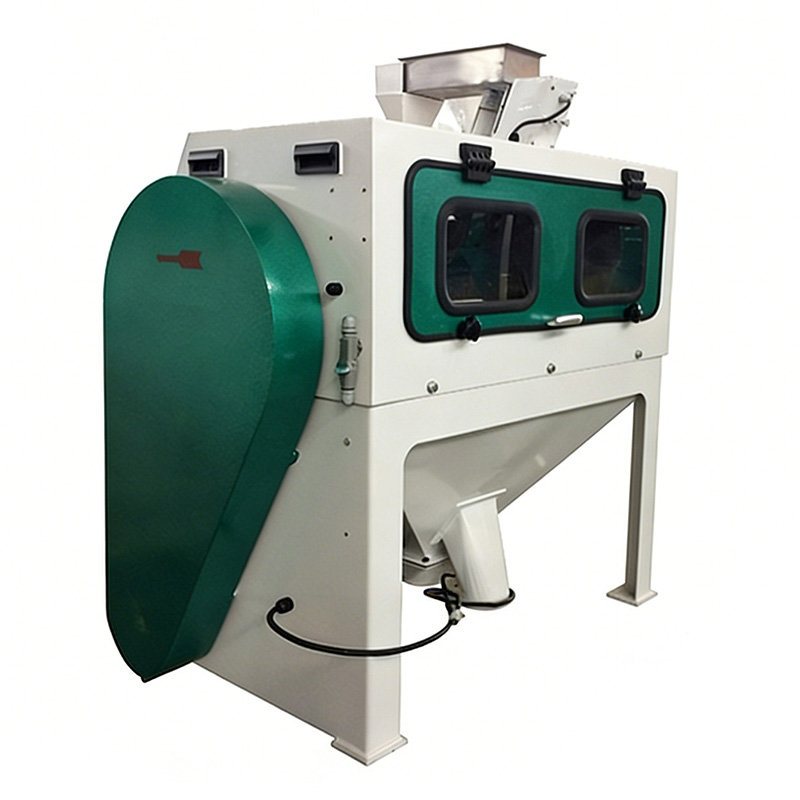
Drum Groats Cutter
Product Overview and Processing Purpose
The Drum Groats Cutter is developed to solve a specific but important problem in oat processing: how to cut dehulled oat kernels uniformly without producing excessive fines, flour, or irregular fragments. In steel-cut oat production, the goal is not to crush the grain randomly. Instead, the kernel must be divided into clean and consistent pieces. This allows the final oat product to cook evenly, look uniform in retail packaging, and meet the expectations of food manufacturers and consumers.
Traditional size-reduction equipment can break grain, but many machines are designed for crushing, grinding, or impact milling. Such equipment may generate excessive powder, produce broad particle-size distribution, or cause inconsistent appearance. The Drum Groats Cutter uses a purpose-oriented cutting mechanism that supports more controlled segmentation of groats. The result is a product that is closer to the desired shape and size for steel-cut oats.
The machine is particularly suitable for processors that manufacture breakfast cereal ingredients, instant food ingredients, whole-grain products, and specialty oat products. It also serves plants that supply food companies requiring consistent raw material preparation. When the cut size is stable, later processes such as steaming, drying, blending, bagging, or bulk packing become easier to control.
The available model YQL50 has a power rating of 1.5 kW and a capacity of approximately 0.8 to 1.0 tons per hour based on oats. Its cut-off waste is less than or equal to one percent. These figures make the equipment attractive for production lines that require dependable output without excessive electrical demand or unnecessary raw material loss.
Why Uniform Cutting Matters in Oat Processing
Oats are valued because of their nutritional profile, fiber content, natural flavor, and suitability for a wide variety of food products. However, oats are also sensitive to processing quality. When kernels are cut unevenly, the smallest particles may overcook while larger particles remain firm. In packaged products, uneven fragments can create a poor visual impression and reduce perceived value. For industrial users, inconsistent particle size may cause process variation in hydration, thermal treatment, mixing, and filling.
Uniform cutting is especially important for steel-cut oats. Consumers expect steel-cut oats to have a recognizable texture and a hearty mouthfeel. If too many fines are produced, the product can become pasty during cooking. If too many oversized pieces remain, cooking time increases and texture becomes inconsistent. A controlled groats cutter helps maintain the balance between appearance, texture, and cooking performance.
The Drum Groats Cutter addresses this need by cutting dehulled oat kernels into three to four segments with a high degree of consistency. This simple target is central to the value of the machine. By reducing random breakage and maintaining a stable cutting pattern, the equipment helps processors deliver a finished product that is easier to standardize, market, and scale.
In addition, a lower waste rate directly supports profitability. Every percentage point of avoidable broken powder or off-spec material represents lost value. When cutting waste is controlled at one percent or below, processors can protect yield while reducing the need for rework, screening, or downgraded product handling.
Main Technical Characteristics
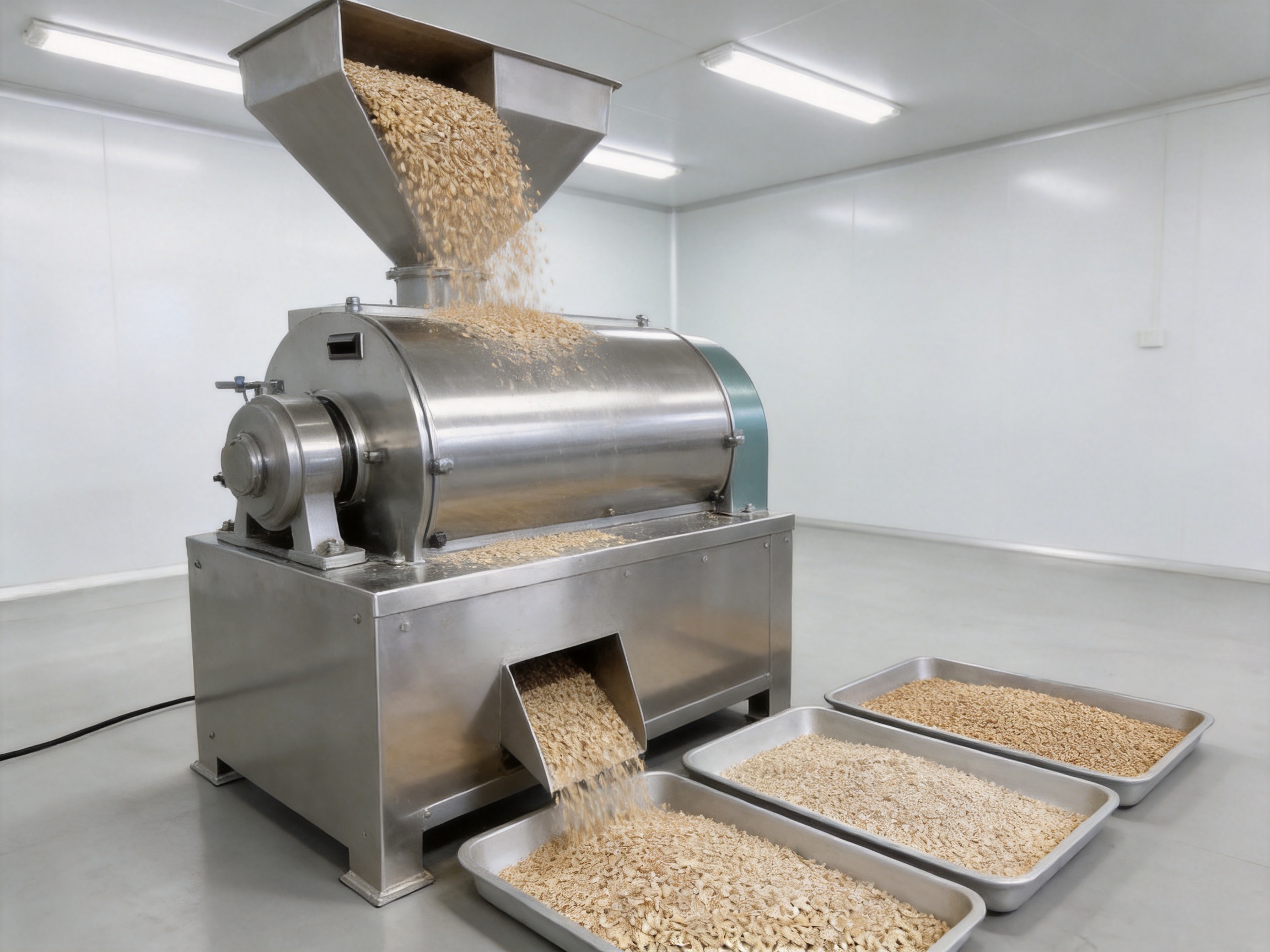
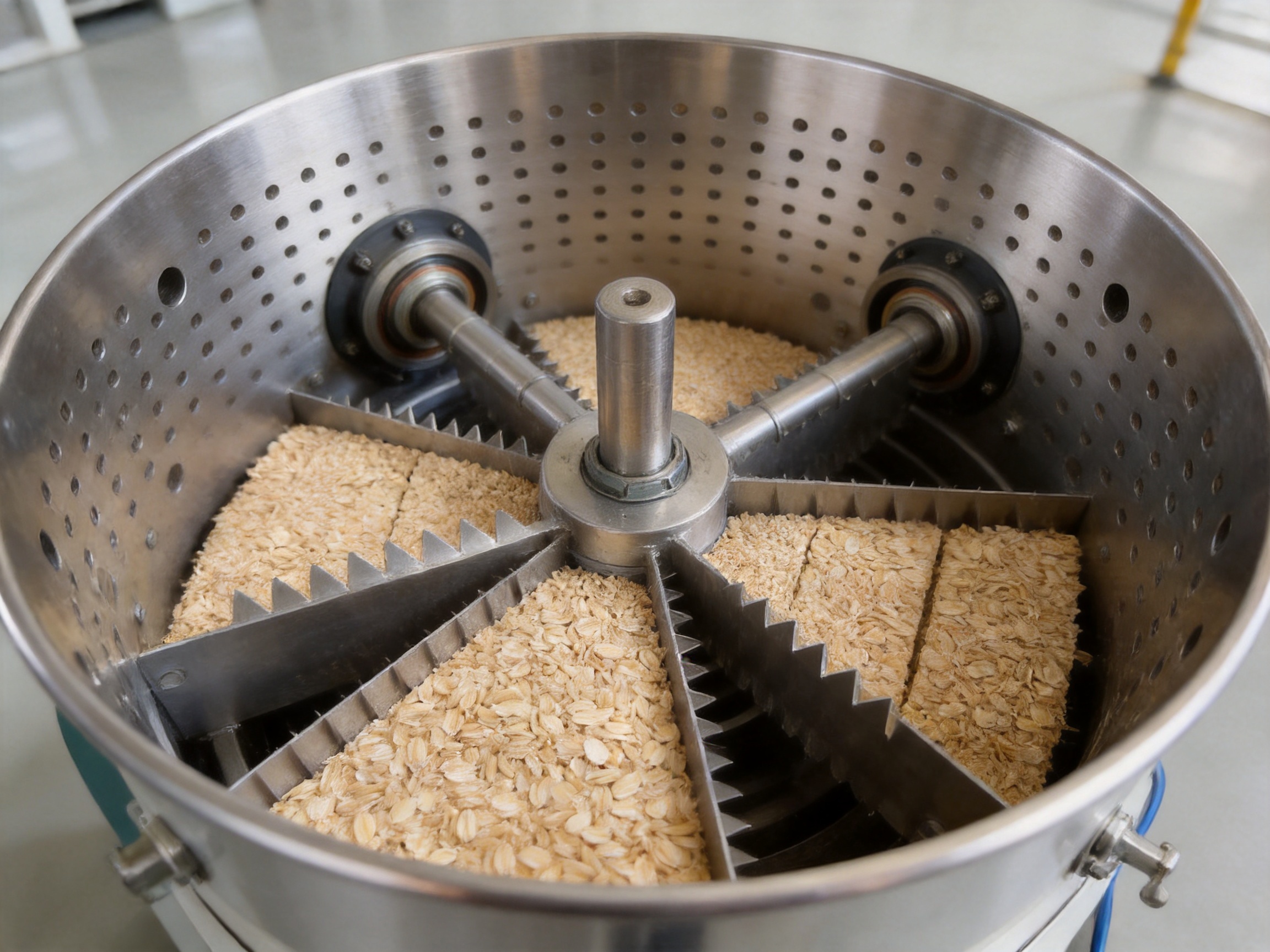
The core of the Drum Groats Cutter is its cutting drum. The drum is designed with stainless steel to provide durability, hygiene, and resistance to wear in grain processing environments. Stainless steel is preferred in food-related equipment because it supports cleanability and helps maintain product safety standards. It is also suitable for long-term operation where repeated contact with grain kernels and cleaning procedures can challenge ordinary materials.
Another important design feature is the increased number of working holes on the cutting drum. This improvement raises the machine’s effective processing capacity because more kernels can be engaged in the cutting action during operation. Instead of relying only on high speed to increase throughput, the design improves capacity through structural efficiency. This is valuable because excessive speed may increase breakage or heat generation in some processing situations.
The machine also offers adjustable rotation speed. This feature allows operators to adapt the cutting effect to different kernel lengths, grain types, and desired product grades. Fine, medium, and coarse kernels can be produced according to customer requirements. Adjustable speed also makes the equipment more flexible for plants that process more than one raw material, such as oats in one season and barley or rye in another.
Low energy consumption is another advantage. With a 1.5 kW power rating for the YQL50 model, the machine is well suited for energy-conscious plants. Energy efficiency is increasingly important as processors face rising power costs and sustainability requirements. A machine that can deliver stable output with modest power demand contributes to lower operating expenses over the life of the production line.
| Technical Item | Specification | Processing Significance |
|---|---|---|
| Product Model | YQL50 | Suitable for oat groats cutting in compact or integrated processing lines |
| Power | 1.5 kW | Supports low energy consumption and economical operation |
| Output | 0.8 to 1.0 t/h based on oats | Provides stable capacity for continuous oat processing |
| Cut-Off Waste | Less than or equal to 1% | Improves yield and reduces off-spec material |
| Cutting Result | Dehulled oat kernels cut into 3 to 4 segments | Produces uniform steel-cut oats |
| Applicable Materials | Oats, barley, rye, wheat, and rice | Allows flexible use across multiple grain products |
Advantages Over Conventional Cutting and Crushing Methods
The Drum Groats Cutter offers several advantages when compared with general-purpose mills, simple crushing equipment, or less specialized cutting machines. The first advantage is product uniformity. A machine designed specifically for groats cutting can focus on controlled segmentation rather than random particle reduction. This leads to better visual consistency and more predictable cooking performance.
The second advantage is reduced waste. Many impact-based machines can generate a high proportion of fines. Although fines may still have value in some applications, they are often not suitable for premium steel-cut oat products. Excessive fines may require separation, downgrade handling, or blending into lower-value products. With cutting waste controlled at less than or equal to one percent, the Drum Groats Cutter helps processors maintain a higher proportion of saleable finished product.
The third advantage is energy efficiency. Instead of using a high-energy impact or grinding process, the machine applies a dedicated cutting action suitable for groats. Lower power demand can reduce the cost per ton, especially when the machine is used continuously. Over time, lower energy use can make a meaningful difference in plant operating costs.
The fourth advantage is adaptability. Since the rotation speed is adjustable, the equipment can be set for different grain types and different product grades. A processor may produce coarse steel-cut oats for traditional cooking, medium cuts for balanced cooking time and texture, or finer cuts for faster preparation. The same equipment can also be used for barley, rye, wheat, and rice, increasing asset utilization.
The fifth advantage is hygienic and durable construction. The stainless-steel cutting drum supports food processing requirements while also extending service life. In grain plants, wear, dust, and repeated cleaning can shorten the lifespan of poorly constructed equipment. A robust drum design reduces maintenance concerns and supports stable long-term production.
Role in a Complete Oat Processing Line
The Drum Groats Cutter is usually not a standalone solution in the entire oat processing chain. It is one key stage within a broader process that may include raw material receiving, cleaning, dehulling, separation, steaming, drying, cutting, grading, storage, weighing, and packaging. Its performance influences downstream efficiency because the cut product must be consistent before further classification or packing.
A typical line begins with raw oats entering a cleaning system to remove impurities such as dust, stones, light material, and foreign particles. After cleaning, the oats are dehulled to remove the outer hull. The resulting dehulled oat kernels are then conditioned as needed before cutting. At this point, the Drum Groats Cutter performs its primary role by dividing the kernels into controlled segments.
After cutting, the product may pass through screening or grading equipment to separate desired sizes. Because the cutter produces low waste and uniform segments, the burden on the screening section is reduced. Less off-spec material means fewer recirculation loops, lower labor intervention, and better overall line balance. The finished steel-cut oats can then be packaged directly or supplied as ingredients for further processing.
In plants that handle bulk grain and large volumes of raw materials, loading and unloading equipment also becomes important. Jiangsu Zhengding Intelligent Equipment Co., Ltd. has strong experience in intelligent automated loading and unloading systems for automobiles, containers, ships, and logistics applications. This background supports a broader understanding of how material flow, automation, and industrial reliability influence grain processing productivity.
Company Manufacturing Strengths and Engineering Capability
Jiangsu Zhengding Intelligent Equipment Co., Ltd. is a national high-tech enterprise engaged in research, development, manufacturing, and sales of intelligent automated loading and unloading equipment. The company provides systematic solutions for industries such as steel, chemical, cement, coal, grain, oil, food, feed, ports, papermaking, and new energy. Its product range includes rear dumpers, side-turn truck dumpers, car loading equipment, container flippers, and related automation systems.
Although the Drum Groats Cutter belongs to oat processing equipment, the company’s broader manufacturing background is highly relevant. Intelligent equipment manufacturing requires structural strength, precision fabrication, automation knowledge, safety design, and reliable quality control. These capabilities are also essential for food and grain processing machinery. A cutting machine must be accurately built, stable during operation, easy to maintain, and consistent in performance.
The company’s experience in automated loading and unloading systems demonstrates its ability to design machines that operate under demanding industrial conditions. Truck dumpers and container handling systems must withstand heavy loads, repeated cycles, and strict safety requirements. The same engineering discipline can be applied to grain processing equipment: stable frames, carefully selected materials, dependable transmission systems, and practical maintenance access.
Advanced manufacturing processes help ensure that the Drum Groats Cutter is not merely assembled but engineered for continuous use. Fabrication quality affects vibration, alignment, service life, and cutting accuracy. Proper machining of the drum and related parts helps maintain stable operation. Careful welding, surface treatment, component inspection, and assembly procedures contribute to product reliability.
The company’s market experience also supports customer service. Its equipment has been exported to markets including Japan, Brazil, Egypt, Pakistan, India, the Middle East, and Southeast Asia. It has served well-known international users in food, beverage, agriculture, and industrial sectors. This international exposure helps the company understand different working conditions, safety expectations, documentation requirements, and after-sales service needs.
Advanced Manufacturing Processes Behind Reliable Performance
A reliable Drum Groats Cutter depends on precision at each manufacturing stage. The cutting drum must be produced with dimensional consistency so that kernels are engaged and cut evenly. If the geometry of the drum is inconsistent, the machine may produce irregular cutting results, higher vibration, or uneven wear. Precision manufacturing is therefore essential to final product quality.
Material selection is the first step. Stainless steel is used for the cutting drum because it provides durability and is suitable for food-contact applications. The use of stainless steel helps resist corrosion and maintain sanitary conditions. For grain processors, this is especially important because equipment must often operate in dusty environments and undergo periodic cleaning.
Machining accuracy is another key factor. The working holes and cutting surfaces must be formed with care to ensure efficient kernel movement and cutting. Increasing the number of working holes improves capacity, but only if those holes are properly arranged and manufactured. Poorly finished holes could cause plugging, inconsistent flow, or damage to the grain. Proper manufacturing turns the design concept into practical performance.
Assembly control also matters. Bearings, shafts, drive components, guards, and adjustment mechanisms must be aligned and secured. A machine that is not assembled correctly may consume more energy, generate noise, vibrate excessively, or require frequent maintenance. By applying industrial equipment manufacturing standards, the company can improve the stability and service life of the cutter.
Quality inspection should include checks on materials, dimensions, welding quality, rotational stability, operational noise, and trial running. For food-processing machinery, attention should also be paid to surface finish, cleanability, and safe access. These manufacturing and inspection practices help customers receive equipment that is ready for dependable production.
Food Safety and Hygienic Design Considerations
Food processing equipment must be evaluated not only by output but also by cleanability and product safety. Oat products are consumed directly after cooking or further processing, so contamination control is essential. The stainless-steel cutting drum supports hygienic operation by providing a surface that is easier to clean and more resistant to corrosion than many ordinary materials.
Low waste also contributes indirectly to cleanliness. Excessive powder and broken material can accumulate inside equipment and around the production area. Fine dust may increase cleaning workload, create cross-contamination risks, or affect air quality. By producing a cleaner cut with less waste, the Drum Groats Cutter supports a tidier and more manageable processing environment.
Operators should still follow proper sanitation procedures. The machine should be inspected regularly, and product-contact areas should be cleaned according to the plant’s food safety plan. If different grains are processed on the same line, cleaning procedures should prevent cross-contact or allergen-related concerns where applicable. Good equipment design and good operating discipline work together to protect product quality.
The machine’s suitability for oats, barley, rye, wheat, and rice makes cleaning discipline especially important. Multi-grain processing increases flexibility, but it also requires planned changeovers. A well-designed machine helps reduce cleaning difficulty, while clear operating procedures help ensure that each product batch meets quality expectations.
Energy Efficiency and Cost Control
Energy efficiency is one of the practical strengths of the Drum Groats Cutter. With a 1.5 kW power rating for the YQL50 model, the machine can process approximately 0.8 to 1.0 tons per hour based on oats. This relationship between power and output makes it suitable for processors who want to control operating cost while maintaining consistent production.
In many grain plants, energy cost is not limited to one machine. The total cost includes conveying, cleaning, dehulling, drying, cutting, screening, dust collection, and packaging. However, each efficient machine contributes to the overall economics of the line. If a cutting machine produces fewer fines, it may also reduce the need for additional screening, reprocessing, or waste handling. Therefore, the economic benefit is not only the direct electricity saving but also the improved process flow.
Low energy use also supports sustainability goals. Food manufacturers and ingredient suppliers are increasingly expected to improve resource efficiency. A machine that minimizes waste and consumes less power helps processors reduce their environmental footprint per ton of finished product. When combined with good raw material management and efficient logistics, the result is a more responsible production model.
Cost control also depends on service life. A stainless-steel cutting drum designed for long operation reduces replacement frequency and downtime. Downtime can be expensive because it interrupts production schedules, labor planning, and deliveries. Durable equipment helps maintain predictable operations and reduces the hidden cost of unreliable machinery.
Flexibility for Fine, Medium, and Coarse Kernels
The ability to produce fine, medium, and coarse kernels is important because different markets require different product characteristics. Coarse steel-cut oats are often preferred for traditional texture and longer cooking. Medium cuts may offer a balance between texture and preparation time. Fine cuts may be used in products where faster hydration or blending is needed.
Adjustable rotation speed gives the operator a practical tool for controlling cutting results. Different kernel lengths and moisture conditions may require different settings. Oats from different origins or crop seasons can vary in size, hardness, and behavior during cutting. A fixed-speed machine may struggle to maintain the same result under changing conditions, but an adjustable machine provides more room for optimization.
Flexibility also supports product development. Food companies often test new recipes, packaging formats, and consumer product concepts. A processor with adjustable cutting equipment can respond more quickly to special orders or changing customer specifications. This capability can become a competitive advantage in markets where buyers demand customized particle size or consistent ingredient performance.
The machine’s suitability for barley, rye, wheat, and rice further increases its usefulness. Although oats are the primary application, processors handling multiple grains can improve equipment utilization. Instead of dedicating separate machines to each material, they may use one well-adjusted cutter for different production campaigns, subject to proper cleaning and setup.
Comparison With Competitor Approaches
Some competing solutions focus mainly on crushing capacity. High-capacity crushing may be useful in feed production or rough size reduction, but it is not always ideal for steel-cut oats. The premium oat market requires clean cuts, uniform particles, and low powder content. A machine that simply breaks kernels quickly may reduce product quality and increase waste.
Other machines may offer acceptable cutting but lack sufficient flexibility. Without adjustable rotation speed, operators have fewer options when raw material characteristics change. Grain processing is rarely perfectly constant. Moisture, kernel size, hardness, and dehulling quality can all influence cutting behavior. Equipment that allows adjustment provides better control under real production conditions.
Some lower-cost machines may use ordinary materials or less refined manufacturing. While the initial purchase price may appear attractive, long-term costs can rise through wear, corrosion, cleaning difficulty, downtime, or inconsistent output. The Drum Groats Cutter’s stainless-steel cutting drum and capacity-improved working-hole design provide a stronger long-term value proposition.
Another difference is the company’s industrial equipment background. Jiangsu Zhengding Intelligent Equipment Co., Ltd. has experience with large automated systems, safety-oriented design, and customized engineering. This is valuable when customers need more than a single machine. Many plants require integration with conveyors, loading systems, weighing systems, dust control, and packaging equipment. A manufacturer with systematic engineering experience can better understand the complete production environment.
Operational Recommendations for Best Results
To obtain the best performance from the Drum Groats Cutter, processors should begin with properly prepared raw material. Dehulled oat kernels should be clean and reasonably consistent. Excessive impurities, stones, metal fragments, or foreign materials should be removed before cutting. This protects the cutting drum, improves food safety, and supports stable product quality.
Moisture control is also important. Grain that is too dry may become brittle and create more small fragments. Grain that is too moist may cut less cleanly or create flow problems. The ideal moisture condition depends on the specific grain and desired product, so operators should test and record settings. Consistent moisture leads to more predictable cutting performance.
Speed adjustment should be performed methodically. Operators should avoid changing settings without evaluating the result. A practical approach is to run a small sample, inspect the cut size, measure fines if necessary, and adjust speed gradually. Once the desired result is achieved, the setting should be recorded for future batches of similar raw material.
Regular inspection helps maintain performance. The cutting drum, drive system, bearings, guards, and feeding area should be checked according to a maintenance schedule. Early detection of wear or misalignment can prevent bigger problems. Since the machine is designed for low waste and uniform cutting, any sudden increase in fines or irregular particles may indicate that adjustment or maintenance is needed.
Maintenance and Long-Term Reliability
Long-term reliability depends on both manufacturing quality and user maintenance. The stainless-steel cutting drum provides a durable foundation, but even high-quality equipment requires inspection. Grain dust, vibration, and continuous operation can affect mechanical systems over time. A clear maintenance plan helps preserve performance and reduce unplanned downtime.
Operators should keep the machine clean and free from excessive buildup. Dust and grain particles should not be allowed to accumulate around moving parts. Cleaning should be done safely, with power isolated according to plant procedures. Guards and safety devices should be kept in place during operation.
Lubrication points, if present, should be serviced according to the manufacturer’s guidance. Bearings and drive components benefit from proper lubrication and alignment. Over-lubrication or wrong lubricant selection can also create problems, so maintenance personnel should follow the recommended procedure.
Wear inspection is particularly important for the cutting area. If the cutting drum or related components become worn, the machine may still run but produce less uniform results. Scheduled inspection allows the plant to plan replacement or repair during normal maintenance windows instead of reacting to sudden quality problems.
Integration With Automated Material Handling
Efficient oat processing is not only about the cutter. Material must enter and leave each process stage smoothly. Poor feeding can reduce cutting quality, while poor discharge handling can cause product damage or bottlenecks. The Drum Groats Cutter should therefore be considered as part of a complete material handling system.
Jiangsu Zhengding Intelligent Equipment Co., Ltd. has substantial expertise in automated loading and unloading equipment, including rear dumpers, side-turn truck dumpers, car loading equipment, and container flippers. This experience is useful for designing plants where raw materials arrive in trucks or containers and must be transferred safely and efficiently to processing lines.
In grain, oil, food, and feed industries, unloading efficiency can influence the entire production schedule. If raw material intake is slow or inconsistent, downstream equipment may be underused. If unloading is fast but not well controlled, storage and conveying systems may become overloaded. A systematic solution balances intake, storage, processing, and dispatch.
When the Drum Groats Cutter is integrated into a line with proper feeding and discharge equipment, the result is smoother operation. Consistent feed rate supports uniform cutting. Proper discharge prevents accumulation and protects the finished cut product. Automation can also reduce manual labor, improve safety, and increase traceability.
Applications Beyond Oats
Although the machine is developed for oat processing, it can also process barley, rye, wheat, and rice. This makes it useful for grain processors serving diversified markets. Each material has its own physical characteristics, but the principle of controlled cutting and size preparation remains valuable.
Barley may be processed for food ingredients, brewing-related preparation, or specialty grain products. Rye may be used in bakery ingredients, cereal blends, or traditional foods. Wheat can be prepared for certain food applications requiring cracked or cut kernels. Rice can be processed for specific ingredient forms where controlled size reduction is preferred over random breakage.
Multi-material capability can improve return on investment. A machine used only for one seasonal product may sit idle at certain times of the year. If it can be adapted to other grains, the processor can increase operating days and respond to broader customer demand. Adjustable speed and durable construction support this flexibility.
However, each material should be tested and settings should be optimized. Operators should consider grain size, hardness, moisture, and desired final product. Screens or grading systems after cutting may also need adjustment. With proper setup, the Drum Groats Cutter can become a versatile component in a diversified grain processing facility.
Customer Value and Return on Investment
The value of the Drum Groats Cutter can be measured in several ways. The first is yield improvement. With cutting waste less than or equal to one percent, more raw material becomes saleable product. In high-volume processing, even small improvements in yield can have a meaningful financial impact.
The second is product quality. Uniform steel-cut oats can command stronger market acceptance than irregularly broken product. Food manufacturers prefer ingredients that behave consistently in recipes and production processes. Retail customers prefer products with attractive appearance and predictable cooking behavior. A better cutting process supports both industrial and consumer satisfaction.
The third is operating cost. Low power consumption reduces electricity expense. Stable operation reduces labor intervention and maintenance disruption. Durable construction reduces replacement and repair costs. Together, these factors improve the long-term economics of the machine.
The fourth is flexibility. The ability to produce fine, medium, and coarse kernels, and to process multiple grain types, allows the processor to serve more customers with one equipment platform. In competitive markets, flexibility can be as important as capacity because customer requirements change over time.
The fifth is integration support. A manufacturer with strong experience in intelligent equipment and automated material handling can help customers think beyond the cutter itself. Better line planning can improve total plant productivity, safety, and reliability.
Quality Control in Finished Steel-Cut Oats
After cutting, quality control should confirm that the product meets specification. Common checks include particle size distribution, fines percentage, visual uniformity, moisture content, foreign material inspection, and sensory evaluation where applicable. The Drum Groats Cutter supports these quality goals by producing consistent segments and low waste, but final verification remains important.
Particle size can be checked using sieves or other measurement methods. A stable distribution indicates that the cutter is operating correctly. If the distribution shifts, operators should examine raw material condition, feed rate, speed setting, and machine wear. Maintaining records helps identify patterns and optimize future production.
Visual inspection is also useful. Steel-cut oats should appear cleanly cut rather than crushed. Excess powder, irregular splinters, or uncut kernels may indicate a process issue. By training operators to recognize these signs, the plant can respond quickly before a large batch is affected.
Quality control also supports customer communication. When processors can provide consistent specifications, they build trust with buyers. A dependable cutting machine becomes part of a larger quality assurance system that includes raw material selection, process control, sanitation, packaging, and logistics.
Safety Considerations During Operation
Safety must be a priority when operating any mechanical processing equipment. The Drum Groats Cutter includes moving parts and should be operated only by trained personnel. Guards should remain in position during operation, and maintenance should be performed only after proper shutdown and energy isolation.
Operators should avoid reaching into feeding or discharge areas while the machine is running. If a blockage occurs, the machine should be stopped according to plant procedures before inspection. Tools and loose objects should be kept away from moving components. Personal protective equipment should be used as required by the plant’s safety policy.
Dust control is also important in grain processing. Grain dust can affect worker health and, in certain concentrations, may create explosion risks. A complete processing line should include appropriate dust collection, ventilation, housekeeping, and electrical safety measures. Low-waste cutting helps reduce dust generation, but it does not eliminate the need for proper dust management.
The company’s broader background in automated loading and unloading equipment reinforces the importance of safety engineering. Heavy industrial systems require careful risk control, and that same safety mindset benefits grain processing equipment. Safe design, clear instructions, training, and maintenance discipline all contribute to reliable operation.
Why This Cutter Fits Modern Grain Processing Trends
Modern grain processing is moving toward higher quality, better automation, lower waste, and more flexible production. The Drum Groats Cutter fits these trends because it improves product consistency while supporting efficient operation. Its low waste rate helps processors use raw materials responsibly, and its low energy consumption supports cost and sustainability goals.
Consumers are increasingly interested in whole grains, natural textures, and nutritious breakfast foods. Steel-cut oats are well positioned in this market because they are associated with traditional processing and satisfying texture. To meet demand at industrial scale, processors need equipment that can produce steel-cut oats consistently and economically.
Food manufacturers also require reliable ingredients. Inconsistent particle size can disrupt cooking instructions, texture targets, and package filling weights. A precision cutter helps suppliers meet specifications and reduce customer complaints. In this sense, the machine is not only production equipment but also a quality assurance tool.
Automation and integration are also becoming more important. Plants want equipment that can fit into continuous lines and work with material handling systems. Jiangsu Zhengding Intelligent Equipment Co., Ltd. brings experience in automated logistics equipment, which supports a system-oriented approach to customer needs.
Q&A Section
Q1: What is the primary function of the Drum Groats Cutter?
The primary function is to uniformly cut dehulled oat kernels into three to four segments to produce steel-cut oats of consistent size. This improves product appearance, cooking behavior, and downstream processing stability.
Q2: What materials can the machine process?
The machine is suitable for oats, barley, rye, wheat, and rice. It is especially focused on oat groats cutting but can be adjusted for other grains according to their size, moisture, and required final product.
Q3: What is the capacity of the YQL50 model?
The YQL50 model has an output of approximately 0.8 to 1.0 tons per hour based on oats. Actual performance may vary depending on raw material characteristics and operating settings.
Q4: How much power does the machine require?
The YQL50 model has a power rating of 1.5 kW, making it an energy-efficient option for continuous oat cutting operations.
Q5: What is the cutting waste rate?
The cut-off waste is less than or equal to one percent. This low waste rate helps improve yield, reduce off-spec material, and protect product value.
Q6: Why is the stainless-steel cutting drum important?
The stainless-steel cutting drum provides durability, corrosion resistance, and suitability for food processing environments. It supports long service life and easier cleaning compared with less suitable materials.
Q7: Can the machine produce different grades of cut kernels?
Yes. The rotation speed is adjustable, allowing the equipment to produce fine, medium, and coarse kernels. This flexibility helps processors meet different market and customer requirements.
Q8: How does the machine compare with general crushing equipment?
General crushing equipment often breaks grain randomly and may create more fines. The Drum Groats Cutter is designed for controlled cutting, resulting in more uniform steel-cut oats, lower waste, and better product quality.
Q9: What should operators monitor during production?
Operators should monitor raw material cleanliness, moisture, feed consistency, speed settings, particle size distribution, fines level, vibration, and machine cleanliness. Regular inspection helps maintain stable performance.
Q10: How does the manufacturer’s broader engineering background benefit customers?
Jiangsu Zhengding Intelligent Equipment Co., Ltd. has strong experience in intelligent automated loading and unloading systems, industrial equipment manufacturing, and customized engineering. This supports better machine quality, line integration, safety awareness, and customer service.
Conclusion
The Drum Groats Cutter is a practical and specialized solution for processors who need uniform steel-cut oats with low waste and reliable efficiency. Its stainless-steel cutting drum, increased working-hole design, adjustable rotation speed, and low energy consumption make it well suited for modern oat processing lines. The YQL50 model, with 1.5 kW power and 0.8 to 1.0 t/h output based on oats, provides a balanced combination of capacity, economy, and quality control.
Compared with general crushing or less specialized cutting equipment, this machine offers clear advantages in product uniformity, yield protection, energy efficiency, material flexibility, and hygienic design. It helps processors produce fine, medium, and coarse kernels while reducing the burden on downstream screening and packaging operations.
The manufacturing and engineering strengths of Jiangsu Zhengding Intelligent Equipment Co., Ltd. further support the product’s value. As a national high-tech enterprise with experience in automated loading and unloading equipment, industrial system design, and international markets, the company brings a disciplined approach to machinery manufacturing and customer solutions. For oat processors and diversified grain plants, the Drum Groats Cutter represents a dependable step toward higher quality, lower waste, and more efficient production.
References
1. Kent, N. L., and Evers, A. D. Technology of Cereals: An Introduction for Students of Food Science and Agriculture. Woodhead Publishing.
2. Fellows, P. J. Food Processing Technology: Principles and Practice. Woodhead Publishing.
3. Campbell, G. M., Webb, C., McKee, S. L., and Nijmeh, S. Processing and Quality Control of Cereal Grains. Academic and industry technical literature.
4. Fast, R. B., and Caldwell, E. F. Breakfast Cereals and How They Are Made. American Association of Cereal Chemists.
5. International Association for Cereal Science and Technology. Cereal Processing and Grain Quality Guidelines.


