

 English
 русский
 Español
 Français
 Português
 عربى





+86-13588556918
Content
- 1 1. What Is a Shallow Foundation Truck Dumper?
- 2 2. Why Shallow Foundation Design Matters
- 3 3. Main Advantages Compared with Conventional Truck Dumpers
- 4 4. Hydraulic Lifting and Synchronous Stability System
- 5 5. Automated Wheel Retaining and Control Functions
- 6 6. Materials Handled by Shallow Foundation Truck Dumpers
- 7 7. Wear-Resistant and Food-Grade Configurations
- 8 8. Engineering and Manufacturing Strengths
- 9 9. Safety Design and Operating Protection
- 10 10. Installation and Commissioning Process
- 11 11. Maintenance Requirements
- 12 12. Throughput, Efficiency, and Product Protection
- 13 13. Application Areas
- 14 14. How to Select the Correct Model
- 15 15. Frequently Asked Questions
- 15.1 Q1: What is the main difference between a shallow foundation dumper and a conventional dumper?
- 15.2 Q2: Can the equipment handle wet or sticky materials?
- 15.3 Q3: What is the maximum particle size that can be dumped?
- 15.4 Q4: Is a shallow foundation dumper suitable for food-grade materials?
- 15.5 Q5: Does the shallow foundation reduce unloading efficiency?
- 15.6 Q6: Can the driver operate the dumper without a professional operator?
- 15.7 Q7: How often should wear liners be inspected?
- 15.8 Q8: Can the dumper be connected to an existing conveyor system?
- 15.9 Q9: What information should a customer provide before requesting a quotation?
- 15.10 Q10: Why is site-specific design important?
- 16 16. Conclusion
- 17 References
- 18 Product: Shallow Foundation Truck Dumpers
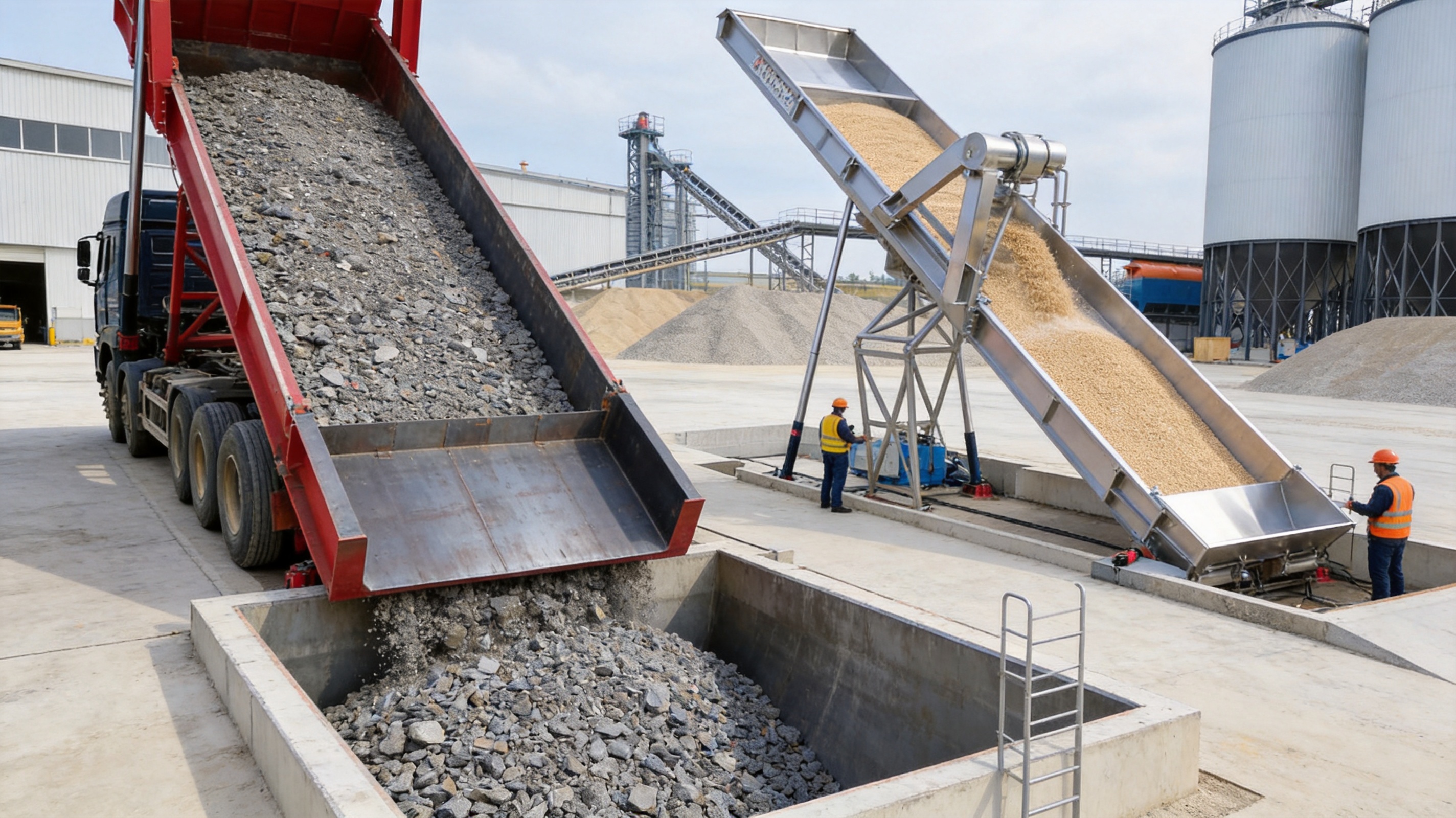
Truck unloading is one of the most important operations in bulk-material logistics. Grain terminals, cement plants, coal yards, chemical facilities, aggregate processing sites, feed mills, ports, and manufacturing plants all depend on reliable unloading equipment to transfer materials from road vehicles into storage, conveying, processing, or loading systems. When unloading equipment is slow, difficult to maintain, or poorly matched to the site, the entire material-handling process can suffer from vehicle queues, excessive labor requirements, product loss, safety risks, and high civil construction costs.
Shallow foundation truck dumpers provide a practical solution for facilities that need the unloading performance of a hydraulic truck dumper without constructing a deep pit. By using a low-profile foundation arrangement, the equipment can be installed where deep excavation is restricted by groundwater, existing foundations, underground utilities, limited space, soil conditions, or project budget. The result is a truck unloading system that combines strong lifting performance with reduced installation complexity.
Jiangsu Zhengding Intelligent Equipment Co., Ltd. develops and manufactures shallow foundation truck dumpers and other automated loading and unloading equipment for road vehicles, containers, and related logistics applications. Its equipment is designed for demanding industries including grain, food, coal, cement, chemical products, steel, oil, feed, ports, papermaking, construction materials, and new energy manufacturing.
This article explains the operating principle, structural advantages, material compatibility, automation functions, manufacturing strengths, technical parameters, maintenance requirements, and application value of shallow foundation truck dumpers. It also examines how this equipment compares with conventional deep-pit dumpers and why a site-specific engineering approach is important when selecting a truck unloading system.
1. What Is a Shallow Foundation Truck Dumper?
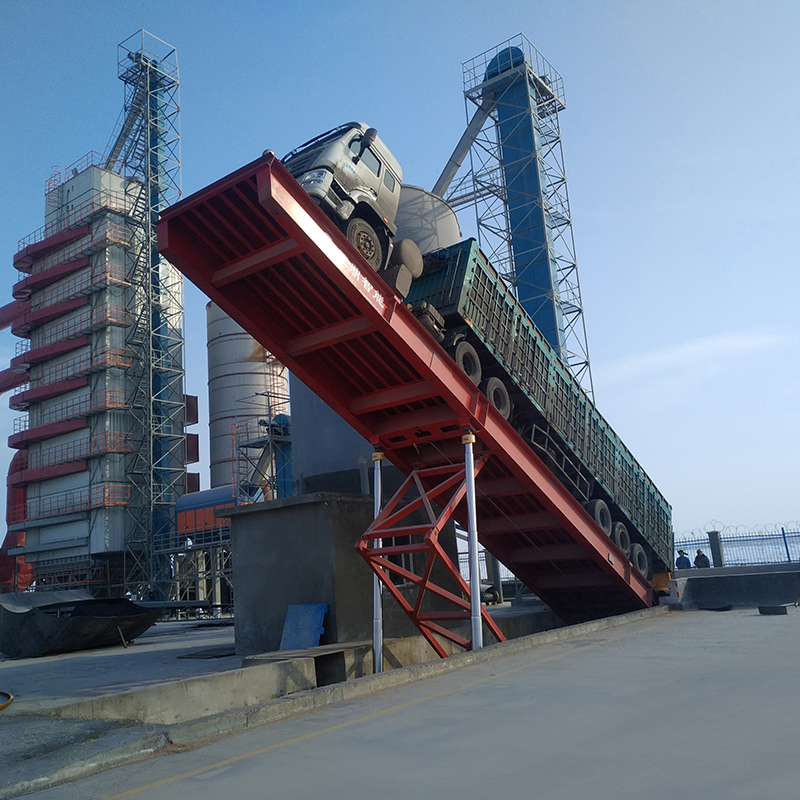
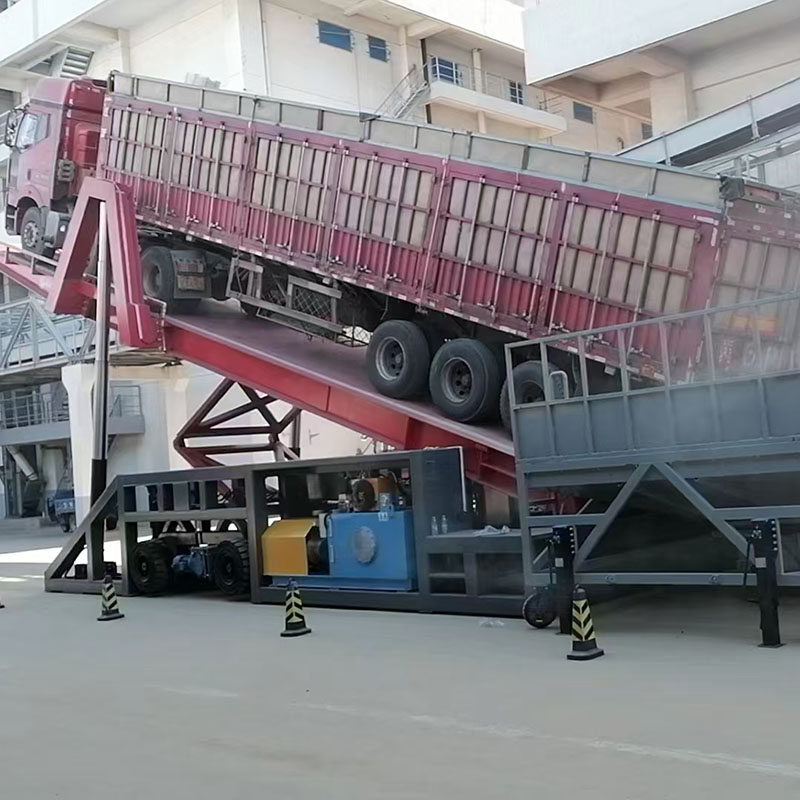
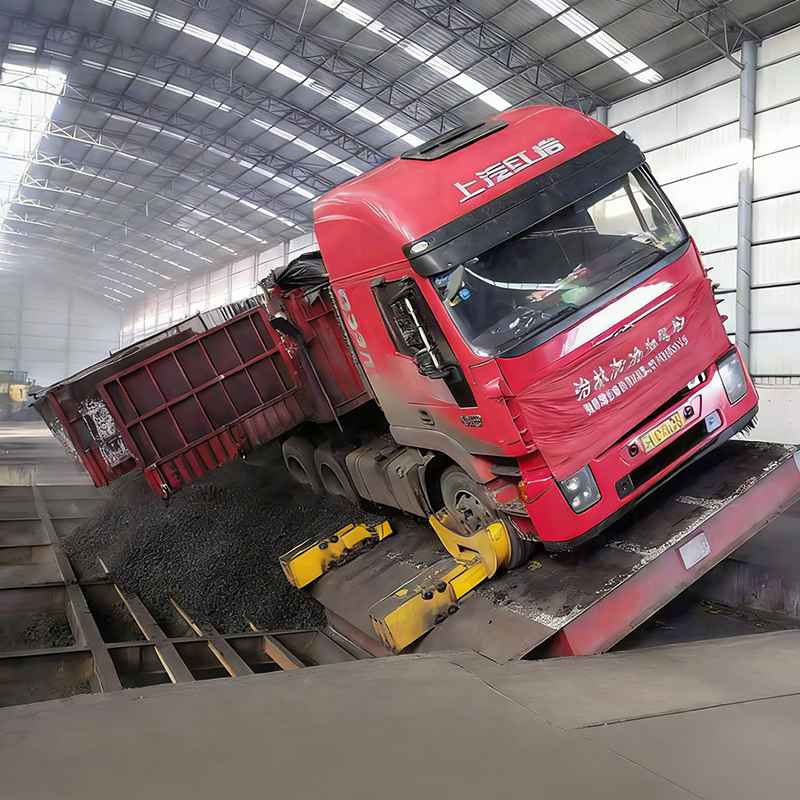
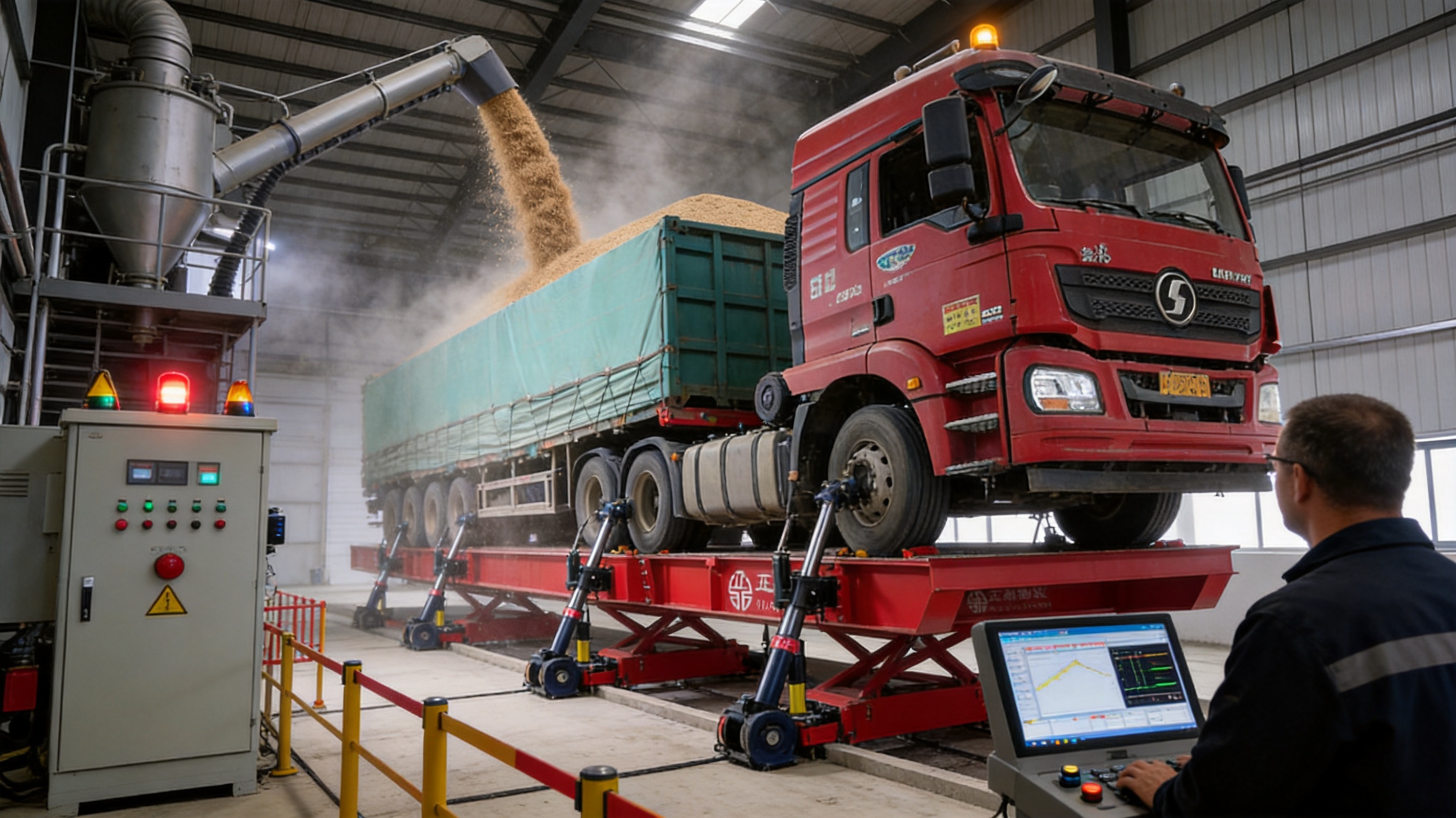
A shallow foundation truck dumper is a hydraulic unloading platform designed to raise a loaded truck or trailer to a controlled angle so that bulk material flows out through the vehicle body. Unlike a conventional truck dumper that is installed in a deep excavation, the shallow foundation model uses a low-profile pit or foundation. In typical applications, the pit depth is approximately 0.5 to 1.2 meters, although the final arrangement depends on the platform structure, truck dimensions, discharge route, and site conditions.
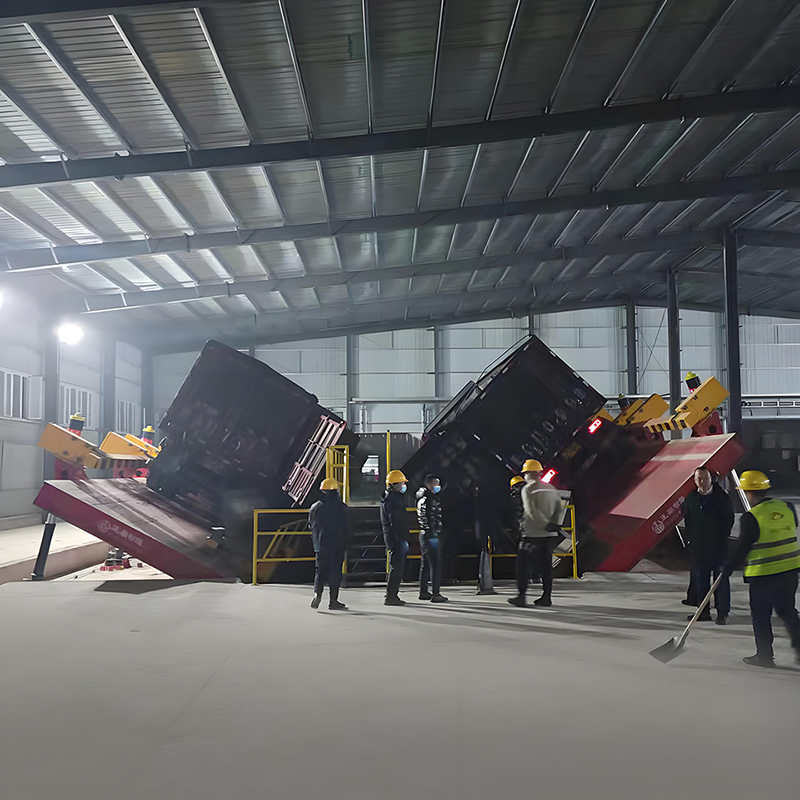
The platform receives the truck, while hydraulic cylinders lift one end of the platform. As the platform rises, gravity causes material to move toward the rear or side discharge point of the truck body. After unloading, the hydraulic system returns the platform to its horizontal position, allowing the vehicle to leave and the next truck to enter.
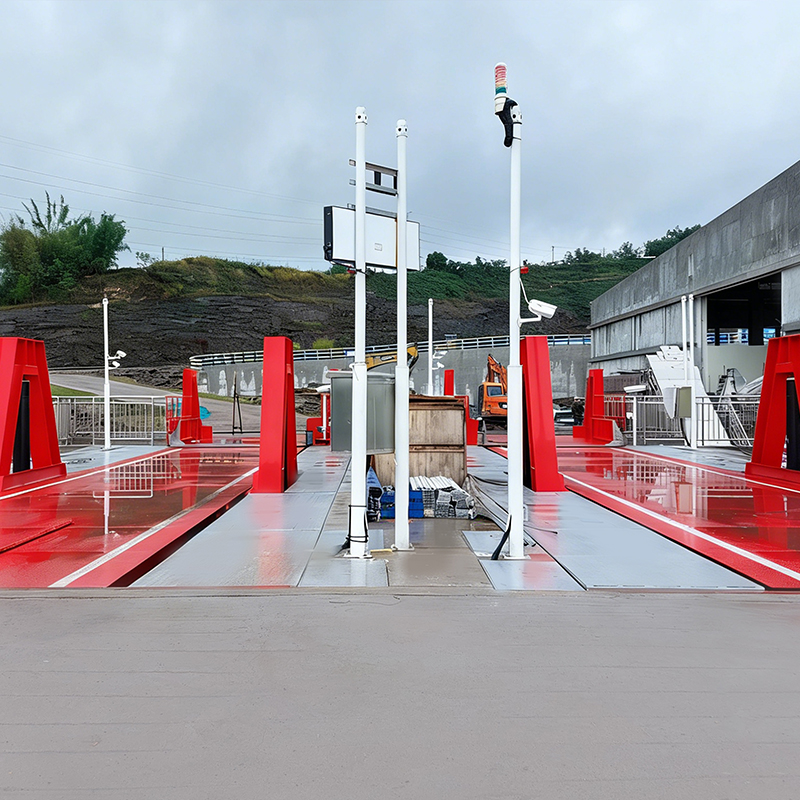
The shallow design does not mean that the equipment is lightly built. These dumpers are heavy-duty machines with reinforced platforms, synchronized hydraulic cylinders, safety control systems, retaining devices, and optional wear-resistant liners. Their purpose is to reduce the depth of civil construction while maintaining reliable truck unloading performance.
Depending on the model and configuration, the equipment can accommodate platform lengths generally ranging from approximately 12 to 20 meters. This allows the system to serve a range of semi-trailers, rigid trucks, grain trucks, bulk tankers, and other road vehicles. Platform width, lifting capacity, lifting angle, and discharge arrangement can be customized to suit the customer’s vehicle fleet and process layout.
2. Why Shallow Foundation Design Matters
The foundation is often one of the most expensive and time-consuming parts of a truck dumper project. A conventional deep-pit dumper may require substantial excavation, reinforced concrete construction, drainage systems, waterproofing, retaining walls, access ramps, and additional structural work. In difficult soil or high-water-table conditions, the foundation can become more complex than the mechanical equipment itself.
A shallow foundation truck dumper reduces these challenges by limiting the excavation depth. In many projects, the depth is close to the thickness of the unloading platform and supporting structure. Depending on the site, soil conditions, drainage requirements, and civil design, customers may reduce civil construction costs by approximately 60% to 70% compared with a conventional deep-pit arrangement.
The precise savings vary from project to project. They depend on excavation volume, soil disposal, concrete quantity, groundwater control, reinforcement requirements, local construction prices, and whether the facility already has a suitable unloading area. Nevertheless, the low-profile structure normally provides a clear cost advantage where deep excavation would be expensive or impractical.
Shallow foundation construction can also reduce the project schedule. Less excavation and fewer underground structures mean that civil work can often progress more quickly. The equipment can be installed with reduced interference with nearby buildings, roads, conveyors, storage silos, and existing production systems.
Another benefit is easier future modification. If the customer needs to change the discharge conveyor, add a screening unit, install a dust-control system, or alter the vehicle approach lane, a shallow arrangement may provide better access to the surrounding infrastructure. This flexibility is particularly useful for expanding grain terminals, aggregate yards, and industrial plants with evolving logistics requirements.
3. Main Advantages Compared with Conventional Truck Dumpers
3.1 Reduced Civil Engineering Requirements
The most visible advantage is the reduced foundation depth. Conventional deep-pit dumpers may require a large below-ground structure to accommodate the platform and hydraulic mechanism. A shallow foundation dumper minimizes the volume of excavation and concrete required, helping reduce capital expenditure.
Lower civil construction requirements can be especially valuable in locations with rocky ground, unstable soil, groundwater, buried pipes, electrical cables, or existing concrete surfaces. Instead of rebuilding a large underground pit, the customer may be able to prepare a relatively shallow reinforced foundation and connect the unloading system to the existing material-handling line.
3.2 Easier Installation and Site Integration
A low-profile truck dumper is easier to integrate into a plant layout because it requires less vertical and underground space. Vehicle approach lanes can often be planned with shorter ramps or simpler traffic arrangements. This may improve circulation, reduce truck waiting time, and simplify the connection between the dumper and downstream conveyors, hoppers, feeders, or storage systems.
The shallow structure is also suitable for plants that cannot interrupt production for a long period. A shorter installation period can reduce the impact on operations and help the customer begin using the new unloading capacity sooner.
3.3 Easier Inspection and Maintenance
Maintenance personnel benefit from improved access to hydraulic cylinders, pumps, valves, sensors, and structural components. In a deep pit, inspection work may require confined-space procedures, drainage, additional lighting, ventilation, or special access equipment. A shallow arrangement makes many routine tasks more straightforward.
Improved accessibility can reduce maintenance time and help technicians identify problems before they lead to unplanned downtime. Lubrication points, hydraulic connections, retaining devices, limit switches, and platform supports can be inspected more conveniently during scheduled maintenance.
3.4 Improved Safety and Visibility
A shallow pit reduces the hazards associated with deep underground structures. There is less risk related to personnel entering deep spaces, water accumulation, poor visibility, and difficult emergency access. The open and low-profile layout also allows operators and drivers to maintain better visual contact with the unloading area.
The equipment is equipped with safety-oriented hydraulic and control features. The high-precision oil-cylinder synchronous stability system helps maintain balanced platform movement. Smooth and synchronized lifting reduces vibration, uneven loading, and sudden impact on the cylinders and structural members.
3.5 Lower Long-Term Ownership Cost
Total ownership cost includes more than the initial purchase price. It also includes foundation construction, installation, electrical work, maintenance access, spare parts, labor, downtime, cleaning, and future modifications. A shallow foundation truck dumper can reduce several of these costs simultaneously.
Imported-brand hydraulic cylinders and pumps are used in the equipment configuration described by the manufacturer. These components are selected for reliability, service life, and stable performance. When combined with correct hydraulic maintenance and appropriate operating procedures, they help support dependable operation in demanding industrial environments.
4. Hydraulic Lifting and Synchronous Stability System
The lifting system is the core of a truck dumper. It must raise a heavy platform and loaded vehicle in a controlled manner while maintaining stability throughout the lifting cycle. Uneven cylinder movement can create torsion, excessive vibration, structural stress, and unsafe operating conditions. For this reason, hydraulic synchronization is a major design consideration.
The shallow foundation truck dumper uses a high-precision oil-cylinder synchronous stability system developed by the manufacturer. The system coordinates the movement of the hydraulic cylinders so that the platform rises evenly. This reduces vibration during operation, limits impact loads on the cylinders, and helps extend the service life of hydraulic components.
A stable lifting cycle also protects the truck and its cargo. Sudden movement may cause cargo to shift unevenly or create unnecessary stress on the truck chassis. Smooth lifting allows material to flow progressively, improving unloading control and reducing the likelihood of bridging or sudden discharge surges.
The hydraulic system can be configured for different lifting capacities and angles. Common lifting angles range from approximately 45 degrees to 55 degrees, while other applications may use lower angles depending on the material, truck body, discharge opening, and downstream equipment. The correct angle should be selected through material-flow analysis rather than by using the maximum angle in every application.
| Model | Available Platform Size Options, L × W (m) | Maximum Lifting Weight (t) | Maximum Lifting Angle |
|---|---|---|---|
| TQXHC 50 | 14 × 3, 16 × 3, 17 × 3 | 80 | 45° / 55° |
| TQXHC 80 | 16 × 3, 17 × 3, 18 × 3 | 80 | 45° / 55° |
| TQXHC 100 | 17 × 3, 18 × 3, 20 × 3 | 100 | 45° / 55° |
| TQXHC 150 | 17 × 3, 18 × 3, 20 × 3 | 150 | 45° / 55° |
The final model selection should consider the combined weight of the vehicle, body, cargo, and any dynamic operating load. Platform dimensions should also be checked against the customer’s truck fleet. A system intended for different vehicle lengths may require multiple platform configurations, wheel stops, approach arrangements, or control settings.
5. Automated Wheel Retaining and Control Functions
Vehicle stabilization is essential during lifting. A truck must remain correctly positioned on the platform so that the center of gravity stays within the safe operating area. Manual positioning and wheel restraint can introduce inconsistency, especially in dusty environments or during high-throughput operations.
The truck dumper adopts a fully automatic wheel-retaining and fixing device. This system helps secure the vehicle without requiring the operator to stand in a dusty area while continuously holding a remote control. Once the truck is correctly positioned, the retaining device can be engaged as part of the automated operating sequence.
Automatic wheel fixation improves operational efficiency in several ways. It reduces manual intervention, supports more consistent truck positioning, and allows the driver to complete routine unloading operations with limited assistance. It also helps reduce the number of personnel exposed to moving equipment, dust, noise, and vehicle traffic.
The control system can be designed for unmanned or minimally attended operation. In a suitable plant layout, the driver can follow traffic signals and control instructions to position the vehicle, activate the unloading sequence, wait for the platform to return to its home position, and leave the station. Professional operators are not necessarily required for every unloading cycle, although site safety procedures, training, supervision, and emergency response arrangements remain essential.
Automation may include position sensors, hydraulic pressure monitoring, platform angle detection, wheel-stop confirmation, interlocks, emergency-stop circuits, warning lights, audible alarms, and communication with the plant control system. The exact control architecture is selected according to the customer’s automation level and local safety requirements.
6. Materials Handled by Shallow Foundation Truck Dumpers
Shallow foundation truck dumpers are designed for bulk solids, granular products, and free-flowing powders. Typical material bulk densities range from approximately 0.4 to 2.5 tonnes per cubic meter, although the equipment must be checked against the actual truck load and platform capacity for each project.
Common applications include corn, wheat, soybeans, rice, barley, coal, petroleum coke, sand, gravel, crushed stone, cement, fly ash, lime, fertilizers, plastic pellets, biomass, and selected construction materials. The material’s moisture content, particle size, abrasiveness, temperature, cohesion, corrosiveness, and flowability all influence the correct equipment configuration.
Free-flowing products generally discharge quickly and efficiently. Grain, plastic pellets, and dry granular fertilizer can often achieve very high discharge efficiency when the truck body and platform are properly matched. Abrasive materials such as crushed stone, limestone, sand, slag, and petroleum coke require wear-resistant liners and suitable structural protection.
Cohesive or wet materials require more careful engineering. Wet clay, damp concentrate, sticky residue, and materials with moisture levels around 12% to 18% may not flow freely at standard speed. In these cases, a reduced lifting speed, platform vibration, low-friction liner, or heated platform may be considered.
| Material Category | Typical Bulk Density (t/m³) | Recommended Tilt Angle | Indicative Discharge Efficiency | Recommended Protection |
|---|---|---|---|---|
| Corn, soybeans, wheat | 0.72–0.78 | 40°–45° | Approximately 99.5% | Food-grade or painted steel surfaces |
| Sand, gravel, crushed stone | 1.4–1.8 | 50°–55° | Approximately 98.2% | AR400 wear-resistant liners |
| Cement, fly ash, lime | 0.9–1.2 | 45°–50° | Approximately 97.8% | Sealed structure and abrasion protection |
| Granular fertilizers | 0.85–1.1 | 42°–48° | Approximately 99.1% | Corrosion-resistant coating |
| Plastic pellets | 0.55–0.65 | 38°–42° | Approximately 99.7% | Smooth, low-contamination surfaces |
| Coal and petroleum coke | 0.75–0.95 | 48°–53° | Approximately 98.5% | Wear-resistant liners and dust control |
These figures are indicative rather than universal guarantees. Actual performance depends on vehicle body geometry, material condition, loading method, ambient temperature, moisture, downstream receiving equipment, and operator settings. A material test or engineering review is recommended when the product has unusual flow characteristics.
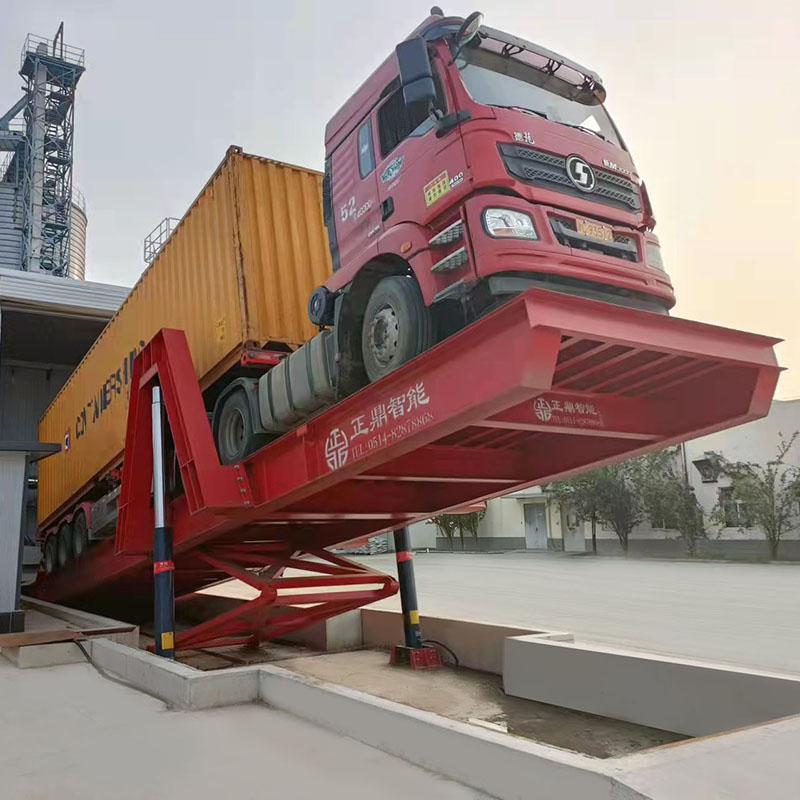
Shallow Foundation Truck Dumpers
7. Wear-Resistant and Food-Grade Configurations
7.1 Abrasion-Resistant Steel Liners
Abrasive bulk materials can cause rapid wear to ordinary carbon-steel surfaces. Sand, crushed stone, slag, limestone, cement, and petroleum coke may create impact and sliding abrasion during every unloading cycle. To extend service life, AR400 steel liners can be installed on high-wear areas of the platform and discharge path.
AR400 steel has a typical hardness range of approximately 360 to 440 HB. In suitable applications, these liners can help extend platform service life to approximately 8 to 10 years, although actual life depends on operating hours, impact intensity, particle size, material hardness, loading height, and maintenance practices.
Wear protection should not be limited to the platform floor. Side walls, transition areas, discharge chutes, stop plates, and receiving hoppers may also require reinforcement. A complete wear analysis helps prevent premature failure at secondary contact points.
7.2 UHMW-PE Low-Friction Liners
Ultra-high-molecular-weight polyethylene, commonly known as UHMW-PE, provides a low-friction surface for materials that tend to stick or slide poorly. It can be useful for damp clay, mineral concentrate, selected chemical products, and other cohesive materials.
The smooth liner surface reduces friction between the material and the platform. In suitable conditions, it may improve material flow by approximately 20% to 30%. UHMW-PE also helps reduce product retention and can simplify cleaning between different materials.
7.3 Stainless Steel for Food and Corrosive Products
Food-processing and grain facilities may require stainless steel contact surfaces to support hygiene, cleaning, and cross-contamination control. Stainless steel platforms are available for food-grade applications, with 304 or 316 stainless steel selected according to the material, cleaning chemicals, chloride exposure, and corrosion conditions.
For corrosive chemicals, the material compatibility of the platform, seals, hydraulic components, fasteners, and drainage system must be considered together. Stainless steel surfaces, protective coatings, corrosion-resistant seals, and appropriate cleaning procedures can help support long-term service.
8. Engineering and Manufacturing Strengths
The value of a truck dumper is determined not only by its lifting capacity but also by the quality of its design, manufacturing, testing, installation, and after-sales support. Jiangsu Zhengding Intelligent Equipment Co., Ltd. is a national high-tech enterprise focused on the research, development, manufacturing, and sale of intelligent logistics equipment.
The company provides systematic solutions for automated loading and unloading of automobiles and containers. Its product range includes rear dumpers, side-turn truck dumpers, car loading equipment, container flippers, container loading and unloading equipment, and related systems for industrial logistics.
Its engineering approach combines mechanical design, hydraulic control, electrical automation, structural fabrication, site assessment, and material-flow analysis. This is important because a dumper cannot be evaluated independently from the receiving hopper, conveyor, dust-control system, vehicle lane, weighbridge, and plant control system.
8.1 Site-Specific Foundation Engineering
Every shallow foundation project should begin with a site review. The manufacturer can assess available space, soil conditions, groundwater, vehicle direction, foundation thickness, drainage, conveyor elevation, truck dimensions, and safety clearances. This information is used to determine whether the shallow foundation arrangement is appropriate and how the platform should be integrated into the site.
Site-specific engineering helps prevent common problems such as inadequate drainage, insufficient clearance under the platform, incorrect truck positioning, poor discharge alignment, or a receiving hopper that cannot accept the material at the selected tilt angle.
8.2 Material Flow Analysis
Material flow analysis considers bulk density, moisture, particle size, repose angle, cohesion, abrasiveness, temperature, and contamination requirements. These properties influence the required lifting angle, platform speed, liner material, vibration system, discharge opening, and receiving equipment.
For free-flowing grains, the priority may be gentle handling, low residual material, dust control, and food-grade cleaning. For aggregates, the priority may be impact resistance, wear protection, structural reinforcement, and high throughput. For sticky materials, low-friction liners and controlled vibration may be more important than maximum lifting speed.
8.3 Integrated Automation
The company’s equipment can be integrated into automatic logistics systems. Functions may include vehicle identification, weighing, traffic lights, wheel fixation, platform lifting, discharge confirmation, return-to-home-position control, and data communication with a plant management system.
Integration can improve operational visibility. Managers may monitor truck cycles, unloading times, equipment alarms, maintenance events, material categories, and daily throughput. The resulting data can help identify bottlenecks and improve scheduling.
8.4 International Application Experience
The company’s automatic loading and unloading equipment has been supplied to industries in China and exported to Japan, Brazil, Egypt, Pakistan, India, the Middle East, and Southeast Asia. Its products are used in steel, chemical, cement, coal, grain, oil, food, feed, port, papermaking, and other industrial environments.
International users associated with the company’s equipment include Budweiser, Heineken, Buhler Group, Wilmar International, Cargill, DuPont, Louis Dreyfus, Charoen Pokphand Group, and Saint-Gobain Group. Such experience reflects the importance of adapting equipment to different operating standards, climates, materials, vehicle types, and production requirements.
9. Safety Design and Operating Protection
Truck dumpers handle heavy vehicles and large quantities of material, so safety must be designed into the complete system. The platform should include clearly defined vehicle-positioning zones, wheel-retaining devices, warning signals, emergency stops, hydraulic protection, access restrictions, and a control sequence that prevents unsafe movements.
The synchronous hydraulic system helps reduce uneven lifting and sudden vibration. Limit switches or angle sensors can confirm platform position. Interlocking logic can prevent lifting when the wheel-retaining device is not engaged or when the vehicle is incorrectly positioned.
Emergency-stop buttons should be accessible from appropriate operator locations. Warning lights and audible alarms should be visible and audible in the working environment. The system should also provide safe procedures for power failure, hydraulic pressure loss, control-system faults, and vehicle misalignment.
Personnel should never stand beneath a raised platform or enter hazardous areas during operation. Maintenance work should be performed only after the platform is secured, hydraulic pressure is released according to procedure, and the equipment is isolated from electrical and mechanical energy sources.
Dust control is also a safety and environmental issue. Grain, cement, coal, fertilizer, and mineral products may generate airborne dust during unloading. The dumper can be connected to local extraction, enclosure, water mist, filter, or other dust-management systems selected according to material and regulatory requirements.
10. Installation and Commissioning Process
A successful project normally follows several stages. The first stage is application confirmation. The customer provides truck dimensions, maximum gross load, material properties, required throughput, unloading frequency, available space, and downstream process information.
The second stage is preliminary engineering. The manufacturer prepares the platform dimensions, hydraulic capacity, lifting angle, retaining arrangement, foundation interface, discharge connection, and control concept. At this stage, the customer can review traffic flow and maintenance access.
The third stage is civil preparation. The foundation must provide adequate strength, levelness, drainage, anchor arrangements, and clearance. Concrete strength and reinforcement should be determined by the project engineer according to local construction standards and equipment loads.
The fourth stage is mechanical and electrical installation. The platform, hydraulic cylinders, pump station, retaining devices, sensors, control cabinet, safety components, and communication interfaces are installed and connected.
The fifth stage is commissioning. Testing normally includes no-load platform movement, synchronized cylinder operation, emergency-stop circuits, wheel fixation, limit switches, warning devices, hydraulic pressure, full-load lifting, material discharge, and communication with connected conveyors or control systems.
Final acceptance should verify that the system operates correctly with the customer’s actual truck types and materials. If the facility handles several products, commissioning should include the most difficult material and the most demanding vehicle configuration.
11. Maintenance Requirements
Routine maintenance is essential for stable truck dumper performance. Operators should inspect the platform, wheel-retaining device, hydraulic hoses, cylinder connections, oil level, oil temperature, sensors, warning devices, and emergency stops according to the recommended schedule.
For abrasive materials such as sand, cement, coal, and aggregates, wear liners should be inspected regularly. A practical reference is to perform detailed liner inspections approximately every 1,000 operating hours, or more frequently when the material contains large, sharp, or highly abrasive particles.
For corrosive chemicals, hydraulic seals, platform surfaces, fasteners, and drainage areas should be checked at least every three months, or according to the chemical exposure level. Any damaged coating or seal should be repaired promptly to prevent corrosion from spreading into the structure.
Food and grain applications require cleaning and sanitation procedures. The platform should be cleaned at an interval appropriate to the product and hygiene standard. Weekly sanitation may be suitable for some grain-handling operations, while facilities handling sensitive food products may require cleaning after each product change.
Hydraulic oil should be maintained at the specified level and replaced according to the equipment manual and operating conditions. Contaminated oil can damage pumps, valves, and cylinders. Hydraulic filters should be inspected and replaced when required. Unusual noise, uneven lifting, excessive vibration, oil leakage, or slow movement should be investigated immediately.
With suitable maintenance, liner life can vary widely by material. In representative operating conditions, aggregate liners may last approximately 5,000 to 7,000 operating hours, while grain-service liners may exceed 15,000 operating hours. These figures depend on design, operating frequency, loading impact, and cleaning practices.
12. Throughput, Efficiency, and Product Protection
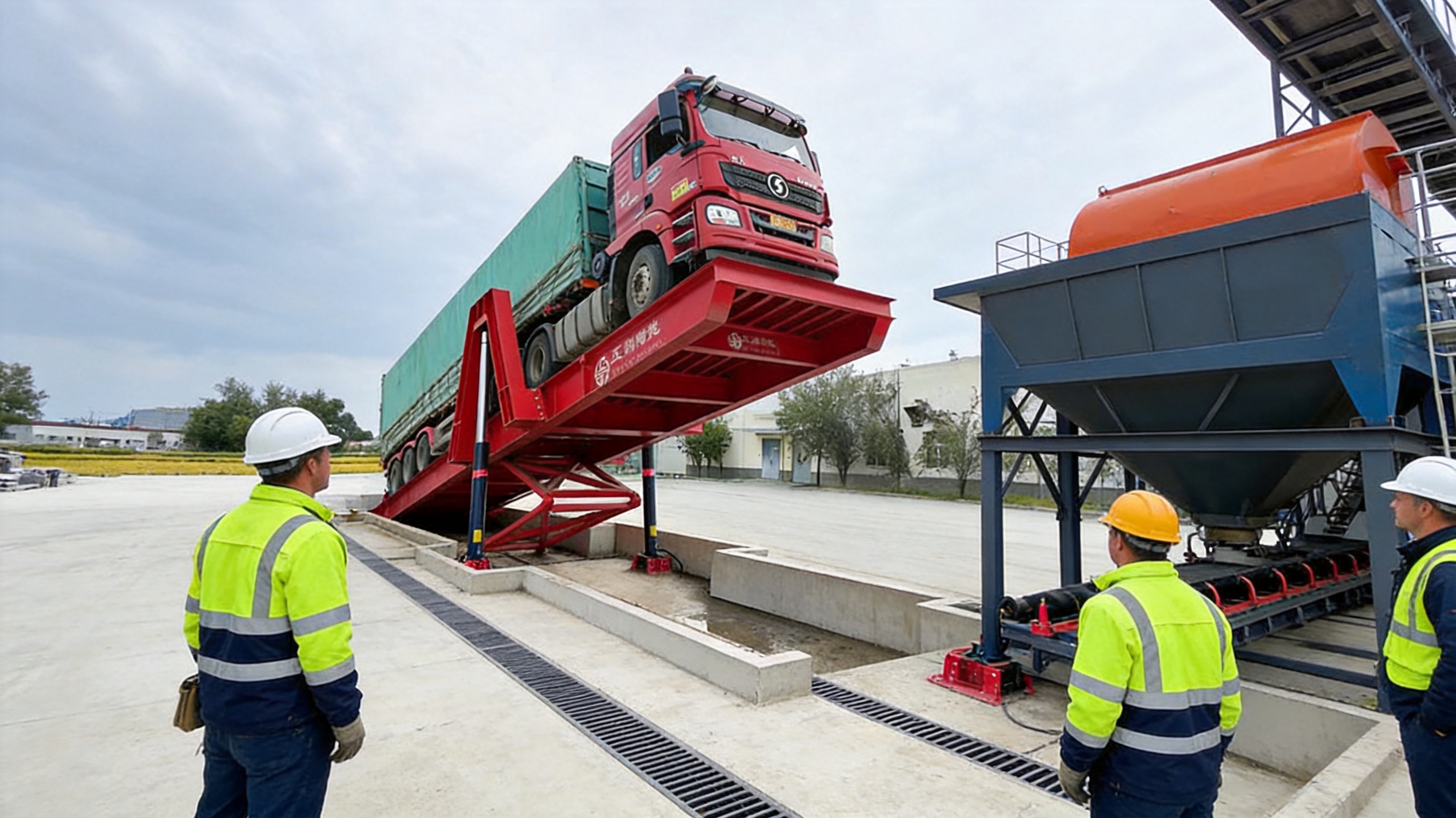
The economic value of a truck dumper is closely related to unloading time and residual material. A system that unloads quickly but leaves a large amount of material in the truck may create additional labor and product loss. A system that unloads completely but operates slowly may produce vehicle queues.
Shallow foundation dumpers are designed to provide a balance between lifting speed, stable operation, complete discharge, and safe vehicle handling. For free-flowing materials such as grains and plastic pellets, discharge efficiency can exceed 99.5% under suitable conditions. Aggregates, cement, coal, and other materials may achieve approximately 97.8% to 98.5%, depending on moisture, particle size, and liner design.
High discharge efficiency improves more than product yield. It also reduces manual cleaning, limits cross-contamination, minimizes dust caused by repeated scraping, and shortens truck turnaround time. At high-throughput terminals, even a small reduction in residual material can create meaningful savings over thousands of truck cycles.
The system can be designed around the customer’s target throughput. Important factors include the number of trucks per hour, average payload, lifting and lowering time, material discharge time, traffic-light sequence, weighbridge operation, downstream conveyor capacity, and the time needed for vehicle positioning.
When the dumper is connected to automatic truck identification and weighing equipment, the facility can coordinate vehicle entry, product verification, unloading, and departure. This reduces paperwork and improves traceability, particularly in grain, food, chemical, and bulk-material distribution operations.
13. Application Areas
13.1 Grain and Oilseed Terminals
Grain facilities use truck dumpers to unload corn, wheat, soybeans, rice, barley, and other agricultural products. The shallow foundation arrangement is useful when a terminal must expand capacity without constructing a deep underground pit. Stainless steel or food-grade surfaces can be selected where hygiene and product separation are important.
13.2 Cement and Mineral Plants
Cement, fly ash, lime, limestone, sand, and crushed stone require robust structures and wear-resistant protection. AR400 liners and reinforced receiving areas help manage impact and abrasion. Dust extraction should be integrated into the unloading point to improve working conditions and environmental performance.
13.3 Coal and Petroleum Coke Handling
Coal and petroleum coke may be abrasive and dusty. The dumper can be equipped with wear-resistant liners, enclosed transfer points, and dust-control equipment. The selected angle and receiving conveyor should be designed for the material’s flowability and particle-size distribution.
13.4 Chemical and Fertilizer Facilities
Granular fertilizers and selected chemical powders can be handled using corrosion-resistant surfaces and seals. Material compatibility must be reviewed before selecting stainless steel grades, coatings, hydraulic protection, and cleaning procedures.
13.5 Feed and Food Processing
Feed mills and food plants benefit from automated unloading, easy cleaning, low residual material, and controlled product changeover. Stainless steel surfaces, sanitary seals, and smooth transitions can help reduce contamination risks.
13.6 Ports and Multimodal Logistics Centers
Ports and logistics centers often require fast truck turnaround and reliable connection to conveyors, storage yards, ship-loading systems, or container handling equipment. The shallow foundation design can reduce construction difficulties in busy or space-constrained terminals.
13.7 Construction and Recycling Materials
Construction rubble, recycled aggregates, slag, and demolition materials may contain large particles and sharp edges. Reinforced platforms and thicker wear plates are recommended for material sizes of approximately 100 to 150 millimeters. Standard configurations may handle particle sizes up to approximately 80 millimeters, subject to the actual material and truck body.
14. How to Select the Correct Model
Model selection should begin with the maximum gross load rather than the average payload. The calculation should include the truck chassis, body, cargo, and possible loading variation. Selecting a model with insufficient capacity can compromise safety and service life, while excessive capacity may increase unnecessary capital cost.
Platform length and width must match the vehicle fleet. If the facility receives trucks of different lengths, the customer should identify the smallest and largest vehicles and confirm wheel-stop positions, axle locations, body overhang, and discharge opening requirements.
The maximum lifting angle should be selected according to material flow and downstream equipment. Free-flowing grain may require less angle than sticky clay or damp mineral concentrate. Increasing the angle is not always the best solution because it may influence vehicle stability, discharge velocity, dust generation, and receiving-hopper design.
Material protection is another key selection factor. Abrasive products require wear liners. Sticky materials may require UHMW-PE, vibration, or heating. Food-grade materials may require stainless steel. Corrosive products may require special coatings, seals, and drainage.
The customer should also specify the desired level of automation. Basic systems may use local push-button controls, while advanced installations may include remote monitoring, vehicle identification, automatic weighing, plant-level communication, and unmanned operation.
15. Frequently Asked Questions
Q1: What is the main difference between a shallow foundation dumper and a conventional dumper?
The primary difference is the foundation arrangement. A conventional dumper generally requires a deeper pit, while a shallow foundation dumper uses a low-profile structure with a typical pit depth of approximately 0.5 to 1.2 meters. The shallow design can reduce excavation, concrete work, drainage requirements, and installation complexity.
Q2: Can the equipment handle wet or sticky materials?
Yes, but the dumper should be configured for the material. Wet or sticky products with approximately 12% to 18% moisture may benefit from reduced lifting speed, platform vibration, UHMW-PE liners, or a heated platform. Extremely cohesive materials should be evaluated through application testing before final design.
Q3: What is the maximum particle size that can be dumped?
Standard configurations can handle particles up to approximately 80 millimeters under suitable operating conditions. For larger aggregates of approximately 100 to 150 millimeters, reinforced platforms and thicker wear plates, typically around 12 to 16 millimeters in selected areas, may be recommended.
Q4: Is a shallow foundation dumper suitable for food-grade materials?
Yes. Food-grade configurations can use 304 or 316 stainless steel platforms, FDA-compliant seals, smooth surfaces, and cleaning-friendly designs. The final configuration should also consider product changeover, sanitation frequency, drainage, and the customer’s hygiene standards.
Q5: Does the shallow foundation reduce unloading efficiency?
Not necessarily. The correct platform angle, receiving hopper, liner, and material-flow design are more important than foundation depth alone. Representative application data indicates that shallow and full-depth dumpers can achieve similar average discharge efficiency when properly engineered.
Q6: Can the driver operate the dumper without a professional operator?
The equipment can be configured for unmanned or minimally attended operation. Automatic wheel fixation and programmed control sequences allow the driver to complete the standard cycle. However, the customer must provide training, traffic control, emergency procedures, and supervision appropriate to the site.
Q7: How often should wear liners be inspected?
For abrasive materials, a detailed inspection around every 1,000 operating hours is a useful reference. Inspection frequency should be increased when the material is highly abrasive, contains large particles, or is loaded from a significant height. Grain-service applications generally experience slower liner wear.
Q8: Can the dumper be connected to an existing conveyor system?
Yes. The platform, discharge opening, hopper, conveyor, dust-control equipment, and control system can be engineered as an integrated system. The existing conveyor elevation, capacity, direction, and control interface must be reviewed during the design stage.
Q9: What information should a customer provide before requesting a quotation?
The customer should provide truck dimensions, maximum gross weight, axle arrangement, material name, bulk density, moisture content, particle size, abrasiveness, required throughput, operating hours, available site dimensions, foundation conditions, discharge direction, power supply, and preferred automation level.
Q10: Why is site-specific design important?
Truck dumpers interact with vehicles, foundations, conveyors, hoppers, traffic lanes, dust-control systems, and plant controls. A standard platform may not fit every site. Site-specific engineering helps confirm safe clearances, correct material flow, suitable foundation design, and efficient integration with the complete logistics process.
16. Conclusion
Shallow foundation truck dumpers offer an efficient alternative to conventional deep-pit unloading systems. Their low-profile design can reduce civil engineering costs by approximately 60% to 70% in suitable projects, while also simplifying installation, maintenance, access, and future modification.
Their value extends beyond foundation savings. High-precision hydraulic synchronization supports stable lifting, automatic wheel fixation improves safety and convenience, and imported-brand hydraulic cylinders and pumps support reliable operation. Unmanned or minimally attended control can reduce labor requirements and help drivers complete unloading with fewer manual steps.
The equipment can handle a wide range of bulk materials, including grains, coal, aggregates, cement, fertilizers, plastic pellets, chemical products, and selected sticky or wet materials. Wear-resistant liners, low-friction UHMW-PE surfaces, stainless steel platforms, vibration systems, and heating options allow the equipment to be adapted to specific material properties.
Jiangsu Zhengding Intelligent Equipment Co., Ltd. strengthens this product offering through integrated engineering, manufacturing, hydraulic control, automation, site assessment, material-flow analysis, and international application experience. Its broader portfolio of rear dumpers, side-turn truck dumpers, container flippers, and automated loading and unloading equipment allows customers to develop coordinated logistics systems rather than isolated machines.
For companies seeking a safer, lower-cost, and more adaptable truck unloading solution, a shallow foundation dumper should be evaluated as part of the complete material-handling process. Correct model selection, foundation planning, liner choice, automation design, and maintenance planning are the key factors that determine long-term performance.
References
1. Jiangsu Zhengding Intelligent Equipment Co., Ltd., Product Characteristics and Technical Parameters for Shallow Foundation Truck Dumpers.
2. Jiangsu Zhengding Intelligent Equipment Co., Ltd., Company Profile and Automated Loading and Unloading Equipment Overview.
3. Bulk Material Handling Engineering Principles, Hydraulic Truck Dumper Design and Vehicle Stabilization Practices.
4. Industrial Wear Materials Guide, AR400 Steel Liners and Abrasion-Resistant Platform Applications.
5. Food and Chemical Equipment Design Practices, Stainless Steel Surfaces, Sanitary Seals, and Corrosion Protection.
6. Bulk Solids Flow Engineering References, Material Density, Cohesion, Moisture, Particle Size, and Discharge Efficiency.
7. Industrial Safety and Maintenance Guidelines for Hydraulic Lifting Platforms and Automated Vehicle Handling Equipment.


