

 English
 русский
 Español
 Français
 Português
 عربى





+86-13588556918
Content
- 1 1. What Is a Truck Dumper?
- 2 2. The Main Difference: Mechanical Rigid Synchronization
- 3 3. Product Characteristics and Functional Advantages
- 4 4. Engineering Safety Built into the Product
- 5 5. Model Range and Main Technical Parameters
- 6 6. Manufacturing Strengths and Advanced Production Approach
- 7 7. Advantages Compared with Conventional Truck Dumpers
- 8 8. Applications in Major Industries
- 9 9. Installation, Operation, and Maintenance
- 10 10. Operator Training and Safety Culture
- 11 11. Frequently Asked Questions
- 11.1 Q1: What is the key advantage of the mechanical synchronization system?
- 11.2 Q2: Can the truck dumper handle unevenly loaded vehicles?
- 11.3 Q3: Is automatic wheel restraint necessary if the truck has a parking brake?
- 11.4 Q4: Can one driver operate the entire unloading process?
- 11.5 Q5: What maximum lifting capacities are available?
- 11.6 Q6: What lifting angles are available?
- 11.7 Q7: How often should the hydraulic safety system be inspected?
- 11.8 Q8: What clearance should be maintained around the dumper?
- 11.9 Q9: Can the equipment be integrated with a plant control system?
- 11.10 Q10: What information is needed before selecting a model?
- 12 12. Why Choose a Specialized Manufacturer?
- 13 13. Conclusion
- 14 References
- 15 Product: Truck Dumpers
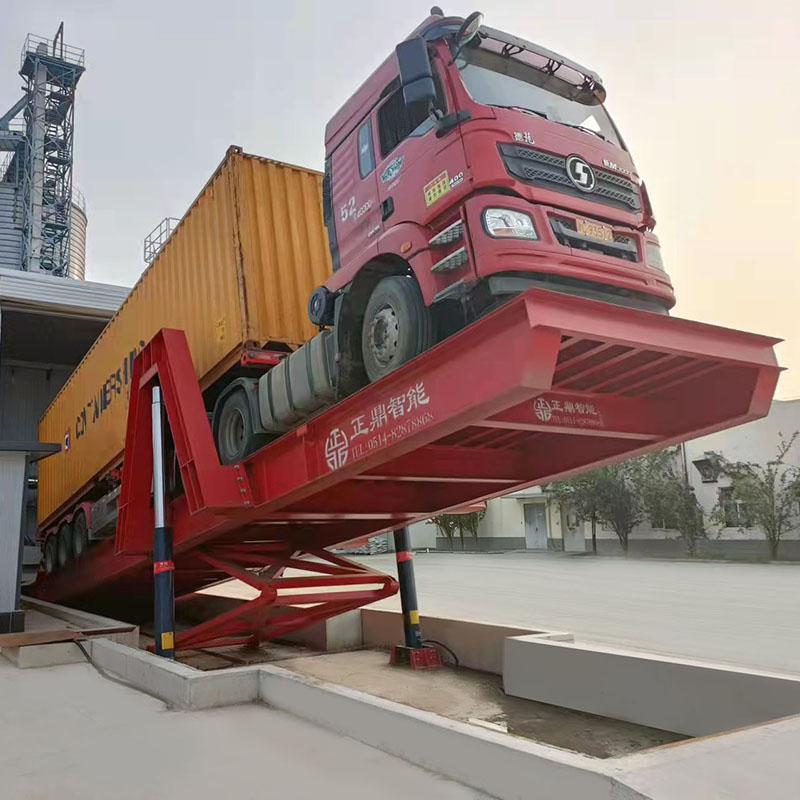
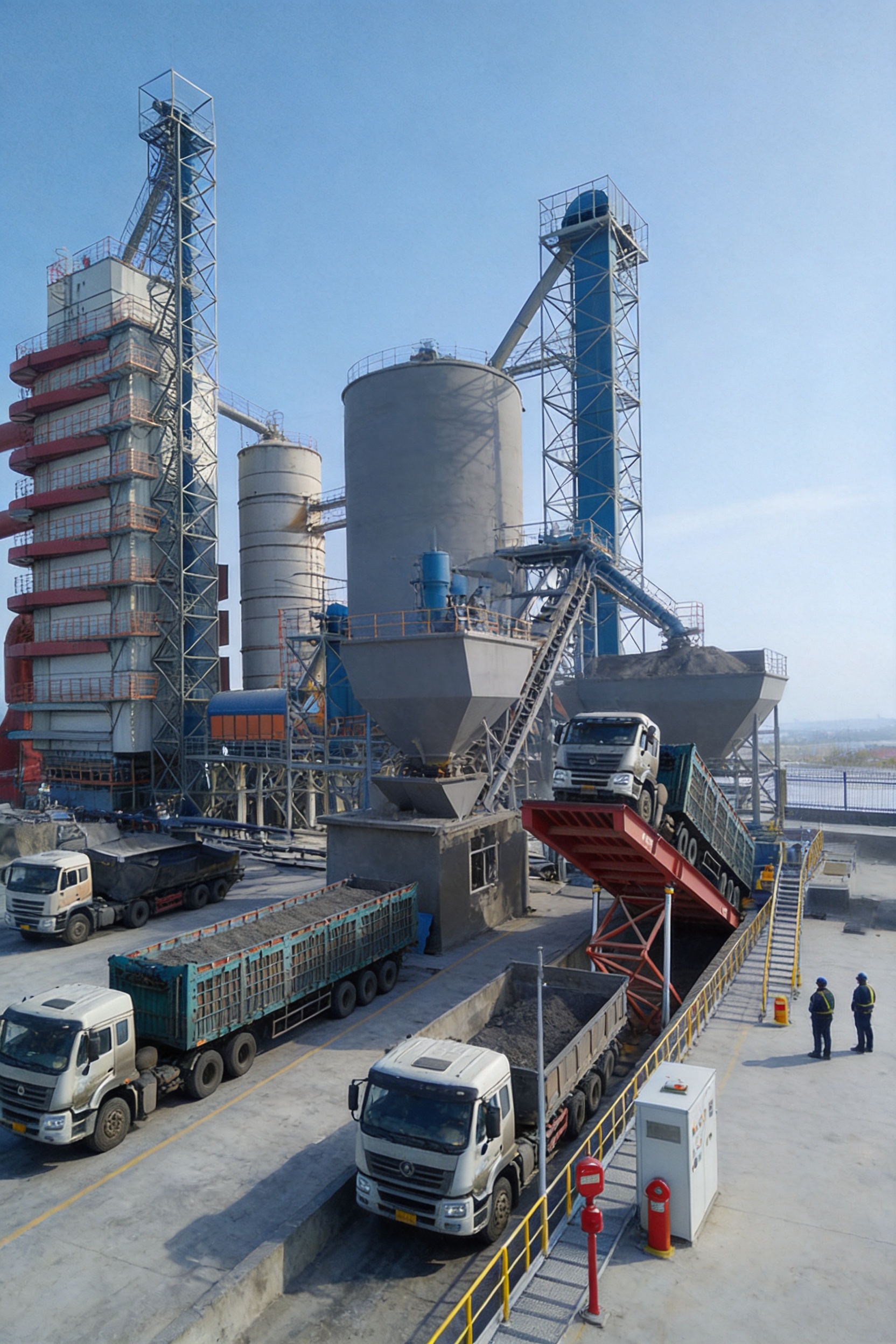
Truck dumpers are essential loading and unloading systems for industries that handle coal, grain, feed, cement, minerals, chemicals, oil products, and other bulk materials. By lifting and tilting a loaded vehicle, a truck dumper allows the material to discharge rapidly into a receiving hopper, conveyor, storage pit, or processing line. Compared with manual unloading or conventional tipping arrangements, an engineered truck dumper can significantly reduce unloading time, labor requirements, material loss, and vehicle congestion.
Modern facilities, however, require more than lifting capacity. They need stable operation, dependable synchronization, effective vehicle restraint, precise control, simplified maintenance, and a high level of operator safety. The truck dumper described in this article is designed around these requirements. Its most important distinction is the use of a mechanical rigid synchronization mechanism instead of relying only on oil-flow synchronization between side cylinders.
This design approach provides a simpler mechanical structure, improved lifting stability, lower vibration, reduced cylinder impact, and better operational reliability. Combined with imported hydraulic components, automatic wheel restraint, unmanned operating capability, and integrated safety controls, the equipment provides a practical solution for demanding industrial unloading applications.
Truck Dumpers
1. What Is a Truck Dumper?
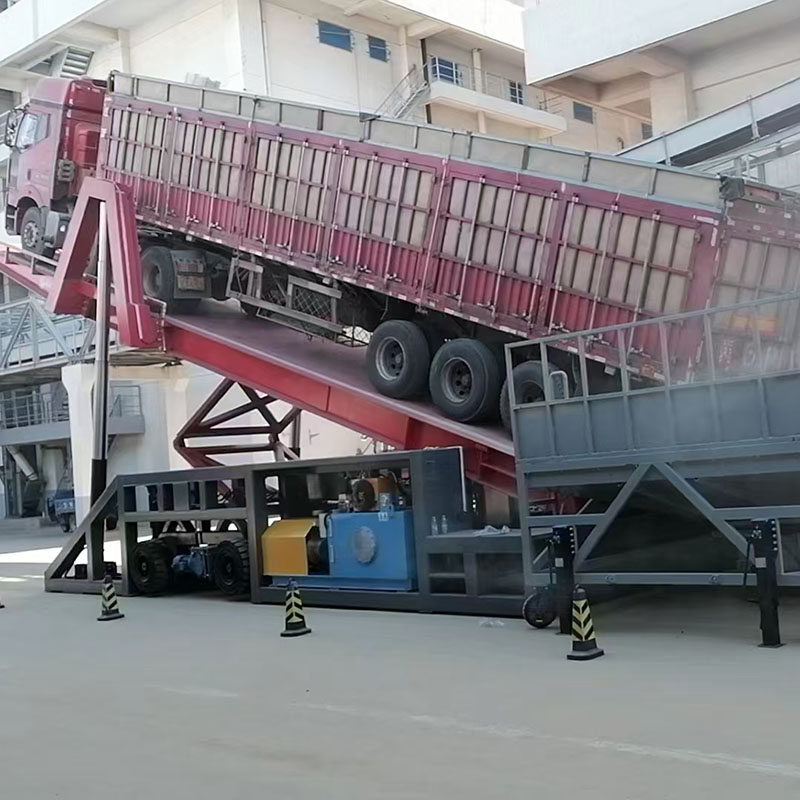
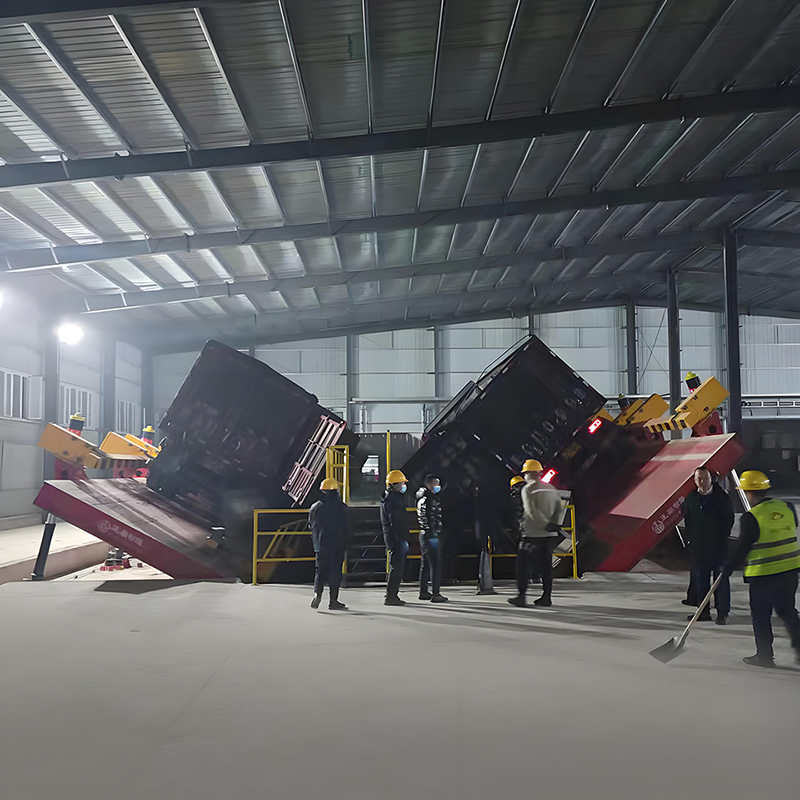
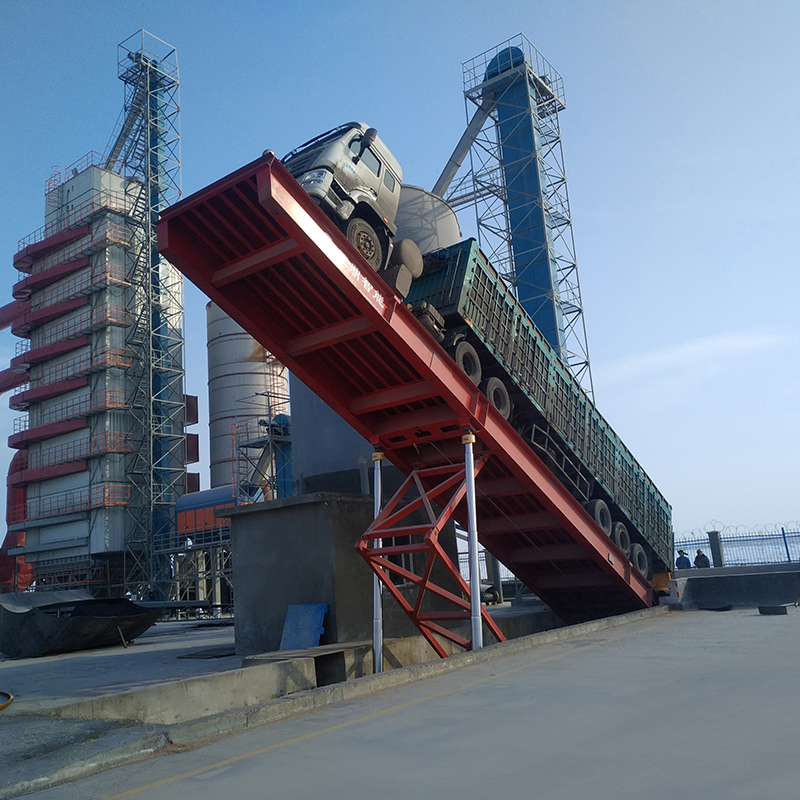
A truck dumper is an industrial unloading machine that raises one end or the entire platform of a loaded truck and tilts the vehicle to discharge its contents. Depending on the application, the equipment may be installed as a rear dumper, side-turn truck dumper, or another specialized vehicle unloading system.
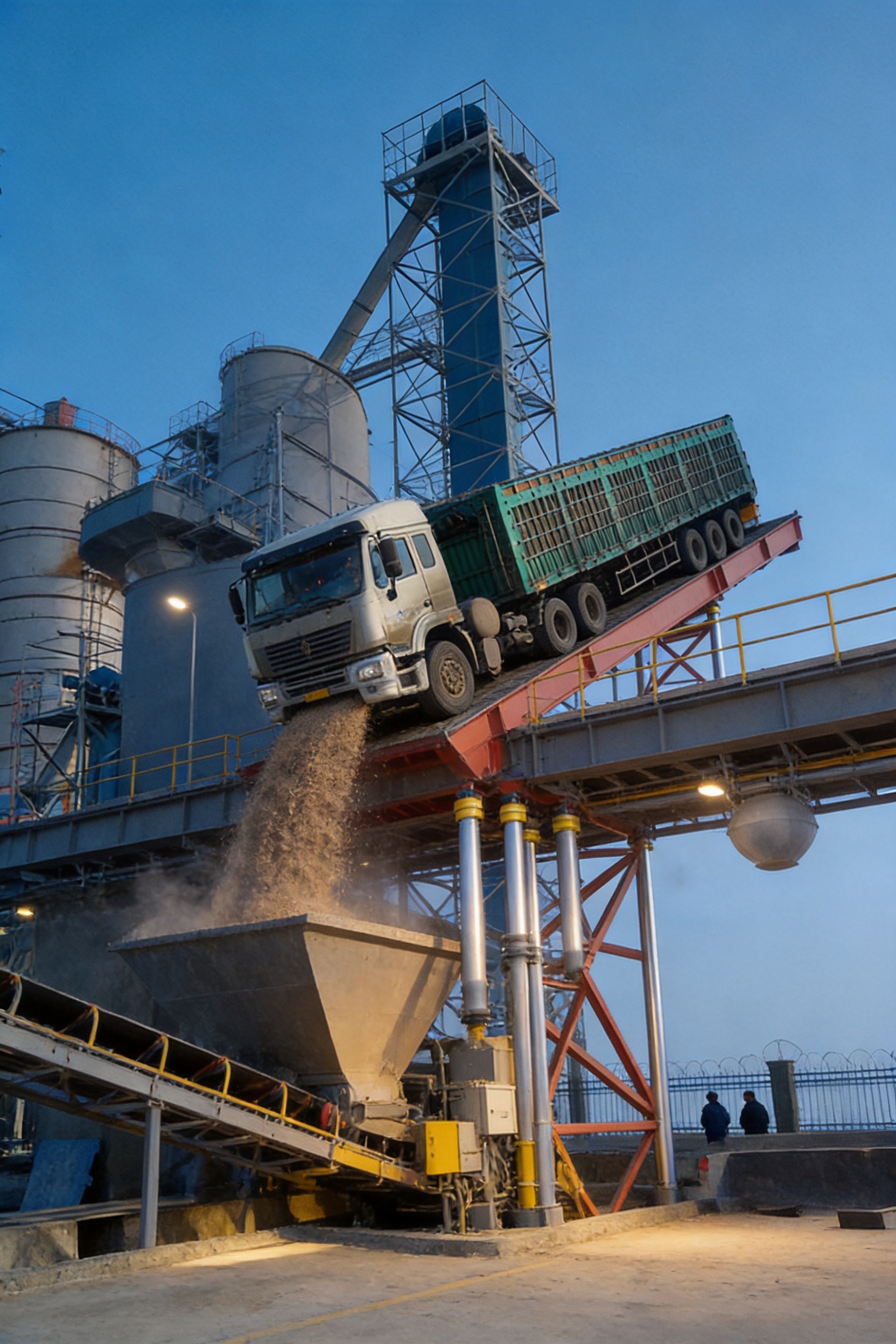
The basic operating sequence is straightforward. A truck drives onto the dumper platform, stops in the designated position, and is secured by a wheel restraint or vehicle-fixing device. The hydraulic system then raises the platform to a preset angle. Gravity causes the bulk material to flow from the vehicle body into a receiving structure. After unloading, the platform returns to its original position and the vehicle leaves the station.
Although the process appears simple, the machine must safely manage a combination of high vehicle weight, dynamic loads, uneven material distribution, hydraulic pressure, vehicle movement, and changing center-of-gravity conditions. A truck weighing dozens of metric tons can create substantial forces during lifting and tilting. For this reason, the design of the synchronization system, hydraulic circuit, restraint equipment, platform structure, control system, and safety interlocks is critical.
The truck dumper models covered by this product range are intended for heavy-duty industrial use. Depending on the selected model and platform configuration, the equipment can handle maximum lifting capacities of 80 to 150 metric tons and achieve lifting angles of 45 or 55 degrees.
2. The Main Difference: Mechanical Rigid Synchronization
Many traditional truck dumpers synchronize their side cylinders by controlling and balancing hydraulic oil flow. In this type of arrangement, the two cylinders must extend at a similar rate. If oil flow differs because of pressure variations, seal wear, temperature changes, valve response, or uneven loading, the two sides may not move at precisely the same speed.
Oil-flow synchronization can function effectively when correctly designed and maintained, but it may become less accurate under demanding operating conditions. Uneven vehicle loading can place different forces on the two sides of the platform. A small difference in cylinder movement can create platform twisting, vibration, additional structural stress, or impact loads on cylinder components.
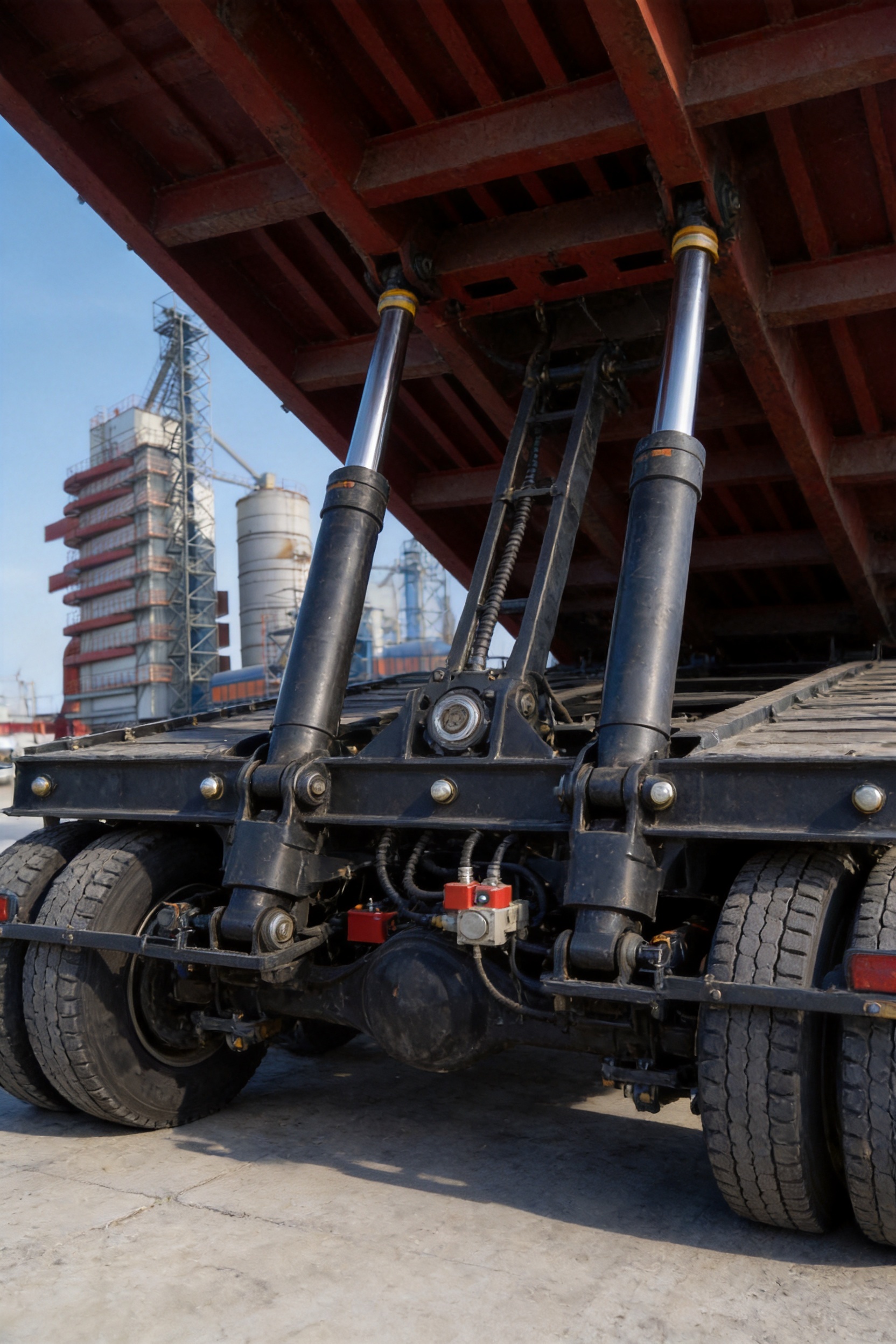
The truck dumper in this product range uses a mechanical rigid synchronization mechanism. This mechanism physically coordinates the movement of the lifting structure, rather than depending solely on hydraulic flow balance. The mechanical connection helps maintain consistent movement between the two sides of the platform, even when the load is not perfectly symmetrical.
2.1 Improved lifting stability
Rigid mechanical synchronization supports stable and coordinated movement during the entire lifting cycle. The platform is less likely to move unevenly from side to side, which helps protect the truck, the dumper structure, the hydraulic cylinders, and the receiving equipment.
Stable movement is particularly important when the vehicle carries material with an uneven distribution. Grain, coal, feed, mineral products, and other bulk materials may shift during transport or may not be loaded evenly. A synchronized platform reduces the effect of these load variations and helps the equipment maintain controlled motion.
2.2 Reduced vibration and impact
When two cylinders do not extend at the same rate, the platform may experience oscillation or sudden correction. These movements can generate vibration and impact forces. The high-precision cylinder synchronous stability system used in this dumper is intended to minimize such effects.
Lower vibration improves operator comfort, reduces noise and mechanical shock, and limits stress on the cylinder mounting points, pins, bearings, structural members, and hydraulic connections. It also helps create a smoother discharge process, which can reduce sudden surges of material into the receiving system.
2.3 Longer cylinder service life
Hydraulic cylinders are among the most important and highly loaded components in a truck dumper. Repeated side loading, uneven extension, vibration, and impact can accelerate wear of seals, rods, bushings, pins, and mounting components.
By maintaining coordinated cylinder movement, the rigid synchronization system reduces unnecessary side forces and impact on the cylinders. This can help extend cylinder service life and reduce the frequency of repairs. Longer component life is especially valuable in facilities operating multiple shifts or handling thousands of vehicle loads each year.
2.4 A simpler and more reliable structure
A mechanically synchronized lifting structure is less dependent on precise hydraulic flow distribution. This can simplify the operating principle and reduce the risk that small hydraulic inconsistencies will cause large differences in platform movement.
Simplicity is an important advantage in industrial equipment. A system that is easier to understand, inspect, and maintain allows maintenance teams to identify problems more quickly. It also reduces dependence on complicated adjustment procedures and helps operators obtain consistent performance during daily use.
3. Product Characteristics and Functional Advantages
3.1 High-precision hydraulic cylinder synchronization
The truck dumper incorporates a high-precision oil-cylinder synchronous stability system. The system is designed to maintain stable and coordinated cylinder movement, reduce operating vibration, and limit impact on the hydraulic components.
This feature is particularly valuable for heavy-duty applications in which the platform is frequently exposed to high loads. A stable lifting process protects the equipment and supports predictable operation from one truck cycle to the next.
3.2 Automatic wheel restraint and vehicle fixing
The dumper uses a fully automatic wheel-fixing device. This helps prevent the vehicle from moving while the platform is being raised. Vehicle restraint is one of the most important safety functions in any truck unloading system because a truck can roll, slide, or shift when the platform changes angle.
In many conventional systems, operators must manually position wheel chocks or control a remote device in a dusty environment. Manual handling can expose personnel to vehicle movement, bulk material dust, poor visibility, and unnecessary walking around the platform. An automatic wheel restraint reduces these risks and makes the operating process more straightforward.
The automatic device also supports consistent operation. When integrated with the control sequence, the dumper can prevent lifting until the vehicle is correctly positioned and secured. This interlocked approach is more dependable than relying only on an operator’s visual judgment.
3.3 Imported hydraulic cylinders and pumps
The product uses imported-brand hydraulic cylinders and pumps selected for safety, reliability, and service life. Hydraulic components must operate under high pressure and repeated load cycles, so the quality of the pump, cylinder, valve, hose, fitting, and sealing system directly affects equipment performance.
Reliable hydraulic components help maintain lifting speed, pressure stability, positioning accuracy, and safe holding performance. They can also reduce the risk of leakage, premature wear, and unplanned downtime. The selection of recognized hydraulic brands demonstrates the equipment’s focus on dependable long-term operation rather than only initial purchase cost.
3.4 Unmanned operation capability
The truck dumper can support unmanned or driver-operated unloading. A professional full-time dumper operator is not necessarily required when the equipment is correctly installed, configured, and commissioned. The driver can complete the operating sequence from the designated control position, subject to site safety procedures and training requirements.
Unmanned operation can reduce staffing requirements and improve the utilization of personnel. It also limits the number of people exposed to the unloading zone. In dusty facilities, this is a significant advantage because operators do not need to remain close to the vehicle or manually operate equipment beside the platform.
Automation should not be confused with the removal of safety responsibilities. Drivers and authorized personnel still need training, must follow the operating procedure, and must confirm that the area is clear before starting a lifting cycle. Automation works best when combined with physical restraints, visual indicators, emergency stops, and interlocked controls.
4. Engineering Safety Built into the Product
Truck dumpers handle heavy vehicles and high-energy movements. Safety therefore needs to be integrated into the machine rather than left entirely to operator attention. The design philosophy of this equipment combines mechanical stability, hydraulic protection, automatic restraint, controlled movement, and operating interlocks.
4.1 Protection against vehicle roll-off
Vehicle roll-off is one of the most serious hazards associated with truck dumpers. When the platform tilts, the vehicle may move if its wheels are not properly restrained. The automatic wheel-fixing device is intended to prevent this movement and keep the truck in the designated position throughout the unloading cycle.
The restraint system should be checked during commissioning to ensure that it is correctly aligned with the vehicle types used at the site. The facility should define the permitted wheelbase, tire dimensions, axle arrangement, and loading position. Vehicles that do not meet the approved operating conditions should not be unloaded until a safe method has been confirmed.
4.2 Hydraulic holding and controlled descent
A hydraulic lifting system must be able to hold the platform safely when the pump stops or when a hose or control component develops a fault. Hydraulic holding valves and related protective components help prevent uncontrolled descent.
Controlled descent is essential because a sudden platform drop can damage the dumper, the truck, the receiving hopper, and surrounding structures. It can also create a severe crushing or entrapment hazard. The hydraulic system should therefore be inspected regularly for leakage, damaged hoses, loose fittings, abnormal pressure, and irregular movement.
4.3 Platform angle limits
The truck dumper can be configured for maximum lifting angles of 45 or 55 degrees, depending on the model and application. Angle limits must be selected according to the vehicle body, material flow characteristics, receiving structure, and site layout.
Limit switches or equivalent position controls should prevent the platform from moving beyond the approved angle. A suitable limit system protects the structure and helps prevent instability caused by excessive lifting. It also ensures that the vehicle discharges into the intended receiving point without damaging adjacent equipment.
4.4 Emergency stop controls
Emergency stop controls should be available at appropriate locations, including the main control station and, where required, near the platform or access points. Anyone who observes an unsafe condition should be able to stop the lifting motion quickly.
Emergency stops should be tested at planned intervals. A stop circuit that has not been inspected may fail when it is most needed. Testing should confirm that the pump and lifting motion stop correctly and that the system requires a deliberate reset before normal operation resumes.
4.5 Interlocked operating sequence
An interlocked sequence can prevent the dumper from lifting unless the truck is correctly positioned and the restraint system is engaged. Interlocks can also prevent vehicle release while the platform is raised or prevent operation when an access gate is open.
These controls reduce reliance on memory and help prevent unsafe combinations of actions. They are particularly useful in busy facilities where multiple vehicles, conveyors, gates, and receiving systems operate at the same time.
5. Model Range and Main Technical Parameters
The available models are designed for different platform lengths, operating conditions, and lifting capacities. The dimensions shown below represent the principal platform size configurations provided for the product range. Final dimensions and technical details should be confirmed during project engineering because the dumper may be customized according to vehicle type, foundation design, receiving equipment, and site requirements.
| Model | Available Size L × W, m | Maximum Lifting Weight, metric tons | Maximum Lifting Angle |
|---|---|---|---|
| TQXHD 50 | 14 × 3; 16 × 3; 17 × 3 | 80 | 45° / 55° |
| TQXHD 80 | 16 × 3; 17 × 3; 18 × 3 | 80 | 45° / 55° |
| TQXHD 100 | 17 × 3; 18 × 3; 20 × 3 | 100 | 45° / 55° |
| TQXHD 150 | 17 × 3; 18 × 3; 20 × 3 | 150 | 45° / 55° |
The model selection should not be based only on the nominal truck weight. Engineers also need to consider the truck’s axle distribution, body length, body height, wheelbase, tire position, material density, loading condition, discharge behavior, foundation arrangement, and required cycle time.
For example, a vehicle that is within the rated weight may still require a longer platform if its body extends beyond the standard dimensions. Similarly, material that tends to bridge or remain attached to the vehicle body may require a larger lifting angle or a special receiving hopper. Correct application engineering ensures that the dumper performs safely and efficiently throughout its service life.
6. Manufacturing Strengths and Advanced Production Approach
Truck dumper performance depends not only on the concept of the machine but also on manufacturing accuracy, assembly quality, hydraulic cleanliness, welding control, and final testing. Jiangsu Zhengding Intelligent Equipment Co., Ltd. focuses on the research, development, manufacture, and sales of intelligent loading and unloading equipment for automobiles, containers, ships, and industrial logistics applications.
6.1 Specialized product development
The company’s product portfolio includes rear dumpers, side-turn truck dumpers, vehicle loading equipment, container flippers, and other automated loading and unloading systems. This specialization allows the engineering team to develop experience across multiple vehicle handling and bulk material applications.
A manufacturer that works continuously with truck unloading systems can better understand practical problems such as uneven loading, difficult material flow, vehicle restraint, dust generation, limited plant space, and integration with conveyors or storage systems. This application knowledge supports more effective equipment design than a general-purpose machinery approach.
6.2 Structural engineering and fabrication
The dumper platform and supporting frame must withstand repeated heavy loads and dynamic forces. Manufacturing quality begins with appropriate structural design, material selection, cutting accuracy, forming, welding, machining, and dimensional inspection.
Critical structural parts should be manufactured according to controlled drawings and verified during assembly. Welded areas require suitable preparation, correct welding procedures, and inspection for visible defects. Machined holes and mounting points must remain aligned so that pins, cylinders, bearings, and synchronization components operate without excessive stress.
Accurate fabrication is especially important for a mechanically synchronized dumper. The rigid synchronization structure must be installed with correct geometry and alignment. Poor alignment could create additional loads rather than delivering the intended stability benefits. Controlled manufacturing and assembly are therefore essential to the product’s performance.
6.3 Hydraulic system assembly
Hydraulic reliability depends heavily on assembly cleanliness and correct installation. Contamination in hydraulic oil can damage pumps, valves, seals, and cylinder surfaces. During production, hydraulic pipes, fittings, tanks, and components should be cleaned and protected before commissioning.
The use of recognized hydraulic cylinders and pumps provides a strong component foundation. However, the complete hydraulic system also requires correct pressure settings, hose routing, valve installation, filtration, oil selection, and leak testing. A professional manufacturer evaluates the system as an integrated unit rather than treating each component separately.
6.4 Control and automation integration
The automatic wheel restraint, platform movement, limit controls, emergency stops, and operator interface must work together as one coordinated system. Control logic should be developed to ensure that each action occurs in the correct order.
Typical logic may require the truck to be correctly positioned before the wheel restraint engages. The restraint must be confirmed before lifting is permitted. The platform must stop at the defined upper limit, and the vehicle must remain secured until the platform has returned to the safe lowered position.
Such sequencing improves consistency and reduces the possibility of a dangerous operating shortcut. It also makes it easier to connect the dumper with upstream and downstream equipment, such as vehicle identification systems, traffic lights, dust collection systems, receiving hoppers, conveyors, and plant control networks.
6.5 Factory testing and commissioning
Before delivery, a truck dumper should undergo functional inspection and testing. Important checks include platform movement, synchronization, hydraulic pressure, cylinder response, restraint engagement, limit-switch operation, emergency-stop function, control interlocks, abnormal noise, vibration, and visible leakage.
Testing should be repeated during site commissioning because foundation conditions, vehicle dimensions, electrical supply, receiving equipment, and operating procedures can affect performance. A professional installation process includes alignment verification, no-load testing, controlled-load testing, operator instruction, and maintenance training.
6.6 Customized engineering
Industrial unloading stations rarely have identical conditions. The manufacturer can provide systematic solutions based on different truck sizes, materials, industries, unloading capacities, plant layouts, and automation requirements.
Customization may involve platform length, lifting capacity, lifting angle, wheel restraint arrangement, hopper connection, dust-control provisions, control cabinet configuration, traffic management, safety barriers, and communication with existing plant systems. This ability to adapt the equipment is a major strength when compared with a standard machine that cannot be integrated easily into the customer’s process.
7. Advantages Compared with Conventional Truck Dumpers
The main competitive advantage of this truck dumper is the combination of mechanical synchronization, automatic restraint, reliable hydraulic components, and automation capability. Each feature provides value independently, but their combined effect creates a more stable and practical unloading system.
7.1 Better synchronization than oil-flow balancing alone
A conventional system that depends mainly on oil-flow synchronization may be sensitive to pressure differences, component wear, and load imbalance. The rigid mechanical mechanism provides direct physical coordination between the lifting sides, reducing dependence on hydraulic flow balance alone.
This does not eliminate the need for hydraulic maintenance. Instead, it gives the equipment an additional layer of stability. Hydraulic power creates the lifting force, while the mechanical system helps coordinate the movement.
7.2 Improved safety compared with manual wheel chocking
Manual wheel chocks can be misplaced, incorrectly positioned, displaced by the vehicle, or forgotten during a busy operating period. An automatic wheel-fixing system provides a more consistent restraint method and can be connected to the control interlock.
The result is a safer operating sequence with less direct exposure of personnel to the vehicle and platform. It also reduces the time required to prepare each truck for unloading.
7.3 Lower labor dependence
Unmanned operation can allow the driver to complete the unloading cycle without the presence of a dedicated operator beside the dumper. This can reduce labor costs and simplify shift organization. It can also improve productivity in facilities where vehicle traffic is continuous.
Because the equipment is automated, operating instructions should be displayed clearly and training should be documented. The reduction in labor dependence should be accompanied by stronger control logic and clear responsibility for pre-operation checks.
7.4 Lower long-term maintenance pressure
Reduced cylinder impact, lower vibration, and the use of reliable hydraulic components can contribute to longer service intervals and lower maintenance demand. A simpler mechanical structure may also make fault diagnosis more direct.
Maintenance cost is influenced by many factors, including cycle frequency, material dust, climate, operator behavior, foundation movement, and spare-parts availability. Even so, equipment that reduces unnecessary mechanical stress has a sound basis for achieving better lifecycle economics.
7.5 Stronger adaptability across industries
The dumper can be applied in steel, chemical, cement, coal, grain, oil, food, feed, port, papermaking, and new energy operations. Its adaptable platform configurations and automation options make it suitable for different vehicle types and unloading processes.
This broad application range is an advantage for companies that operate several plants or handle more than one material. A common engineering partner can support equipment standardization, spare-parts management, operator training, and technical service across multiple locations.
8. Applications in Major Industries
8.1 Grain and feed processing
Grain, feed ingredients, and agricultural materials must often be unloaded quickly to prevent truck queues and production interruptions. A truck dumper can discharge material into a receiving pit connected to conveyors, screens, cleaners, storage silos, or processing equipment.
Automatic operation is valuable in grain facilities because it reduces the number of people working in dusty areas. The unloading system can also be integrated with traffic signals, dust collection equipment, weight measurement, and plant management controls.
8.2 Coal and minerals
Coal, ore, limestone, and mineral products are heavy bulk materials that may require high-capacity unloading systems. The dumper must be designed for the material density, truck weight, impact at the receiving hopper, and abrasive operating environment.
Mechanical synchronization and stable hydraulic lifting are particularly valuable in these applications because the equipment may operate under severe loads and high cycle frequency. Protective guarding, dust control, wear-resistant receiving components, and regular inspection are also important.
8.3 Cement and construction materials
Cement plants and construction-material facilities often handle limestone, clinker, gypsum, sand, aggregates, and other materials. A truck dumper can help connect road transport with crushing, screening, conveying, and storage systems.
The equipment should be selected with attention to dust, material flow, vehicle dimensions, and foundation design. A reliable restraint system is essential because loaded construction vehicles may have different tire types and suspension characteristics.
8.4 Chemical and industrial materials
Chemical and industrial plants may use truck dumpers for raw materials, additives, powders, granules, and packaged or semi-bulk products. The system configuration should reflect the material’s chemical properties, temperature, dust behavior, and environmental requirements.
Where hazardous materials are involved, the dumper may require additional electrical, ventilation, containment, grounding, or monitoring provisions. The appropriate configuration must be established through project-specific risk assessment and applicable regulations.
8.5 Ports and logistics terminals
Ports and logistics terminals need high equipment availability because delays can affect vessels, trucks, storage yards, and downstream production. A truck dumper can support the transfer of bulk materials between road vehicles and storage or ship-loading systems.
Automated identification, traffic control, weighing, and remote monitoring can improve the efficiency of a port unloading station. The equipment should also be designed for local weather conditions, corrosion exposure, and high utilization.
9. Installation, Operation, and Maintenance
9.1 Foundation and site preparation
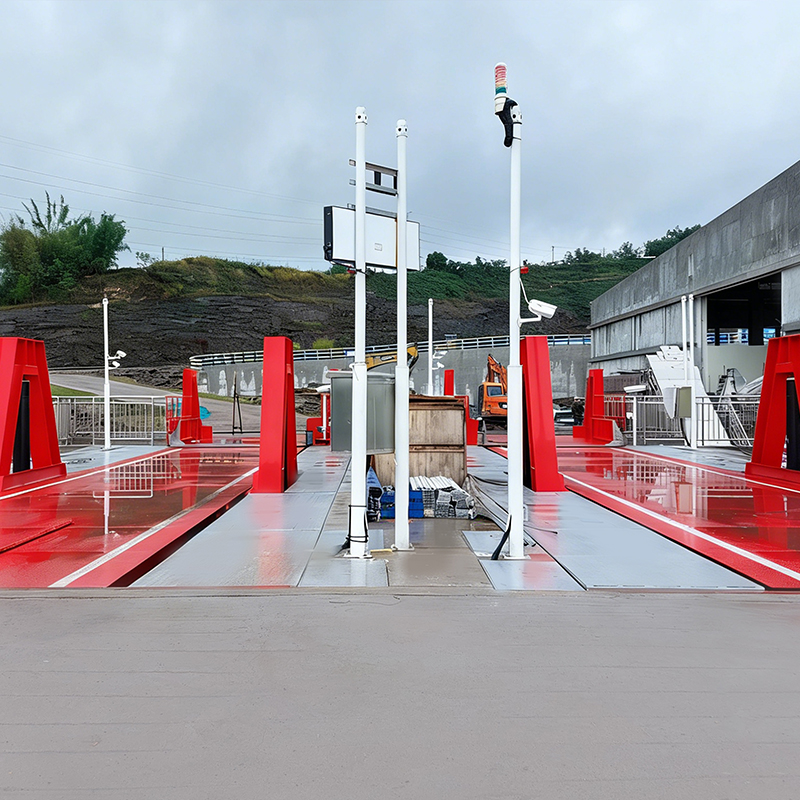
A strong and accurately prepared foundation is essential. The foundation must support the static and dynamic loads transmitted by the vehicle and dumper. Drainage, access, pit dimensions, cable routes, hydraulic equipment location, and receiving-hopper alignment should be confirmed before installation.
The installation area should provide adequate clearance for vehicle approach, turning, reversing, emergency access, inspection, and maintenance. Barriers, guardrails, warning signs, lighting, and traffic signals should be arranged to separate pedestrians from vehicle movement.
9.2 Pre-operation inspection
Before each operating shift, the driver or authorized operator should inspect the platform, wheel restraint, hydraulic hoses, visible structural parts, control panel, emergency stops, warning devices, and surrounding area.
The operator should confirm that no person, tool, loose object, or unauthorized vehicle is on or near the platform. The receiving hopper and discharge area should be free from blockage. Any abnormal leakage, noise, vibration, or control response should be reported before operation continues.
9.3 Standard operating sequence
The truck should approach the dumper according to the site traffic procedure and stop at the marked position. The driver should apply the parking brake and follow the vehicle-position confirmation process. The automatic wheel restraint should engage before lifting begins.
After the system confirms that the safety conditions are satisfied, the platform can be raised to the approved angle. The driver or control system should monitor the process and stop immediately if abnormal movement, obstruction, unusual noise, or material flow problems occur.
After discharge is complete, the platform should return fully to the lowered position. The restraint should not release until the platform is confirmed safe. The driver may then exit only after receiving the appropriate release signal.
9.4 Routine maintenance
Hydraulic systems should be checked daily for visible leakage, damaged hoses, loose fittings, unusual pressure behavior, and cylinder-rod damage. Maintenance personnel should conduct more detailed weekly inspections, including the condition of pins, bearings, welds, synchronization components, wheel restraints, and limit switches.
Annual inspections should include hydraulic pressure testing, valve-function verification, control-system checks, structural inspection, electrical testing, and calibration of relevant sensors. Hydraulic oil condition and filtration should be evaluated according to operating hours and manufacturer recommendations.
Hoses, seals, and fittings should be replaced when damaged or when inspection indicates deterioration. Even if a hose appears acceptable externally, its service age and operating conditions should be considered. Planned replacement is safer than waiting for a failure during a lifting cycle.
10. Operator Training and Safety Culture
Technology is most effective when operators understand the equipment and follow a consistent procedure. Training should cover equipment familiarization, safe operating steps, vehicle positioning, restraint confirmation, emergency response, basic maintenance awareness, and hazard reporting.
| Training Topic | Suggested Initial Duration | Refresher Frequency | Assessment Method |
|---|---|---|---|
| Equipment familiarization | 4 hours | Annual | Practical demonstration |
| Safe operating procedures | 8 hours | Semi-annual | Written examination |
| Emergency response | 4 hours | Annual | Drill participation |
| Maintenance awareness | 2 hours | Annual | Verbal or written quiz |
Only trained and authorized personnel should operate the equipment. Training records should include the employee’s name, course content, date, assessment result, instructor, and authorization status.
A strong safety culture also encourages employees to report near misses, unusual equipment behavior, damaged restraints, oil leaks, and unsafe site conditions. Management should review these reports and implement corrective action rather than treating them as isolated events.
11. Frequently Asked Questions
Q1: What is the key advantage of the mechanical synchronization system?
The mechanical rigid synchronization mechanism coordinates the movement of the lifting sides physically instead of relying only on balanced hydraulic oil flow. It helps improve platform stability, reduce vibration, limit cylinder impact, and maintain reliable movement under uneven loading conditions.
Q2: Can the truck dumper handle unevenly loaded vehicles?
The dumper is designed to provide stable lifting, but vehicles should always be loaded and positioned according to the approved operating requirements. The mechanical synchronization system helps manage load differences, but it does not eliminate the need for correct vehicle loading, weight control, and safe positioning.
Q3: Is automatic wheel restraint necessary if the truck has a parking brake?
Yes. A parking brake alone should not be considered sufficient protection during platform lifting. The truck dumper should use a positive mechanical restraint or automatic wheel-fixing device designed to prevent vehicle movement. The restraint should be integrated with the control sequence whenever possible.
Q4: Can one driver operate the entire unloading process?
The equipment can support driver-operated or unmanned unloading, depending on the site configuration and control system. The driver must be trained, authorized, and positioned where the platform and surrounding area can be observed safely. Local regulations and site risk assessments may require additional personnel or supervision.
Q5: What maximum lifting capacities are available?
The listed product range includes models with maximum lifting capacities of 80, 100, and 150 metric tons. The correct model depends on the total vehicle weight, load distribution, platform dimensions, operating cycle, and site conditions.
Q6: What lifting angles are available?
The available maximum lifting angles are 45 degrees and 55 degrees, depending on the model and configuration. The correct angle should be selected according to the vehicle body, material flow behavior, receiving hopper, and safety requirements.
Q7: How often should the hydraulic safety system be inspected?
Operators should perform a visual inspection before each use. Maintenance personnel should conduct regular weekly checks for visible wear, leakage, and damage. A detailed annual inspection should include hydraulic pressure testing, holding-valve verification, hose inspection, and control-system testing.
Q8: What clearance should be maintained around the dumper?
A clearly controlled danger zone should be established around the platform. A minimum clear distance of approximately 3 meters is commonly used as a basic planning reference, but the final distance must be determined by the equipment design, local regulations, vehicle size, platform movement, and site risk assessment.
Q9: Can the equipment be integrated with a plant control system?
Yes. Depending on the project requirements, the truck dumper can be coordinated with traffic signals, weighing systems, vehicle identification, conveyors, receiving hoppers, dust collection equipment, warning devices, and other automated plant systems.
Q10: What information is needed before selecting a model?
Important information includes vehicle dimensions, maximum gross weight, axle arrangement, wheelbase, body type, material characteristics, unloading rate, platform length, receiving-hopper dimensions, desired lifting angle, working environment, foundation conditions, electrical supply, and automation requirements.
12. Why Choose a Specialized Manufacturer?
Selecting a truck dumper is a long-term investment. The purchase decision should consider engineering capability, manufacturing quality, component selection, installation support, training, spare parts, and after-sales service rather than focusing only on the initial equipment price.
Jiangsu Zhengding Intelligent Equipment Co., Ltd. is a national high-tech enterprise focused on intelligent loading and unloading equipment. Its equipment portfolio covers vehicle and container loading and unloading applications, allowing the company to provide complete process solutions rather than isolated lifting machinery.
The company serves industries including steel, chemicals, cement, coal, grain, oil, food, feed, ports, papermaking, and new energy. Its products have been exported to Japan, Brazil, Egypt, Pakistan, India, the Middle East, Southeast Asia, and other markets. This international application experience supports the development of equipment suitable for different operating environments and customer requirements.
The company has supplied equipment to well-known users and groups in brewing, grain processing, agricultural products, food, chemicals, construction materials, and logistics. Such applications demonstrate the importance of reliable operation, customized integration, and professional technical support in real industrial environments.
For customers planning a new unloading station, replacing an outdated dumper, or upgrading from manual wheel chocking to automated restraint, a specialized manufacturer can help evaluate the complete process. This includes vehicle traffic, material flow, dust control, safety zones, platform capacity, receiving equipment, automation, and future expansion.
13. Conclusion
The modern truck dumper must provide more than lifting power. It must deliver coordinated movement, reliable restraint, hydraulic safety, efficient unloading, simple maintenance, and compatibility with automated industrial processes.
The product described here addresses these requirements through a mechanical rigid synchronization mechanism, a high-precision cylinder stability system, automatic wheel fixing, imported hydraulic cylinders and pumps, unmanned operation capability, and integrated safety controls. Compared with systems that depend primarily on oil-flow synchronization and manual wheel chocking, this design offers a stronger combination of stability, reliability, operational simplicity, and safety.
Its model range supports lifting capacities from 80 to 150 metric tons, with platform configurations suitable for different truck sizes and maximum lifting angles of 45 or 55 degrees. Through customized engineering, the equipment can be integrated into grain, coal, cement, chemical, port, feed, food, and other bulk material handling systems.
Advanced manufacturing, controlled assembly, hydraulic quality, structural accuracy, factory testing, and professional commissioning are essential to achieving the expected performance. When these capabilities are combined with operator training and planned maintenance, the truck dumper becomes a dependable part of a high-efficiency automated unloading operation.
References
1. Product technical information for TQXHD series truck dumpers, including model dimensions, lifting capacities, and maximum lifting angles.
2. Manufacturer-provided information on mechanical rigid synchronization, hydraulic cylinder stability, automatic wheel restraint, imported hydraulic components, and unmanned operation.
3. Industrial safety guidance concerning vehicle restraint, hydraulic holding systems, emergency stops, interlocks, platform limits, and controlled access zones.
4. General principles of hydraulic equipment inspection, preventive maintenance, hose management, pressure testing, and valve-function verification.
5. General engineering practices for bulk material receiving systems, truck unloading stations, vehicle positioning, hopper integration, and automated plant control.
6. Manufacturer information concerning intelligent loading and unloading equipment for automobiles, containers, ships, and industrial logistics applications.


