

 English
 русский
 Español
 Français
 Português
 عربى




+86-13588556918
Content
- 1 1. The Role of Gantry Container Tilters in Modern Logistics
- 2 2. Product Overview and Operating Concept
- 3 3. Main Product Features
- 4 4. Models and Technical Parameters
- 5 5. Advantages Compared with Conventional Unloading Methods
- 6 6. Application Areas
- 7 7. Recommended Operating Parameters
- 8 8. Advanced Manufacturing and Engineering Strengths
- 9 9. Why Choose a Specialized Manufacturer
- 10 10. Complete System Integration
- 11 11. Installation and Site Planning
- 12 12. Maintenance and Reliability
- 13 13. Operator Training and Safety Management
- 14 14. Frequently Asked Questions
- 14.1 Q1: What container sizes can the gantry container tilter handle?
- 14.2 Q2: What is the maximum lifting capacity?
- 14.3 Q3: Can the machine unload grain and powder materials?
- 14.4 Q4: Can it be connected to a dust collection system?
- 14.5 Q5: Is a weighing system available?
- 14.6 Q6: Does the tilter open the container doors automatically?
- 14.7 Q7: What is the typical unloading throughput?
- 14.8 Q8: Can the machine be integrated with an existing conveyor line?
- 14.9 Q9: What safety devices are included?
- 14.10 Q10: How much maintenance does the equipment require?
- 14.11 Q11: Can the equipment be customized?
- 14.12 Q12: Why is a gantry tilter preferable to a forklift attachment?
- 15 15. Conclusion
- 16 References
- 17 Product: Gantry Container Tilter
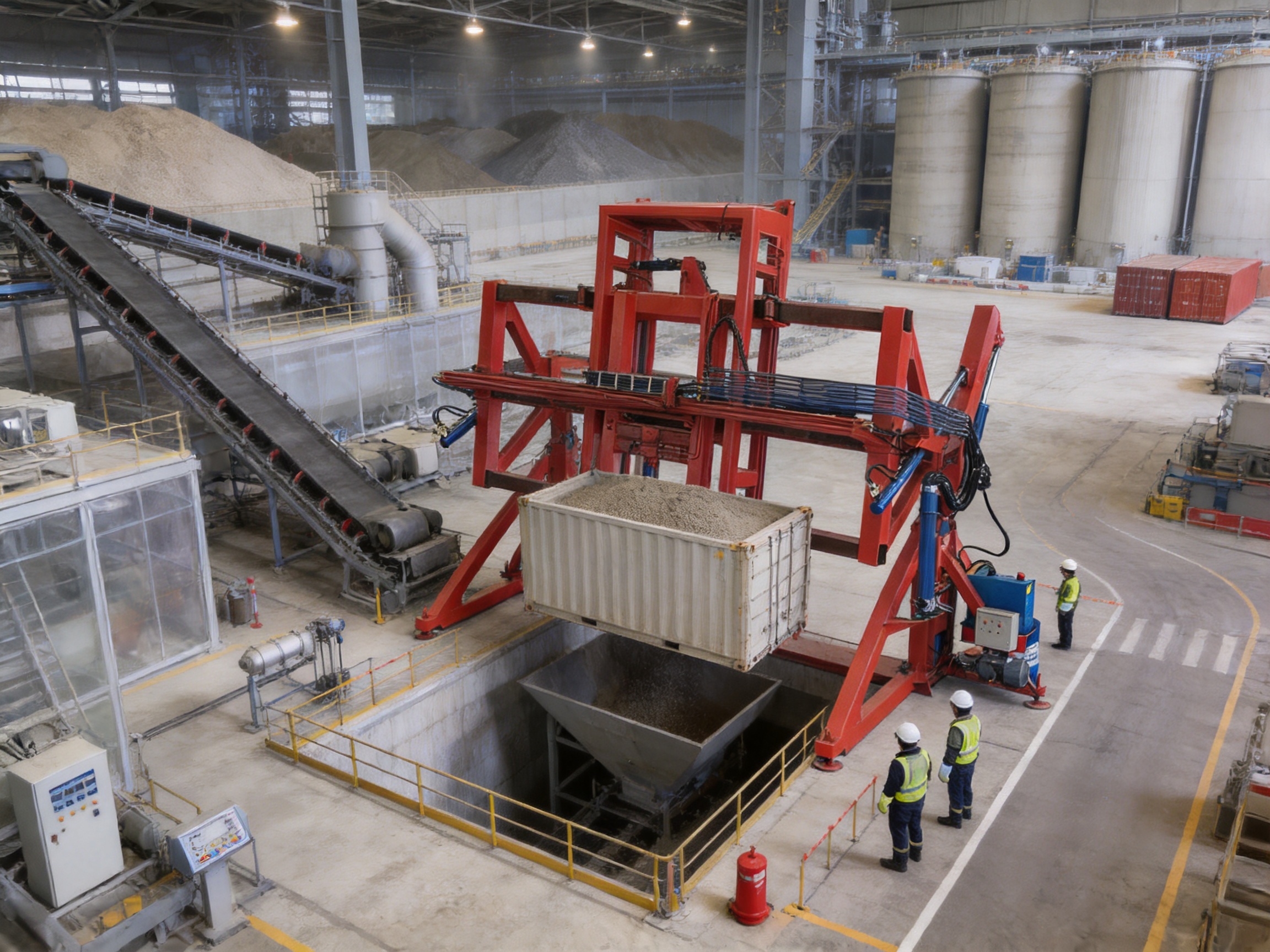
Efficient container unloading has become an important requirement for grain terminals, ports, mining operations, steel plants, chemical facilities, paper mills, cement plants, and other industries that handle bulk materials. As containerized logistics continues to expand, many companies are seeking safer and more productive alternatives to forklifts, manual unloading, and conventional tipping equipment. A gantry container tilter provides a controlled, heavy-duty solution by lifting, securing, and rotating an entire container to discharge its contents into a receiving hopper, conveyor, or processing line.
The Gantry Container Tilter developed by Jiangsu Zhengding Intelligent Equipment Co., Ltd. is designed specifically for automated container loading and unloading applications. Its gantry frame, container locking structure, hydraulic lifting system, optional weighing technology, and automated control functions enable reliable handling of high-capacity containers. The equipment supports tilting from 0 to 90 degrees and can be configured to lift loads of 30 or 40 tons, depending on the selected model and operating requirements.
More than a simple container-turning device, the gantry container tilter is an integrated logistics machine. It can connect container positioning, locking, lifting, tilting, weighing, unloading, and reset operations into one coordinated workflow. This approach helps reduce labor requirements, improve operational consistency, limit material spillage, and increase the safety of bulk material handling.
1. The Role of Gantry Container Tilters in Modern Logistics
Containers are highly efficient for long-distance transportation, but unloading bulk materials from them can be difficult. A conventional container may need to be opened manually, cleaned with additional equipment, or emptied using several workers and a forklift. These methods can increase unloading time and expose personnel to dust, unstable loads, vehicle movement, and uncontrolled material discharge.
A gantry container tilter addresses these challenges by securing the container at its standardized corner castings and rotating it around a controlled axis. Instead of requiring material to be shoveled or transferred manually, the container itself becomes the discharge vessel. When the container reaches the appropriate angle, gravity moves the material into a hopper, chute, conveyor, or other receiving system.
The equipment is suitable for a broad range of bulk materials, including grains, oilseeds, minerals, cement-related products, scrap metal, industrial powders, feed ingredients, and selected waste materials. The optimum angle and unloading speed vary according to material density, moisture, particle size, flowability, and container loading conditions. The tilter can therefore be integrated into application-specific systems rather than being limited to one material category.
For large logistics facilities, the main value of the equipment lies in repeatability. Every container can follow a programmed sequence with consistent positioning, locking, lifting, and tilting. This helps operators manage high-volume unloading with fewer variations between shifts and fewer manual interventions.
2. Product Overview and Operating Concept
The Gantry Container Tilter uses a heavy-duty overhead frame to support and control the container during the complete tilting cycle. Depending on the selected configuration, the equipment may include a visual positioning system, an automatic container door mechanism, an integrated weighing system, hydraulic lifting cylinders, safety locks, and an automated control cabinet.
During a typical operating cycle, a loaded container is moved into the designated position beneath the gantry. Sensors or an image display system can assist with alignment and help the operator confirm that the container is correctly positioned. The locking mechanism then engages the container corner castings. Once the control system verifies that the container is secured, the lifting system raises and rotates it at a controlled speed.
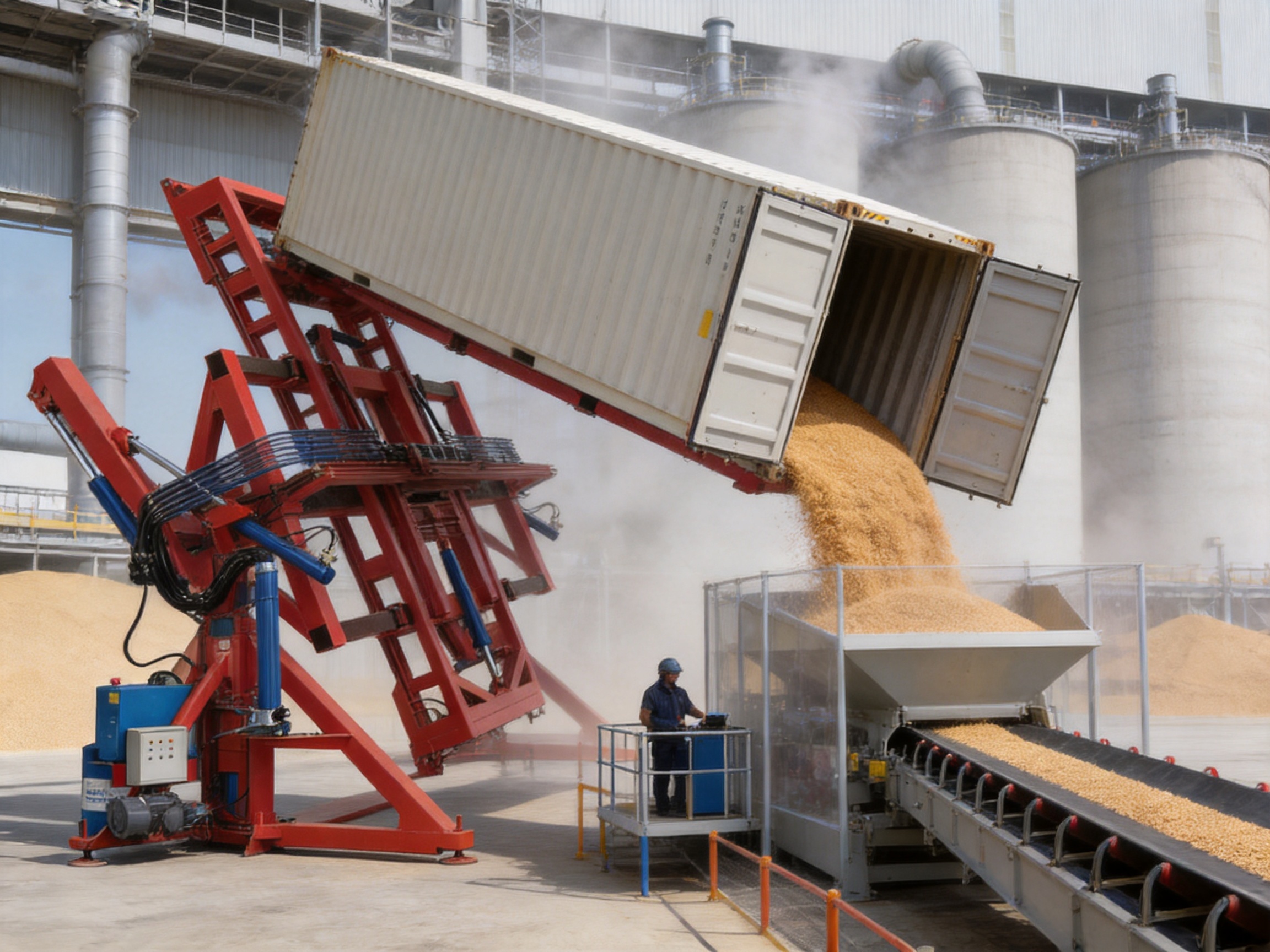
At the selected angle, bulk material flows through the open container doors into the receiving equipment. The operator or automatic control system can pause, continue, or return the container according to the material flow and downstream equipment capacity. After discharge, the tilter returns the container to its original position, releases the locks, and prepares for the next cycle.
This sequence allows the equipment to perform multiple functions in a single integrated station. It can reduce the need for separate lifting, positioning, and tipping machines. It also supports connection with conveyor systems, dust collection units, hoppers, metering equipment, and plant management systems.
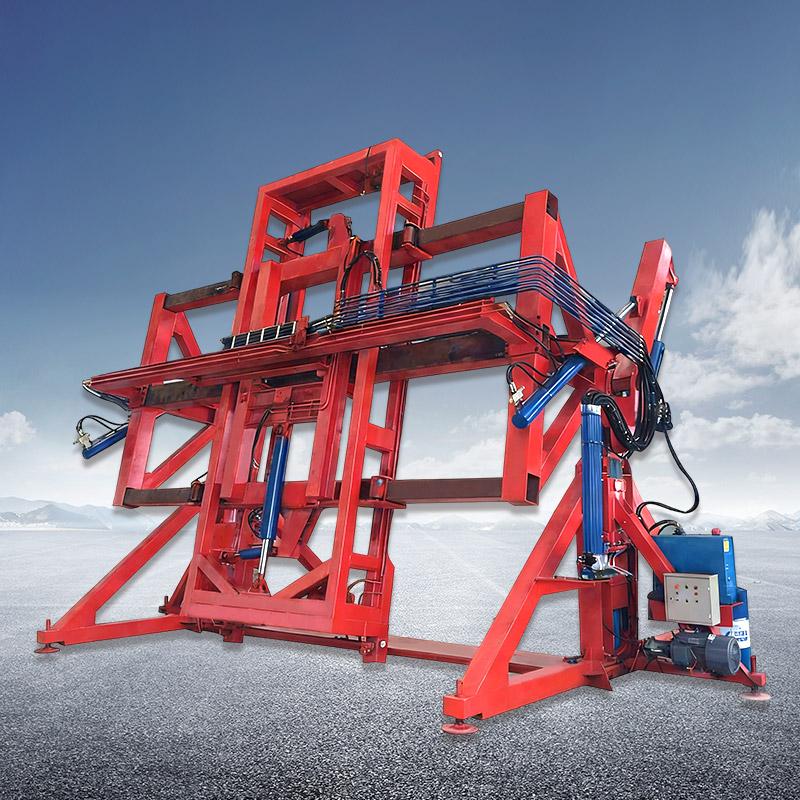
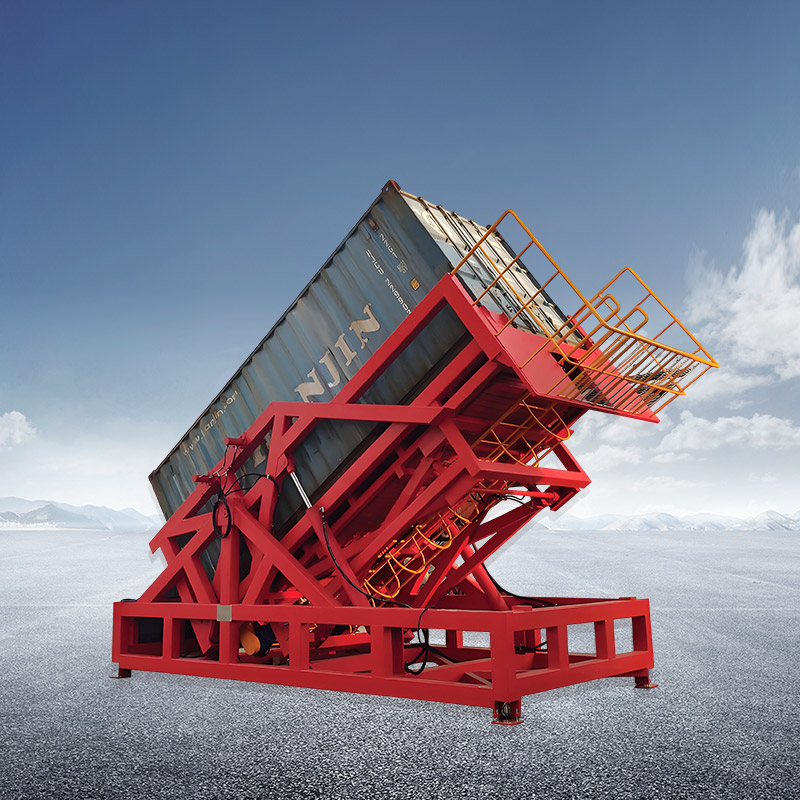
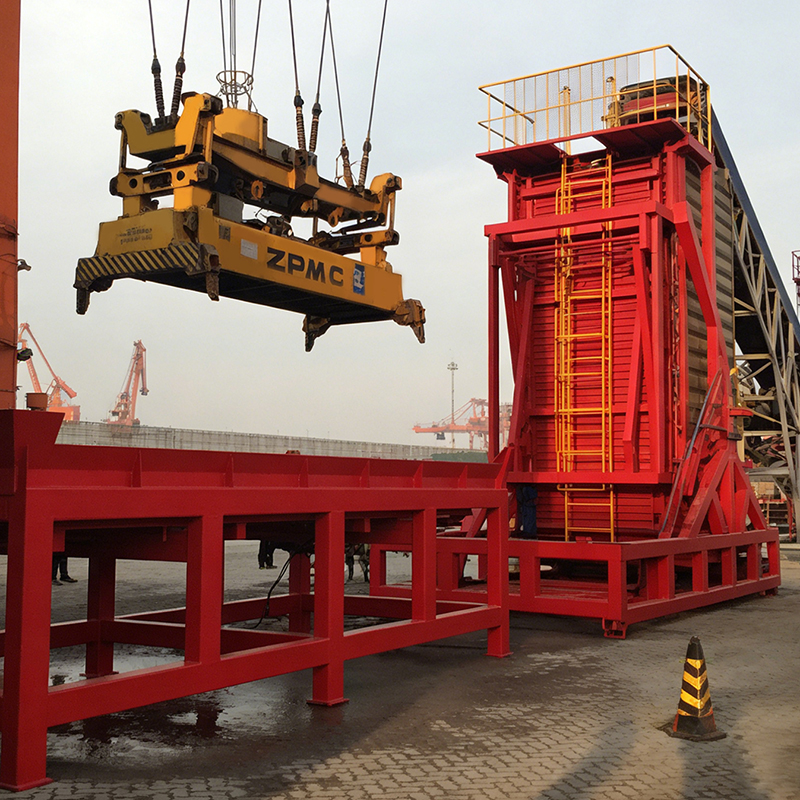
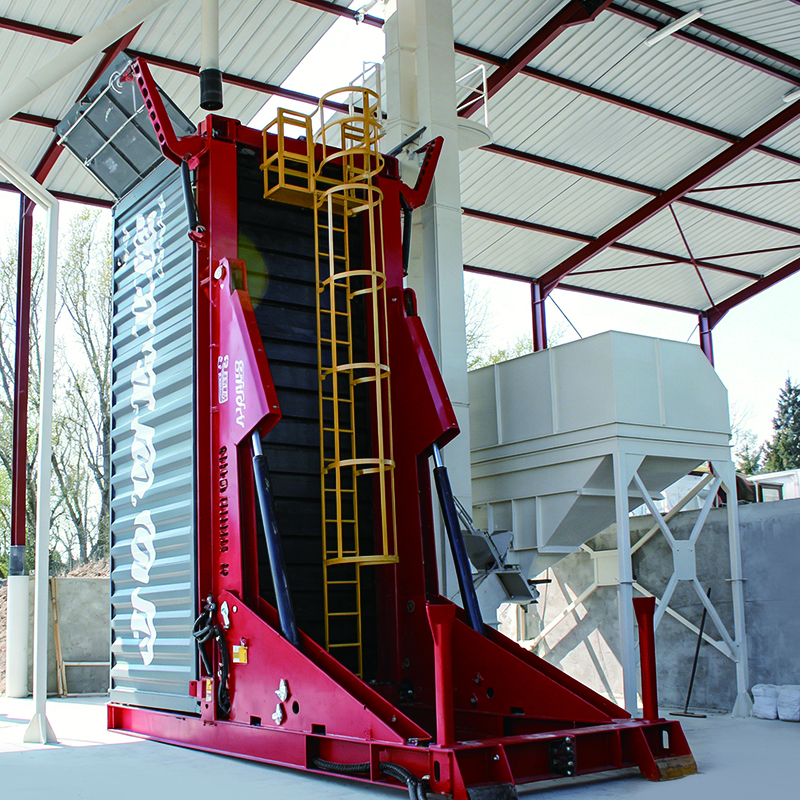
Gantry Container Tilter
3. Main Product Features
3.1 Full-Range Tilting from 0 to 90 Degrees
The tilter is designed to provide a full operating range from 0 to 90 degrees. This capability is important because different materials require different discharge angles. Free-flowing grains may discharge effectively at a moderate angle, while sticky, irregular, or dense materials may require a steeper position.
Controlled tilting also allows the operator to match the unloading process to the capacity of the receiving hopper or conveyor. Instead of releasing the entire load suddenly, the container can be rotated gradually to achieve a smoother material flow. This can help reduce blockages, excessive impact on downstream equipment, and unnecessary dust generation.
3.2 Heavy-Duty Gantry Frame
The gantry frame is the primary load-bearing structure of the machine. It is designed to support large containers and their contents while maintaining stability during lifting and rotation. The heavy-duty steel structure is suitable for demanding industrial environments in which equipment may operate repeatedly throughout the day.
A gantry configuration offers several advantages over lighter mobile attachments. The load is supported by a dedicated structural frame rather than relying only on a forklift mast or vehicle attachment. This provides a more controlled load path and allows the equipment to be engineered around the expected container dimensions, loading weight, tilting angle, and operating cycle.
The steel frame can be manufactured with protective surface treatment and anti-corrosion coating to improve durability in port, outdoor, grain, chemical, and industrial environments. With correct installation, inspection, and maintenance, the structural assembly is designed for long service life under normal working conditions.
3.3 30- and 40-Ton Lifting Capability
The standard technical range includes maximum lifting capacities of 30 or 40 tons. The correct capacity depends on the model, container type, material density, loading pattern, and site requirements. Capacity selection should always consider the combined weight of the container and its contents, as well as dynamic forces generated during starting, stopping, and tilting.
The available capacity range enables the equipment to serve both general industrial users and high-throughput facilities that process fully loaded containers. It also provides a basis for customized engineering when the customer has special container dimensions, unusual materials, or additional equipment mounted around the discharge area.
3.4 Optional Image Display System
Container positioning is an important part of safe and efficient operation. The equipment can be configured with an image display system to help operators quickly identify and align the container with the tilter. Visual assistance is especially useful in busy yards, low-light areas, or facilities where containers arrive with different markings and loading conditions.
By improving positioning accuracy, the image system can shorten setup time and reduce the possibility of misalignment. It may also support more advanced automation by providing visual information to the control system for container recognition and positioning confirmation.
3.5 Automatic Container Door Mechanism
The tilter can be equipped with an automatic opening and closing mechanism for container doors. Manual door operation can require additional labor and may expose workers to material pressure behind the doors. An automatic door system allows the opening process to be managed from a safer operating position and synchronized with the lifting sequence.
The door mechanism can be adapted to the container design and unloading arrangement. In applications involving dusty or fine materials, the door area can be connected with sealing skirts, enclosed chutes, or dust extraction equipment to help control airborne particles.
3.6 Optional Weighing Function
An integrated weighing function can provide useful process data during unloading. Weighing allows the facility to confirm incoming material quantities, support inventory management, and monitor the relationship between container weight and downstream production.
When combined with automated controls, the weighing function can also support batch management and material traceability. For example, a plant can record the container identification, material type, unloading time, and measured weight as part of its logistics or production management system.
3.7 Automated Control System
The equipment can support automatic positioning, locking, lifting, and tilting. Automation reduces dependence on manual coordination and helps ensure that each operating cycle follows defined safety conditions. The control system can monitor position, angle, locking status, lifting movement, emergency-stop conditions, and other operating signals.
Automation does not eliminate the need for trained personnel. Instead, it changes the operator’s role from manually controlling every movement to supervising the process, confirming operating conditions, and responding to alarms or unusual situations. This can reduce physical workload and improve consistency between operators.
4. Models and Technical Parameters
The product range includes single-channel and dual-channel configurations. The appropriate configuration depends on the layout of the unloading area, the desired throughput, container movement strategy, and available civil works.
| Model | Flip Form | Maximum Lifting Weight | Maximum Tilting Angle | Typical Configuration |
|---|---|---|---|---|
| TJXDD 20 | Single channel | 30/40 tons | 90 degrees | Single-container handling station |
| TJXDS 20 | Single channel | 30/40 tons | 90 degrees | Single-channel automated unloading |
| TJXSD 20 | Dual channel | 30/40 tons | 90 degrees | Two-channel handling arrangement |
| TJXSS 20 | Dual channel | 30/40 tons | 90 degrees | Dual-channel automated unloading |
The model names and technical configurations provide a starting point for selection. Final equipment specifications should be confirmed according to container size, material characteristics, rated loading weight, operating cycle, foundation conditions, discharge height, conveyor arrangement, and local safety requirements.
5. Advantages Compared with Conventional Unloading Methods
5.1 Greater Stability than Forklift Tipping
Forklift tipping can be useful for small-scale or occasional tasks, but it may become inefficient when containers are heavy, frequently handled, or filled with bulk materials. A forklift must support the load while also maintaining vehicle stability and maneuverability. The process may require more space and several operators to coordinate vehicle movement, container doors, and material discharge.
A gantry container tilter is a dedicated machine with a fixed operating zone. Its frame, locking system, and hydraulic movement are designed around the container load. This provides a more predictable tipping process and reduces dependence on the balancing skill of a forklift operator.
5.2 Reduced Manual Labor
Traditional unloading may require several workers to open doors, guide vehicles, clean residual material, and supervise the flow into the receiving system. An automated gantry tilter can combine many of these tasks into one controlled process. Depending on the facility layout and automation level, the required operating staff may be reduced from a larger manual team to one or two trained personnel.
Reduced labor requirements can be especially valuable in high-volume facilities, where staffing costs and operator fatigue have a direct effect on productivity. It also allows personnel to work from safer positions away from the container opening and moving equipment.
5.3 Improved Unloading Consistency
Manual methods often produce differences in unloading speed, angle, and material flow. These differences can affect conveyor loading, dust generation, and the amount of residual material left in the container. A programmable tilter provides a repeatable movement profile, allowing the facility to establish standard operating parameters for each material type.
Consistent operation is also useful for planning. If the unloading cycle is more predictable, logistics managers can estimate receiving capacity, vehicle turnaround time, storage requirements, and downstream production availability with greater confidence.
5.4 Lower Material Loss and Spillage
Controlled rotation can reduce the uncontrolled release of material that may occur when a container is tipped abruptly. The use of a receiving hopper, sealed chute, or conveyor connection further limits spillage around the unloading station.
Reduced spillage provides both economic and environmental benefits. Valuable grain, chemical powder, cement product, or mineral material is less likely to be lost. The surrounding work area also requires less frequent cleaning, and the risk of slips, dust accumulation, and contamination can be reduced.
5.5 Better Integration with Dust Control Systems
Bulk material unloading may generate dust, especially when fine powders or dry agricultural products are discharged from height. A gantry tilter can be designed with enclosed discharge arrangements, flexible skirts, extraction ducts, and filters. This is more difficult to achieve consistently when containers are tipped using mobile equipment in an open area.
Dust control should be engineered according to the properties of the material and the local regulatory environment. The tilter itself is not a substitute for a complete dust management system, but its fixed and repeatable discharge position makes it easier to install effective containment and extraction equipment.
5.6 Better Use of Plant Space
A fixed gantry station can be planned together with container lanes, hoppers, conveyors, and storage systems. Compared with repeated forklift maneuvering, a dedicated unloading area can provide a more organized traffic pattern. The operating zone may also reduce conflicts between container vehicles, pedestrians, and other plant equipment.
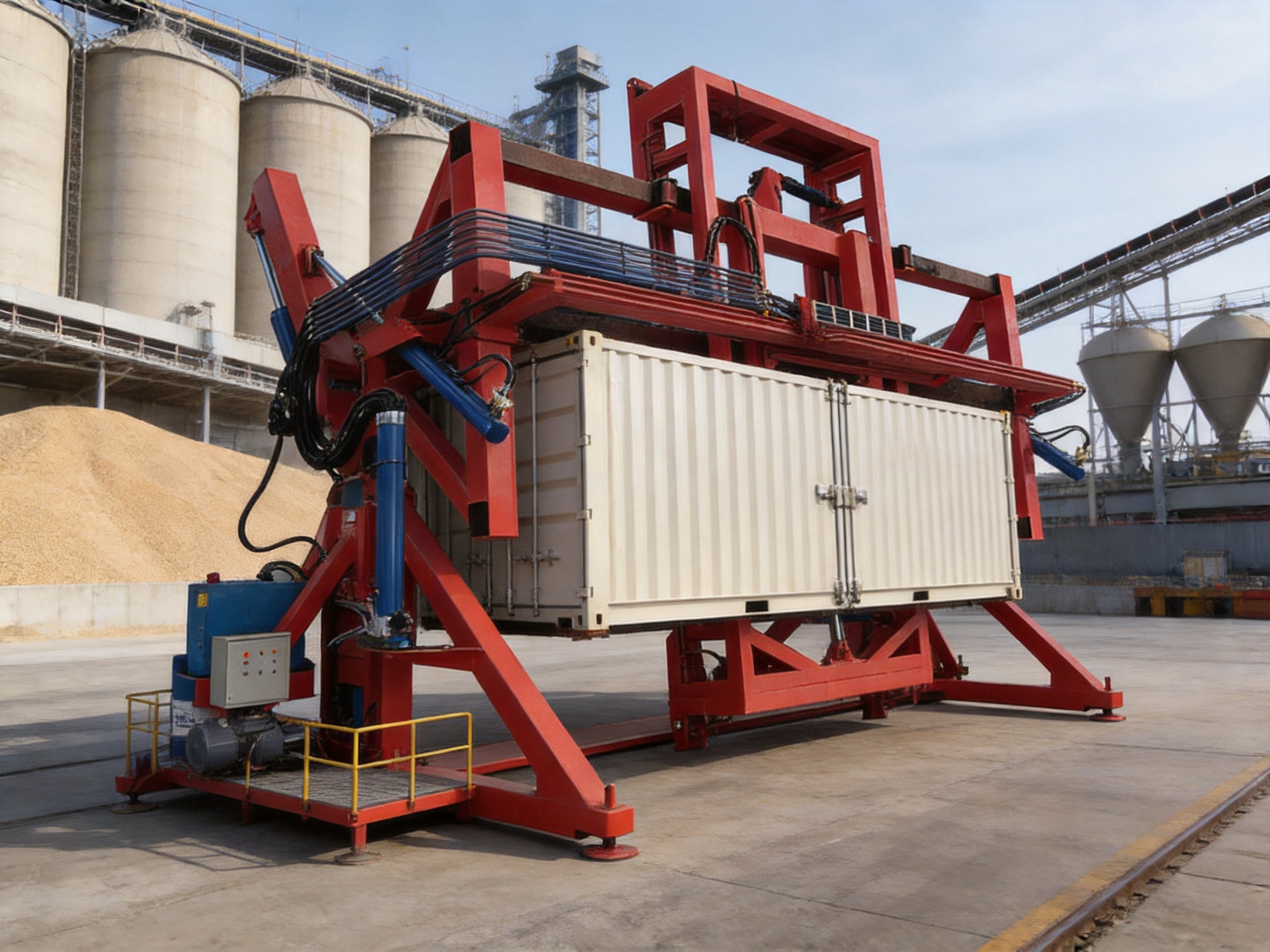
The required installation area depends on the container size, approach direction, discharge equipment, access routes, maintenance clearances, and local civil engineering conditions. A typical arrangement for 40-foot containers may require approximately 12 meters in length, 6 meters in width, and 5 meters in height, subject to detailed design.
6. Application Areas
6.1 Grain and Agribulk Terminals
Grain terminals, feed plants, flour mills, and oilseed processing facilities frequently receive corn, soybeans, wheat, rice, barley, and other agricultural materials in containers. These facilities require high throughput, controlled unloading, and effective dust management.
For free-flowing grain and oilseeds, an operating angle in the range of approximately 50 to 55 degrees may be suitable, depending on moisture and material condition. A single machine can potentially handle several containers per hour when supported by a properly sized receiving hopper and conveyor system.
6.2 Recycling and Waste Processing
Recycling plants may use containers for scrap metal, packaging waste, electronic waste, recovered materials, and industrial residues. These materials can have irregular shapes and uneven weight distribution. A strong locking system and carefully controlled movement are therefore important.
Scrap metal may require a steep angle, potentially between 75 and 90 degrees, to encourage complete discharge. The final operating parameters should be determined through testing because material size, shape, moisture, and container loading method can significantly affect flow.
6.3 Mining, Minerals, and Cement
Mineral products, cement clinker, aggregates, and related materials are often dense and heavy. Handling these materials places high demands on the structural frame, hydraulic system, container locks, and receiving equipment.
The gantry tilter can be integrated with hoppers, belt conveyors, bucket elevators, or enclosed transfer points. A controlled angle and moderate movement speed can reduce impact loading and help protect downstream equipment.
6.4 Chemical and Industrial Powders
Chemical powders, additives, pigments, and other fine materials require special attention to containment, compatibility, dust control, and cleaning. A fixed unloading station makes it easier to install enclosed chutes and connect the discharge area to a dust collector.
For powder materials, moderate angles of approximately 45 to 50 degrees may be appropriate in certain applications. However, material testing is recommended because cohesive powders may bridge, compact, or adhere to the container walls.
6.5 Ports, Terminals, and Multimodal Logistics Centers
Ports and inland terminals often handle containers arriving by ship, rail, and road. A gantry container tilter can be installed as part of a dedicated bulk unloading line, allowing selected containers to move directly from the logistics network into a plant or storage system.
In such environments, throughput, equipment availability, and safe traffic management are essential. The tilter can be connected with container identification, weighing, conveyor monitoring, and centralized control systems to support a more complete logistics process.
6.6 Paper, Food, Feed, and New Energy Industries
Paper mills, food processors, feed plants, and new energy material facilities may receive powders, granules, fibers, or other bulk products. The equipment can be customized with suitable contact materials, discharge arrangements, cleaning access, and dust control components according to the application.
Food and feed applications may require additional attention to hygiene, material residue, inspection, and cleaning. Chemical or new energy applications may require specialized safety measures based on the material’s properties. These requirements should be addressed during the engineering and specification stage.
7. Recommended Operating Parameters
Material behavior is one of the most important factors in selecting an unloading angle. Bulk density, moisture, particle size, friction, cohesion, temperature, and container filling pattern all influence discharge performance.
| Material Type | Typical Bulk Density | Indicative Optimal Tilt Angle | Potential Throughput |
|---|---|---|---|
| Corn and soybeans | 0.72–0.78 tons per cubic meter | 50–55 degrees | 4–6 containers per hour |
| Scrap metal | 0.90–1.20 tons per cubic meter | 75–90 degrees | 3–5 containers per hour |
| Cement clinker | 1.20–1.50 tons per cubic meter | 60–65 degrees | 3–4 containers per hour |
| Chemical powders | 0.50–0.80 tons per cubic meter | 45–50 degrees | 5–7 containers per hour |
The values in this table are reference ranges rather than universal guarantees. Actual throughput depends on container loading, material flowability, door operation, receiving equipment, operator procedures, safety checks, and the time needed to move containers in and out of the station.
With appropriate system design, a gantry container tilter may handle approximately three to seven containers per hour. Annual capacity depends on working shifts, operating days, maintenance schedules, material type, and the availability of upstream and downstream equipment.
8. Advanced Manufacturing and Engineering Strengths
The performance of a heavy-duty container tilter depends not only on its basic design but also on how the equipment is engineered, fabricated, assembled, tested, and integrated. Jiangsu Zhengding Intelligent Equipment Co., Ltd. combines equipment research and development with manufacturing and system engineering. This allows the company to provide more than an individual machine and to develop complete loading and unloading solutions.
8.1 Heavy Steel Structure Fabrication
The gantry frame must resist vertical loads, horizontal forces, torsional effects, and repeated stress during the lifting and tilting cycle. Manufacturing quality therefore begins with steel selection, cutting, forming, welding, and dimensional control.
Heavy structural components should be prepared according to approved engineering drawings and assembled with controlled welding procedures. Critical connection points, pivot supports, hydraulic mounting points, and locking structures require careful alignment. Accurate fabrication helps reduce vibration, uneven loading, and premature wear during operation.
8.2 Hydraulic System Engineering
The hydraulic system controls the lifting and rotation movement of the container. It must provide sufficient force while also allowing smooth starting, stopping, and speed adjustment. Dual hydraulic cylinders support balanced movement and help distribute the load through the structure.
Integrated overload protection is important because the actual container load may vary. Hydraulic components, hoses, valves, seals, and connections should be selected for the intended pressure, duty cycle, temperature range, and environmental conditions. The control system can also monitor movement and stop the equipment when an abnormal condition is detected.
8.3 Precision Alignment and Assembly
A gantry tilter contains multiple moving parts that must work together accurately. The container locking points, lifting frame, pivot axis, hydraulic cylinders, sensors, and safety devices must be correctly aligned. Poor alignment can cause uneven loading, excessive noise, accelerated wear, or difficulty engaging the container.
During assembly, dimensional inspection and functional testing help confirm that the structure moves correctly throughout the full tilting range. This is especially important for dual-channel models and customized systems with multiple operating positions.
8.4 Electrical and Automation Integration
The company’s experience in intelligent logistics equipment supports the integration of programmable controls, sensors, image systems, weighing devices, safety interlocks, and operator interfaces. These components can be configured according to the customer’s preferred operating method.
Automation may include automatic container positioning, lock confirmation, lifting sequence control, angle control, door mechanism operation, weighing data collection, and fault alarms. The system can also be connected with conveyors, dust collectors, plant monitoring systems, and other material-handling equipment.
8.5 Safety-Oriented Design
Safety is a central requirement for equipment that lifts and rotates heavy containers. The tilter can include automatic safety locks, overload protection, emergency stops, movement limits, access controls, and interlocking functions. These features are intended to prevent uncontrolled descent, unintended movement, or operation when the container is not securely locked.
Safety design must be combined with appropriate installation, inspection, operating procedures, and personnel training. Operators should understand emergency stop functions, container loading limits, load balance, visual inspection, and the correct response to alarms.
8.6 Surface Protection and Service Life
Equipment installed outdoors or in dusty, humid, or chemically active environments needs suitable surface protection. Anti-corrosion coatings and appropriate component selection can help protect the steel frame and improve long-term reliability.
Service life also depends on maintenance. Hydraulic oil, filters, seals, bearings, locking components, electrical devices, and structural welds should be inspected according to operating hours and site conditions. A well-maintained machine is more likely to provide stable performance and predictable availability.
9. Why Choose a Specialized Manufacturer
Purchasing a container tilter from a company that specializes in automated loading and unloading equipment can provide advantages during design, installation, and after-sales support. Jiangsu Zhengding Intelligent Equipment Co., Ltd. develops and manufactures rear dumpers, side-turn truck dumpers, car loading equipment, container flippers, and related logistics systems.
This broad product range gives the company experience with different vehicle types, containers, material characteristics, lifting systems, hydraulic technologies, and plant layouts. The same customer may require several types of unloading equipment, and a manufacturer with a wider portfolio can help coordinate the complete material-handling process.
The company provides systematic solutions for automobile and container loading and unloading. Its products are used in steel, chemical, cement, coal, grain, oil, food, feed, ports, papermaking, and new energy industries. This industry coverage supports the development of application-specific designs rather than relying only on a standard machine configuration.
Jiangsu Zhengding Intelligent Equipment Co., Ltd. is also positioned as a national high-tech enterprise focused on research and development, manufacturing, and sales of intelligent logistics equipment. Its products have been exported to Japan, Brazil, Egypt, Pakistan, India, the Middle East, and Southeast Asia. International project experience can help the company understand different site conditions, communication requirements, technical specifications, and customer expectations.
The company has served or supplied equipment to well-known users and groups including Budweiser, Heineken, Buhler Group, Wilmar International, Cargill, DuPont, Louis Dreyfus, Charoen Pokphand Group, and Saint-Gobain Group. Such project exposure demonstrates experience in industries where operational continuity, safety, hygiene, automation, and throughput are important.
10. Complete System Integration
A container tilter is most effective when it is designed as part of a complete unloading system. Jiangsu Zhengding can provide customized engineering support for integration with existing conveyor systems, dust collection units, hoppers, storage silos, weighing equipment, and container handling logistics.
The receiving hopper should be designed according to material flow characteristics and the expected discharge rate. Conveyor capacity should be sufficient to accept the material without creating blockages or excessive back pressure. Dust extraction should be positioned near transfer points, container doors, and enclosed chutes. Access platforms and maintenance areas should allow inspection without exposing personnel to unnecessary hazards.
The logistics arrangement is equally important. The site should define how containers arrive, how they are aligned, how empty containers leave, and how vehicles interact with the unloading station. A clear traffic plan can reduce waiting time and prevent interference with pedestrians or other mobile equipment.
For automated facilities, the tilter can be connected with container identification and management software. The system may record container numbers, material types, weights, operating times, alarms, and maintenance information. This provides a foundation for data-based logistics management and production planning.
11. Installation and Site Planning
Before installation, the customer should confirm the foundation design, equipment dimensions, lifting requirements, power supply, hydraulic arrangements, control room location, container approach path, discharge height, and maintenance clearances.
A typical operational area for a 40-foot container may be approximately 12 meters long, 6 meters wide, and 5 meters high. These dimensions are indicative only. The actual space requirement may be larger when the system includes vehicle lanes, hopper access, conveyors, dust collectors, platforms, stairs, safety barriers, and service areas.
For 20-foot containers or selected mobile arrangements, a smaller footprint may be possible. However, reducing the footprint should not compromise container alignment, operator visibility, emergency access, or maintenance safety.
The foundation must be able to withstand the static and dynamic loads generated during operation. The ground should be surveyed for levelness and bearing capacity. Electrical and hydraulic services should be located to protect them from impact and to allow convenient inspection.
Installation should be followed by no-load testing, partial-load testing, and full-load testing where appropriate. The test process should confirm container locking, lifting movement, angle control, emergency stops, safety interlocks, weighing accuracy, door operation, and communication between the tilter and connected equipment.
12. Maintenance and Reliability
Preventive maintenance is essential for maintaining safe and efficient operation. Operators should conduct a visual inspection before each shift. This inspection may include checking container locks, hydraulic hoses, cylinder connections, structural components, electrical cabinets, sensors, emergency stops, and the surrounding work area.
Hydraulic oil should generally be replaced every 2,000 operating hours or once per year, whichever comes first, subject to the manufacturer’s instructions and actual site conditions. Hydraulic filters may require replacement approximately every 500 operating hours. Cylinder seals can have a service life of five to seven years under normal duty cycles, but this varies with load, environment, temperature, contamination, and maintenance quality.
Structural welds, pivot points, bolts, safety locks, and guide components should be inspected at regular intervals. Unusual noise, vibration, uneven movement, hydraulic leakage, delayed locking, or inaccurate angle readings should be treated as signs requiring investigation.
Maintenance records should include operating hours, inspection results, oil changes, filter replacement, component repairs, alarms, and safety tests. A documented maintenance program helps identify recurring issues and supports long-term equipment planning.
13. Operator Training and Safety Management
Although automation simplifies operation, trained personnel remain essential. Operators should understand the machine’s rated capacity, approved container types, loading balance, material limitations, operating sequence, emergency stop functions, and inspection requirements.
A structured training session should cover normal operation, container alignment, locking confirmation, door control, weighing functions, angle selection, alarm handling, emergency procedures, and safe access around the equipment. Operators should never stand beneath a suspended container or enter the danger zone while the equipment is moving.
Safety procedures should also address abnormal conditions, including a container that is overloaded, damaged, misaligned, frozen, stuck, or loaded unevenly. If material fails to discharge, personnel should not attempt to enter the container or manually clear the load while it is suspended. The equipment should be returned to a safe state before troubleshooting begins.
Facilities that combine equipment safeguards with regular training, clear procedures, housekeeping, and supervision are better positioned to reduce incidents and maintain reliable operations.
14. Frequently Asked Questions
Q1: What container sizes can the gantry container tilter handle?
The standard equipment is intended for common ISO container formats, including 20-foot and 40-foot containers. Some configurations may be adapted for 45-foot containers or specialty containers, subject to container dimensions, corner casting locations, total weight, and locking requirements. Smaller containers may also be possible with adjustable clamping or customized support arrangements.
Q2: What is the maximum lifting capacity?
The principal models are available with maximum lifting capacities of 30 or 40 tons. The final rated capacity must be selected according to the complete container weight, material loading pattern, dynamic forces, and site operating conditions. Customers should not exceed the approved rated capacity.
Q3: Can the machine unload grain and powder materials?
Yes. The tilter can be used for grains, oilseeds, feed products, cement-related materials, minerals, and selected powders. Material testing and system design are important because flowability, moisture, density, particle size, and cohesion affect the required tilt angle and discharge performance.
Q4: Can it be connected to a dust collection system?
Yes. The discharge area can be enclosed with flexible skirts, sealed chutes, hoppers, and extraction ducts connected to a dust collector. The effectiveness of dust control depends on enclosure design, extraction airflow, filter selection, material properties, and maintenance.
Q5: Is a weighing system available?
Yes. A weighing function can be configured according to the customer’s process requirements. It may be used for incoming material verification, inventory management, batch control, and production records. Weighing accuracy should be confirmed during commissioning and checked periodically.
Q6: Does the tilter open the container doors automatically?
An automatic container door opening and closing mechanism is available as an optional configuration. This function can reduce manual intervention and allow door operation to be coordinated with the lifting and tilting sequence.
Q7: What is the typical unloading throughput?
Indicative throughput may range from three to seven containers per hour, depending on material type, container size, receiving equipment, operating angle, door operation, vehicle movement, and safety checks. Actual performance should be confirmed through application analysis and, where necessary, material testing.
Q8: Can the machine be integrated with an existing conveyor line?
Yes. The tilter can be engineered to work with existing hoppers, belt conveyors, enclosed transfer points, dust collectors, weighing systems, and plant control networks. Interface dimensions, elevations, capacity, control signals, and safety interlocks must be reviewed during the design stage.
Q9: What safety devices are included?
Depending on the configuration, safety functions may include automatic locking, overload protection, emergency stops, movement limits, position sensors, interlocks, alarms, and controlled hydraulic descent. The complete installation should also include barriers, signs, access controls, and safe maintenance platforms.
Q10: How much maintenance does the equipment require?
Routine maintenance includes inspection of the frame, hydraulic system, locks, sensors, electrical cabinet, bearings, and safety devices. Hydraulic oil is generally changed every 2,000 operating hours or annually, while filters may be replaced around every 500 operating hours. The actual schedule should follow the operating environment and manufacturer’s recommendations.
Q11: Can the equipment be customized?
Yes. Customization may include capacity, channel arrangement, container size, discharge height, weighing system, image display system, automatic doors, dust containment, conveyor interfaces, control functions, and site layout. The customer should provide container data, material information, throughput targets, and installation drawings for accurate engineering.
Q12: Why is a gantry tilter preferable to a forklift attachment?
A gantry tilter provides a dedicated load-bearing frame, controlled hydraulic movement, container locking, and a fixed unloading position. These features can improve stability, repeatability, safety, and integration with hoppers and conveyors. A forklift may remain useful for other site tasks, but a dedicated tilter is generally more suitable for frequent, high-capacity container unloading.
15. Conclusion
The Gantry Container Tilter is a practical solution for companies seeking to automate the unloading of bulk materials from shipping containers. Its 0-to-90-degree tilting capability, heavy-duty gantry structure, 30- and 40-ton lifting options, optional weighing and image systems, automatic door mechanism, and programmable controls make it suitable for demanding industrial applications.
Compared with manual unloading and conventional forklift tipping, the equipment offers a more stable and repeatable operating process. It can reduce labor requirements, limit spillage, improve dust control opportunities, and support higher throughput when connected with suitable hoppers and conveyors.
Jiangsu Zhengding Intelligent Equipment Co., Ltd. strengthens this product offering through experience in intelligent logistics equipment, heavy structural fabrication, hydraulic systems, automation integration, customized engineering, and international project support. Its broader range of truck dumpers, container flippers, car loading equipment, and automated handling systems allows customers to develop coordinated solutions for different transportation and production requirements.
For a successful project, the tilter should be selected as part of a complete system. Material properties, container size, rated load, unloading angle, throughput, dust control, foundation conditions, operator safety, and maintenance planning all need to be considered. With proper engineering and operation, a gantry container tilter can become a reliable link between container logistics and automated bulk material processing.
References
Jiangsu Zhengding Intelligent Equipment Co., Ltd. Product information for Gantry Container Tilter and automated loading and unloading equipment.
Jiangsu Zhengding Intelligent Equipment Co., Ltd. Technical information for container flippers, rear dumpers, side-turn truck dumpers, and integrated logistics systems.
ISO 12100. Safety of Machinery: General Principles for Design, Risk Assessment, and Risk Reduction.
International Organization for Standardization. ISO Freight Container Series: Container Dimensions, Corner Fittings, and Handling Requirements.
Industrial bulk material handling practices for grain, mineral, cement, recycling, chemical powder, and port logistics applications.
Manufacturer recommendations for hydraulic system inspection, oil replacement, filter maintenance, structural inspection, and operator training.


