

 English
 русский
 Español
 Français
 Português
 عربى




+86-13588556918
Content
- 1 1. The Development of Continuous Container Handling
- 2 2. Product Overview
- 3 3. Dedicated Container Feeder
- 4 4. Automatic Door Opening and Closing
- 5 5. Configurable Weighing Function
- 6 6. Integrated Loading and Unloading Functions
- 7 7. Continuous Handling Compared with Traditional Batch Methods
- 8 8. Throughput and Capacity Benefits
- 9 9. Space Efficiency and Simplified Logistics
- 10 10. Safety and Labor Advantages
- 11 11. Container Protection and Process Quality
- 12 12. Engineering and Manufacturing Strengths
- 13 13. Application Industries
- 14 14. Control System and Automation Architecture
- 15 15. Maintenance and Lifecycle Value
- 16 16. Why Choose an Integrated Supplier
- 17 17. Project Selection Considerations
- 18 18. Frequently Asked Questions
- 18.1 Q1: What is a Continuous Container Handling System?
- 18.2 Q2: Can the system handle both 20-foot and 40-foot containers?
- 18.3 Q3: What is the maximum lifting capacity?
- 18.4 Q4: Can loading and unloading be performed on the same line?
- 18.5 Q5: Is automatic container door operation available?
- 18.6 Q6: Can weighing be integrated into the process?
- 18.7 Q7: How does continuous handling compare with batch handling?
- 18.8 Q8: Can existing batch equipment be upgraded?
- 18.9 Q9: What industries can use the equipment?
- 18.10 Q10: What information is needed for a quotation?
- 18.11 Q11: Does automation remove the need for operators?
- 18.12 Q12: What are the main benefits for a high-volume facility?
- 19 19. Conclusion
- 20 References
- 21 Product: Continuous Container Handling System
Modern logistics facilities are under constant pressure to move more containers in less time, while controlling labor costs, reducing equipment idle time, and maintaining safe, repeatable operations. Railway container central stations, inland ports, large warehouses, intermodal terminals, and industrial distribution centers increasingly require handling systems that can support continuous operating rhythms instead of relying on slow, sequential batch procedures.
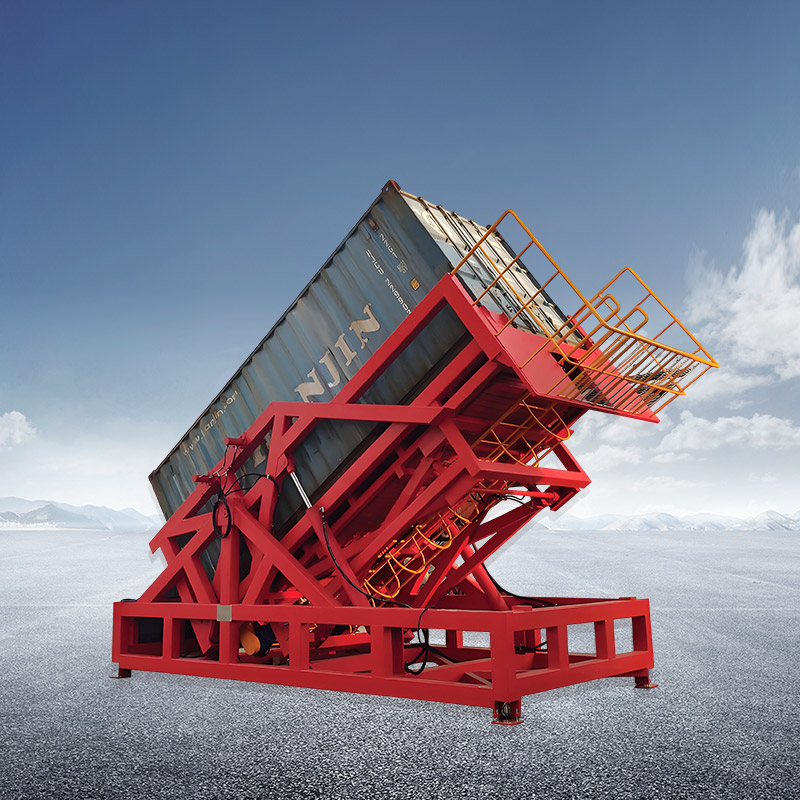
The Continuous Container Handling System is designed for this purpose. It combines container feeding, positioning, loading, unloading, optional weighing, and controlled container movement within an integrated production line. The system is suitable for both 20-foot and 40-foot containers and can be configured according to throughput requirements, site conditions, material characteristics, and the automation level required by the customer.
Unlike conventional equipment that requires a container to be completely processed before another container can enter the operating area, this system is designed to reduce changeover delays and coordinate multiple actions within one continuous workflow. The result is a more stable process, improved equipment utilization, reduced manual intervention, and better use of valuable site space.
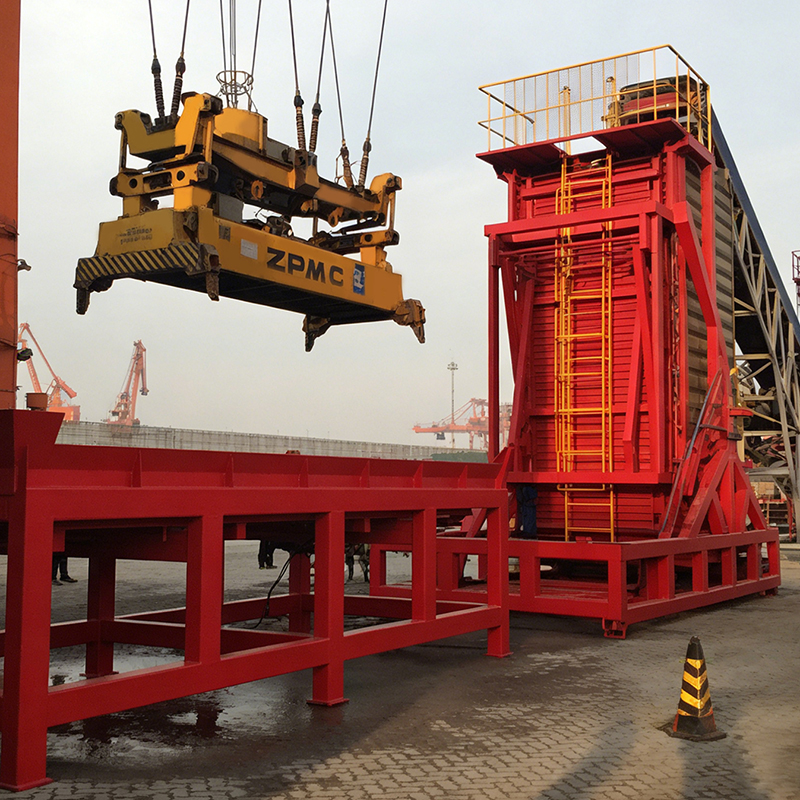
Continuous Container Handling System
1. The Development of Continuous Container Handling
Traditional container loading and unloading operations are commonly organized as separate batches. A container is positioned, secured, opened, loaded or unloaded, closed, weighed if necessary, and removed before the next container can begin processing. Although this approach is familiar, it creates a series of non-productive intervals between containers.
During these intervals, operators may need to reposition equipment, release clamps, open or close doors, check container alignment, remove the processed container, and wait for the next unit to arrive. Each individual delay may appear small, but the accumulated time can significantly reduce the daily capacity of a facility.
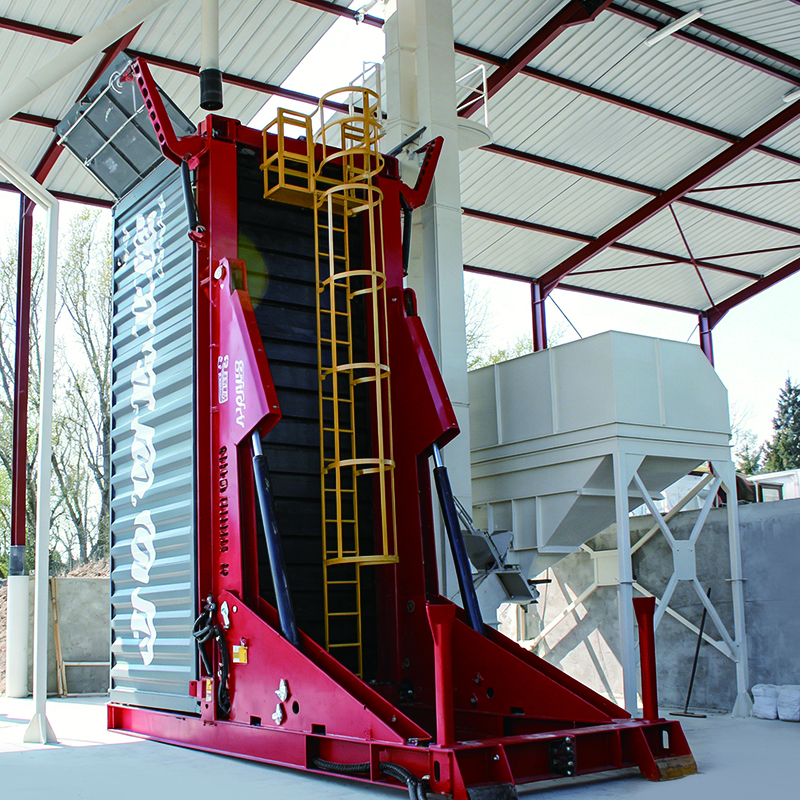
Continuous container handling addresses this problem by coordinating container movement and operating functions as part of a connected system. Indexing conveyors, dedicated feeders, container tilting platforms, automated door mechanisms, and synchronized transfer equipment can work together to reduce unnecessary stops. The system does not merely increase the speed of one machine; it improves the relationship between the entire sequence of operations.
In a continuous system, the next container can be prepared while the current container is being processed. Certain loading, unloading, positioning, weighing, and transfer tasks can overlap, depending on the selected configuration. This allows the production line to maintain a more consistent rhythm and reduces the sharp peaks and valleys associated with manual batch handling.
Industry comparisons indicate that facilities moving from traditional batch methods to continuous handling can achieve substantial throughput improvements using similar numbers of personnel and dock positions. Typical operational comparisons show continuous systems achieving approximately 10 to 16 containers per hour, while traditional batch operations commonly handle approximately 4 to 8 containers per hour. Actual capacity depends on the material, container condition, loading method, cycle requirements, and site layout.
2. Product Overview
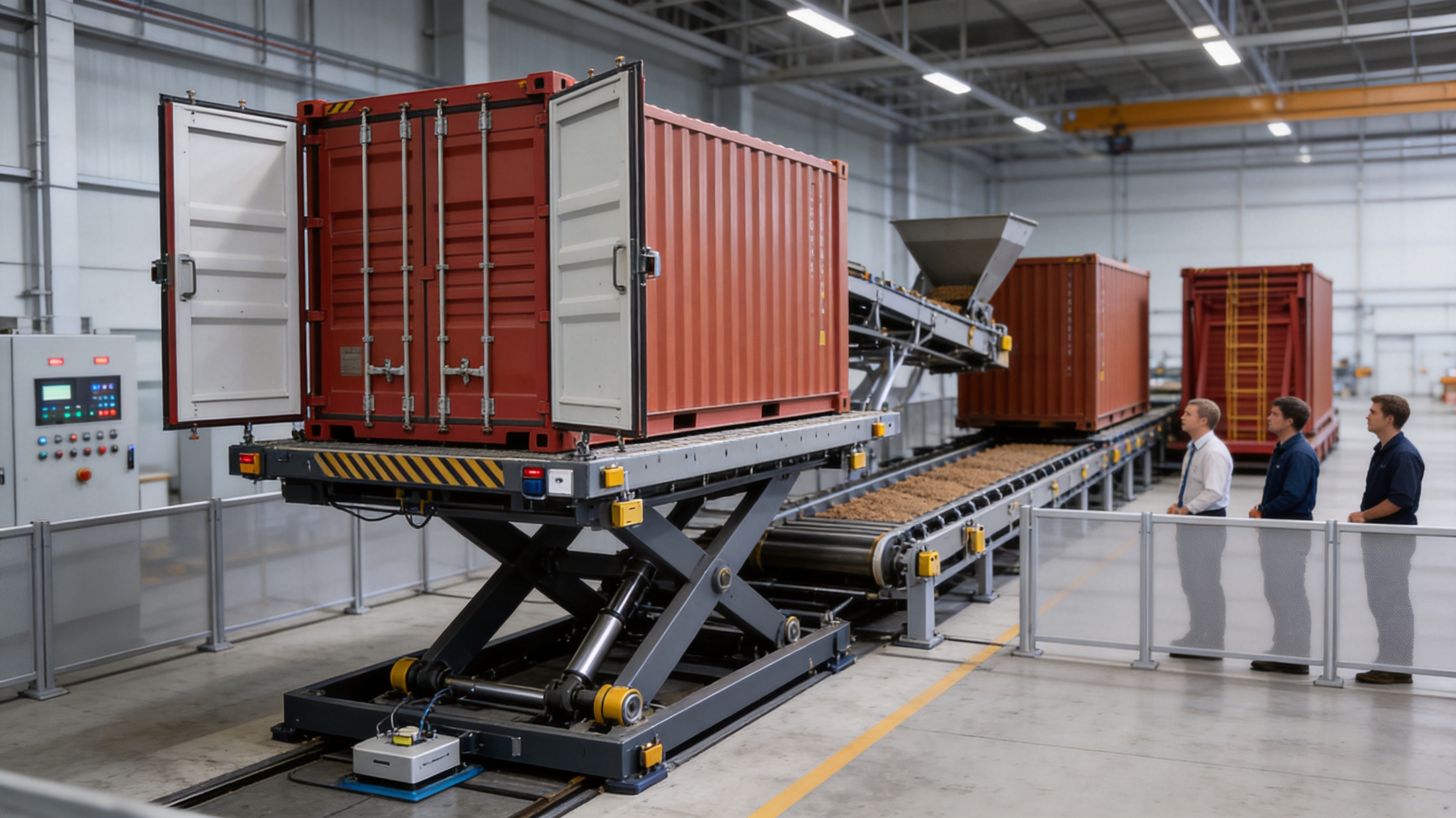
The Continuous Container Handling System is an integrated solution for loading and unloading containers. It is engineered to meet the operating requirements of both 20-foot and 40-foot containers and can be used in facilities where high throughput and demanding operating rhythms are essential.
The system can be applied in railway container central stations, inland ports, logistics parks, large warehouses, industrial plants, and other locations where containers must be processed quickly and consistently. It can also support industries that require controlled loading or unloading of bulk materials, packaged products, agricultural commodities, chemicals, food ingredients, and other goods compatible with the selected handling process.
A core characteristic of the equipment is its integrated design. Loading and unloading functions are brought together within the same production line instead of being distributed across unrelated work areas. This reduces the need to transfer containers between different equipment groups and simplifies the overall logistics route.
The system can be supplied as a standard configuration or customized for specific operational requirements. Customization may include container size, maximum lifting capacity, lifting angle, weighing functions, door automation, conveyor arrangement, control strategy, safety protection, and connection with upstream or downstream equipment.
Basic Model Configuration
| Model | Applicable Container Length | Approximate Size L × W | Maximum Lifting Weight | Maximum Lifting Angle |
|---|---|---|---|---|
| TJXH 20 | 20-foot containers | 6 × 3 meters | 50 tons | 45° or 60° |
| TJXH 40 | 40-foot containers | 12 × 3 meters | 100 tons | 45° or 60° |
The parameters in the table provide a basic reference for equipment selection. Final technical specifications should be confirmed after reviewing the container type, payload, operating cycle, material properties, installation foundation, required safety standards, and local project conditions.
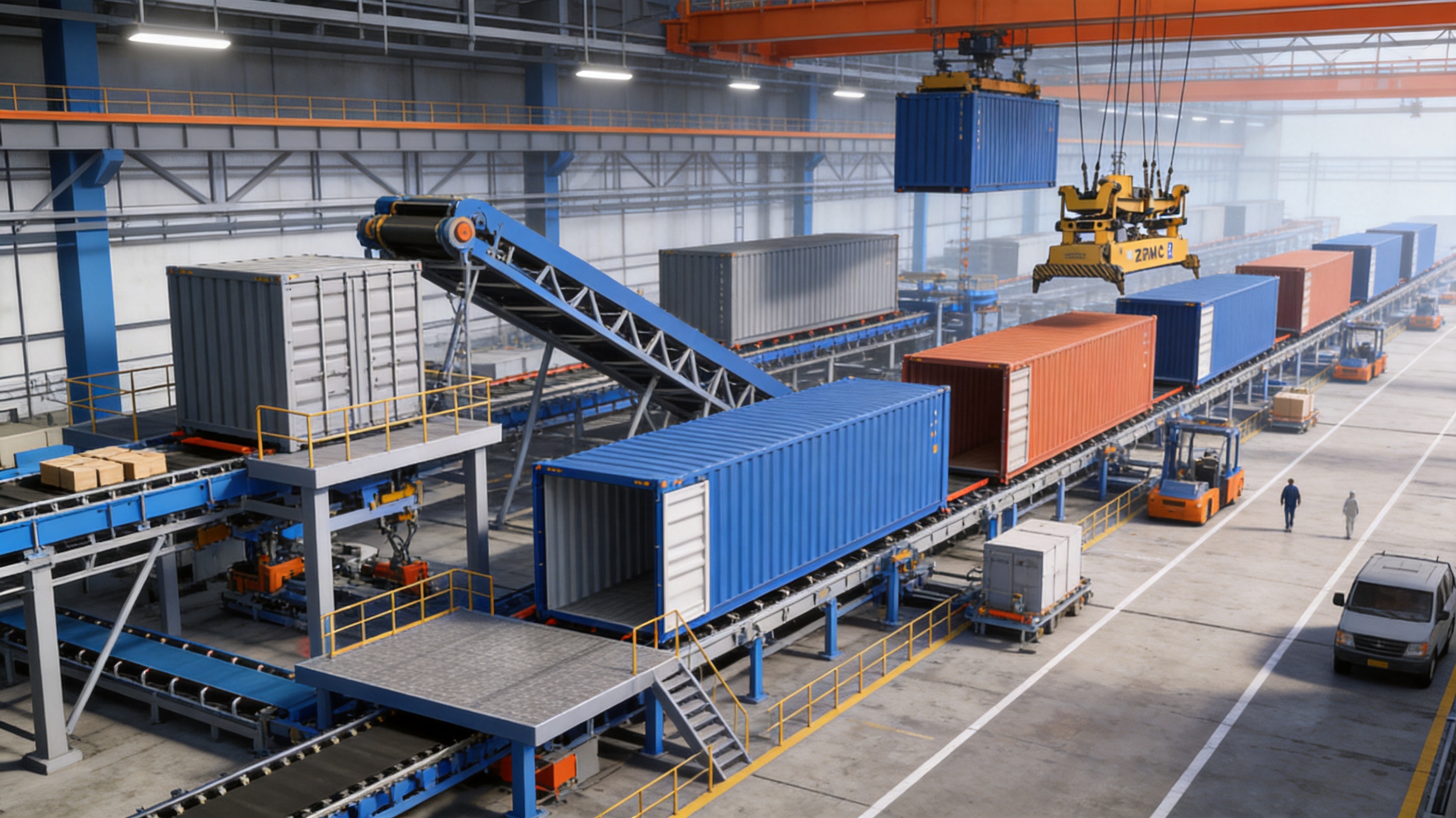
3. Dedicated Container Feeder
The dedicated container feeder is one of the main components of the system. Its purpose is to automatically deliver containers onto the container tilting platform or designated processing position. This reduces the dependence on repeated crane positioning and helps maintain a more regular operating rhythm.
In conventional arrangements, a crane may be responsible for lifting, positioning, aligning, transferring, and removing each container. When the crane is occupied with these repetitive movements, its availability for other important tasks is reduced. The dedicated feeder separates container delivery from the main loading or unloading operation, improving the utilization of the crane and supporting a more balanced workflow.
Automatic feeding also improves positioning consistency. Containers can be delivered according to a defined path and placed into a controlled working area. This makes it easier to coordinate the container with the tilting platform, clamping devices, weighing components, door mechanisms, and transfer conveyors.
For high-volume sites, a reliable feeder is particularly important because a small positioning delay can be repeated hundreds of times during a workday. By reducing unnecessary crane movements and standardizing container entry, the feeder helps lower cycle variation and improves the predictability of the complete process.
Operational Advantages of the Feeder
The feeder can reduce crane dependence, improve container positioning, support automatic sequencing, and provide a foundation for future expansion. It can also help improve workplace safety by reducing the number of personnel required to guide containers manually in congested operating areas.
When integrated with sensors and a programmable control system, the feeder can verify whether a container has reached the correct position before the next operation begins. Interlocking logic can prevent the tilting platform or transfer mechanism from operating if the container is not correctly aligned or secured.
4. Automatic Door Opening and Closing
Container doors can require significant manual effort, particularly when they are heavy, deformed, contaminated, frozen, or affected by uneven loading. Manual door operation may also require workers to perform high-altitude tasks or stand close to moving equipment. These conditions can increase both physical workload and operational risk.
The Continuous Container Handling System can be configured with an automatic container door opening and closing mechanism. This mechanism is designed to coordinate door operation with the container handling sequence. Depending on the project design, the door system can be integrated with sensors, mechanical actuators, control interlocks, and safety protection devices.
Automatic door operation improves consistency because each door movement can follow a defined sequence. It also reduces the need for workers to perform heavy physical labor repeatedly. For facilities processing a large number of containers per day, the reduction in manual door operation can make a meaningful difference to labor efficiency and operator comfort.
The door mechanism can be selected according to the container design and the intended use. Different projects may require different actuator arrangements, protective devices, access platforms, or manual override functions. These details should be determined during the engineering stage so that the mechanism works reliably under actual site conditions.
5. Configurable Weighing Function
Accurate weight information is important in many container handling applications. It may be required for inventory control, transport documentation, loading verification, safety management, production measurement, or commercial settlement. Performing weighing as a separate operation can create additional transport steps and increase the time required for each container.
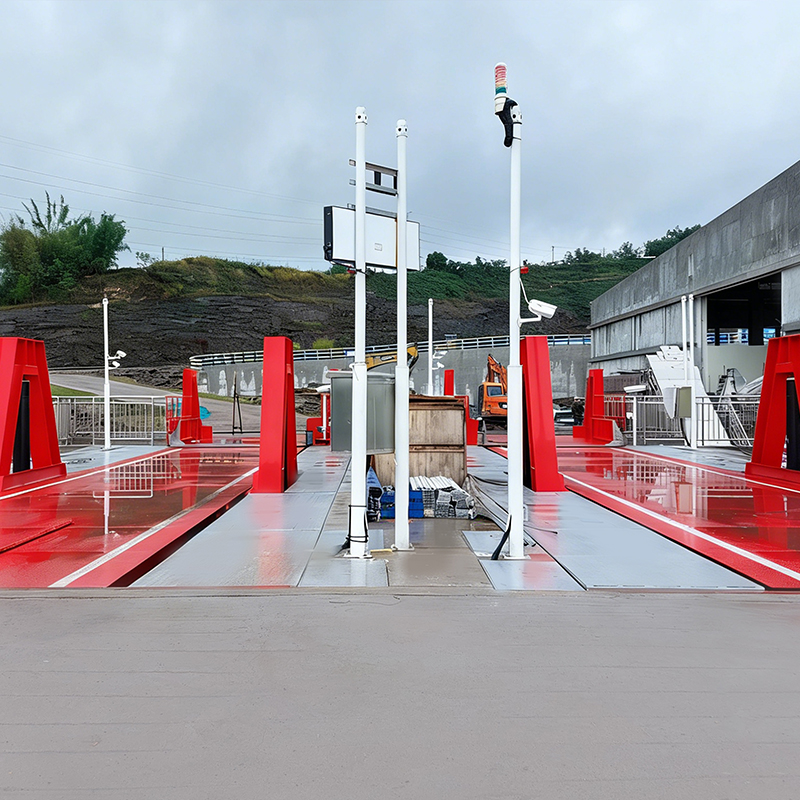
The system can be configured with a weighing function that automatically completes weighing during the container circulation process. Integrating weighing into the handling line avoids unnecessary container transfers and allows weight information to be associated with the relevant operating record.
A weighing system may include load cells, a weighing platform, signal processing equipment, a display interface, and communication with the central control system. The exact arrangement depends on the required accuracy, environmental conditions, legal metrology requirements, and the way weight data must be stored or transmitted.
Integrated weighing offers several advantages. It reduces repeated handling, saves floor space, shortens the process route, and allows the operator to identify abnormal loading conditions earlier. If the system detects a weight outside the expected range, the control logic can alert personnel or pause the process for inspection.
6. Integrated Loading and Unloading Functions
A major advantage of the system is that loading and unloading functions can be integrated into the same production line. In a conventional facility, separate areas may be required for loading, unloading, weighing, temporary storage, and container transfer. Every additional transfer creates more handling time and may require more cranes, vehicles, operators, and floor space.
With an integrated arrangement, containers can remain within a controlled process route. The system can be designed to receive a container, position it, perform the loading or unloading operation, complete weighing when required, and transfer the container to the next destination. The exact sequence can be adapted to the customer's material flow and production schedule.
This integrated design is especially valuable where site space is limited. By reducing duplicate equipment and unnecessary movement lanes, the system can help make better use of the available installation area. It may also simplify traffic planning by reducing the number of points at which internal vehicles and lifting equipment must interact.
Integration also improves process visibility. A central control system can track container positions, operating status, safety conditions, weighing information, and alarm signals. This provides operators with a clearer understanding of the condition of the line and helps maintenance personnel identify abnormal behavior more quickly.
7. Continuous Handling Compared with Traditional Batch Methods
The difference between continuous and batch handling is not limited to the speed of one machine. It is a difference in the organization of the entire operation.
Traditional batch handling usually follows a sequential start-to-finish process. One container occupies the main operating position until all tasks are complete. The next container can only begin after the previous container has been removed. This arrangement is simple to understand, but it creates unavoidable waiting time during container exchange.
Continuous handling uses overlapping operations. While one container is being loaded or unloaded, another container may be positioned, prepared, weighed, or moved into the next station. The process is organized around flow rather than isolated cycles.
| Performance Metric | Traditional Batch Handling | Continuous Container Handling | Typical Advantage |
|---|---|---|---|
| Containers per hour | Approximately 4 to 8 | Approximately 10 to 16 | Higher throughput |
| Equipment idle time | Approximately 35% to 45% | Approximately 8% to 15% | Reduced non-productive time |
| Container changeover | Approximately 3 to 8 minutes | Approximately 20 to 45 seconds | Faster transition |
| Labor pattern | High peaks and valleys | More consistent workload | Smoother labor utilization |
| Process arrangement | Separate or sequential operations | Integrated and coordinated operations | Shorter process route |
These figures are representative comparisons rather than guaranteed results for every installation. Throughput depends on container condition, material flowability, payload, operator procedures, equipment configuration, and the time required for safety checks. Nevertheless, the comparison illustrates why continuous handling is attractive for high-volume facilities.
Reduced Changeover Time
Changeover time includes container release, removal, positioning of the next container, alignment, securing, and preparation for the next operation. Traditional systems often perform these actions one after another. The Continuous Container Handling System is designed to coordinate them more efficiently.
Reducing changeover time has a direct impact on daily capacity. If a facility processes a large number of containers, even a one-minute reduction in each transition can create several additional operating hours over the course of a month. The greatest benefits are normally achieved at sites where container demand is high and operating windows are limited.
Improved Equipment Utilization
Equipment utilization refers to the percentage of available operating time during which the equipment is performing productive work. A crane, platform, conveyor, or loading station may be technically available but not productive if it is waiting for another part of the process.
By coordinating container feeding, processing, weighing, and discharge, continuous systems can reduce these waiting periods. Better utilization can increase output without requiring a proportional increase in the number of machines or operating personnel.
8. Throughput and Capacity Benefits
Throughput is often the most visible reason for adopting continuous container handling. High-throughput logistics sites must process containers within fixed arrival and departure schedules. Delays can lead to congestion, additional vehicle waiting time, missed rail connections, demurrage costs, and inefficient use of labor.
A continuous system supports a steady operating rhythm. Instead of stopping after each container, the system maintains coordinated movement across the line. This allows facilities to process more containers during the same shift or achieve the required output with fewer operating hours.
For example, a facility processing 150 containers per day through traditional batch methods may require approximately 14 hours of operation. After adopting a continuous flow arrangement, the same facility may process approximately 240 containers in 12 hours, representing a potential capacity increase of about 60 percent. The actual result depends on the site and should be confirmed through an engineering assessment.
Capacity improvements can also provide flexibility during peak periods. Seasonal demand, production surges, vessel arrival clusters, and railway scheduling can create short periods of unusually high container volume. A system that has sufficient continuous capacity can absorb these peaks more effectively than a batch system that is already operating near its limit.
Continuous handling may also reduce the need to expand the site physically. Before constructing additional loading bays or storage areas, a facility can evaluate whether existing equipment is being used efficiently. Removing idle periods and improving the sequence of operations may release capacity within the current footprint.
9. Space Efficiency and Simplified Logistics
Space is an important cost factor in ports, warehouses, terminals, and industrial plants. Land acquisition, foundation construction, traffic lanes, storage zones, and safety clearances can significantly affect project investment. Equipment that performs multiple functions in one area can help reduce the total space requirement.
The integrated design of the Continuous Container Handling System helps minimize unnecessary transfers between separate loading and unloading zones. A shorter route means fewer vehicle lanes, fewer temporary storage positions, and fewer points where containers must be handled again.
Space efficiency does not mean simply installing more equipment in a smaller area. Safe access, maintenance clearance, emergency routes, operator visibility, and future expansion must all be considered. The advantage of an integrated system is that the process can be planned as one coordinated layout rather than as several independent equipment zones.
A well-designed layout can also improve traffic separation. Container movement, maintenance access, pedestrian routes, and truck or rail interfaces can be arranged to reduce conflict. This contributes to safer operation and makes daily supervision easier.
10. Safety and Labor Advantages
Safety is a central consideration in container handling because the equipment may operate with heavy loads, large moving structures, elevated platforms, and powerful lifting mechanisms. The system is designed to reduce unnecessary manual intervention and provide controlled movement through an organized operating sequence.
Automatic feeding and door operation can reduce the number of tasks that require workers to stand near moving containers. Interlocked controls can help ensure that lifting, tilting, door opening, and transfer actions occur only when the relevant conditions are satisfied.
Safety functions may include emergency stop circuits, access protection, warning signals, position sensors, overload protection, mechanical locking, container detection, and operating-area monitoring. The exact configuration must be determined according to the project design and applicable regulations.
Automation does not eliminate the need for trained operators. Instead, it changes the operator's role from continuous manual handling to supervision, control, inspection, and exception management. This can reduce repetitive physical work while improving the consistency of the process.
A more stable workload can also improve labor planning. Traditional batch methods may create periods of intense activity followed by waiting periods. Continuous handling distributes work more evenly, allowing personnel to follow standardized procedures and reducing the likelihood of rushed manual actions.
11. Container Protection and Process Quality
Container damage can result from uncontrolled movement, repeated repositioning, uneven lifting, poor alignment, or excessive impact during transfer. Every additional handling action introduces another opportunity for damage to the container, its doors, its locking points, or the goods inside.
The Continuous Container Handling System is designed to reduce unnecessary movement by guiding containers through a defined route. Once the container is correctly positioned and secured, the system can complete the required operation with controlled motion rather than repeated manual adjustment.
Continuous handling methods may reduce container damage incidents by approximately 15% to 25% compared with conventional processes, according to industry comparisons. The result depends on the condition of the containers, operator behavior, material distribution, equipment maintenance, and the quality of the control system.
Process quality can also improve because the system provides more repeatable operating conditions. Controlled lifting angles, defined positioning points, automatic weighing, and consistent transfer speeds reduce variation between individual container cycles.
12. Engineering and Manufacturing Strengths
Jiangsu Zhengding Intelligent Equipment Co., Ltd. is a national high-tech enterprise engaged in the research, development, manufacturing, and sales of intelligent loading and unloading equipment. Its product scope includes equipment for automobiles, containers, ships, and related logistics applications.
The company has developed experience in rear dumpers, side-turn truck dumpers, car loading equipment, container flippers, and other automatic loading and unloading systems. This broad equipment range is important because container handling projects often require more than one type of machine. A supplier with experience across multiple loading and unloading applications can better understand the relationship between feeding, lifting, tilting, conveying, weighing, and discharge.
Manufacturing strength begins with engineering design. Before production, the equipment must be matched to the container size, maximum load, lifting angle, operating cycle, foundation, material flow, and site arrangement. A project-specific design helps ensure that the final equipment is not merely a general-purpose machine but a practical solution for the customer's process.
The manufacturing process also requires careful attention to structural strength. Main frames, lifting assemblies, platforms, supports, pins, cylinders, hydraulic systems, conveyors, and safety components must be selected and assembled according to the required load conditions. For high-capacity models, structural design and load distribution are particularly important because a 40-foot container system may be required to handle loads of up to 100 tons.
Fabrication quality influences service life and operating stability. Welding, machining, alignment, surface treatment, hydraulic installation, electrical wiring, control cabinet assembly, and final inspection all contribute to the performance of the finished system. A well-organized production process helps ensure that components fit correctly and that the equipment can be commissioned efficiently at the customer's site.
Factory testing is another important stage. Before shipment, the supplier can inspect dimensions, structural connections, hydraulic functions, electrical circuits, sensor signals, interlocks, emergency stops, and control sequences. Where project conditions allow, parts of the system may be pre-assembled or function-tested to reduce installation risks.
Customization Capability
Different industries require different container handling solutions. A grain terminal may prioritize dust control, weighing integration, and high-volume unloading. A chemical facility may require specialized sealing, corrosion-resistant materials, safety interlocks, and controlled discharge. A railway terminal may emphasize rapid indexing, precise positioning, and coordination with train schedules.
Customization may involve the platform dimensions, lifting mechanism, feeder arrangement, door automation, conveyor configuration, weighing system, control interface, protective enclosure, hydraulic components, and communication with customer software. The company can provide systematic solutions based on the actual project rather than limiting customers to one fixed configuration.
13. Application Industries
The equipment can serve a wide range of industrial and logistics applications. In steel plants, it can support the movement of raw materials, finished products, or bulk cargo. In chemical plants, the handling line can be designed around controlled operation and appropriate protective measures. Cement and coal facilities may use integrated loading or unloading equipment to improve bulk material throughput.
Grain, feed, oil, and food processing sites can benefit from rapid container circulation and weighing integration. In these applications, the handling system may be connected with storage, conveying, batching, loading, or packaging equipment. Hygiene requirements, dust management, material protection, and cleaning access should be considered during project planning.
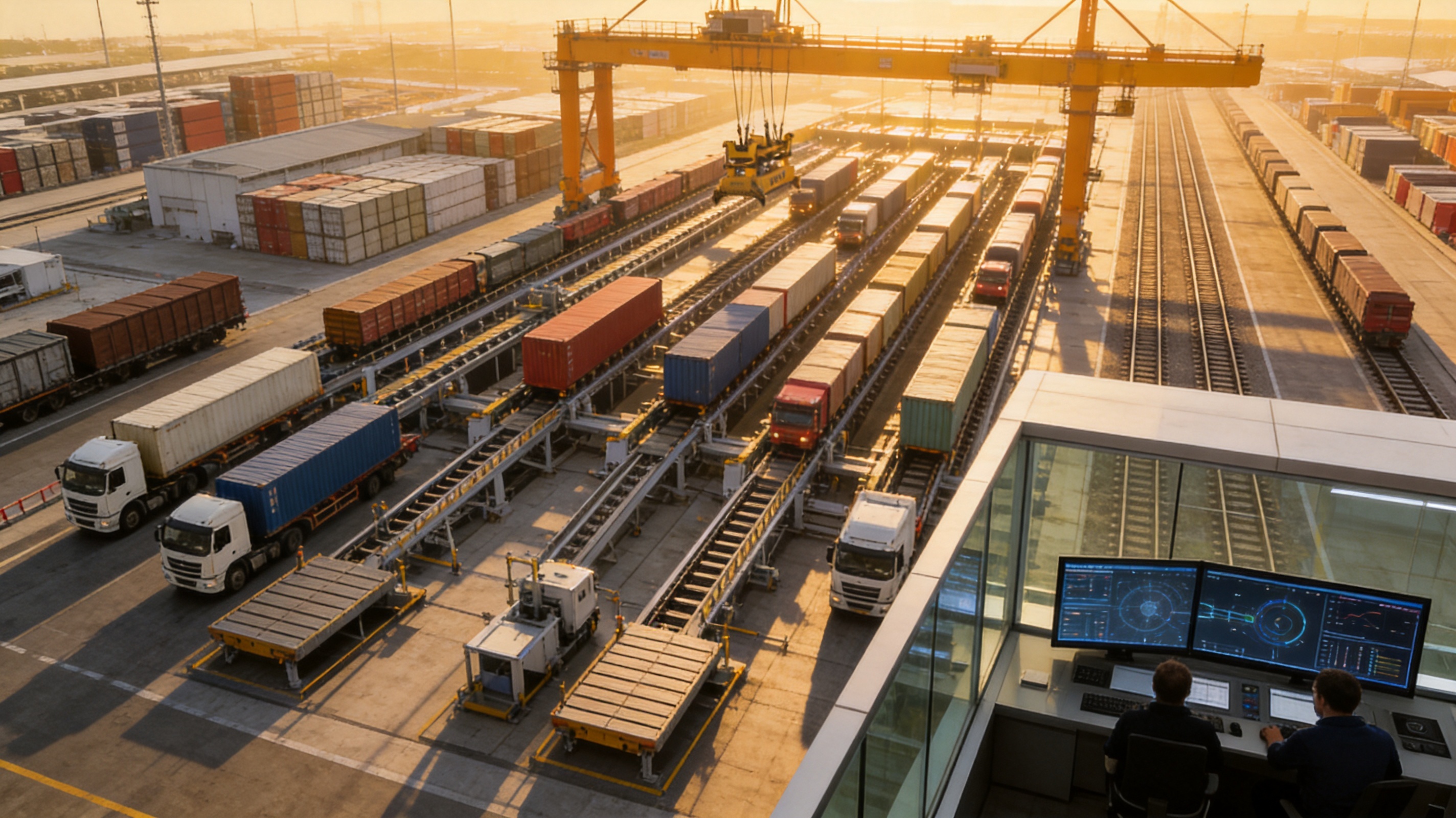
Ports and inland terminals can use the system to reduce container dwell time and support more predictable transfer between road, rail, storage, and processing areas. Large logistics parks can integrate the equipment into automated distribution flows, particularly where a high number of containers must be handled within limited operating windows.
The equipment is also relevant to papermaking, new energy, and other industries that require efficient movement of heavy or packaged products. The final design should be based on the payload, container type, material behavior, environmental conditions, and required production rate.
14. Control System and Automation Architecture
A continuous container handling line requires coordinated control rather than isolated machine operation. The control system can connect feeder movement, container detection, platform positioning, door operation, weighing, lifting, tilting, unloading, and discharge functions.
Sensors can be used to confirm container presence, position, door status, platform status, locking condition, lifting angle, hydraulic pressure, and other operating parameters. The controller uses these signals to manage the sequence and prevent unsafe or incorrect actions.
Operator interfaces may display equipment status, process progress, weight information, alarms, operating modes, and maintenance prompts. A clear interface allows operators to understand the condition of the line without relying solely on visual inspection.
Automatic and manual modes can be included according to the project requirements. Automatic mode supports routine high-volume operation, while manual or maintenance mode allows trained personnel to inspect, adjust, and service individual components. Safety interlocks should remain active in all appropriate operating modes.
Data collection can support production analysis and maintenance planning. Records may include container counts, cycle times, weight results, alarm history, operating hours, and fault conditions. Such information can help managers identify bottlenecks and verify whether the system is achieving the expected performance.
15. Maintenance and Lifecycle Value
The value of a container handling system should be evaluated over its entire service life rather than only by its purchase price. A system with higher throughput, lower idle time, reduced labor requirements, and easier maintenance may provide better long-term economics than a cheaper system with limited capacity.
Routine maintenance should include inspection of structural connections, hydraulic components, cylinders, hoses, pins, bearings, conveyors, sensors, electrical cabinets, safety devices, and weighing components. Lubrication, cleaning, adjustment, and replacement of wear parts should follow the maintenance plan supplied for the equipment.
Continuous systems can be designed with access points and inspection areas that allow maintenance personnel to identify problems before they become major failures. Monitoring hydraulic pressure, sensor status, motor current, cycle time, and alarm frequency can provide useful early warnings.
Spare parts availability and technical support are also important. Jiangsu Zhengding serves customers in China and international markets, including Japan, Brazil, Egypt, Pakistan, India, the Middle East, and Southeast Asia. Its experience with export projects supports attention to project coordination, equipment documentation, commissioning, and customer communication.
A lifecycle approach should also consider future expansion. A facility may begin with one continuous handling line and add another line later. If the initial control architecture, layout, and utility planning allow expansion, the customer can increase capacity without redesigning the entire site.
16. Why Choose an Integrated Supplier
Purchasing the feeder, container flipper, weighing system, door mechanism, platform, and control system from unrelated suppliers can create integration challenges. Differences in communication protocols, mechanical interfaces, safety logic, installation responsibility, and after-sales support may increase project risk.
An integrated supplier can coordinate the design of the complete line. This includes matching the capacity of each component, defining the sequence of operations, designing the control logic, checking the foundation loads, and confirming the interface with external equipment.
Jiangsu Zhengding's product portfolio covers multiple categories of automatic loading and unloading equipment. This allows the company to approach the project from a system perspective rather than focusing on only one individual machine.
The company has served international users and industries including steel, chemical, cement, coal, grain, oil, food, feed, ports, papermaking, and new energy. This broad application background supports the development of equipment adapted to different loads, environments, operating schedules, and automation requirements.
17. Project Selection Considerations
Before selecting a continuous container handling system, the customer should define the required number of containers per hour, daily container volume, operating shifts, container sizes, maximum gross weight, loading or unloading material, weighing accuracy, and available installation space.
The project team should also review container condition, door type, payload distribution, weather exposure, dust or corrosion risks, temperature range, drainage, foundation structure, and access for maintenance. These factors affect the choice of materials, sealing, hydraulic components, electrical protection, and safety equipment.
Site traffic is another important consideration. The relationship between trucks, rail wagons, cranes, temporary storage, and the continuous handling line should be studied before finalizing the layout. A technically advanced machine cannot deliver its full value if containers cannot arrive and leave in a coordinated manner.
Customers should also establish performance acceptance criteria. These may include throughput, weighing accuracy, cycle time, container positioning accuracy, safety response, availability, noise, and energy consumption. Clear acceptance criteria help align equipment design, factory testing, installation, and commissioning.
18. Frequently Asked Questions
Q1: What is a Continuous Container Handling System?
A Continuous Container Handling System is an integrated line that supports the controlled feeding, positioning, loading, unloading, weighing, transfer, and discharge of containers. It is designed to reduce the idle time and repeated manual movements common in traditional batch handling.
Q2: Can the system handle both 20-foot and 40-foot containers?
Yes. The equipment can be configured for both 20-foot and 40-foot containers. The TJXH 20 model is designed for 20-foot containers, while the TJXH 40 model is designed for 40-foot containers. Final dimensions, lifting capacity, and operating functions should be confirmed according to the project requirements.
Q3: What is the maximum lifting capacity?
The reference capacity is up to 50 tons for the TJXH 20 model and up to 100 tons for the TJXH 40 model. The actual allowable load depends on the equipment configuration, container condition, payload distribution, foundation, and safety design.
Q4: Can loading and unloading be performed on the same line?
Yes. One of the main advantages of the system is its integrated dual functionality. Loading and unloading operations can be arranged within the same production line, reducing the need to transfer containers between separate equipment areas.
Q5: Is automatic container door operation available?
Yes. An automatic door opening and closing mechanism can be configured. It can reduce manual high-altitude work and heavy physical labor while improving the consistency of the operating sequence.
Q6: Can weighing be integrated into the process?
Yes. A weighing function can be added so that container weight is measured during circulation. The weighing arrangement should be selected according to the required accuracy, operating environment, legal requirements, and data communication needs.
Q7: How does continuous handling compare with batch handling?
Continuous handling overlaps container positioning, processing, transfer, and preparation activities. Batch handling completes all activities for one container before beginning the next. Continuous systems generally offer higher throughput, lower idle time, faster changeover, and more stable labor utilization.
Q8: Can existing batch equipment be upgraded?
Partial conversion may be possible through automated positioning, feeder integration, conveyor installation, or control-system improvements. However, full continuous flow normally requires equipment designed for overlapping operations. A pilot line can be considered before a larger expansion.
Q9: What industries can use the equipment?
The system can be used in ports, inland terminals, railway logistics centers, warehouses, steel plants, chemical plants, cement facilities, coal operations, grain and feed facilities, oil and food industries, papermaking, new energy, and other applications requiring efficient container loading or unloading.
Q10: What information is needed for a quotation?
A quotation normally requires container size, maximum gross weight, material type, loading or unloading method, required throughput, operating hours, lifting angle, weighing requirements, automatic door requirements, site layout, foundation information, power supply, environmental conditions, and the required level of automation.
Q11: Does automation remove the need for operators?
No. Automation reduces repetitive manual work but trained personnel are still required for supervision, inspection, maintenance, exception handling, and safety management. The system changes the operator's role from continuous manual handling to controlled process management.
Q12: What are the main benefits for a high-volume facility?
The main benefits include higher throughput, lower container changeover time, improved crane and equipment utilization, reduced manual labor, better space efficiency, integrated weighing, safer operation, more consistent process quality, and greater scalability.
19. Conclusion
The Continuous Container Handling System provides a practical response to the growing demand for faster, safer, and more coordinated container logistics. Its dedicated feeder, optional automatic door mechanism, configurable weighing function, container tilting platform, and integrated loading and unloading capabilities allow facilities to replace fragmented batch procedures with a more continuous process.
Compared with traditional methods, the system can reduce idle intervals, shorten container changeover, improve equipment utilization, and increase the number of containers processed during each operating shift. It can also help reduce unnecessary container movement, improve labor stability, simplify site organization, and create a foundation for future automation.
Jiangsu Zhengding Intelligent Equipment Co., Ltd. combines research and development, manufacturing, system integration, and application experience in automatic loading and unloading equipment. Its broad product portfolio and international project experience support the development of customized solutions for ports, terminals, warehouses, and industrial plants.
For facilities seeking to increase capacity without relying solely on additional labor, additional cranes, or a larger physical footprint, an integrated continuous handling line can provide significant operational value. The most effective solution is one designed around the customer's actual containers, materials, throughput targets, site conditions, safety requirements, and long-term expansion plans.
References
1. Jiangsu Zhengding Intelligent Equipment Co., Ltd. Product information for Continuous Container Handling System.
2. Jiangsu Zhengding Intelligent Equipment Co., Ltd. Technical parameters for TJXH 20 and TJXH 40 container handling models.
3. Industry comparison data on continuous and traditional batch container handling performance, throughput, changeover time, and equipment utilization.
4. General principles of industrial material handling system design, automation integration, and logistics equipment safety.
5. General practices for container terminal process planning, weighing integration, preventive maintenance, and equipment lifecycle management.


